Making Squash Accessible Beyond the Private Club
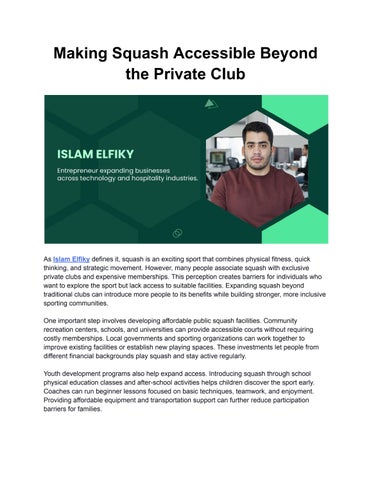
As Islam Elfiky defines it, squash is an exciting sport that combines physical fitness, quick thinking, and strategic movement. However, many people associate squash with exclusive private clubs and expensive memberships. This perception creates barriers for individuals who want to explore the sport but lack access to suitable facilities. Expanding squash beyond traditional clubs can introduce more people to its benefits while building stronger, more inclusive sporting communities. One important step involves developing affordable public squash facilities. Community recreation centers, schools, and universities can provide accessible courts without requiring costly memberships. Local governments and sporting organizations can work together to improve existing facilities or establish new playing spaces. These investments let people from different financial backgrounds play squash and stay active regularly. Youth development programs also help expand access. Introducing squash through school physical education classes and after-school activities helps children discover the sport early. Coaches can run beginner lessons focused on basic techniques, teamwork, and enjoyment. Providing affordable equipment and transportation support can further reduce participation barriers for families.
Community partnerships can strengthen these efforts by connecting experienced players with beginners. Local businesses, nonprofit organizations, and sports associations can sponsor training sessions, donate equipment, and host introductory tournaments. Volunteer coaches can share their knowledge and help participants build confidence. These partnerships create opportunities for people who might never consider entering a private squash club. Promoting squash through public events can also change how communities view the sport. Free demonstration matches, open-house sessions, and neighborhood competitions introduce squash in welcoming environments. Social media campaigns can highlight players from different backgrounds and share information about affordable programs. Greater visibility helps challenge the idea that squash belongs exclusively to wealthy communities. Accessibility also requires a focus on long-term participation. Programs should offer flexible schedules, beginner-friendly instruction, and opportunities for players with different abilities. Organizers can gather community feedback to understand challenges and improve their services. Consistent support helps participants remain engaged beyond their first experience. Ultimately, making squash accessible beyond private clubs requires cooperation, investment, and a commitment to inclusion. By expanding public facilities, supporting youth programs, and building community partnerships, organizations can help more people experience squash. These efforts can transform the sport into a welcoming activity that promotes fitness, friendship, and lifelong participation.