Lessons from History. How Should Countries Prepare to Deal With Industrial Disasters? (64)
Lessons from History. How Should Countries Prepare to Deal With Industrial Disasters?
Series | All-Hazards Preparedness and Response
[ This document is one of a series of discussion notes addressing fundamental questions about global health. Its purpose is to transfer scientific knowledge into the public conversation and the decision-making process. These documents are based on the best information available and may be updated as new information comes to light. ]
5 March 2025
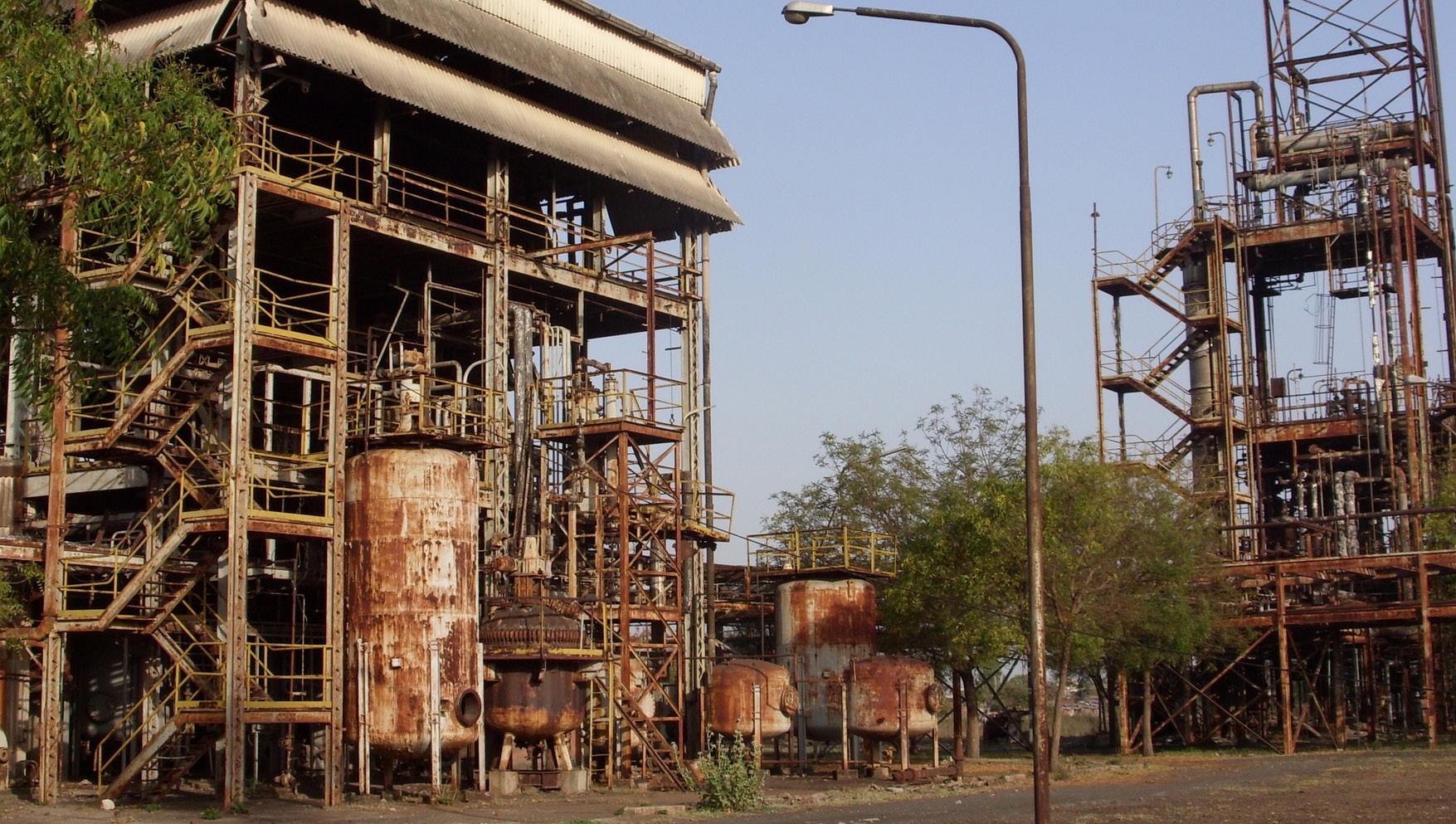
Photograph: Abandoned Union Carbide plant in Bhopal, India, the site of a chemical disaster in 1984 / Julian Nyča (Wikimedia Commons)
One of the most deadly terrorist attacks in modern history took place on 11 September 2001, when two planes crashed into the Twin Towers in New York, causing some 2 753 deaths. This event has taken its place in the annals of history and popular culture. The causes of the attack, the identities of those involved, and the terrible aftermath are all well known, as are the details and timeline of the tragedy.
There is, however, one aspect of the 9/11 story that, despite its importance, has not entered the collective imagination in the same way as some others. And that is the exposure to harmful substances of people who were close to the towers when they collapsed.1 The emergency responders and all of the people who witnessed the tragedy were enveloped in a toxic cloud of particles, including asbestos, silica, metals, concrete and glass. The fires,
which were initially caused by the combustion of aircraft fuel and later persisted in the debris pile of World Trade Center Building 7, burned until the end of December 2001 and continued to flareup in 2002, releasing carcinogenic and neurotoxic combustion by-products and leading to prolonged exposure to toxic gases, smoke and vapours.
An estimated 400 000 people—including responders, volunteers and residents of the southern end of Manhattan—were exposed to toxic contaminants, the risk of physical injury, and the physically and emotionally stressful conditions that persisted in the days, weeks and months following the attacks. Shortly after the attacks, people who had been exposed to the toxic cloud during or after the event began to report related health conditions. To this day, the World Trade Center
* Elizabeth Diago-Navarro is the Coordinator of ISGlobal’s Preparedness, Response, Recovery and Resilience Hub. Clara Marín-Carballo is a Policy Consultant at ISGlobal´s Policy and Development department. These two authors have contributed equally to this paper. Roberto Lucchini is Professor of Occupational and Environment Health Sciences at Florida International University and at the University of Modena and Reggio Emilia.
1 Toxins and Health Impacts: Health Effects of 9/11 - WTC Health Program. Available from: https://www.cdc.gov/wtc/exhibition/ toxins-and-health-impacts.html
Authors: Elizabeth Diago-Navarro, Clara Marín-Carballo and Roberto G Lucchini*
“Industrial accidents can result from chemical spills, building collapse (including structural collapse due to armed conflict), explosions, fires, gas leaks, poisoning of the atmosphere or water courses and radiation (including nuclear accidents), among others.”
Health Program continues to screen and provide medical care for people exposed during and after 9/11. The program also provides medical care for people affected by physical and mental diseases related to their exposure.
This is just one example of how an industrial disaster—whether accidental or intentional—can affect the health of the population even many years after the event. Such disasters have a huge potential to harm the population, and experts have indicated that they may become more frequent in the future. The human, environmental and economic costs
associated with future disasters will be determined by the willingness and capacity of national governments to develop and implement policies today to prevent, prepare for and respond effectively to such events.
1.What Is an Industrial Disaster?
An industrial disaster is defined as the release or spill of a hazardous material from an industrial source that results in an abrupt and serious disruption of the functioning of a society, causing widespread human, material and environmental losses that exceed the ability of the affected society to cope using only its own resources.2
According to the International Disaster Database, 3 the category includes many types of events, including chemical spills, building collapse (including structural collapse due to armed conflict), explosions, fires, gas leaks, poisoning of the atmosphere or water courses and radiation (including nuclear accidents), among others. The repercussions of an industrial disaster may be immediate (acute) or long term (chronic). When there is no doubt about the source or cause of the problem, the disaster is described as “overt”. When the source or cause is unknown and the effects are protracted over time and only observable through the indirect evidence, it may be described as “diluted”.4 Indus-
trial disasters can be accidental or intentional. They can have long-term effects on the environment. In short, both the events and their consequences are complex phenomena
Traditionally, disasters have been classified into three categories according to the underlying cause: natural, industrial-technological and conflict-related. 5 However, many are actually what are known as hybrid disasters, that is, accidents that fall into more than one category. For example, in 2011 a tsunami caused a nuclear accident in Fukushima, Japan. This was clearly a hybrid disaster, a natural event that triggered an industrial accident.
a. Factors that affect the frequency and severity of industrial disasters
• Natural and circumstantial factors: The time, location and weather conditions can all have a significant influence on the severity and frequency of industrial disasters. For example, most industrial accidents occur between 6 in
2 Mark E. Keim MD. The public health impact of industrial disasters. American Journal of Disaster Medicine. September 2011;6(5):265-72.
3 Disaster Classification System. 2023. Available from: https://doc.emdat.be/docs/data-structure-and-content/disaster-classification-system/
4 Bertazzi PA. Industrial disasters and epidemiology. A review of recent experiences. Scandinavian Journal of Work, Environment & Health. 1989;15(2):85-100.
5 Hogan D, Burstein J: General concepts. In Hogan D, Burstein J (eds.): Disaster Medicine. 2nd ed. Philadelphia, PA: Lippincott, Williams & Wilkins, August 2007: 8.
www.isglobal.org
the morning and 6 in the evening on workdays.
• Socio-economic and political factors: A country experiencing accelerated industrialisation may lack effective industrial disaster prevention measures. This inevitably increases the risk exposure of the most vulnerable communities, a phenomenon known as the “socio-political amplification” of risk.6 Until the 1970s, most industrial accidents occurred in industrialised countries. Since then, the burden has gradually shifted to the Global South and now primarily affects middle-income countries such as Brazil, India and China. Between 2000 and 2009, most technological accidents have occurred in this group of countries.
b. Public health impact
Even though industrial accidents have enormous destructive potential, there are still critical gaps in our knowledge about how to assess and manage them. In 2011, in a seminal article on the public health impact of industrial disasters, Mark Keim described the lack of familiarity with industrial disasters among the public health and medical communities in general.7
Industrial disasters can be fatal to those exposed, but they also have a great potential to cause non-fatal health effects.
In some cases, the damage only manifests long after the event that caused the disaster. This was what happened after the Bhopal disaster in 1984, which involved a leak of methyl isocyanate into the area surrounding a pesticide factory in the Indian city of Bhopal (see Box 1). A 2023 study that reviewed data from the Emergency Events Database (EM-DATS) found 1 054 industrial disasters worldwide between 1995 and 2021, responsible for a total of 29 708 deaths and 57 605 injuries.8
6 Firpo de Souza Porto M, Machado de Freitas C: Major chemical accidents and industrializing countries: The socio-political amplification of risk. Risk Anal. 1996; 16(1): 19-29.
7 Mark E. Keim MD. The public health impact of industrial disasters. American Journal of Disaster Medicine. September 2011;6(5):265-72.
8 Tin D, Cheng L, Hata R, et al. Descriptive Analysis of the Healthcare Aspects of Industrial Disasters Around the World. Disaster Medicine and Public Health Preparedness. 2023;17:e400.
Forty years ago, on 3 December 1984, the most serious industrial accident in history took place in Bhopal, India. It involved a release of a toxic gas— methyl isocyanate—from an industrial pesticide plant owned by an Indian subsidiary of the US-based Union Carbide Corporation (UCC) in which the Indian Government was also a shareholder. The leaked gas resulted in a toxic cloud that killed thousands of people living in the area.
Estimates of the number of deaths vary between 3 000 and 16 000, but the number of people injured is up to half a million.9 It is estimated that more than 120 000 people are still suffering the consequences of the accident, including many who were born with congenital malformations after the accident.10 Twenty-four years after the disasters, scientific cohort studies showed excess mortality and morbidity in the population exposed to the toxic gas. 11
The factory handled highly poisonous chemicals in a plant that did not follow the safety measures that would have been mandatory in similar UCC plants in the United States, and it was located in a densely populated area—a location appropriate only for commercial or light industrial activity. After the accident, UCC attempted to dissociate itself from the plant’s activities, shifting the blame to the Indian subsidiary. In 1985, the Government of India became the representative of the victims and the case was transferred to the Indian Supreme Court, where a settlement of US$ 470 million was reached based on estimates claiming that only 3 000 people died and 102 000 were injured. Furthermore, when it ceased operations at the plant in 1995, the company failed to clean up the site, an omission that led to the groundwater contamination with chemicals and heavy metals that continues to this day.10
Following that accident, a number of regulations and legal instruments were introduced to regulate industrial and environmental safety in India and other countries, including the USA.
Baltimore, Maryland (USA) Cargo ship accident
Matanzas (Cuba) Fires and explosions at container depots
East Palestine, Ohio (USA) Derailment of freight train carrying vinyl chloride, benzene, etc.
Durban (South Africa) Toxic fire in a pesticide warehouse
Wetteren (Belgium) Derailment of tank train carrying acrylonitrile
Jilin (China) Exposure to petrochemical products Port of Beirut (Lebanon) Ammonium nitrate explosion
Sitakunda Upazila (Bangladesh) Fires and explosions at container depots
9 Eckerman I. The Bhopal Saga – Causes and Consequences of the World’s Largest Industrial Disaster. Universities Press (India) Private Limited 2005.
10 Broughton E. (2005) The Bhopal disaster and its aftermath: A review. Environ Health 4, 6. Available from: https://ehjournal.biomedcentral.com/articles/10.1186/1476-069X-4-6.
11 Sharma, Dinesh C (2013) Bhopal study represents “missed opportunity” The Lancet, Volume 382, Issue 9908, 1870. Available from: https://www.thelancet.com/journals/lancet/ article/PIIS0140-6736(13)62562-3/fulltext
Figure 1. Some of the largest industrial accidents of the 21st century
“Some conventions have not been updated with the latest recommendations introduced to take into account the lessons learned from reviews of past accidents, and existing recommendations and tools are not uniformly implemented, even in regions where they are mandatory, such as Europe.”
The Current Situation Regarding Industrial Accident Preparedness and Response
Even though past industrial accidents have resulted in major disasters, preparedness and response is still deficient in several areas. Factors that contribute to these shortcomings include the following:
The Growing Risk
Industrial accidents account for 16% of all technological disasters, a category that includes industrial and transport accidents as well as fire, infrastructure collapse, explosions, and others. Technological disasters are events caused by human activity and they can be intense and sudden.12 Between 2000 and 2019, industrial accidents accounted for only 16% of technological disasters, but it is estimated that they affected over 1.4 million people, that is, 64% of the total population impacted by technological disasters during that period.13 During the same period, the number of technological disasters decreased overall, mainly due to a decline in transport accidents. Industrial accidents, however, decreased only slightly.14 Contrary to what this slight decrease might suggest, the risk may be increasing, as explained below. Despite the accumulated experience of many past industrial disasters, these events continue to occur at a similar rate, a clear indication that they are not being effectively assessed after the fact and we are not learning from experience.
In the USA, just between January 2021 and October 2023, there were 825 incidents involving hazardous substances (leaks, spills and releases of toxic or flammable chemicals, as well as fires and explosions involving chemicals and/ or hazardous materials during transport, storage, use, manufacture and disposal), that is, on average one incident every two days. 15 These incidents resulted in the evacuation of 191 communities, while in 101 other areas residents were advised to shelter in place. According to the latest available data, this trend persisted in 2024.16
In the European Union (EU), the eMARS dashboard on the MINERVA platform has reports of 181 major industrial accidents— almost 20 per year—between 2015 and October 2024.17 A downward trend has, however, been observed since the implementation of the EU Seveso III directive (see below and Table 3)
In other parts of the world, while the number of industrial accidents has decreased compared to the peak reached in 2005, the majority of these accidents continue to be concentrated in Asia and Africa, and the trend does not appear to be downward (see Figure 2)
12 Technological disaster | Hazards. 202. Available from: : https://www.preventionweb.net/knowledge-base/hazards/technical-disaster
13 Centre for Research on the Epidemiology of Disasters (CRED). Technological disasters. 2020. Available from: https://www.cred.be/sites/default/files/CC60.pdf
14 Centre for Research on the Epidemiology of Disasters (CRED). Technological Disasters: Trends and transport accidents. 2022. Available from: https://www.cred.be/sites/ default/files/CredCrunch65.pdf
15 Nelms D, Bernat E. Key Findings: Chemical Incident Tracking 2021-2023. Coming Clean. Available from: https://comingcleaninc.org/assets/media/images/Chemical%20 Disaster%20Prevention/Key%20Findings%202021-2023%20FINAL.pdf
16 Coalition to Prevent Chemical Disasters. Available from: https://preventchemicaldisasters.org/index
17 EUROPA - eMARS Accidents Search - European Commission. Available from: https://emars.jrc.ec.europa.eu/en/emars/accident/search
Source: Data extracted from the EM-DAT database. Available from: https://public.emdat.be/
It is essential to not relax our vigilance. Due to a combination of circumstances, the risk of an upward trend in industrial accidents may be increasing. The following are the key risk factors:18
Climate Change
Shifting climate patterns increase the risk of natural disasters, which in turn may result in technological disasters, including industrial accidents. The term used to describe such compound disasters is Natech (Natural Hazard-Triggered Technological Accident). These accidents may be caused by extreme weather events, for example hurricanes, floods, forest fires, etc., and they normally include pipeline spills and leaks from chemical plants. The EU Joint Research Centre is compiling a global database of these compound events.19
Ageing of Industrial Installations and Infrastructure
Deterioration of infrastructure is often associated with poor maintenance levels and a failure to update protocols. It can also be the result of an inadequate transfer of know-how. Sometimes a change in the ownership of facilities and inadequate management of the process leads to accelerated deterioration.
Rapid Technological Development
While new technologies can improve the safety and security of industrial facilities, they can also create new vulnerabilities, such as programming errors in automation programs and the use of novel chemicals associated with a greater public health or environmental risk.
The Human/Technology Interface
The human/technology interface refers to issues such as insufficient security and risk management measures, human error and deliberate malicious acts, including cyber-attacks and terrorist attacks, all of which can trigger industrial or chemical accidents or disasters.
Industrial accidents | UCP Knowledge Network. Available from: https://civil-protection-knowledge-network.europa.eu/eu-overview-risks/human-induced-risks/industrial-accidents
Figure 3. Recent timeline of industrial disaster preparedness and response measures
1993
The EU Seveso Directive was adopted to improve safety in installations that handle dangerous substances. It was drawn up in response to earlier events, notably the Seveso disaster in Italy (1976), in which an industrial fire led to the release of a toxic cloud containing dioxins, which affected the health of the population and the environment in the affected area.
2001-2023
The EU’s Seveso III Directive (amending the Seveso Directive) updates the earlier regulatory instrument, with a greater emphasis on planning aimed at preventing and minimizing the impact of major industrial accidents.
2023-2024
Source: ISGlobal.
Despite the Adoption of Regulatory Instruments, Shortcomings Still Persist in Prevention and Preparedness Prevention and preparedness for such accidents is covered by the regulatory measures governing certain industrial activities. Such regulations depend greatly on where the industrial plants are located.
The EU adopted the Seveso III Directive in 2012.20 Seveso III created a framework of risk management measures designed to prevent major industrial accidents and to limit their consequences. This updated version of the Seveso directive, which came into force in 2015, strengthens the rules on land use planning and the active provision of information to the public as well as the requirements for public participation and access to justice. It also established more rigorous require-
ILO Convention N.º 181 on the prevention of major industrial accidents. This international instrument has not been revised since it was first ratified.
1996
The frequency of accidents in the USA and the EU sees a steady increase, with record numbers of major incidents. This led to the restructuring of safety procedures, particularly in older industrial plants.
2012
Significant increase in the USA of accidents associated with derailments as well as industrial leaks and spills. In the first quarter of 2023, an accident was recorded every 1.5 days. This prompted the US Environmental Protection Agency to introduce stricter regulations in its Risk Management Plan, completed in February 2024.
ments in relation to inspections undertaken to ensure and certify that safety standards are effectively implemented and that companies are complying with the regulations. The latest report on the implementation of Seveso III covering the period 2015-2018 identifies over 11 700 establishments that fall within the scope of the directive, 43% of which are classified as upper tier establishments due to the quantity of dangerous substances stored in the facility.21 Surprisingly, 5% of these establishments did not have the required external emergency plan in place. This figure has improved over the years, as has the percentage of establishments with plans in place that are regularly tested, exercised and reviewed; however, 23% of establishments had not complied with the testing and review requirements dur-
20 Directive 2012/18/EU of the European Parliament and of the Council of 4 July 2012 on the control of major-accident hazards involving dangerous substances, amending and subsequently repealing Council Directive 96/82/EC, OJ L 197, 24.7.2012, p. 1–37.
21 Report from the Commission to the European Parliament and the Council on the implementation and efficient functioning of Directive 2012/18/EU on the control of major-accident hazards involving dangerous substances for the period 2015-2018. European Commission; 2021 sep.
ing the period covered by the report. This failure to review plans is not uniform across all EU countries: in Italy, Estonia, Spain and Lithuania 63%, 58%, 50% and 42%, respectively, of establishments with plans had not complied with testing and review requirements. By contrast, in Belgium, the Netherlands, Poland, Portugal and Finland, among other countries, 100% of establishments had complied with the requirements. In several countries, deficiencies were found in access to information about potentially hazardous establishments regarding their activities, inspections, the hazardous substances stored, emergency plans and accidents, among other aspects, as required by the regulations. In Spain and Italy, 36% of the upper tier establishments had not published the required information.
Other EU policies and legal instruments that contribute to the prevention of these types of accidents include the Directives on the Protection of Critical Infrastructure,22 the Safety of Offshore Activities,23 the Management of Flood Risks24 and the Framework for Water Policy.25
On the international level, there are regulations intended to avoid transboundary effects. The most important of these are:
• Convention on the Transboundary Effects of Industrial Accidents. Helsinki, 17 March 1992, signed by 26 European countries.26 This convention establishes measures to protect people and the environment from industrial accidents and fosters coordination between countries. It also covers accidents caused by natural disasters. The convention was ratified by the EU in 1998.
• The Prevention of Major Industrial Accidents Convention, 1994 (No 174).27
The purpose of this international convention is to prevent major accidents involving hazardous substances and to limit their consequences. It establishes responsibilities for companies (the identification, notification and safety of the installation), for authorities (development of preparedness and emergency plans, inspections) and the rights and duties of workers.
• In the special case of nuclear accident prevention, the International Atomic Energy Agency has developed regulatory standards that set out the fundamental principles, requirements and recommendations to ensure the nuclear safety of both nuclear facilities and technologies that use radiation sources.28 They have also established a set of safeguards for using nuclear technologies.
In addition to these conventions, several organisations are providing technical support and working towards strengthening industrial accident preparedness and response capacities:
• The Organisation for Economic Co-operation and Development has published a document with guiding principles for Chemical Accident Prevention, Preparedness and Response.29 The principles cover prevention, preparedness and mitigation, emergency response, and how to learn from past accidents.
• The Major Accident Hazards Bureau of the EU Joint Research Centre has created the MINERVA portal to provide technical information and tools to support EU policies on the control of major chemical risks.
• In February 2024, the US Environmental Protection Agency (EPA) strengthened its Risk Management Plan
22 Council Directive 2008/114/EC of 8 December 2008 on the identification and designation of European critical infrastructures and the assessment of the need to improve their protection (Text with EEA relevance) [Internet]. Dec 8, 2008. Available from: http://data.europa.eu/eli/dir/2008/114/oj/eng
23 Directive 2013/30/EU of the European Parliament and of the Council of 12 June 2013 on safety of offshore oil and gas operations and amending Directive 2004/35/EC Text with EEA relevance [Internet]. June 12, 2013. Available from: http://data.europa.eu/eli/dir/2013/30/oj/eng
24 Directive 2007/60/EC of the European Parliament and of the Council of 23 October 2007 on the assessment and management of flood risks (Text with EEA relevance) [Internet]. Oct 23, 2007. Available from: http://data.europa.eu/eli/dir/2007/60/oj/eng
25 Directive 2000/60/EC of the European Parliament and of the Council of 23 October 2000 establishing a framework for Community action in the field of water policy [Internet]. Oct 23, 2000. Available from: http://data.europa.eu/eli/dir/2000/60/oj/eng
26 United Nations Treaty Collection. 1992. Convention on the Transboundary Effects of Industrial Accidents. Available from: https://treaties.un.org/pages/ViewDetails.aspx?src=TREATY&mtdsg_no=XXVII-6&chapter=27&clang=_en
27 International Labour Organization. Convention C174 - Prevention of Major Industrial Accidents Convention, 1993 (No. 174). Available from: https://normlex.ilo.org/dyn/ nrmlx_en/f?p=NORMLEXPUB:12100:0::NO::P12100_INSTRUMENT_ID:312319
28 International Atomic Energy Agency. IAEA; 2019. Safety standards. Available from: https://www.iaea.org/resources/safety-standards
29 OECD Guiding Principles for Chemical Accident Prevention, Preparedness and Response - Third Edition. OECD; June 2023. Available from: https://www.oecd.org/en/publications/oecd-guiding-principles-for-chemical-accident-prevention-preparedness-and-response-third-edition_162756bf-en/full-report/component-3.html
“All countries should be encouraged to share information and data to maximise learning from such disasters.”
in February 2024.30 Under the updated rule, facilities are required to develop risk management plans that take into account extreme weather events caused by climate change, such as hurricanes and floods, and have backup power in the event of a power loss. It also requires facilities to test their emergency plan every ten years with a field exercise.31 It requires facilities to put in place worker protection plans.
As we can see, some conventions have not been updated with the latest recommendations introduced to take into account the lessons learned from reviews of past accidents, and existing recommendations and tools are not uniformly implemented, even in regions where they are mandatory, such as Europe.
Recommendations
1) Implement safety and security measures to prevent industrial disasters
Prompt action is required to update ageing infrastructure and equipment, which is becoming increasingly vulnerable. The frequency and effectiveness of inspections must be increased to ensure that industrial sites are in compliance with current regulations. Good Practice Reports are available that can be used during inspections.32
2) Raise public awareness about the need to improve the response to chemical and industrial accidents
Urgent action is needed to prevent the negative repercussions of these events in various spheres, including the long-term physical and mental impact on workers, first responders and communities. Ongoing impacts must be monitored using epidemiological health surveillance methods designed to prevent the negative effects that may emerge later, as shown by existing examples (the World Trade Center Health Programme, the monitoring of dioxin exposure in Seveso, and the transgenerational effects of radiation from Chernobyl and other nuclear accidents).
Effective health surveillance requires accurate assessment of immediate exposure to all possible contaminants and of the possible long-term effects of accidents.
3) Increasing public transparency of information
The general public and affected communities must have access to information on the type of hazardous substances stored in facilities.
4) Apply knowledge gleaned from previous events of varying magnitude
Analysis of a broad spectrum of data is key to improving both immediate response and long-term management. Exposure must be assessed, people exposed must be monitored in situ, data must be transferred to a digital repository and analysed to use the lessons learned and immediately incorporate them into good practice. Analysis of the data is also essential for epidemiological health surveillance, which can shed light on the insidious physical and mental effects that can occur decades after an event. Moreover, there are reports that draw lessons learned from past accidents, extract conclusions from investigations and inspections, and propose ways to improve
30 Summary analysis of key updates to the Risk Management Program (RMP) rule in 2024. Coming clean; Available from: https://www.epa.gov/system/files/documents/2024-02/ risk-management-program-final-rule-prepublication_partial508.pdf
31 Summary analysis of key updates to the Risk Management Program (RMP) rule in 2024. Coming clean; Available from: https://preventchemicaldisasters.org/assets/documents/ RMP%20factsheet%202024%20final.pdf
32 Risk management and enforcement on ageing hazardous sites. Major Accident Hazards Bureau - European Commission. Available from: https://minerva.jrc.ec.europa.eu/en/ shorturl/technical_working_group_2_seveso_inspections/mjvmaltafinalpubreportv2pubsypdf
preparedness and response.33 All countries should be encouraged to share information and data to maximise learning from such disasters.
5) Set up academic programs designed to train experts in chemical and industrial safety and emergency preparedness
A multidisciplinary approach to public health must be incorporated into professional training to produce experts capable of managing a variety of different technological situations.
6) Update outdated plans and legislation
Much of the international regulation is outdated and needs to be updated, and recent regulations are poorly implemented.
FOR MORE INFORMATION
• Mark E. Keim MD. The public health impact of industrial disasters. American Journal of Disaster Medicine. 1 September 2011;6(5):265-72. Available from: https://wmpllc.org/ojs/index.php/ajdm/article/view/2067
• Nuclear Energy Agency. Towards an All-Hazards Approach to Emergency Preparedness and Response: Lessons Learnt from Non-Nuclear Events [Internet]. OECD; 2018. Available from: https://www.oecd.org/en/publications/towards-an-allhazards-approach-to-emergency-preparedness-and-response_9789264289031-en. html
33 Weibull B, Fredstrom C, Wood MH. Learning lessons from accidents: key points and conclusions for inspectors of major chemical hazard sites: a Seveso inspection series publication. Luxembourg: Publications Office of the European Union; 2020. 1 p. (EUR).
How to cite this document:
Diago-Navarro E, Marín-Carballo C and Lucchini RG. Lessons from history. How should countries prepare to deal with industrial disasters? Barcelona Institute for Global Health (ISGlobal). Series: All-Hazards Preparedness and Response, No. 64. March 2025. https://www.isglobal.org/-/aprendiendo-historia-prepararse-pais-desastre-industrial-