Series | All-Hazards Preparedness and Response
[ This document is one of a series of discussion notes addressing fundamental questions about global health. Its purpose is to transfer scientific knowledge into the public conversation and the decisionmaking process. These documents are based on the best information available and may be updated as new information comes to light. ]
Today, we face an era of multiple and compounding crises that threaten the stability and well-being of nations and their populations. The confluence of the COVID-19 pandemic, violent conflicts, and the climate crisis have generated what is commonly referred to as the “3 C’s”. 1 This multiple crises scenario, also defined as “polycrisis”, presents a complex and interrelated set of challenges, particularly for low- and middle-income countries (LMICs), which often bear the brunt of these crises due to their lack of resources and their many vulnerabilities.2 Consequently, while differing in nature,
magnitude, and consequences, the 3 C’salong with other ongoing crises - have the potential to cause local, national and even global economic downturns, increasing poverty rates and inequalities, along with multiple others worrisome consequences.3
As summarized in Figure 1, economic downturns resulting from the 3C’s can directly and indirectly affect a wide range of health outcomes in LMICs disproportionally impacting the poorest communities, which are structurally less resilient than the average population. 4 Some of the most affected health outcomes
Policy Director. Antoni Plasència is Director General of ISGlobal. Megan Naidoo is a predoctoral fellow at the ISGlobal’s Health Impact Assessment Group. Natanael Silva is a predoctoral fellow at the ISGlobal’s Health Impact Assessment Group. Daniella Cavalcanti is a researcher at the Institute of Collective Health at the Federal University of Bahia, Bahia, Brazil. Álvaro Flores is a resident in Preventive Medicine and Public Health at the Hospital Universitario Fundación Jiménez Díaz, Madrid. Elizabet Diago is coordinator of the ISGlobal Preparedness, Response, Recovery and Resilience working group. Felipe Alves is a postdoctoral fellow at the ISGlobal’s Health Impact Assessment Group. Davide Rasella is Director of the ISGlobal’s Health Impact Assessment Group.
1United Nations (UN). (2022), The Sustainable Development Goals Report 2022, New York. https://unstats.un.org/sdgs/report/2022/
2 World Econ. Forum. (2023), Global Risks Report https://www.weforum.org/reports/global-risks-report-2023/
3 World Bank. (2022), Poverty and Shared Prosperity. https://www.worldbank.org/en/publication/poverty-and-shared-prosperity
4 Glonti K, Gordeev VS, GoryakinY, et al. (2015), A Systematic Review on Health Resilience to Economic Crises. PLoS ONE; 10: e0123117.
1 www.isglobal.org
2023
28 July
52
Authors: Elisa Landín, Clara Marín, Gonzalo Fanjul, Antoni Plasència, Megan Naidoo, Natanael Silva, Daniella Cavalcanti, Álvaro Flores, Elizabet Diago, Felipe Alves, Davide Rasella*
*Elisa Landín is a research technician at the ISGlobal’s Health Impact Assessment Group. Clara Marín is coordinator of ISGlobal’s Global Analysis and Development department. Gonzalo Fanjul is ISGlobal’s
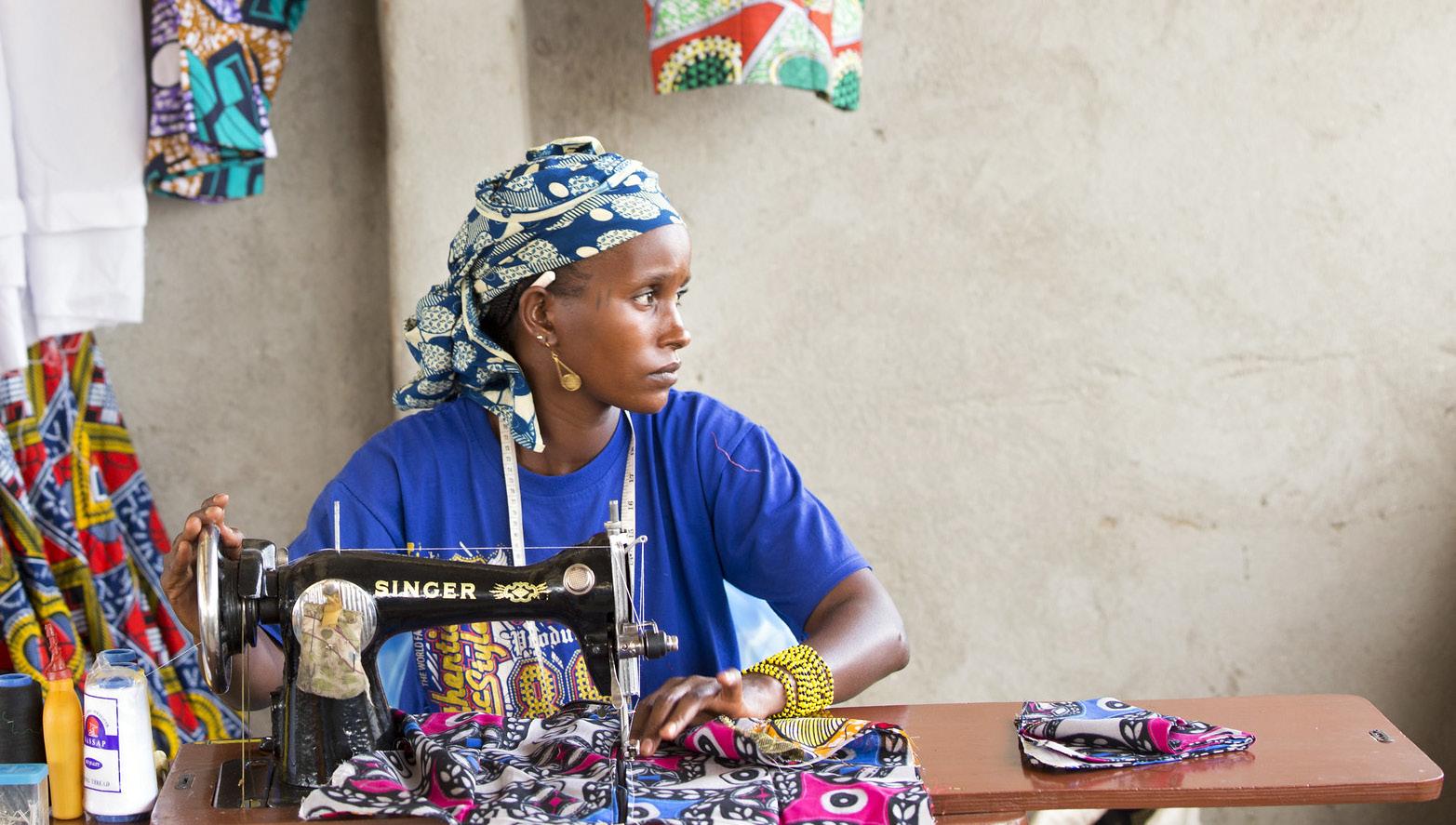
Photo: UN Women/Ryan Brown
How Can
We Address the Effects of Economic Downturns on Systemic Health Crises?
include mental health impacts (e.g. depression and suicide), child and maternal health risks (e.g. malnutrition, perinatal care access), unhealthy behaviours (e.g.
Outstanding factors
COVID-19 pandemic
“Polycrisis Era” Social conflicts
3
Disruption of essential health services
Disruption of education system and school meal programs
Job loss/ Household income shocks
Disruption of food and agricultural supply chain
Climate crises
Increases in commudities’ price and inflation
Increases in environmental hazards
alcohol and drug abuse), and increased poverty-related diseases (e.g. malaria, HIV/AIDS).5,6
7
Underlying factors
Immediate factors
Impact Outcomes
Difficulties in accessing healthcare services
Household socio-economic insecurity
Household water & food insecurity
Basic housing & sanitation insecurity
Community insecurity
Unemployment
Low educational level
Malnutrition
Physical wellbeing
Mental wellbeing
Social exclusion
Vector-borne hazards
Shorter life expectancy
Increased diseases
Mental disorders
BMI disorders
Marginalization
Illiteracy
Poor health behaviours
Areas for Healthcare Systems strenghtening
Deepening inequalities & poverty
Therefore, in times of economic uncertainty, and to safeguard the population’s health, an equitable preparedness strategy must prioritize interventions that respond to the underlying determinants of health and ensure that the most vulnerable members of society are protected from suffering economic shocks. These strategies could be based on ensuring the readiness of shortterm mitigation interventions or promoting long-term structural resilience.
This policy brief focuses mainly on the short-term mitigation strategies which should be based on two pillars: the strengthening of health systems,
Mortality
Morbidity
Human capital
and the expansion of social protection policies. Ultimately, these interventions will also help enhance the long-term structural resilience of the states.8,9
In this regard, ISGlobal Preparedness, Response, Recovery and Resilience (PR3)10 model, based on the all-hazards perspective, combines the different stages for an efficient preparedness and response framework for public health crises, including economic turmoils. The strategies being detailed in this document will be of use during the response to other types of crises that can have an impact on the most vulnerable citizens.
5 Li Y, Couto R de M, Pelissari DM, et al. (2022), Excess tuberculosis cases and deaths following an economic recession in Brazil: an analysis of nationally representative disease registry data. Lancet Glob Health; 10: e1463–72.
6 Backhaus I, Hoven H, Di Tecco C, et al. (2022, Apr 4), Economic change, and population health: lessons learnt from an umbrella review on the Great Recession. BMJ Open;12(4):e060710.
7 United Nations Children’s Fund (UNICEF), United States Agency for International Development (USAID), World Health Organization (WHO), United States Agency for International Development Advancing Nutrition (USAID Advancing Nutrition). (2022), Multi-sectoral Impacts of the COVID-19 Pandemic on Nutrition Outcomes: An Analytical Framework. New York.
8 Hone T, Mirelman AJ, Rasella D, et al. (2019), Effect of economic recession and impact of health and social protection expenditures on adult mortality: a longitudinal analysis of 5565 Brazilian municipalities; Lancet Glob Health, 2019; 7: e1575–83.
9 Rasella D, Basu S, Hone T, et al. (2018), Child morbidity and mortality associated with alternative policy responses to the economic crisis in Brazil: A nationwide microsimulation study. PLOS Med, 2018; 15: e1002570.
10 ISGlobal. (2021), How can we be better prepared for the next public health crisis? Lessons learned from the COVID-19 pandemic. https://www.isglobal.org/en/-/how-can-webe-better-prepared-for-the-next-public-health-crisis-lessons-learned-from-the-covid-19-pandemic.
2
www.isglobal.org
Figure 1. The 3C’s “Polycrisis Era” conceptual framework based on a framework by the United Nations Children’s Fund (UNICEF).
Gender-based violence and abuse C’s
Areas for investing in Social Protection strategies
“Prioritize primary healthcare services, intersectoral and international collaborations focusing on social, commercial, and environmental determinants of health, robust health information systems, and effective governance is vital for building healthcare systems capable of addressing global economic crises. This will ensure equitable access, responsive services, and improved health outcomes for all.”
Strengthening Health Systems
The COVID-19 pandemic showed significant gaps in health systems around the world, particularly in public health and primary healthcare. The need for a more prepared financing approach to bridge the gap between health system investment needs and the challenge of domestic funding is very clear. In addition, as a means to achieve responsive and resilient health systems to face future global crises, it is important to shift “health” from a narrow focus on healthcare services to a more comprehensive approach that addresses the importance of primary care, the impact of the social determinants of health, and the need for a global health partnership perspective.
Several key strategies can be implemented to achieve these goals:
1. Strengthen Primary Health Care
Primary care is one of the foundations of an effective health system. It focuses on providing accessible, person-centered, and holistic care that addresses a wide range of health needs, including prevention, early detection, treatment, and management of common illnesses. Studies suggest that primary health care (PHC) can have an important mitigating effect during economic crises.8,11 For instance, a study made by Rasella D et al. showed that under a possible austerity scenario, ending the Mais Médicos programme (MMP) - an intervention to increase primary care doctors in underserved areas in Brazil- would imply an excess 8.60% in the mortality rates by 2030.11
2. Emphasize prevention and promotion of health
Implement population-level interventions to promo-
te healthy behaviors, including enabling healthy environments and supporting health literacy and awareness programs.12
3. Strengthen health information systems
Establishing robust health information systems is crucial for capturing data on health determinants, health outcomes, and healthcare utilization. This enables evidence-informed decision-making, monitoring of population health trends, and evaluation of interventions crucial to help mitigate the effects of economic crises over population health. The Health Metrics Network, by the World Health Organization (WHO), is a global collaboration in the making, intended to help bring solutions for the resilient maintenance of health information systems in those countries most in need.13
4. Strengthen governance and leadership
Effective governance and leadership are critical for driving structural change in health systems. LMICs need to establish robust policies and regulations that prioritize primary care, respond to social determinants of health, and foster political leadership to facilitate the transition towards a more holistic approach to health during economic turmoils. In this line, social sciences have approached gridlocks in multilateral cooperation as potential opportunities for health governance development. Political leaders can use the institutional fragmentation and multipolarity found in multilateral cooperation to generate an environment of continuous learning and feedback, that ultimately helps shaping a more comprehensive, innovative, and resilient health governance system.14
3 www.isglobal.org
11 Rasella D, Hone T, de Souza LE, et al. (2019), Mortality associated with alternative primary healthcare policies: a nationwide microsimulation modelling study in Brazil. BMC Med, 2019; 17: 82.
12 Levin-Zamir D, Sorensen K, Su TT, et al. (2021), Health promotion preparedness for health crises - a ‘must’ or ‘nice to have’? Case studies and global lessons learned from the COVID-19 pandemic. Glob Health Promot, 2021; 27–37.
13 AbouZahr C, Boerma T. (2005 Sep 22), Health information systems: the foundations of public health. Bull World Health Organ. 2005 Aug;83(8):578-83.
14 Kickbusch I, Reddy KS. (2015), Global health governance – the next political revolution. Public Health, 2015; 129: 838–42.
1.
5. Enhance intersectoral and international collaborations
Recognizing that health outcomes are influenced by factors beyond healthcare, fostering collaboration among various sectors is essential. For example, by bringing together alliances from different local and international governments, academia, research institutions, private sector, NGOs, and community stakeholders in developing policies and programs related to health outcomes linked to economic shocks.15
6. Promote financial mechanisms that ensure the adequacy of funding
On June 2023, three multilateral development banks and the World Health Organization (WHO) launched the Health Impact Investment Platform (HIIP) during the annual Health20 (H20) Summit.16,17 This platform serves as an excellent example of how international collaborations can support LMICs in developing more responsive and resilient PHC services (via grants and concessional loans), and ultimately, ensure LMICs are better prepared to withstand future economic crises and safeguard their communities.
Invest in Social Protection Strategies
There is consolidated evidence about the impact of social protection interventions on enhancing health and mitigating economic downturns in the population, especially among the poorest individuals.
To ensure social protection funds, governments should strive to find the optimal balance of financing and policy options with regard to the preparedness, resilience, and social responsiveness of their national contexts.18,19 According to the International Labor Organization (ILO), options for expanding the funding on social protection in LMICs include increasing revenue from national taxes and social security contributions, improving the efficiency and progressivity of the domestic taxation system, and greater inter-
national cooperation on tax matters.20
In addition, several steps can be considered by the states to ensure the effective implementation and response of key social protection strategies in the event of future economic crises:
1. Constant monitoring and assessment of national social protection mechanisms Governments should understand, evaluate, and provide the basic services of their national social protection system according to their context needs. Firstly, by ensuring the ongoing social protection interventions are effectively reaching their target population. Secondly, by
15 Arslan A, Golgeci I, Khan Z, et al. (2020), Adaptive learning in cross-sector collaboration during global emergency: conceptual insights in the context of COVID-19 pandemic. Multinatl Bus Rev 2020; 29: 21–42.
16 Multilateral development banks and WHO launch new investment platform to strengthen primary health care services. Health Policy Watch. 2023 Jun 23 https://healthpolicy-watch.news/development-banks-unite-to-boost-primary-health-care-financing/
17 H20 Annual Summit. (2023), H20 Annual Summit | News. https://h20annualsummit.com/news/
18 Hillier-Brown F, Thomson K, Mcgowan V, et al. (2019), The effects of social protection policies on health inequalities: Evidence from systematic reviews. Scand J Public Health 2019; 47: 655–65.
19 Qiu M, Jessani N, Bennett S. (2018), Identifying health policy and systems research priorities for the sustainable development goals: social protection for health. Int J Equity Health 2018; 17: 155.
20 ILO. (2021), World Social Protection Report 2020–22: Social protection at the crossroads ‒ in pursuit of a better future International Labour Office – Geneva. (377p.) https://www.ilo.org/global/research/global-reports/world-social-security-report/2020-22/lang--en/index.htm
4
www.isglobal.org
2.
“Investing in Social Protection system preparedness lead to improvements in maternal and child mortality reduction, provides a frontline responsive tool against economic shocks, and fosters overall health and economic resilience among the population.”
measuring the real impact and effectiveness of those interventions.21,22
2. Building on existing social protection programs that are effective, well-targeted, and easily scalable
For instance, cash transfers have been demonstrated to be a very successful social protection strategy in mitigating the adverse socioeconomic and health con-
sequences of economic crises.8,9 Particularly during crises, these social assistance programs can reach many poor households who hold informal jobs and will not be covered otherwise by its job retention schemes. In addition, these cash benefits could be made temporarily more generous to prevent less in-need households from an economic shock, as seen below in Figure 2. during the strike of the COVID-19 crises.10,20,21
COVID-19 Social Protection mitigation strategies in 6 LMICs
1. Bahrain Doubled its disability pension and access to social services for people with disabilities.
2. Jordan Prevented job losses and extended its unemployment benefits to workers from crisis affected sectors that lost or were at risk of losing their jobs.
3. Mongolia Increased the value of its monthly child and family benefits for six months.
4. Somalia The country launched the Baxnaano programme to provide cash transfers to 1.2 million people.
5. Thailand Extended its financial protection against health expenses to both nationals and legal residents by granting free of charge treatment for COVID-19 patients at public and private hospitals .
6. Togo Implemented their three-month cash transfer programme “Novissi”– via a phone app – to financially protect informal workers, reaching over half a million workers within a month.
3. Involve local governments and nonstate institutions
Any realistic social protection response should involve local stakeholders and governments, as well as a range of non-state actors, like local and international NGOs, to help collect information on the real-time unmet needs of their population and the effective delivery of targeted assistance.20,22
4. Foster gender equality structurally to generate long-term resilience
In-kind or cash transfers targeting women can improve their empowerment and decision-making within the household. In addition, transfer programs conditioned to school attendance can help in reducing child labor and early marriage; in an economic crisis or displacement situation, this could help reduce gender-based violence and related health outcomes.20,23
21 Gerard F, Imbert C, Orkin K. (2020), Social protection response to the COVID-19 crisis: options for developing countries. Oxford Review of Economic Policy. 2020;36. (Supplement_1): S281-S296.
22 Aransiola TJ, Ordoñez JA, Cavalcanti D, et al. (2022), The Comprehensive Health Impact of Cash Transfers, Social Pensions and Primary Care in Brazil: An Integrated Evaluation and Forecasting Analysis to Mitigate the Effects of the COVID19-Related Economic Crisis [Internet]. SSRN Preprints with The Lancet. 2022. https://papers.ssrn.com/ sol3/papers.cfm?abstract_id=4133606
23 R. K. Radhakrishnan, E. E. de Wit, Vandana Gopikumar, et al. (2022), Social Mobility of Rohingya Women in a Small Refugee Camp in Chennai, India: A Case Study. Journal of Immigrant & Refugee Studies 0:0, pages 1-14.
www.isglobal.org
5
Figure 2. Social Protection mitigation strategies during COVID-19 economic crises. Examples of 6 LMICs given by ILO 2020-22 report. 20
5. Consider the adoption of digital financial services
As seen with the COVID-19 pandemic, an economic crisis calls for a fast and effective response from the states to mitigate its effects on the population. Here,
the challenge of making massive payouts to the target beneficiaries highlight the existing disparities in the “payment ecosystems” between countries. Advancing on the implementation of digital technologies to speed-up cash transfers to those most in-need could help make a difference in the mitigation of health and economic risks.20,24
Brazil’s Comprehensive Cash Transfers, Social Pensions, and Primary Health Care as a Mitigation Strategy for the Health Impact of Multiple Crises
Over the last years, Brazil implemented some of the world’s largest social protection programs, including Conditional Cash Transfers (CCT), Social Pensions (SP), and Primary Health Care (PHC). Their potential to mitigate the adverse health effects of a potential economic crisis resulting from a poly-crisis scenario was evaluated for the period 2004-2019. Results showed that consolidated coverages of CCT, PHC, and SP were responsible for overall mortality reductions of 6%, 7%, and 8% -respectively. In addition, these programs had even stronger effects on under-five child mortality, with a 13%, 10%, and 16% reduction respectively. The study concluded that, in a scenario of moderate economic crisis, implementing a mitigation strategy that increases the coverage of CCT, PHC, and SP to fully cover the “new poor” could prevent more than 700,000 deaths and 10 million hospitalizations by 2030 if compared with baseline scenarios; and more than 1.4 million deaths and 15 million hospitalizations, if compared with fiscal austerity scenarios. The study strongly encouraged decision-makers to consider mechanisms that allow the expansion of social protection interventions during economic downturns and avoid applying fiscal austerity measures that compromise their coverage and effectivenes. 22
6 www.isglobal.org
24 Rutkowski M, Garcia Mora A, Bull GL, et al. (2020), Responding to crisis with digital payments for social protection: Short-term measures with long-term benefits. World Bank Blogs. 2020. https://blogs.worldbank.org/voices/responding-crisis-digital-payments-social-protection-short-term-measures-long-term-benefits
Nutritional status Mordibidity Mortality Health status Caregiver resources Vaccinations Growth monitoring Prenatal Health and nutrition educational activities Household living conditions Pharmaceutical and hygiene products Household income Household food consumption quality and quantity Basic Determinats Social, economic, and political context Social Pension Program Bolsa Família Program Cash transfer Health conditionalities Family Health Strategy Health-care System, and Other health services
Figure 3. Example of mechanisms linking the Social Pension Program, the Cash Transfers Bolsa Familia Program, and the Primary Care Family Health Strategy to health outcomes. 22
“In the face of the “Polycrisis Era”, all countries, particularly LMICs, should consider prioritizing the strengthening of their healthcare and social protection systems to anticipate and mitigate the adverse health consequences of future economic crises in the population, especially, among those most vulnerable.”
Conclusions and Recommendations
The current scenario of poly-crisis and its related economic downturns, including the potentially incumbent global economic recession, requires that all countries, and in particular LMICs, are prepared to strengthen their health systems and social protection programs to mitigate the adverse health impact of economic shocks, especially on their most vulnerable individuals
While during economic crises one of the most common political responses, especially in LMICs, is to introduce measures of fiscal austerity to reduce national debt, their effects could be extremely detrimental to the health of the population. Therefore, austerity policies should be avoided or, if not possible, they should be done without compromising healthcare and social protection coverage and interventions for the most vulnerable populations.20,22,25
In particular, to anticipate and minimize the adverse effects of economic crises, governments should consider:
1. Monitor timely and efficient indicators of socioeconomic vulnerability in their populations, particularly, among the poorest.
2. Consolidate the effective coverage of social protection interventions. Anticipate the occurrence of economic downturns, by designing preparedness mechanisms that allow the prompt expansion of new or already ongoing programs to mitigate and cover the “new poor”.
3. Develop social protection strategies that combine short-term poverty relief interventions with education and professional training, to promote structural resilience among those economically deprived.
4. Strengthen healthcare system components linked to social determinants, prevention, and promotion of health. Particularly, interventions targeting the most vulnerable.
5. Achieve and consolidate effective and universal coverage of primary health care by building adequate financial mechanisms and partnership agreements that allow the prompt assistance of increased poverty-related diseases, morbidity, and mortality during economic shocks.
6. Protect the population, especially the most vulnerable, from health-related outof-pocket catastrophic costs, by guaranteeing free-of-charge economic access to essential healthcare services, or by providing economic assistance if needed (e.g. free-of-charge, or very low cost, prescription drugs for those most in need).
7 www.isglobal.org
3.
25 Stubbs T, Kentikelenis A, Gabor D, et al. (2023), The return of austerity imperils global health. BMJ Glob Health 2023; 8: e011620.
TO LEARN MORE
• World Econ. Forum. (2023), Global Risks Report https://www.weforum.org/reports/global-risks-report-2023/
• ILO. (2021), World Social Protection Report 2020–22: Social protection at the crossroads ‒ in pursuit of a better future International Labour Office – Geneva. (377p.) https://www.ilo.org/global/research/global-reports/world-social-securityreport/2020-22/lang--en/index.htm
• Aransiola TJ, Ordoñez JA, Cavalcanti D, et al. (2022), The Comprehensive Health Impact of Cash Transfers, Social Pensions and Primary Care in Brazil: An Integrated Evaluation and Forecasting Analysis to Mitigate the Effects of the COVID19-Related Economic Crisis [Internet]. SSRN Preprints with The Lancet. 2022. https://papers.ssrn.com/sol3/papers.cfm?abstract_id=4133606
How to cite this document:
Landín E, Marín C, Fanjul G, Plasència A, Naidoo M, Silva N, Cavalcanti D, Flores A, Diago E, Alves F, Rasella D. How Can We Address the Effects of Economic Downturns on Systemic Health Crises? Barcelona Institute for Global Health (ISGlobal). Series: All-Hazards Preparedness and Response, No. 52. July 2023.
https://www.isglobal.org/

8 www.isglobal.org
