What Impact Has the COVID-19 Pandemic Had on the Fight Against Malaria?
[ This document forms part of a series of discussion notes addressing fundamental questions about global health. Its purpose is to transfer scientific knowledge into the public conversation and the decisionmaking process. These documents are based on the best information available and may be updated as new information comes to light. ]
Malaria is the leading parasitic in fection worldwide, and one of the most important global causes of disease and death. Plasmodium parasites have infec ted humans for millennia with devastating effects, making malaria one of the ancient scourges of humankind. Today, malaria still causes approximately 241 million clinical episodes, between two and four million cases of severe disease and an estimated 627,000 deaths, 1 particularly in Africa among children under 5 years of age. Therefore, despite different initiatives to control this disease, it still vents its rage on most vulnerable popula tions, contributing to perpetuating social disparities and global health inequity.
In such a long history, the first global attempt to eradicate malaria started
*
in the 1950s. The international com munity succeeded in eliminating malaria from many countries and areas of the world, but never managed to interrupt transmission globally, and was followed by the recognition that malaria could not be eradicated with the existing tools. In fact, the deflation of global efforts, fun ding shortages, and the increasing re sistance to drugs and insecticides used against malaria led, in the period 19702000, to a dramatic increase in cases and deaths and to devastating epidemics in countries that were approaching elimination. The Research and development (R&D) attempts leading to new and more effective drugs and, im portantly, the massive upscale of such better control strategies and prevention tools2 led to significant reductions in
1www.isglobal.org
7 October 2022
Authors: Rosauro Varo, Quique Bassat (ISGlobal)*
47
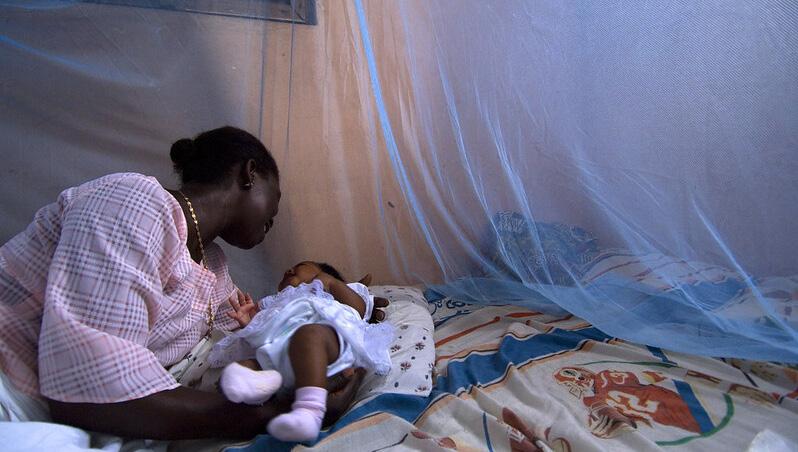
Rosauro Varo is a Medical Research Fellow at ISGlobal. Quique Bassat is an ICREA Research Professor and Head of the Malaria Programme at ISGlobal. With the collaboration of Clara Marín, the coordinator of the Policy Department at ISGlobal, Regina Rabinovich, Director of the Malaria Elimination Initiative at ISGlobal, Matiana González, Coordinator of the Malaria Elimination Initiative at ISGlobal, and Gonzalo Fanjul, Policy Director at ISGlobal. 1 WHO. (2021), ‘World Health Organization: World malaria report 2021’ 2 Resulting from the significant injection of new international available funding following the creation of the Global Fund and the US President’s Malaria Initiative (PMI) in the early 2000s. Photo: Ghana Arne Hoel_The World Bank
Series | COVID-19 and other pandemics
the malaria burden during the first 15 years of the new millennium.
On the other hand, the stall in progress witnessed from 2015 onwards3 eviden ced the many challenges faced by malaria control in many countries, making mala ria eradication an unforeseeable mid or even long-term perspective.4 Such consi deration was made assuming that current available tools may not suffice, and that sustained investments would be required not only to maintain progress, but also to support research activities for a new generation of preventive, diagnostic and therapeutic tools.5 Moreover, the coin cidence with different humanitarian and health emergencies, including most nota bly the COVID-19 pandemic, has further jeopardized many of the gains achieved
in the past two decades in the fight aga inst malaria, and thus making urgent a renewed response to countries facing the highest malaria burden, although still supporting those that are steadily advan cing towards eliminating malaria from their territories.
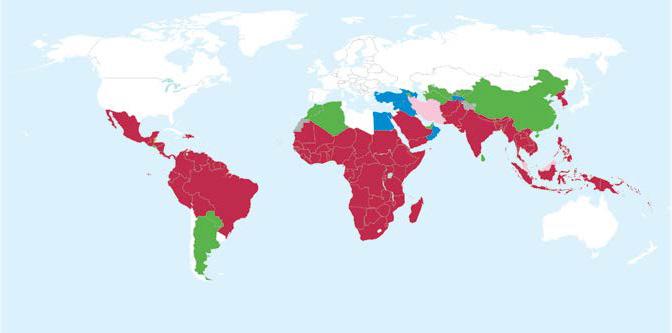
Figure 1. Countries with indigenous cases in 2000 and their status by 2020.
One or more indigenous cases
Zero indigenous cases in 2018-2020
Zero indigenous cases in 2019-2020
Zero indigenous cases (>3 years) in 2020
Certified malaria free in 2020
No malaria
Not applicable
Source: World Health Organization: World malaria report 2021. Note that in 2021 both China and El Salvador have now
their status of
malaria elimination”.
3Alonso, Pedro and Noor,
6736(17)33080-5
4 Although The Lancet Comission, not without a huge
org/10.1016/S0140-6736(19)31139-0
around
malaria
a generation was ambitious, achievable, and necessary. See ‘Feachem RGA, et al. (2019) Malaria eradication
5 malERA Consultative Group on Integration
2011 Jan 25;8(1):e1000404. https://doi.org/10.1371/journal.pmed.1000404
2www.isglobal.org
Abdisalan M. (2017), ‘The global fight against malaria is at crossroads’, The Lancet, 390 (10112), 2532-34. https://doi.org/10.1016/S0140-
controversy
its conclusions, stated that eradication of
within
within a generation: ambitious, achievable, and necessary’. The Lancet;394(10203):1056-1112. https://doi.
Strategies. ‘A research agenda for malaria eradication: cross-cutting issues for eradication’. PLoS Med.
certified
“Certified
“In the year 2015, WHO launched its Global Technical Strategy (GTS) for Malaria 2016–2030. Two of the main objectives of such a strategy were to reduce malaria mortality rates and global incidence by at least 90% by 2030. For WHO, these very ambitious goals continue to be valid until now, but need to be reconsidered.”
Malaria Before the COVID-19 Pandemic
In the last two decades there has been an important decrease worldwide in the incidence rate of malaria with significant differences in its geographic distribution. Indeed, the first fifteen years of the millennium witnessed a 37% and 60% drop in the global malaria incidence and mortality rates, respectively, together with the interruption of transmission and eventual elimination in many countries.6 However, and worryingly, the number of cases per 1000 population at risk had stood similar during the years before the CO VID-19 pandemic. As WHO pointed out back in 2017, “the global fight against malaria is at crossroads”, and this has caused a rethinking on how to address
the global malaria burden, putting more emphasis on control in the countries with high burden while not putting a brake in the elimination efforts in those ready to go in that pathway. The Rethinking Ma laria initiative, led by Harvard University in partnership with the WHO and other partner institutions around the world, has worked with that renewed vision.7
Figure 2. Global trends in malaria case incidence and mortality rate.
3www.isglobal.org 6 WHO. (2021), ‘World Health Organization: World malaria report 2021’ 7 https://rethinkingmalaria.org/
1.
Source: World Health Organization: World malaria report 2021
In any case, nearly half of the world’s po pulation continues to be at risk of ma laria, which in 2020 remained endemic in eighty-five countries. The areas with ongoing malaria transmission are mainly in sub-Saharan Africa (SSA) but also in South-East Asia (SEA), Eastern Medite rranean, Western Pacific, and the Ameri cas. However, 29 countries concentrate up to 96% of the global malaria bur den, with five countries currently ac counting for nearly half of all malaria cases (Nigeria, the Democratic Republic of the Congo, Uganda, Mozambique and Angola) and deaths (Nigeria, the Demo cratic Republic of the Congo, the United
Republic of Tanzania and Mozambique) worldwide.8 Such concentration of the disease burden, together with the ob served stalling of the progress, led in 2018 to the design and implementation by WHO of the “High burden, High impact response”, aiming at rapidly bringing the numbers down in those areas with major risks in order to better target resources and intensify the effect of the in terventions in terms of disease reduction.9
4www.isglobal.org
8 WHO. (2021), ‘World Health Organization: World malaria report 2021’ 9 WHO. (2018), ‘High Burden to High Impact: A Targeted Malaria Response’
Figure 3. Global trends in distribution of malaria cases and deaths by country, 2020.
Source: World Health Organization: World malaria report 2021
Before the start of the “High burden, High impact response”, a new global strate gy had been launched. Thus, in the year 2015, WHO, with the support of the main actors in the malaria stakeholders10 map, launched its Global Technical Strategy (GTS) for Malaria 2016–2030 11 Two of the main objectives of such a strategy were to reduce malaria mortality rates and glo bal incidence by at least 90% by 2030. For WHO, these very ambitious goals con tinue to be valid until now, but need to be reconsidered in the light of the changing malaria scenario and the many difficulties encountered globally and locally by countries, including financial, implementation and biological challenges.12 In consequence, although the goals remain the same after their up date in 2021, some of the approaches have evolved, for example, to give more importance to country leadership in order to inform and implement policies based on their own strategic data and to strengthen their health system.13
Undeniably, the difficulties faced by those initiatives have been aggravated by the global COVID-19 pandemic, which has caused enormous harm to all national control programs. The stagnating situation in malaria control observed sin ce 2015 has also highlighted the need to increase the funding for scaling up and improve the specific design of implementation measures, reinforcing local capacities in terms of surveillance, research, workforce capacity and decision making.14 This has been at the basis of a major shift in the recent years in the ‘mindset’ of the malaria community, now highlighting the importance of increased ownership of ma laria strategies by endemic countries, the need for tailoring strategies at subnational level rather than having ‘one size fits all’ ap proach, and the focus on capacity building in Africa, where most high burden coun tries are concentrated.
Figure 4. Goals, milestones and targets of the Global Technical Strategy (GTS) for Malaria 2016–2030.
2025 2030
1. Reduce malaria mortality rates globally compared with 2015
2. Reduce malaria case incidence globally compared with 2015
3. Eliminate malaria from countries in which malaria was transmitted in 2015
4. Prevent re-establishment of malaria in all countries that are malaria free
At least 40 %
At least 40 %
At least 10 países
prevented
Source: Global Technical Strategy for Malaria
At least 75 %
At least 75 %
At least 20 countries
prevented
At least 90 %
At least 90 %
At least 35 countries
prevented
5www.isglobal.org
10 WHO regional offices; national malaria programs; global, regional and national partners; research groups and academia. 11 WHO (2015), ‘Global Technical Strategy for Malaria 2016–2030’ 12 https://www.who.int/teams/global-malaria-programme/surveillance/malaria-threats-map 13 Global Technical Strategy for Malaria 2016–2030, 2021 update 14 WHO. (2021), ‘World Health Organization: World malaria report 2021’
GOALS MILESTONES TARGETS 2020
Re-establishment
Re-establishment
Re-establishment
2016–2030, 2021 update
“The worst-case scenario has been avoided, even though numbers in 2020 showed a 12% increase in malaria related mortality globally, and up to 14 million additional infections compared to 2019.”
Impact of COVID-19 on the Malaria Strategy
During the beginning of the COVID-19 pandemic, modelers tried to predict the consequences that the pandemic could have, directly or indirectly, on the three major diseases affecting low-income set tings, namely HIV/AIDS, tuberculosis and malaria. Predictions offered many varying and glooming scenarios, inclu ding increases in mortality by 10%, 20% and 36%, respectively in the following 5 years. Regarding malaria, major threats were predicted to come from the inability to distribute bed nets used to prevent mosquito bites that trans mit the parasite, given that this tool is considered to have played a major role in the reduction of malaria burden, and that 2020 coincided with a year of bed net replenishment for many African cou ntries.15 Other analyses projected a dou bling of malaria deaths in the worst-case scenario of service disruptions.16,17
Now that all data for the year 2020 has finally become available,10 and thanks in part to the many efforts led by National Malaria Control Programs (NMCPs) to catch up, with the support of a variety of international partners and under the gui dance of WHO, it is safe to say that the worst-case scenario has been avoi ded, even though numbers in 2020 showed a 12% increase in malaria related mortality globally, and up to 14 million additional infections compared to 2019 18
6www.isglobal.org
2. 15 Hogan, A. B., et al. (2020), ‘Potential impact of the COVID-19 pandemic on HIV, tuberculosis, and malaria in low-income and middle-income countries: a modeling study’, Lancet Glob Health, 8 (9), e1132-e41. 16 Sherrard-Smith, E., et al. (2020), ‘The potential public health consequences of COVID-19 on malaria in Africa’, Nat Med, 26 (9), 1411-16. https://doi.org/10.1038/s41591020-1025-y 17 WHO. (2020), ‘World Malaria Report 2020: 20 Years of Global Progress and Challenges’ 18 Ibíd,.
World Health Organization: World malaria report 2021.
A considerable proportion of that increa se (two-thirds of the new deaths) may be attributable to disruptions in the provision of prevention, diagnosis and treatment services for the disea se during the COVID-19 pandemic, 19 and has been observed predominantly in Africa, where more than 95% of patients and global deaths from malaria are con centrated. The COVID-19 pandemic has taken us back to mortality figures similar to those of a decade ago.20 Nonetheless, WHO states that “with support from global, regional and national partners, countries have mounted an impressive response to adapt and implement WHO guidance to maintain essential malaria services during the pandemic”.21 Having this in mind, the impact of the pandemic needs to be evaluated specifically in the following areas:
a) Access to health care services, clinical disease pathogenesis and management
At the beginning of the pandemic, many countries (including most malaria-ende mic ones) imposed severe restrictions to citizen’s movements, as a first response to control the expansion of COVID-19. These included, among others, and with varying severity, travel restrictions, lockdowns or curfews. Such restric tions impacted the accessibility of sick patients to health care, which was fur ther limited by fear of getting infected or COVID-19 quarantines; closure of health facilities and reduced health care workforce capacity.22,23 The generalized difficulties in accessing the health sys tem (together with shortages in global supplies, described below), may explain the increase in malaria mortality du ring the coronavirus pandemic, similarly
7www.isglobal.org 19 WHO. (2021), ‘World Health Organization: World malaria report 2021’ 20 Heuschen, A. K., et al. (2021), ‘Public health-relevant consequences of the COVID-19 pandemic on malaria in sub-Saharan Africa: a scoping review’, Malar J, 20 (1), 339. https://doi.org/10.1186/s12936-021-03872-2 21 Ibíd,. 22 Babalola, O. J., et al. (2022), ‘The influence of first wave of COVID-19 outbreak on routine healthcare services, Liberia, August 2020: a mixed study approach’, BMC Health Serv Res, 22 (1), 684. https://doi.org/10.1186/s12913-022-08074-3 23 Hakizimana, D., et al. (2022), ‘The impact of Covid-19 on malaria services in three high endemic districts in Rwanda: a mixed-method study’, Malar J, 21 (1), 48. https://doi. org/10.1186/s12936-022-04071-3 Figure 5. Trends in COVID-19 cases and
deaths
in
malaria endemic
countries. Source:
AFR: WHO African Region; AMR: WHO Region of the Americas; EMR: WHO Eastern Mediterranean Region; SEAR: WHO South-East Asia Region; WHO: World Health Organization; WPR: WHO Western Pacific Region.
to what was observed during the Ebo la epidemic in 2014 in West Africa.24
However, given the short nature of those restrictions, and the subsequent catch-up efforts made by NMCPs, the overall im pact of such restrictions has finally been transitory and smaller than predicted.25,26
Otherwise and considering clinical as pects of both diseases, malaria and CO VID-19 infections have overlapping symptomatology and one initial con cern, particularly during the first waves of the pandemic -when no rapid diagnostic tools for COVID-19 were available- was that the two diseases could easily be mis diagnosed, resulting in an overall increase in morbidity and mortality secondary to any of them. However, and despite the challenges mentioned, COVID morbidi ty and mortality in endemic areas, such as those of SSA countries, have been not only proportionally lower than anticipa ted, but also lower than what has been documented in high-income countries (HIC). This may have resulted from di ffering population pyramids (with a hig her proportion of young population, less prone to severe COVID disease), climatic differences, genetic factors, preexisting immunity, or a lower burden of chronic comorbidities (diabetes, hypertension, obesity etc.) predisposing to severity.27
b) Malaria infection control and prevention
Major disruptions in the distribution and supply of malaria diagnostic tools and antimalarial drugs were expected, particularly as a result of the aforemen tioned generalized restrictions imposed by many governments. Therefore, the reduced delivery of global supplies despite strenuous efforts of countries and institutions may also explain the impact on disease control, justified by the limi ted availability of curative and preventi ve malaria commodities. For instance, problems in the distribution of the antimalarial drugs used for seasonal malaria chemoprevention or insecticidetreated bed nets, have been associated with the significant increases in the ma laria burden.28 In addition, redirection of investments and human resources from malaria programs to emergency relief for the COVID-19 pandemic may have had an important effect in malaria control programs.29 Other increased costs for countries may have resulted from the prevention measures adopted against COVID-19, and in particular as a result of disturbances of global transport.30
8www.isglobal.org
24 Walker PG, et al. (2015), ‘Malaria morbidity and mortality in Ebola-affected countries caused by decreased health-care capacity, and the potential effect of mitigation strategies: a modelling analysis’, Lancet Infect Dis, 15(7):825-32. https://doi.org/10.1016/S1473-3099(15)70124-6 25 The Global Fund. (2020), ‘Mitigating the Impact of COVID-19 on Countries Affected by Hiv, Tuberculosis and Malaria’ 26 WHO. (2021), ‘World Health Organization: World malaria report 2021’ 27 Maeda JM, Nkengasong JN. (2021), ‘The puzzle of the COVID-19 pandemic in Africa’ Science. 1;371(6524):27-28. 28 WHO. (2021), ‘World Health Organization: World malaria report 2021’ 29 Hussein, M. I. H., et al. (2020), ‘Malaria and COVID-19: unmasking their ties’, Malar J, 19 (1), 457. https://doi.org/10.1186/s12936-020-03541-w 30 WHO. (2021), ‘World Health Organization: World malaria report 2021’
streams for malaria control remain insufficient, and biological challenges such as insecticide or drug resistance, genetic parasite variants eluding rapid diagnostic tests
or climate change can still overthrow many of the successes achieved in recent
3.
Post-Pandemic Challenges
The global fight against malaria conti nues to be threatened by the same pro blems that were already well-established before SARS-CoV-2 appeared, although some of those have clearly worse ned as a result of COVID-19. Financial streams for malaria control remain in sufficient, and biological challenges such as insecticide or drug resistance, genetic parasite variants eluding rapid diagnostic tests (RDTs), or climate change can still overthrow many of the successes achie ved in recent years.
Vector control: Scale-up ho me-centered interventions such as long-lasting insec ticidal nets (LLINs) and in door residual spraying (IRS) have been important contributors to the significant decline in the malaria burden witnessed globally.31 However, such suc cess is threatened by the emergence of mosquitoes resistant to pyrethroids and to other insecticides used as part of other vector control strategies. Additionally, mosquito behavioral changes to elude these preventive measures (such as bi ting outdoors to avoid the effect of bed nets) are important biological challenges to consider in the fight against malaria. Innovative approaches are needed to con trol the so-called ‘residual transmission’, such as the use of drugs (for example ivermectin) that kill mosquitoes feeding upon treated people or animals, attractive targeted sugar baits and spatial repellents.
Diagnosis: RDTs are now the most widely available op tion and often the first-line investigation method in the presence of malaria suspicion, as they
provide rapid, simple and near-patient, sensitive and specific diagnosis. HRP2based diagnostic tests, which are those most widely available, may produce ne gative results in infections caused by P. falciparum parasites that do not express the PfHRP-2/3 proteins, rendering these RDTs useless, and those infections “invi sible”. As the deletion mutants increase in prevalence, the need for better data and the potential for transitioning to nonHRP2-based RDTs may be required.
Treatment: Emergence of an timalarial drug resistance threatens effective antima larial drug treatment, pre vention, and elimination. Resistance has been observed for most antimalarials including artemisinins. Artemisinin resis tance appears to be “partial”, characte rized by a slower parasite clearance, and has emerged (like all other resistances do cumented for antimalarial drugs) in the Greater Mekong Subregion,32 although major containment efforts in the region have decreased its importance as a global threat. However, artemisinin-resistance has recently been also described as emer ging de novo and independently in at least two African countries, namely Uganda33 and Rwanda.34,35 While we wait for the next generation of antimalarial drugs with different mechanisms of action to those already in use, it appears critically im portant to establish surveillance systems to closely monitor the emergence and spread of parasite resistance to currently available drugs, and to develop alternative strategies to protect currently used anti malarial drugs (such as triple artemisininbased combination therapy).
9www.isglobal.org
“Financial
(RDTs),
years.”
31 Bhatt, S., et al. (2015), ‘The effect of malaria control on Plasmodium falciparum in Africa between 2000 and 2015’, Nature, 526 (7572), 207-11. https://doi.org/10.1038/nature15535 32 Menard, D. and Dondorp, A. (2017), ‘Antimalarial Drug Resistance: A Threat to Malaria Elimination’, Cold Spring Harb Perspect Med, 7 (7). 33 Balikagala, B., et al. (2021), ‘Evidence of Artemisinin-Resistant Malaria in Africa’, N Engl J Med, 385 (13), 1163-71. DOI: 10.1056/NEJMoa2101746 34 Uwimana, A., et al. (2020), ‘Emergence and clonal expansion of in vitro artemisinin-resistant Plasmodium falciparum kelch13 R561H mutant parasites in Rwanda’, Nat Med, 26 (10), 1602-08. https://doi.org/10.1038/s41591-020-1005-2 35 Uwimana, A., et al. (2021), ‘Association of Plasmodium falciparum kelch13 R561H genotypes with delayed parasite clearance in Rwanda: an open-label, single-arm, multicentre, therapeutic efficacy study’, Lancet Infect Dis, 21 (8), 1120-28. https://doi.org/10.1016/S1473-3099(21)00142-0
A. M., et al. (2010),
(9753), 1647-57.
R., et al. (2018),
Concerning severe malaria, changes in malaria transmission have also led to changes in the clinical presentation. In areas where malaria was highly endemic and now transmission has decreased, children now present with severity at an older age than a decade ago36 or have other complications, like acute kidney in jury, previously more frequent in adults.37 Promising strategies to decrease malariaassociated mortality in children, such as the use of pre-referral rectal artesunate for children with severe malaria have also shown frustratingly differing results when implemented in ‘programmatic mode’ to those seen in clinical trials, evidencing the importance of implementation science to better tailor and understand the efficacy of tools when scaled up in real-life health systems.38
In addition, there are no currently avai lable adjunctive therapies to improve the clinical and long-term outcomes of severe malaria which, despite prompt and effec tive treatment with antimalarials, still carries an unacceptably high associated mortality.39 Several adjunctive therapies have been evaluated without proving any success, and this is a field which urgently needs to be further developed.40
Vaccines: The great antigenic variability shown by the ma laria parasite throughout its life cycle has made the design of effective vaccines a titanic task. The RTS,S/AS01 malaria vaccine, recently re commended by WHO (October 2021) for its implementation in malaria-endemic areas of SSA for the protection of young
infants, is currently the only effective compound, and has shown consistently significant (albeit partial) levels of pro tection, both against clinical malaria and severe malarial disease.41,42 The evaluation of the results of the pilot implementation project conducted in Ghana, Kenya and Malawi confirmed its protective effecti veness, the feasibility of administering 4 doses, the impact on overall infant mor tality and the safety of its routine use in endemic countries, and importantly that such an intervention had significant pu blic health impact and was highly equita ble, paving the way to the current WHO recommendation.43 This first-generation malaria vaccine, which should be added to existing preventive and control measu res, has the potential to save tens of thou sands of lives a year, and consequently, GAVI, the Global Alliance for Vaccination and Immunization, announced its imme diate support – with an initial investment of 1380 million euro for the period 20222025- for purchase and distribution. Cu rrent shortage in supply appears as an important bottleneck for a wide scale im plementation, but efforts have been made to develop a prioritization framework to guide where should scarce vaccines be first implemented.44
RTS,S has however opened a path for new products to be developed, with higher efficacy and safety profiles, and currently exciting candidates are well advanced in their clinical development.45 The gigantic leap forward brought by mRNA vaccines developed against COVID should also benefit efforts in the fight against malaria.
(AQUAMAT): an
,
10www.isglobal.org
36 Guinovart, C., et al. (2022), ‘The epidemiology of severe malaria at Manhiça District Hospital, Mozambique: a retrospective analysis of 20 years of malaria admissions surveil lance data’, Lancet Glob Health, 10 (6), e873-e81. https://doi.org/10.1016/S2214-109X(22)00125-5 37 Conroy, A. L., et al. (2016), ‘Acute Kidney Injury Is Common in Pediatric Severe Malaria and Is Associated With Increased Mortality’, Open Forum Infect Dis, 3 (2), ofw046. https://doi.org/10.1093/ofid/ofw046 38 Brunner NC, et al . ‘Prereferral rectal artesunate and referral completion among children with suspected severe malaria in the Democratic Republic of the Congo, Ni geria and Uganda’. BMJ Glob Health. 2022 May;7(5):e008346. doi: 10.1136/bmjgh-2021-008346. PMID: 35580913; PMCID: PMC9114942. http://dx.doi.org/10.1136/bm jgh-2021-008346 39 Dondorp, A., et al. (2005), ‘Artesunate versus quinine for treatment of severe falciparum malaria: a randomised trial’, Lancet, 366 (9487), 717-25. https://doi.org/10.1016/ S0140-6736(05)67176-0 Dondorp,
‘Artesunate versus quinine in the treatment of severe falciparum malaria in African children
open-label, randomised trial’, Lancet
376
https://doi.org/10.1016/S0140-6736(10)61924-1 40 Varo,
‘Adjunctive therapy for severe malaria: a review and critical appraisal’, Malar J, 17 (1), 47. https://doi.org/10.1186/s12936-018-2195-7 41 RTS,S Clinical Trials Partnership. (2021), ‘A phase 3 trial of RTS,S/AS01 malaria vaccine in African infants’. N Engl J Med. 2012 Dec 13;367(24):2284-95. DOI: 10.1056/ NEJMoa1208394 42 RTS,S Clinical Trials Partnership. (2014), ‘Efficacy and safety of the RTS,S/AS01 malaria vaccine during 18 months after vaccination: a phase 3 randomized, controlled trial in children and young infants at 11 African sites’, PLoS Med, 11(7):e1001685. https://doi.org/10.1371/journal.pmed.1001685 43 WHO. (2021), ‘World Health Organization: World malaria report 2021’ 44 Strategic advisory group of experts (SAGE) on immunization and the Malaria Policy Advisory Committee (MPAC), (2019), “Proposed framework for policy decision on RTS,S/AS01 Malaria vaccine” 45 HDatoo MS, et al. (2021), ‘Efficacy of a low-dose candidate malaria vaccine, R21 in adjuvant Matrix-M, with seasonal administration to children in Burkina Faso: a randomised controlled trial’, The Lancet, 15;397(10287):1809-1818. https://doi.org/10.1016/S0140-6736(21)00943-0
Climate change, natural disasters and conflicts: Although important efforts have been made to try to understand and predict the potential impact that climate change46 and other major factors (such as, for example, urbanization)47 may have on malaria trends in the future, there are still major uncertainties that hinder our current understanding. However, there is good evidence to suggest that vector-borne diseases in general will increase.48 Impor tantly, the number of people living in ma laria transmission areas will significantly increase in the next few years. In addition, we have to consider that other infectious
disease outbreaks (like Ebola or other viral haemorrhagic diseases), economic crisis, political instability and armed conflicts, natural disasters (hurricanes, droughts, flooding….) and populations displace ments (inside and between countries) may further increase malaria transmission and thus, health risks for those people living in malaria-endemic countries.
11www.isglobal.org
46 World Health Organization. (2018), Climate Change and health 47 Tatem AJ, et al. (2013), ‘Urbanization and the global malaria recession’. Malar J. 17;12:133. https://doi.org/10.1186/1475-2875-12-133 48 Parham, P. E., et al. (2015), ‘Climate, environmental and socio-economic change: weighing up the balance in vector-borne disease transmission’, Philos Trans R Soc Lond B Biol Sci, 370 (1665). https://doi.org/10.1098/rstb.2013.0551
“We need to foster creativity at the service of malaria control, although this needs to be done in parallel to the strengthening of the health systems, and the promotion of universal health coverage, precisely because health systems are weakest in those places where malaria remains highly endemic.”
Conclusions and Future Perspectives4.
In the third decade of the 21st century, malaria remains a significant global health challenge, and the situation is not likely to improve in the short term In the pre-pandemic years, the world’s malaria situation was already at a crossro ads. Although less than expected, the time of COVID-19 pandemic has meant a sig nificant regression in the number of glo bal malaria cases and deaths, going back to 2010-2011 numbers,49 from which it will take years to fully recover. It is now however clear that with current tools, we will not achieve the ambitious 2030 mala ria control and elimination targets.50 Thus, it is now time for rolling back again our sleeves, and pushing the accelerator to enhance malaria control strategies, in parallel to heightened efforts to continue improving our understanding of the biology of malaria, but also to the cul tural, social and political factors that may affect its transmission as a mecha nism to better design the new generation of tools and strategies to combat this di sease, in addition to the necessary fun ding schemes and systems in place to generate data and inform policies. We need to foster creativity at the service of malaria control, although this needs to be done in parallel to the strengthening of the health systems, and the promotion of uni versal health coverage, precisely because health systems are weakest in those places where malaria remains highly endemic. We encourage working for a new push in malaria innovation and research focu sing on new therapeutics, diagnostics, in secticides and preventive measures. Our recommendation is that global efforts should be focused on uncovering the biological, economic and political challenges affecting the currently existing tools, and research in all those areas may play an essential role. In addition, further work is needed to improve capacity building; to establish a better governance of the global malaria
scene to increase endemic countries’ ow nership; or to develop a new culture of decision making based on data with sub national granularity. In general, it is essential to increase financial support, to strengthen malaria programmes and global leadership, and to advance faster in research and development. In that sense, the unprecedented achievements in the containment of the coronavirus pande mic may be an example to follow, given the extraordinary speed in the develop ment of preventive and therapeutic inno vations, together with the unprecedented collaborative approaches that have occu rred at a global level.
The reaction to COVID-19 pandemic has proved that the success in the fight against a particular disease is a matter of willingness. Unhappily, and despite specific initiatives that have been discussed here, malaria has still not been accounted as a main concern for the glo bal society. The fact that this is a disease affecting the most vulnerable populations in the most vulnerable countries, as the African children, may justify this indiffe rence. Therefore, to revert this situation, the response against coronavirus must be not only a possible model, but surely an incentive to bring malaria to the frontline of our health priorities.
12www.isglobal.org
49 WHO. (2021), ‘World Health Organization: World malaria report 2021’ 50 WHO. (2021), ‘World Health Organization: World malaria report 2021’
TO LEARN MORE:
• Alonso, Pedro and Noor, Abdisalan M. (2017), ‘The global fight against mala ria is at crossroads’, The Lancet, 390 (10112), 2532-34.- https://doi.org/10.1016/ S0140-6736(17)33080-5
• Monroe, April, Nana Aba Williams, Sheila Ogoma, Corine Karema, and Fre dros Okumu. ‘Reflections on the 2021 World Malaria Report and the Future of Malaria Control’, Malaria Journal 21, no. 1 (2022/05/27 2022): 154. https://doi. org/10.1186/s12936-022-04178-7.
• WHO. (2021), ‘World Health Organization: World malaria report 2021’.
• Rethinking Malaria/COVID19 | Defeating Malaria (harvard.edu)
How to cite this document:
Varo, Rosauro and Bassat, Quique. What Impact Has the COVID-19 Pandemic Had on the Fight Against Malaria? Barcelona Institute for Global Health (ISGlobal). No. 47. September 2022. https://www.isglobal.org/
www.isglobal.org
13
