

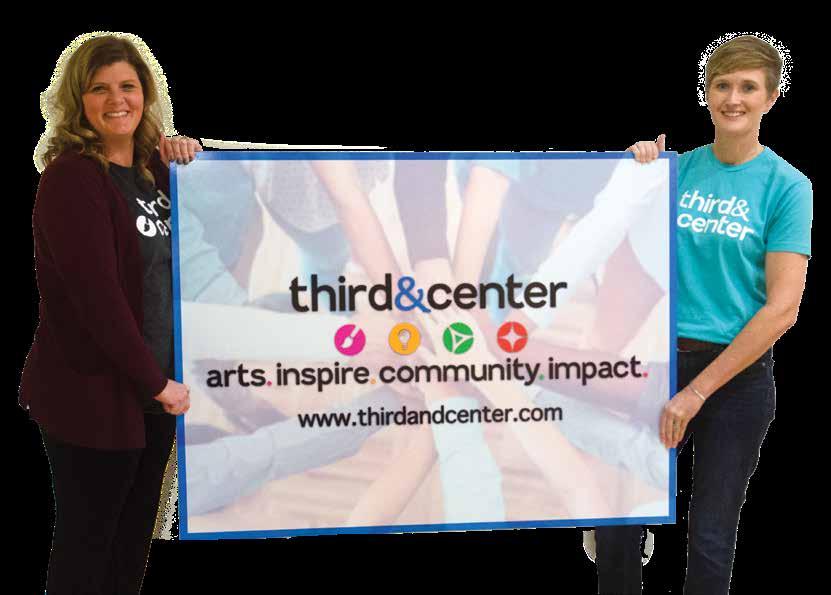
Since its founding six years ago, Third and Center’s work can be seen in numerous projects around the city of Ironton, ranging from artwork, to festivals to their last year of work at bringing programming back to life at the Ironton Senior Center.
And all of these efforts are united by a common thread, a sense of community.
Amanda Cleary, co-founder of the nonprofit and its director, said Third and Center was “founded on the concept

river region, that we are very much lacking in third places.”
The nonprofit operates with a board of seven members, and operates through state and federal grant funding and community donations from individuals, groups and businesses, as well as money from fundraising events, Cleary said.
“And all of our board members are from Ironton,” she said.
Cleary said Third and Center is “dedicated to building collaborative communities” and “strives through programming and events to create third spaces in our community.”
Third and Center streets by the Rotary Fountains.
Both of these projects were paid for with a grant from the Ohio Arts Council, Cleary said.
“We know art is a unifying measure, so introducing more arts and culture into our programming was very important from the inception,” she said.
While most of their projects have been Ironton-based, Cleary said the hope is for that to grow.
“We like to be as inclusive as we can, and our goal is to expand our programming to all of Lawrence County,” she said
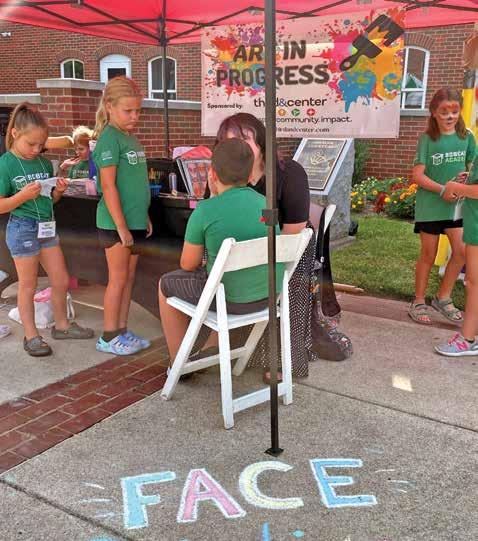
Another project paid for through the Ohio Arts Council grant is Third and Center’s Inspire Arts Program.
Initially conceived as a youth program, Cleary said it is now designed to provide art education to all ages and demographics.
This program is also funded through a grant from the National Endowment for the Arts, she said.
“We provide artist-led art instruction to members of our community,” she said.
Last year, this program led to the Bobcat Academy at Ohio University Southern, where they provide five days of art classes. Cleary said the Inspire program has also offered pottery and spring and summer art classes.
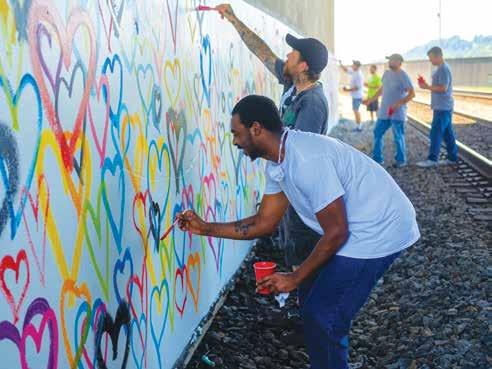
Other art-related projects the group has organized are the painting of murals on the Ironton floodwall and by Moulten’s Field, as well as an underpass on the northern end of town.
And set to have its fourth year is the group’s Summer Solstice Music and Arts Festival, which will take place on the Ironton Riverfront on June 21.
“it is designed to be celebration of all things local,” Cleary said. “We have so many amazing, talented musicians in this area, as well as talented young people. The lineup is all local artists and the concept is to highlight those — our makers, artisans, culinary professionals and others.”
Cleary said, last year, they added a songwriter round to the event, and the day is capped off with a talent show, with both youth and adult categories.
“It’s just an opportunity to show people how talented our region is,” Cleary said.
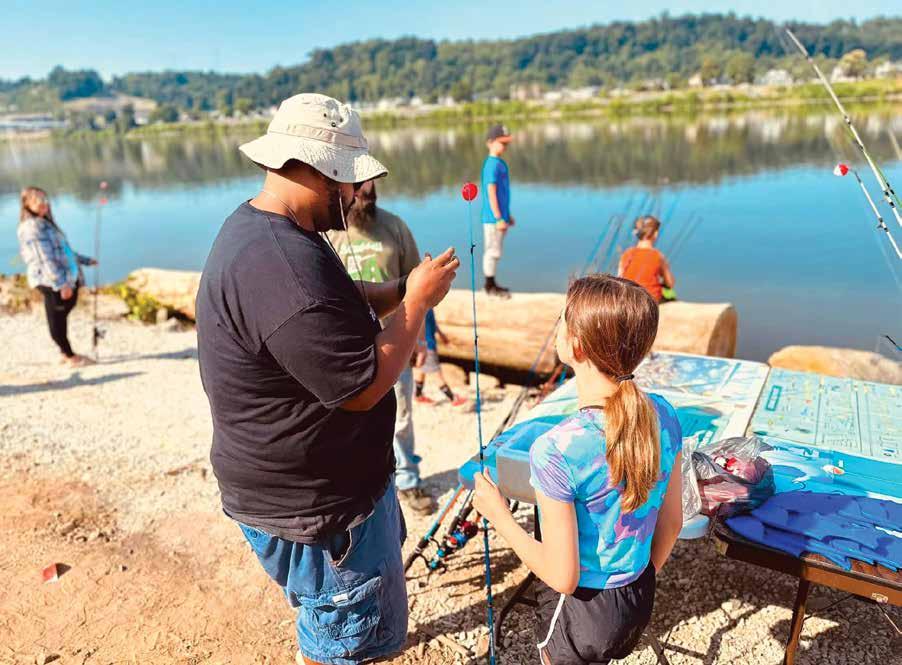
For the second year, the event will be proceeded with their First Cast event, a fishing event for local youth. The organizer of that, James Gordon, Third and Center’s chair, was honored with the Alumni Humanitarian Award at this year’s Dr. Martin Luther King Jr. Legacy Awards at Ohio University Southern. Other events the organization has put together are the Trash Bash, a community clean up event, which takes place again this year on April 26; and, in past
years, the Ironton River Run, a run/walk and fundraiser for the group in downtown Ironton, which they held for three consecutive years.
In the past year, Third and Center has taken on a major endeavor for the city’s seniors.
Cleary said, when campaigning for mayor in 2023, she paid a visit to the Ironton Senior Center, where she learned they no longer had programming, with things having lapsed during the COVID-19 shutdown.
While her political campaign was not successful, she stayed engaged on the issue and took it to Third and Center, where they worked with the Lawrence County CAO and the county commissioners to have Third and Center take on programming at the center.
“I went to our board and there was an enthusiastic ‘Yes,’” she said of proposing the move to the nonprofit.
Cleary said Third and Center has hired a paid employee, Michael Gleichauf as program coordinator for the center, as well as a part time employee.
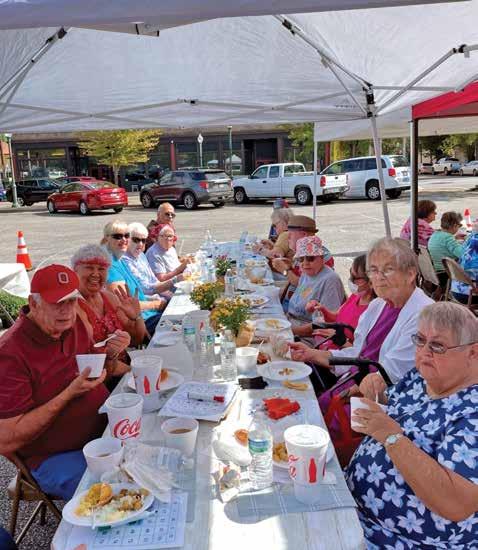
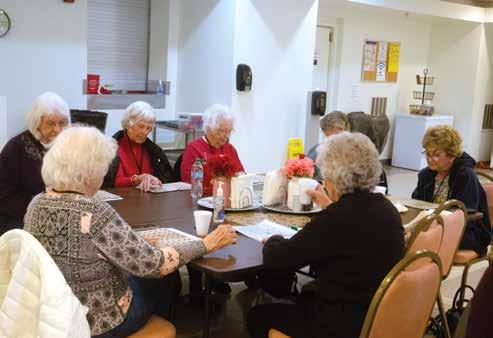
Since taking on the programming, they have organized many evets at the center, such as art and music classes, bingo, health screenings, chair exercises, community outings and holiday programming.
Cleary said they have also hosted organizations such as SNAP and HEAP, letting seniors know what resources exist for them.
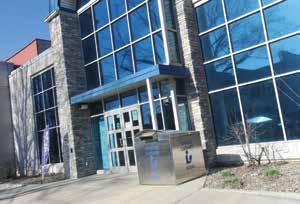
They have been able to turn the kitchen of the center, located in the Park Avenue Apartments building, at 202 Park Ave., into a community collaborative kitchen and the space is used for meal preparation for Fat Boy Q and Frankly Stellar Events and Catering.
Cleary said Third and Center is applying for a grant from

Area Agency on Aging District 7 and they hope they will be able to provide meals at no cost for seniors through that funding. The current cost is $4 per person.
“Our goal is to have a place where seniors can eat for free,” she said.
She said they are also working with the Briggs Lawrence County Public Library, who brings in additional programming.
“They do wonderful things, like Jeopardy! crafts and a book club,” she said.
The senior center is open Monday, Wednesday and Friday, from 9:30 a.m.-12:30 p.m., Cleary said. The first hour is social hour, and then programming begins at 10:30 a.m.
The center is located on the second floor of the building, but Cleary notes it is fully ADA accessible. She makes a pitch to the community to come by.
“We just want to let seniors know the center is a welcome space for everyone,” she said. “Our goal is to provide connection and community. You don’t have to be from Ironton to participate.”
In addition to their own projects, Cleary said another goal of Third and Center, since their founding, is to provide a mechanism for members of the public to bring their project ideas to them, so that they can partner with them.
“They would not have to create a nonprofit,” she said. “It is a way to empower the community to be the change they want to see.
She said the overall aim of their group is to engage the community, particularly young people.
“We want to give them opportunities to create experiences that make them proud to be from Ironton, southern Ohio and Appalachia,” she said.
For more information on Third and Center, visit www.thirdandcenter.com, where a calendar for the senior center is posted, as well as a list of events for the community. Sponsorship opportunities are also included on the website. The group can also be followed on Facebook.


OUS social work organization has been assisting community for more than a decade
HEATH HARRISON, SUBMITTED
“It’s a see a need, fill a need organization,” Joy Shytle says of the Ohio University South ern’s Social Work Student Association.
Shytle, who is associate professor of instruction, social work and field liaison at OUS and has been there for 12 years, said the group was formed by her 11 years ago.
And through it, students work to provide for those in need across the Tri-State in a number of ways.
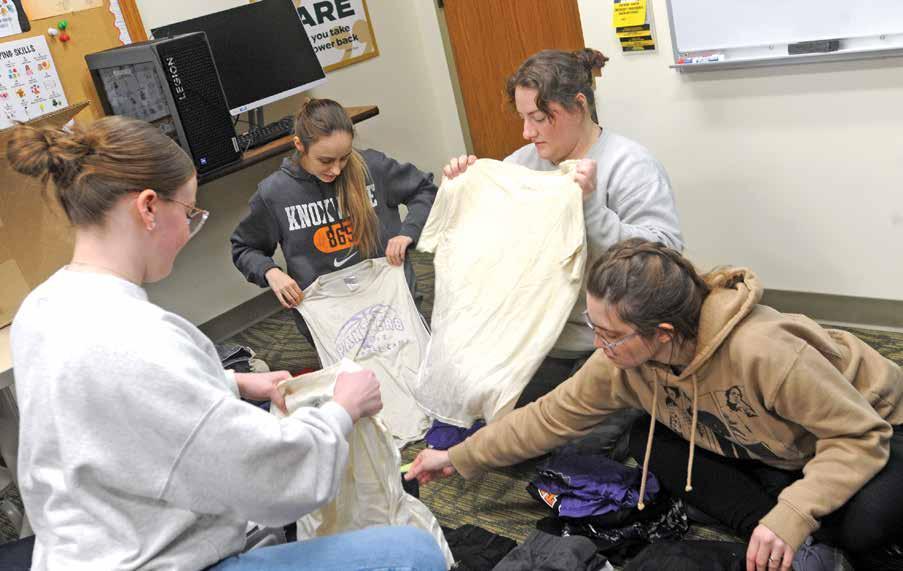
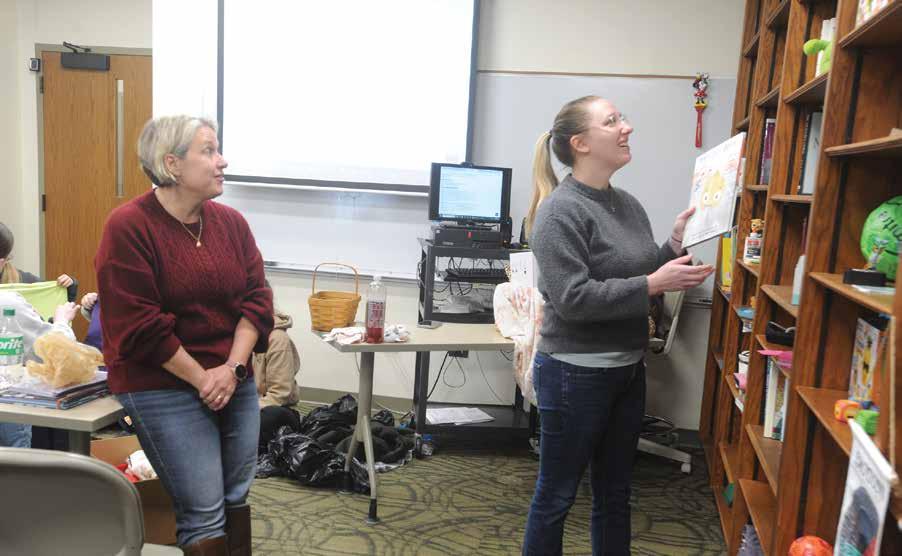
When Shytle and a group of students spoke with The Tribune in February, they were meeting in the school’s social work classroom, where they were organizing donations collected for those impacted by that month’s storms in Kentucky and West Virginia.
“Today, we’re sorting items to take to flood victims of this past storm,” Brittney
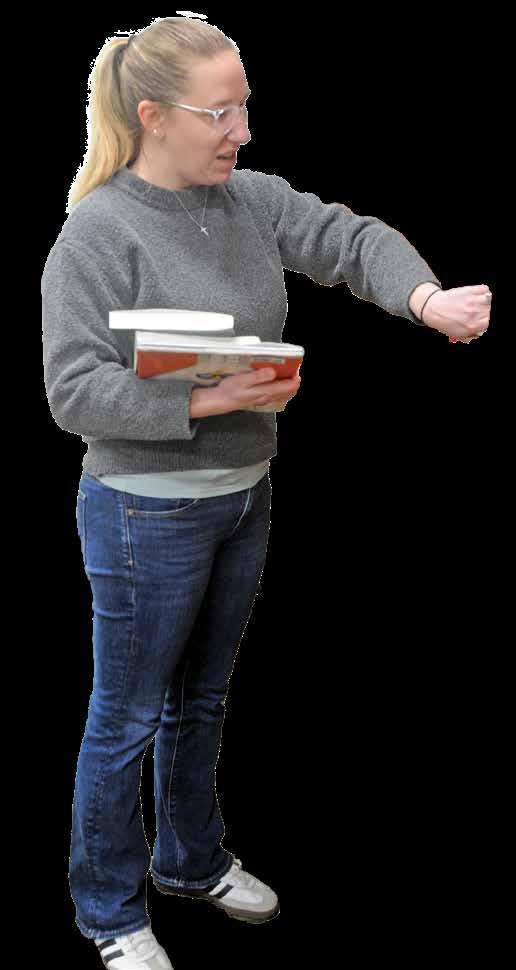
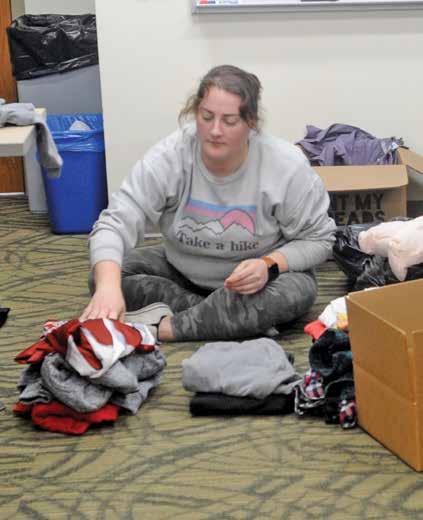
Marinich, the group’s president, said.
She explained that, originally, the donations they were sorting were collected for unhoused populations in the Tri-State. But, when the need for relief following the storm became apparent, they allocated some of those donations toward that effort.
“Now, we’re splitting between the unhoused and the flood victims,” she said.
As they sorted, the group said they were also conducting a drive over the following several days to collect more items.
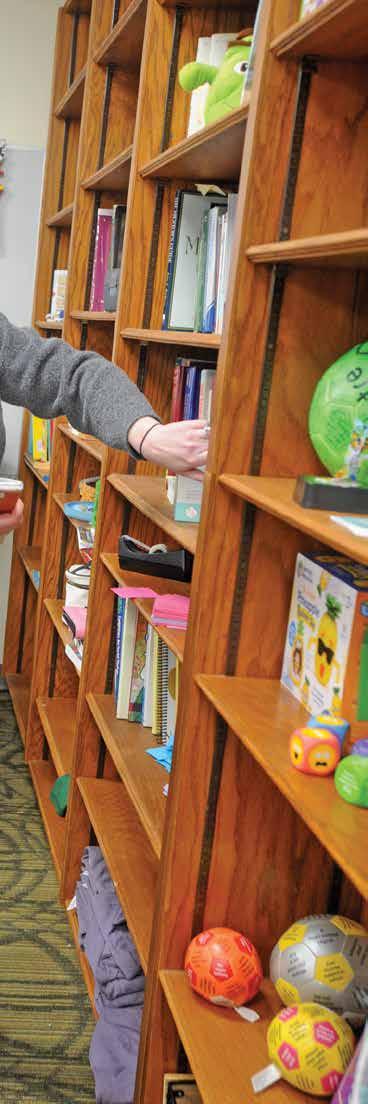
The group was meeting in the school’s social work learning lab, where they typically organize.
Shytle mentioned the facility is stocked with books and other resources students can use in the program. And, two years ago, they received a grant for virtual reality headsets to allow students to do social work simulations.
Of the student group, Shytle said they stay engaged, looking for ways to help throughout the region.
“This group is very active,” she said.
A typical meeting will have five or six members, though she said they are never the same members, with students coming in to help, depending on their schedule.
“It varies, but everyone is involved in some way,” she
said, noting they have nearly 50 members signed up on their distribution list. “But everyone on the list is involved in some way. They’ll make donations, or they’ll attend events.”
She said the motivation among members is strong.
“They’re a group that wants to create social change in the community,” she said. “And, even if they can’t come to a meeting — most of our students are parents or work full time — they will help in what whey they can.”
One way she said that many contribute is through the basket raffles they do several times a year, as a fundraiser for the group’s efforts.
“They can donate items to the baskets,” she said. “Or sell tickets for the baskets. Or they can bring in items for drives like this.”
Shytle spoke of some of the activities they do regularly, such as the collection for the unhoused.
“We did this last year,” she said. “On Saturdays, we take them to places we know unhoused populations congregate, like the Ashland park or Ironton City Mission. We collected all kinds of cold weather items — body warmers, lip balm, socks, and thermoses. We also have things like instant soup that they can put in the thermoses, and instant coffee.”
Other activities the association has taken part in are hosting a trunk or treat in Ashland annually, as well as restocking blessing boxes throughout the Tri-State.
“There’s a list of all of them and we drove around, and filled
them,” Shytle said.
Other initiatives have included food drives, and baking cookies for residents of the Sherman Thompson Towers senior apartments in Ironton.
“It depends on the makeup of the group,” Shytle said. “They have their pet projects. One year, we did a suicide prevention walk. Another, we did an Alzheimer’s walk. And we do some recruiting for the program, when we can. We set up tables at events things like that.”
Shytle said the group regularly visits The Neighborhood, a nonprofit assistance organization in Ashland, Kentucky.
“We see what kind of needs they have and we do a tour of the facility,” she said. “Sometimes, just an odd request will come in and we’ll figure out how to fill it.”
One project they did was through The Dressing Room at The Neighborhood.
“We’ve done drives for prom dresses and we donate those to The Dressing Room,” Shytle said.
Another time, she said they asked everyone on the OUS campuses to donate extra purses, collecting 325 of them.
“We collected hygiene items and money,” Shytle said. “And we went to different homeless encampments and Church Without Walls. We distributed 275 purses filled with things. And the rest, we took to Ironton City Mission.”
Shytle said the aim of the group is to have their work impact all
of the Tri-State.
“We have students from Kentucky, West Virginia and Ohio,” she said. “And we do our best to make sure we are spreading our resources in those communities. Brittany lives in Charleston, and some of the stuff goes to Charleston. There was flood damage in Huntington. I’m going to go up and take stuff to that fire department.”
And they have new projects in the work, Marinich said.
“We are talking about doing a dinner at the Ronald McDonald House in Huntington,” she said. “For all the families who stay there.”
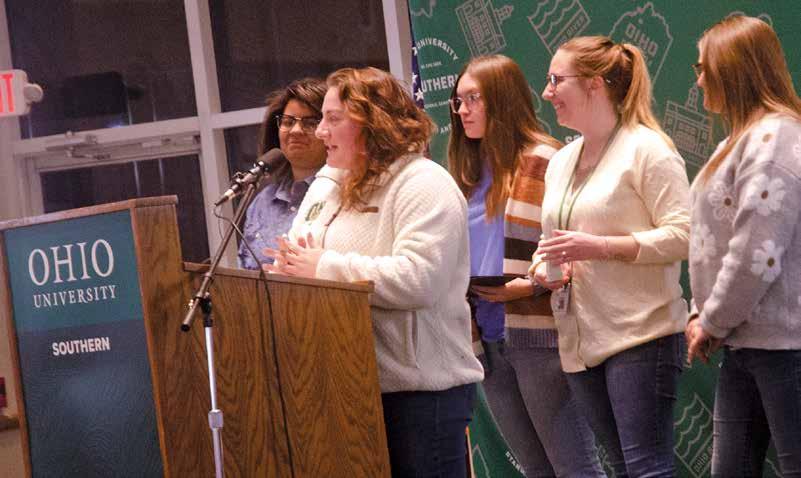
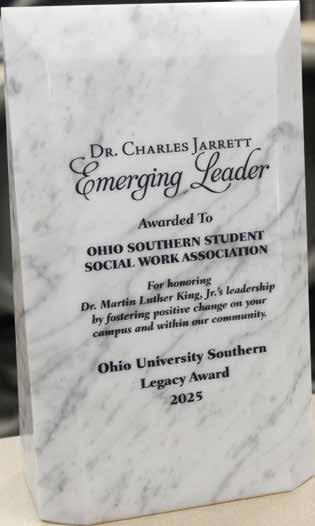
The group recently earned accolades from the university, receiving the Dr. Charles Jarrett Emerging Leader Award in January, as part of the school’s annual Dr. Martin Luther King Jr. Legacy Awards.
Shytle said it is the group’s nature to be flexible and aware of both longstanding concerns, as well as more urgent emergencies.
“When there are needs in the community, we figure out how to help them,” she said. “But, if something is more urgent, then we do what we can to help there. We just try to reallocate where the need is the greatest.”
She said they have done fundraisers for needs across the nation, such as those impacted by wildfires in California or Hurricane Blair in North Carolina.
“I have a friend who boards horses at a rescue in North Carolina,” she said. “And her farm was hosting mule teams there.”
Shytle said these teams were used to deliver supplies to areas that were not traversable for vehicles.
“The mule teams from Montana, Texas and Colorado came in and set up shop at the farms,” she said. “And, on their own dime, they picked up debris and made trails to get water and food to people.”
The group at OUS decided to help by donating to the farm, sending gift card from Lowe’s and Tractor Supply.
“They needed feed for mules, straw and blades to replace on chain saws,” she said.
Shytle also said she is proud of a new project social work students have undertaken.
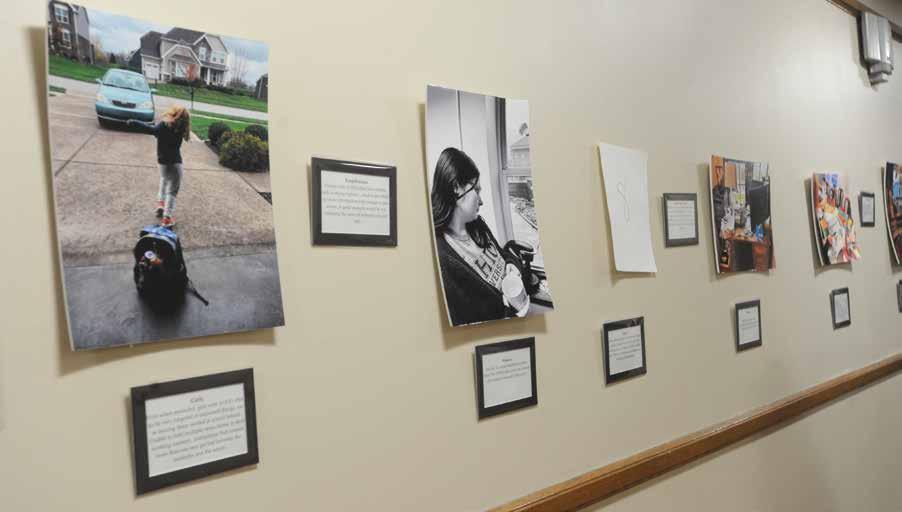
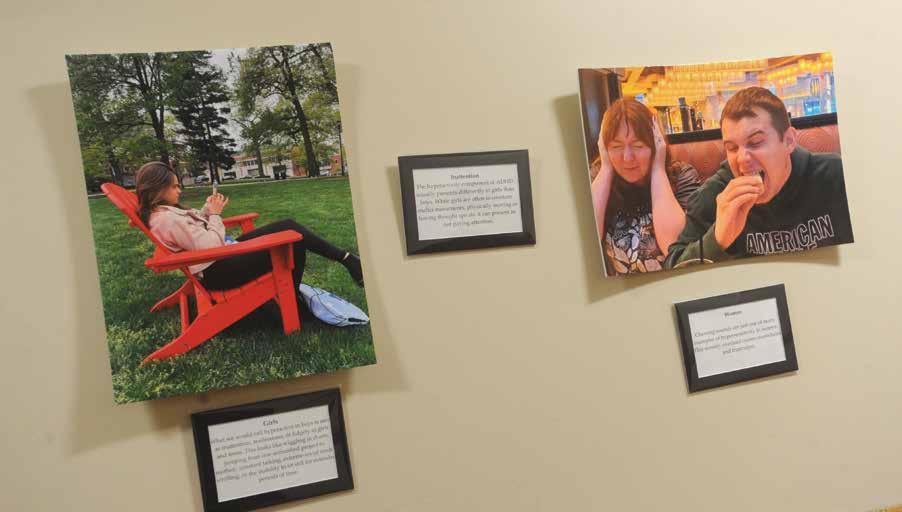
In the fall semester, they focused on mental health, following a conference on the topic in October. And the results were displayed in the spring semester, in the form of a photo documentary in the Riffe Building.
“There were three groups, and they each picked a mental health issue,” she said.
Topics could include “What does ADHD look like in girls?” post partum depression and “Faces of Depression in Scioto County.”
“We are telling the story of specific mental health issues through pictures,” she said. “There are little narratives underneath, but very they are minimal. The pictures are powerful.”
Marinich expanded on the project.
“Mental health, if you’ve ever experienced it or dealt with it, can be overwhelming for people to read about,” she said. “But we all know a feeling we have felt. And, sometimes, you think you’re alone in that feeling. But there are millions of people who share the same issue. So, by using pictures, it connects
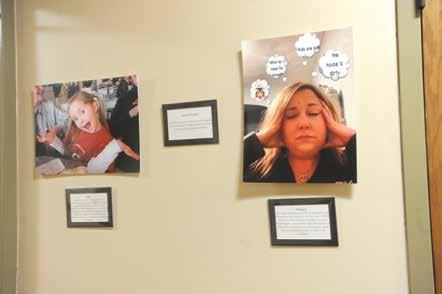
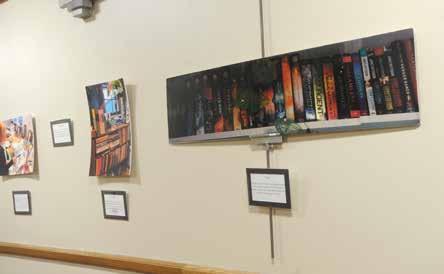
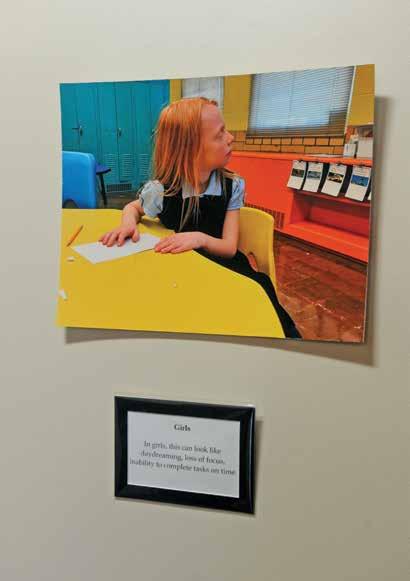
with an audience who might not have otherwise received that information.”
Shytle said the group is always looking for needs to fill. She said they often hear about them when they are doing projects, such as gift wrapping at the Ashland Town Center.
“People ask about stuff, and have questions about social issues in the community,” she said. “We are responsive to needs, as they arise. That’s why we continue to do fundraising. We’ll plan things we want to do, but have freedom in what we do. All of these students are in their practicums, working in the community, and they know what the needs are.”
Next on the schedule for the group is their annual spring yard sale, which will take place on the OUS parking lot in mid-April. Shytle said the fundraiser for the group raised $700 last year.
“And anything doesn’t sell in yard sale goes to community churches and they can distribute to those who need it,” she said. “Our fundraisers pay for things like the gift cards. And we’ll take donations and augment them with our own funds for things like drives.”
Rachel Miller, one of the group members, summed up their experience doing their work.
“I think its very fulfilling to be a part of something bigger than ourselves,” she said. “Even though it’s a small Tri-State area, we’re making a very big impact, helping those around us in our community and extending help to other communities.”
For more information on the OUS Social Work Student Association, contact Shytle at shytle@ohio.edu.
Former social worker was driven to mission of help
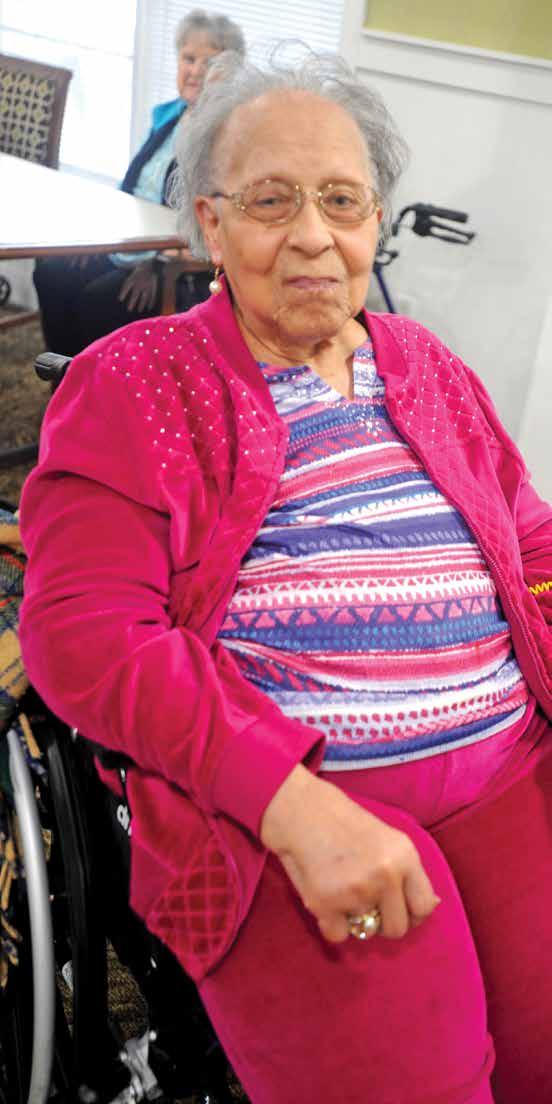
ROME TOWNSHIP — Yolanda Ferrell’s life is one of triumphing over obstacles, and then dedicating her career to helping others to do the same.
The former social worker was born in Fort Gay, West Virginia on Jan. 18, 1925.
“It was a little country town,” she recalled. “And I left there at 14 and moved to be with my aunt and uncle.”
Her motivation in doing so was to get an education.
As a Black child, she was not able to attend West Virginia’s public schools, and instead went to Fort Gay Colored School starting at the age of 7.
That school only went to the eighth grade, and she was not able to attend the segregated high school in her hometown, so she relocated to Huntington, where she attended Douglas High School, which served Black students in the city.
She said the school was a pleasant experience, and she graduated as salutatorian, becoming the first in her family to get an education beyond eighth grade.
“We had all the classes — English, math — all like I suppose they do now, and almost anything,” she said. “I liked it, because I wanted to go to high school and get my education.”
Upon graduation, in 1943, she said she
wanted to attend St. Mary’s School of Nursing in Huntington.
“But I couldn’t get in, because of my race,” she said. “And it was the same with Marshall (College).”
Neither school would admit Black students for another decade, when West Virginia followed the national law and desegregated schools in 1954.
Instead, Ferrell opted for another state.
“So for my college education, I went to Wilberforce University, in Wilberforce, Ohio,” she said. “I went to college with two pairs of shoes. My aunt sewed, she made most of my dresses — she made my graduation dress.”
It was at that historically Black school that Ferrell earned her bachelor’s degree in social work, graduating in 1947.
Following graduation, she returned to Huntington, where she first worked as a store clerk, before taking a job as a case worker/social worker in 1966.
“I worked 22 and a half years for the state of West Virginia,” she said of her time as a social worker. “I worked in Cabell County — all over Cabell County.”
Ferrell said the biggest difference in her work then, compared to today is how social workers met with those they served.
“Back then, we had to go to people’s homes,” she said. “It wasn’t like it is now. There are certain rules and regulations and, for every application we took, we had to make a visit.”
Her first tasks as a social worker were with homebound clients, helping them to apply for services.
She described her mission in that work.
“It was really about aiding people who needed help, and to help families to have some kind of income” she said, stating she would do things such as help to provide food or assist in an applicant needing to file for disability.
“A lot of times, I gave groceries,” she said “I wouldn’t just give money, if they needed something, because they might spend money something other than food.”
She also recalls visits to nursing homes she made regularly.
“It was helping people there to have a visitor,” she said. “They didn’t have anybody coming to see them. They enjoyed a visit.”
Ferrell said this is something social workers were expected to do once a year, but she did so far more often.
She said it was the human side of her job that she enjoyed the most.
“I enjoyed working with people, associating with people and being friendly,” she said. “I could say, in all my 22 years, I never had anyone to dislike me. And, to this day, if I see some people I had in my caseload, they tell me how nice I was, and how I helped them get the assistance in order to help raise their children.”
She said the other big difference with social work today is the amount of paper work she had to do.
“We still didn’t have computers,” she said of her retirement in 1988. “There was a lot of writing. One day, you might have six seven pages on one case. I enjoyed my work, but the caseloads got so heavy, it was hard to keep up the paperwork. Now, every worker has computer on their desk.”
Ferrell said that is one aspect of her life that has not changed since retirement, and, though she has Internet service through a tablet, she never purchased a computer and keeps track of all her affairs in writing.
“Still, to this day, I tell my boys, ‘I don’t need a computer — my mind’s still good.’”
Ferrell had five sons (two of whom are twins) with her husband, William E. Ferrell, and has 11 grandchildren and 15
great-grandchildren.
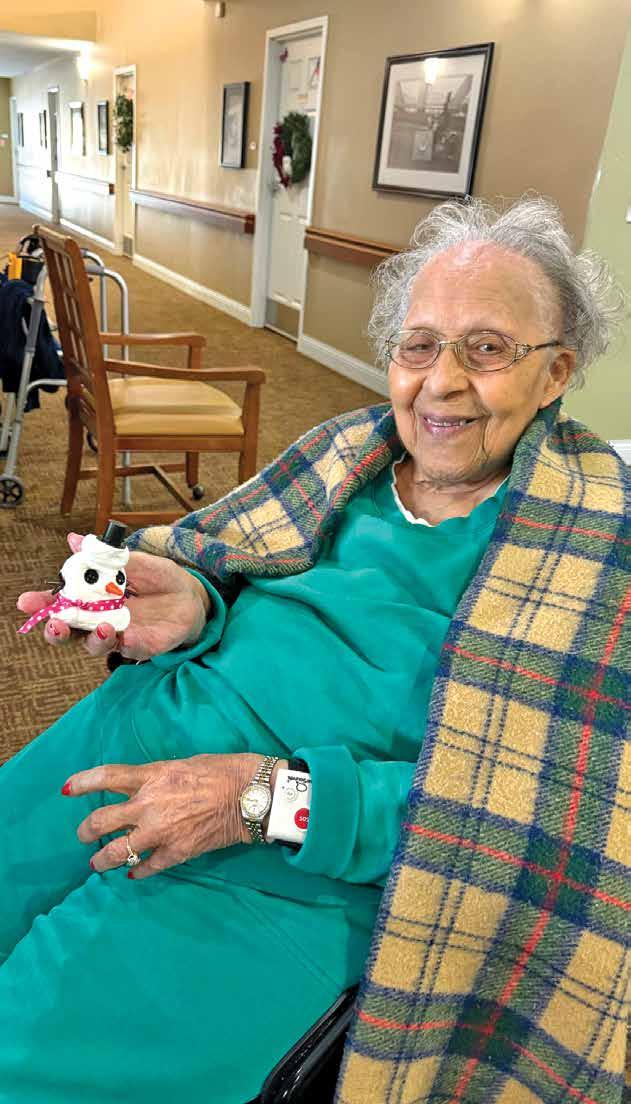
Her sons are regular visitors at the Wyngate at RiversEdge, a senior living community in Proctorville, where she has resided since October 2024.
One of those sons, Brad, stopped by as she was being interviewed by The Tribune.
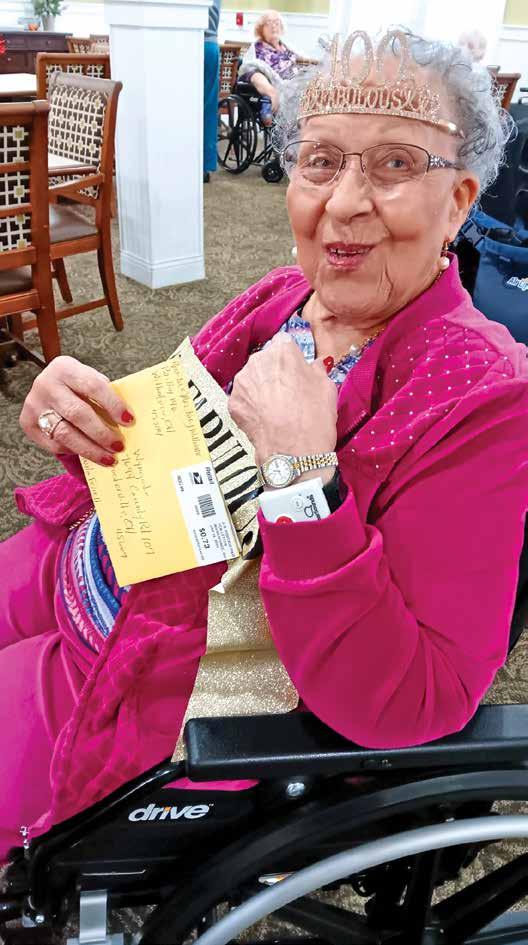
He said people are amazed to learn that his mother, who is lively and energetic, turned 100 this year.
“It’s good genes, I guess,” he said of her excellent health.
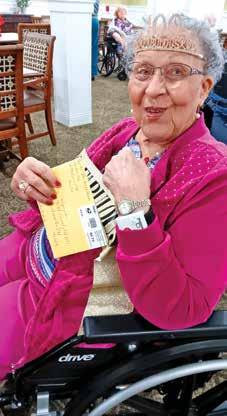
For that milestone, Ferrell had a celebration at the Marie Redd Senior Life and Enrichment Center on Jan. 18
Ferrell said she enjoys her stay at the Wyngate, where she receives “excellent care.”
She said it was her third facility and “the hardest part is not being able to do I used to.”
Always independent, she notes that she drove until age 90.
“Then I sold my car,” she said.
But she is still quite active, and said she takes part in exercise sessions at the Wyngate, as well reads, knits, plays games and enjoys watching documentaries on TV.
Another activity she takes part in is crafts, and she notes how the construction paper turkeys they recently made reminded her of school projects.
Amber Carpenter, the Wyngate’s activities director says Ferrell is “super fast” at crafts.
“She’s always the first one finished,” she said. She said Ferrell is always upbeat with everyone and “knows everything.”
“She’s so pleasant and positive,” Carpenter said. “She’s a ray of sunshine. She is living her best life and definitely rocking it. If I live to 100, I definitely want to be like that.”
When asked what advice she would give to younger generations, Ferrell stressed, “Try to get a good education, in order to get better jobs.”
“And don’t give up,” she said, noting she had to work through college, and in summers when she came home.


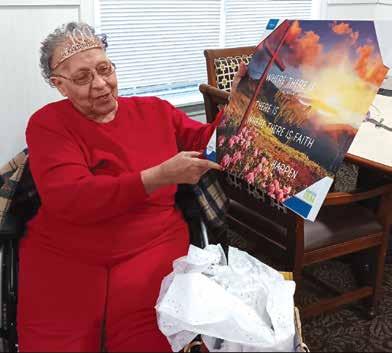
“Don’t expect somebody else to put a silver spoon in your mouth,” she said. “Don’t just depend on somebody else. Just because you might fail one time., don’t stop right there. Keep on. If you cant walk, crawl. And, if you cant crawl, don’t stop walking.”




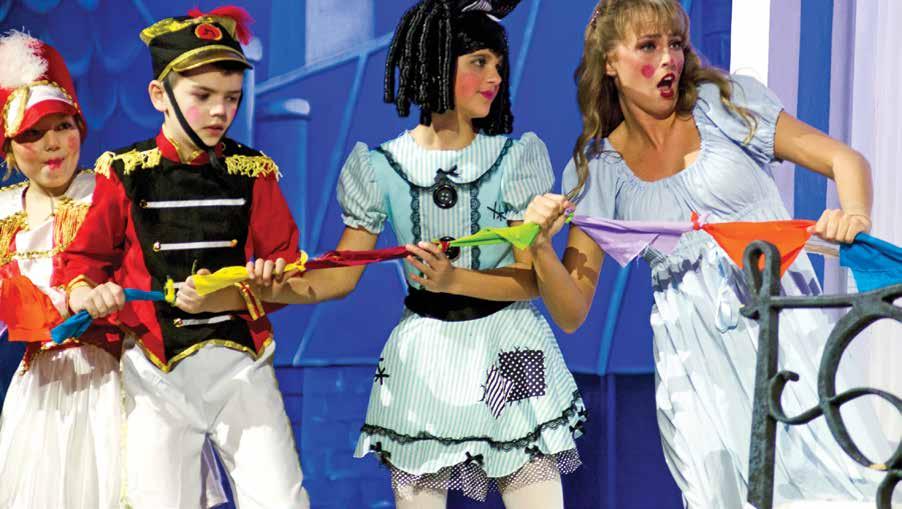
ASHLAND, Ky. — For a decade and a half, the Paramount Players have been bringing theater to the Tri-State, but, in addition to their live performances, much of their impact is defined on nurturing the talent who comes through the door of the historic theater.
“It’s about developing actors,” Matt Stone, education director for the theater says.
He notes that the Paramount offers two camps for youth, where participants can see and take part in all aspects of a theatrical show, from auctioning, to costumes to choreography to the final production.
He says the theater is also connected to the Ashland Youth Ballet, where an education in dance can also be obtained.
“What is so great is you can learn to sing, dance and act without leaving the building,” he said.
Founded 15 years ago by Melanie Cornelison-Jannotta, the Paramount Players,which operates as a part of PAC, auditions and casts shows with talent from around the Tri-State.
“It’s all indivuduals from the community,” Stone said.
The group puts on six shows a year, he said — four with adults, and two focused on youth.
Casts can range can number more than 100, or far smaller for some of the more intimate productions, he said.
“We’ve had some with as few as four,” Stone said. “It depends on the show.”
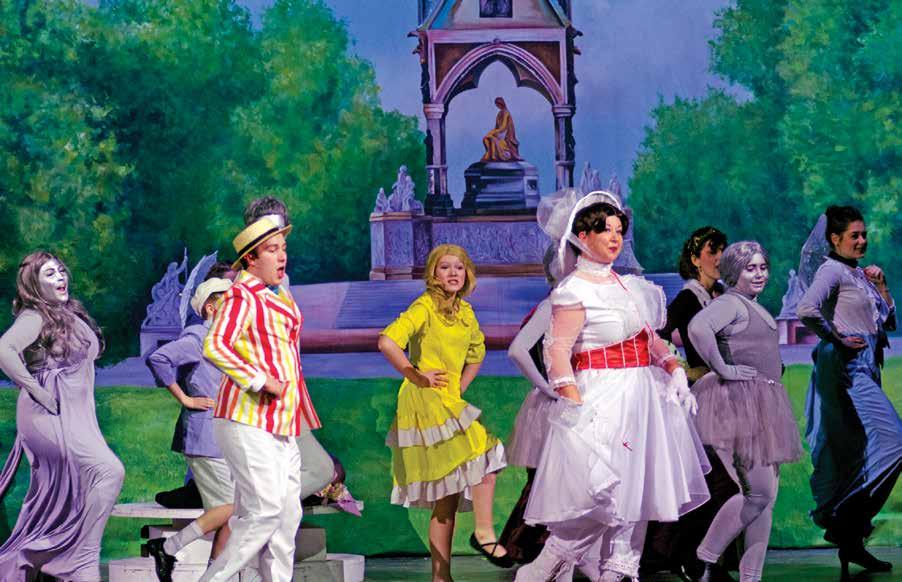
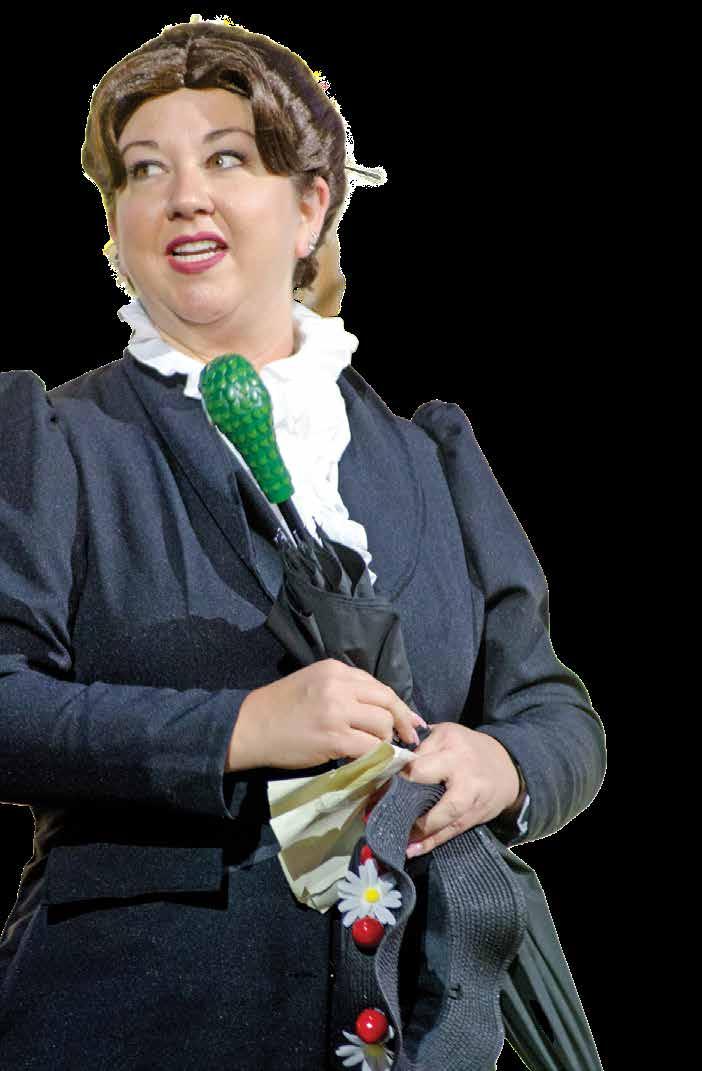
Most of the productions are musicals, such as “Cabaret,”
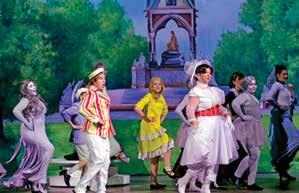
“Grease,” “The Wizard of Oz,” or adaptations of Disney favorites like “The Little Mermaid” and “Mary Poppins,” but Stone said they also offer dramatic shows like “Dracula” and George Orwell’s “1984.”
“Some people specifically like doing straight shows, rather than musicals,” he said, “And we try to throw a few toward them.”
Of the more popular shows they’ve put on, Stone points to a few.
“‘Matilda’ sold really well,” he said. “And so did ‘The Rocky Horror Picture Show.’”
Stone has been with the group since nearly the beginning, starting shows 14 years ago, before leaving to attend Morehead State University in Kentucky, where he obtained a Bachelor’s Degree in music education. From there, he went to the University of Kentucky, and earned his Master’s in art administration.
He moved into his current role three years ago, when Cornelison-Jannotta left for Tennessee.
“I took over from her,” he said.
He serves in many roles at PAC, such as music director for shows, but Stone said his job is to work primarily with youth.
In addition to their camps, the Paramount Players works to spurn interest in theater through their performances, and Stone said they stage educational productions for local schools to attend.
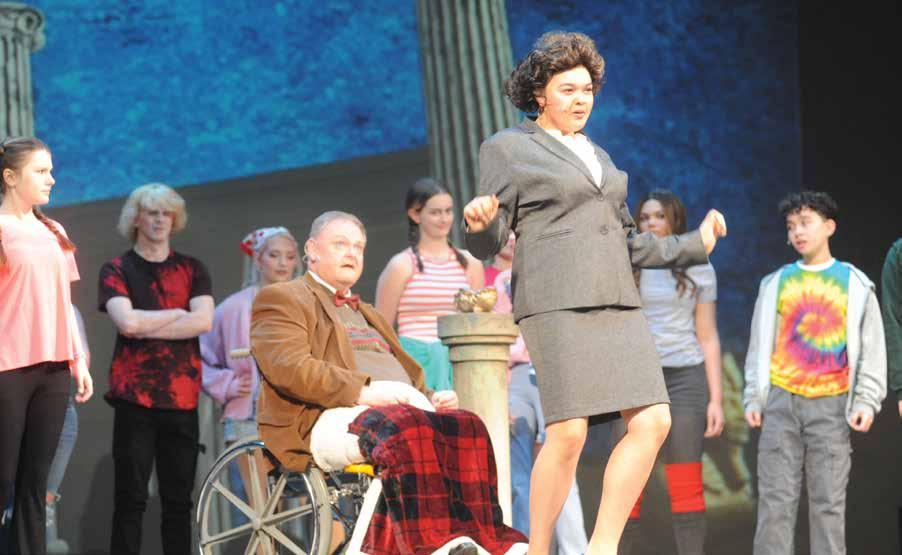
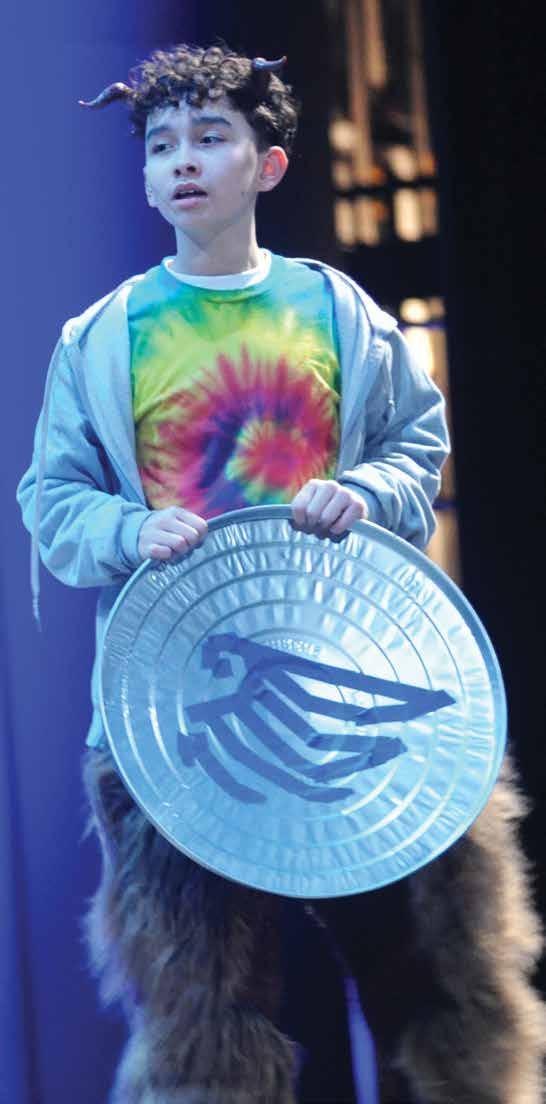
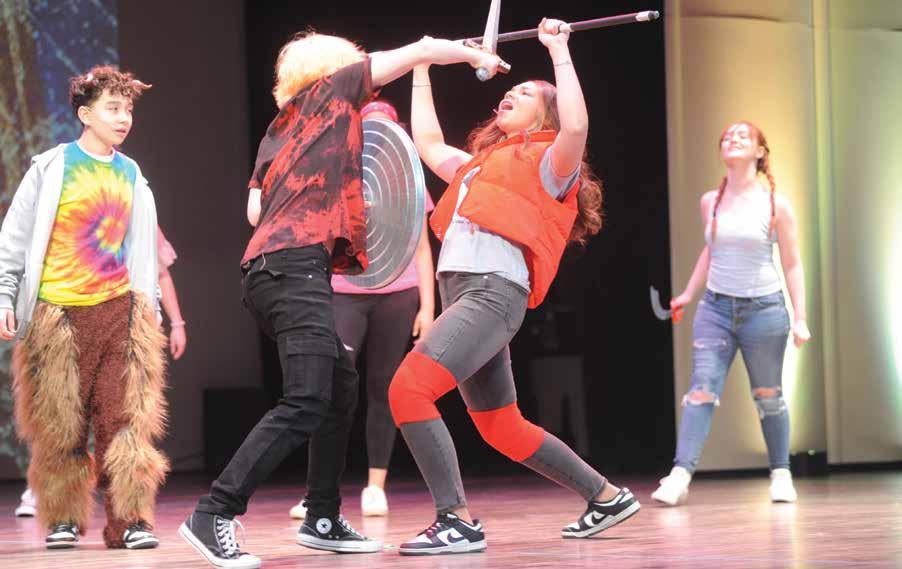
The group’s most recent show, “The Lightning Theif: The Percy Jackson Musical,” was a youth-heavy production.
Based on the series of books by Rick Riordon, geared toward fourth through eighth graders, it depicts the children of the Greek gods, told in a modern setting, who attend Camp Half Blood.
Stone said the principal characters were all played by youth, while the adults portrayed the parents and the instructors.
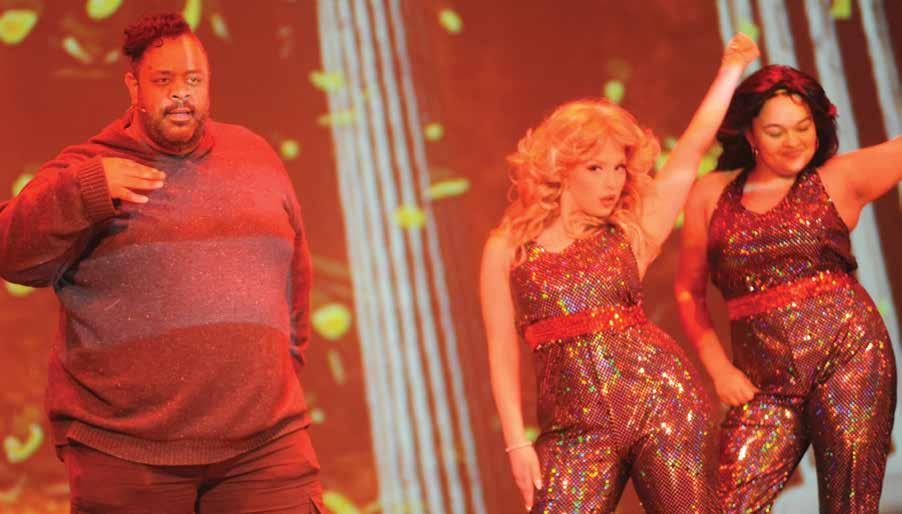
It was typical of a Paramount Players show in that, in addition to its core cast, it featured an ensemble of dozens, bringing in first time actors, alongside veteran performers.
Stone said the Paramount Arts Center operate as part of the paramount Players larger budget, though they also are supported through donations from the community. He said those interested in contributing can


have their donations to the PAC specifically directed toward the
He said the key to the Paramount Players’ success is the team they have assembled, such as Rick Payne, of Ironton, who in addition to being a regular performer in shows, serves as costumer for the productions.
“He’s been involved for 14 years,” Stone said.
He said many volunteer their time for the shows.
“We work with very generous, talented people,” he said, citing Alex Wilson, who does makeup design, and Sarah Brehn, who creates props.
Stone said the casts draw a


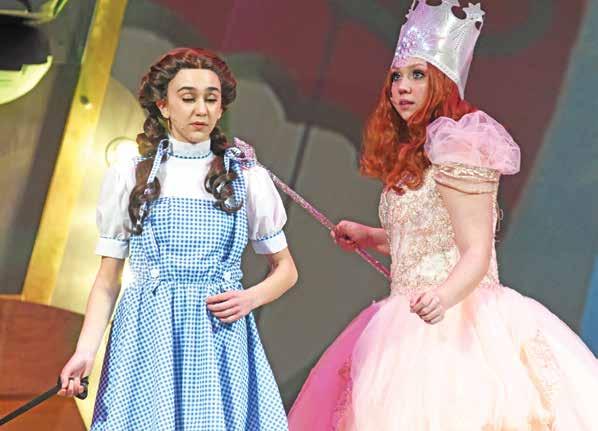
wide range of ages, with those on stage running from teenagers to people in their 50s.
He said many performers have stayed with the group over its existence.
“We have some who have been here all 15 years,” he said. “They just love it, so they stick round.”
He said one of the most rewarding aspects of what they do has been seeing the growth in performers, as they develop their talents and discover a sense of community.
“I have seen so many instances, and not just with kids, where people come in here — they’re very shy and introverted, and they find their people here,” he said.
“We love performing, but what’s really special are the relationships we build and finding people with the same interests. We see so much of each other and are always having a good time.”
— The Paramount Arts Center is located at 1300 Winchester Ave. in Ashland. For more information on the group and their shows, visit www.paramountartscenter.com or the Paramount Players on Facebook.
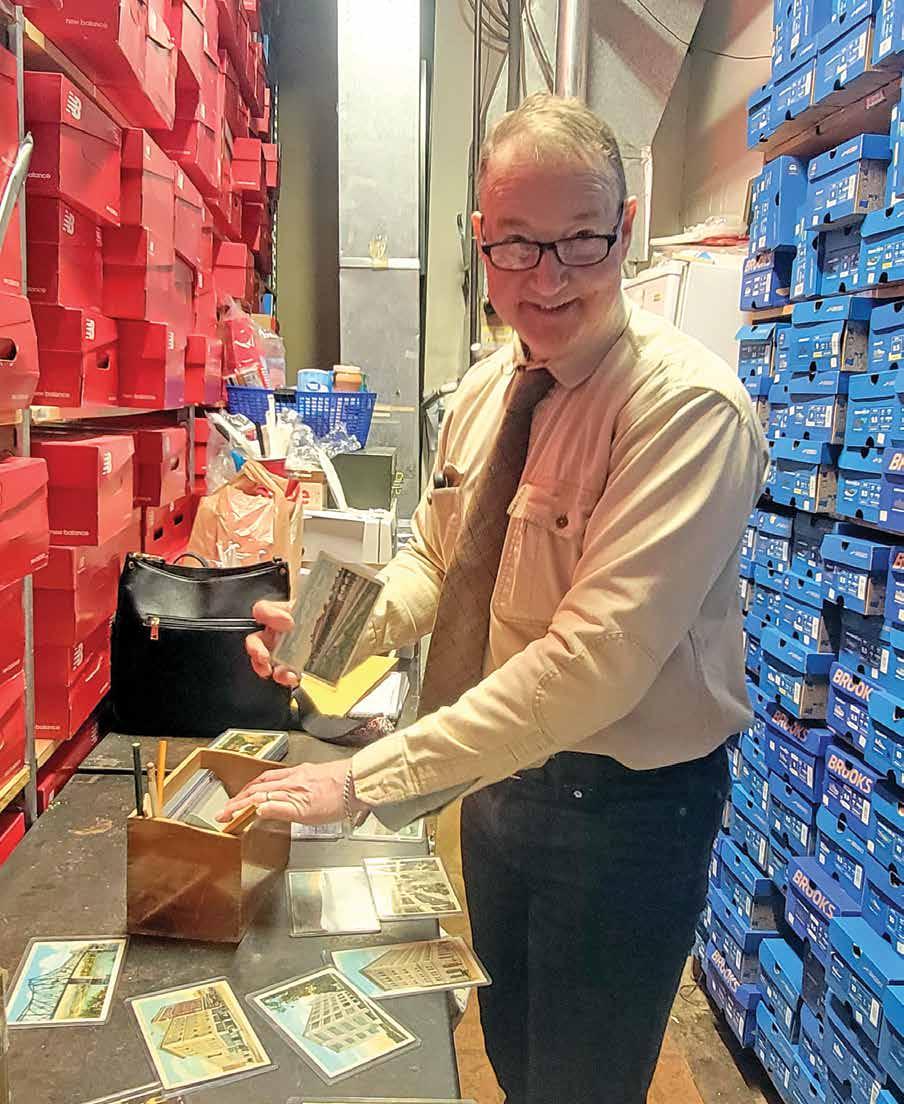
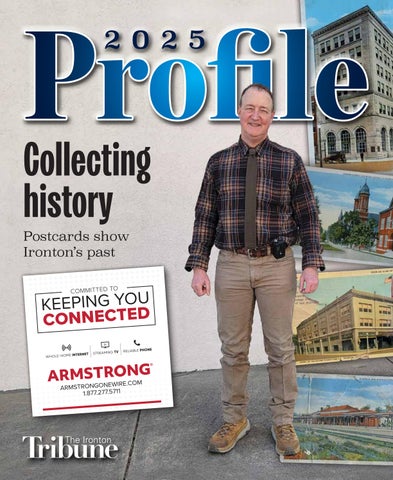
Joe Unger’s collection of vintage postcards showcases Ironton
STORY
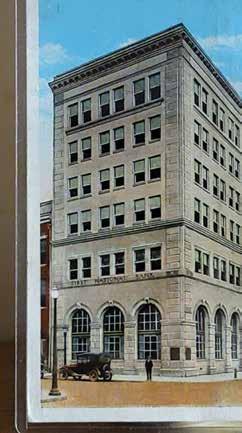
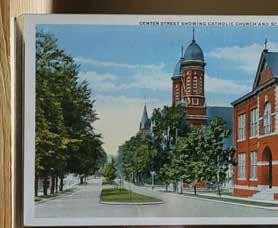
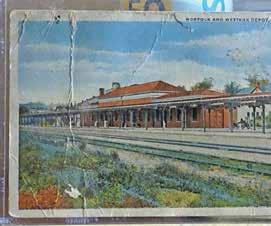
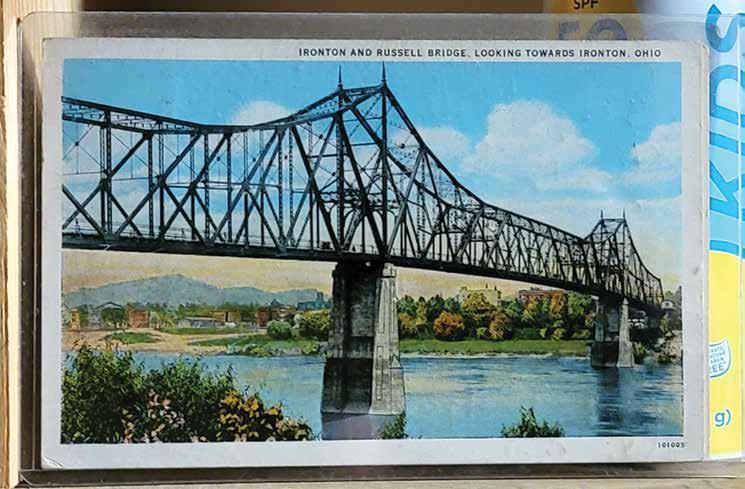
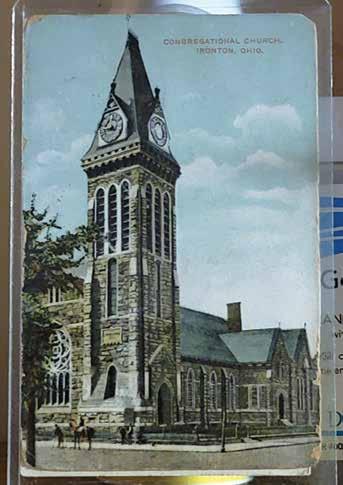
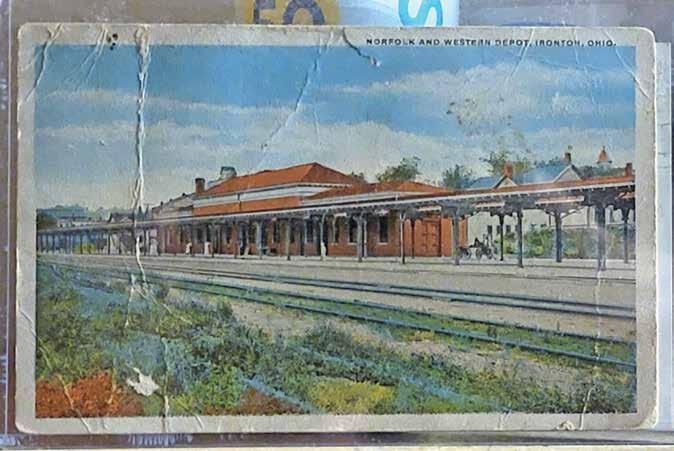
Amongst the shelves of shoes in the backroom of Unger’s Shoes, Joe Unger sets down a wooden box. In the box are some of his collection of postcards carefully encased in plastic sleeves. These specifically showcase his beloved hometown of Ironton.
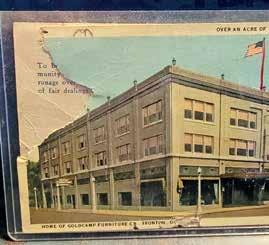
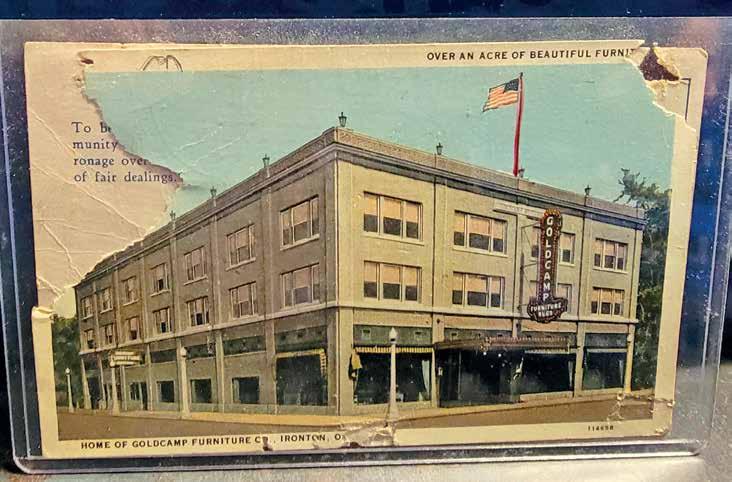
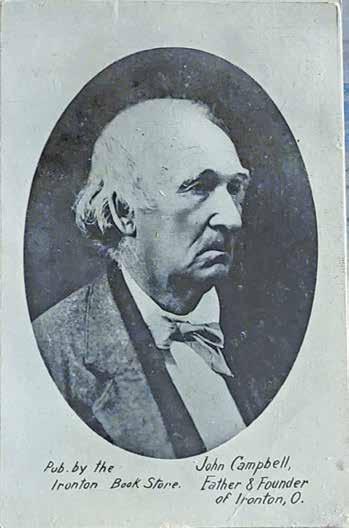
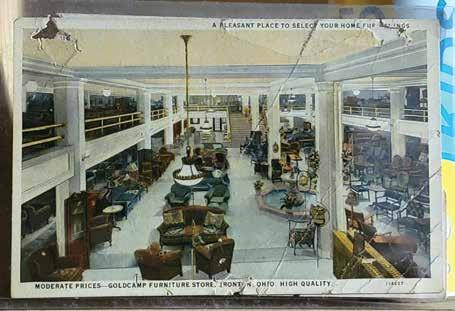
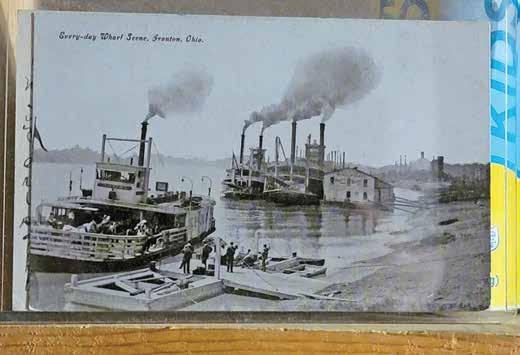
There are so many scenes of Ironton. Three are of the town’s founder, John Campbell. Several are long-gone scenes of men working the Ohio River. Others are businesses that are long gone, but the buildings that housed them are still here and have found new uses, like Goldcamp building across the Third Street from Unger’s Shoes. It was once a furniture store, then a JC Penney. Now it is the seat of the Ironton government. The postcard boasts that it had “over an acre of beautiful furniture” under its roof.
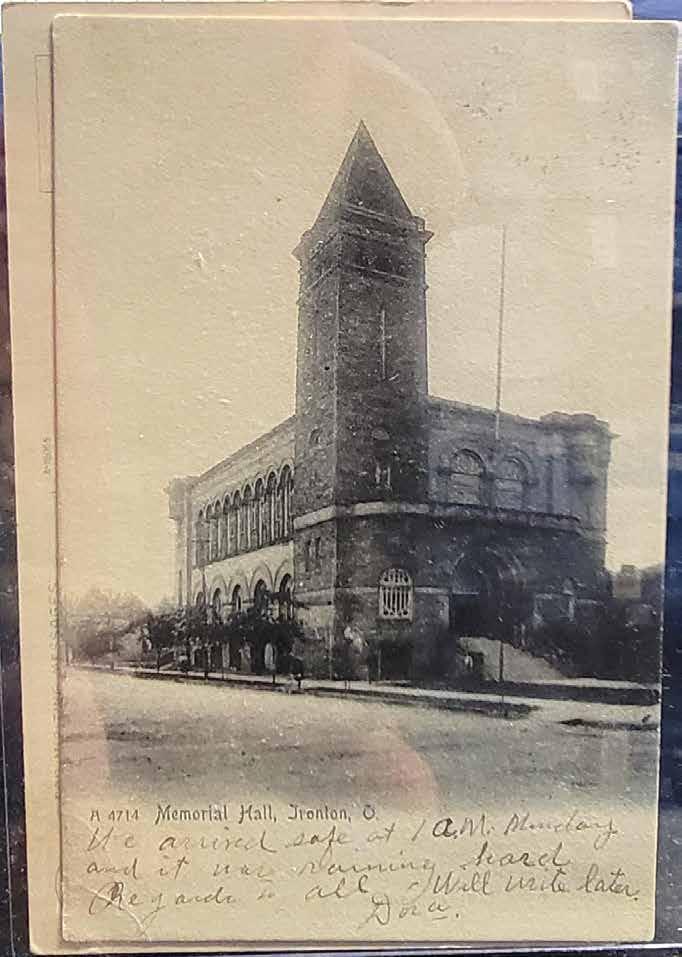
Another is Memorial Hall as it appeared on the day that thousands gathered outside it when it was the city hall of Ironton in 1901. They were there to mourn the passing of President William McKinley, an Ohioan who was assassinated by a nihilist.
So where did Unger’s love of postcards come from?
“My Dad, Gene Unger,” Unger explained. It was the elder Unger who started the shoe store after World War II.
“People would tell him that they were going on vacation and he would say “Well, send me a postcard,” Unger said.
And they did, from all over the country.
“Dad used to joke his shoes have been everywhere,” Unger said.
Those postcards would go up on a cork board in the back of Unger’s Shoes, where a young Joe Unger would stand and just drink in the colorful postcards.
Not all of the cards were from distant parts of America, some were cards of Ironton mailed from Ironton to Unger’s Shoes.
“They were joking with Dad,” Unger said. “That’s what got me started.”
When asked to pick his favorite Ironton postcard, Unger flips through the cards until he finds it.
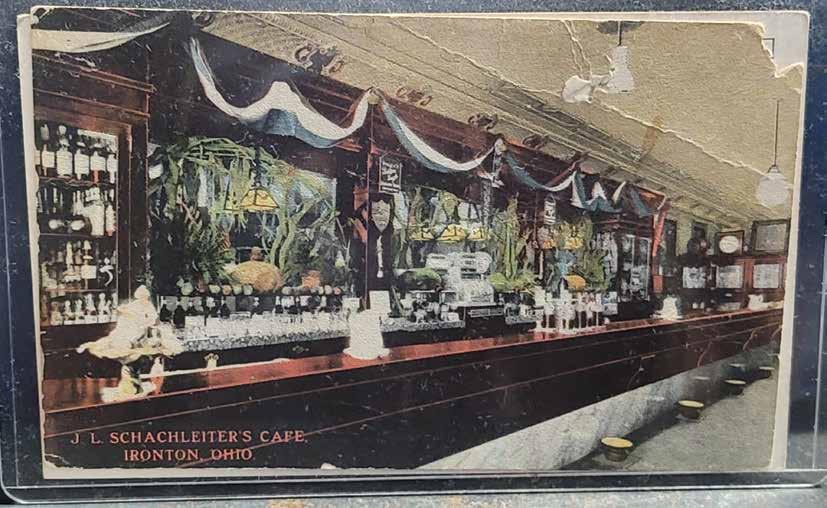
“This is a good one,” he said. “It was one of the ones stapled to dad’s board. It’s J.L. Schachleiter’s Café.”
The card shows a classic old time bar with shelves and long serving area made out of dark wood. It is decorated with banners and ferns. And every few feet are a brass spittoon for patrons to spit their tobacco into.
“When I was growing up in the 1960s, there were a lot of people that remembered Schachleiter’s Café,” Unger said. Then he points to shiny objects spaced out every couple of feet in front of the bar. “Those are spittoons,” Unger said. Spittoons were large brass containers for patrons to spit their tobacco into.
And the second reason it is his favorite is a common refrain
from collectors.
“Nobody else has it,” Unger said. “I know a circle of Ironton postcard collectors and every one of them would give me their front teeth if they could have that Schachleiter’s Café postcard.
And the third reason is that there are people alive today that remember it.
“They are very old now, but they would tell you great stories of Schachleiter’s Café,” Unger said. “So that’s my favorite one: Came from Dad, it’s from Ironton, it is post marked Ironton and people remember it. And its highly collectable and it’s very rare.”
As for why Unger collects the postcards, Unger said he has always loved Ironton as well as being passionate about saving its history.
“Post cards are a great historic record of this city and what is really tragic though, is I see some of these buildings in these postcards in their glory, in their heyday. And I see the same building today and it just not the same.”
He pulls out a postcard of the Marlow Theater, which still stands on the corner of South Third Street and Park Avenue.
“That’s where my mother and father had their first date,” Unger said. “Now that building, it has windows that are missing or boarded up. It has really fallen into such disrepair and nothing is being done about it. And it is right in the middle of our downtown. It’s is a real eyesore when you come into our city, rather than, as you can see in this postcard, how beautiful it was.”
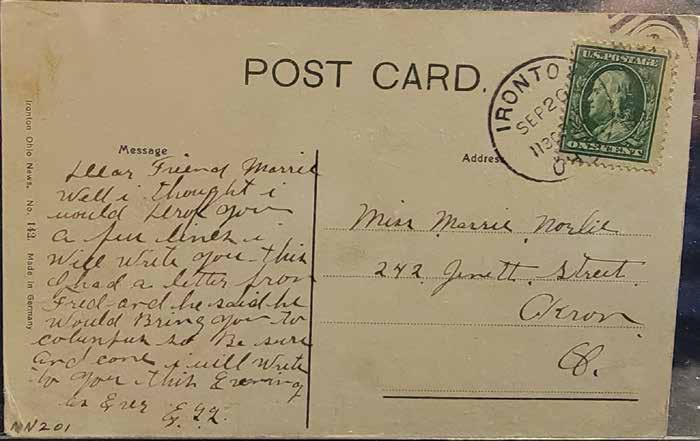
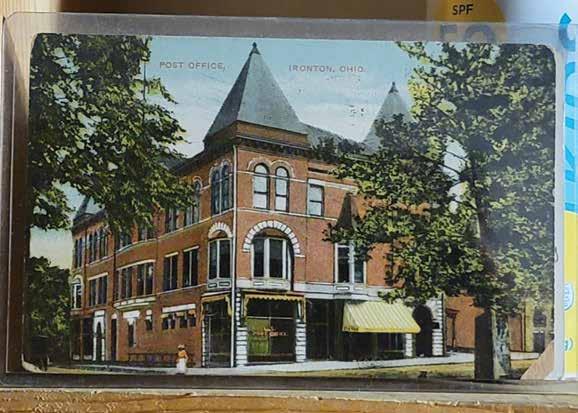
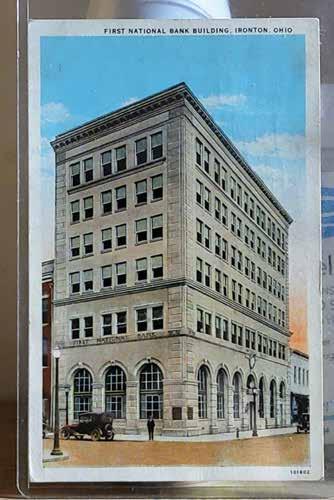
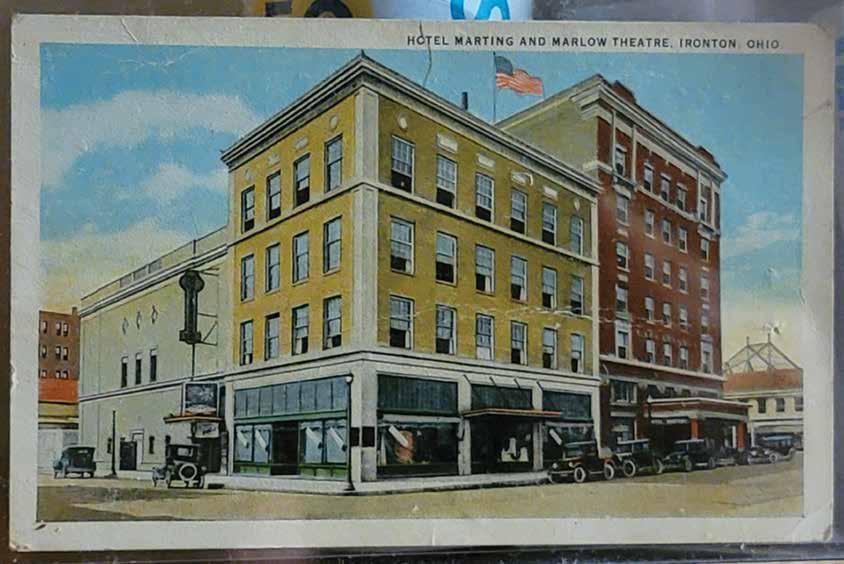

“Your
Toyo Tire dealer!”

He also points out a card that has the Selby Shoe factory, that was once a glory of Art Deco design. He thinks the city needs to more strongly enforce codes and make the building owners bring “them up to snuff or sell them.”
Over the years, people have brought Unger cards because they knew he collected them.
That’s how he got the card of Memorial Hall and many others.
As for how many postcards Unger has, he has to think for a moment.
“I think I have over 300,” he said.
His favorite era for postcards are from 1910-1940.
“They were used as a form of communication, whereas now we send a postcard as a novelty,” Unger said.
Post cards lost their popularity in the 1960s. It used to be that every town pharmacy had a spinner rack of cards showcasing the town. Even hotels sold cards. Now they are most found at tourist destinations.
“People just don’t send postcards anymore like they used to,” Unger said.
After 64 years, Ironton law firm still going strong
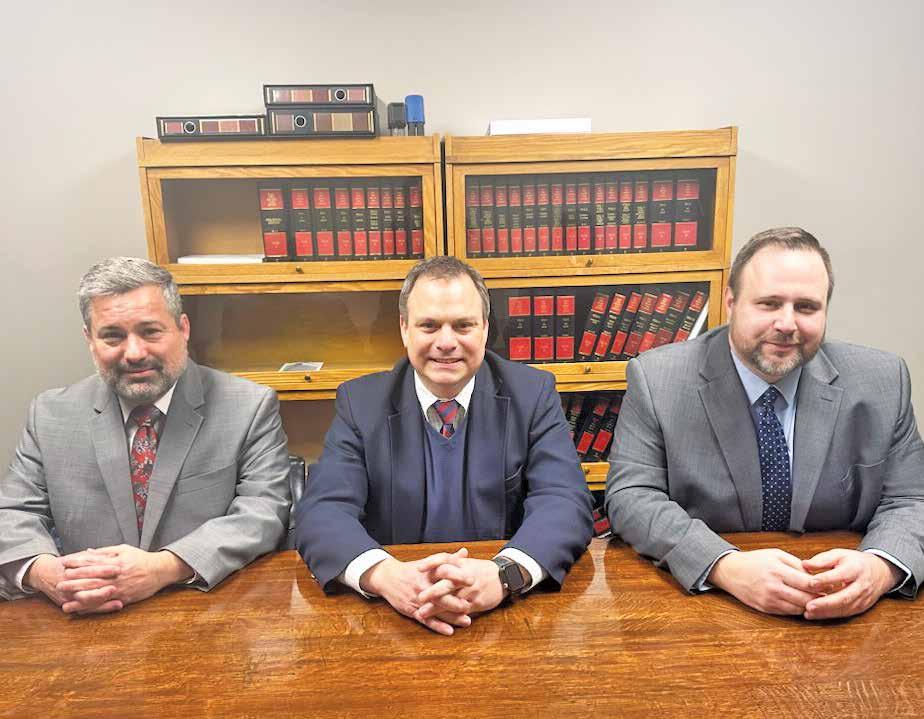
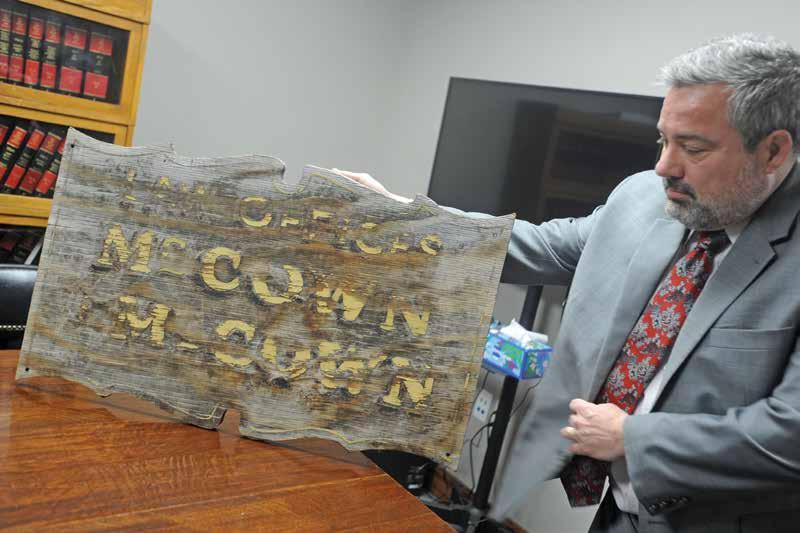
The origin of the law offices of McCown, Fisher and Cremeans, Legal Professional Association (LPA), date to 1961.
That is when David Crowe was a sole practitioner and general counsel to Liberty Savings Bank in Ironton.
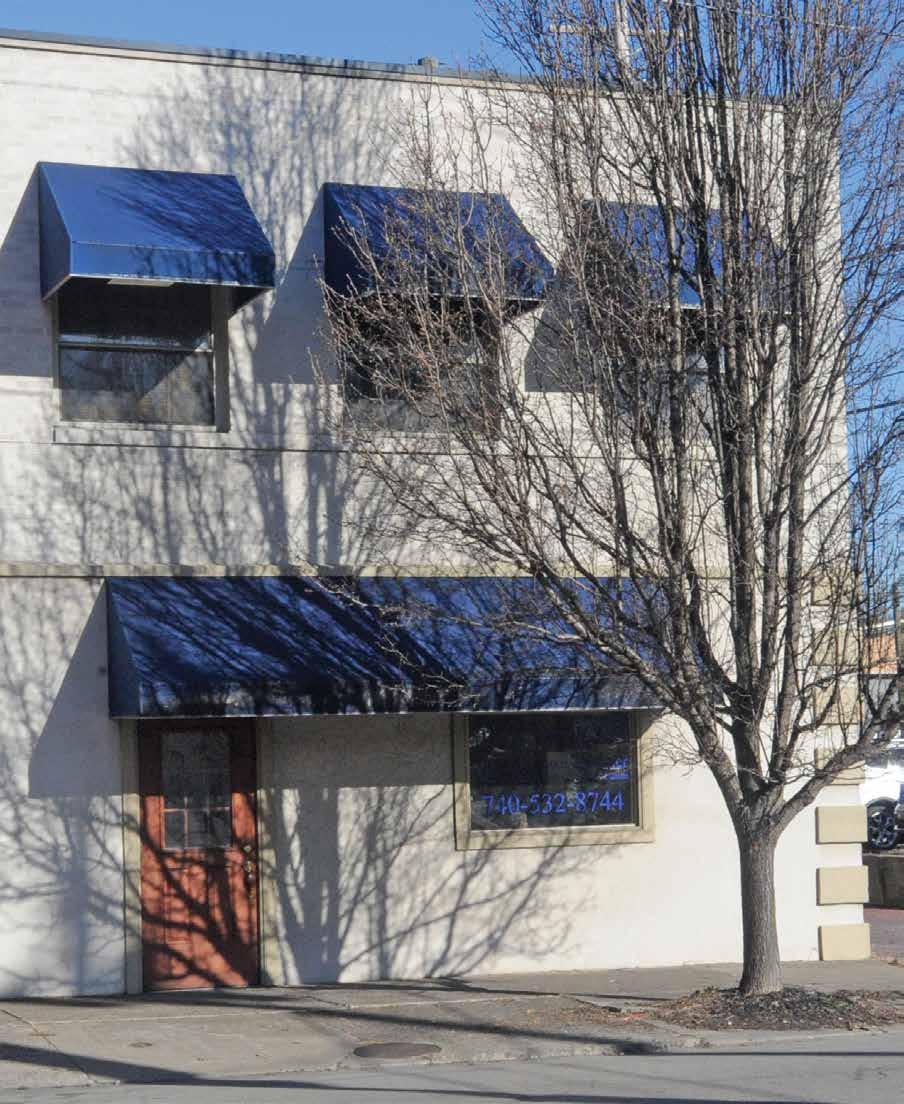
“His office was where we are here on Park Avenue,” Mark McCown, managing partner in the firm, said. “Liberty was actually downstairs and had the building next door. The law office was up on the second floor.”
David McCown, Mark’s uncle, graduated from law school in 1960. He came back to Ironton and practiced with Elliott Meyers for a year and then went into practice with Crowe. Crowe wanted someone to do real estate legal work for him, including title searches for Liberty so David came over to work with Crowe, becoming Crowe and McCown.
“It was that for many years,” Mark said.
Frank McCown, according to Mark, graduated from law school in 1965 and joined the firm. All three of the
lawyers and their staff were on the second floor of the 311 Park Ave. building in Ironton. The three attorneys practiced together until Crowe retired.
“I think late 1980s,” Mark said.
Frank was elected Common Pleas Judge and took office in February 1997, according to Mark. Mark returned to Ironton that year, fresh out of law school.
“Game day was always interesting here,” Mark said. “Frank went to Ohio State and David (McCown) went to Michigan. I decided I would be neutral Switzerland. I went to Georgetown in Washington, D.C.”
Mark thought he was going to take a month off before studying for the bar exam. Fate would change those plans. David experienced a heart attack the day before Mark graduated from law school.
“I came back and had to run a firm with no lawyers in it until David could recuperate and then I could take the bar exam and pass it,” Mark said. “I was sworn in that year.”
David and Mark practiced as McCown and McCown
for a few years. The firm has gone through some other iterations, including McCown and Associates. Current partner Derick Fisher
Court for years. Brian Cremeans is the current acting judge in Lawrence County Municipal Court.”

“We are now McCown, Fisher and Cremeans, LPA,” Mark said.
We are still to this day, 64 years later, general counsel for Liberty
Practicing in Ohio, partners Fisher and Mark are licensed in the U.S. Supreme Court. All three partners are licensed in the federal




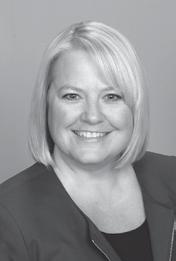


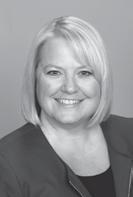
Mark said the most rewarding part of all of his years practicing law in Ironton is the “service to the people and community.”
“We all truly look at that,” he said. “Any of us who have worked in this firm could’ve gone other places in this country and made a lot more money than you make in a small, Appalachian town, but we’re committed to making this a better place to live. We do that not just through the practice of law but in our volunteer efforts — the things we do for the community in various capacities.”
Mark said one of the issues facing Lawrence County is an “aging bar.” He said the community is experiencing a lot of problems like those throughout the rural areas of Ohio in attracting younger lawyers and other professionals in all capacities.


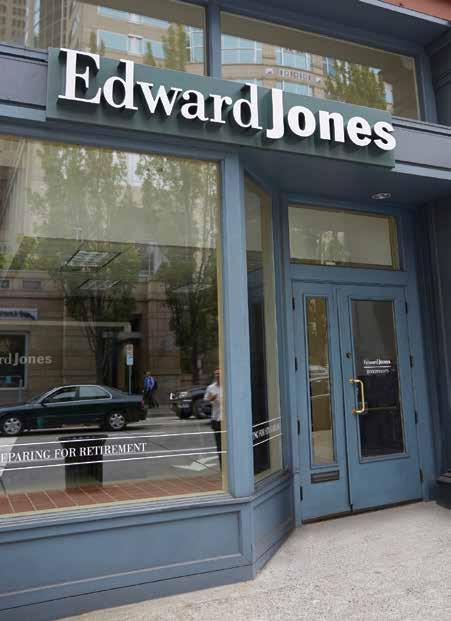
Purchasing the building Dick Meyers and Brenda Neville had in Chesapeake allowed the firm to open an office there. Dick Meyers

“He moved to the upper end of the county, opening an office in Chesapeake many years ago,” Mark said. “Dick passed away a few
“Any person who is looking to go to a professional school and come out — you go into a profession because you have a passion for it,” Mark said. “You don’t go into it because you want a new Mercedes every year. You will burn out quickly if that’s your purpose.”
Mark said he encourages young people to consider “medical, legal, accounting, whatever,” and then to come back to their roots.
“Come back and make these areas better,” he said. “It’s still a great place to raise a family. Yeah, we have our problems. But versus the large metro areas and the issues you see there, there are a lot of great things that can be had living in a small community.”





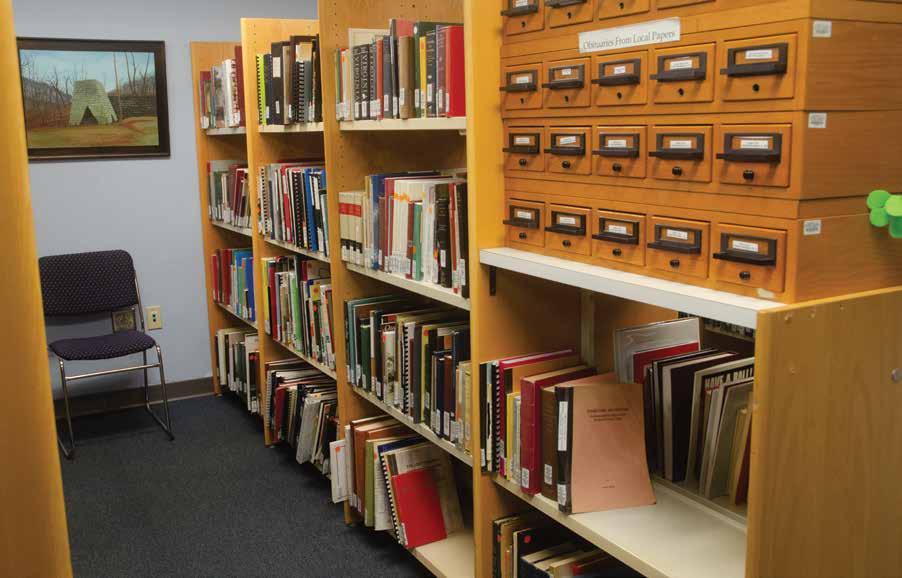
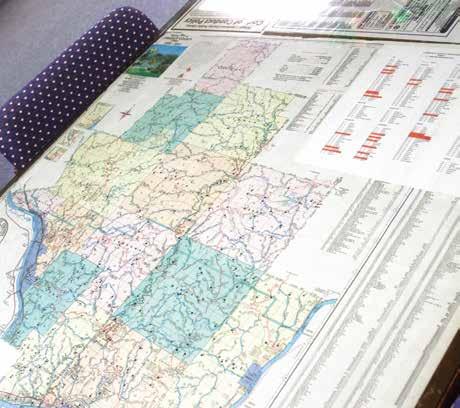
The main goal of a genealogy room is to preserve and tell local history to the community and, at the Briggs Lawrence County Public Library’ Hamner Room, they are doing just that.
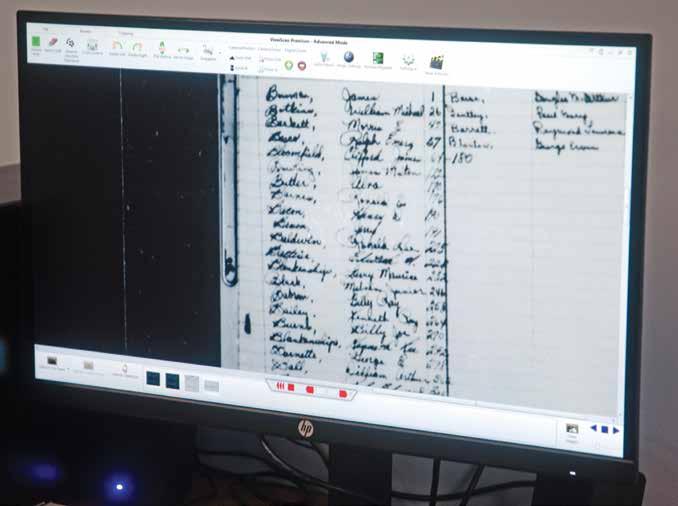
Just this past year, the genealogy room has undergone some rearranging and redecorating. They have since added more collection shelves, a new microfiche reader which allows for a clearer and faster scan, a new copier, some new paintings within the room, and even more updates are coming according to the director. A microfiche reader is a machine that enlarges tiny historical readings stored on microfilm.
Library’s genealogy connects public to ancestors
In most libraries, a genealogy room is a valuable place to hold records, with easy access for the public. This past year, 970 patrons visited and used the room, while another 296 have had some sort of request for records sent to the library.
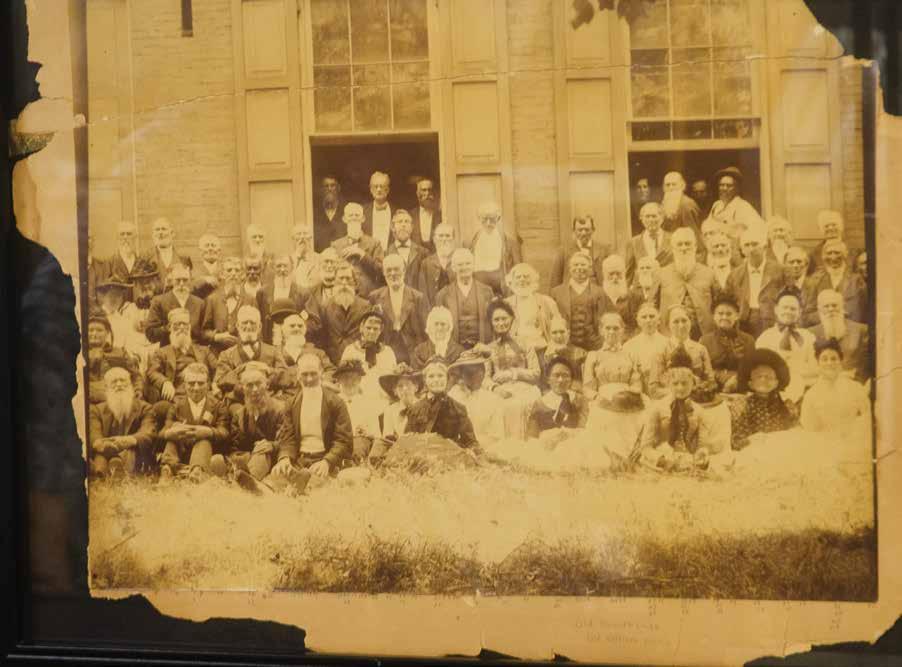
The library has records from old newspapers dating back to 1850, marriages from 1817, births and deaths from 1868, and Ironton yearbooks from 1810. Sometimes, old photos of relatives can only be obtained from past yearbooks, since pictures in the old days weren’t always readily available.
Librarian Lori Shafer, who has worked there for 27 years, said people traveled from Washington, Colorado and Florida
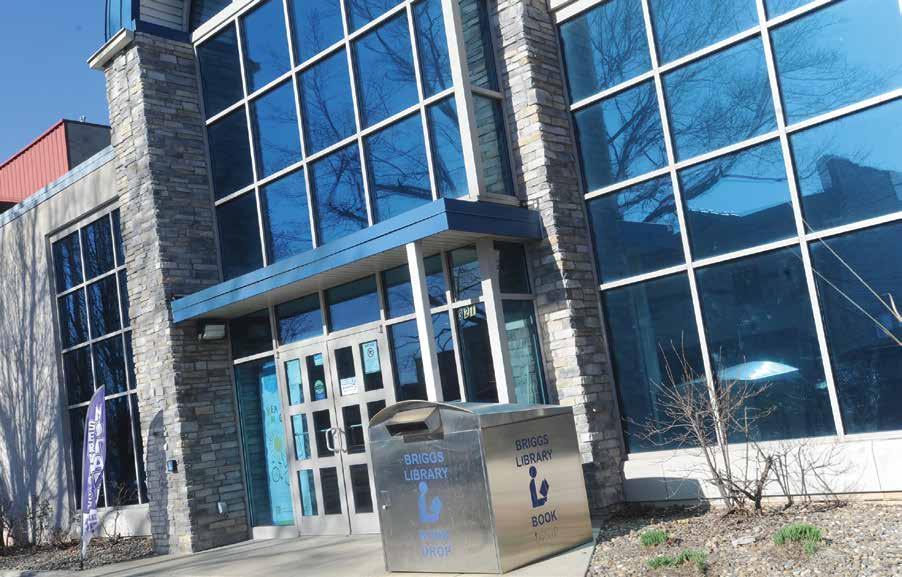
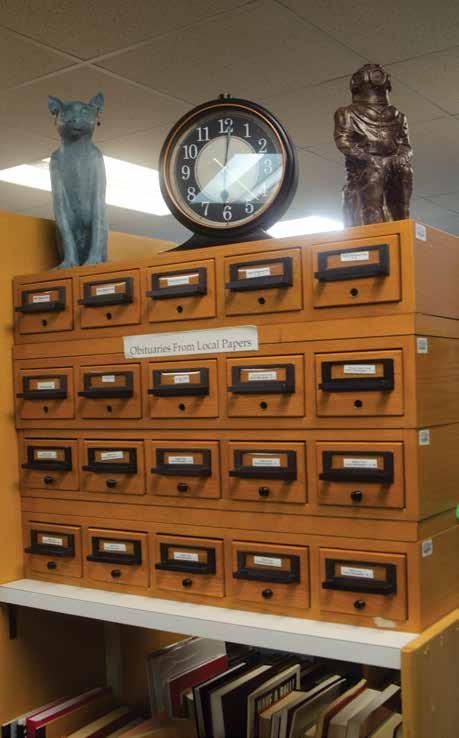
last year alone to come in and start their ancestry research.
While doing her own ancestry she said, “I’ve connected to a lot of different people that I didn’t know about.”
When you begin a search, you always have to start with what you know and then unravel it from there.
“It’s like you’re trying to solve a puzzle,” Shafer said. “Sometimes, you find it all and sometimes you don’t.”
She explains that going into the research can often feel like you are reading a story, something distant from yourself, but, when you find that one thing that connects you to the story, it can be fulfilling.
Aside from connecting to others and to another version of yourself through your past, the history found could be beneficial from a health standpoint, since many health conditions today are genetically transferred, she said.
Shafer also talks about the differences and technological changes the library has undergone since the time she’s been there.
“Suddenly, I can see records from Germany, where, before, you had to travel to the location of the records you wanted to find,” he said.
Shafer said she is amazed by how much the library has upgraded their efficiency with such technological advancements and can’t wait to see how it will develop further in the future. Future advancements may include the use of AI and more precise DNA testing.
Back in 2020, when the COVID-19 pandemic occurred, Shafer had started a weekly historical reading made available online on the library Facebook page.
She explains that the cause for the videos was that the library wanted to stay connected to the community and share interesting historical stories along the way. She said that, sometimes, she would get comments or emails from people who had seen

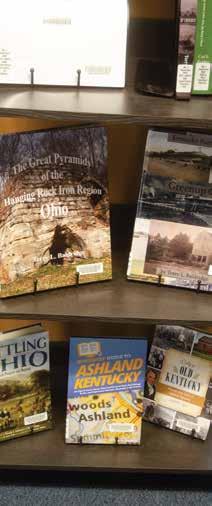
her videos because they involved a distant relative. The overall need for connection, understanding and closeness needed during the pandemic was met with these videos, she said.
Generational effects can have a big impact on today’s behaviors, values and attitudes, and knowledge about your past can influence how you raise your children, which traditions or habits you partake in, and what morals you develop, she said.
The same thing can be said about generations ahead of you, when they look back on what is our present day sometime in the future.
Looking back on the past helps to prevent repetition, where it counts, and past mistakes recorded in history help to highlight what went wrong, at and what point in time it did, so that it cannot be made again.
Shaffer loves the mystery and discovery that takes part in genealogy and loves even more to connect others to their past.
“Eventually we are going to be somebody’s ancestor,” she said. “Our roots do affect us and how we are raised. We can still see the patterns from our ancestors today.”
Iwas just a scrawny kid back then, but my memory holds the details clear as a summer’s day. Now that I’m an old-timer, I can still see the light in my own young eyes — too big for my britches, but full of wonder at the promise of my first real ride.
I remember how the morning sun felt on my shoulders as I suited up. My little fingers fumbled with the leather on my chaps, a birthday gift from Granpaw. They nearly swallowed my legs.
I still hear the clomp of my brogans against the worn wooden porch — each step gives off a tiny jingle from those strap-on spurs that make my heart pound faster. And my hat was a straw brim back then, not the fancy felt I’d later come to favor, but it looked just as grand to me.
Lastly came the six-shooter. The bullets were caps, so I couldn’t do much damage with it, but it made me feel like the biggest cowboy in the territory.
The stable wasn’t more than a 20-minute walk from our place, but it felt like traveling cross-country. Dust kicked up around my boots as I stepped inside. The smell of straw and horse sweat filled the air — thick enough to chew.
I spotted her right away: a speckled roan mare with a coat that shimmered red and white in the beams of sunlight streaming through the stable’s rafters. Her big brown eyes followed me warily as I approached.
We’d been introduced a time or two, but never like this—me in all my cowboy finery, determined to make her mine for the day.
I fumbled with the tack, fresh from the rack. The saddle was a mite too heavy for my puny arms, and when I tried lifting it onto
her back, I nearly toppled. She stamped and tossed her head, none too pleased.
I gently ran my hand along her neck and murmured soothing nonsense like I’d seen the TV cowboys do. Slowly, she settled enough for me to cinch her up. Of course, she gave me a bit of a fuss — laid her ears back and sidestepped. We danced a little dance in that dusty aisle, me and her, until she resigned herself with a huff that seemed to say, “All right, kid, let’s see what you’re made of.”
Climbing on was like scaling a mountain. I got one boot in the stirrup and hoisted myself up, nearly losing the hat.
Next thing I knew, she did a halfbuck—to test me, I suppose. Her back end shimmied sideways, sending a few plumes of stable dust floating up into the shafts of light. My heart thundered in my chest as I held on for dear life.
But soon enough, she settled down, snorting and pawing. At that moment, sitting tall in the saddle, I felt more alive than ever. The old stable smelled of manure, leather and the faintest hint of tobacco from the stable hand’s rolled cigarette. Even all these years later, I can still catch a whiff of it if I think hard enough.
I led her out onto the dirt road that cut through town. A bit of wind caught the brim of my hat; I tipped it reflexively at the folks passing by, the way I thought a real cowboy should. The ladies on the wooden boardwalk outside the dress shop giggled behind lace

fans, and I gave them my best, most serious nod.
Other boys my age and a few grown cowpokes alike paused in their errands to watch my debut. Some admired the mare’s speckled hide with envy. Oth ers, the older, wiser ones, just grinned behind mustaches that had seen more miles of trail than I could count.
When we took off at a canter, dust rose around us in a soft cloud. I felt the power in her muscles, and I let out a whoop that carried us to the meadow beyond the edge of town.
The sun’s warmth and the breeze in my hair were as close to flying as I’d ever been. Time fell away. I forgot about chores, lessons, and even the fact that I was only a little colt myself trying to play the part of a seasoned rider.
We spent what felt like a perfect hour in that meadow. Me, losing myself to the thunder of hooves and the hum of cica das. And just as I was bringing her back toward the main road, a stern voice cut through the air: “Hold it right there.”

I saw the sheriff—“You best take her home,” I could feel my cheeks redden beneath the dust. Yes, I answered quickly. The onlookers snickered good-naturedly — no one makes a speedy getaway from the law when it’s your mom wearing the star.
“Done shopping, time to go home, and no more dimes for you.” And for goodness sake, let someone else have a turn.”
“That’s the problem with stabling your horse at S.S. Kresgie’s Five and Dime,” and your mom is the law.
John Ferguson is an Ironton native, retired businessman and Rotary Club member. He returned home to the city in 2021, after 52 years away.

In the 1950s, kids rode coin-operated mechanical horses in dime stores, supermarkets and amusement areas. Popular models like Sandy by Exhibit Supply Co. and Ride-A-Horse by Bally featured galloping motion via electric motors. Made of aluminum or fiberglass, they cost a dime per ride and remain nostalgic collectibles today.

In the 1920’s, Ironton was experiencing a decline in industry, with the riverfront blast furnaces mostly cold and the city’s steel mills, not necessarily making steel.
The lively town, however, was supported in many other ways. Rolling mills dotted the riverbank, the cement factories were profitable and the original Ironton-Russell Bridge was completed in 1922, providing a critical link to Kentucky and beyond.
The Ironton Tanks played crosstown rival the Lombards on the day after Thanksgiving in 1920, a tradition carried on by the Detroit Lions. The downtown area hosted a variety of clothing shops, banks, a realty company, a dentist, restaurants and street fairs.
Next to the lavish Marting Hotel, the 735-seat Marlowe Theater opened, where silent films were accompanied by live music from Hall’s Symphony Orchestra. This was a welcome compliment to the nearby Eastern Theater, South Side Theater and the Grand Theater. The Opera House within the Masonic Temple and the Empire Theater had burned down just a few years prior.
The Ironton Register newspaper was replaced by the Daily Register and reported all the happenings in and around the town.
In the midst of the hustle and bustle of the City of Ironton, a group of people came together to organize the Lawrence County Historical Society, with the mission to preserve the past and record history in the making. Now, 100 years later, the Marlowe Theater is hidden within the city, while the Ro-Na boasts a marquee congratulating the Ironton Fighting Tigers on their
state championship.
The downtown area boasts many of the same buildings, although now for different purposes. Many of the same families from a century prior are still here raising the next generation.
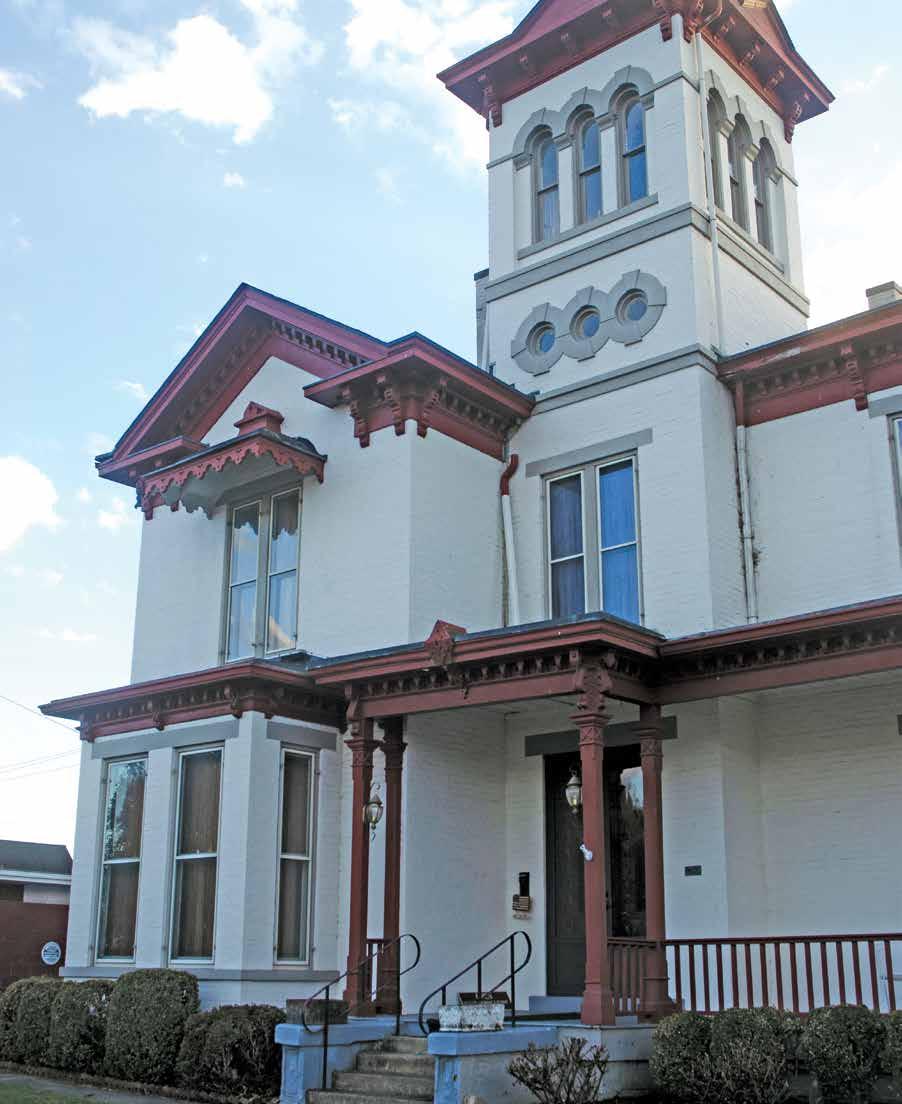
The Historical Society is still going strong, with the same mission started by its founders — to preserve our precious past. The county history museum is located at 506 South 6th St., where the 1870s Italian Villastyle home is filled with relics, scrapbooks, photographs, maps, quilts, dresses, biographies, family Bibles and so much more. It is an honor and a privilege to be the president for our centennial year and I am proud of the work the Historical Society has done to commemorate this amazing community.
The museum will open for the season on April 5 with an open house, hosted by characters portraying the original owners of the home, as well as others. A walkthrough timeline depicting the 100 years leading up to 1925 will be open to the public, as well as the museum’s regular events.
We are grateful to the community for supporting the Society all these years and sharing our enthusiasm and passion for local history. We look forward to celebrating this milestone with all of you!
Nicole Cox is president of the Lawrence County Historical Society
KENOVA, W.Va. — When Tim Hensley retired from the railroad industry a decade ago, it did not mean that his lifelong fascination with trains would come to an end.
Instead, the former resident vice president for CSX Transportation in West Virginia took that passion and used it to start his next venture.
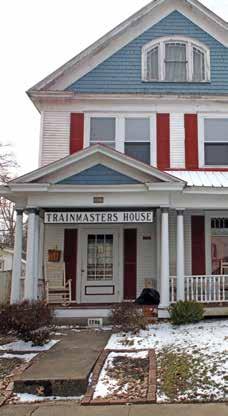
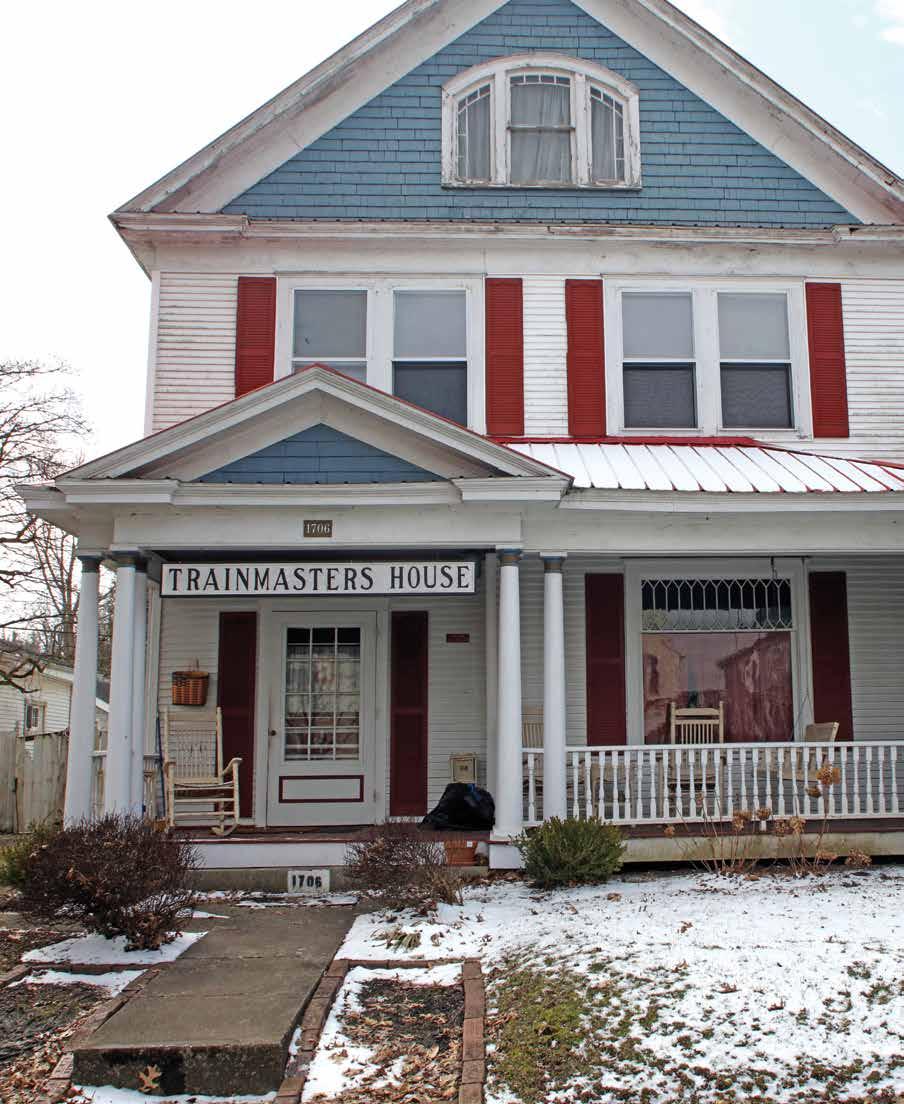
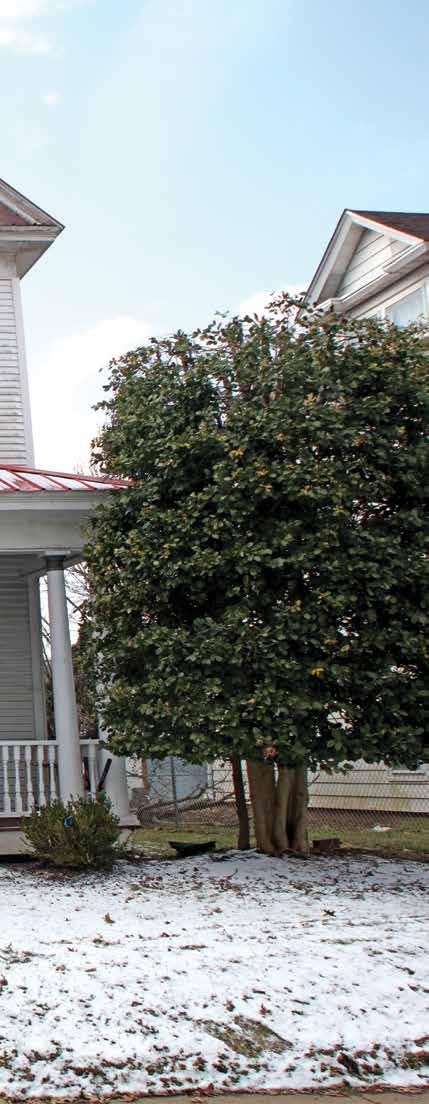
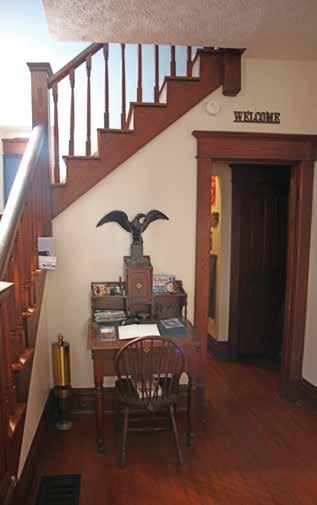
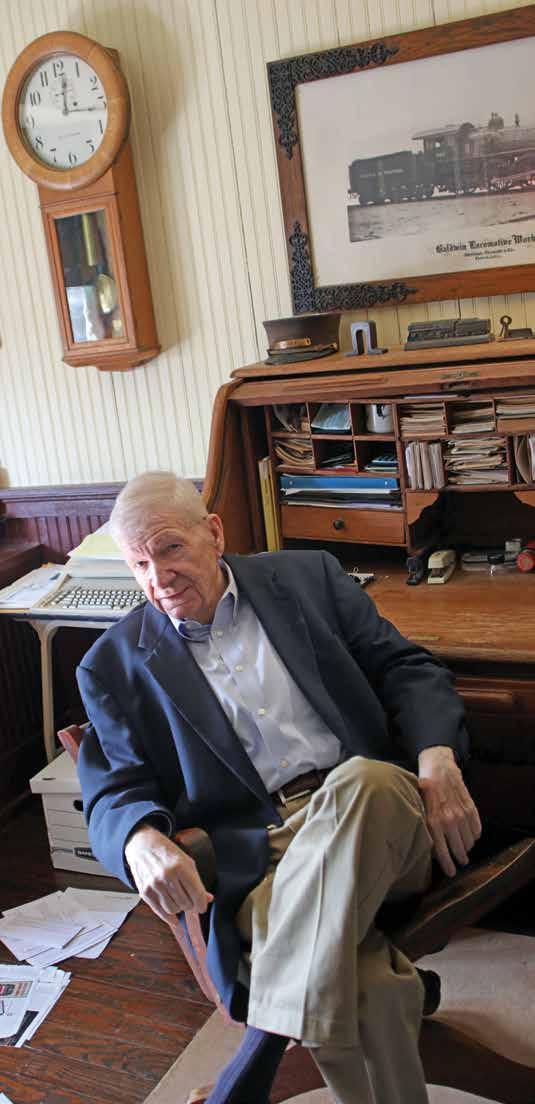
Hensley, of Kenova, took his home, which he purchased in 1984, located on Chestnut Street, and opened the Trainmaster’s House, a bed and breakfast, which also houses his extensive collection of artifacts from the railroad industry.
The home, built in 1907, is a historic one in that regard, having served as the residence of two trainmasters, Dick Nelson, from 1917-24, and William Workman , who was assistant trainmaster until the 1950s.
Hensley’s interest stems from his grandfather, who was killed working for the railroad in 1926.
“He left her four girls during the Great Depression,” he said of the aftermath.
His mother was given her husband’s oil lantern, which was bent from the accident.
Hensley said it was kept in the family’s attic, and his mother was hesitant for him to have it, discouraging him from a career in the railroad.
“She wanted me to be a doctor or a minister,” he said.
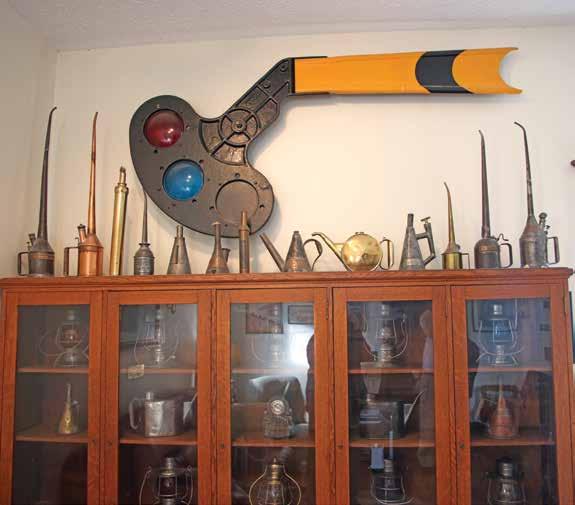
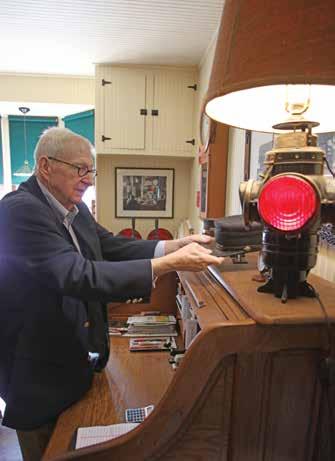
The lantern was lost, but Hensley’s interest remained and he began collecting the lanterns, building up what he said is one of the best collections of them that can be found.
He has about 25, acquired through years of attending railroad shows, visiting antique stores in towns along the Norfolk and Western lines and meeting other collectors.
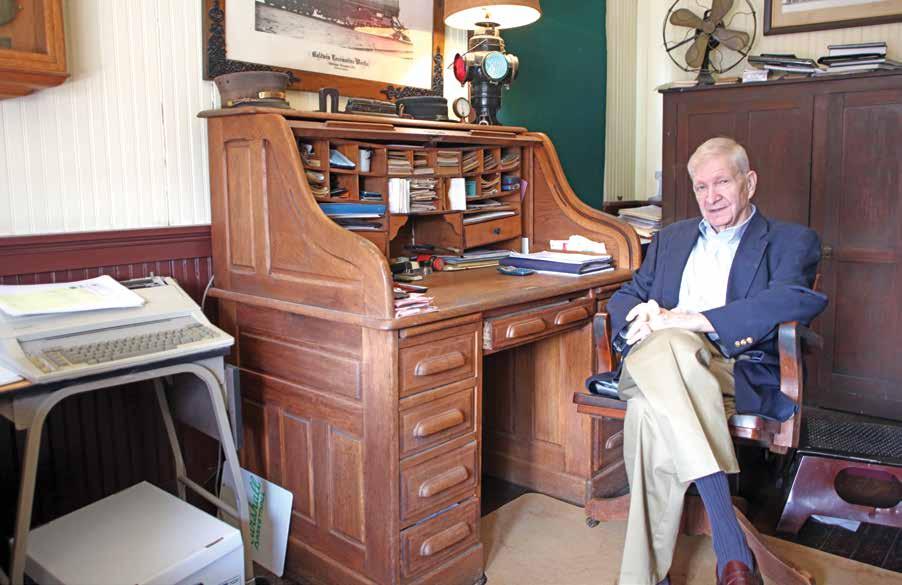
He notes that there were only seven manufacturers for the lanterns and that he learned the different styles and types and the significance of the globes on them.
“The colors of them meant different things,” he said.
Over the course of his career, Hensley served as a locomotive engineer, and, due to a background in journalism, became the public relations representative for the Brotherhood of Local Engineers.
Among the items in Hensley’s collection are a large number of vintage tin advertising signs from businesses like Sunbeam bread and Sherwin Williams, dating from the 1900s to 1940s. These can be found in just in the entrance of the home.
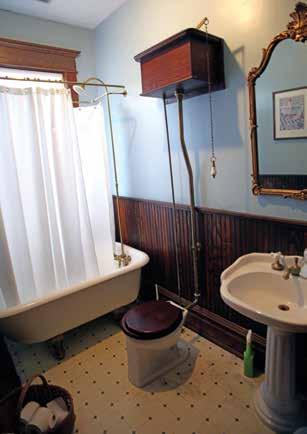
The kitchen features a restoration of the home’s original tin ceiling, one of the many renovations he has done throughout the residence.
The living room features the lantern collection, as well as a number of oilers, many with the engineers names inscribed on them.
Upstairs are the three guest rooms.
The first, Hensley describes as ”a feminine-themed room,” and its décor consists of items from his family.
Second is a Marshall University football-themed room, decorated with memorabilia of the Thundering Herd. Hensley notes that he often takes guests to locations around the region import-
ant to the history of the football program, such as the sire of the 1970 plane crash, as well as the memorial at Spring Hill Cemetery in Huntington.
Hensley says the third room, Mr. Carter’s Room, was once used by William T. Carter, a Norfolk and Western engineer.
He was a close friend of Hensley, who died in 1988 at the age of 101. Hensley said he met Carter in college, interviewed him extensively over the years about the history of Norfolk and Western and compiled hours of oral history recordings with him. Many of the items in the room pertain to Carter’s career, including his overalls, which hang in the corner.
Carter once boarded in the home and Hensley said the call boy would wake him by throwing pebbles at the room’s window.
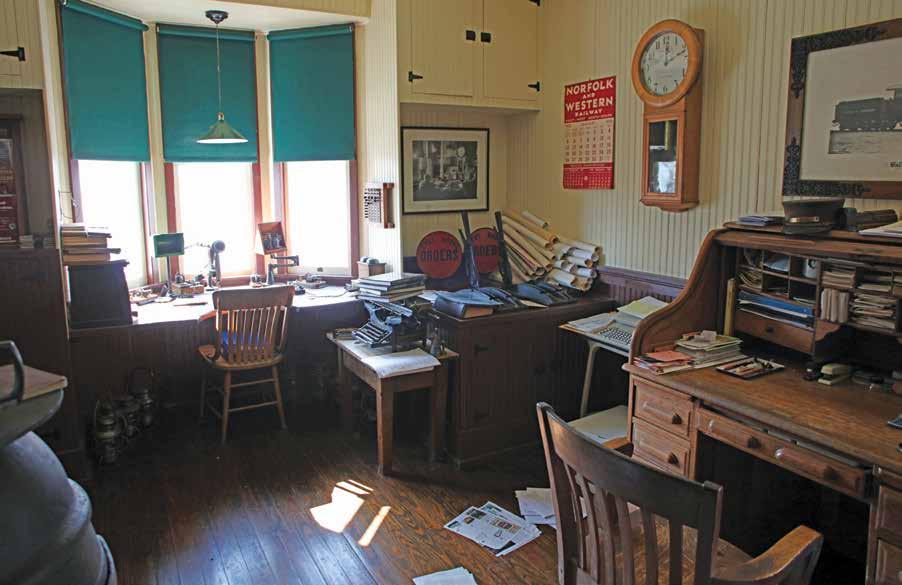
Also in the home are Hensley’s office, where he has penned several books on railroad history, and the Agent’s Telegraph Office, which Hensley has constructed as a replica, complete with vintage equipment. He made sure to get the counters, window and table accurate in their heights, and he notes that everything is Norfolk and Western Standard.
Hensley said when a train station was demolished in Coal Grove, the windows were brought to him and installed in the room.
Other items in the collection include a number of things from the coal industry, such as a canary cage used in the mines.
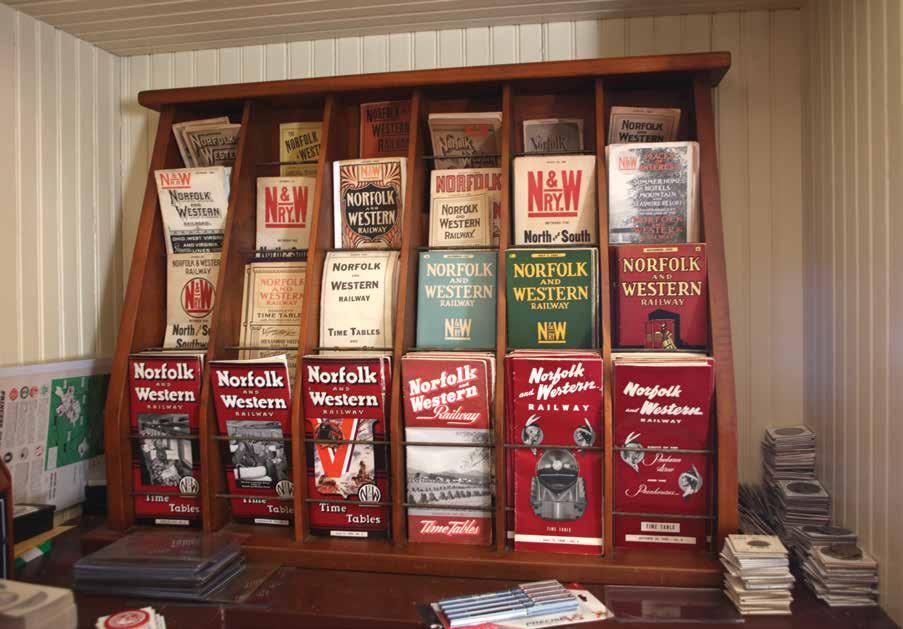
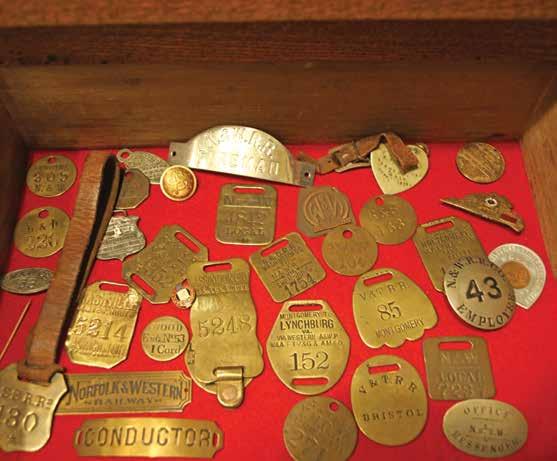
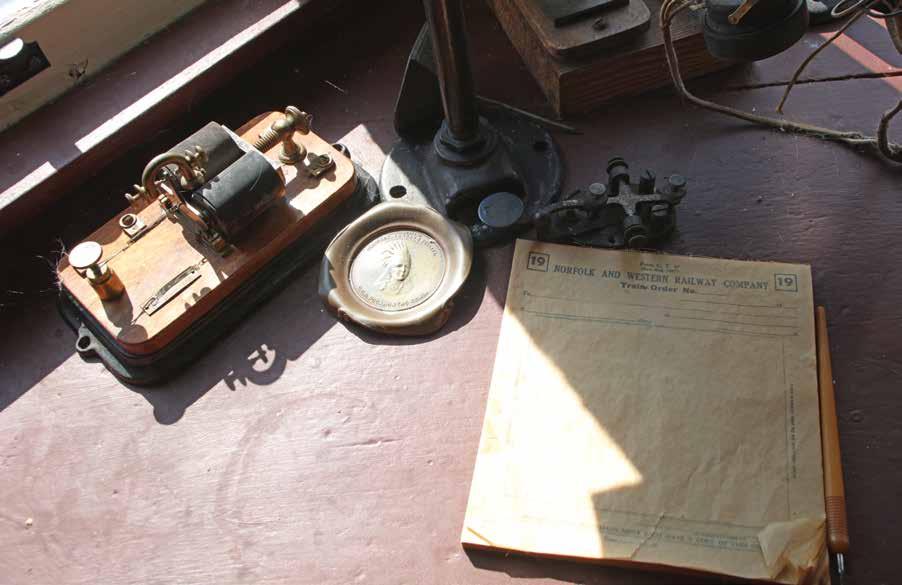
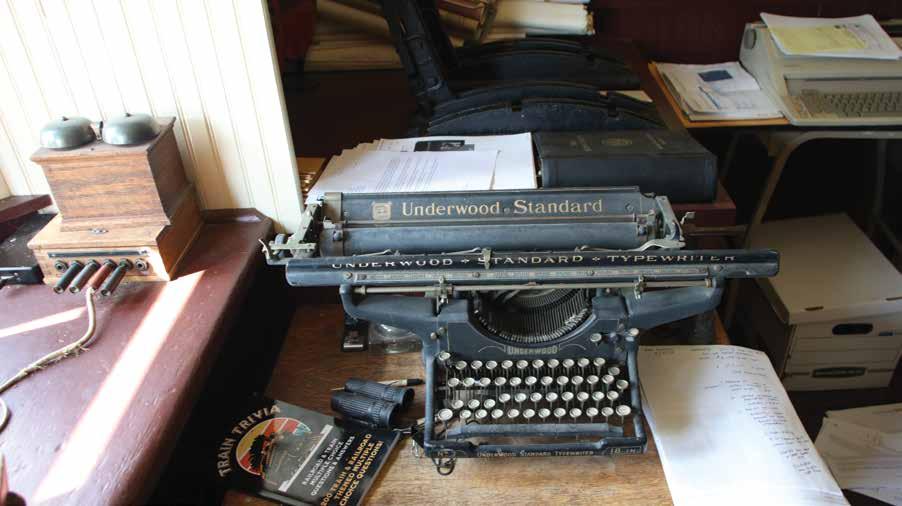
There are also many mementos from Hensley’s career, such as a wall dedicated to President Bill Clinton’s train visit to Huntington, for which Hensley served as the primary contact.
Hensley said the bed and breakfast runs throughout the year, except in the winter off-season.
The home has appeared on Antiques Roadshow, and has had a visit from the president of Norfolk Southern.
For Hensley, he said the biggest enjoyment he gets from running the bed and breakfast is the social side of it.
He said he draws visitors for events, such as last year’s Rock the Country concert, as well as fellow railroad enthusiasts.
He said many guests have told him that the best part of the stay has simply been conversing with him as he shares, not just his extensive knowledge of Norfolk and Western and the industry, but the history of the TriState region.
“I’m a walking Chamber of Commerce for the area,” he said.
For more information on the Train master’s House, call 304-633-8512.


Health is incredibly important to all aspects of our lives. Without good health, it’s difficult to enjoy all that life has to offer: family and friends … hobbies and passions … nature and travel.
At UK King’s Daughters, we’re committed to helping you maintain your highest level of health so you can do the things you’re passionate about and be the best version of yourself. Today and every day.


UK King’s Daughters offers low-cost blood testing for $25, including a comprehensive metabolic panel, complete blood count, lipid panel, and thyroid stimulating hormone. Optional A1C testing is $5. Fasting is required.
Our Urgent Care Center provides treatment for non-life-threatening medical problems. Patients are seen on a first-come, firstserved basis. Open 9 a.m. to 9 p.m. daily.
• Coumadin clinic
• Lab testing
• X-ray
UPCOMING DATES
• March 27
• April 24
• May 22
• June 25
(Testing from 8 to 10 a.m.)