
International Research Journal of Engineering and Technology (IRJET) e-ISSN: 2395-0056
Volume: 13 Issue: 02 | Feb 2026 www.irjet.net p-ISSN: 2395-0072
International Research Journal of Engineering and Technology (IRJET) e-ISSN: 2395-0056
Volume: 13 Issue: 02 | Feb 2026 www.irjet.net p-ISSN: 2395-0072
Jadhav Prerna , Naragude Nisha , Rajegore sanika , Bokare Vaishnavi
Jadhav Prerna Parmeshwar Diploma in Electrical Engineering Government Polytechnic Nanded Maharashtra, Naragude Nisha Dnyanoba Diploma in Electrical Engineering Government Polytechnic Nanded Maharashtra, P. S. Linge Professor, Department of Electrical Engineering Government Polytechnic Nanded Maharashtra, India
Abstract – Three-phaseinductionmotorsareextensively Usedinindustrialandcommercialapplicationsduetotheir Robustness, high efficiency, and low maintenance Requirements.However,highinrushcurrentduringstartup Remainsasignificantchallenge,causingmechanicalstress
The motor and electrical disturbances in the supply network.
Conventional methods, such as manual or timer-based Star delta starters, have been widely implemented to mitigate Starting current, but they suffer from limitations including Lack of real-time control, inflexibility, and increased Dependence on human intervention. Previous research has Explored advanced methods such as soft starters and Programmable logic controllers (PLCs) for better motor Control, but these solutions often involve higher cost and Complexity. This paper proposes a wireless 3-phase stardelta and delta-star conversion system using contactors controlled Via a mobile application. The proposed system enables Remote operation, real-time monitoring, and enhanced Safety by minimizing manual interaction. Additionally, it Provides reliable motor control, reduces energy loss during Startup, and offers a cost-effective alternative to Conventional and automated solutions. Experimental results Demonstrate the system’s effectiveness in reducing starting Current, improving operational flexibility, and facilitating User-friendly control, making it suitableformodernIndustrialautomationapplications.
Key Words: Three-phase induction motor, Star-Delta starter, Contactor, Wireless control, Mobile application
Three-phase induction motors are widely used in industries Due to their simple construction, high reliability, and low Maintenance requirements. However, startingthesemotorsDirectlyusingDirect-On-Line(DOL) methods generates high Inrush currents, which can damagemotorwindings,reducetheLifespanofconnected equipment, and cause electrical Disturbances. To address this issue, star-delta starters are commonly employed to limit the starting current. Traditional Star-delta starters areeithermanualortime-based,requiringOperatorstobe physically present near the motor panel, which Can be
inconvenientandunsafeinmanyindustrialEnvironments. With recent advancements in wireless Communication and mobile technologies, motor control can Now be performedremotely,providingflexibility,safety,andRealtimemonitoring.Thisprojectproposesawireless3-phase Star-delta and delta-star conversion system using contactors Controlled through a mobile application. The system enables Remote operation, reduces human effort, improves operational Safety, and ensures efficient and reliable motor performance, offering a modern and costeffectivesolutionforindustrialMotorcontrol.
2. Literature Review:
Several researchers have studied motor Starting techniquesAndautomationMethods:conventionalmanual star-delta Starters are simple but prone to human error and unsafe Operation. Automatic star-delta starters using timers reduce human Intervention but lack flexibility and monitoring.PLC-based Motor control systems Provide accurate control but are costly and complex for small industries.RecentstudiesshowthatWirelessTechnologies suchasBluetooth,GSMandWi-Fiareincreasinglyusedfor motor control and monitoring using Mobile applications. However, most existing systems do not focus on wireless Bidirectional conversion between star and delta using Contactors. Therefore,a need existsfora low-cost,simple, andwireless-controlledstar-deltasystem.
1.1Manual Star-Delta Starters:
Manual star-delta starters are among the earliest and simplestTechniquesforreducingthehighstartingcurrent of induction Motors. In this method, the motor initially starts in a star (Y) Configuration, which reduces the voltage applied to each Phase to 1/√3 of the line voltage, thus limiting the starting Current to approximately onethird of the direct-on-line (DOL) value. After a certain period,theconnectionismanuallychangedtodelta(Δ)for normal operation, allowing The motor to run at full line voltage. While cost-effective, this Method is prone to human error, timing mistakes, and unsafe operation, especially in industrial environments with large Motors. Improper switching can cause mechanical stress, Overheating,orevenmotorfailure.
International
2395-0056
Volume: 13 Issue: 02 | Feb 2026 www.irjet.net p-ISSN: 2395-0072
Timer-Based Automatic Star-Delta Starters:
Timer-based automatic star-delta starters were developed to Reduce human intervention while controlling the high starting Current of induction motors. In this system, the motor initially starts in the star configuration, which reduces the voltage across each winding to 1/√3 of the Line voltage and limits the starting current to approximatelyone-Thirdofthedirect-on-line(DOL)value. ThiseliminatestheneedFormanualintervention,Reduces human error, and ensures More consistent startup performance.
However, timer-based starters have inherent limitations. The Fixed switching time is calculated for nominal load conditions and cannot adapt to varying operational loads or supply Voltage fluctuations. If the motor is lightly loaded,thetransitionfromstartodeltaMayoccurtoolate, resultinginunnecessaryenergylossandMechanicalstress. Conversely, under heavy load, switching Too early can causehighinrushcurrent,potentiallydamagingThemotor andconnectedequipment.
Moreover, these systems do not provide real-time monitoring,faultdetection,orRemotecontrol,whichlimits flexibility and makes them less Suitable for modern industrial automation. Despite these limitations, timerbasedautomatic startersRemainwidelyusedinsmalland medium-scale industries due To their low cost, simplicity, and reliability. They serve as a Foundation for more advanced automated systems, including PLC-based and wirelesscontrolsolutions.
PLC-Based Motor Control Systems:
Programmable Logic Controller (PLC)-based starters provide A modern and flexible solution for controlling three-phaseInductionmotors.APLCisanindustrialdigital computer designed to perform Control functions in realtime. In motor starting applications, PLCs can manage the sequence of star-delta switching, Monitor motor parameterssuchascurrent,voltage,andTemperature,and implementsafetyinterlockstopreventfaultsOrdamage.
Unlike timer-based systems, PLCs allow adaptive Control based on real-time operating conditions. For example, the PLC can adjust the star-to-delta transition Time according to motor load, preventing unnecessary Mechanical stress or high inrush current. PLCs can also Integrate with sensors and feedback devices, enabling Automatic fault detection,overloadprotection,andsystemDiagnostics.
Additionally, PLC-based control can be integrated with SCADA(SupervisoryControlandDataAcquisition)systems Or HMI (Human-Machine Interface) panels, providing Centralized monitoring, logging, and remote operation. ThisEnhancessafety,reliability,andefficiencyinindustrial Operations.ThemainlimitationsofPLC-basedstartersare higher cost, Hardware complexity, and programming requirements. Small-Scale industries often find PLC
systemsexpensiveandtechnicallydemandingcomparedto conventionalortimer-Basedstarters.
Nevertheless, PLC-based solutions are highly effective for Large-scaleorautomatedindustrialenvironments,offering precise control, flexibility, and advanced monitoring Capabilities that manual and timer-based systems cannot provide
Wireless Motor Control Systems:
Recent advances in wireless technologies, including Bluetooth, GSM, Wi-Fi, and IoT platforms, have enabled Remote motor operation and monitoring via mobile Applications. Wireless control minimizes operator presence Near high-voltage panels, enhancing safety and convenience.Italsoallowsreal-timefeedback,operational alerts, and Energy monitoring. Previous research has implementedsingle-Directionwirelessmotorstarters,but most systems do not provide bidirectional star-delta and delta-star switching using Contactors, which is essential forflexibleindustrialApplications.
Theory of Star-Delta Switching and Contactors:
Star-delta conversion is achieved using contactors, which are Electromechanical switches designed to handle high currents. During startup, the star contactor closes, connecting the motor Windings in star configuration and reducing starting current. After the timer or controller triggers the transition, the star Contactor opens and the delta contactor closeTheory of Star-Delta Switching and Contactors:
After the timer or controller triggers the transition, the star Contactor opens and the delta contactor closes, applying full Line voltage. Proper sequencing and interlocking of contactors Are critical to prevent short circuits and ensure safe operation. Wireless control of these contactors enables remote switching, Monitoring, andsafetyinterlocks
Research Gap:
Althoughconventional,automatic,andPLC-basedstarters Have been widely studied, there is a lack of low-cost, wireless Systems capable of bidirectional star-delta conversion with Real-time monitoring via mobile applications.Suchasystemwouldcombinethebenefitsof reduced starting current, Operational flexibility, safety, andeaseofuseatareasonableCost.
Conclusion:Aneffectivemotorstartingsystemshouldbe Simple,reliable,low-cost,andsupportwirelessremote Operation. This motivates the development of a wireless star-Delta and delta-star conversion system using contactors and A mobile application, addressing limitations of previous Methods while meeting modern industrialneeds.
International Research Journal of Engineering and Technology (IRJET) e-ISSN: 2395-0056
Volume: 13 Issue: 02 | Feb 2026 www.irjet.net p-ISSN: 2395-0072
Wireless 3 Phase Star To Delta And Delta To Star Conversion Usiing Contactor And Mobile Application:
Block diagram:
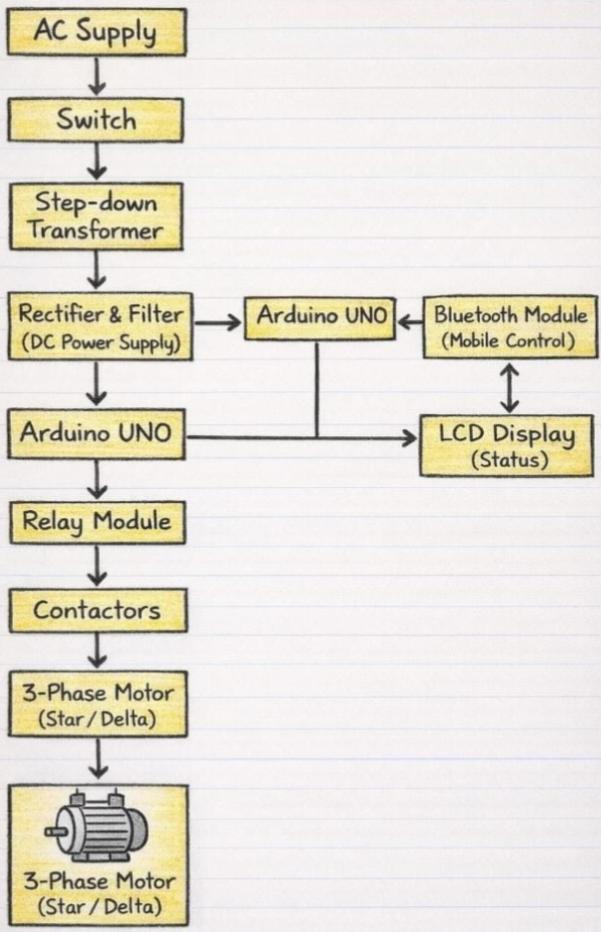
Fig. 1.BlockDiagramofWirelessStar–DeltaandDelta–StarConversionSystem
Thisprojectdealswiththewirelessconversionof3-phase Inductionmotorsfromstartodeltaandviceversausing Contactorscontrolledthroughamobileapplication.In Conventional systems, high starting current can cause electricalStressandreducemotorlife.Topreventthis,the motor initially Operates in a star configuration, limiting the starting current, and then switches to a delta configuration for normal Operation. The mobile application allows remote control and Real-time monitoring, making the system convenient, safe, and Efficient. Overall, this approach enhances motor performance, Reduces energy losses, and improves operationalreliability.
Working principle: Theprojectisdividedintotwomain Sections:
• Power Section:Managesthemain3-phasesupplyand Themotorthroughcontactors.
• Control Section: The microcontroller receives CommandswirelesslyviaBluetooth
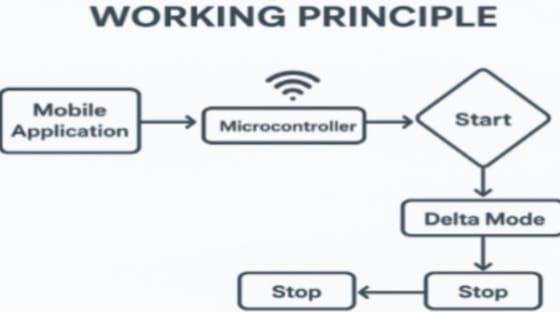
Working Principle of Wireless Star-Delta & Delta-Star Conversion by power section:
Themobileapplicationsendscommandswirelesslytothe Micro controller. When the START button is pressed, the Starcontactorisenergized.ThemotorstartsinStarmode, reducing the starting Current.After a preset time or when the DELTA button is pressed, the Star contactor turns off andtheDeltacontactorturnson.
TheMotorthenrunsatfullspeedandfullpower.Pressing the STOP button turns off all contactors, ensuring the Motor stops safely.Delta-to-Star switching can also be performedremotelyifrequired
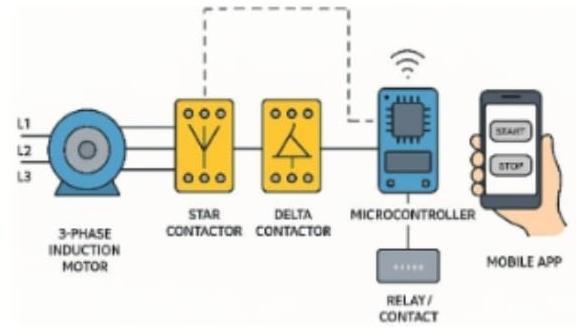
Power circuit:
Thepowercircuitisusedtocontrolthe3-phaseinduction MotorwiththehelpofStarandDeltacontactors.
The 3-phase AC supply is first passed through an MCB / Circuit Breaker, which protects the motor from overload andShort-circuitfaults. From the MCB, the supply is given to both Star and Delta Contactors.
When the Star contactor is energized, the motor starts in star Connection, resulting in reduced starting Current.After the starting period, the Delta contactor is energized, allowing the motor to run at full voltage and rated speed. Electrical interlocking is provided to ensure that the Star and Delta contactors do not operate at the sametime.
Finally, power from the contactors is supplied to the motorTerminalsU,V,andWforpropermotoroperation.
International Research Journal of Engineering and Technology (IRJET) e-ISSN: 2395-0056
Volume: 13 Issue: 02 | Feb 2026 www.irjet.net p-ISSN: 2395-0072
Advantages:
Wireless Motor Control: Enables remote start, stop, And Star–Delta switching through a mobile Application.
Reduced Starting Current: Limits inrush current during motor startup, protecting windings and Connectedequipment.
Enhanced Safety: Reduces human interaction with High-voltagesystems,minimizingaccidentrisks.
AutomationandEaseofOperation:Eliminatesmanual switching and provides smooth, automatic Motor control.
Cost-EffectiveImplementation:Builtusingeasily Available and low-cost components such as Arduino, Relays,andcontactors.
Improved Motor Life: Controlled starting and proper Switchingincreasethelifespanofthemotor.
ScalableandUpgradable:Thesystemcanbeexpanded With IoT integration, fault detection, and real-time monitoringinthefuture.
Disadvantages:
• Limited Wireless Range: Bluetooth or Wi-Fi Communicationmaynotcoverlongdistancesinlarge Industrialareas.
• Dependence on Continuous Power Supply: The Microcontroller and communication modules require a Stablepowersourceforproperfunctioning.
•RiskofIncorrectSwitching:Faultyinterlockinglogic MaycausesimultaneousoperationofStarandDelta Contactors,leadingtoelectricaldamage.
• No Feedback in Basic Version: Motor status such as Speed, load, or running condition is not available without additionalsensors.
• Interference Issues: Wireless communication may be Affected by electromagnetic interference in industrial Environments.
• Security Concerns: Unauthorized access is possible if Proper authentication is not implemented in the wireless System.
•InitialSetupComplexity:Properprogrammingand Circuitconfigurationsarerequired,whichmayneed Technicalexpertise.
This work presents the design and implementation of a Wireless Star–Delta and Delta–Star conversion system for a 3-phase induction motor using contactors and a Mobile application. The proposed system effectively reduces the high starting current by initially operating The motor in star configuration and later switching to Delta mode for normal running conditions. Wireless control Through Bluetooth or Wi-Fi minimizes manual intervention And enhancesoperationalsafety.
Theuseofamicrocontroller-basedcontrolcircuitensures Accurate switching, proper interlocking, and reliable motorOperationthesystemiscosteffective Easy to implement, And suitable for small- and mediumscale industrial Applications. Overall, the proposed approachimprovesmotor Life, operational efficiency,and user convenience, making it A practical solution for modernmotorcontrolsystems.
We express our sincere gratitude to our project guide Mr. P. S. Linge for his valuable guidance, continuous support, and Encouragement throughout the completion of this project.WeArealsothankfultoMr.VilasSarwadnya,Head of Department, for providing the necessary facilities and Motivationtocarryoutthiswork. Wewouldliketothank the faculty members of the Department of Electrical Engineering, Government Polytechnic Nanded, for their cooperationandtechnicalSupport.Finally,wearegrateful to our friends and family Members for their constant encouragementandsupport Duringtheprojectwork.
International Research Journal of Engineering and Technology (IRJET) e-ISSN: 2395-0056
Volume: 13 Issue: 02 | Feb 2026 www.irjet.net p-ISSN: 2395-0072 © 2026, IRJET | Impact Factor value: 8.315 | ISO 9001:2008 Certified Journal | Page220
1. B. L. Theraja and A. K. Theraja, A Textbook of Electrical Technology – Vol. II,S. Chand Publication
2. P. S. Bimbhra, Electrical Machinery, Khanna Publishers.
3. S. J. Chapman, Electric Machinery Fundamentals, McGraw-Hill Education. “Arduino Microcontroller DocumentationandMotorControl,”
4. Arduino Documentation, Microcontroller ProgrammingAndMotorControl.
5. ESP8266TechnicalReferenceManual.
6. Siemens, Star–Delta Starter and Induction Motor Control.
7. Schneider Electric, Motor Starting Methods and Protection.
8. IEEE, Control and Protection of Three-Phase InductionMotors.
9. N. Mohan, T. M. Undeland, and W. P. Robbins, Power
10. Electronics: Converters, Applications and Design, Wiley.
11. A E. Fitzgerald, C. Kingsley, and S. D. Umans, ElectricMachinery,McGraw-Hill.
12. V. K. Mehta and Rohit Mehta, Principles of Electrical 13. Machines,S.Chand.
14. IEEE Standards Association, IEEE Guide for the SelectionofACInductionMotors.