

International Research Journal of Engineering and Technology (IRJET) e-ISSN: 2395-0056
Volume: 13 Issue: 04 | Apr 2026 www.irjet.net p-ISSN: 2395-0072
WELLNESSHUB: AN AI-POWERED MENTAL HEALTH SUPPORT AND CRISIS MANAGEMENT SYSTEM
Smt Yamini Swathi Lanka1, P. Dinesh Varma2, N. Deep Gopal3, P. Subramanyam4
1Assistant Professor, Dept. of Computer Science and Systems Engineering, Andhra University College of Engineering, Visakhapatnam, India
2Student, Dept. of Computer Science and Systems Engineering, Andhra University College of Engineering, Visakhapatnam, India
3Student, Dept. of Computer Science and Systems Engineering, Andhra University College of Engineering, Visakhapatnam, India
4Student, Dept. of Computer Science and Systems Engineering, Andhra University College of Engineering, Visakhapatnam, India ***
Abstract - Mental health disorders remain among the most underserved healthcare challenges globally, and access to timely digital support is still severely limited in low-resource settings. Existing tools either lack clinical depth or fail to connect assessment, crisis detection, and therapeutic support in a single coherent system. This paper presents WellnessHub, a fullstack AI-powered mental health support and crisis management platform. The system uses React.js on the frontend, Node.js with Express on the backend, and MongoDB Atlas for data storage. Google Gemini 2.0 Flash drives seven evidence-based therapeutic modules and the Sage multi-turn crisis chatbot. Twilio SMS API handles emergency alerting when clinical thresholds are crossed. The platform is built around the TAF-9 (Triadic Assessment Framework 9 Scale) protocol, which measures Affective, Behavioral, and Cognitive dimensions of patient functioning across nine scales. SMS alerts go out automatically when the composite Total Impairment Score exceeds 33, or when the Sage chatbot detects trigger levels 2 or 3. The platform also includes a transcrisis detection engine, an SOS intervention toolkit with seven evidence-based tools, a Stanley–Brown Safety Plan Builder, longitudinal progress monitoring, and a clinician burnout reflection module.
Key Words: Mental Health, Crisis Management, AI Chatbot, TAF-9 Assessment, Gemini AI, Twilio SMS, Automated Alerting, Cultural Sensitivity
1. INTRODUCTION
Mental health disorders affect over one billion people worldwide, yet treatment gaps remain severe particularly in countrieslikeIndia,wherethepsychiatrist-to-populationratiocandropaslowas1per100,000people[1].Theresultis thatmostpeopleindistressneverreceiveprofessionalhelpatall.
Traditional mental healthcare is reactive by design. Patients must typically reach a crisis point before a clinician intervenes. Between appointments, there is no monitoring, no early warning, and no automated escalation pathway [2]. Most digital mental health tools do not fix this structural gap. They tend to be either static informational resources, shallow mood trackers, or consumer apps without proper crisis infrastructure [3]. Very few use a validated multidimensional assessmentframework,and fewerstill combine automated emergencyalerting with real-timeAI analysisof whatapatientisactuallysaying.
WellnessHubwasbuilttoaddressthis.Itisafull-stack,clinicallyinformedplatformthatintegratesreal-timepsychological assessment,AI-poweredtherapeuticsupport,autonomouscrisisdetection,andmulti-channelemergencyalertingintoone application.Thesystem isbuiltonthe TAF-9protocol a nine-scaleframework witha transcrisis detection enginethat tracks each patient against their own personal baseline over time [5]. Sage, the AI crisis chatbot powered by Gemini 2.0 Flash,candispatchSMSalertswithoutwaitingformanualintervention[6].
2. REVIEW OF LITERATURE STUDY
WorldHealthOrganization[1].TheWHOWorldMentalHealthReportdocumentsthatoveronebillionpeoplegloballylive witha mental healthcondition, with treatment gaps exceeding 70% in lowand middle-incomecountries, pointingtothe needforscalable,technology-enabledinterventions.
Kroenke, Spitzer, and Williams [2]. This foundational study established the PHQ-9 as a validated instrument for digital depressionscreening,showingthatmulti-itemclinicalscalescanbereliablyadministeredonline.Thisdirectlyinformsthe multi-dimensionalstructureoftheTAF-9protocol.
International Research Journal of Engineering and Technology (IRJET) e-ISSN: 2395-0056
Volume: 13 Issue: 04 | Apr 2026 www.irjet.net p-ISSN: 2395-0072
Spitzer, Kroenke, Williams, and Lowe [3]. The GAD-7 validation study showed that anxiety can be measured effectively throughashortdigitalinstrument,supportingtheinclusionofanxietyasaprimaryAffectivescaleinTAF-9.
Barlow, Farchione, Fairholme et al. [4]. The Unified Protocol for Transdiagnostic Treatment of Emotional Disorders providesthetheoretical basisfortreatinganxiety,depression,andangerasseparablebutcorrelatedAffective constructs directlyinformingthethreeAffectivescalesinTAF-9.
FoaandKozak[5].EmotionalProcessingTheoryandtheroleofbehavioralinhibition underpintheinclusionofapproach, avoidance,andimmobilityasthethreeBehavioralscalesintheTAF-9protocol.
Fitzpatrick,Darcy,andVierhile[6].TheWoebotrandomizedcontrolledtrialshowedthatCBTprinciplescanbedelivered throughanautomatedconversationalagent,providingtheevidencebaseforWellnessHub’ssevenAItherapeuticmodules.
Stade, Stirman, Ungar et al. [7]. This study examined large language models in therapeutic contexts and identified a concerning absence of safety guardrails. WellnessHub addresses this through a mandatory trigger detection mechanism embeddedineverySagechatbotresponse.
Maslach, Jackson, and Leiter [8]. The Maslach Burnout Inventory identifies emotional exhaustion, depersonalisation, and reduced personal accomplishment as the primary dimensions of clinician burnout, informing the Doctor Wellbeing module.
Morse, Salyers, Rollins et al. [9]. This meta-analysis found burnout prevalence rates of 21 to 67 percent among mental healthworkersandidentifiedstructureddebriefingandreflectivejournalingasevidence-basedmitigationstrategies.
StanleyandBrown[10].TheSafetyPlanningInterventionprovidestheclinicalframeworkforthesix-stepStanley–Brown SafetyPlanBuilderinWellnessHub.
Prochaska and DiClemente [11]. The Transtheoretical Model of Change underpins the Substance Use Guidance module, whichdeliversstage-matchedmotivationalsupport.
Kubler-Ross [12]. The Five Stages of Grief model underlies the Grief Support module, providing stage-matched AI counselingacrossdenial,anger,bargaining,depression,andacceptance.
Mishara and Weisstub [13]. Research on cultural dimensions of digital mental health support found that Western CBT frameworks are often poorly suited to users from collectivist backgrounds, motivating WellnessHub’s cultural context toggle.
Walker and Finer [16]. This review found that users in acute distress have reduced working memory capacity, which informedtheminimalistsingle-actiondesignoftheSOSdashboard.
Ji, Pan, Li et al. [17]. This review of machine learning methods for suicidal ideation detection informed the design of the Sagechatbot’sfour-leveltriggerdetectionmechanism.
3. METHODOLOGY
WellnessHubisafull-stackthree-tierwebapplication.Afterauthenticationviaemail/passwordorGoogleSign-In,theuser accessesa main dashboard with tab-based navigation across fiveareas:Check-In(TAF-9assessment),SOS Tools,Talk to Sage,Progress,andClinicianWellbeing.
TheTAF-9assessmentfollowsathree-stepwizard.InStep1,thepatientcompletesaprofile.InStep2,thepatientadjusts nine clinical sliders across three domains, with the composite Total Impairment Score calculated and displayed live. In Step3, the patient reviews andsubmits.Upon submission,theserver calculatesthe score, savesit toMongoDB, runs the transcrisisdetectionalgorithm,anddispatchesanSMSalertviaTwilioifthescoreexceeds33.
Thecrisis detectionsystem operatesatthreeindependentlevels:absolutethreshold detection(score≥33triggersSMS), transcrisis detection (personal baseline deviation ≥ 10 triggers an in-app banner), and conversational risk assessment throughSage(triggerlevels2and3dispatchindependentSMSalerts).
3.1 TAF-9 Assessment Framework
The Triadic Assessment Framework-9 measures patient functioning across three clinical domains: Affective (anxiety, anger, depression), Behavioral (approach, avoidance, immobility), and Cognitive (physical, psychological, social impairment). The maximum composite score is 90, with a clinical alert threshold of 33. A lethality sentinel checks the composite of depression, immobility, and psychological scores, triggering a safety check modal when this combination exceeds25.
International Research Journal of Engineering and Technology (IRJET) e-ISSN: 2395-0056
Volume: 13 Issue: 04 | Apr 2026 www.irjet.net p-ISSN: 2395-0072
3.2 Sage Chatbot — Crisis Detection Architecture
TheSagechatbotrunsonGoogleGemini2.0Flashusingthemulti-turnchatAPI,withaclinicalsystempromptinjectedas the first exchange. Every AI response includes a hidden metadata block |||SAGE_META|||{triggerLevel, reason}||| parsed server-side.Triggerlevels2and3dispatchimmediateSMStotheadminandpatientphone,andactivateapersistentcrisis banner.
3.3 AI Therapeutic Modules
Seven distinct AI modules provide evidence-based therapeutic support: Thought Reframer (CBT), Journal Analyzer (NarrativeTherapywithculturalcontexttoggle),GriefSupport(Kubler-Rossmodel),SubstanceUseGuidance(Prochaska StagesofChange),TriggerPatternAnalyzer,ClinicianWellbeingReflection,andTrendAnalyzer.
4. DESIGN DETAILS
WellnessHub uses a standard three-tier architecture. The four figures below illustrate the system from different angles:theoverallblockdiagramshowingsystemflow,thelayeredarchitectureshowingcomponents,theactor-leveluser flowshowingswimlaneinteractions,andthemessage-levelsequencediagramshowingthefullprotocoltrace.
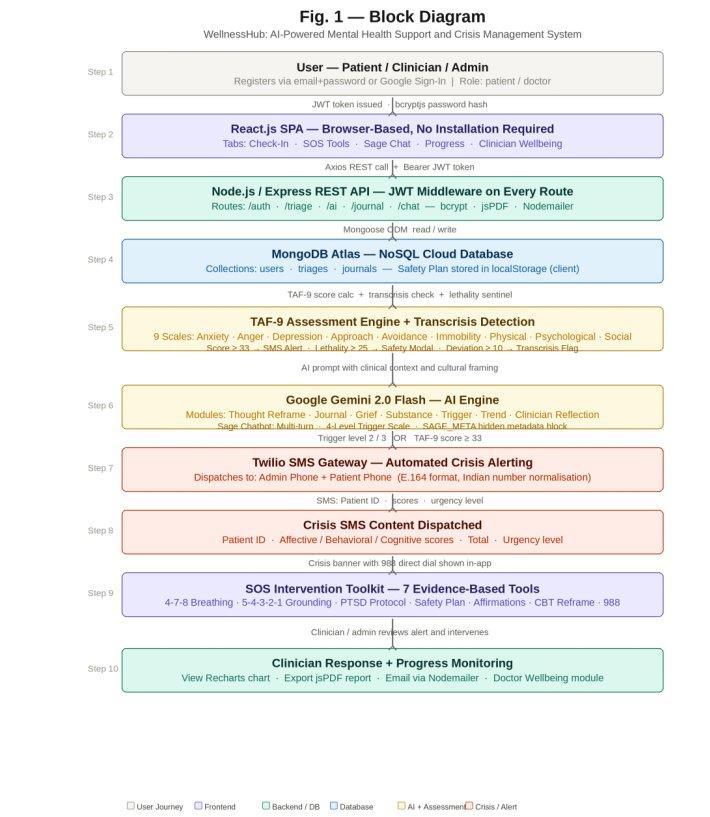
Fig. 1: BlockDiagram WellnessHubCompleteEnd-to-EndSystemFlow
Fig.1showsthecompleteend-to-endflowacrosstensteps.Theuserregistersorlogsinviaemail/passwordorGoogle Sign-In.TheReact.jsSPAcommunicateswiththeNode.jsbackendthroughJWT-authenticatedRESTAPIcalls.Thebackend readsandwritestoMongoDBAtlas.TheTAF-9enginecalculatesscores,runslethalitychecks,andexecutesthetranscrisis detectionengine.GoogleGemini2.0FlashpowersallsevenAImodulesandtheSagechatbot.Whenclinicalthresholdsare
© 2026, IRJET | Impact Factor value: 8.315 | ISO 9001:2008 Certified Journal | Page1901
International Research Journal of Engineering and Technology (IRJET) e-ISSN: 2395-0056
Volume: 13 Issue: 04 | Apr 2026 www.irjet.net p-ISSN: 2395-0072
crossed, Twilio dispatches SMS crisis alerts. The SOS toolkit and Safety Plan Builder provide in-app intervention. The clinicianresponsemoduleenableslongitudinalmonitoringandPDFreportdeliveryviaNodemailer.
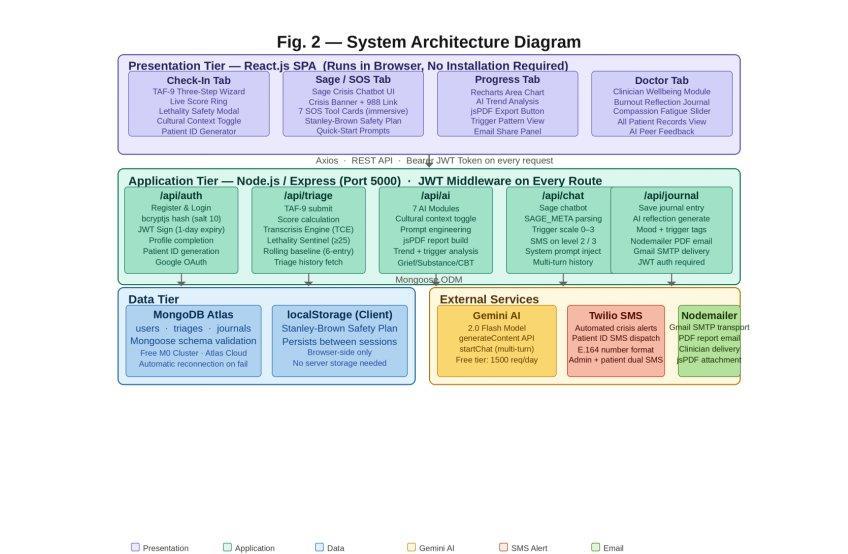
Fig. 2: SystemArchitectureDiagram Three-TierArchitecturewithAllExternalServices
Fig.2showsthelayeredsystemarchitecture.ThePresentationTieristheReact.jsSPAwithfourtabs.TheApplication Tier provides five route groups: /api/auth (registration, bcryptjs, JWT, Patient ID), /api/triage (TAF-9, score calculation, transcrisis engine, lethality sentinel), /api/ai (seven AI modules with cultural context, jsPDF), /api/chat (Sage with SAGE_METAparsingandtrigger0–3),and/api/journal(journal,AIreflection,Nodemailer).TheDataTierusesMongoDB Atlas and browser localStorage. Three external services integrate: Google Gemini AI, Twilio SMS, and Nodemailer with GmailSMTP.
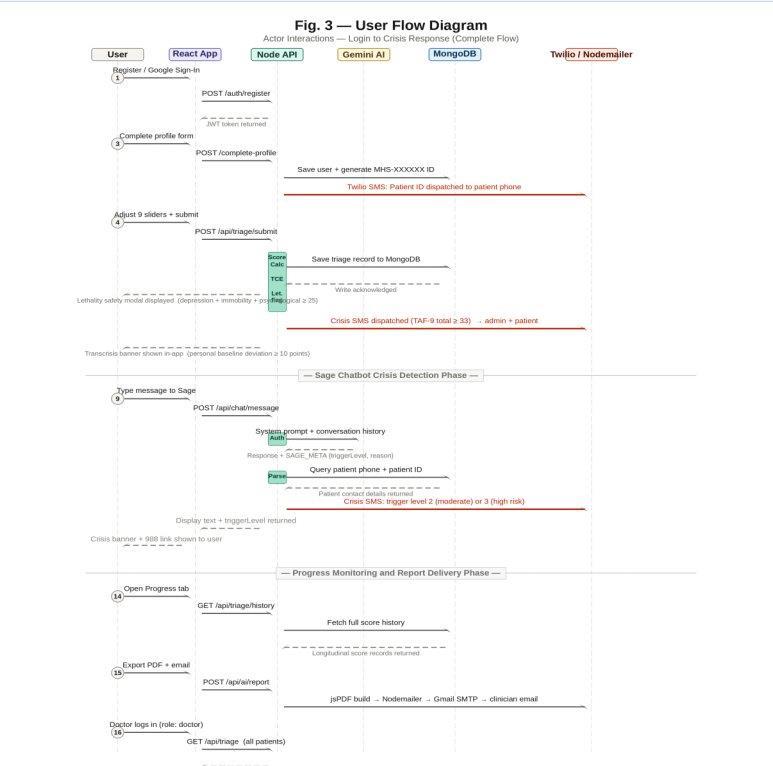
Fig. 3: UserFlowDiagram CompleteActorInteractionfromLogintoCrisisResponse
Fig.3showsthesequentialjourneyacrosssixswimlaneactors:User,ReactApp,NodeAPI,GeminiAI,MongoDB, and Twilio/Nodemailer. The flow starts at registration, moves through profile completion and Patient ID SMS, to TAF-9
© 2026, IRJET | Impact Factor value: 8.315 | ISO 9001:2008 Certified Journal | Page1902
International Research Journal of Engineering and Technology (IRJET) e-ISSN: 2395-0056
Volume: 13 Issue: 04 | Apr 2026 www.irjet.net p-ISSN: 2395-0072
submission.TheNodeAPIprocessingblockrunsscorecalculation,transcrisisdetection,andlethalityflagging.Lethality≥ 25 returns a safety modal. Score ≥ 33 dispatches crisis SMS. Deviation ≥ 10 shows a transcrisis banner. The Sage phase covers SAGE_META parsing, phone lookup, and conditional crisis SMS. The progress phase handles chart retrieval, PDF export,emaildelivery,doctorrecordsview,andclinicianwellbeingreflection.
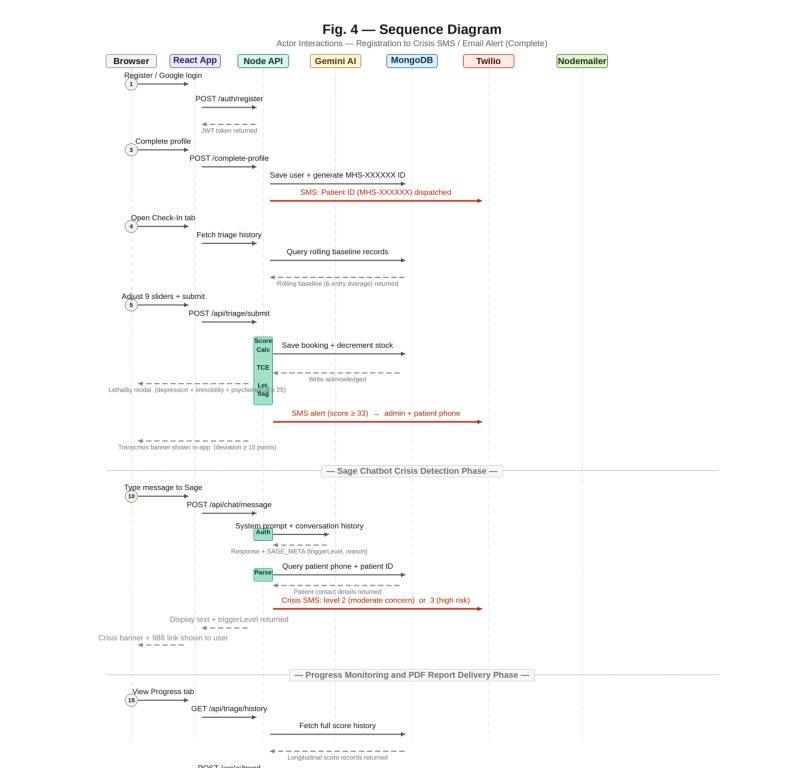
Fig. 4: SequenceDiagram CompleteMessage-LevelTracefromRegistrationtoAlertDispatch
Fig. 4 traces the complete interaction between all seven system actors: Browser, React App, Node API, Gemini AI, MongoDB, Twilio, and Nodemailer. The sequence starts with registration and JWT issuance, then profile completion and Patient ID SMS dispatch. The TAF-9 submission activates the processing block covering score calculation, TCE, and lethalityflagging.ThetriagerecordsavestoMongoDBandthelethalitymodalreturnsiftriggered.Ifscore≥33,SMSalerts go out via Twilio. The Sage phase covers system prompt injection, SAGE_META parsing, patient phone query, and conditional crisis SMS. The final phase covers longitudinal history retrieval, AI trend analysis, and jsPDF report delivery viaNodemailertoGmailSMTP.
5. IMPLEMENTATION RESULTS
WellnessHub was implemented using React.js 18, Node.js with Express 5, MongoDB Atlas, Google Gemini 2.0 Flash, and Twilio SDK 5.13.1. The application was tested on Android smartphones, iPhones, and desktop browsers, with consistentUIrenderingandfunctionalperformanceacrossallplatforms.
5.1 Login and Registration Interface
The login interface is a dark-themed screen with email/password and Google Sign-In options. On successful authentication,aJWTtokenisstoredinlocalStorageandtheuseristakentothemaindashboard.
© 2026, IRJET | Impact Factor value: 8.315 | ISO 9001:2008 Certified Journal | Page1903
International Research Journal of Engineering and Technology (IRJET) e-ISSN: 2395-0056
Volume: 13 Issue: 04 | Apr 2026 www.irjet.net p-ISSN: 2395-0072
5.2 TAF-9 Check-In Assessment
Step 2 of the assessment presents three category cards for Affective, Behavioral, and Cognitive domains, each with three slider controls spanning 1 to 10. A live score bar updates in real time showing the Total Impairment Score, colorcodedstatus,andthreedomainsubtotals.
5.3 Clinical Safety Check Modal and SMS Alert
When the lethality composite score exceeds 25, the lethality modal appears as a full-screen overlay. When the Total Impairment Score exceeds 33, an automated SMS goes out via Twilio to the clinician and patient, containing the patient identifier,domainscores,andcompositetotal.
5.4 Sage Crisis Chatbot Interface and Crisis Banner
The Sage chat interface supports multi-turn conversation with quick-start prompts. When trigger level 2 or above is detected,apersistentcrisisbannerappearsabovethechatwindowwithdirectaccesstothe988crisislineandCrisisText Line.
5.5 SOS Intervention Dashboard
TheSOSdashboardhasaherobannerwithdirect988accessandaresponsivegridofsevenclinicalinterventiontool cards. Each card opens into a focused single-tool view that removes surrounding navigation to reduce cognitive load duringmomentsofacutedistress.
5.6 Progress Monitoring and Longitudinal Chart
TheProgresstabshowsaRechartsareachartofTAF-9TotalImpairmentScoresovertime.AI-poweredtrendanalysis andtriggerpatternidentificationareavailableasone-tapfunctions.ThesharepanelenablesjsPDFreportgenerationand Nodemaileremaildelivery.
6. CONCLUSION
This paper presented the design, architecture, and implementation of WellnessHub, an AI-powered mental health supportandcrisismanagementplatform.Bycombiningmulti-dimensionalclinicalassessmentthroughtheTAF-9protocol, automatedcrisisdetectionandSMSalertingthroughTwilio,AI-poweredtherapeuticsupportacrosssevenevidence-based modules,andaculturallysensitivemulti-turncrisischatbot,WellnessHubaddressescorestructuralgapsinexistingdigital mentalhealthtools.
The system shows that proactive, continuous mental health monitoring can be delivered through a browser-based applicationwithoutspecializedhardware. The TAF-9framework providesa multi-dimensional alternativetosingle-scale mood logging. The Sage chatbot’s four-level trigger detection allows autonomous, real-time crisis escalation. The transcrisis detection engine surfaces personal deterioration before absolute thresholds are reached, enabling earlier intervention.
The dual-mode AI framing for cultural context supports both individualistic and collectivist users. The clinician wellbeing module offers evidence-based burnout monitoring for mental health professionals. Future work includes wearable biometric integration, multi-language support, a shared clinical dashboard, and an offline-capable progressive webapplicationmode.
REFERENCES
[1] World Health Organization. (2022). World Mental Health Report: Transforming Mental Health for All. Geneva: WHO Press.
[2]Kroenke,K.,Spitzer,R.L.,&Williams,J.B.(2001).ThePHQ-9:Validityofabriefdepressionseveritymeasure.Journalof GeneralInternalMedicine,16(9),606-613.
[3]Spitzer,R.L.,Kroenke,K.,Williams,J.B.,&Lowe,B.(2006).Abriefmeasureforassessinggeneralizedanxietydisorder: TheGAD-7.ArchivesofInternalMedicine,166(10),1092-1097.
[4] Barlow, D. H., Farchione, T. J., Fairholme, C. P., et al. (2011). Unified Protocol for Transdiagnostic Treatment of EmotionalDisorders.OxfordUniversityPress.
International Research Journal of Engineering and Technology (IRJET) e-ISSN: 2395-0056
Volume: 13 Issue: 04 | Apr 2026 www.irjet.net p-ISSN: 2395-0072
[5] Foa, E. B., & Kozak, M. J. (1986). Emotional processing of fear: Exposure to corrective information. Psychological Bulletin,99(1),20-35.
[6] Fitzpatrick, K. K., Darcy, A., & Vierhile, M. (2017). Delivering cognitive behavior therapy using a fully automated conversationalagent(Woebot):Arandomizedcontrolledtrial.JMIRMentalHealth,4(2),e19.
[7] Stade, E. C., Stirman, S. W., Ungar, L. H., et al. (2024). Large language models could change the future of behavioral healthresearchandpractice.ScienceTranslationalMedicine,16(764).
[8]Maslach,C.,Jackson,S.E.,&Leiter,M.P.(1996).MaslachBurnoutInventoryManual(3rded.).ConsultingPsychologists Press.
[9] Morse, G., Salyers, M. P., Rollins, A. L., Monroe-DeVita, M., & Pfahler, C. (2012). Burnout in mental health services: A reviewoftheproblemanditsremediation.AdministrationandPolicyinMentalHealth,39(5),341-352.
[10]Stanley,B.,&Brown,G.K.(2012).Safetyplanningintervention:Abriefinterventiontomitigatesuiciderisk.Cognitive andBehavioralPractice,19(2),256-263.
[11]Prochaska,J.O.,&DiClemente,C.C.(1983).Stagesandprocessesofself-changeofsmoking.JournalofConsultingand ClinicalPsychology,51(3),390-395.
[12]Kubler-Ross,E.(1969).OnDeathandDying.Macmillan.
[13] Mishara, B. L., & Weisstub, D. N. (2007). Ethical, legal, and practical issues in the control and regulation of suicide promotionovertheinternet.SuicideandLife-ThreateningBehavior,37(1),58-65.
[14]Nielsen,J.(1994).UsabilityEngineering.MorganKaufmann.
[15]Norman,D.A.(1988).TheDesignofEverydayThings.BasicBooks.
[16] Walker, R. L., & Finer, C. E. (2019). Mobile mental health applications: A review of usability for clinical populations underacutestress.DigitalHealth,5,1-12.
[17]Ji,S.,Pan,S.,Li,X.,Cambria,E.,Long,G.,&Huang,Z.(2022).Suicidalideationdetection:Areviewofmachinelearning methods.IEEETransactionsonComputationalSocialSystems,8(1),214-226.
[18]Vaswani,A.,Shazeer,N.,Parmar,N.,etal.(2017).Attentionisallyouneed.AdvancesinNeuralInformationProcessing Systems,30.
[19]WebContentAccessibilityGuidelines(WCAG)2.1.(2018).W3CRecommendation.WorldWideWebConsortium.
[20]Google.(2024).GeminiAPIDocumentation.GoogleAIforDevelopers.
International Research Journal of Engineering and Technology (IRJET) e-ISSN: 2395-0056
Volume: 13 Issue: 04 | Apr 2026 www.irjet.net p-ISSN: 2395-0072
BIOGRAPHIES


Smt Yamini Swathi Lanka is an Assistant Professor in the Department of Computer Science andSystemsEngineeringatAndhraUniversity,Visakhapatnam.Herareasofexpertiseinclude Computer Science Hardware and Architecture, Electronics, Wireless Communications, Digital Image Processing, and Embedded Systems. She has guided several student projects and contributesactivelytoacademicandresearchactivities.
P. Dinesh Varma is a student in the Department of Computer Science and Systems Engineering at Andhra University. His interests include software development, database management,andsystemdesign.
N. Deep Gopal isa student intheDepartment ofComputer Science and SystemsEngineering atAndhraUniversity.Hisinterestsincludesoftwaredevelopment,databasemanagement,and systemdesign.
P. Subramanyam is a student in the Department of Computer Science and Systems Engineering at Andhra University. His interests include software development, database management,andsystemdesign.