
International Research Journal of Engineering and Technology (IRJET) e-ISSN: 2395-0056
Volume: 12 Issue: 02 | Feb 2025 www.irjet.net p-ISSN: 2395-0072
International Research Journal of Engineering and Technology (IRJET) e-ISSN: 2395-0056
Volume: 12 Issue: 02 | Feb 2025 www.irjet.net p-ISSN: 2395-0072
V. Srinivas1, Srujan K2, Raju Kamuni3, Dr. D. Seshikala4, Raju Kaduru6 ,
1. Research Scholar, Dept. of Envi. Science, UCS, Osmania University, Hyderabad, Telangana, India
2. Research Scholar, Dept. of Envi Science, UCS, Osmania University, Hyderabad, Telangana, India
3. Research Scholar, Dept. of Envi. Science, UCS, Osmania University, Hyderabad, Telangana, India
4. Assistant Professor, Dept. of Envi. Science, UCS, Osmania University, Hyderabad, Telangana, India
5. Research Scholar, Dept. of Envi. Science, UCS, Osmania University, Hyderabad, Telangana, India
Abstract:
Phytoplankton communities play a pivotal role in aquatic ecosystemsasprimaryproducersandecologicalindicators of water quality. This study investigates the diversity and ecological significance of phytoplankton in Mallampally Lake,SiddipetDistrict,Telangana.Eightphytoplanktontaxa were identified, including Nitella, Nostoc, Diatom, Oedogonium, Hydrodictyon, Khara, Volvox, and Spirogyra. These species were analyzed for their potential as bioindicators of nutrient status and water quality. Results reveal a dominance of species associated with eutrophic conditions, such as Hydrodictyon, Nostoc, and Volvox, indicativeofmoderatlyelevatednutrientlevels. Diatoms and Spirogyra werealsoprevalent,suggestingmoderatenutrient enrichment. Comparative analysis with other freshwater ecosystems in India, such as Kolleru Lake, underscores similarities in phytoplankton composition and nutrient dynamics.Thefindingshighlighttheecologicalimportance ofmonitoringphytoplanktondiversitytoassessandmanage freshwater ecosystem health. Continued studies are recommended to track ecological changes and guide conservationeffortsinMallampallyLakeandsimilaraquatic systems.
Keywords:
Phytoplanktondiversity,ecologicalindicators,Mallampally Lake,eutrophication,waterquality,freshwaterecosystems.
Introduction:
Freshwater habitats are important for global biodiversity because they provide crucial ecosystem services such as waterpurification,habitatprovision,andsupportforaquatic and terrestrial species (Dudgeon et al. 2006). These ecosystemsareamongthemostbiodiverseandproductive on Earth, but they are increasingly threatened by anthropogenic pressures such as pollution, habitat degradation, and climate change (Reid et al., 2019). Biodiversity withinthesesystemsiscritical forsustaining ecological stability, controlling nutrient cycling, and increasing ecosystem resilience to environmental change
(Doddsetal.,2019).Asaresult,understandingthedynamics ofbiodiversityinfreshwaterecosystemsiscriticalfortheir preservationandsustainablemanagement.Phytoplankton, algae, and aquatic vegetation are essential components of freshwater ecosystems and important bioindicators of environmentalhealth.
Phytoplankton,asprimaryproducers,formthebaseofthe aquatic food web and contribute significantly to oxygen generationandnutrientcycling(Reynolds,2006).Algaeand aquaticplantsnotonlyprovidehabitatandfoodfordiverse aquatic organisms but also exhibit rapid responses to changes in nutrient levels, pollution, and other environmentalvariables,makingthemaccurateindicatorsof water quality (Palmer, 1969; Wetzel, 2001). For example, eutrophication, a process caused by excessive nutrient intake,frequentlyresultsinalgalblooms,whichhavebeen well-documented as indicators of ecological imbalance in freshwatersystems(Smith,2003).
Study area:
Mallampally Lake, nestled in the village of Mallampally, Siddipet District, Telangana, has been a vital part of the region'slandscapesinceitsconstructionin1902.Spanning 190acres,thelakeholdswateracross127acres,primarily duringtherainyseason.Beyonditsscenicbeauty,itserves asalifelineforlocalfarmers,irrigatingnearly1,500acresof farmland.Thevillageitselfishometoaround3,650people, withroughly750familiesdependingdirectlyonagriculture for their livelihood. The primary crops grown in the area include paddy, maize, cotton, and chilli, cultivated across bothKharifandRabiseasons,underscoringthecommunity's deeprelianceonthelakeforirrigation.
As a rain-fed waterbody, Mallampally Lake plays a crucial role in sustaining agriculture, but it also faces significant environmental threats. Agricultural runoff, excessive fertilizer use, and waste dumping pose risks to its water quality. Nutrient overload from fertilizers can lead to eutrophication, affecting aquatic life and reducing water usability. Additionally, improper waste disposal can introduce heavy metals and other pollutants, further
International Research Journal of Engineering and Technology (IRJET) e-ISSN: 2395-0056
Volume: 12 Issue: 02 | Feb 2025 www.irjet.net p-ISSN: 2395-0072
degrading the lake and harming both crops and local ecosystems. The urban growth rate is far higher than the rural growth rate, showing increasing urbanization. The pondsandwaterbodiesinurbanareasareindeteriorating stage.(Sultana&Seshikala,2012)
Thepurposeofthisstudyistoinvestigatethebiodiversityof Mallampally Lake, with a special emphasis on phytoplankton, algae, and aquatic vegetation as essential markersofwaterqualityandecologicalbalance.Buildingon proven approaches and insights from prior research, this work aims to improve our understanding of freshwater ecosystemdynamicsandcontributetoeffectiveconservation policies.
Phytoplankton and aquatic plants serve critical roles in freshwaterecosystemstability,actingasprimaryproducers andbioindicatorsofwaterquality(Prescott,1962).Thegoal ofthisresearchistodiscovercriticalindicatorspeciesthat canbeusedtoaccuratelyassessthelake'secologicalhealth. By examining the composition and distribution of these species, we can assess the lake's ability to sustain biodiversity,detectearlysignalsofecologicaldisturbances, and estimate the impact of natural and human-caused factors on its aquatic ecosystem. Understanding these interactions is critical for developing sustainable managementtechniquesthatcanprotectMallampallyLake's ecologicalintegritywhilealsosupportinglocalagriculture andlivelihoods.
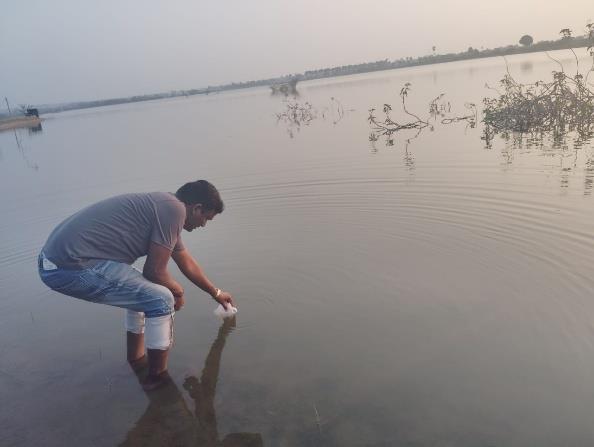
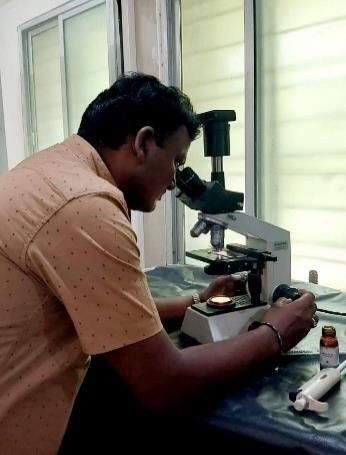
This study was conducted over the course of three years, encompassing the seasons: pre-monsoon, and postmonsoon, to capture the full seasonal variation in water quality and biological diversity. To guarantee optimal representation, five sampling sites were chosen, each representingadifferentecologicalzoneofthelake,allowing for an examination of spatial heterogeneity in species distributionandwaterqualitycharacteristics.Phytoplankton and aquatic vegetation samples were collected using planktonnetsandmanualcollectionmethods,respectively. Thesesamplesweretaxonomicallyidentifiedusingstandard references (Prescott, 1962; Bellinger & Sigee, 2010), resulting in accurate species categorisation and analysis. This sample design establishes a solid foundation for evaluatingtherelationshipbetweenwaterqualitymetrics andbiodiversityinMallampallylake.
Results and Discussion:
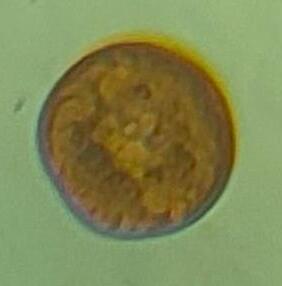
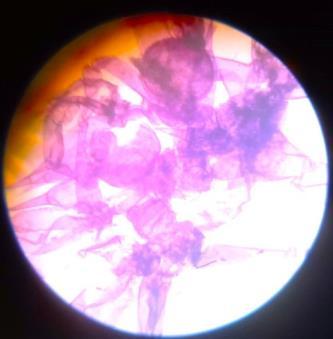
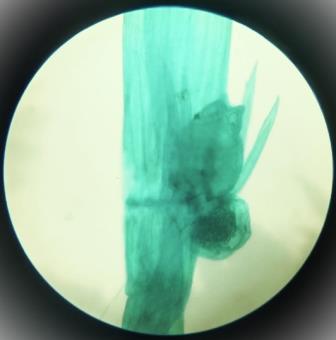
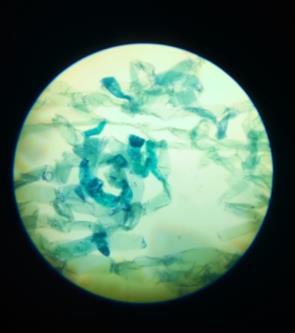
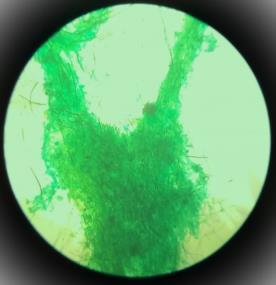
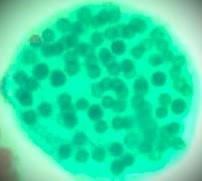
The study discovered a variety of phytoplankton species, including Nitella, Nostoc, Diatom, Oedogonium, Hydrodictyon, Khara, Volvox, and Spirogyra. These organisms,whicharepresentinfreshwaterhabitats,actas naturalmarkersofwaterquality.NitellaandHydrodictyon are well-known eutrophic bioindicators that thrive in nutrient-richwater(Hossainetal.,2020).Similarly,Nostoc
and Volvox are frequently associated with high nutrient loadsandcanindicatepossiblewaterqualitydegradation, especiallyinshallowlakes(Bhattetal.,2019).
By analyzing the presence and abundance of these phytoplanktonspecies,thisstudyprovidesvaluableinsights into the nutrient status and ecological balance of Mallampally Lake. Their distribution not only reflects currentwaterqualityconditionsbutalsohelpsinpredicting environmental changes, reinforcing the importance of monitoring phytoplankton diversity for sustainable lake management.
Discussion:
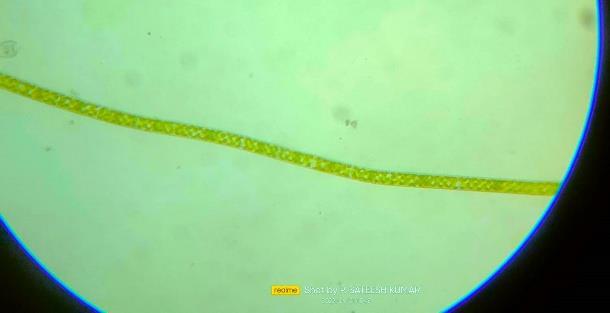
The presence of Diatoms, Spirogyra, and Oedogonium in Mallampally Lake indicates that the lake has moderate nutrient levels, which is consistent with results from comparable research in freshwater systems. For example, Royetal.(2020)foundthatdiatomsflourishinhabitatswith highsilicaandmoderatenutrientloads,andtheirdominance can imply reasonably stable ecological circumstances. Spirogyra,afilamentousgreenalga,iscommonlyfoundin eutrophicenvironmentsandisemployedasabioindicatorof nutrientcontamination(Sarmaetal.,2021).
KharaandHydrodictyon,ontheotherhand,arecommonin nutrient-rich habitats and have been linked to eutrophication(Raoetal.,2018).ThepresenceofVolvox,a colonialgreenalgae,suggeststhatthelake'snitrogenlevels aresomewhathigher(Muralidharanetal.2021)discovered thatVolvoxspeciesoftendominateinshallow,nutrient-rich water bodies and are regarded good markers of eutrophication.
The high abundance of Nostoc, a cyanobacterium, further supports this observation, as cyanobacteria are often associated with nutrient excess, particularly nitrogen and phosphorus(Mohammedetal.,2020).Nostocspecieshave
International Research Journal of Engineering and Technology (IRJET) e-ISSN: 2395-0056
Volume: 12 Issue: 02 | Feb 2025 www.irjet.net p-ISSN: 2395-0072
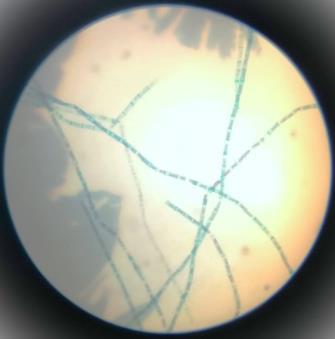

alsobeenconnectedtothecreationofalgalblooms,which canimpairwaterqualitybylimitingoxygenavailabilityand producingtoxins(Ibrahimetal.,2021).
MallampallyLake'sphytoplanktoncommunityisconsistent with observations from other eutrophic water bodies in India.Forexample,Reddyetal.(2019)foundthatSpirogyra, Nostoc,andHydrodictyondominatedthephytoplanktonin KolleruLake,implyingthatthelakes'nutrientdynamicsare similar.ThecontinuouspresenceofVolvoxandDiatomsin these lakes suggests that both can be useful biological markersoffertiliserloadingandwaterquality.
The phytoplankton community of Mallampally Lake is varied, with Nitella, Nostoc, Diatom, Oedogonium, Hydrodictyon,Khara,Volvox,andSpirogyraservingaskey ecological markers. These species provide important informationaboutthelake'swaterquality,nitrogenlevels, and overall ecological health. The water quality of Mallampally Lake reflects a moderately nutrient-enriched environment,asindicatedbythepresenceofbothnutrientsensitive and eutrophication-indicating phytoplankton species.Thedominanceof Diatoms and Spirogyra suggests relatively stable ecological conditions with moderate nutrient loads, while the presence of Hydrodictyon and Nostoc signals potential eutrophication. This balance indicatesthatthelakeisneitherhighlypollutednorpristine but requires regular monitoring to prevent excessive nutrient buildup. Sustainable management practices, including pollution control and periodic water quality assessments, will be essential to maintaining the lake's ecologicalhealth
Isincerelyexpressmygratitudetomyfellowco-scholarsat theDepartmentofEnvironmentalScience,UniversityCollege ofScience,OsmaniaUniversity,fortheirinvaluablesupport andcollaborationthroughoutthisresearch.Theirinsightful discussions and encouragement have greatly enriched my
International Research Journal of Engineering and Technology (IRJET) e-ISSN: 2395-0056
Volume: 12 Issue: 02 | Feb 2025 www.irjet.net p-ISSN: 2395-0072
work. I extend my special thanks to Rajender at EPTRI laboratoriesforhisassistanceandtechnicalguidance,which significantlycontributedtotheexperimentalaspectsofthis study.
I am deeply grateful to Dr. Duvvala Srinivas, Assistant Professor, Government Degree College, Siddipet, for his profoundinsightsandacademiccontributions,whichhave been instrumental in shaping my research approach My heartfeltappreciationgoesto Sridhar fromtheDepartment of Botany, UCS, Osmania University, for his valuable discussionsandsupport.Lastly,Iwouldliketoexpressmy sincerethanksto Dr. Madhusudhan, YuvaBiotechPVTLtd, Vidya Nagar, Hyderabad, for his encouragement and guidance, which have been crucial in refining this work. Their collective support and contributions have been immensely valuable in the successful completion of this research.
[1] APHA.(2017). Standard methods for the examination of water and wastewater (23rd ed.). American Public HealthAssociation.
[2] Bellinger,E.G.,&Sigee,D.C.(2010). Freshwater algae: Identificationand use as bioindicators. Wiley-Blackwell.
[3] Bhatt, A., Gupta, P., & Patel, S. (2019). Phytoplankton diversity and water quality assessment in freshwater lakes. EnvironmentalMonitoringandAssessment,191(8), 1-12.
[4] Dodds,W.K.,Perkin,J.S.,&Gerken,J.E.(2019).Human impact on freshwater ecosystem services: A global perspective. EnvironmentalScience&Technology, 53(5), 2114–2124.https://doi.org/10.1021/acs.est.8b03344
[5] Dudgeon,D.,Arthington,A.H.,Gessner,M.O.,Kawabata, Z.I.,Knowler,D.J.,Lévêque,C.,...&Sullivan,C.A.(2006). Freshwaterbiodiversity:Importance,threats,statusand conservationchallenges. BiologicalReviews, 81(2),163–182.https://doi.org/10.1017/S1464793105006950
[6] Hossain, M. S., Ali, M. E., & Haque, M. E. (2020). Phytoplankton as bioindicators of water quality in a freshwater lake. Aquatic Ecosystem Health & Management,23(2),162-171.
[7] Ibrahim, N. H., El-Sheekh, M. M., & El-Gammal, E. W. (2021). The role of Nostoc species in algal bloom formation and their ecological impact. Environmental Science and Pollution Research, 28(12), 14995–15010. https://doi.org/10.1007/s11356-021-12483-2
[8] Kumar,S.,Sharma,C.,&Patel,M.(2020).Assessmentof eutrophication in Indian freshwater ecosystems: Case studies and mitigation strategies. Journal of Environmental Management, 262, 110314. https://doi.org/10.1016/j.jenvman.2020.110314
[9] Mohammed, R., Syed, A., & Nizam, U. (2020). Role of cyanobacteriainaquaticecosystems:Areview. Journal of Environmental Management,270,110902.
[10] Muralidharan, M., Kumar, P., & Reddy, B. (2021). Eutrophication and its impact on phytoplankton diversity in Indian lakes. Hydrobiologia, 848(2), 423437.
[11] Palmer, C. M. (1969). A composite rating of algae toleratingorganicpollution. Journal of Phycology, 5(1), 78–82. https://doi.org/10.1111/j.15298817.1969.tb02581.x
[12] Prasad,M.B.K.,Ananda,M.G.,&Kulkarni,D.R.(2017). Phytoplanktondiversityandwaterqualityassessment in urban lakes of South India. Applied Water Science, 7(4),1893–1901.https://doi.org/10.1007/s13201-0150355-y
[13] Prescott,G.W.(1962). Algae of the western Great Lakes area. Wm.C.BrownCompanyPublishers.
[14] Rao,M.V.,Reddy,T.,&Bhat,P.(2018).Phytoplanktonas indicatorsofeutrophicationinfreshwaterecosystems. Environmental Toxicology and Chemistry,37(6),15701578.
[15] Reddy,V.R.,Rao,S.P.,&Singh,R.(2019).Comparative studyofphytoplanktondiversityinKolleruLakeandits implications for water quality management. Environmental Science and Pollution Research, 26(12), 12445-12456.
[16] Reynolds, C. S. (2006). The ecology of phytoplankton. CambridgeUniversityPress.
[17] Roy, S., Kaur, H., & Singh, M. (2020). Diatom diversity and its relationship with water quality in freshwater ecosystems. Water Research,185,116204.
[18] Smith, V. H. (2003). Eutrophication of freshwater and coastal marine ecosystems: A global problem. Environmental Science and Pollution Research, 10(2), 126–139.https://doi.org/10.1065/espr2002.12.142
[19] Wetzel, R. G. (2001). Limnology: Lake and river ecosystems.AcademicPress.
[20] Yadav, A., Singh, N., & Bajpai, A. (2019). Role of phytoplanktonasbioindicatorsinassessmentofwater quality of river Ganga. Environmental Monitoring and Assessment, 191(9), 556. https://doi.org/10.1007/s10661-019-7652-4
[21] Sultana, R., & Seshikala, D. (2012). Water body quality analysis by benthic macroinvertebrates. International Journal of Pharmacy and Biological Sciences, 2(1),269279.
https://www.ijpbs.com/ijpbsadmin/upload/ijpbs_50cd6 c853c912.pdf