
International Research Journal of Engineering and Technology (IRJET) e-ISSN: 2395-0056
Volume: 13 Issue: 03 | Mar 2026 www.irjet.net p-ISSN: 2395-0072
International Research Journal of Engineering and Technology (IRJET) e-ISSN: 2395-0056
Volume: 13 Issue: 03 | Mar 2026 www.irjet.net p-ISSN: 2395-0072
Dr. SWAPNIL GUPTA
Assistant Director & Scientist ‘C’ (Documents), CFSL Delhi, DFSS, MHA
Abstract - Forensicexaminationofthesecurityfeaturesofa chequeinvolves systematicvisual, instrumental,andtechnical scrutiny to detect counterfeiting, substitution, or tampering. Forensic examination of cheques focuses on verifying security features like UV-sensitive inks, watermarks, microprinting, and void pantographs to differentiate genuine documents from counterfeits. A number of Security Features under MandatoryandDesirableCategoryhavebeenproposedbyCTS 2010 for the implementation and improvement of cheque. The Cheque Truncation System (CTS) is an image-based cheque-clearing system in which the physical cheque stops moving beyond the first bank branch, and only its digital image and MICR data are transmitted electronically for processing and settlement. It was introduced by the Reserve Bank of India (RBI) to make cheque clearing faster, cheaper, and more secure. In questioned-document examination, the presence, quality, and magnetic properties of the MICR line can support or challenge the genuineness of a cheque, especially when compared with standard genuine-cheque MICR samples. In the current research work, verification procedure(s) to check the authenticity of cheques explained which should be used by the Forensic Scientists, Bank officials and Layman etc.
Key Words: NIA, RBI, CTS, MICR, E13B.
AccordingtoSection13(a)ofNegotiableInstrumentsAct (NIA) 1881, “Negotiable instrument means a promissory note,billofexchangeorchequepayableeithertoorderorto bearer,whethertheword“order”or“bearer”appearonthe instrumentornot.”Section6ofNIAdefines“Achequeisa bill of exchange drawn on a specified banker, and not expressed to be payable otherwise than on demand”. A cheque is bill of exchange with two more qualifications, namely,(i)itisalwaysdrawnonaspecifiedbanker,and(ii) itisalwayspayableondemand.Consequently,allchequeare billofexchange,butallbillsarenotcheque.Achequemust satisfyalltherequirementsofabillofexchange;thatis,it must be signed by the drawer, and must contain an unconditionalorderonaspecifiedbankertopayacertain sumofmoneytoortotheorderofacertainpersonortothe bearerofthecheque.Itdoesnotrequireacceptance.
Achequeisadocumentthatordersapaymentofmoney from a bank account. The person writing the cheque, the drawer,usuallyhasabankaccountwheretheirmoneywas
previouslydeposited.Thedrawerwritesthevariousdetails including the monetary amount, date, and a payee on the cheque, and signs it, ordering their bank, known as the drawee,topaythatpersonorcompanytheamountofmoney stated. Cheques are a type of bill of exchange and were developedasawaytomakepaymentswithouttheneedto carry large amounts of money. Technically, a cheque is a negotiableinstrumentinstructingafinancialinstitutionto payaspecificamountofaspecificcurrencyfromaspecified transactionalaccountheldinthedrawer'snamewiththat institution. Both the drawer and payee may be natural persons or legal entities. Specifically, cheques are order instruments, and are not in general payable simply to the bearer(asbearerinstrumentsare)butmustbepaidtothe payee.
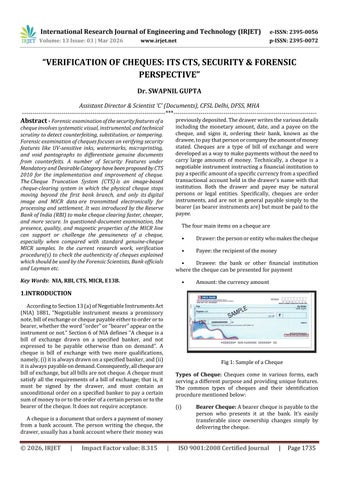
Thefourmainitemsonachequeare
• Drawer:thepersonorentitywhomakesthecheque
• Payee:therecipientofthemoney
• Drawee: the bank or other financial institution wherethechequecanbepresentedforpayment
• Amount:thecurrencyamount
Types of Cheque: Cheques come in various forms, each servingadifferentpurposeandprovidinguniquefeatures. The common types of cheques and their identification procedurementionedbelow:
(i) Bearer Cheque: Abearerchequeispayabletothe person who presents it at the bank. It’s easily transferable since ownership changes simply by deliveringthecheque.
International Research Journal of Engineering and Technology (IRJET) e-ISSN: 2395-0056
Volume: 13 Issue: 03 | Mar 2026 www.irjet.net p-ISSN: 2395-0072
Identification:Lookforthewords“orbearer”oncheque.The bankwillhonourthepaymenttowhoevercarriescheque.
(ii) Order Cheque: Unlike bearer cheques, order chequesarepayableonlytothepersonwhosename is specified on the cheque. The bank verifies the identityofpayeebeforeprocessingthepayment.
Identification: The phrase “or bearer” is crossed out, indicatingthatonlythenamedpayeecanreceivethefunds.
(iii) Crossed Cheque: Acrossedchequehastwoparallel lines drawn across it, with “a/c payee” written inside.Thistypeofchequeensuresthatpaymentis made only to the account holder named on the chequeandcanonlybecashedordepositedintothe payee’saccount.
Identification:Thechequefeaturestwoslopingparallellines andthewords“a/cpayee.”
(iv) Open Cheque: Anopenchequeisnotcrossedand can be encashed by the bearer at any bank. It’s transferable,meaning the payeecan transferitto anotherperson.
Identification:It’ssimplysignedbytheissueranddoesnot havethe“a/cpayee”crossing.
(v) Post-Dated Cheque: Thistypeofchequeisdated for a future date. Banks will only process the paymentonorafterthespecifieddate.
Identification: The date on the cheque is set in the future, anditremainsvalidbeyondthisdate.
(vi) Stale Cheque: A stale cheque is one that is presentedforpaymentafterthreemonthsfromthe dateofissuance.Itisnolongervalidforpayment.
Identification: Any cheque that has exceeded the threemonthvalidityperiod.
(vii) Traveller’s Cheque: Usedprimarilybytravellers, thischequecanbeencashedatbanksworldwide.It providesasecurewaytocarryandexchangemoney whiletraveling.
Identification:Issuedbybanks,itdoesnotexpireandcanbe usedacrossdifferentcountries.
(viii) Self Cheque: Aself-chequeisdrawnbytheissuerto withdraw money from their own account. It’s payableonlyatthebankwheretheaccountisheld.
Identification: The word “self” is written in the drawee column,indicatingthatthechequeismeantfortheissuer’s ownuse.
(ix) Banker’s Cheque: Issuedbyabankonbehalfofan account holder, a banker’s cheque is used for making payments to another person within the same city. It is considered a secure and nonnegotiableinstrument.
Identification:Issuedbythebankwiththespecifiedamount debitedfromtheaccountholder’saccount.Validforthree monthsandcanberevalidatedundercertainconditions.
Chequetruncationmeansstoppingtheflowofaphysical chequeduringthecourseofaclearingcycle,immediatelyon generation of an electronic image for transmission. In the extant Cheque Truncation System (CTS) of India, physical cheques are truncated by the presenting bank. Cheque truncation thus obviates the need to move the physical instruments across bank branches for clearing purposes, other than in exceptional circumstances. This effectively eliminatestheassociatedcostofmovementofthephysical cheques, enables automation of clearing processes and reducesthetimerequiredfortheircollection.
Cheque Clearing traditionally involves a presentation session and a return session. In the Cheque Truncation System(CTS)ofIndia,duringthepresentationsession,the presenting bank (or its branch) captures the data of the chequesalongwiththeirelectronicimagesandsendsthem, in lieu of the physical cheques, to the clearing house for presentation on the drawee (paying) bank. The clearing house processes the data, arrives at the settlement, and routestheimagesandrequisitedatatothedraweebanksat theendofpresentationsession.
Inthereturnsession,thedraweebanksubmitsthedataof unpaid / dishonoured cheques to the clearing house. The clearing house processes provided data, arrives at the settlement, and routes the return data to the presenting banksattheendofthereturnsession.Theclearingcycleis treatedascompleteoncethepresentationclearingandthe associated return clearing sessions are successfully completed.Fundsaremadeavailabletothepresentingbanks onlyaftercompletionofthereturnclearingsession.Under Continuous Clearing, the flow of cheque images and data acrossbanksthroughtheclearinghouseiscontinuousand boththepresentationandthereturnsession(nowcalledthe confirmationsession)operateintandem.Thisenablesfaster clearingofchequesandevenutilisationofinfrastructureand resources throughout the day. The CTS process involves followingClearingProcess:
1) Preliminary Verification: Atthispointthepresenting bank verifies account, physical feel of the cheque, the apparent tenor of the instrument, no discoloration or tamperingoralterationvisibletothenakedeye,examination underUVlamp,thresholdlimits,etc.
2) Sorting: Onlychequeswhichmeettherequirementof theCTSsystemaresortedandproceedforprocessing.
Volume: 13 Issue: 03 | Mar 2026 www.irjet.net p-ISSN: 2395-0072
3) Crossing: Allchequesreceivedforcollectionoverthe bank’scounters,Chequedepositmachinesandchequedrop boxes are required to be branded with the bank’s special crossingstamp /endorsement prior to scanning. The bank takescarethatthecrossingendorsementdoesnotinterfere with any material portion of the cheque, and the drawee banksareabletoprocesstheirinwardswithoutanyundue problems.
4) Image capture: At this point the images of all the instrumentsinabatch/filemustbedulycapturedalongwith MICRdatausingscannerssetupforthepurpose.Theamount needstobecaptured/keyedintocompletethedatarecord. Idealnumberofinstrumentsinonecapturefileshouldbea maximumof250.
ThreeimagespecificationsaspublishedbytheRBI:Image TypeMinimumDPIFormatCompression
(i) FrontGrayScale100JFIFJPEG
(ii) FrontBlack&White200TIFFCCITTG4
(iii) ReverseBlack&White200TIFFCCITTG4
5) Endorsement: At the time of scanning the cheque/instrument,thereadersorter/scannerwillprinta single line endorsement on the back of each instrument whichshallbetheuniqueidentifierfortheinstrument.The printingoftheendorsementimpliesthatthecollectingbank undertakestocreditthepayee’saccountonrealizationofthe chequeandthattheinstrumentdepositedisagenuineone andisbeingcollectedforabonafidecustomerofthebank.
6) ValidationoftheCheque:Datacapturedbythebanks’ capture system will be validated to avoid rejection. The capture system can automatically detect special cases like Governmentcheques.
7) Transaction completion: Thebankswillpassdebit/ creditontheValueDateofthetransaction(thedateonwhich thesettlementispostedinthesettlementbank’saccount).
8) Storage and Archiving System: To ensure proper management of disputes, complaints, reconciliation, etc. banks are required to maintain a secure storage and archiving system of cheque images. The present statutory periodforpreservationofphysicalpaidChequesis10(Ten) yearsas mandated by Reserve Bank of India.Additionally, bankscanutilizetheNationalArchivalServices(NAS)where images and reports can be downloaded instantly by the memberbanksforahistoricperiodof10years.ThroughNAS API service, banks can extend archival service to their branchesforonlineretrievalofchequeimages.
9) PPS – Positive Pay system: PPSisafacilityprovided tobanktoavoidfrauds.Acustomerwhoisissuingacheque shouldprovidethepayee’snameandamountofthecheque to the bank. The bank in turn submits this information to NPCI.Wheneverthesaidchequeispresentedforclearing,the chequedetailswillbematchedwiththePPSdetailsandaPPS
report will be sent to the drawee bank with the required flags.
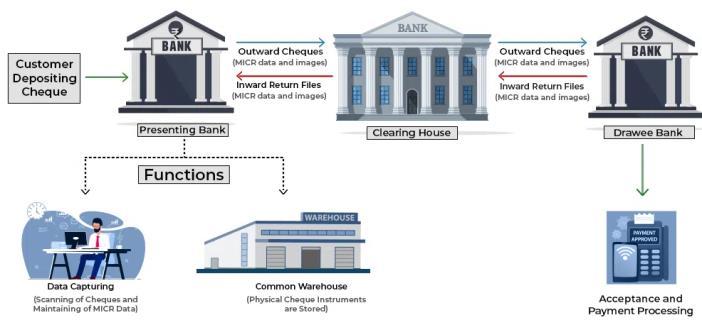
CTS is a quicker and more efficient method of handling cheques,anditalsohelpspreventfraud.Whencomparedto the traditional paper-based clearing procedure, CTS drasticallyshortensthetimeittakesforachequetoclear.It alsoimprovessafetyanddecreasesthepossibilityoffraudor mistakesascomparedtousingrealcheques.
ReserveBankofIndiahasprescribednewguidelineson standardizationofsecurityfeaturesofcheques,referredto asCTS-2010.AChequemustbehavingweightof96g.s.m. (+5%)andthicknessofNotlessthan4¼thousandthsofan inch (+5%). "CTS-2010 Standard" for Cheque FormsSpecifications involve following Security Features for a Chequeunderdifferentcategories;
A. MANDATORY FEATURE: MandatoryFeaturesarethe compulsory features which must be present in all the chequesissuedfromeach&everyBank.
1. Paper (At Manufacturing Stage)- Currently all the Bank has maintaining paper specifications as per the document'MechanisedchequeprocessingusingMICR technology – Procedural Guidelines', available at RBI website. Now paper is image friendly and have protection against alterations by having chemical sensitivitytoacids,alkalis,bleachesandsolventsgiving a visible result after a fraudulent attack. CTS-2010 StandardpapershouldnotglowunderUltra-Violet(UV) lighti.e.,itshouldbeUVdull.
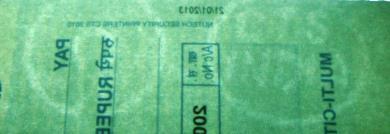
2. Watermark (At Manufacturing Stage)- Allchequesare carrying a standardized watermark, with the words “CTS-INDIA”whichcanbeseenwhenheldagainstany light source. This would make it difficult for any fraudstertophotocopyorprintaninstrumentsincethis paper would be available only to security printers handlingchequeprinting.Thewatermarkshouldbeoval in shape and diameter could be 2.6 to 3.0 cm. Each cheque must hold atleast one full watermark. Sample watermarksthatwouldbeusedinCTSwillbefinalised
International Research Journal of Engineering and Technology (IRJET) e-ISSN: 2395-0056
Volume: 13 Issue: 03 | Mar 2026 www.irjet.net p-ISSN: 2395-0072
inconsultationwithIndianBanks’Association(IBA)/ National Payments Corporation of India (NPCI) and could(illustratively)appearasunder–

3. VOID pantograph (At Printing Stage)- Pantograph with hidden / embedded “COPY” or “VOID” feature should be present in the cheques. This feature should not be visible on the scanned image at the resolution specified in CTS but should be clearly visible in photocopies and scanned colour images as resolution usedinsuchcaseswouldbeabovetheprescribedCTS standards.Thiswouldactasadeterrentagainstcolour photocopyorscannedcolourimagesofacheque.

4. Bank’s logo printed with invisible ink (ultra-violet ink) (At Printing Stage)- Bank’slogoshouldbeprinted inultra-violet(UV)ink.Thelogowillbecapturedby/ visibleinUV-enabledscanners/lamps.Itwillestablish genuinenessofacheque.
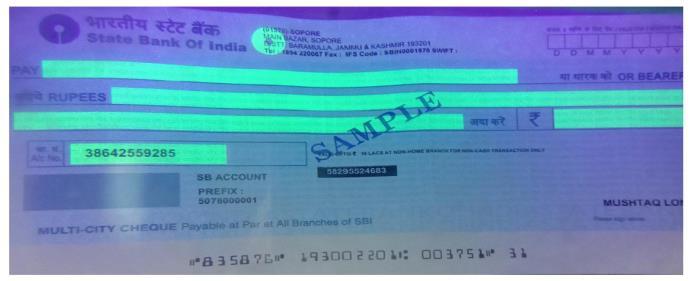
5. Field placements of a cheque- Placementofsignificant fieldsonthechequeformsshallbemandated.However, placementofadditionalfieldsshallbelefttobanks.This willenabledatacapturingbyOptical/ImageCharacter
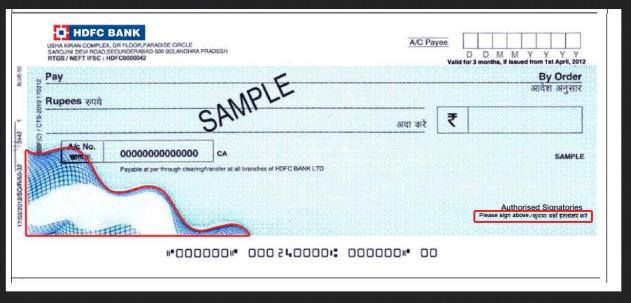
Recognition (OCR / ICR) engines in offline mode and help banks in automating their payment processes. A samplechequewithrecommendedfieldplacementsis placedatforbelow.
6. Mandating colours and background- Light/ Pastel colours shall be mandated for cheques so that Print/ DynamicContrastRatio(PCR/DCR)ismorethan60% forensuringbetterqualityandcontentofimages.The colourswillbefinalizedinconsultationwithIBA/NPCI.
7. Clutter free background- Backgroundofchequesshall bekeptasclutterfreeaspossibleforimprovingquality andclarityofimages.
8. Prohibiting alterations / corrections on cheques- No changes / corrections should be carried out on the cheques (other than for date validation purposes, if required).Foranychangeinthepayee’sname,courtesy amount(amountinfigures)orlegalamount(amountin words), etc., fresh cheque forms should be used by customers. This would help banks to identify and controlfraudulentalterations.
9. Printing of account field- Allchequesshould,asfaras possible,beissuedwiththeaccountnumberfieldpreprinted. This should be considered must for current accountholdersandcorporatecustomers.
10. Use of UV feature on cheque images- Thoughbank’s logo in UV ink is a strong deterrent for forgery and duplicate cheques, there are challenges in terms of increasedimagesize,stabilisationofUVtechnologyin CTSenvironment,availabilityofUV-enabledscanners, etc.,inimplementingthisfeature.However,thebenefits outweighthelimitationsandhencethisfeatureshallbe incorporated.Presentingbankscansubjectinstruments beyondathresholdvaluetoUVverificationusingtheUV lampscurrentlyavailableforcurrencynoteverification. IncaseUVtechnologystabilisesinfuture,theUVimage view could be incorporated in CTS as an additional image view or by dropping one of the existing image views.
1. Inadditiontothemandatorysecurityfeaturesasabove, bankscanconsiderincludingadditionalsecurityfeaturesas pertheirriskperceptionlike
i. supplementary watermark containing their own logo,
ii. embeddedfluorescentfibres,
iii. fugitiveink,
iv. secondaryfluorescentink,
International Research Journal of Engineering and Technology (IRJET) e-ISSN: 2395-0056
Volume: 13 Issue: 03 | Mar 2026 www.irjet.net p-ISSN: 2395-0072
v. micro-lettering,
vi. tonerfusing,
vii. check-sum,
viii. patterns,
ix. floraldesigns,
x. bleedingink,
xi. structuralmagnetics,
xii. securitythread,
xiii. hotstampedhologramsonmulti-citychequesand demanddrafts,
xiv. auto-detectiontools,
xv. useofUVbandonsensitiveandkeyareasofinterest on a cheque such as Legal Amount Recognition (AmountinWords),CourtesyAmountRecognition (AmountinFigures),Signature,BeneficiaryName,
xvi. pre-encodingofamountfieldontheMICRbandfor demand drafts / pay orders (above a self-decided cut-off)beforeissuetocustomers,
xvii. useofcheck-sumonthefaceofdemanddrafts/pay orders(otherthantheMICRband),etc.
2. Useofadditionalfeaturesbybankswillbesubjecttothe features being compatible with CTS requirements. While incorporating additional features, banks should take care that-
i. Theadditionalsecurityfeaturesdonotoverlaporbe verycloseorclashagainsttheprescribedminimumsecurityfeatures.
ii. ThefeaturesarecompatiblewithCTSspecifications.
iii. The features are not image heavy, i.e., increase the imagesize.
iv. Theyshouldnotblockanyimportantdataonimages orhinderpaymentprocessing.
v. Presenting banks are not expected to verify the additionalfeatures.
1. IBA and NPCI shall be jointly vested with the task of certifyingadditional/optionalsecurityfeatures.IBAand NPCI would ensure that the additional/ optional features are compatible with CTS and MICR clearing schemesbeforereleasingthemtobanks.
2. IBAandNPCIshallbeentrustedwiththeresponsibility forempanelmentofvendorswithcapabilitytoprovide thenewsecuritystandards.
3. UseofUVimageviewinCTSisbeingkeptonholdfor thepresent.Thedecision wouldberevisitedinfuture onceUVtechnologystabilizes.
Thelayoutofachequeleafandlocationofvarioussecurity featuresasprescribedabovewouldappearasunder–
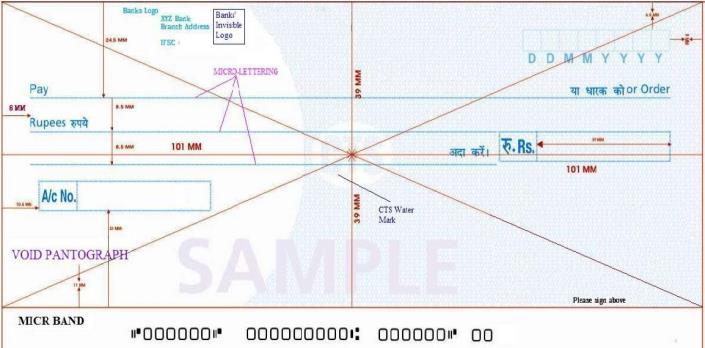
One of the important means of efficient funds movement through the organised sector of an economy is the process of clearing of cheques. To facilitate quick processing of cheques and prompt settlement thereof, mechanisedchequeprocessingsystemsusingMagneticInk Character Recognition (MICR) technology for cheque clearing. Magnetic Ink Character Recognition (MICR), a technology invented in the 1950s has allowed financial institutions to streamline their check processing. (MICR) consists of magnetic ink printed characters that can be recognized by high speed magnetic and/or optical recognitionequipment.TheMICRencoding,calledtheMICR linewhichcontainsomecharactersareprintedwithspecial MICRFontsandareknownasMICRCharacters,whichmust be printed with MICR Toner or MICR Ink. It is the combination of Toner and Fonts that create the machine readableMICRline. MICRTonerorInkistheelementwhich addsthemagneticreadabilitytoeachcharacter,allowingfor high-speedcheckclearing.
International Research Journal of Engineering and Technology (IRJET) e-ISSN: 2395-0056
Volume: 13 Issue: 03 | Mar 2026 www.irjet.net p-ISSN: 2395-0072
To facilitate MICR based Cheque Processing, instruments passing through clearing are required to be issued in standard format and defined size of 8" x 3 2/3". The instrumentsshouldbeprintedonMICRgradequalitypaper witha"Readband"of5/8"inwidthreservedatthebottom onwhichessentialparticularsoccurinspecialMICRinkin theE-13BFont.Chequesareprintedbyapprovedsecurity printers forming part of a panel of printers and paper manufacturers which is maintained by the Indian Banks' Association.
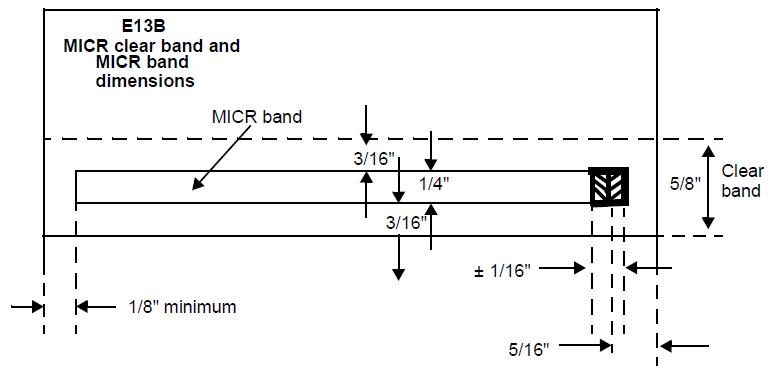
Fig8:MICRclearbanddimensions
MICR Fonts are the characters that appear at the bottom of checks or financial documents. There are two different fonts which are used depending on established bankingstandardsinthecountry.ThesefontsareE-13Band CMC-7.E13-B Font is used in the India, United States of America, Canada, Australia, United Kingdom, Japan, India, Mexico,Colombia,andTurkeywhileCMC-7Fontisusedin France,Spain,Israel,SouthAmerica(exceptColombia)and otherMediterraneanCountries.
These are the special font which used in magnetic ink printing. Use of the term E13B generally implies both the character shape as well as the magnetic aspects of the printing Actually, the name E13B is the abbreviation wherein E signifies that it was the 5th version of the font considered; 13 references the fact that the MICR font is constructed on a .013” module for stroke and character widthand B signifiesthatitwasthesecondrevisionofthat font. There are two types of characters in the E13B font: numbersandsymbols.
E13B Numbers- TheE13Bfontnumbersareillustrated below:

E13B Symbols- TheE13Bfonthasthefollowingfour symbols.
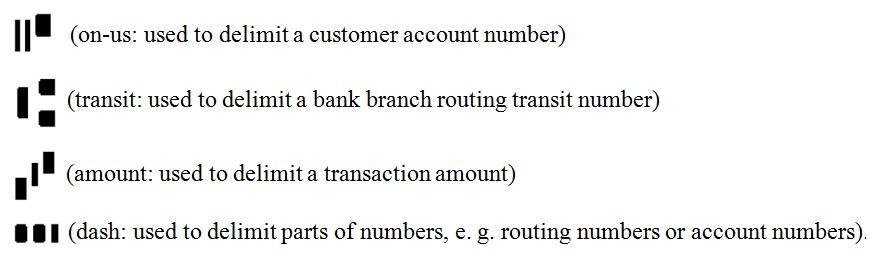
Font]-
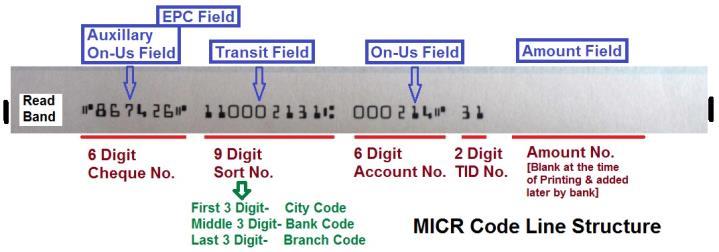
The MICR line contains some character positions. These positionsaregroupedintofivefields,whicharereadfrom righttoleft.
1.AmountField
2.On-UsField
3.TransitField
4.ExternalProcessingCodeField(optional)
5.AuxiliaryOn-UsField(optional)
Allcheckshaveatleastthreeofthefields(Amount,On-Us, andTransit).CommercialchecksmayalsohaveanAuxiliary On-Usfield,locatedontheleftofthecheck.Somechecksalso have an External Processing Code (EPC) digit, located betweentheTransitandAuxiliaryOn-Usfields.TheAmount and Transit fields have a standardized content, while the contentsoftheOn-UsandAuxiliaryOn-Usfieldscanvaryto meettheindividualbankrequirements.
MICR Code Line Structure-
ThecodelineoccurringintheReadBandisdividedintofive fields with distinct delimiters separating each field, the detailsofwhichareasunder:
I. CHEQUE NUMBER- Itofsixnumericdigitspreceded andfollowedbyadelimiter.Thealpha-numericprefix totheserialnumbernormallyusedbybanksshouldbe printedoutsidethecodelineincloseproximity,just abovethereadband,innormalink.
II. SORT NUMBER- Itisconsistingofninedigitsfollowed byadelimiter.Thefirstthreedigitsrepresentthe City, the next three indicate the Bank and the last three digitssignifythe Branch.Theninedigitsortcodeis uniqueforanybankbranchinthecountry.
Thefirstthreedigitsrepresentthe City code andare sameasthefirstthreedigitofthePINcodeofthatcity. e.g.,abankinDelhiwillhavefirstthreedigitsofMICR code as 110. The Bank code is a three-digit code numberallottedtothebankonanall-Indiabasis.Alist
Volume: 13 Issue: 03 | Mar 2026 www.irjet.net p-ISSN: 2395-0072
of3-digitbankcodenumbersallottedtobanksalong withthethree-letterabbreviation(alphacode)tothe respectivebankisfurnishedinthelistavailableonthe websitee.g.SBIbank’scodeis002.The Branch code isthelastthreedigitsofthenine-digitsortcodeandis uniquetoabranchinacitye.g. generally,theservice branchofabankisallottedthebranchcodeof'001'.
III. ACCOUNT NUMBER- It is consisting of six digits followedbyadelimiterisanoptionalfield.Inthecase of Government Cheques issued by RBI alone, the account number is of seven digits. The Government Account number is 10 digits in length-7 digits occurringintheAccountnumberfieldandthreeinthe transactioncodefield.
IV. TRANSACTION NUMBER- TIDcomprisesoftwodigits inallinstrumentsexceptGovernmentchequesdrawn onRBIwhichhavea3-digittransactioncode.Control documents-batchandblockticketshaveathree-digit representationinthetransactioncodefield.
Auniformsetoftransactioncodeshasbeendeveloped to be used by all banks. The transaction code, to be pre-printed,comprisesofatwo-digitnumberrunning from 01-99, codes 01-49 are reserved for debit instrumentsandcodes50-99forcreditinstruments.
It also talks about the payability of cheque e.g. 10Saving Bank Account Cheque, 11 – Current Account Cheque,12–Banker’sCheque,16–DemandDraft,29 –AtParCurrentAccountCheque,isalocalchequeour payable at par cheque. 29, 30 and 31 represents payableatparcheque,while09,10and11represents local cheque.Payableatpar chequeisa chequethat canbecashedatanybranchoftheissuingbank,while localchequecanbecashedonlyattheissuingbranch. So,ifyoudepositachequeinyourbank,withcode10 written at the bottom of the cheque, it’ll take a few daysforthemoneytocomeinyouraccount.However, sincemostofthebranchesthesedaysareCBS(Core Banking Solution) enabled, so the cheques are generallypayableatpar.
V. AMOUNT NUMBER- Itconsistsofsomenumeraldigits boundedonbothsidesbyadelimiter.Theamountis encodedinpaisewithoutthedecimalpoint.Thefield isalwayszero-filledtotheleft.E.g.iftheamountofthe chequeisRs1000/-thenAmountNumberispresent as [added later byBankinFig.11].
Magnetic Ink Character Reader (MICR reader): MICRofa chequecanbeexaminedbyaMagneticInkCharacterReader (MICR reader).Itisa device thatreadscharactersprinted withmagneticinkonbankingdocumentssuchascheques, using the Magnetic Ink Character Recognition (MICR) technology.Itismainlyusedtoautomaticallycapturedata from the MICR line at the bottom of a cheque (account number, cheque number, IFSC· branch code, etc.) at high speedandwithhighaccuracy.
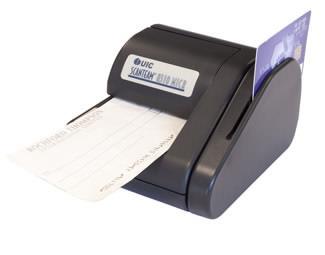
The MICR line is printed withmagnetic inkcontainingiron-oxide particles, using one of two standard MICR fonts (E-13B). When the cheque passes through the MICR reader: Amagnetizing headmagnetizes the iron-oxide particles in the ink patents. Aread head(similar to a tape-recorder head) detects the unique magnetic“signature”ofeachcharacterasitmovespast.The reader’s electronicsconvert the magnetic waveform into digital characters(account number, branch code, amount, etc.)forautomaticprocessingandclearing.SincetheMICR lineisprintedwithspecialmagneticink,anon-magneticor toner-printedline(asinmanyfakes)willnotgeneratethe correctsignal,helpingdetectforgedoralteredcheques.
CTS makes deals with cheques safer. Cheques are sent between banks and the clearinghouse as safe electronic images.Thismakesitlesslikelythattheactualchequeswill belostorstolen.Also,thesystemcanautomaticallycheckfor andverifyfraud,whichmakesitlesslikelythatfakecheques
International Research Journal of Engineering and Technology (IRJET) e-ISSN: 2395-0056
Volume: 13 Issue: 03 | Mar 2026 www.irjet.net p-ISSN: 2395-0072
willbepassed.AsperthelatestdirectivefromtheReserve BankofIndia(RBI),theChequeTruncationSystem(CTS)is being upgraded to a Continuous Clearing and Real-Time Settlement mechanism effective from the year 2025. This changewillsignificantlyenhancethespeedandefficiencyof chequeprocessingacrossallbanks.ReserveBankofIndia has prescribed guidelines on standardization of security features of cheques in which some security features are mandatory for all bank whereas some are desirable in accordancewiththeCTS-2010.Allthesecurityfeaturesin the questioned/disputed cheques should be examined forensicallyincomparisonwiththetocheckthegenuineness ofthecheque(s).MagneticInkCharacterRecognition(MICR) is a 9-digit, machine-readable technology used to process cheques securely by printing unique bank routing informationatthebottomofacheckwithspecialiron-oxide ink. It ensures fast, accurate clearing, with digits representingthecity,bank,andbranch.Thisresearchpaper certainlybeusefultoForensicScientist,BankOfficialsandas wellasforalayman.
6. ACKNOWLEDGEMENT
Authors convey to special regards to Dr. B. K. Mohapatra, Director,CFSL,DelhifortheirencouragementforR&Dwork.
7. REFERENCES
(1)ChequeTruncationSystem-CTS2010
(2)TheBankers’BookEvidence(BBE)Act,1891
(3)HDFCBankhttps://www.hdfc.bank.in/blogs/savingsaccount/different-types-of-cheque-you-need-to-know
(4)IFSC-MICRCodehttp://bankifsccode.com/
(5)NEGOTIABLEINSTRUMENTS(NI)ACT,1881
(6)NATIONALPAYMENTCORPORATIONOFINDIA(NPCI) https://www.npci.org.in/uploads/Product_Booklet_CTS_5 3d8e7963b.pdf
(7)ReservebankofIndia(RBI)
https://www.rbi.org.in/commonman/english/scripts/FA Qs.aspx?Id=3878
(8)StateBankofIndia(SBI)
https://sbi.bank.in/documents/53471/53742/30122023 1823-Policy+on+Multi+City+Cheques.pdf/f31d1591-be9c7207-670e0ffa2678706a?t=1703940828010