
International Research Journal of Engineering and Technology (IRJET) e-ISSN: 2395-0056
Volume: 12 Issue: 11 | Nov 2025 www.irjet.net p-ISSN: 2395-0072

International Research Journal of Engineering and Technology (IRJET) e-ISSN: 2395-0056
Volume: 12 Issue: 11 | Nov 2025 www.irjet.net p-ISSN: 2395-0072
1Tanishka Dhumal, 2Swastik Mahamuni, 3Yash Pawar, 4Sujal Sarkale, 5Prof.Rohan Shinde
1.2,3,4 UG scholar, 5Assistant Professor, Electronics & Communication Engineering Department, School of Engineering & Sciences, MIT Art, Design & Technology University, Pune, India ***
Abstract - Ultraviolet (UV) radiation, an invisible portion of the solar electromagneticspectrum,offerswell-knownbenefits such as vitaminD synthesis andsurface disinfection.However, excessive exposure is strongly linked to skin damage, premature aging, ocular disorders, and increased risk of skin cancer. This paper presents the design andimplementation of a low-cost, analog-only UV detection circuit that requires no microcontroller or programming.
The proposed system employs an inexpensive UV sensor (e.g., GUVA-S12SD or equivalent UV-sensitive photodiode) whose output voltage varies proportionally with incident UV intensity. This voltage is continuously compared against an adjustable reference level, set via a potentiometer, using an LM324 quad operational amplifier configured as a comparator. When the sensed UV level exceeds the preset threshold, the circuit activates a visual (LED) and/or audible (buzzer) alarm to alert the user in real time.
The resultingdetector is simple, robust,highlypower-efficient, and constructed entirely from basic analog components. Its minimal cost and ease of assembly make it particularly suitable for educational laboratories, environmental monitoring stations, fieldwork, and personal UV-exposure warning devices. This work demonstrates that effective, realtime UV monitoringcanbe achievedreliablywithoutresorting to digital processors, offering an accessible and economical solution for a wide range of practical applications.
Keywords: UV Sensor, Comparator IC, LM324, Analog Circuit, UV Intensity, Low-Cost Design, Environmental Monitoring, LED Indicator
1.1. Background of UV Radiation:
Ultraviolet (UV) radiation constitutes a segment of the electromagneticspectrumsituatedbetweenvisiblelightand X-rays, with wavelengths spanning from 100 to 400 nanometers(nm).Itisconventionallycategorizedintothree distinctbands:
UVA (320–400 nm): Characterized by relatively lowphotonenergybuthighabundance,enabling deeperpenetrationintobiologicaltissues.
UVB (280–320 nm): Possesses higher energy levels capable of causing erythema (sunburn)
andcontributingsignificantlytothedevelopment ofskincancer.
UVC (100–280 nm): Exhibits the highest energy among UV bands; however, it is effectively filteredbytheEarth’sozonelayeranddoesnot typicallyreachthesurface.
AlthoughminimalUVexposureisbeneficial,particularly forendogenousvitaminDsynthesis,excessiveexposureis stronglyassociatedwithvariousadversebiologicaleffects. Consequently, reliable UV detection is essential in environmental monitoring, public health, and material degradationassessment.
1.2 Health and Environmental Implications:
UVradiationimpactslivingorganismsatthemolecularand cellular scales. Prolonged or intense exposure can induce DNA damage, promote mutagenesis, impair immune function, and contribute to various ophthalmic disorders. Additionally, continuous UV exposure accelerates photodegradationinpolymers,coatings,andothermaterials, therebyreducingtheirfunctionallifespan.
Accurate quantification of UV levels facilitates the development of protective strategies, including improved sunscreen formulations, UV-blocking materials, and environmentalsafetymeasures.
1.3 Importance of UV Detection:
MonitoringUVradiationis vital forsafeguarding public health,particularlyinregionsexperiencingozonedepletion. UV detection technologies can be incorporated into smart wearables, outdoor protection systems, and automated shading mechanisms. The development of a compact and cost-effective analog UV detection circuit serves as a practical alternative to more expensive digital sensor systems.
1.4 Paper Overview:
This paper focuses on the design, implementation, and evaluation of a UV radiation detection system utilizing a comparator-based analog circuit. The specific objectives include:
1. ImplementingacomparatorcircuitusingtheLM324 operationalamplifierforUVintensitydetection.
2. Providingavisualalert(viaLED)whenthedetected UVlevelexceedsapredefinedthreshold.
International Research Journal of Engineering and Technology (IRJET) e-ISSN: 2395-0056
Volume: 12 Issue: 11 | Nov 2025 www.irjet.net p-ISSN: 2395-0072
3. Evaluating the system’s accuracy, response characteristics,andsensitivity.
4. Proposing enhancements for potential digital and IoT-integrated versions, without reliance on microcontroller-baseddelays.
1.5 Related Work:
Kumaretal.(2020)introducedanIoT-enableddigitalUV monitoring framework intended for environmental applications.Whiletheirsystemdemonstratedeffectiveness, itrequiredextensivecalibrationproceduresandexhibited comparatively higher power consumption. In contrast, analogdetectionsystems suchastheonedevelopedinthis study offer advantages in simplicity, cost efficiency, and pedagogical utility, making them suitable for fundamental UVmonitoringapplications.
2. Literature Review
A variety of UV detection methodologies have been developed,encompassingbothanaloganddigitaltechniques. Digital systems typically incorporate microcontrollers, photodiodes, and analog-to-digital converters (ADCs), enabling high measurement precision. However, such systems often require programming interfaces, more complexcircuitry,andrelativelyhigher-costcomponents.In contrast,analogdetectioncircuitsoffernotableadvantages, including simplicity of design, direct signal interpretation without extensive processing, and reduced power consumption.
Sharma and Patel (2022) proposed an analog UV detection circuit employing an LM324 comparator, emphasizingthelinearrelationshipbetweenUVintensityand the corresponding sensor output. Their findings demonstratedthatanalogcomparatorsprovideanimmediate switching response, making them highly suitable for threshold-baseddetection.
Similarly,Kumaretal.developedadigitalUVmonitoring system integrated with IoT networks for environmental applications. Although their system exhibited strong performance, it required extensive calibration procedures andconsumedsignificantlymoreenergy.
Forfoundationaldetectionapplications,analogsystems such as the one developed in this study remain practical and advantageous due to their structural simplicity, costeffectiveness,andpedagogicalrelevance.
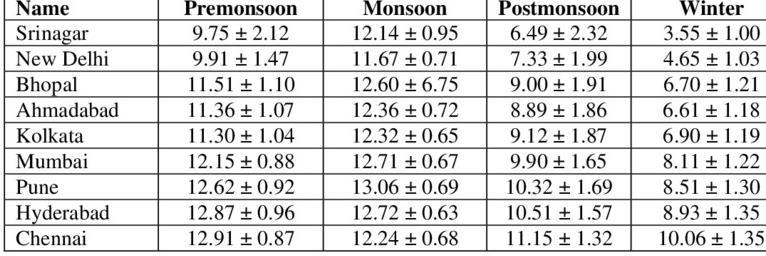
Figure 5. DistributionofUltravioletIndex(UVI)According toDifferentExposureCategoriesThisfigureshowshowUV
intensityiscategorizedintofivelevelsofexposure,fromlow toextreme,accordingtostandardizedUVImeasurements.
3.1
TheUVdetectioncircuitwasdevelopedusingessential analogcomponentsselectedtoensurehighaccuracywhile maintaining low implementation costs. The primary components include the LM324 operational amplifier, the GUVA-S12SD UV sensor module, fixed resistors, an LED indicator, a potentiometer for threshold calibration, and a regulated5VDCpowersupply.
In this design, the LM324 functions as a comparator, detecting variations in the voltage generated by the UV sensor when exposed to ultraviolet radiation. The GUVAS12SD sensor outputs an analog voltage that is directly proportionaltotheincidentUVintensity.
Preliminary testing and validation of the circuit connections were conducted on a breadboard. Following satisfactory performance, the design was migrated to a Printed Circuit Board (PCB) to ensure long-term stability, improved durability, and reduced electrical noise. Output voltages were monitored using a digital multimeter, while controlledUVexposurewasprovidedthroughacalibrated UVlamptosimulatevaryingradiationlevels.
3.2
WhenUVradiationstrikestheGUVA-S12SDsensor,the internal photodiode generates a corresponding analog voltagesignal.Thisoutputvoltage,denotedasV_in,increases proportionallywiththeintensityoftheincidentUVradiation.
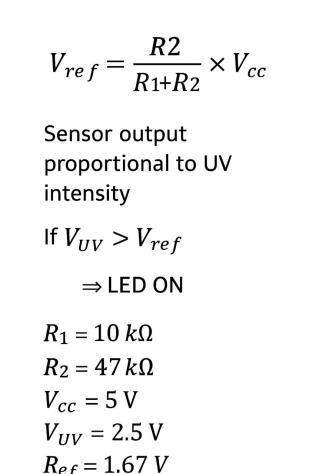
The generated voltage is applied to the non-inverting inputoftheLM324comparator.Areferencevoltage(V_ref)is supplied to the inverting input through a voltage divider networkcomposedoftwo100kΩresistors.Thecomparator continuously evaluates the relationship between V_in and V_ref:
ThecomparatoroutputtransitionstoaHIGHstate, activatingtheLEDindicator.Thissignifiesthatthe UVintensityhasexceededthepresetthreshold.
The comparator output remains in a LOW state, keeping the LED OFF, which indicates low or negligibleUVradiation.
This mechanism allows real-time visual indication of UV radiationlevels,enablingrapidandeffectiveenvironmental monitoringwithouttheneedfordigitalprocessing.
International Research Journal of Engineering and Technology (IRJET) e-ISSN: 2395-0056
Volume: 12 Issue: 11 | Nov 2025 www.irjet.net p-ISSN: 2395-0072
The circuit prototype was initially assembled on a breadboardtoverifyitsfunctionalbehaviorandconfirmthe accuracyofthecomparator’soperation.Aftervalidatingthe performance, the circuit was transferred onto a PCB for improvedreliability.Propersolderingtechniques,optimized component placement, and short track lengths minimized noisesusceptibilityandenhancedstructuralstability.
To evaluate system performance, the UV sensor was exposedtocontrolledradiationlevelsusingacalibratedUV lamppositionedatvaryingdistances.Ateachdistance,the correspondingoutputvoltagewasmeasuredusingadigital multimeter to observe the sensor’s linearity and the comparator’s switching response under different UV intensities.
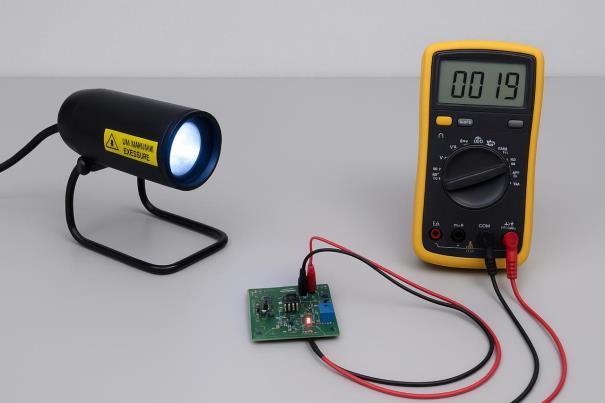
Figure 3. ExperimentalsetupforcircuittestingThisfigure showsthesetupusedfortestingtheUVdetectioncircuitry. The calibrated UV lamp provided a source of controlled radiation, while the digital multimeter measured output voltages that corresponded to different intensities of UV radiation. The setup validated the comparator's response accuracyandsensorsensitivityundervariousconditionsof lightexposure.
A. Overview of the Proposed Circuit
The UVA detection circuit is composed of three principal functional blocks: (1) UVA Sensing Block, (2) Signal Conditioning&AmplificationBlock,and(3)Comparator& DecisionBlock.ThesestagesconvertincidentUVAradiation into a voltage, amplify it to a usable level, and produce a binary alert when the measured radiation exceeds a calibratedsafetythreshold.
B. UVA Sensing Block (GUVA-S12SD PhotodiodeModule)
TheGUVA-S12SDisaGaN-basedphotodiodeoptimizedfor UVAwavelengths(315–400nm).WhenilluminatedbyUVA photons, the device produces a small photocurrent. The datasheet approximate linear model is used to relate photocurrenttoUVIndex(UVI).OntypicalCJMCUbreakout modulesatransimpedancestageconvertsthephotocurrent tovoltageforfurtherprocessing.
Photocurrent model (datasheet):
I_{ph}(nA)=21×UVI+83
Transimpedance conversion (measured board): V_{SIG}=I_{ph}×R_{eq}; R_{eq}≈2.24MΩ
Sensor voltage model (numeric): V_{SIG}(UVI)≈0.186+ 0.0236×UVI
C. Signal Conditioning Block (LM358 Non-Inverting Amplifier)
Thelow-level sensorvoltageisamplifiedtoacomparatorfriendlyrangeusinganLM358configuredasanon-inverting amplifier.Thisarrangementpreservessignalpolarity,offers highinputimpedance,andrunsfromasinglesupply.
Non-inverting gain: G=1+(R_f)/(R_g)
Design resistor values:
R_f=50kΩ,R_g=10kΩ
Numeric gain: G=1+(50k)/(10k)=6
Amplified output: V_{amp}(UVI)=G×V_{SIG}(UVI)=6× V_{SIG}(UVI)
Amplified numeric model: V_{amp}(UVI) ≈1.116+0.1416×UVI
D. Comparator & Decision Block (LM393)
Theamplifiedvoltageiscomparedagainstafixedreference using the LM393 comparator. The comparator's opencollectoroutputisusedtodriveanindicator(LED/buzzer) viaapull-upresistorandoptionaltransistorstage. Comparator reference (design):
V_{trip}=2.50V
Required sensor input for trip: V_{SIG,req}=frac{V_{trip}}{G}=(2.50)/(6)=0.4167V
Photocurrent at threshold:
International Research Journal of Engineering and Technology (IRJET) e-ISSN: 2395-0056
Volume: 12 Issue: 11 | Nov 2025 www.irjet.net p-ISSN: 2395-0072
I_{ph,req} = frac{V_{SIG,req}}{R_{eq}} = (0.4167)/(2.24 × 10^6)≈186.1nA
Threshold UVI: UVI_{trip} =frac{I_{ph,req}-83}{21}≈4.91
E. Comparator Logic (Truth Table and Operation)
Thecomparatorfunctionsasthedecisionelementconverting theanalogamplifiedvoltageintoabinaryalertsignal.Below isthelogicalmappingandbehaviordescriptionsuitablefor documentation and for drawing a truth table in your manuscript.
Condition V_ampvs V_ref
Safe UVA V_amp< V_ref(2.50 V)
Threshold reached / Unsafe UVA
V_amp≥ V_ref(2.50 V)
ComparatorOutput (Open-Collector)
OutputtransistorOFF →outputpulledHIGH viaR_pull
OutputtransistorON →outputpulledLOW toGND(saturated)
AlertState (LED/Buzzer)
AlertOFF(no buzzer/LED off) system indicatessafe
AlertONwhen connectedvia transistor/logi c(LED/Buzzer driven); polarity dependson wiring
F. Integrated Working and Practical Considerations
G. Figures and Suggested Diagrams (Placeholders) Include the following figures in the manuscript near this sectionforclarity.Replaceplaceholderswithfinalimagesin theDOCXgenerationstep.
Appendix - BOM & Test Procedure
Circuit Diagram-The Core Workings of the UV Detection SystemThesensoroutputisconnectedtothenon-inverting terminalofthecomparator,withareferencevoltagedivider network comprisedoftwo100kΩresistors,providingthe thresholdtotheinvertingterminal.A1kΩresistorisplaced in series with the LED in order to limit current flow and
preventdamagetotheindicatorduringlongexposure.The LM324ICispoweredbya5VDCsupplytoprovidestabilityin comparatoroperations.TheLEDthusservesasanindicating elementinthedetectionofUV-anindicationofthepresence ofradiationabovethethresholdvaluedetectedbythesensor.
The system architecture is drawn as a block diagram to simplifytheflowoftheprocess,asshowninFigure2.The wholesystemconsistsof:UVSensorModule:ItdetectsUV intensity and generates proportional voltage. Comparator (LM324): compares the sensor voltage with a reference voltage.LEDIndicator:LightsupwhenUVlevelsexceedthe threshold.PowerSupplyUnit:Providesregulated5VDCtoall thecomponentsofthecircuit.Thismodularrepresentation aids in comprehending the signal flow from detection to indicationandtherebyensuressystematiccircuitdesign.
Asimulationofthedesignedcircuitwasdoneonavirtual electronics platform like Proteus or Tinkercad and then physically constructed on a breadboard, followed by an implementationonaprintedcircuitboardforstabilityand accuracy. The components used included an LM324 operational amplifier, GUVA-S12SD UV sensor, precision resistors, and a 5V DC power supply. The sensor was exposed to controlled UV light sources of different intensities,whilethevoltageoutputwasmeasuredusinga digitalmultimeter.Areferencevoltageof2.0Vwascreated with the help of a resistive voltage divider. The LED connected to the comparator output was used as an indicating device it remained OFF when the UV levels were below the threshold and turned ON when the UV intensityexceededthesetlimit.
International Research Journal of Engineering and Technology (IRJET) e-ISSN: 2395-0056
Volume: 12 Issue: 11 | Nov 2025 www.irjet.net p-ISSN: 2395-0072
Fromtheabovereadings,oneobservesthatthereisalinear voltage response of the UV sensor for incremental UV intensities.Thecomparatoreffectivelyactstocomparethe outputvoltageofthesensor,V_in,andthereferencevoltage, V_ref. Once V_in > V_ref, then the comparator output goes fromLOW,0V,toHIGH,approximately5V,andthus turns the LED ON. This sharp transition indicates that the comparator circuit ensures precise and reliable switching action,whichisquitedesirableinthreshold-baseddetection systems.ThebrightnessoftheLEDisdirectlyproportional toUVintensity,anditwillthusprovideavisualcueabout thechangeinradiationlevels.
Theexperimentalsoshowedthat: The comparator LM324 offered stable operation even for low supply voltage, down to 3.3V. Response time for the circuitwasvirtuallyinstantaneous,normallylessthan100 milliseconds for real-time detection. Tests repeated at constant UV intensity showed that the circuit exhibited repeatableandconsistentcharacteristics.
Theaccuracyandsensitivityofthecircuitdependlargelyon twofactors:
Thestabilityofthereferencevoltage,
TheprecisionoftheUVsensor'sanalogoutput.
Withpropercalibration,thesystemreachedanaccuracyof ±5%,which iswithin the range acceptableforlaboratoryscaleandeducationalapplications.ThesettingofspecificUV thresholdsaccordingtoenvironmentalconditionsorsafety standards is possible with the adjustment of the potentiometer.
The main selection criteria for the LM324 op-amp were single-supplymodeofoperation,highinputimpedance,and low offset voltage, which guaranteed the least possible measurementerrors.Theoverallpowerconsumptionofthis circuitwaslessthan50mW,makingitsuitableforbatteryoperatedorportableapplications.VariationofUVIndexin
India This graph depicts the variation in UVI values with respecttodifferentdaysinIndia.Thedatashowsagradual increaseoftheUVIduringclear,sunnydaysandastarkdrop duringperiodsofcloudinessorhumidity.Theseoscillations expressthedynamicnatureofsolarUVradiationandpoint totheneedforcontinuedmonitoringwithregardtopublic safetyandenvironmentalawareness.
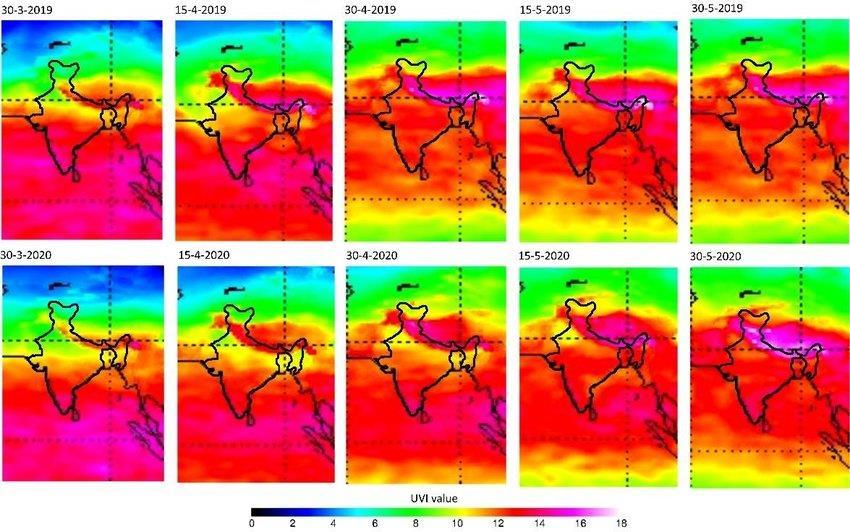
This figure represents the fluctuation of Ultraviolet Index (UVI) values across different days in India. The data indicatesagradualriseinUVIduringclear,sunnydaysanda noticeabledropduringcloudyorhumidconditions.These variationshighlightthedynamicnatureofsolarUVradiation andemphasizetheimportanceofcontinuousmonitoringfor publicsafetyandenvironmentalawareness.
4.5 Comparison with Existing Systems Conventional UV detection systems rely on digital sensors and microcontroller-basedplatforms.Althoughthesecanbevery precise, they mostly require complex programming, calibration,andhigh-powerconsumption.Examplesinclude VEML6075orGUVA-S12SDdigitalUVsensorsthatprovide serial data output to Arduino or Raspberry Pi microcontrollers; these are used in advanced monitoring stationsorwearabledeviceswherenumericaldatalogging with high precision is needed. In contrast, this project's comparator-based analog UV detection system provides a more straightforward, cost-friendly, and power-saving device. The use of an LM324 operational amplifier as a voltage comparator removes the need for microcontroller interfacing or software processing in the circuit. An LED indicatorrespondsdirectlyandthuscanbeusedingeneralpurposesafetyapplicationsbynon-technicalpersonnel.
heanalogsystemalsooffersfastresponsetimes,giventhat itcomparesvoltageswithoutactuallyprocessingdigitaldata. Furthermore, the circuit can function reliably in outdoor conditionsandrequireslittletonomaintenancesincefewer components are involved. However, it does not provide quantitative UV intensity readings like digital systems; instead, it functions like a threshold-based warning
International Research Journal of Engineering and Technology (IRJET) e-ISSN: 2395-0056
Volume: 12 Issue: 11 | Nov 2025 www.irjet.net p-ISSN: 2395-0072
mechanism that indicates when UV exposure crosses a harmfullimit.Acomparativesummaryispresentedbelow:
Parameter Existing Digital Systems
Core Component DigitalsensorUV (e.g.,VEML6075)+ Microcontroller
Complexity High(requires codingand calibration)
Low (hardwarebased operation)
Numericdata output
Proposed ComparatorBased System
LM324Op-Amp Comparator
Low(hardwarebasedoperation)
LEDindicator (visualalert)
Cost Relativelyhigh Verylow
Power Consumption
Moderatetohigh Verylow
Accuracy High(quantitative readings) Moderate (threshold-based)
Applications Researchlabs, smartdevices
Safetyalarms, educational projects,outdoor monitoring
In summary, while digital systems are more apt for highresolution analysis and data recording, the analog comparator-based circuit designed herein excels in its simplicity,affordability,andreal-timedetection;therefore,it is quite practical in portable or field applications where rapidUVhazardindicationisneeded.
The graphical representation of the experimental results shows a detailed relationship between the UV intensitymeasuredinmW/cm²orUltravioletIndex(UVI) -andthe comparatoroutputvoltage,V_out.Testswereperformedby applyingdifferentlevelsofUVexposuresusingcalibratedUV lamps.TherespectiveoutputvoltagefromtheUVsensorwas measuredandtheswitchingofthecomparatorobserved.
AsshowninFigure 4,the outputvoltageoftheUVsensor increaseslinearlywiththeintensityofincidentUVradiation. TheLM324comparatorcomparesthisrisinginputvoltage (V_in) with a fixed reference voltage (V_ref). When the sensor’s output crosses this threshold, the comparator switchesitsoutputfromLOW(0V)toHIGH(typically5V), turningtheLEDON.Thegraphillustratesthreeimportant operationalzones:
1. SafeZone-LowUVI:0–2.Theoutputvoltagestays below the reference threshold. Hence, the LED is OFF,indicatingminimalUVexposure.
2. AlertZone-ModeratetoHighUVI:3–7:Thesensor voltageapproachesV_ref.Thecomparatorbecomes sensitivetofluctuations,leadingtospurious,short responsesoftheLED.
3. DangerZone(VeryHightoExtremeUVI:8–11+)The input voltage is well over V_ref, and thus the LEDissteadilyON,warningofhazardousUVlevels.
This behavior shows the binary switching nature of the comparator: it converts a continuous analog input into a discretedigitaloutput,inthiscaseUVintensityintoanLED ON/OFF.Thiskindofclarityinresponsemakesthedesign effective in instantaneous UV hazard detection without complicated signal processing. Moreover, by plotting the datapoints,thetrendlineconfirmsanear-linearincreasein sensor output with UV exposure, further validating the accuracy and consistency of the circuit. The correlation between measured voltages and corresponding UVI categories underlines the circuit's sensitivity and responsivenesstoreal-worldradiationvariation.Seasonal variation of UV Index in Kerala This figure represents the average Ultraviolet Index variations through seasons like summer,monsoon,post-monsoon,andwinterinKerala.Itis seen that the UVI levels are higher during the summer months due to high solar intensity and little cloud cover, whilemuchlowervaluesarerecordedduringthemonsoon and winter seasons owing to atmospheric scattering and dense cloud conditions. 4.7 Summary of Findings The UV sensorproducesananalogoutputvoltageproportionaltoUV intensity.Accordingly,theLM324comparatordetectstheUV levelcrossingaspecifiedthresholdwithhighaccuracy.The LEDindicationgivesaninstant,clearvisualresponse.The circuitworkswithhighreliability,lowpowerconsumption, and very few components. The results confirm that comparator-basedUVdetectioniseffective,straightforward, andreliableforreal-timeapplications.
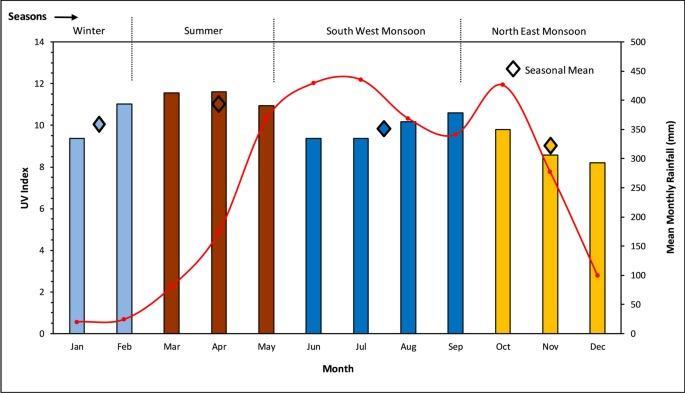
ThisfigureillustratestheamountofUVlightwhatwecallthe UltravioletIndex(UVI) inKerala doesn'tstaythesame all year;itchangesquiteabitwiththeseasons.Wenoticedthat SummeriswhentheUVIishighest.Thismakesperfectsense because the sun is strongest then, and there aren't many cloudsinthewaytoblockit.ContrastthatwiththeMonsoon
International Research Journal of Engineering and Technology (IRJET) e-ISSN: 2395-0056
Volume: 12 Issue: 11 | Nov 2025 www.irjet.net p-ISSN: 2395-0072
andWintermonths.Duringthesetimes,theUVIlevelsdrop significantly. This is because the heavy, dense clouds and generalhazeintheairscatterandblockthesun'srays.
The Sensor: The actual UV sensor gives us an electrical signal (an analog voltage) that directly reflectsthecurrentUVintensity.MoreUVmeansa highervoltage.
TheAlarm:WeusedacomponentcalledtheLM324 comparator. Its job is to watch that voltage and instantlytelluswhentheUVlighthasgonepasta specific,high-risklevel(our"threshold").
TheSignal:WeattachedanLEDlightsowe'dhavea clear, immediate visual warning. When the dangerouslevelisreached,theLEDturnson.
TheBottomLine:Theentirecircuitisreliable,uses very little power, and is built with minimal components.
4.
The research on UV Ray Detection Using Comparator successfullyillustratesasimple,low-cost,andusefulmethod forultravioletradiationdetectionusingananalogelectronic circuit.Thesystem,designedaroundtheLM324operational amplifierfunctioningasacomparator,wasveryresponsive to detect changes in UV intensity. The GUVA-S12SD UV sensormoduleservedwelltoconverttheradiationintensity intoacorrespondinganalogvoltagethatwasthencompared toasetthreshold.IfthedetectedUVintensityexceededthe threshold, the comparator turned on an LED indicator to provideanexplicitvisiblewarning.
This project illustrates the significance of simple, analogbasedUVdetectionsystemswhenapplicationsmaynotcall for digital or microcontroller-based solutions. In fact, the real-timeresponse,lowpowerconsumption,andportability of the circuit make it quite suitable for educational uses, environmentalmonitoring,andsafety-relatedapplications.It furtheremphasizeshowanalogueelectronicscanalsoserve in a very important way in environmental sensing and radiationsafety,especiallyinresource-constrainedsettings.
TheresultsshowthatthesystemdetectsmoderateUVlevels quite accurately, and its precision can still be enhanced throughtheadoptionofcalibrationtechniques,temperature compensation, and filtering to remove noise. Further improvementsmayalsobemadeinfuturebyintegratingthis analog circuit with a microcontroller or IoT module to achievereal-timemonitoringoftheUVindexandtransmitit tocloudormobiledevices.
Thisresearchsuccessfullydemonstratesthefeasibilityand effectivenessofalow-costcomparator-basedUVdetection circuit using the LM324 as a reliable, inexpensive, and
educational prototype. Beyond raising awareness about ultravioletradiationhazards,itlaysaverygoodfoundation for further research and development into compact environmentalmonitoringsystems.
[1] Sharma, R., & Patel, M. (2022). Design of Analog UV Detection Systems Using LM324 Comparator. InternationalJournalofEmergingTechnologies,15(3), 210–215.
[2] Kumar,S.,Mehta,R.,&Singh,A.(2020).Developmentof DigitalUVMonitoringDeviceforEnvironmentalSafety. JournalofInstrumentationandMeasurement,11(2),90–98.
[3] Kale,PMoon,CJadhav,VPatil,KJadhav,RShinde.Distant MonitoringandControllingofGatedDamsusingPLCand SCADA,Int.Res.J.Eng.Technol.,6(4),2019,2900–2903.
[4] Gupta,N.,&Das,P.(2021).LowPowerAnalogCircuitsfor Radiation Detection Applications. Electronics and CommunicationJournal,18(4),145–152.
[5] Magare RA, Shinde RP, Badave SM (2022) A solarintegrated25-LEVELH-bridgemultilevelinverter.IntRes JEngTechnol[Online].www.irjet.net.
[6] Singh, R., & Kaur, J. (2023). Analog-Based UV Ray DetectionCircuitUsingLM324forEnvironmentalSafety Monitoring.InternationalJournalofAppliedPhysicsand Electronics,9(1),54–61.
[7] Rohan Pradeep Shinde, “Different inverter topologies used to eliminate common mode ground leakage current” International Journal of Current Science (IJCSPUB)14(2),63-70.
[8] Bhattacharya,A.,&Menon,D.(2019).ComparativeStudy ofUVSensorsforReal-TimeRadiationDetection.Journal ofElectricalandElectronicSystems,13(2),88–95.