
International Research Journal of Engineering and Technology (IRJET) e-ISSN: 2395-0056
Volume: 12 Issue: 12 | Dec 2025 www.irjet.net p-ISSN: 2395-0072
International Research Journal of Engineering and Technology (IRJET) e-ISSN: 2395-0056
Volume: 12 Issue: 12 | Dec 2025 www.irjet.net p-ISSN: 2395-0072
R.N.Mokal1 , S.A.Ahire2
1,Department of Mechanical Engineering Mit coe engineering Dhanore yeola-423401
2Department of Mechatronicss Engineering SND coe R&C Bhabulgaon yeola 423401 Maharashtra India ***
ABSTRACT- In this paper a variationally consistent polynomial shear deformation theory is presented for the free vibration of thick isotropic square and rectangular plate. In this displacement based theory, the in-plane displacement field use parabolic function in terms of thickness coordinate to include the shear deformation effect. Governing equations and boundary conditions of the theory are obtained using the principle of virtual work. Results of frequency are obtained from free vibration of simply supported isotropic square and rectangular plates and compared with those of other refined theories and frequencies from exact theory.
Keywords: Shear deformation; laminated plate; Shear correction factor; free vibration.
Platesarethebasicstructuralcomponentsthatarewidelyusedinvariousengineeringdisciplinessuch as aerospace, civil, marine and mechanical engineering. The transverse shear and transverse normal deformation effects are more pronounced in shear flexible plates which may be made up of isotropic, orthotropic, anisotropic or laminated compositematerials.Inordertoaddressthecorrectstructuralbehaviorofstructuralelementsmadeupofthesematerials; development of refined theories, which take into account refined effects in static and dynamic analysis of structural elements, becomes necessary. The study of plate vibration dates back to the early eighteen century, with the German physicist, who observed the nodal patterns for a flat square plate. Since then there has been a tremendous research interest in the subject of plate vibrations. Several thin plate vibration solutions based on Kirchhoff’s plate theory are availableintheliterature.TheclassicalplatetheorybasedonKirchhoff'shypothesis[1]isnotadequatefortheanalysisof shear flexible plates due to the neglect of transverse shear deformation and the rotary inertia in the theory; as a consequence, itunder predictsdeflectionsandoverpredictsall thevibrationfrequenciesforthick plates,and thehigher frequenciesforthethinplates.Themostsuitablestartingpointfortheanalysisofboththinandthickplatesseemstobe a theory in which the classical hypothesis of zero transverse shear strains is relaxed. At first, Reissner proposed that the rotationsofthe normal tothe plate mid-surface inthe transverse planecould be introduced asindependentvariablesin theplatetheory.
Raiser has developed a stress based theory which incorporates the effect of shear. Mindlin [2] simplified Reissner’s assumption that normal to the plate mid-surface before deformation remains straight but not necessarily normal to the platemid-surfaceafterdeformationandthestressnormaltothemid-surfaceisdisregardedasinthecaseofclassicalplate theory of Kirchhoff. Mindlin employed displacement based approach. In Mindlin’s theory, transverse shear stress is assumed to be constant through the thickness of the plate, but this assumption violates the shear stress free surface conditions. The theory includes both the shear deformation and rotary inertia effects. Both effects decrease the frequencies.TherearestillothereffectsnotaccountedforbytheMindlinarestretchinginthethicknessdirectionandthe warping of the normal to the mid-plane, which are more important in case of thick plates. Mindlin’s theory satisfies constitutive relations for transverse shear stresses and shear strains by using shear correction factor. The value of this factorisnotuniquebutdependsonthematerial,geometry,loadingandboundaryconditionparameters. Wangdiscussed thesetheoriesindetailanddevelopedtherelationshipsbetweenbendingsolutionsofReissnerandMindingplatetheory.
Usually, in two dimensional plate theories, displacement components are considered power series expressions in thickness coordinate (z). Depending on the number of terms retained in the power series expressions, various higher order theories for homogeneous and laminated plates can be developed Reddy [3,4] utilize some simplification of the generalizeddisplacementfunction.Thesimplifiedhigherordertheories,generallythirdordersheardeformationtheories give parabolic variation of transverse shear stress through the thickness of the plate satisfying the shear stress free boundary conditions on the top and bottom surfaces of the plate. Thus, these theories do not require shear correction factors. Levinson formulated a theory based on displacement approach which does not require shear correction factor.
International Research Journal of Engineering and Technology (IRJET) e-ISSN: 2395-0056
Volume: 12 Issue: 12 | Dec 2025 www.irjet.net p-ISSN: 2395-0072
However,Levinson’stheoryisvariationallyinconsistentsincethefieldequationsandboundaryconditionsarenotderived usingprinciple ofvirtual work.Srinivasetal.[5]developed exactelasticitysolutionsfortheflexureandfreevibrationof simply supported homogeneous, isotropic, thick rectangular plates. The exact elasticity solutions play important role in validation of results of two dimensional thick plate theories. surveyed plate theories particularly applied to thick plate vibrationproblems.Inthedevelopmentofsuchtheoriesuseofpolynomials,trigonometricfunctions,hyperbolicfunctions andexponentialfunctionsintermsofthicknesscoordinateiswidelyandwiselymadeby
Ghugal and Sayyad[6,7] haveused trigonometricshear deformation theory for the free vibration analysisof orthotropic platesand avariationallyconsistenttrigonometricsheardeformationtheoryforfreevibrationofhomogenous,isotropic plateisdeveloped.Ithasfourvariablesandincludeseffectsoftransverseshearandtransversenormalstrain.Thetheory satisfiesthetangentialtractionfreeboundaryconditions(zeroshearstressconditions)onthetopandbottomsurfacesof the plate. The primary objective of this investigation is to present the frequencies of flexural mode, thickness shear and thicknessstretchmodesoffreevibrationofthickplates.
2.1 Laminated plate under consideration
Consider a rectangular laminated plate composed of orthotropic layers as shown in figure 1.The plate is assumed in Cartesian coordinate (x,y,z) system with origin o .it is convenient to take the y-plane of the coordinate system to the undeformedmiddletakentobepositiveinadownworddirectionfromthemiddleplane.
2.2 Displacement field.
Forthebendinganalysis,thedisplacementfieldatapointinthelaminatedplateisexpresseda
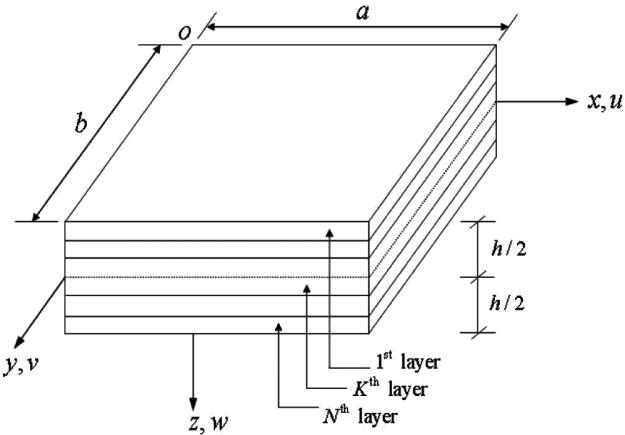
Figure1: plategeometryandcoordinateSystem
5 3 016412 0 3522 5 3 016412 0 3522
Where,
0(,)uxy , 0(,)vxy , 0(,)wxy , 1(,)wxy , 2(,)wxy
Where ,, uvw arethein-planedisplacementofthemid-planeinx,yandzdirectionrespectively 012 ,, www aretheshear rotations
Forthesmallplatedeformationthesixstraincomponentareplaneofthelaminate.Thez-axisis
International Research Journal of Engineering and Technology (IRJET) e-ISSN: 2395-0056
Volume: 12 Issue: 12 | Dec 2025 www.irjet.net p-ISSN: 2395-0072
(,,,,,) z xyxyxzyz And three displacement components (,,) uvw are related according to the wellknownlinerkinematicrelation.
2.4 Stress – Strain Relationship
The stress component associated with strain is given component by eq. (3) considering transverse shear deformation in theplatecoordinatecanbeexpressedasfollows:-
International Research Journal of Engineering and Technology (IRJET) e-ISSN: 2395-0056
Volume: 12 Issue: 12 | Dec 2025 www.irjet.net p-ISSN: 2395-0072
WhereQijarethetransformedelasticcoefficient, 1122 ,, 1112121121 1212 2 , 121 226612
WhereE1,E2 aretheelasticmoduli,μ12andμ21 arePoisson’sratiosandG12,G23,G13 aretheshearmoduliofthematerial.
2.5 Governing equation and boundary conditions.
Governingequationandboundaryconditionsareobtainedusingprincipalofvirtualwork. (5)
inserting strains from Eq.(2) and stress from Eq.(3) into Eq.(5). Integrating by parts and collecting coefficient of variables
International Research Journal of Engineering and Technology (IRJET) e-ISSN: 2395-0056 Volume: 12 Issue: 12 | Dec 2025 www.irjet.net
34 44 00 12 222222223444 34 44 00 222212 666666662222222
34 44 00 222212 666666662222222 vw ww BEFH yyyy uw ww BEFH xyxyxyxy vw ww BEFH xyxyxyxy
34 44 00 12 1111111113444
34 44 00 12 121212122222222 uw ww wCFIJ xxxx vw ww CFIJ xyxyxyxy
34 44 00 12 222222223444 34 4 00 1 222 66666622222 4 2 2 66 22 vw ww CFIJ yyyy uw w CFI xyxyxy w J xy
34 2200 6666222 44 2212 66662222
22 11 555522 22 11 444422 vw CF xyxy ww IJ xyxy
24 44 00 12 2111111113444
34 44 00 12 121212122222222 uw ww CFIJ xyxyxyxy
34 44 00 12 222222223444
34 4 00 1 222 66666622222 4 2 2 66 22 vw ww CFIJ yyyy uw w CFI xyxyxy
34 44 00 12 22222222 344 uw ww wDHJL xxxx vw ww DHJL xyxyxyxy uw ww DHJL xyxyxyxy vw ww DHJL yyy
34 44 00 12 121212122222222
24 44 00 12 121212122222222
4y 34 44 00 222212 666666662222222 34 44 00 222212 666666662222222 2222 1111 5555 4444 2222 uw ww DHJL xyxyxyxy vw ww DHJL xyxyxyxy wwww NPNP xxyy
(5)
International Research Journal of Engineering and Technology (IRJET) e-ISSN: 2395-0056
Volume: 12 Issue: 12 | Dec 2025 www.irjet.net p-ISSN: 2395-0072
Similarlyfordensityofmasscomponentareasfollows:-
23 33 00 12 0 2222
34 44 00 12 0 2222222 uw ww uIAIBICID txtxtxt vw ww vIAIBICID tytytyt uw ww wIBIEIFIH xtxtxtxt
23 33 00 12 0 2222
34 44 00 12 1 2222222 uw ww wICIFIIIJ ytytytxt
2 0 2 vw ww ICIFIIIJ ytytytxt
34 44 00 12 2222222
2 22 0 12 222 34 44 00 12 2 2222222 34 44 00 12 2222222
22 12 22 ww
(6) 3. Analysis of Laminated Plates.
The following middle surface displacement functions are assumed which satisfies the boundary condition and the governingequationofsimplysupportedlaminatedcompositeplates;
vxyvxy mn
wxywxy mn
wxywxy mn
wxywxy mn
0(,)cossin, 0(,)sincos, 0(,)sinsin, 1(,)sinsin, 2(,)sinsin, uxyuxy mn
(7)
Substitutions of solution from given by Eq. into governing equation (5)-(6) result into system of the algebraic equation whichcanbewrittenintomatrixformasfollows: 1112131415 1222232425 3132333435 41434445 42 55 51525354 kkkkk kkkkk kkkkk kkkkk kkkkk
International Research Journal of Engineering and Technology (IRJET) e-ISSN: 2395-0056
Volume: 12 Issue: 12 | Dec 2025 www.irjet.net
In a compact equation can be written as follows
and are the stiffness matrix,massmatrix,amplitudevectorandnaturalfrequencies,respectively.Theelementofstiffnessmatrix[k]aredefined asfol s;
22 111166 () 121166
32 (2) 13111266
32 (2) 14111266
32 (2) 15111266 () 211266
22 222266 23 (2) 23126622 23 (2) 24126622 2 (2) 251266
International Research Journal of Engineering and Technology (IRJET) e-ISSN: 2395-0056
32 (2) 31111266
23 (2) 32126622
4224 (24) 3311126622
4224 (24) 3411126622
4224 (24) 3511126622
4224 (24) 4411126622
32 (2) 41111266
23 (2) 42126622 4224 (24) 4311126622 kCCC kCCC kFFFF
422 (24) 45111266
4 55 2244 32 (2) 51111266 23 (2) 52126622 4224 (24) 5311126622
Volume: 12 Issue: 12 | Dec 2025 www.irjet.net p-ISSN: 2395-0072 © 2025, IRJET | Impact Factor
Volume: 12 Issue: 12 | Dec 2025 www.irjet.net
3.1 Numerical Result.
Inthispaper,freevibrationanalysisofsimplysupportedsquareandrectangularplatesforaspectratio(sidetothickness ratio, a/h)10isattempted.
The simply supported plates considered are composed of isotropic material. The results obtained using trigonometric sheardeformationtheoryarecomparedwithexactresultsandwiththoseofotherrefinedtheoriesavailableinliterature. Followingnon-dimensionalformisusedforthepurposeofpresentingtheresultsinthispaper
Figure-1.2showsthatnaturalfrequenciesofisotropicsquareplate(b/a =1)foraspectratio10.
International Research Journal of Engineering and Technology (IRJET) e-ISSN: 2395-0056
Volume: 12 Issue: 12 | Dec 2025 www.irjet.net p-ISSN: 2395-0072
Figure-1.3 showsthatnaturalfrequenciesof isotropicrectangularplate(b/a=)foraspect ratio1
Table 1 Comparisonofnon-dimensionalnaturalfrequenciesofisotropicsquareplate(b/a =1)foraspectratio10.
Table2Comparisonofnon-dimensionalnaturalfrequenciesofisotropicrectangularplate(b/a=)foraspectratio10
(2,3)
(3,2) 0.4511 0.4535 0.4550 0.4520 0.4509 0.5073
(3,3)
International Research Journal of Engineering and Technology (IRJET) e-ISSN: 2395-0056
Volume: 12 Issue: 12 | Dec 2025 www.irjet.net p-ISSN: 2395-0072
In this paper, a variationally consistent trigonometric shear deformation theory is applied to free vibration of isotropic squareandrectangularplates.Theeffectsoftransverseshearandtransversenormaldeformationarebothincludedin the presenttheory. The theory givesrealistic variation oftransverseshearstressthroughthethicknessofplateandsatisfies the shear stress free boundary conditions on the top and bottom planes of the plate. The theory requires no shear correctionfactor.Theresultoffrequenciesarecomparedwithexact
Frequenciesandthoseofotherhigherorder theories.Itisobservedthatthefrequenciesobtainedbypresenttheoryarein excellent agreement with the frequencies of exact theory. The present theory is capable to produce frequencies of thickness of bending mode of vibration. The theory yields the exact dynamic shear correction factor from the thickness shearmotionwhichisamostimportantfactorinthedynamicanalysisofplate
References
1. Kirchhoff G.R., Uber das gleichgewicht and die bewegung einer elastischen scheibe, Journal of Reine Angew. Math.(Crelle)(1850),vol40,pp(51-88).
2. MindlinR.D.”influenceofrotaryinertiaandshearonflexuralmotionofisotropic,elastic plates”,ASME Journalof AppliedMechanics,(1951),vol18,pp(31-38)
3. Reddy J.N., Phan N.D. Stability and vibration of isotropic, orthotropic and laminated plates according to higher orderdefrormationtheory,Journalofsoundandvibration,(1985),vol98,pp(157-170).
4. Reddy J.N, A simple higher order theory for laminated composite plates, Journal of Applied Mechanics,(1985),vol51,pp(745-752).
5. Srinivas S., Rao A.K., Joga Rao C.V, Flexure of simply supported thick homogenous and laminated rectangular, ZAMM:ZeitschriftfurAngewandteMathematicundMechanic(1985),vol49(8),pp449-458.
6. A.S.Sayyad and Ghugal,On the free vibration analysis of laminated composite and sandwich plates: A review of recentliteraturewithsomenumericalresult,Compositestructure(2015).vol129,pp(177-201).
7. Ghugal and A.S.Sayyad, free vibration of thick isotropic plates using trigonometric shaear deformation theory,LatinAmericanJournalofSolidsandstructure,june2011