
International Research Journal of Engineering and Technology (IRJET) e-ISSN: 2395-0056
Volume: 13 Issue: 03 | Mar 2026 www.irjet.net p-ISSN: 2395-0072

International Research Journal of Engineering and Technology (IRJET) e-ISSN: 2395-0056
Volume: 13 Issue: 03 | Mar 2026 www.irjet.net p-ISSN: 2395-0072
Romy Sinha1 , M. Keerthana2 , K. Manoj Kumar3 , M. Karthik Swamy4 , K. Pranay Kumar5
1Assistant Professor, Dept. of Computer Science and Engineering, Bharat Institute of Engineering and Technology (affiliated to JNTUH), Hyderabad, Telangana, India 2345UG student, Dept. of Computer Science and Engineering, Bharat Institute of Engineering and Technology (affiliated to JNTUH), Hyderabad, Telangana, India
Abstract - Unified Payments Interface (UPI) is one of the most widely used online payment systems. People are making use of this online payment method on a daily basis, as it is simple, fast, and one does not need to carry money with them. From tea shop payments to online payments, everything is being done through their mobile phones. But with an increase in the number of users for online payment systems, fraud is also increasing rapidly. Many people are being cheated through phishing, QR Code scams, screensharing and even through phone calls from people who are pretending to be from the bank or technical support teams [7][8]. In the past, fraud detection systems were based on rules, that is, they used to detect fraud by applying rules. But now it is no longer effective, as the nature of fraud is changing rapidly. The fraud is becoming sophisticated [1][3]. In this paper, a technique is proposed to detect fraud in UPI transactions using a machine learning approach. Various algorithms, such as Logistic Regression, Decision Tree, Random Forest and XGBoost are implemented to detect fraud in UPI transactions. It is observed that the Random Forest algorithm has the maximum accuracy of 96%. It can detect fraud transactions, which is a very important aspect in terms of reducing false alarms in the system [9][11].
Key Words: UPI, Fraud Detection, Machine Learning, Artificial Intelligence, Random Forest, Digital Payments, Anomaly Detection.
The last few years have witnessed a major revolution in the Indian digital payment system, and this can be attributed to the concept of UPI. Today, people are no longer dependent on cash, as the digital payment system hasmadetheirliveseasier.Withthehelpofasmartphone and an internet connection, people can now easily make instanttransactionsandfulfiltheirfinancialneeds. However, as the number of digital transactions has increased,thenumberoffraudcaseshasalsoseenarapid rise. Scammers are finding new ways to dupe people, and this includes fake payment requests, QR code scams, phishing and impersonating bank representatives [7][8]. In many cases, the user unknowingly authorizes the transaction,andthismakesitdifficult.
In the previous days, the detection of fraud was carried out based on a rule-based system, where the system checksthelimitandthetimeatwhichthetransactionwas carriedout.Itiseasy,buttheproblemwiththismethodis that it cannot be made flexible to accommodate the changingpatternoffraud[1][3].Now,thepatternoffraud isbehaviour-based,whichcannotbecarriedoutusingthe abovemethod.
Machine Learning is a good method to handle the detection of fraud, as a large number of transactions can be carried out using this method. Machine Learning considers a number of factors, including the frequency, location, device, etc., along with the time at which the transaction is carried out, to detect the behavior of the userandtofindoutanyanomaliesinthetransaction,thus identifying the normal and fraud transactions [3][4]. The RandomForestandBoostingmethodhavebeenprovedto beeffectiveinhandlingthedetectionoffraud[2][9].
Despite the advantages, some challenges still need to be addressed. For example, the data used to perform the detection of fraudulent activities is unbalanced. This impliesthatthenumberoffraudulent transactionsisvery smallcomparedtonormaltransactions.Nevertheless,this challengecanbeovercome.Theotherchallengeisthatthe fraud detection system must be able to perform in realtimetoavoidlosses[12].
The objectives of this work are to design an intelligent system to detect fraudulent activities in UPI transactions. Theobjectivesofthisworkareasfollows:
1. To automate the process of detecting fraudulent transactions.
2. Tominimizefalsealarmsforgenuineusers.
3. To improve the accuracy of results through the employment of effective feature extraction methods.
The system is developed in a sequence of steps, which startsfromthedatasetsandendsatthemodel.
Volume: 13 Issue: 03 | Mar 2026 www.irjet.net p-ISSN: 2395-0072
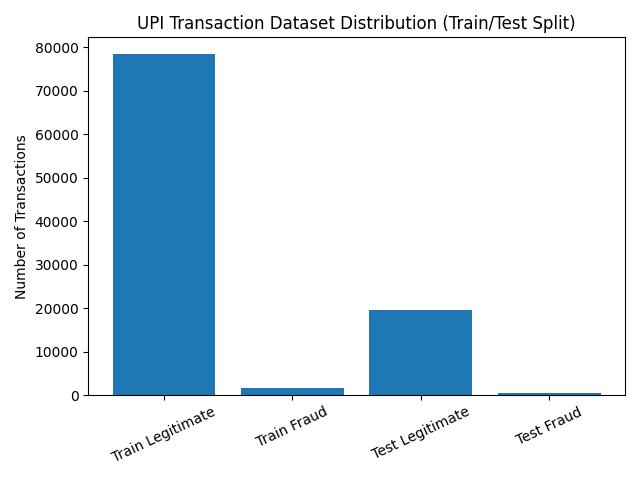
For the current study, a dataset is employed, which contains100,000UPItransactions.Outofthese,only2%of the transactions are fraudulent, which is in accordance with the real-world scenario, as the number of fraudulent transactionsislow,asmentionedin[3][12].Thishasmade thedetectionoffraudachallengingtask.
Eachandeverytransactioncontainssomeattributes,which help in understanding the behavior of the user during the transaction.
Eachtransactionrecordcontainsthefollowingattributes:
TransactionID
SenderAccountID
ReceiverAccountID
TransactionAmount
Timestamp
GeographicalLocation
DeviceID
TransactionFrequency
FraudLabel(0–Legitimate,1–Fraud)
Fraudulent transactions are characterized by unusual behavior. For instance, there can be a number of transactionswithinashortperiodoftime,asuddenchange in transaction amounts, or a new device/location. These differencesinbehavioraresignificantfordetectingfraud.
Thedatasetisdividedintotwoparts:trainingandtesting.
80%fortraining
20%fortesting
This is done so that the model is correctly trained on the dataandthentestedonunseendatatocheckit’sabilityto generalize.Thecorrecthandlingofthedatasetiscriticalfor areliablefrauddetectionsystem[4].
It is important to note that the application of any kind of machine learning algorithm requires the preprocessing of thedata.Itistobenotedthatinanyreal-lifescenario,the datawillbeincomplete,incorrectandofvaryingtypes.The techniques used in the preprocessing of the data are as follows:
1. Removal of incomplete and duplicate data from thedataset.
2. Changingthecategoricalnatureofthedatathatis, deviceandlocationtoanumericalnature.
3. Normalizing the numerical natureof thedata that is,transactionamount,throughscaling.
4. Applying the SMOTE technique to overcome the class imbalance problem by adding synthetic data fortheclassoffraudulenttransactions[12].
Thequalityofthedatacanbeenhancedthroughtheabove techniques,andthemodelcanlearnthedata.Theaccuracy ofthemodelimprovesbyremovingthefraudulentrecords fromthedataset[3].
Feature engineering is another important aspect in improving the performance of fraud detection systems. Instead of using the raw data provided, features are createdtobettercomprehendthebehavioroftheuser.
Someofthefeaturesusedinthesysteminclude:
Deviation from the average amount of the transaction.
Numberoftransactionsmadeinashorttime.
Numberofchangesinthedeviceused.
Deviationinthelocationfromtheusualpatterns.
Unusualtimeofthetransactions.
Thesefeaturesassistthesysteminunderstandingwhatis normalbehaviorfortheuser.Thishelpsintheaccurate identificationoffraud.Ithasbeenshowninvarious studiesthattheaccuracyoffrauddetectionisimproved usingbehavior-basedfeatures[4][9].
If a feature vector is created based on the transaction as follows:
T=(A,F,D,L,H)
Where:
A=Amountdeviation
F=Frequencyofthetransaction
D=Deviceswitchingcount
International Research Journal of Engineering and Technology (IRJET) e-ISSN: 2395-0056
Volume: 13 Issue: 03 | Mar 2026 www.irjet.net p-ISSN: 2395-0072
L=Locationanomalyscore
H=Historicaltransactiondeviationscore
Probabilityoffraudcanbedeterminedasfollows: P(Fraud)=f(T) where‘f’isaclassificationmodel.
Feature engineering plays a vital role in improving the ability of the model to create a differentiation between normalandsuspiciousbehaviorofthetransaction.
In this section, various machine learning models are used, whichincludeLogisticRegression,DecisionTrees,Random ForestandXGBoost.Allmodelshavetheirownsignificance andareusedtoperformaperformancecomparison.
Random Forest has been chosen as the primary model, which has shown good results in terms of accuracy. Random Forest is an ensemble learning method that combines multiple decision trees to improve the accuracy ofthemodel[9][11].
Moreover,RandomForesthastheadvantageofhandlinga largenumberoffeatures,whichmakesthemodel perform well even if the data is imbalanced. The model has shown good results in terms of generalization with comparing withsinglemodelslikedecisiontrees.
2. 5 Model training and evaluation
Themodelistrainedon80%ofthedataandthentestedon the remaining 20%. During training, it learns from the patternsinthehistoricaltransactionaldata.
Aftertraining,itistestedanditsperformance isevaluated onthebasisofthefollowingparameters:
Accuracy
Precision
Recall
F1-Score
ROC-AUCcurve
This will provide a comprehensive understanding of the performanceofthemodel,whichisimportantinasituation wherethereisaneedforfrauddetection.
Outputofthemodel:
0-GenuineTransaction
1-FraudTransaction
Once the model is trained, it can be used in a real-time system where it can monitor and detect any suspicious activityinreal-time,therebypreventlosses[1][10].
Table -1: PerformanceofDifferentModels Representation:
From the results,it isclear thattheRandomForest model performsbetterthanothermodelsintermsofaccuracy.
The model also generalizes well, which means that the model performs well with unseen data. This is important because, in the real-world new kinds of fraud may be present.
Themodelalsobalancesprecisionandrecall,whichmeans that fraud will be detected without any false alerts. This makesitsuitableforpracticaldeployment[9].
ThisstabilityintheRandomForestmodel,bothintraining and validation sets, is a good indication that the model is not overfitting. It is also clear that the Random Forest model is more effective in dealing with complex patterns compared to simpler models like the Logistic Regression model. In comparison with the XGBoost model, although the performance is not significantly different, the Random Forestmodelisslightlymoreconsistent[11].
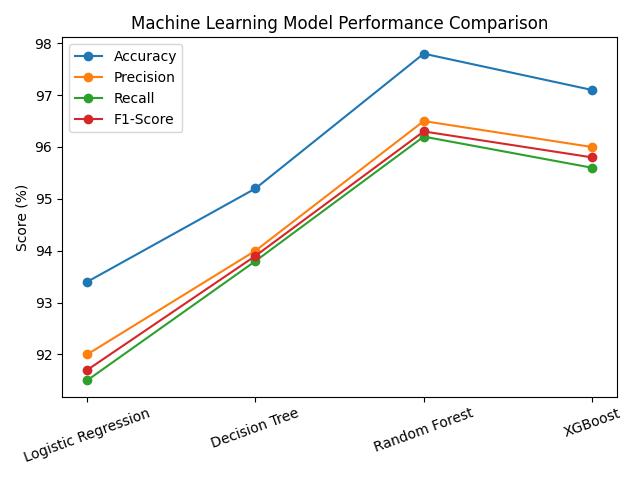
Fig -2:Comparisonofclassificationperformancemetrics (accuracy,precision,recall,andF1-score)forvarious machinelearningmodels.
International Research Journal of Engineering and Technology (IRJET) e-ISSN: 2395-0056
Volume: 13 Issue: 03 | Mar 2026 www.irjet.net p-ISSN: 2395-0072
A. Accuracy plot of random forest model
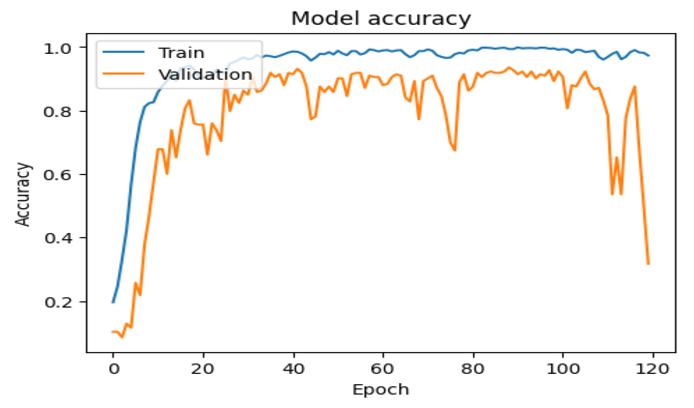
Fig -3:Trainingandvalidationaccuracyoftherandom forestmodel
B. Loss plot Random Forest Model
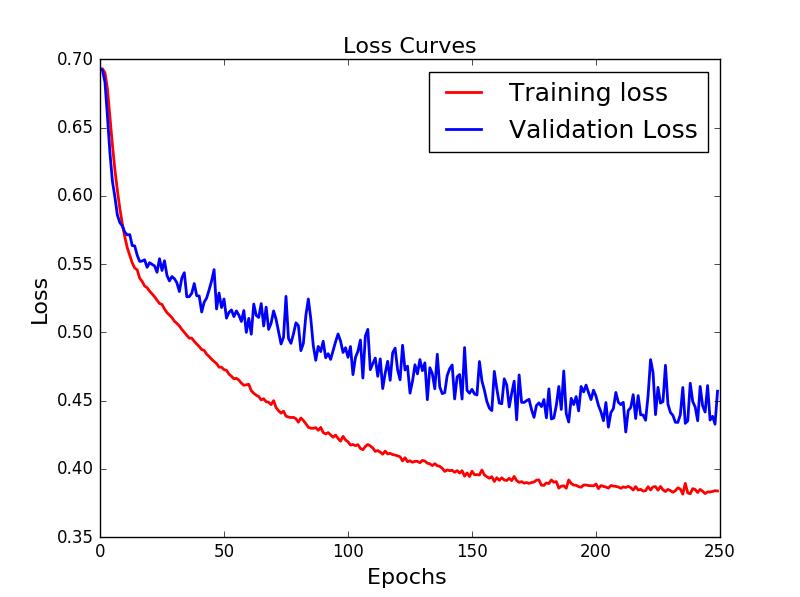
Fig -4:Lossplotshowingtrainingandvalidationlossof therandomforestmodel
Inaddition,basedontheaccuracycurveofthemodel,itis clearthattheRandomForestmodelisperformingwellin thetrainingprocess,consideringthatthemodelisvery accuratewithaverylowvalidationloss,asdepictedinthe graph[9][11].
4. CONCLUSIONS
Inthisparticularcase,amachinelearning-basedapproach has been developed in order to detect the fraudulent transactions in the UPI transactions based on the pattern that is followed by the users. In this particular case, the best results have been achieved by using the Random Forestmodel.Ithasbeenpossibletodetectthefraudulent transactionsinaneffectivemanner,andthesametime,the chances of false alarms have been reduced in the case of
genuine users. This is a very important factor in this particular case. In this particular case, the preprocessing ofthedataandthefeatureengineeringarethetwofactors that are very important in order to make this particular model successful, as these factors have helped the model inunderstandingthenormalandabnormalbehaviorofthe users. This particular model has the capability of being used in order to enhance the security of the digital transactionsandavoidthelossesinthecaseoffraudulent activities. One more important factor is that the usage of multiple features is better compared to the usage of a single feature in order to detect the fraud transaction. Moreover, the model also proved stability when it was tested using unseen data, which shows it can be used in real-lifescenarios.However,itisimportanttonotethatno system can perform perfectly, but this can be used as a basis to create a sophisticated fraud detection system. In conclusion, the study shows that the use of Artificial IntelligenceandMachineLearningcanbe anefficientway of addressing fraud detection problems in UPI systems [1][10].
[1] A. Sharma and R. Gupta, “Artificial intelligence framework for real time digital payment fraud detection,”IEEEAccess,vol.14,pp.1–12,2026.
[2] S. Randhawa, C. K. Loo, M. Seera, C. P. Lim, and A. K. Nandi, “Credit card fraud detection using AdaBoost and majority voting,” IEEE Access, vol. 12, pp. 1–12, 2025.
[3] P. Reddy and V. Kumar, “Machine learning-based anomaly detection for financial transaction fraud,” JournalofBigData,vol.12,no.1,pp.1–11,2025.
[4] H. Alzahrani and A. Alghamdi, “Fraud detection in financial transactions using machine learning algorithms,”IEEEAccess,vol.12,pp.1–10,2025.
[5] Y. Tang and Z. Liu, “Credit card fraud detection algorithmbasedonSDTandfederatedlearning,”IEEE Access, vol. 12, pp. 1–15, 2024, doi: 10.1109/ACCESS.2024.349117.
[6] M. Abdallah, M. A. Maarof, and A. Zainal, “Fraud detection system for online financial transactions using machine learning,” IEEE Access, vol. 12, pp. 1–13,2024.
[7] M. D. Nazmoddin, M. Swetha, G. Yashwanthi, and Y. Divyree,“UPIfrauddetectionusingmachinelearning,” Journal of Computational Analysis and Applications, vol.32,no.4,pp.1–9,2024.
International Research Journal of Engineering and Technology (IRJET) e-ISSN: 2395-0056
Volume: 13 Issue: 03 | Mar 2026 www.irjet.net p-ISSN: 2395-0072
[8] D. J. Kumari and G. Tejawi, “AI-powered UPI fraud detection,”InternationalJournalofScientificResearch andTechnology,vol.10,no.4,pp.1–8,2024.
[9] J.Jemai,A.Zarrad,andA.Daud,“Identifyingfraudulent transactions using ensemble learning,” IEEE Access, vol. 12, pp. 1–14, 2024, doi: 10.1109/ACCESS.2024.338082.
[10] I. A. A. Almazroi and N. Ayub, “Online payment fraud detection using machine learning,” IEEE Access, vol. 11, pp. 1–13, 2023, doi: 10.1109/ACCESS.2023.333922.
[11] E. Esenogho, I. D. Mienye, T. G. Swart, K. Aruleba, and G. Obaido, “A neural network ensemble with feature engineering for improved credit card fraud detection,” IEEE Access, vol. 10, pp. 1–12, 2022, doi: 10.1109/ACCESS.2022.3148298.
[12] E. Ileberi, Y. Sun, and Z. Wang, “Performance evaluation of machine learning methods for credit card fraud detection using SMOTE and AdaBoost,” IEEE Access, vol. 9, pp. 1–15, 2021, doi: 10.1109/ACCESS.2021.3134330.
[13] R. Banerjee and P. S. Chaturvedi, “Machine learning-based financial fraud detection in digital payments,” IEEE Access, vol. 8, pp. 1–10, 2020, doi: 10.1109/ACCESS.2020.9097258.
[14] S. Roy, J. J. S. Reddy, and P. K. Reddy, “A deep learning approach for credit card fraud detection using neural networks,” IEEE Access, vol. 8, pp. 1–12, 2020.
[15] R. Ahmad, A. Khan, and S. U. Khan, “Financial frauddetectionusingartificialintelligencetechniques: Areview,”IEEEAccess,vol.8,pp.1–18,2020.
BIOGRAPHIES

RomySinha
AssistantProfessor Dept. of Computer Science and Engineering
Bharat Institute of Engineering and Technology(BIET)




M.Keerthana
Student
Dept.ofComputerScienceand Engineering
BharatInstituteofEngineeringand Technology(BIET)
K.ManojKumar
Student
Dept.ofComputerScienceand Engineering
BharatInstituteofEngineeringand Technology(BIET)
M.KarthikSwamy
Student
Dept.ofComputerScienceand Engineering
BharatInstituteofEngineeringand Technology(BIET)
K.PranayKumar
Student
Dept.ofComputerScienceand Engineering
BharatInstituteofEngineeringand Technology(BIET)