
International Research Journal of Engineering and Technology (IRJET) e-ISSN: 2395-0056
Volume: 12 Issue: 05 | May 2025 www.irjet.net p-ISSN: 2395-0072
International Research Journal of Engineering and Technology (IRJET) e-ISSN: 2395-0056
Volume: 12 Issue: 05 | May 2025 www.irjet.net p-ISSN: 2395-0072
Kuriens Shaji Maliekal1
1Staff Software Engineer, Walmart Global Tech, USA ***
Abstract - The exponential growth in modern systems has significantly transformed how organizations monitor, optimize,andunderstandtheiroperations.Logs,whichrecord criticalfactsconcerningsystemperformance,userinteraction, andinfrastructure behavior,playacriticalrole indiagnosing problems, auditing activities, and facilitating advanced analyses such as predictive modeling for machine learning. Nevertheless, with the rising velocity and volume of logs coming from distributed systems and micro services, conventional log management techniques struggle to aggregate, store, and analyze logs. Previously, centralized logging systems based on relational databases or file storage were employed to collect logs. Although these systems served for small-scale applications, they turned into bottlenecks againstthedemandsofmoderndistributedsystems.Relational databases have scalability challenges, whereas file-based systems don't support complicated analytics or structured queries. Such restrictions hinder real-time insights and consequentlyinfluencedecision-makingprocesseswithintime. IntegratingApacheKafkawithdatalakeshasproventosolve such constraints by providing real-time log streaming and affordable and scalable storage. Yet, the problems of data quality, governance, and consistency still exist.
This study proposed a unified log management framework leveragingKafkaconnecttostreamlogsintodatalakeswhile ensuring data quality and governances. By implementing automated de duplication and schema evolution within ETL pipelines,thisapproachaddresseskeychallengesandenables both real time processing and long-term analytics. It unified real time monitoring with predictive maintenance and anomaly detection, optimizing resource utilization in cloud native environment. Future advancement in schema management, data validations and machine learning (ML) integrationhelpsstreamlinereal-timeinsightsandpredictive capabilities for improved decision making and operational efficiency.
Key Words: Log Management, Kafka, Kafka Connect, Data Lake,ML,MachineLearning,DistributedSystems
The exponential growth of data in modern systems has transformed the way organizations understand, monitor, and optimize their operations. Logs, as a critical subset of thisdata,serveasthepulseofapplicationandinfrastructure, capturing important details about system behavior,
performanceanduserinteraction.Theyare invaluablefor diagnosing issues, auditing activities, and powering advancedanalyticssuchaspredictivemodellinginMachine Learning(ML).However,thesheervolumeandvelocityof logs generated by distributed systems and micro services present significant challenges in aggregation, storage and analysis. Traditionally, log management depended on centralizedloggingsystemthatgatheredlogsfrommultiple sources and saved in relational database or file systems. Although effective for smaller scale applications, these methods faced challenges with the requirements of contemporary distributed systems. Relational databases frequently turned into bottlenecks because of their restrictedscalabilityandlackofcapacityforlarge-scalerealtimedataingestion.File-basedsystemswerenotadvanced enough for structured queries and complex analytics. Additionally, conventional systems were poorly suited to processunstructuredorsemi-structuredlogdataproduced bycontemporaryapplications.Theserestrictionshindered immediateinsightintosystemperformanceandpostponed essentialdecision-makingprocesses[1]
Thetrendoflatehasbeentoincreasinglyfocusonsmarter, morescalable,moreefficientpossibilitiesformanaginglogs. One of the emerging fundamental components is Apache Kafka,whichhasbecomethecornerstonestandardforrealtimedatastreamingandlogaggregation.Withitsdistributed architecture,Kafkacanhandlethemassiveamountsoflogs generated by today's applications, as it can process logs quicklyathighthroughput,whileprovidingreliability,data integrityandscalablesolutionsformoreprocessingworkers [2]. Kafka can allow users to have logs streamed to downstream applications for processing or storage with real-timeingestionfromvarioussourcesorapplicationpods in Kubernetes clusters which have generated logs. While Kafkaisoptimizedforreal-timeingestionandstreaming,it was not designed for storage or complex analytics of the ingestedlogs.Theseconstraintscanbeaddressedbytheidea ofcombiningKafkawithdatalakes[3].
Datalakesallowforacost-efficientandscalablestorewhere raw logs can be kept in their original form. Amazon S3, Google Cloud Storage (GCS), and Hadoop based environments provide virtually unbounded capacity at comparatively affordable prices. Using Kafka Connect, a Kafkaframeworkforexternalsystemintegration,logscanbe nativelystreamedfromKafkatopicstodatalakes.Thisnot only centralizes storage but also separates ingestion from
International Research Journal of Engineering and Technology (IRJET) e-ISSN: 2395-0056
Volume: 12 Issue: 05 | May 2025 www.irjet.net p-ISSN: 2395-0072
downstreamanalysisprocesses,allowingforflexibilityand scalability[4].
Existing literature shows the benefits of data lakes with Kafka. Studies show that integrating Kafka and data lakes allows organizations to retain historical logs for extended periodsoftimewithoutsacrificingperformanceandwithout costinganarmandaleg[5].Thereisalsoawidearrayofuse cases we can take advantage of, ranging from real time monitoringtobatchanalyticsandmachinelearningmodel creation. While there are still challenges regarding data quality, governance and consistency between these two systems,manyquestionsremain.Someoftheseincludehow we can protect against the data lake fragmentation which canresultinrecordslosingtheirintegrity,orde-duplication methodsthatcouldproducelogswitherrorsindownstream ifeitherschemagovernanceorde-duplicationaren'tinplace [6][7]
The proposed study aims to address these challenges by establishing a unified log management framework that leveragesKafkaConnecttostreamlogsintodatalakeswhile maintaining data quality and governance standards. By implementingschemaevolutiontechniquesandautomated de-duplication processes within the ETL (ExtractTransform-Load)pipeline,thisframeworkensuresthatlogs are stored in a structured and consistent manner. Additionally, the study explores how machine learning modelscanbetrainedonhistoricallogdatastoredindata lakestoenablepredictiveanalytics.
Onesignificantcontributionofthisstudyisitsfocusonrealtime streaming capabilities combined with long-term analytical potential. While traditional approaches often required separate pipelines for real-time monitoring and historical analysis, this framework unifies both use cases withinasinglearchitecture.LogsingestedthroughKafkaare immediately available for real-time processing while simultaneously being archived in the data lake for future analysis. This dual capability is particularly valuable for applicationssuchasanomalydetectioninsystembehavior orpredictivemaintenanceinindustrialsettings.
Another key aspect of this study is its emphasis on leveragingcloud-nativetechnologiestosimplifydeployment andscalability.ByutilizingmanagedserviceslikeAmazon ManagedStreamingforApacheKafka(MSK)orGoogleCloud Pub/Subalongsidecloud-baseddatalakesolutionslikeS3or GCS,organizationscanreduceoperationaloverheadwhile achievinghighavailabilityandfaulttolerance.Thestudyalso examinesbestpracticesforoptimizingresourceutilization insuchenvironments,includingtechniqueslikepartitioning logs based on metadata attributes to improve query performance[8].
Furthermore,theintegrationofKafkawithdatalakesoffers a robust foundation for machine learning applications. Historical logs stored in data lakes can be used to train
models that predict system failures, detect anomalies, or optimize resource allocation. This predictive capability is crucial for maintaining high uptime and performance in moderndistributedsystems.Moreover,byleveragingdata lakes as a centralized repository, organizations can apply machinelearningacrossmultipleapplicationsanddomains, fostering a data-driven culture that enhances decisionmakingatalllevels.
In addition to its technical contributions, this study also explores the organizational and operational benefits of unified log management. By centralizing log data and providingrealtimeinsights,theorganizationcanimprove collaboration between development, operations, and security teams. This alignment is important for modern DevOpspractices,wherecontinuousintegrationanddelivery requires seamless communication and feedback loops. Moreover, the ability to analyze logs in real time support agile development methodologies, allowing developers to quicklyidentifyandrectifyissuesduringthedevelopment cycle.
The importance of data and logs in understanding system andapplicationbehaviorcannotbeoverstated.Logsprovide a detailed record of user interaction, system events, and performance metrics, which are crucial for auditing, compliance,andsecuritymonitoring.Inregulatedindustries suchasfinanceandhealthcare,logsserveasalegalbusiness imperative, capturing the tamper-resistant record of the transactionsandtheactivities.Additionally,logsarecritical inmachinelearningapplicationscenarios,whenpastdata areemployedtocalibratemodelsusedtoforecastwhatwill happenoridentifyanomaliesinthefuture
Kafkaissuchanimportantpartoflogstreamingduetoits abilityinleveragingthecharacteristicsoflowlatencylogs with significant volumes of data. Because Kafka is distributed,ithandleslogsandconsumestheminreal-time, rather than batch processed logs. These respective needs generate an imperative for real-time actions based on systemevents-consideringthetimepressuresassociated with financial trading platforms and other analysis needs that are real-time in nature. Additionally, coupling Kafka withdata lakes evenbrings theability tolaunchreal time analysis with a long-term storage component, since data lakes can be a long-term log ingestion and log analytics solutionwherethelong-termdiagnosticcapacitysupports up-to date operational needs and decision-making for the organization. Kafka Connect is also very functional for streaminglogsintodatalakes.Asthebridge,KafkaConnect provides an interface to make it much more flexible for incorporating the use of Kafka data into other systems. In anyotherneedfordatapullfromKafka,organizationscan also determine how to configure the flow of logs and in a muchbroaderscopeofdatalaketechnologiesdependingon thecharacteristicsoftheexistingsystemsandtheirneeds. Forexample,organizationsalreadyinvestedintheAmazon WebServices(AWS)ecosystemmightpreferS3,whilethose
International Research Journal of Engineering and Technology (IRJET) e-ISSN: 2395-0056
Volume: 12 Issue: 05 | May 2025 www.irjet.net p-ISSN: 2395-0072
usingGoogleCloudPlatform(GCP)mightoptforGCS.This choice enables organizations to leverage their existing investments while still benefiting from the scalability and flexibilityofKafka.
Fromtheanalysisandmachinelearningperspectives,logs amassed in data lakes present a rich dataset for model trainingforpredictivemodels.Withtheuseofmethodslike naturallanguageprocessing(NLP)andtime-seriesanalysis, organizations can tap into log data insights that were not exploitable in the past. For example, anomaly detection models can be trained to detect unusual trends in system activity, enabling proactive maintenance and minimizing downtime.Likewise,predictivemodelscanpredictresource usage based on past trends, allowing for better resource allocationandcostsavings.Thesuggestedframeworkalso deals with the issue of data governance and quality in log management. Through the application of strong schema managementanddatavalidationprocedures,organizations canensurethatlogsarestoredinastructuredandconsistent manner.Consistencyisessentialfordownstreamanalytics since it supports reliable querying and analysis across datasets.Inaddition,applyingdatagovernancerulestolog data allows organizations to comply with regulations and preservedataintegrityinthelongterm.
Logsplayanimportantroleinmodernsoftwaresystemsby serving as a critical lens through which developers and administrators can observe, interpret, and manage applicationandsystembehavior.Asthesesystemsgrowin complexity, effective logging has become essential for maintaining visibility, performance and security. Logs not only provide a detailed view into application and system behavior but also support critical functions such as troubleshooting, compliances, and advanced analytics, includingMLdriveninsights.
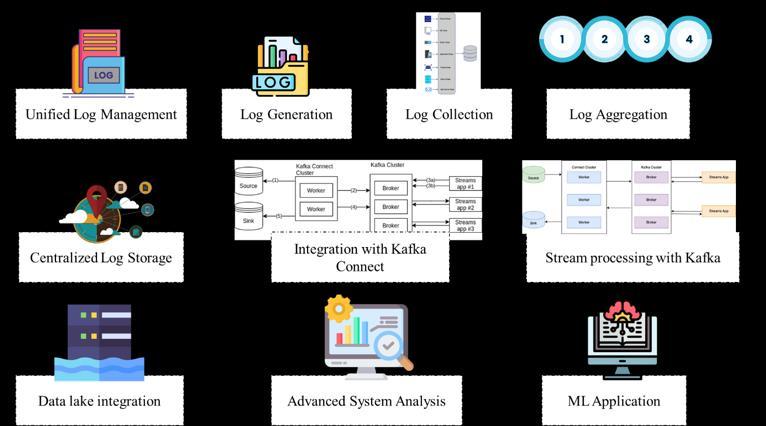
Logs serve as a reflective surface for the health and performance of the application, which is important in
identifyingandtroubleshootingproblems.Astheprevailing study [9], with ML applications, continuous oversights is critical in identifying unforeseen challenges occurring in production.Logsgenerateandcollectinformationthatcan helpidentifyingthedifferencemadetoapplicationbehavior, finalanomalies,andtounderstandthefactorsaffectingthe performance of ML systems. This information is very importanttodecreaseriskandtoimprovehowthesystem can operate. In addition, as IoT platforms grow more complex[10],theycanbeaugmentedbylogdatatoenable realtimemonitoringofdistributedsystems.Usingtoolssuch as elastic stack (Elastic search, Kibana beats) and Apache Kafka, IoT platforms utilize logs to monitor system performance from edge nodes to cloud servers to data streams,facilitatingeffectiveproblem-solvinganddecisionmaking.Logsofferaformattedmeanstoseeplatformhealth, so administrators and users get immediate access to importantperformanceinformation.
Accordingto[11],akeyadvantageofhavingaccesstolarge quantitiesoflogdataproducedbydifferentapplications,is ourabilitytoutilizeitforreal-timeanomalydetection,early maintenance dispatchment, and for prediction of future anomalies. By utilizing open-source technologies, such as, Kafka, PySpark and Grafana, there are scalable and fault tolerant log analytics architectures which provide organizations capability of intuitive visualization and actionableinsightswithintimelines.Logdataisreflectiveof applicationhealthandhasthecapabilitytoreversetracka problemtoitssourceandsupportfastertroubleshootingand debugging. In case of the scalable data pipeline [12], it is important to note that logs are important in keeping the performanceofdistributedsystemsthatprocessagreatdeal ofdata.ThismayincludeusingtoolslikeApacheKafkathat allow event-driven architecture, and Apache Spark for distributed processing. Logs allow data to flow efficiently throughthedatapipelinefromingestionthroughanalysis. Logs also help identify blockages or errors in the data processingthatwouldhelporganizationsmaintainefficient datapipelines.
Likewisethestudy[13]discussesthearchitectureofmulti cloud disturbed systems where logs assist in monitoring systemwellnessinvariedplatforms.Logsareemployedto monitorthedatafragmentation,latency,andsystemcrashes, optimizeresourceutilization,identifyproblems,andensure fault tolerance. Here, logs become critical in the aspect of deliveringreal-timemeasurementstoguaranteethesmooth functioningofmulti-clouddistributedsystems.
Logs are also extremely important in cyber security [14], mainlyinusingcyberthreatsintelligence(CTI)fromopen source data to seek and analyze logs from a variety of internetbasedsourcesinrealtimeforpotentialindicatorsof compromise (IOCs) using Natural Language Processing (NLP)forclassifyingandextractingIOCs.Theuseofsystems such as Apache Kafka for message processing guarantees efficientprocessingoflogsfromdifferentsensors,enabling
International Research Journal of Engineering and Technology (IRJET) e-ISSN: 2395-0056
Volume: 12 Issue: 05 | May 2025 www.irjet.net p-ISSN: 2395-0072
timely response and data backup in the event of server failure. This assists with keeping operations safe and efficientinsituationswherereal-timeinformationismost important.Intheapplicationwheremonitoringinrealtime iscritical,forexampleairpressuremonitoringinpetroleum and mining industries [15], logs enable a means of identifyinganomaliesinsensorreadings.
Similarly, the study [16] affirms the value of logs in InformationSystemSecurity(ISS)bygivingdecision-makers thecapabilityofreviewingrisksandmaintainingsoftware securityoverall.Sincetaskforcesareusinglogsasdatainthe FuzzyAnalyticHierarchyProcess(Fuzzy-AHP)framework, they can use security logs to prioritize security risks and considerpotentialmeansofsoftwaremaintenanceoverall, ultimately promoting system security from a holistic lens. Similarly,[17]elaboratesfurtherbystressinghowsoftware loggingfacilitatesbettersoftwaremaintenance,particularly forlargesystems,wherelogginguser-basedactivitiesallows prioritizingthoseareasneedingrefining.Withaneffective loggingfacilitythatisabletorecordkeyHTTPrequestsand user actions, a way can be discerned on how parts of the software are being utilized most intensively, making for more intelligent decisions regarding allocation in maintenance.
Ultimately,logsconvertraweventinthesystemintoinsights thatcanbeacteduponatalllevels,fromrealtimeincident response to historical optimization and predictions about future behavior. Logs play a vital role in ensuring secure, truthful,andhighperformingsoftwaresystems.
Logs are used as historical records for audits, serving an importantfunctiontoensurecomplianceinindustries.Logs are particularly important in regulated industries, where they serve as a way to track system activity and user activities, enabling organizations to comply with industry specificregulationandstandards.
The project presented in this dissertation undertook to developanautomateddataingestionsystemthatmakesuse ofKafkaConnectfortransferringdatafromdifferenttypesof data structures like databases, cloud storage, real-time streamsintoapredictiveanalyticssystem.Theautomated dataingestionallowsflexibilityandscalabilitythroughthe use of connectors, which allow transformation and enrichmentofdatawhilstdataflowsthroughthepipeline. Theoverallarchitectureenables [18]real-timeprocessing and integration of predictive analytics into everyday businessdecisionmakingthatreliesupontheabilityofan organizationtohaveaccesstopredictabletrendsthatcanbe informed instantly. The project outlines methods for the environmentsetupofadata lake,connectorconfiguration and predictive model development, with targeted interventionforissuesrelatedtodataqualityandprocessing latency.
Dataengineeringbecamemorecomplexandlargescalewith the development of modern software applications. The existing study [19], provided an extensive review on the evolution, fundamental elements, technological advancement, and future trends in data engineering in connection with software development. The study investigated the integration of AI within cloud-native systems, processing frameworks, and real-time data engineering. Issues of scale and security were addressed, togetherwithworkflowoptimizationtechniques.Thearticle alsocontainedresultsshowcasedindatatablesandworking codesnippetstoprovidepracticaladviceforpractitioners andresearchersalike.Today’slargeorganizationshavejust a tremendous challenge to manage and analyze massive quantities of financial data in order to take strategic decisionsandstaycompetitive.Traditionaldatawarehouse solutionsfrequentlydidnotmeetmodernfinancialanalytics volume,complexity,andperformanceneeds.Thisresearch [20]examinedarchitecturalprinciples,technicalsolutions, andbestpracticesthatarenecessaryfordevelopingscalable datawarehousesthatmeettheneedsoffinancialanalytics.It looked at the data integration directions, performance optimizationtechniques,securitystructures,andregulations in compliance. By conducting thorough technological analysis of real-life case studies, this paper provides practitionerswithastructuralroadmapfordesigningand implementingsolid,scalable,andsecuredatawarehousing capabilities.
Theexplosivegrowthofdatahasnecessitatedscalabledata pipelines to effectively manage, process, and analyze complex,large-scaledatastreams.[21]delvedintosomeof thefundamentalarchitecturalprinciplesanddesignpatterns involved in constructing batch and real-time streaming pipelines and solved challenges such as data integration, fault tolerance, and scalability with contemporary data engineering tools. Practical case studies illustrated realworld methods for architecting pipelines to satisfy the requirementsofbigdataenvironments.
IntegratingDataEngineeringandMLOpsprovedimportant for building efficiency, secure ML pipelines where data engineering managed data ingestion and transformation while MLOps streamlined model deployment, monitoring, and governance. The paper [24] identified architectural patternsandtoolchainsthataddresseddatamanagement, workflow interruptions, and ethical concerns, exploring advancedtechniqueslikepipelinedesign,redundancy,and server less architectures to optimize ML workflows. In parallel, a unified log management system [25] based on message queues outperformed traditional solutions in performance,security,andscalability,enablingcentralized analysis and intelligent security operations for large-scale logdata.
International Research Journal of Engineering and Technology (IRJET) e-ISSN: 2395-0056
Volume: 12 Issue: 05 | May 2025 www.irjet.net p-ISSN: 2395-0072
Logs have emerged as a foundational resource for ML in modernintelligentsystems,actingasthebaselineforpattern recognition, behavior modelling, and predictive analytics [26]. The rapid increase in data generated across a broad rangeofconnecteddevices,sensors,anddigitalserviceshas resulted in organizations having available to them unmanageable streams of log data identifying their every interaction,transaction and event ina system which isan excess of log data at our disposal [27]. This stream of log dataisvitalforthedevelopmentofmachineintelligenceas an abundance of data enables models to identify intricate patterns and model the behavior of users or systems at a levelofscaleandgranularityneverexperiencedbefore[28]. Asanexampleinsmartcitiesandtransportationsystems, logs from millions of individual journeys data are used to reconstruct travel patterns, optimize routes, and predict patterns, providing direct input to support AI and ML improvementsinoperationalactivityanduserexperience.
The use of unified log management platforms, including those that use Apache Kafka and data lakes, have also increased the value of logs for ML use [29]. These architecturessupporttheeffortlesscollection,aggregation, andstorageofheterogeneouslogdatafromvarioussources, enablingreal-timeanalyticsandmachinelearningpipelines. By streaming logs into elastic data lakes, enterprises can processandconvertrawdatacost-effectively,renderingit feasibleforsophisticatedMLmodelsforanomalydetection, predictivemaintenance,andautomateddecision-makingin industriessuchastransportation,manufacturing,andcyber security [30]. Real-time correlation and analysis of multimodal log data are essential to detect latent anomalies, predict failures, and address emerging threats in advance [31]
Despite these technological advances, several limitations persistinleveraginglogsformachinelearning.Securityand privacyconcernsariseduetothesensitivenatureoflogdata, necessitating stringent access controls and encryption mechanismstoprotectinformation[32][33].Moreover,the high dimensionality and noise inherent in log data can complicate model training, leading to potential false positives or overlooked anomalies. Data governance and compliance,especiallyinregulatedsectorslikefinanceand transportation, impose additional constraints on data retentionandusage[34].Addressingtheseissuesdemandsa combinationofautomatedlifecyclemanagement,integrated lineagetracking,andethicalconsiderationsindatahandling to ensure trustworthy and effective ML-driven insights. Continued research and innovation in unified log management and MLOps frameworks are vital to overcomingthesechallengesandunlockingthefullpotential oflogsasafuelformachinelearning[35]
Apache Kafka is now an industry-standard technology for real-time log streaming, providing a scalable, highthroughputplatformthateffectivelyingestsandprocesses logs from multiple systems and applications. Contrary to logging systems that come in common use, Kafka's architectureisscalabilityandreliability-focusedtofacilitate effortlesslogaggregationandanalysisevenincomplicated, containerized environments. By categorizing log data by topicsandpartitions,Kafkaenableseffectivehandlingand retrieval oflogsfrommany applicationpodsornodes,for use in both operational monitoring and analytical applications.Forthisreason,Kafkaisanexcellentbackbone to use with centralized log management across today’s dynamicinfrastructures
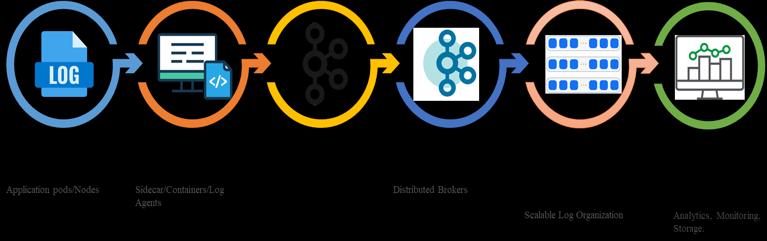
ApacheKafkahasbecomeapreferredoptionforreal-time log ingestion and offering a distributed, high-throughput pipelinecapableofingestingthevolumeandvelocityoflog datathatorganizationsinterfacewithfromapplicationsand infrastructuretoday[36].Traditionalloggingsystemsoften lackthescalabilityandreliabilitythatKafkacanprovide,and unlike traditional logging systems, Kafka is built on the principlesoftopics,producers,andconsumersthatsupport aflowofdatainitsarchitectureandreal-timeenvironment [37, 38]. Although logs are published and consumed independentlyinKafka'sdistributedarchitecture,Kafkacan support event-driven architectures in a reliable way to ensureavailabilityoflogdataforanydownstreamanalytics ormonitoring.
Kafka's distributed design offers substantial benefits over traditionalloggingsystems,especiallyintermsofdurability, fault tolerance, and scalability[39, 40]. Through the replicationoflogdataacrosspartitionsandbrokers,Kafka provideshighavailabilityandnodefailureresilience,making itwell-suitedformission-criticalapplications.Itsintegration with orchestration platforms such as Kubernetes additionally boosts deployment agility and operational productivity, enabling organizations to dynamically scale their log pipelines according to the demands of workload [41]. This proves particularly useful within containerized andcloud-nativeenvironments,whereapplicationsareoften beingdeployedandscaledacrossdistributedclusters[42]
International Research Journal of Engineering and Technology (IRJET) e-ISSN: 2395-0056
Volume: 12 Issue: 05 | May 2025 www.irjet.net p-ISSN: 2395-0072
However,despiteitsstrengths,Kafkabasedlogingestionis not without complications. Managing and scaling Kafka clusters is no easy feat and can be onerous. This is due to state management, persistent storage management, and networkconfiguration,allofwhichcanconsumetimeand resources [43, 44]. In addition, validating that the data is consistent, secure, and available across distributed methodologies adds complexity, and configuration issues will lead to slowdowns and, in some instances, data loss. Manyorganizationsmayfindspecializedexpertiseneededin both Kafka and containerorchestration environments, for exampleKubernetes [45]. Thesechallengescan largely be mitigated with an understanding of best practices for deployment, monitoring, and security, and the use of managedservice,orautomationtools,tosimplifyKafkause inproduction.
In today's containerized world, Apache Kafka is indispensableforaggregatinglogsacrossvariousapplication podsandnodessothatthereisefficientandscalabledata ingestion across distributed micro service architectures. Kafka's high-performance, distributed messaging system complements container orchestration platforms such as Kubernetes, where applications are deployed and scaled dynamically [46, 47]. To enable real-time log collection, sidecarcontainersorlightweightloggingagentslikeFluent Bit are typically deployed in conjunction with application containers. These agents run continuously to collect logs from their respective pods and serve as Kafka producers, sendingthedata intoKafka topicsforcentralizedanalysis andprocessing[48].
Usingsidecarcontainersorlogagentseffectivelyloosensthe couplingoflogmanagementfromthecoreapplicationand allows the logging facility collection be relieved from the coreworkloadsinyourapplication[49].Logeventsareoften forwarded to Kafka topics that provide the ability to introduce message streaming and partitioned degrees of parallelism to the log stream while achieving a very high throughputandlowlatency todeal with thelargevolume and velocity of log data coming from cloud-native environments.Bydistributingthelogmessagesacrossaset ofKafkabrokers,thedurability,availability,andconsistency oflogdataismaintainedbyleveragingKafka'sdistributed architecture, and in the case of a log agent failure or deadlock,logsarereplicatedacrossmultipleKafkabrokers, soyouwon'tloseyourlogsandthesystemisreliableatthis point[50]
Evenwiththesebenefits,thedeploymentofKafka-basedlog ingestion in containerized environments has operational complications.Orchestratingsidecarcontainerorlogagent deployment and configuration across many pods is a complex automation and orchestration exercise [51]. Furthermore, ensuring uniform log structures, schema evolution, and data quality for heterogeneous sources
require robust metadata management and governance processes. However, Kafka integration with containerized loggingsoftwarehasemergedasabestpracticecornerstone, allowing organizations to achieve unified, scalable, and robustlogmanagementacrosscomplex,dynamicapplication environments.
ApacheKafka'sscalabilityandeffectivenessindealingwith high-scalelogdatastreamsareessentiallypredicatedonits fundamentalideasoftopicsandpartitions.AKafkatopicis essentiallyalogicalstreamorcategoryofaparticulardata stream, i.e., an application's logs or a sensor network's events.ButtherealstrengthofKafkaisinthefactthateach subject is split into several partitions, the major building blocks of parallelism, storage, and fault tolerance in the Kafka system. This partitioning feature allows Kafka to dividedataamongseveralbrokersinaclustertoenablehigh throughput, scalability, and reliability in log consumption andprocessing[52].
From a conceptual standpoint, every partition in Kafka is essentiallyanordered,append-onlylogofmessages,which guarantees relative ordering of messages sent to that partition. Such ordering is essential for some applications where processing events in-order is required, such as transaction logs or time series. Likewise, Kafka allows multiple partitions per topic, which allows a producer to writedataconcurrently,butalsoallowconsumerstoread concurrently from multiple partitions. This parallelism significantlyscalesKafkatoprocesshundredsofthousands of log data and can scale horizontally by distributing workloadsacrossadditionalnodes[53,54].
The flexibility in partitioning strategies also increases Kafka'scapacityforoptimizinglogstructureacrossservices orenvironments.Kafkaoffersseveralpartitioningschemes, such as round-robin distribution, which distributes messagesevenlyacrosspartitions;key-basedpartitioning, which sends all messages that share the same key to the same partition, maintaining their order; and custom partitioners,whichenableorganizationstoapplydomainspecific algorithms for distributing data. These strategies balanceload,preservedatalocality,andmakebetteruseof the cache, depending on the application. For instance, in multitenantormicroservicesdeployments,partitioningcan segregate log streams by customer or service to make downstreamprocessingandaccesscontroleasier[55]
Nonetheless, controlling the number and placements of partitions will take planning and continual maintenance. While partitions can provide better throughput and more parallelism for consumers, they also have overhead costs that account for more broker consumption and metadata maintenance,andpossiblymorenetworktraffic.Iftoomany partitions are present, it is not uncommon to see uneven workloads across partitions or delays if not throttled
International Research Journal of Engineering and Technology (IRJET) e-ISSN: 2395-0056
Volume: 12 Issue: 05 | May 2025 www.irjet.net p-ISSN: 2395-0072
properly. Striking that balance will require evaluating the volume of data, the concurrency of consumers, and the throughput of application processing, making the adjustments to the partition counts as the work evolves. Besides throughput and parallelism, Kafka's partitioning mechanismisalsofault-tolerantanddurable.Partitionsare replicated on several brokers such that if a single broker fails,anothercopycantakeoverautomaticallywithoutany loss ofdata.Replicationcoupledwithpartitioningoffers a fault-tolerantframeworkforhigh-availabilitylogstreaming systems that can run reliably in distributed, cloud-native, andcontainerizedenvironments.
Logsandstreamingdataarecriticaltounderstandingsystem and application behavior. They assist in detecting operationalproblems,facilitateauditingforcompliance,and aid machine learning applications like anomaly detection andpredictiveanalytics[56,57].Throughongoingcapture of detailed events and metrics, organizations can keep systems healthy, enhance troubleshooting, and create modelsthatpredictfuturetrendsorfailures,makingoverall decision-makingprocessesbetter.
Apache Kafka is a powerful, distributed platform for realtime ingestion and aggregation of logs generated by application pods and multiple nodes. Kafka's high throughput, fault-tolerant model decouples the data producerfromthedataconsumerandallowslogstreaming, even during operational changes typically seen in micro servicesorcontainerorchestration.Asaresult,Kafkafillsan essentialnicheforcapturingacontinuouslyflowingstream ofdataandtransferringthatdataintodownstreamsystems tobeacteduponorstored[58].
Kafka Connect serves as a connector between Kafka and otherdatalaketechnologies,enablingeasystreamingoflog data into durable storage solutions such as Amazon S3, GoogleCloudStorage(GCS),andHadoopHDFS.Itsdesignis madeupofdistributedworkers,connectors,andtasksthat parallelizeandautomatedata movement.Specializedsink connectorslikeAmazonS3SinkConnector,GCSConnector, and Hadoop HDFS Connector facilitate integration with heterogeneous storage back ends, allowing scalable and fault-tolerant data ingestion pipelines. Kafka Connect also providesessentialfeaturessuchasexactly-onceandat-leastonce delivery semantics for ensuring data consistency, as wellasschemaevolutionandserializationformatssuchas Avro and JSON, which make downstream data processing andanalyticseasier[59]
After logs are ingested into a data lake, they provide the flexibility and scale to pursue advanced analytics and machinelearning.Withtheschema-on-readapproachfrom data lakes, organizations are able to conduct exploratory data analysis, build predictive models, and perform historical audits without the upfront data transformation
[60].Therichdataoflogsenablesmachinelearningmodels tobetrainedinpredictivemaintenance,anomalydetection and customer behavior prediction; ultimately leading to actionable insights and operational efficiencies. When integrated with Kafka into data lakes, organizations can build unified pipelines that improve data quality, reduce machinelearningdeploymenttimesandsupportreal-time decision-makingacrossdifferentareasofthebusiness.
DataLakesofferarobust,scalableandcost-effectivestorage solution for logs and other types of data produced by contemporarybusinesses.Incontrasttoconventionaldata warehouses that need data to be pre-structured before storage,datalakesenableorganizationstoingestandstore datainitsrawform,whetherstructured,semi-structured,or unstructured.Thisflexibilityisparticularlyusefulforlogs, whichtendtocomeinvariedformatsandlargequantities from multiple sources like applications, IoT devices, and cloudservices[61]
One of the primary benefits of data lakes is their cost efficiency and elasticity. Leveraging low-cost, cloud based object storages, data lakes can horizontally scale to petabytesorexa-bytesoflogdatawithoutsignificantupfront investmentandongoingoperationalcost.Withapay-as-yougooptionasanadditionalvalue,theelasticityofadatalake providesorganizationswithanabilitytomanagelargelog volume, even aggravating spikes of log volume, without impacting performance or needing equipment investment andupgrades[62]
Anothercriticaladvantageistheschema-onrealflexibility thatdatalakesoffer.Logscanbeingestedwithouttheneed forpredefinedschemas,allowingorganizationstostoredata asisanddefinethestructureonlywhenthedataisaccessed for analysis or reporting. This approach accelerates data ingestions,supportrapidprototyping,andempowersdata scientists and analysts to experiment with data, run advancedanalytics,andbuildMLmodeldirectlyonrawlog data,unlockingdeeperinsightsandinnovation.
Effectivelogorganizationinadatalakeiscrucialtoachieve maximumusabilityandperformance.Partitioningstrategies are commonly employed to optimize data retrieval and processing. Logs can be partitioned based on date, application,region,orotherapplicableattributes,enabling fasterqueriesandeasierdatasets.Partitioningbydate,for instance,facilitateseffectivetime-basedanalysisandmakes data lifecycle management easier, while partitioning by applicationorregionfacilitatestargetedtroubleshootingand compliancereporting[63].
International Research Journal of Engineering and Technology (IRJET) e-ISSN: 2395-0056
Volume: 12 Issue: 05 | May 2025 www.irjet.net p-ISSN: 2395-0072
Alongwithpartitioning,catalogingandmetadataindexing are also important to make log data discoverable and actionable.Usingmetadatacatalogs,organizationscanhave a catalog of all datasets in the data lake, including informationaboutdatasource,format,schema,andlineage. Metadataindexingenablesefficientsearch,accesscontrol, anddatagovernance,allowinguserstofindandusethelog data they require for analytics, auditing, or regulatory compliancequickly.
Inshort,datalakesprovideastrong,elastic,andagilebase forlogstoragethatfacilitatescost-effectiveexpansion,highspeed ingestion of data, and sophisticated analytics. By adopting good partitioning and metadata management techniques,organizationscanmaketheirdatalakesstrategic resourcesforoperationalintelligenceandinnovation[64].
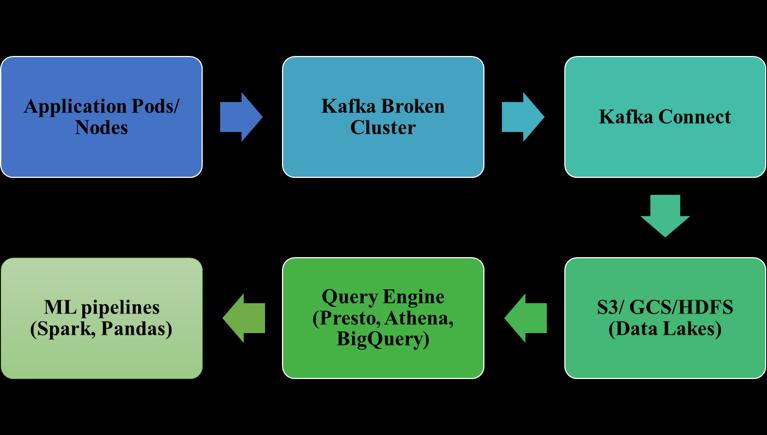
Today, organizations rely heavily on extracting actionable insights from log data through querying. Query engines including Presto, Amazon Athena, and Google BigQuery enable analysts to run complex ad hoc queries directly against massive amounts of log data stored in data lakes, without needing to pre-stage or transform the data. The enginesacceptqueriesfromanalysts,leveragefastscalable computation, and drive dashboards that visualize trends, error rates,andoperational healthastheyare happening. Alertingsystemscanbebuiltfromqueryresultsandprovide automatic notification when thresholds are breached or anomalies are detected, allowing teams to respond to an incident or observe system behavior before an incident occurs[65,66].
Logs must be properly pre-processed before they can be utilizedinmachinelearning(ML)pipelinesefficiently.Preprocessing includes normalization and standardizing log formats across sources, enrichment by adding contextual information, and feature extraction to determine relevant attributesformachinelearning.Pre-processingoperations are often handled using tool chains like Apache Spark, Pandas, and DBT, with their scalable and flexible frameworks for log data cleaning, transformation, and structuring. Accurate pre-processing guarantees that the downstream ML models are provided with high-quality, consistent input, which is imperative for effective pattern recognitionandanomalydetection[67].
When machine learning is added to log analysis, the predictive capabilities expand beyond what was possible previouslywithrule-basedmonitoring.Bytrainingmodels fromhistoricallogdata,organizationscananalyzedeviations in the application's behavior for anomalies and predict systemloadaswellasfindrisksforasecuritybreachbefore
it occurs. ML-based log analysis uses algorithms to learn automatically about what is "normal" operational performance and highlight what is not normal which may indicateafailureoranattack.Theresultisthatoperational reliability and security can be proactively improved in addition to alert fatigue as the analysis will only highlight actionableinformationwithminimalfalsepositives.Inthe end, ML-based log analysis provides a huge payback to organizations by converting raw log data from their IT systems into a potential strategic asset for predictive maintenance,riskmitigation,andcontinuousimprovement [68]
AlargemanufacturingcompanydeployedthousandsofIoT sensors across its production facilities to monitor equipment’s health, environmental conditions, and operational efficiency. The sensors generated massive volumesoflogdata,whichneedtobeingested,processed, and analyzed in real time to enable proactive, maintained and rapid incident response. To address these needs, the company implemented a unified log management architecture using Apache Kafka as the central events streaming platform. Each IoT device published its logs to Kafkaforscalabilitytohandlemillionsofeventspersecond. Kafka connect was used to stream these logs into a cloud based data lake, enabling cost effectiveness, long term storageandsupportingdownstreamanalytics.
Once in the Data Lake, the log data was queried using distributedenginesandfedintoMLpipelines.Thisenabled realtimeanomalydetectionflaggingunusualsensorreading andpredictingequipmentfailurebeforetheyoccurred.The architecturealsosupportedthecreationofdashboardsand alerting systems, providing operational teams with actionable insights and automated notification. By integrating Kafka, Kafka connect, and a data lake, the company achieved scalable, reliable log ingestion, unified governance, and advanced analytics capabilities for predictivemaintenanceandoperationaloptimization[69]
Likewise, an international e-commerce service provider experienced unintegrated log management information distributed across many cloud infrastructures and micro services. The organization required a scalable log aggregation methodology that could collect logs from sources,evaluatethelogsforquality,andprovideadvanced analysis to indicate potential fraud, monitor against customerbehaviorandassessoperationaleffectivenesson the site. The company used Kafka in the architecture to centralize log collection. Logs from application across services were streamed into Kafka topics, where the high throughputandfaulttoleranceofKafkaguaranteedthatlogs were delivered reliably. Kafka Connect was used to push theselogsintoanAmazonS3-baseddatalake.Theprocess decoupled log ingestion from analytics workloads, taking advantage of cost effectiveness and elasticity offered by
International Research Journal of Engineering and Technology (IRJET) e-ISSN: 2395-0056
Volume: 12 Issue: 05 | May 2025 www.irjet.net p-ISSN: 2395-0072
cloud storage. With the logs centrally located in the data lake,thecompanywasabletobuildETLpipelinestoscrub andstructurethelogsinawaythatwasusefulformachine learningandbusinessintelligenceusecases.Datascientists utilizedthiscleansedlogdatatobuildpredictivemodelsfor fraud detection and customer segmentation. Business analystswereabletousequeryenginestobuildreal-time dashboards and reports. The single architecture not only improved data governance and reduced operational overhead, but it also allowed the company to make faster decisionsbasedondata[70].
8. Challenges and strategies to overcome
UnifiedlogmanagementinmodernITsystems,particularly when utilizing Kafka connect to stream to data lakes for sophisticatedanalysisand machinelearning isconfronted with several issues. The amount of log data produced by distributedarchitectures,microservices,andcloud-native appsgrowexponentially,creatingamassiveissuewithdata overwhelm. Each application, system, and network device generatelogsthatarefrequentlyimportanttocomprehend system and application behavior, debug issues, audit, and fuelmachinelearningapplications.Yet,thevolumeoflogs canbesolargethatitoverwhelmsteams,makingithardto collect, store, and analyze logs effectively. A second significantchallengeliesinthecomplexityandheterogeneity of log sources. Logs are generated in diverse formats and from various endpoints, such as various application pods, nodes, and cloud services. This heterogeneity requires strong standardization and conversion processes that guarantee logs are normalized and search-friendly, a prerequisiteforefficientaggregationandanalysisinadata lakearchitecture.Withoutstandardization,itisdifficultto relateeventsamongdistributedsystems,whichmakesroot causesandactionableinformationhardertoidentify.
Operationaldifficultiesalsostemfromthedynamicnatureof contemporaryITinfrastructure.Containersandshort-lived cloud instances are continuously spun up and torn down, renderingitdifficulttoguaranteethoroughandpersistent loggathering.Volatilityhasthepotentialtocausegapsinlog information,makingitdifficulttotroubleshootandreduce the mean time to resolution (MTTR). In addition, keeping andhandlingenormouslog datasetsindatalakeslikeS3,
GCS,orHadoopraisesissuesregardingscalability,expense, and long-term preservation, particularly when there are regulatoryrequirementsforlongstorageperiods.Noisein largelogdatasetsisanothercrucialchallenge.Theprocessof sifting through irrelevant, or duplicate, log entries while trying to derive value is time-consuming and can considerably delay incident response. The most pressing problem may be real-time or near real-time log ingestion and analysis since waiting for useful insights could affect reliabilityandsecurityofthesystem.
To ensure the log completeness and integrity, constant monitoringforlogagentsandKafkalagshouldbedoneas wellasearlyalertingaboutanyingestionerrorstoensure healthy data flow. Security and access management are utmostpriorities,comprisingstrictdatalakeaccesspolicies aswellasin-transitandat-restencryptionofsensitivedata to ensure protection against data breaches. To maximize performance and cost, implementing lifecycle policies for archivingordeletingstalelogsefficientlymanagesstorage. Compressing and data tiering also minimize storage costs whilepreservingfastaccesstomost-useddata.
Log management is moving in a direction of real-time log querying using streaming data lake technologies, such as Apache Hudi and Iceberg, which allows for instantaneous insightsandfasterdecisions.Anexampleoftheoperational changes already being realized are server less processing andauto-scalingingestpipelinesallowinganorganizationto configure its log ingestion and processing infrastructure, easilyscaleitasneededwithoutrequiringanymanualinput, thereby reducing complexity and cost. Where many organizationsstillheavilyrelyuponhumaninputtoreactto logevents,machinelearningandAIpoweredalertingand diagnosticshavechangedthewaywethinkaboutlogsand alerting They are now able to automatically detect anomaliesandpredictanimpendingissue,whileproviding timely situational awareness and actionable intelligence withgreatimpactonthevalue,security,andreliabilityofthe log data. These advancements allow organizations to respond to operational and security events in real-time, leverage available resources more effectively, and gain greater insight into deeper business intelligence through theirlogmanagementsystems.
Theproposedreviewoffersanend-to-endlogmanagement systemthatcombinesApacheKafkawithdatalakestomeet the challenges of contemporary distributed systems in managinglarge-scalelogs.UsingKafka'sreal-timestreaming featuresandthecost-efficient,scalablestoragecapabilities ofdatalakes,thissystemprovideseffectivelogaggregation, storage,andanalysis.Themaincontributionofthestudyis thedualapproachthatintegratesreal-timemonitoringwith long-term analytical capabilities, without the requirement
International Research Journal of Engineering and Technology (IRJET) e-ISSN: 2395-0056
Volume: 12 Issue: 05 | May 2025 www.irjet.net p-ISSN: 2395-0072
for independent pipelines for real-time and historic data. TheuseofKafkaConnectwithintheframeworksimplifies theintegrationprocess,allowingforflexibleandefficientlog ingestionintocloud-basedstoragesolutionslikeAmazonS3 orGoogleCloudStorage.Byincorporatingschemaevolution methodsandautomatedde-duplicationintheETLprocess, the system provides data consistency, quality, and governance while avoiding fragmentation or loss of log records. The study also highlights the value of predictive analytics powered by ML models trained on historical log data, offering organization the ability to predict system failure,detectanomalies,andoptimizeresourceallocation. Thesecapabilitiesarecritical formaintaining highsystem performanceandtheuptime.Thefindingunderscoresthe potentialofunifyingrealtimedataingestionwithlongterm datastorage,significantlyimprovingoperationalefficiency, collaborating among DevOps teams, and fostering a datadriven culture. Moving forward, future directions should focusonfurtherenhancingdatagovernance,improvingthe scalability of the framework for even larger datasets, and developingmoresophisticatedmachinelearningmodelsto deepen insights into system performance. Additionally, integratingmoreadvancedanomalydetectionmethodsand exploring other cloud-native technologies will further strengthen the framework’s applicability in diverse organizationalcontexts.
[1] A.Enemosah,"EnhancingDevOpsefficiencythrough AI-driven predictive models for continuous integration and deployment pipelines," International Journal of Research Publication and Reviews, vol.6,no.1,pp.871-887,2025.
[2] N. Joy, "Scalable Data Pipelines for Real-Time Analytics: Innovations in Streaming Data Architectures," International Journal of Emerging Research in Engineering and Technology, vol.5,no. 1,pp.8-15,2024.
[3] H.P.Salim,"AComparativeStudyofDeltaLakeasa Preferred ETL and Analytics Database," International Journal of Computer Trends and Technology, vol.73,no.1,pp.65-71,2025.
[4] B. S. Pillarisetty, "The Role of Data Streaming in ModernE-commerceandDigitalPlatforms," IJSATInternationalJournalonScienceandTechnology, vol. 16,no.1,2025.
[5] N.GuptaandJ.Yip,"DataIngestioninLakehouse," in Databricks Data Intelligence Platform: Unlocking the GenAI Revolution:Springer,2024,pp.45-60.
[6] K. Singh and A. S. Kushwaha, "Data Lake vs Data Warehouse: Strategic Implementation with Snowflake," International Journal of Computer
Science and Engineering (IJCSE), vol. 13, no. 2, pp. 805-824,2024.
[7] S.D.Kuznetsov,P.E.Velikhov,andQ.Fu,"Real-time analytics: benefits, limitations, and tradeoffs," ProgrammingandComputerSoftware, vol.49,no.1, pp.1-25,2023.
[8] T.M.deMenezesandA.C.Salgado,"UsingLogsto Mitigate Process Variability and Dependence on Practitioners in Traditional Business Process AutomationSoftware," Preprints, 2024.
[9] D.Protschky,L.Lämmermann,P.Hofmann,andN. Urbach, "What Gets Measured Gets Improved: MonitoringMachineLearningApplicationsintheir ProductionEnvironments," IEEE Access, 2025.
[10] G. Calderon, G. del Campo, E. Saavedra, and A. Santamaría, "Monitoring framework for the performance evaluation of an IoT platform with Elasticsearch and Apache Kafka," Information systems frontiers, vol. 26, no. 6, pp. 2373-2389, 2024.
[11] M.B.D.Reddy,J.Jaisri,K.R.Kanagaladharani,K.V. Kumar,andK.Madhavi,"REAL-TIMEPREDICTIVE LOG ANALYTICS: A SCALABLE JAVA DRIVEN PIPELINE FOR DYNAMIC INSIGHTS IN MORDEN DATA ENVIRONMENTS," Journal of Nonlinear Analysis and Optimization, vol.15,no.1,2024.
[12] P.B.DesaiandO.Goel,"ScalableDataPipelinesfor EnterpriseDataAnalytics," International Journal of Research in All Subjects in Multi Languages, vol.13, no.1,p.174,2025.
[13] S. C. Rajesh and L. Goel, "Architecting Distributed Systems for Real-Time Data Processing in MultiCloud Environments," Journal of Emerging Technology and Innovative Research (JETIR), 2025.
[14] P. Balasubramanian, S. Nazari, D. K. Kholgh, A. Mahmoodi, J. Seby, and P. Kostakos, "A cognitive platformforcollectingcyberthreatintelligenceand real-time detection using cloud computing," DecisionAnalytics Journal, vol.14,p.100545,2025.
[15] Z.Zhou,L.Zhou,andZ.Chen,"ADistributedRealTime Monitoring Scheme for Air Pressure Stream DataBasedonKafka," Applied Sciences, vol.14,no. 12,p.4967,2024.
[16] R. A. Khan, I. Keshta, H. A. Al Hashimi, A. O. Almagrabi, H. S. Alwageed, and M. Alzahrani, "A Fuzzy‐AHP Decision‐Making Framework for OptimizingSoftwareMaintenanceandDeployment in Information Security Systems," Journal of
International Research Journal of Engineering and Technology (IRJET) e-ISSN: 2395-0056
Volume: 12 Issue: 05 | May 2025 www.irjet.net p-ISSN: 2395-0072
Software: Evolution and Process, vol. 37, no. 1, p. e2758,2025.
[17] C. Scheepers, "User-based activity logging and analysis to improve system maintenance," NorthWestUniversity(SouthAfrica).2024.
[18] O.EmmaandP.Peace,"BuildinganAutomatedData Ingestion System: Leveraging Kafka Connect for PredictiveAnalytics," Researchgate.net, 2023.
[19] S. Bussa and E. Hegde, "Evolution of Data Engineering in Modern Software Development," Journal of Sustainable Solutions, vol. 1, no. 4, pp. 116-130,2024.
[20] V. N. Edapurath, "Building Scalable Data Warehouses for Financial Analytics in Large Enterprises," IJIRCT, 2024.
[21] S. Chundru and P. K. Maroju, "INTELLIGENT SYSTEMSANDAPPLICATIONSINENGINEERING," International Journal of Intelligent Systems and Applications in Engineering, 2024.
[22] H.P.Kothandapani,"ASystematicFramework for DataLakeCurationandRegulatoryCom-pliancein Financial Institutions: Architecture, Implementation, and Best Practices," Emerging Trends in ML and Big data, 2024.
[23] T. P. Raptis, C. Cicconetti, M. Falelakis, G. Kalogiannis, T. Kanellos, and T. P. Lobo, "Engineering resource-efficient data management forsmartcitieswithApacheKafka," FutureInternet, vol.15,no.2,p.43,2023.
[24] S.JainandJ.Das,"Integratingdataengineeringand MLOpsforscalableandresilientmachinelearning pipelines: frameworks, challenges, and future trends,"2025.
[25] Z. Fan, B. Yang, J. Peng, B. Pei, C. Zheng, and X. Li, "Dynamic Adaptive Mechanism Design and ImplementationinVSSforLarge-ScaleUnifiedLog Data Collection," International Journal of InformationSecurity andPrivacy (IJISP), vol.18,no. 1,pp.1-26,2024.
[26] A.LuckowandK.Kennedy,"Datainfrastructurefor connectedtransportsystems,"in DataAnalyticsfor Intelligent Transportation Systems:Elsevier,2025, pp.121-139.
[27] P.Vlacheas etal.,"Deliverable5.1Softwareplatform Architecture," Horizon, no.30,2026.
[28] H.KullandM.Hujic,"Securelog-managementforan Apache Kafka-based data-streaming service," ed, 2023.
[29] E.ZaganandM.Danubianu,"Datalakearchitecture forstoringandtransformingwebserveraccesslog files," IEEE Access, vol.11,pp.40916-40929,2023.
[30] W.-C. Shih, C.-T. Yang, C.-T. Jiang, and E. Kristiani, "Implementationandvisualizationofanetflowlog data lake system for cyberattack detection using distributed deep learning," The Journal of Supercomputing, vol.79,no.5,pp.4983-5012,2023.
[31] H. P. Kothandapani, "Emerging trends and technological advancements in data lakes for the financial sector: An in-depth analysis of data processing, analytics, and infrastructure innovations," Quarterly Journal of Emerging TechnologiesandInnovations, vol.8,no.2,pp.62-75, 2023.
[32] N. Boyko, "Evaluating Binary Classification AlgorithmsonDataLakesUsingMachineLearning," Revue d'Intelligence Artificielle, vol.37,no.6,2023.
[33] N. Su, S. Huang, and C. Su, "Elevating Smart Manufacturing with a Unified Predictive MaintenancePlatform:TheSynergybetweenData Warehousing, Apache Spark, and Machine Learning," Sensors, vol.24,no.13,p.4237,2024.
[34] M. Gashi, B. Mutlu, and S. Thalmann, "Impact of interdependencies: Multi-component system perspectivetowardpredictivemaintenancebased onmachinelearningandXAI," AppliedSciences, vol. 13,no.5,p.3088,2023.
[35] C.-H. Chang, H.-T. Chiao, H.-C. Chang, E. Kristiani, and C.-T. Yang, "A predictive maintenance architecture for TFT-LCD manufacturing using machinelearningonthecloudservice," Internet of Things, vol.31,p.101541,2025.
[36] S.Kul,S.Kumcu,andA.Sayar,"DockerContainerBased Framework of Apache Kafka Node Ecosystem: Vehicle Tracking System by License Plate Recognition on Surveillance Camera Feeds," International Journal of Intelligent Transportation Systems Research, vol.22,no.2,pp.290-297,2024.
[37] N. Karpiuk, H. Klym, and T. Tkachuk, "USAGE OF APACHE KAFKA FOR LOW-LATENCY IMAGE PROCESSING," Electronics and information technologies/Електроніка
no.26,2024.
[38] J.Oza,A.Patil,C.Maniyath,R.More,G.Kambli,and A. Maity, "Harnessing Insights from Streams: Unlocking Real-Time Data Flow with Docker and CassandraintheApacheEcosystem,"in 2024 IEEE Recent Advances in Intelligent Computational Systems (RAICS),2024:IEEE,pp.1-6.
2025, IRJET | Impact Factor value: 8.315 | ISO 9001:2008 Certified
International Research Journal of Engineering and Technology (IRJET) e-ISSN: 2395-0056
Volume: 12 Issue: 05 | May 2025 www.irjet.net p-ISSN: 2395-0072
[39] M. Usman, "Effortless Lifecycle Management for Experimental IIoT Workloads in Containerized Environments," in 2025 28th Conference on Innovation in Clouds, Internet and Networks (ICIN), 2025:IEEE,pp.202-206.
[40] M. Pacella, A. Papa, G. Papadia, and E. Fedeli, "A ScalableFrameworkforSensorDataIngestionand Real-Time Processing in Cloud Manufacturing," Algorithms, vol.18,no.1,p.22,2025.
[41] J. M. I. Arockiasamy, "DevOps-Driven Real-Time Health Analytics: A Scalable Framework for Wearable IoT Data," International Journal for MultidisciplinaryResearch, vol.7,p.10.36948,2025.
[42] J.-C.Liu,C.-H.Hsu,J.-H.Zhang,E.Kristiani,andC.-T. Yang,"Anevent-baseddataprocessingsystemusing Kafka container cluster on Kubernetes environment," Neural Computing and Applications, pp.1-18,2023.
[43] C.Lekkala,"DeployingandManagingContainerized DataWorkloadsonAmazonEKS," JArtiInte&Cloud Comp, vol.2,no.2,pp.1-5,2023.
[44] T. P. Raptis and A. Passarella, "A survey on networkeddatastreamingwithapachekafka," IEEE access, vol.11,pp.85333-85350,2023.
[45] O.AlhammadiandO.Abul,"Real-timeWebServer LogProcessingwithBigDataTechnologies,"in 2024 Innovations in Intelligent Systems and Applications Conference (ASYU),2024:IEEE,pp.1-8.
[46] Š. Šprem, N. Tomažin, J. Matečić, and M. Horvat, "Building Advanced Web Applications Using Data Ingestion and Data Processing Tools," Electronics, vol.13,no.4,p.709,2024.
[47] H.Sreepathy,B.D.Rao,M.K.Jaysubramanian,and B.D.Rao,"DataIngestionsasaService(DIaaS):A UnifiedinterfaceforHeterogeneousDataIngestion, Transformation, and Metadata Management for DataLake," IEEE Access, 2024.
[48] S. Adhikari, "Real-Time Big Data Processing for Intelligent Transportation Systems:AFramework for Scalability," Journal of Digital Transformation, CyberResilience,andInfrastructureSecurity, vol.10, no.1,pp.1-10,2025.
[49] N. Perera, "Design of Cloud-Facilitated Data Repositories for Large-Scale Traffic Pattern Analyses," Northern Reviews on Algorithmic Research,TheoreticalComputation,andComplexity, vol.10,no.2,pp.1-10,2025.
[50] Y.FanandX.Mi,"DesignandEfficacyofaDataLake Architecture for Multimodal Emotion Feature ExtractioninSocialMedia," IETSoftware, vol.2024, no.1,p.6819714,2024.
[51] J.Chen,"Leveraging ScalableCloudInfrastructure forAutonomousDrivingDataLakesandReal-Time DecisionMaking,"2025.
[52] J. Kim, D. Lee, and U. Lee, "Affectstream: KafkaBased Real-Time Affect Monitoring System Using WearableSensors," Available at SSRN 5193660.
[53] A.Raza,"Real-timeMachineLearningPipelinesfor Big Data in Cloud Environments: Implementing Streaming Algorithms on Apache Kafka," Open Journal of Robotics, Autonomous Decision-Making, andHuman-Machine Interaction, vol.8,no.6,pp.111,2023.
[54] K. Peddireddy, "Streamlining enterprise data processing, reporting and realtime alerting using apache kafka," in 2023 11th International SymposiumonDigitalForensicsandSecurity(ISDFS), 2023:IEEE,pp.1-4.
[55] T. P. Raptis, C. Cicconetti, and A. Passarella, "Efficient topic partitioning of Apache Kafka for high-reliability real-time data streaming applications," FutureGenerationComputerSystems, vol.154,pp.173-188,2024.
[56] K. Peddireddy, "Kafka-based architecture in building data lakes for real-time data streams," International Journal of Computer Applications, vol. 185,no.9,pp.1-3,2023.
[57] C.Martín,P.Langendoerfer,P.S.Zarrin,M.Díaz,and B. Rubio, "Kafka-ML: Connecting the data stream with ML/AI frameworks," Future Generation Computer Systems, vol.126,pp.15-33,2022.
[58] B. J. Mary, "Unified Data Quality Frameworks for Real-TimeMLPipelines:BridgingDataOps,MLOps, and Streaming Architectures," Researchgate.net, 2025.
[59] S.JavaherihaghighiandO.Oloruntoba,"Advanced Database Management and Data Mining for Optimizing Supervised E-Commerce Customer Behavior Prediction," International Journal of Computer Applications Technology and Research, 2021.
[60] B.P.R.Rella,"ComparativeAnalysisofDataLakes andDataWarehousesforMachineLearning."
International Research Journal of Engineering and Technology (IRJET) e-ISSN: 2395-0056
Volume: 12 Issue: 05 | May 2025 www.irjet.net p-ISSN: 2395-0072
[61] A.Lamer,C.Saint-Dizier,N.Paris,andE.Chazard, "DataLake,DataWarehouse,Datamart,andFeature Store: Their Contributions to the Complete Data ReusePipeline," JMIRmedicalinformatics, vol.12,p. e54590,2024.
[62] R. Magesh, U. Ilakkiyaa, R. Shanthini, and R. Charanya,"Unlockingthe Potential of Data Lakes: Organizing and Storing Marketing Data for Analysis," in Data Engineering for Data-driven Marketing:EmeraldPublishingLimited, 2025, pp. 199-216.
[63] R. Marri, S. Varanasi, and S. V. K. Chaitanya, "IntegratingNext-GenerationSIEMwithDataLakes andAI:AdvancingThreatDetectionandResponse," Journal of Artificial Intelligence General science (JAIGS) ISSN: 3006-4023, vol.3,no.1,pp.446-465, 2024.
[64] A. Katari, "Integrating Machine Learning with Financial Data Lakes for Predictive Analytics," journal of Artificial Intelligence 2024.
[65] S. Azzabi, Z. Alfughi, and A. Ouda, "Data lakes: A surveyofconceptsandarchitectures," Computers, vol.13,no.7,p.183,2024.
[66] P.L.Foalem,F.Khomh,andH.Li,"Studyinglogging practice in machine learning-based applications," Information and Software Technology, vol. 170, p. 107450,2024.
[67] R. Mukhamediev et al., "Classification of logging data using machine learning algorithms," Applied Sciences, vol.14,no.17,p.7779,2024.
[68] F.Ekundayo,I.Atoyebi,A.Soyele,andE.Ogunwobi, "PredictiveAnalyticsforCyberThreatIntelligence inFintech Using Big Data andMachineLearning," Int J Res Publ Rev, vol.5,no.11,pp.1-15,2024.
[69] R. R. Pasala, M. R. Pulicharla, and V. Premani, "OptimizingReal-TimeDataPipelinesforMachine Learning: A Comparative Study of Stream Processing Architectures," World Journal of Advanced Research and Reviews, vol.13,2024.
[70] S. R. Nelluri and F. A. A. Saldanha, "Mastering Big DataFormats:ORC,Parquet,Avro,Iceberg,andthe Strategy of Selection," International Journal of Computer Trends and Technology, 2025.

Kuriens Shaji Maliekal has over 12yearsof experienceinDevOps Engineering, Machine Learning (ML) Ops, Cloud and Data Engineering, Continuous Integration and Delivery (CI/CD) automationandQualityAssurance (QA)Engineering