
International Research Journal of Engineering and Technology (IRJET) e-ISSN: 2395-0056
Volume: 13 Issue: 02 | Feb 2026 www.irjet.net p-ISSN: 2395-0072
TWITTER SENTIMENT ANALYSIS ANDROID APP
Payal Hingane, Sakshi Patil, Harsh Patkar, Karan Sharma Prof. Sheetal Gujar Bachelor's Degree in Computer Engineering AIML & Bharat College of Engineering
ABSTRACT: Then put the acronym in parenthesis, such as charge-coupled Social networking websites like Twitter generate a vast volume of text data every day, and sentiment analysis is a critical task in Natural Language Processing (NLP). The Twitter Sentiment Analysis app is perfect for NLP and machine learning learners, providing a simple-to-use interface to conduct sentiment analysis from tweets. In contrast to other approaches that rely on API access, this app employs OCR (Optical Character Recognition) to pull text from tweet screenshots, which is more user-friendly and accessible.
Key Words: Sentiment Analysis, NLP & ML, Hack athons, Skill Development, Collaboration.
1. INTRODUCTION
The Twitter Sentiment Analysis app is aimed at NLP and machine learning beginners, givingasimplemethodtoanalyze tweetsentiments.SentimentanalysisisnormallyAPI-dependent,whichcan be limited, expensive, ordifficult.This appgets aroundthatbyapplyingOCR(OpticalCharacterRecognition)togetthetextfromtweetsinscreenshots,makinganalysiseasy andwithinreach.
Moreover,theappaccommodatesmultipleinputtypes,suchastext,images,andaudio,andcanundertakesentimentanalysis invarying ways.Italsocomeswithagrammarcorrectorbot,thus emerging asa powerful toolfor sentiment recognition andlanguagepolishing..
2. Body of Paper
The primary findings are presented in numbered parts that make up the paper's body. The arrangement of these parts shouldbestshowcasethecontent.
Referringback(orahead)toparticularpassagesisfrequentlycrucial.Thesectionnumberisincludedwhenmakingsuch references, as in "In Sec. 2 we showed…" or "Section 2.1 contained a description…." The words Section, Reference, Equation,andFigurearewrittenoutiftheybeginasentence.ThesetermscanbeshortenedtoSec.,Ref.,Eq.,andFig.when theyappearinthemidstofaphrase.Whenanacronymappearsforthefirsttime,spellitoutand diode(CCD).
1.1 Project Plan
TheCodingClubProjectisintendedtobeanintelligentanddynamicenvironmentthatencouragesdevelopercooperation, careerpreparation,andproblem-solving.Theprojectmakesuseofcontemporaryonlinetechnologiestoofferanorganized and effective coding environment, giving users the resources they need to improve their abilities and tackle real-world problems.
This platform has a number of features, including job postings, problem-solving modules, interview preparation, user authentication, and parts specifically for practicing Data Structures and Algorithms (DSA). By tackling industry-relevant scenarios,thereal-timeproblem-solvingtechniquehelpsusersimprovetheircodingskillsandgetreadyfortechnicalcare retrospect’s.Utilizinga MongoDB databasefor effectivestorage and retrieval of user progress, interview experiences, job applications,andissuesolutions,theprojectplacesastrongemphasisonintelligentdataprocessingandoptimization.This makes systematic learning and a smooth user experience possible. The portal also seeks to offer an intuitive user experiencewithwell-organizedsectionssothatusersmayquicklymovebetweenjobadvertisements,interviewpreparation materials,andDSAtasks.Theprojecthelpstoimproveskillsandclosesthegapbetweentheoreticallearningandpractical applicationbyprovidinganorganizedandparticipatoryapproachtoproblem-solving.
Through this initiative, the Coding Club Project envisions a smarter, more efficient, and collaborative ecosystem for developers,enablingthemtoupskill,preparesfortechnicalroles,andcontributestosolvingindustrychallengeseffectively.
International Research Journal of Engineering and Technology (IRJET) e-ISSN: 2395-0056
Volume: 13 Issue: 02 | Feb 2026 www.irjet.net p-ISSN: 2395-0072
2. Review of Literature
TheCodingClubProjectisbuiltoninsightsfromextensiveresearchinwebdevelopment,codingplatforms,andtechnical interview preparation. Studies highlight the importance of efficient data management (MongoDB), user-centric design (React),gamification,andstructuredDSApracticeinenhancinglearningexperiences.
Researchoncodingplatformsemphasizesreal-timeproblem- solving,mockinterviews,andjob-orientedchallengesaskey to improving technical skills. By integrating these best practices, the Coding Club ensures a seamless, engaging, and effectiveenvironmentfordeveloperstolearn,practice,andprepare for careers
2.1Existing Systems
• Numeroussentimentanalysisapplicationsalreadyexistwithafocus,mainly,ontext-basedanalysesfromsocialsites suchasFacebook,Twitter,andReddit.Someofthemostpopularprogramsare:
• MonkeyLearn&Lexalytics–TheapplicationsoffersentimentanalysisoftextsthroughNLPmethods butnoimageor voiceanalysis.
• GoogleCloudNLP&IBMWatson–Thesolutionsemploymachinelearningforsentimentlabellingbutnotatnocharge andneedspecialistknowledge.
• HuggingFaceSentimentModels–Pre-trainedmodelshavedecentaccuracyfortextsentimentanalysisbutlacksupport formulti-modalinputslikescreenshotsandaudio.
• VADER & TextBlob – These are light-weight sentiment analysis libraries but lack decent accuracy when analyzing complexemotions,sarcasm,ormulti-lingualtext.
• Mostcurrentsentimentanalysistoolsaretext-based,andtheyuseAPIstoretrievedata.Thereisnosimpleoptionto analyze tweets from screenshots or audio inputs. Moreover, most programs are paid, rely on API access, or need substantialMLknowledge,whichmakesithardfornewcomerstostartwiththem.
2.2Literature Survey of Similar Ideas
There are already many sentiment analysis tools with a concentration, primarily, on text-based analysis from social medialikeFacebook,Twitter,andReddit.Someofthemostwidelyusedsoftwareare:
MonkeyLearn&Lexalytics–ThetoolsprovidesentimentanalysisoftextsusingNLPtechniquesbutnotimageorvoice analysis.
GoogleCloudNLP&IBMWatson–ThesolutionsutilizemaSentimentanalysisoropinionminingisa partofNatural Language Processing (NLP) dealing with discovering the opinions and sentiment existing in text, image, and audio information.Sentimentanalysisisnecessaryforsocialmediatrendanalysis,customerreviews,andpublicsentiment analysis. Various methods, including lexicon-based approaches, machine learning algorithms, and deep learning models,havebeenusedforsentimentclassification.WithmoreindividualsrelyingonsocialmediasiteslikeTwitterfor communication, sentiment analysis has become an important tool for businesses, researchers, and policymakers to understanduserbehaviorandtrends.
Traditional sentiment analysis is primarily concerned with text inputs, but recent advancements have brought forth multi-modal sentiment analysis, including text, images, and speech processing. Optical Character Recognition (OCR) assists in extracting text from images, and this may be utilized for sentiment analysis of scanned documents or screenshots. Speech recognition may also facilitate sentiment extraction from audio recordings. All these advancementsaddtotheaccuracyandusabilityofsentimentanalysisfordifferentdatatypes.
chinelearningtolabelsentimentbutnotfreeofcostandrequireexpertknowledge.
Hugging Face Sentiment Models – Pre-trained models have fair accuracy for analyzing the sentiment of text but no supportformulti-modalinputssuchasscreenshotsandaudio.
International Research Journal of Engineering and Technology (IRJET) e-ISSN: 2395-0056
Volume: 13 Issue: 02 | Feb 2026 www.irjet.net p-ISSN: 2395-0072
VADER&TextBlob–Light-weightlibrariesforsentimentanalysisbutnofairaccuracywhenanalyzingsubtleemotions, sarcasm,ormulti-lingualtext.
Most sentiment analysis tools that are currently available are text-based,andtheyfetchdatausingAPIs.Thereisno directoptiontoanalyzetweetsfromscreenshotsoraudioinput.Additionally,mostapplicationsarepaid,dependent onAPIaccess,orrequirealotofMLexpertise,makingitdifficultforbeginnerstobeginwiththem.
3. Proposed System
Theproposedsystemoffersanintegrated,structured,andpersonalizedapproachtolearningandpreparingfortechnical careers,addressingthegapsinexistingcodingclubs.Bycombiningreal-timeproblem-solving, jobreadinessfeatures,and data-driveninsights,theprojectensuresusershavethetoolstheyneedtogrowtheirskillsandsucceedinthetechindustry.
3.1Analysis/Framework/Algorithm:
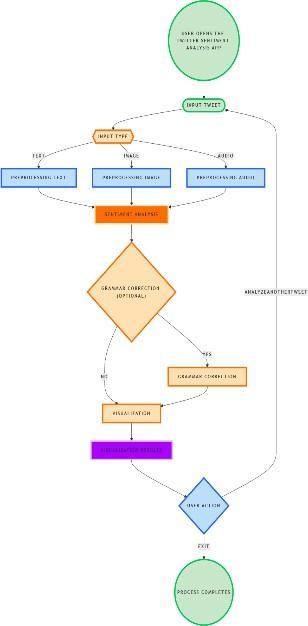
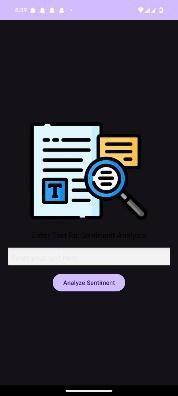
OurTwitterSentimentAnalysisprojectissuitableforMachineLearningandNLPbeginnerswithaneasy-to-useinterfaceto analyzesentimentfromtweets,textinput,images,andvoice.Thesystemisdesignedtobeefficient,real-time,andaccurate andemploysOCRtoextracttext,MLmodelsforsentimentprediction,andaninteractiveUIforimprovedaccessibility:
Step 1: Problem Identification Issue:Mostsentimentanalysistoolsacceptmanualtextinputanddonothavethecapability toanalyzetweetsthroughscreenshots.
Solution: Develop an OCR-based system that captures text from tweet screenshots and conducts sentiment analysis automatically.
Step 2: Data Collection & Preprocessing
Issue:Rawtweetshavenoisesuchasemojis,hashtags,andURLsthatimpactsentimentanalysisaccuracy.
Solution:Apply text-cleaning methodssuch astokenization,stopwordremoval,andstemmingtocleanthetextdata.
Step 3: Sentiment Classification
Issue:Simplekeyword-basedsentimentclassificationdoesnothavecontextualawareness.
Solution:MLmodels(NaïveBayes,SVM,orTransformers)shouldbeintegratedtoclassifysentimentsmorepreciselybased oncontextualsense.
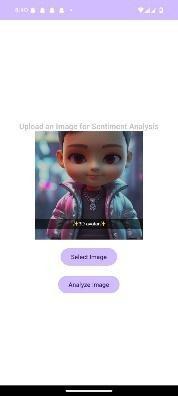
Step 4: Image-Based Sentiment Analysis
Issue:Mostsentimentplatformsdonotcatertoanalyzingemotionsfromimagesthatincludetext.
Solution:UseOCR(Tesseract)topulltextfromimagesanduseNLP-basedsentimentanalysis.
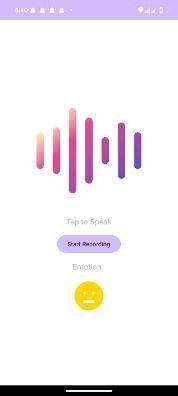
Step 5: Audio Sentiment Analysis
Issue:Speechsentimentdetectionisusuallyabsentinsentimentanalysistools.
Solution:Usespeech-to-texttranslationandthentext-basedsentimentcategorizationforcontentanalysisofspeech.
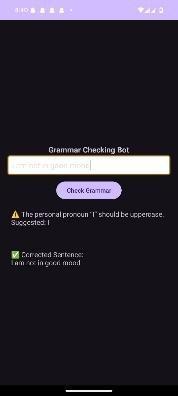
Step 6: Grammar Correction Bot
Issue:Theusersmayinputgrammaticallyflawedtext,influencingsentimentaccuracy.
Solution:Addagrammarcorrectionbottopre-processinputtextpriortosentimentcategorization.
International Research Journal of Engineering and Technology (IRJET) e-ISSN: 2395-0056
Volume: 13 Issue: 02 | Feb 2026 www.irjet.net p-ISSN: 2395-0072
Step 7: Data Visualization
Issue:Unprocessedtextoutputisunengagingandhardtoread.
Solution:ShowresultsinpiechartsandemojisforimprovedusercomprehensionwiththeAnyChartlibrary.
Step 8: User Interaction & Experience
Issue:SentimentanalysissoftwaretendstohavelimitedinteractiveelementsandintuitiveUIs.
Solution:CreateasimpleandintuitiveUIwithXMLandJava,makingtheapplicationeasytouseforbeginners.
Step 9: Scalability & Performance
Issue:Processinglargeamountsoftweetsmaydelayprocessing.
Solution:Utilizemultithreadingandcachingmethodstooptimizetheapptoprovidereal-timeperformance.
Step 10: Security & Privacy
Issue:Userprivacyissueinanalyzingpersonaltweets.
Solution:MakeAPIcallssecure,processdatainananonymizedmanner,andencryptdatatosafeguarduserdetails.
3.2 System Architecture (Challenges of Sentiment Analysis Tool)
Existing sentiment analysis tools face several challenges in processing tweets effectively, especially when dealing with images,audio,andgrammatical errors. Thefollowingissueshighlightarchitectural andfunctional limitations,alongwith theirproposedsolutions:
1. Text Extraction and Preprocessing:
o Challenge: Many tools require manual text input and do not process tweets directly from screenshots, limitingusability.
o Solution: Implement OCR (Tesseract API) to extract text from images and preprocess it by removing unnecessaryelementslikeemojis,hashtags,andURLs.
2. Sentiment Analysis Model:
o Challenge:Basickeyword-basedsentimentanalysislacksaccuracyandcontextualunderstanding.
o Solution: Use machine learning (ML) models like Naïve Bayes, SVM, or Transformers for enhanced text classification,providingcontext-awaresentimentevaluation.
3. Multi-Modal Sentiment Analysis:
o Challenge: Most sentiment analysis apps focus solely on text and ignore emotional cues from images and audio.
o Solution: For image sentiment analysis, extract captions and detect emotions using deep learning- based imagerecognitionmodels.
4. Grammar Correction & Text Refinement:
o Challenge: Poorlystructuredsentencescanaffectsentimentclassificationaccuracy.
o Solution: Integrate a grammar correction bot using NLP models (e.g., GrammerGPT) to refine user input beforesentimentanalysis.
5. Data Visualization & User Interface
Challenge:Manytoolsproviderawsentimentresultswithoutpropervisualrepresentation,makingitdifficultforusers tointerpretdata.
Solution: Implement AnyChart to display results in pie charts, bar graphs, and emojis, making insights visually appealingandeasiertounderstand.
International Research Journal of Engineering and Technology (IRJET) e-ISSN: 2395-0056
Volume: 13 Issue: 02 | Feb 2026 www.irjet.net p-ISSN: 2395-0072
3.3
Data Model:
ThedatamodelfortheTwitterSentimentAnalysisappfollowsanEntity-RelationshipModel (ERM)to ensurestructured andefficientdatamanagement.Itconsistsof:
UserProfile:Storesuser interactionsandpastsentimentanalysishistory.
Tweet Data: Contains extracted tweet text, images, andaudiofilesforanalysis.
SentimentResults:Storesclassifiedsentimentsalongwithtimestampsfortrackingemotionaltrends.
3.4 Methodology:
Toguaranteeeffectivenessandscalability,theTwitterSentimentAnalysisprojectisdevelopedusingasystematicapproach. Thestrategyconsistsof: APIIntegration:UtilizingexternalAPIslikeSentiment140APIforsentimentanalysis,OCR(Tesseract)fortextextraction fromimages,andSpeech-to-Text(STT)foraudiosentimentconversion.
Dataset Utilization: Using real-time Twitter data and public sentiment datasets to train and test the sentiment analysismodel,ensuringhighaccuracyinclassification.
MachineLearningModels:Leveragingpre-trainedNLPmodelsandcustomMLmodelstoclassifysentimentsinto Positive,Negative,orNeutral.GrammerGPTisusedforgrammarcorrection.
Data Visualization & User Interface: Displaying results using pie charts, bar graphs, and emoji-based sentiment indicatorswiththeAnyChartlibraryforanintuitiveuserexperience.
Performance Optimization:Implementing efficienttext preprocessing, removing noise from tweets, and handling different input formats (text, images, audio) for fast and accurate analysis.r enhance functionality and user engagement.
4.1 Proposed System Result:
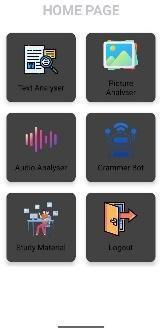
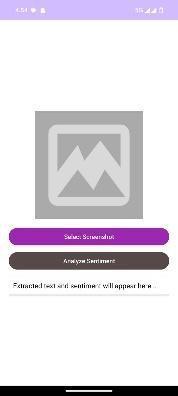
TheimplementedTwitterSentimentAnalysisprojectprovidesastreamlinedandefficientapproachtoanalyzingsentiments fromtweetsusingtext,images,andaudioinputs.ThesystemisdesignedforNLPandmachinelearningbeginners,offering aninteractiveandeducationalexperiencewhileensuringhighaccuracyinsentimentdetection..
International Research Journal of Engineering and Technology (IRJET) e-ISSN: 2395-0056
Volume: 13 Issue: 02 | Feb 2026 www.irjet.net p-ISSN: 2395-0072

5. Conclusion:
The Twitter Sentiment Analysis project provides a comprehensive multi-modal sentiment detection system using text, images, and audio. It helps NLP and ML beginners understand sentiment analysis, OCR, speech-to-text, and ML- based classification.The GrammerGPT-powered grammar correction bot enhances text processing.With real-time analysis, userfriendly visualization, and AI-driven insights, the system makes sentiment analysis accessible and engaging. Future improvementsmayincludemultilingualsupport,advancedsentimentcontextualization,andimprovedMLmodels.
References:
Pang, B., & Lee, L. (2008). Opinion Mining and Sentiment Analysis. Foundations and Trends in Information Retrieval,2(1-2),1–135.
Cambria,E.,Schuller,B.,Xia,Y.,&Havasi,C.(2013).NewAvenuesinOpinionMiningandSentimentAnalysis.IEEE IntelligentSystems,28(2),15–21.
Go, A., Bhayani, R., & Huang, L. (2009). Twitter Sentiment Classification using Distant Supervision. Stanford University.
Liu,B.(2012).SentimentAnalysisandOpinionMining.SynthesisLecturesonHumanLanguageTechnologies,5(1),1167.
Hinton,G.(2012).DeepLearningforNLPandSpeechRecognition.InternationalConferenceonMachineLearning.
Mikolov, T., Chen, K., Corrado, G., & Dean, J. (2013). Efficient EstimationofWordRepresentations inVectorSpace. arXivpreprintarXiv:1301.3781.
Hochreiter,S.,&Schmidhuber,J.(1997).LongShort-TermMemory.NeuralComputation,9(8),1735–1780.
Vaswani,A.,etal.(2017).AttentionisAllYouNeed.AdvancesinNeuralInformationProcessingSystems.
GoogleCloudVisionAPIDocumentation.(n.d.).Retrievedfromhttps://cloud.google.com/vision
TensorFlowLibrary.(n.d.).Retrievedfromhttps://www.tensorflow.org
OpenAI.(2023).GPT-BasedLanguageModelsforNLPTasks.Retrievedfromhttps://openai.com/research
AnyChartAPI.(n.d.).DataVisualizationforSentimentAnalysis.Retrievedfromhttps://www.anychart.com
International Research Journal of Engineering and Technology (IRJET) e-ISSN: 2395-0056
Volume: 13 Issue: 02 | Feb 2026 www.irjet.net p-ISSN: 2395-0072
Acknowledgment:
We express our gratitude to our project guide Prof. Vijayalakshmi Tadkal, Assistant Professor, Department of Computer EngineeringAIMLforhervaluablesuggestions,cooperation,andsupportintheworkingofthispaper.
BIOGRAPHIES




Payal Hingane “currently pursuing Bachelor of Engineering in Artificial Intelligence and Machine LearningfromBharatcollegeofEngineering,Maharashtra,India. Interestedinmachinelearning,data science, and Python programming. & research interests include sentiment analysis, natural language processing,anddataanalyticsc”
Sakshi Patil “pursuing Bachelor of Engineering in Artificial Intelligence and Machine Learning from Bharat college of Engineering, Maharashtra, India. She has an interest in software development, machinelearning, and artificial intelligence applications. Her research interests include data analysisandweb-basedapplications”.
Harsh Patkar “currently pursuing Bachelor of Engineering in Artificial Intelligence and Machine LearningfromBharatcollegeofEngineering,Maharashtra,India.Interestedinmachinelearning,data science, and Python programming. & research interests include sentiment analysis, natural language processing,anddataanalytics.
Karan Sharma “pursuingBachelorofEngineeringinArtificialIntelligenceandMachineLearningfrom Bharat college of Engineering, Maharashtra, India. She has an interest in software development, machine learning, and artificial intelligence applications. Her research interests include data analysis andweb-basedapplications”