
International Research Journal of Engineering and Technology (IRJET) e-ISSN: 2395-0056
Volume: 13 Issue: 02 | Feb 2026 www.irjet.net p-ISSN: 2395-0072
International Research Journal of Engineering and Technology (IRJET) e-ISSN: 2395-0056
Volume: 13 Issue: 02 | Feb 2026 www.irjet.net p-ISSN: 2395-0072
Md
Ahmad Ali1 , Mosim khan2 , Dr. Farrukh Basheer3
1,2Phd Student, Department of Civil Engineering, Jamia Millia Islamia, New Delhi, India
3 Assistant Professor, Dept. of Civil Engineering, Aligarh Muslim University, U.P, India
Abstract This research project seeks to comprehensively determine every aspect of processing slaughterhouse wastewater in a laboratory scale Moving Bed Biofilm Reactor (MBBR).Slaughterhouse wastewater is known to have high organic and ammonia concentrations, which require biological treatment before being released. Compared to chemical treatment, the MBBR process is more economical with lower sludge production. The Plexiglass reactor with a working capacity of 4.864 L and total volume of 5.632 L. The length, breadth and height of MBBR are 160 mm,160mm and 190 mm respectively was operated in batch mode with intermittent aeration for 24 hours. The HDPE carriers, which comprised about 67% of the reactor volume, were employed to support biofilm growth. Each cycle treated 1.25 L of wastewater at a 30% filling level. The treatment process achieved removal efficiencies of 85.25% COD, 86.75% BOD, and 98% NH₃-N. The results of this study validate the efficiency and effectiveness of MBBR technology for the treatment of slaughterhouse wastewater.
Keywords—Moving Bed Biofilm Reactor (MBBR), Biological treatment, Biochemical oxygen Demand (BOD), Chemical oxygen Demand (COD), Biofilm Carriers (HDPE), Ammonia Nitrogen, Wastewater treatment efficiency
The high organic concentration in slaughterhouse wastewater is determined by the meat-processing procedures. If left untreated and discharged into water bodies, it will result in a serious of environmental problems, dissolved oxygen depletion of receiving water overlies, along with difficulties for public health (1,2). With the development of meat industry and rural stoppage, the treatment for slaughterhouse effluent is gradually becoming a major problem confronted by environment(3).
Biological treatment processes are generally preferred overchemicalmethodsduetoloweroperationalcostsand reducedsludgegeneration(4).Amongadvancedbiological systems, the Moving Bed Biofilm Reactor (MBBR) has gained significant attention because it combines the advantages of attached and suspended growth processes. The use of biofilm carriers enhances biomass retention, improves treatment efficiency, and provides stable performanceundervariableloadingconditions(5).
Therefore, MBBR is considered an efficient and sustainable technology for the treatment of slaughterhousewastewater(6).
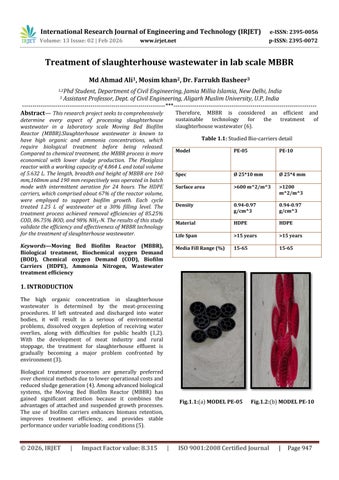
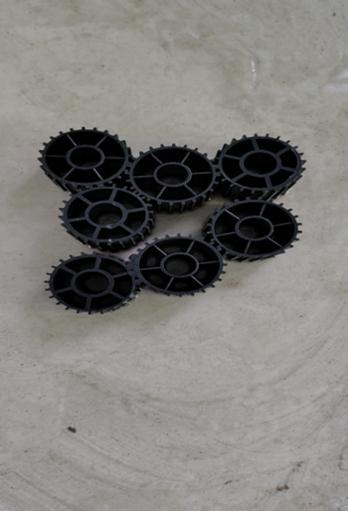
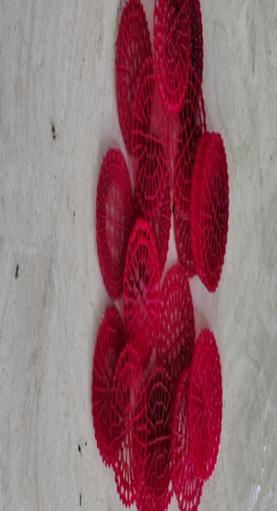
Table 1.1: StudiedBio-carriersdetail


International Research Journal of Engineering and Technology (IRJET) e-ISSN: 2395-0056
Volume: 13 Issue: 02 | Feb 2026 www.irjet.net p-ISSN: 2395-0072
A laboratory-scale Moving Bed Biofilm Reactor (MBBR) fabricatedfromPlexiglasswasemployedforthetreatment of slaughterhouse wastewater. The reactor had a total capacity of 5.632 L with an effective working volume of 4.864 L. capacity of 4.864 L and total volume of 5.632L. The length, breadth and height of MBBR are 160 mm,160mmand190mmrespectively.
High-density polyethylene (HDPE) biofilm carriers, occupying approximately 67% of the working volume, were introduced to facilitate attached microbial growth andenhancebiomassretention(7).
Thereactorwasoperatedinbatchmodewithintermittent aerationforahydraulicretentiontime(HRT)of24hours. Foreachexperimentalcycle,1.25Lofrawslaughterhouse wastewaterwasfedintothereactorata30%fillingratio. Aeration was supplied through diffusers to maintain adequate dissolved oxygen levels for aerobic biodegradation.
Influentandeffluentsampleswerecollectedandanalyzed for important physicochemical parameters such as Chemical Oxygen Demand (COD), Biochemical Oxygen Demand (BOD), and Ammonia Nitrogen (NH₃-N) using standard procedures. The performance of the treatment processes was assessed in terms of percentage removal efficienciesofthechosenparameters.

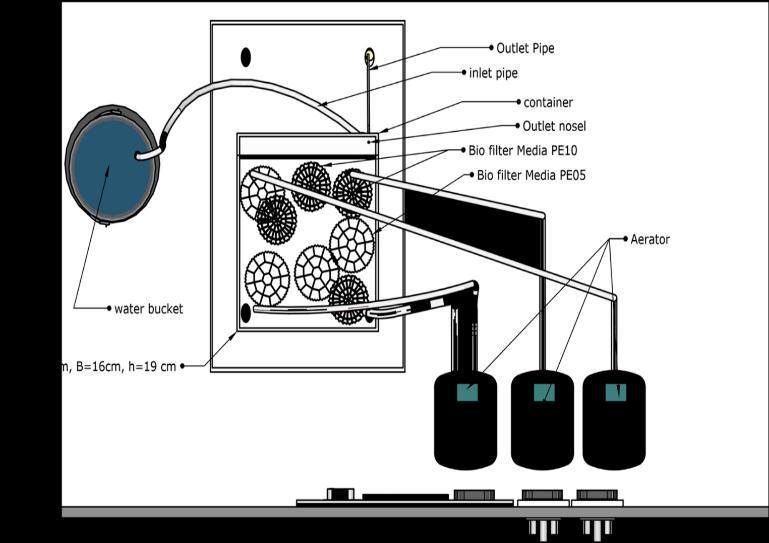
2.1: LinediagramoflabscaleMBBR

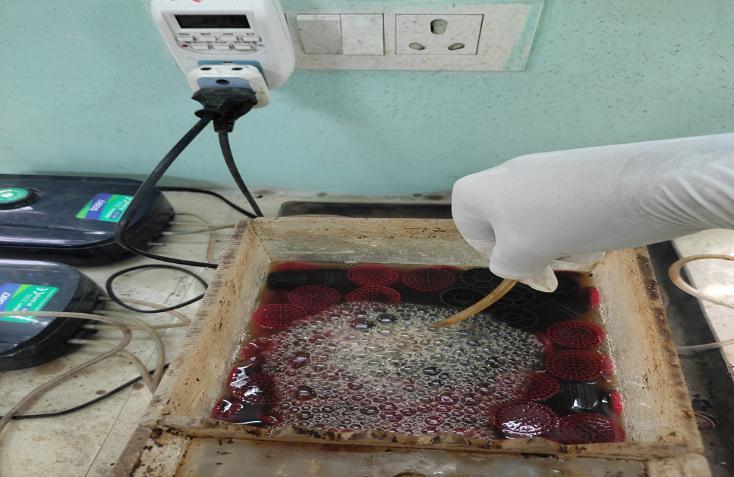
(a)Diffuserperformancetesting

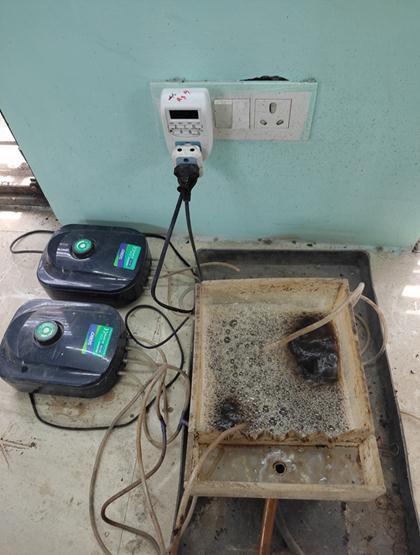
2.3: (b)Reactorduringtreatment
The present study deals with the combined treatment of realSWWusingMBBR.Thesecondarytreatmentofscreen with digested laboratory scale MBBR. The reactor was seeded with digested sludge obtained from AI dua slaughterhouse. The raw wastewater had varying COD concentrationsrangingfrom1500-2000mg/l.
The performance of the MBBR reactor was assessed mainly based on the COD and BOD₅ removal efficiency. Figure 3.1 shows the changes in the influent and effluent CODconcentrationsovertime.
During the startup stage, the effluent COD concentration was higher because of the acclimatization of
International Research Journal of Engineering and Technology (IRJET) e-ISSN: 2395-0056
Volume: 13 Issue: 02 | Feb 2026 www.irjet.net p-ISSN: 2395-0072
microorganisms. But as the operational time increased, a steady reduction in the effluent COD concentration was noticed. The influent COD concentration varied between 1400 mg/L and 1600 mg/L, whereas the effluent COD concentration reduced from around 1500 mg/L to 238 mg/L, indicating an average COD removal efficiency of 75 85%.
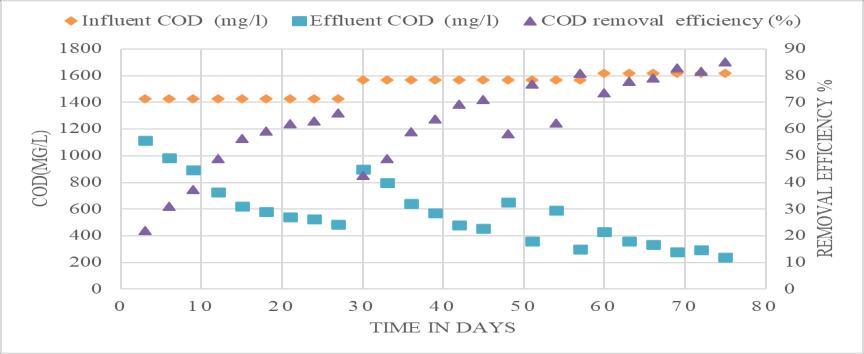
Fig. 3.1: GraphofinfluentandeffluentCODvsTime
3.2 BOD₅ Removal Efficiency
Figure 3.2 shows the influent and effluent BOD₅ concentrationovertheperiodofstudy.TheinfluentBOD₅ concentration ranged from 1000 to 900 mg/L, while the effluentBOD₅concentration decreased steadily to around 125mg/Latsteadystate.
The MBBR reactor had an average BOD₅ removal efficiency of 80-88%, which indicates efficient biodegradation of readily biodegradable organic substances. The substantial decrease in BOD₅ concentration compared to the COD concentration indicates a preference for the utilization of easily degradablesubstancesduringanaerobictreatment.
Although the removal efficiency was substantial, the final effluent BOD₅ concentration exceeded normal discharge standards, which indicates the necessity for aerobic posttreatment(8).








Fig. 3.2: Graphshowingvariationofinfluentandeffluent BODwithtime
3.3 MLSS and MLVSS Variation in MBBR
The variation of Mixed Liquor Suspended Solids (MLSS) andMixedLiquorVolatileSuspendedSolids(MLVSS)with time during the operation of the lab-scale MBBR is presentedinFigure3.3
During the initial phase of reactor operation, relatively lower MLSS and MLVSS concentrations were observed, which can be attributed to the acclimatization period of microorganisms to slaughterhouse wastewater. As the reactor operation progressed, both MLSS and MLVSS showed a gradual increase, indicating active microbial growthandstabilizationofthebiologicalsystem.
The increasing MLVSS/MLSS ratio reflects a healthy and efficient microbial population capable of degrading organicpollutantseffectively(9).
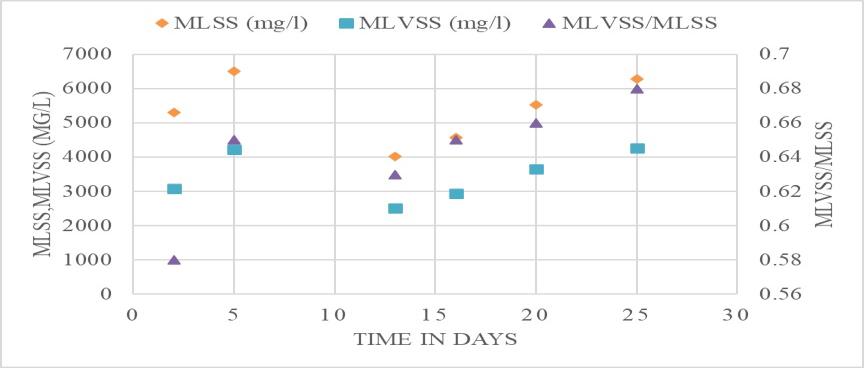
Fig. 3.3: MLSSandMLVSSvsTIME
3.4 Variation of influent and Effluent PH
The variation of pH during the operation of the lab-scale Moving Bed Biofilm Reactor (MBBR) treating slaughterhouse wastewater was monitored regularly to assessprocessstability.ThepHoftheinfluentandreactor mixed liquor remained within a range of 6.8–7.8 throughouttheexperimentalperiod.
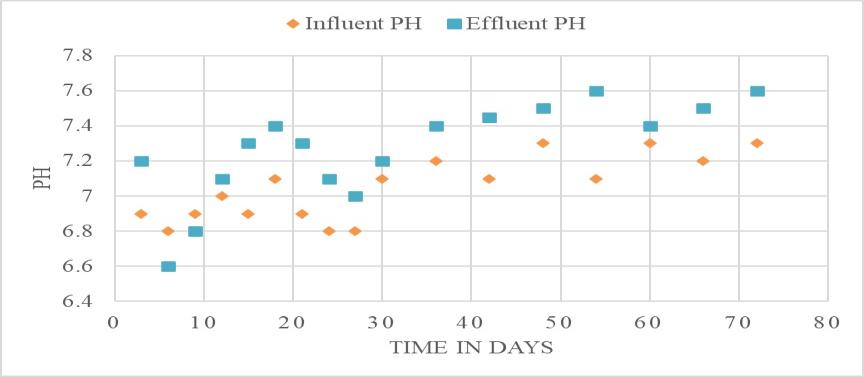
Fig. 3.4: InfluentvsEffluentvsTime
International Research Journal of Engineering and Technology (IRJET) e-ISSN: 2395-0056
Volume: 13 Issue: 02 | Feb 2026 www.irjet.net p-ISSN: 2395-0072
During the experimental period, the concentration of DO in the reactor was maintained between 3.0-4.5 mg/L. During the initial operational period, there were minor variations in the DO concentration due to the acclimatization of biomass and the increased demand for oxygen. Once the reactor attained a steady state, the DO concentration stabilized, signifying a proper balance between oxygen supply and consumption by microorganisms.
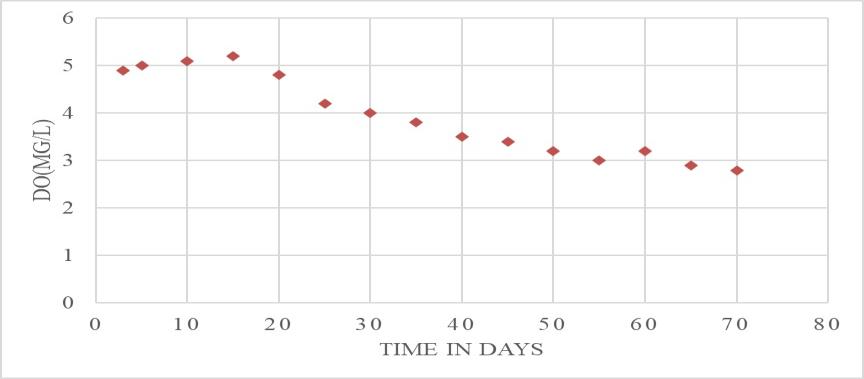
3.5: DoMonitoringvsTime
Development of Biofilm on carriers in MBBR
Biofilm carriers were used in the Moving Bed Biofilm Reactor (MBBR) to provide a large surface area for microbial attachment and growth. The carriers remained in continuous motion due to aeration, ensuring uniform contact between wastewater, microorganisms, and oxygen.
The attached biofilm on the carrier surface played a dominant role in treatment performance by retaining activebiomasswithinthereactor.Thispreventedbiomass washout and increased the effective sludge age without theneedforsludgerecirculation(10).
Ammonia values of the raw wastewater lie between 120150 mg/l. The percentage removal of ammonia is very high(morethan98%)
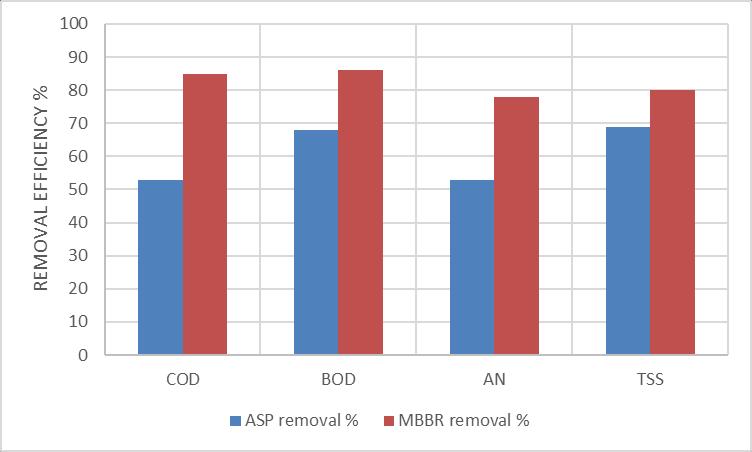
3.8 Comparison of MBBR with CAS
Overallperformanceinthelaboratory-basedinvestigation demonstratesthatMBBRhasahigherconstituentremoval efficiency rate than CAS (Conventional activated sludge) (11).
4. CONCLUSION
The MBBR was operated over a period of 75 days, and effluent was treated in batch mode. The following conclusionsweredrawnfromthestudy:MBBRwasfound effectiveinremovingtheCODandBODofthewastewater by85.25%and86.75%atanorganicloadingrateof1.49 kg/m³/d COD. As the organic loading rate was increased step wise the reactor was still able to achieve 82.5% reduction in COD even at higher organic loading rate of 1.984 kg/m³/d COD. The MBBR was also found effective in the removal of NH3-N to an extent of 98%. The suspendedbiomassconcentrationoftheMBBRwasnearly 4500mg/l while attached biomass concentration was about 1200mg/l. This was on account of a thin film being formed on the carrier surface. The overall COD and BOD removal efficiency of the MBBR method was 85.25% and 86.75%.
5.
[1,2]Akpor,O.B.andMuchie,B.,2011.Environmentaland public health implications of wastewater quality.African journalofBiotechnology,10(13),pp.2379-2387.
Fig. 3.6: Graphshowingvariationofbiomasspercarrier (mg)vsTime
[3]Ng,M.,Dalhatou,S.,Wilson,J.,Kamdem,B.P.,Temitope, M.B., Paumo, H.K., Djelal, H., Assadi, A.A., Nguyen-Tri, P. and Kane, A., 2022. Characterization of slaughterhouse
International Research Journal of Engineering and Technology (IRJET) e-ISSN: 2395-0056
Volume: 13 Issue: 02 | Feb 2026 www.irjet.net p-ISSN: 2395-0072
wastewater and development of treatment techniques: a review.Processes,10(7),p.1300.
[4]Wei,Y.,VanHouten,R.T.,Borger,A.R.,Eikelboom,D.H. and Fan, Y., 2003. Minimization of excess sludge production for biological wastewater treatment.Water research,37(18),pp.4453-4467.
[5] Al‐Amshawee, S.K.A., Yunus, M.Y.B.M., Alalwan, H.A., Lee, W.H. and Dai, F., 2022. Experimental investigation of biofilmcarriersofvaryingshapes,sizes,and materialsfor wastewater treatment in fixed bed biofilm reactor: a qualitative study of biocarrier performance.Journal of Chemical Technology & Biotechnology,97(9), pp.25922606.
[6] Leyva-Díaz, J.C., Monteoliva-García, A., Martín-Pascual, J., Munio, M.M., García-Mesa, J.J. and Poyatos, J.M., 2020. Moving bed biofilm reactor as an alternative wastewater treatment process for nutrient removal and recovery in the circular economy model.Bioresource technology,299, p.122631.
[7] Morgan-Sagastume, F., 2018. Biofilm development, activity and the modification of carrier material surface properties in moving-bed biofilm reactors (MBBRs) for wastewater treatment.Critical reviews in environmental scienceandtechnology,48(5),pp.439-470.
[8] Khan, A.A., Gaur, R.Z., Kazmi, A.A. and Lew, B., 2013. Sustainable post treatment options of anaerobic effluent. InBiodegradation-Engineering and Technology IntechOpen.
[9] Fan, J., Ji, F., Xu, X., Wang, Y., Yan, D., Xu, X., Chen, Q., Xiong, J. and He, Q., 2015. Prediction of the effect of fine grit on the MLVSS/MLSS ratio of activated sludge.Bioresourcetechnology,190,pp.51-56.
[10] Morgan-Sagastume, F., 2018. Biofilm development, activity and the modification of carrier material surface properties in moving-bed biofilm reactors (MBBRs) for wastewater treatment.Critical reviews in environmental scienceandtechnology,48(5),pp.439-470.
[11] Sidek, S., Dora, M.T., Kudus, N., Hassan, M.A., Arif, S., Mohamed,S.,Bidin,N.A.andIdris,M.F.M.,2015.Achieving excellence in academic work practices: The experience of Malaysian distinguished professors.Asian Social Science,11(17),p.83.