
International Research Journal of Engineering and Technology (IRJET) e-ISSN: 2395-0056
Volume: 12 Issue: 05 | May 2025 www.irjet.net p-ISSN: 2395-0072
International Research Journal of Engineering and Technology (IRJET) e-ISSN: 2395-0056
Volume: 12 Issue: 05 | May 2025 www.irjet.net p-ISSN: 2395-0072
Mr. Manoj P. Chokhande1 , Bhushan Angaitkar2 , Tanvi Lohkar3 , Samruddhi Makode4, Parth Udar5, Samar Jawade6
1Assistant Professor, Department of Electrical Engineering. 2,3,4,5,6 Research Scholar, Bachelor of Technology, Department of Computer Engineering. Jagdambha College Of Engineering & Technology, Yavatmal, Maharashtra, India***
ABSTRACT:
Radar systems, which operate by emitting electromagnetic signals to sense objects in their surroundings, are widely utilized in sectors like defense, aviation, and commercial monitoring. These systems help determine the distance, direction,speed,andpositionofbothmovingandstationaryobjects.Withgrowinginnovationsinnavigationtechnologies, radarsystemshaveseenmajorimprovements.Inthisproject,weexplorerecentdevelopmentsinnavigationandpropose a simplified, Arduino-powered radar model. This approach stands out due to its low power requirements and compatibility with the open-source Arduino ecosystem, making it a cost-effective and easily customizable option for developers.
KEYWORDS : Arduino UNO, Ultrasonic Sensor, Servo Motor, Jumping Wires, Breadboard.
INTRODUCTION:
Every object in existence, simply by being present in space, subtly interacts with the air around it creating vibrationsknownasnaturalfrequencies.Thesefrequenciesareusuallytoohighortoolowforhumanearstodetect.When these sound waves exceed 20,000 Hz, they fall into the category of ultrasonic waves. Though inaudible to us, they carry valuable information, which can be harnessed using ultrasonic sensing devices. An ultrasonic sensor typically includes a transducer, a device capable of converting energy from sound to electricity and back again. This two-way conversion allowsthesensortobothemitanddetectultrasonicwaves.Thesesystemsarecommonlyusedinapplicationslikemotion tracking, automatedbrakingsystems, robotnavigation,andsecuritymonitoring.
One of the main advantages of this technology is its ability to make precise measurements without physical contact By analyzinghowlongittakesforsoundwavestobounceback afterhittinganobject,thesensorcancalculateboth distance andspeedwithimpressiveaccuracy.
The diagram below depicts the life cycle of Radar project development which entails several step including design of numerous components,their testing, their implementation and implementation of whole system and their testing.Thesearestepswhichcanbelistedintofollowingstages.
(A) Hardware System Design.
(B) System Circuit Design.
(C) System Circuit Implementation.
(D) Hardware System Testing.
(E) System Design and Implementation.
International Research Journal of Engineering and Technology (IRJET) e-ISSN: 2395-0056
Volume: 12 Issue: 05 | May 2025 www.irjet.net p-ISSN: 2395-0072



Arduino MicroController(ATMEG A328)

Servo-Motor
(A)Hardware System Design for Arduino :
Hardware system have thus 3 components named as Arduino, servo-motor, and ultra-sonic sensor. Ultra-sonic sensor isplacedona servo motor whichprovidesitthe motionfeatureandmakesitpossible forit toprovidea turning feature to it. Ultrasonic sensor along with servo motor is powered and driven by Arduino. As as illustrated in figure 2 above,wecanseeultrasonicsensorandservomotorbotharedrivenbyArduino.
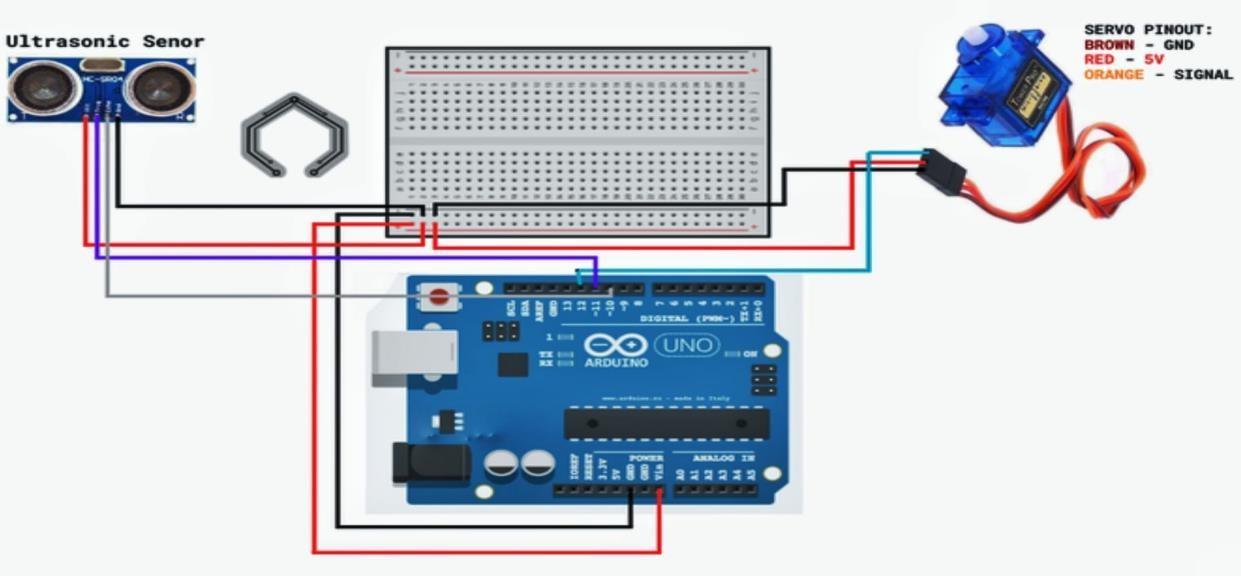
(B) System Circuit Design :
International Research Journal of Engineering and Technology (IRJET) e-ISSN: 2395-0056
Volume: 12 Issue: 05 | May 2025 www.irjet.net p-ISSN: 2395-0072
Figure illustrates hardware system design that was created with fritzing environment. It illustrates the connectionofvariouselectronicscomponents.Inthefigure,triggeringpinsofultrasonicsensorisconnectedtoD10pinof Arduino,controllineofservomotorisconnectedtoD12 pinofArduinoandD11pinofArduinoisconnectedtoechopin. VCCpinsofservomotorandultrasonicsensorisconnectedto5VpinofArduinowhereasgroundpinofArduinoisjoined togroundpinofbothservomotorandultra-sonicsensor.
(C) System Circuit Implementation on Bread Board :
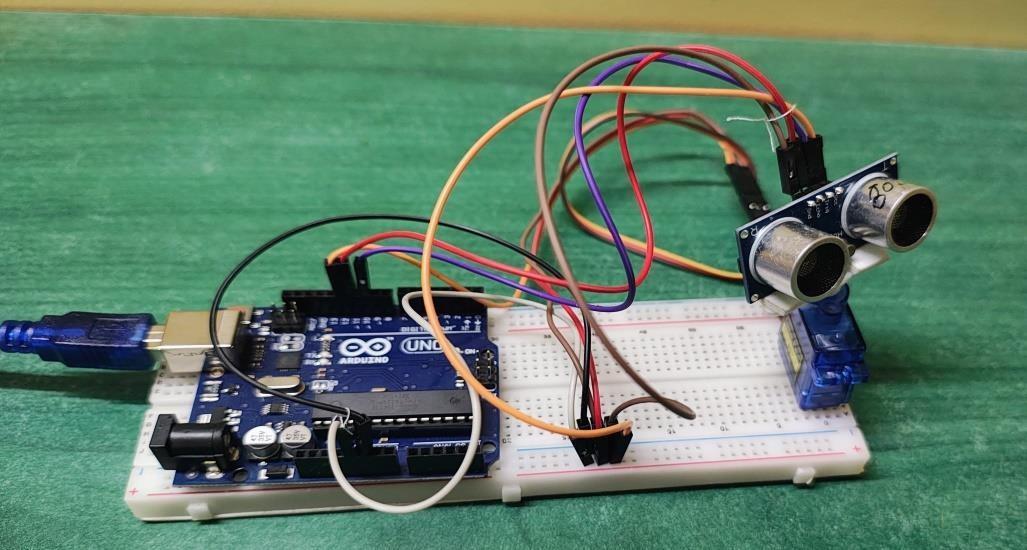
3. Breadboardofthehardwaresystemimplementation.
Figure above 4 demonstrates full hardware system implementation. One sees that ultrasonic servomotor is mounted on top of a servo motor and it is mounted higher than bread board. Arduino is mounted in breadboard in oppositesideofthebreadboardandwholeconnection isestablishedbetweenthem.Arduinoandservomotorareglued on breadboard in order to prevent it from stepping over when the servo motor swings. Arduino IDE was employed to program and upload Arduino. Arduino code is used to read position of servo motor and calculate distance of closest objectinthepath.
(D)Hardware System Testing : A cable was used for connecting Arduino to develop developing machine. From ArduinoIDEhelpedustoobtainresultinserialmonitor.
(E) System Design and Implementation :
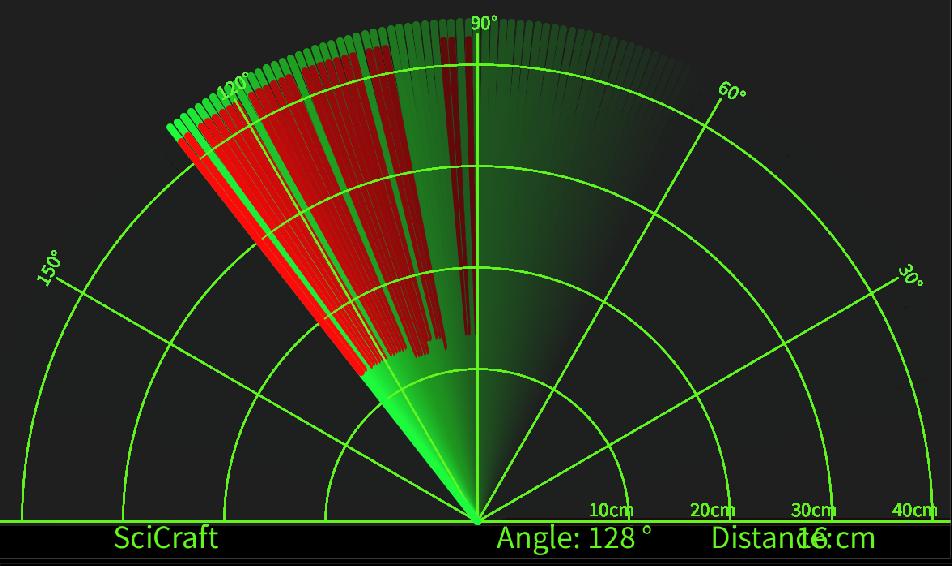
Object class of radar project denotes object which it faces like distance, target/range and angle/direction of position of object. Distance (),method (), angle () method, location () method accepts the necessary value like distance, angle and creates them on GUI to simulate.Figure 4 illustrates line sweep from one-direction to other and smudge is createdisGUIwhereultrasonicsensordetectobstacles.
International Research Journal of Engineering and Technology (IRJET) e-ISSN: 2395-0056
Volume: 12 Issue: 05 | May 2025 www.irjet.net p-ISSN: 2395-0072
:
The objective of this project is to measure the distance, position, and velocity of an object located at a certain distancefromanultrasonicsensormountedonaservomotor.Byrotatingtheservo,thesensorscansdifferentdirections by emitting ultrasonic waves that travel through the air and reflect back upon hitting an object. The sensor then detects the echo, and by analyzing the time delay, the system calculates the distance to the object. Simultaneously, the servo’s angleprovidesthepositionoftheobjectrelativetothesensor.UsingtheArduinoIDE,themicrocontrollerisprogrammed to control the servo motor’s rotation, capture distance measurements, and send both distance and angular data through theserialport.AProcessingapplicationreads thisdatatovisualizetheobject’spositionanddistanceonadisplayscreen, enabling real-time monitoring. Additionally, by tracking changes in position over time, the system can estimate the velocityofamovingobject.Thisintegratedapproachallows foraccuratedetectionandtrackingofobjectsinthesensor’s surroundings.
Hardware Description:
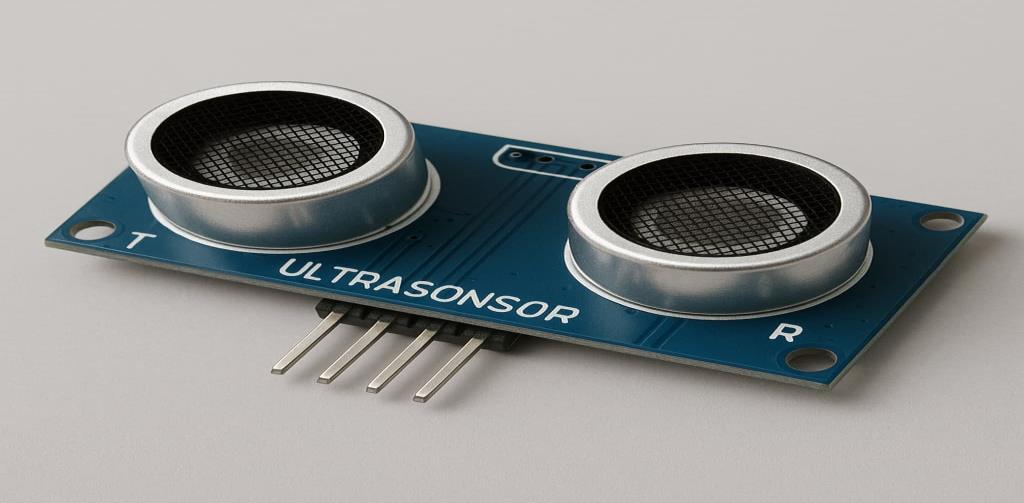
Ultrasonic Sensor:
An ultrasonic sensor operates just like of sonar. It is able to measure object distance by emitting sound waves.Soundwavesaretransmittedataparticularfrequencyinaparticulardirectionandlistenforsoundwave to return. time taken by sound wave to return assists us to calculate distance of object. HC-SR04 Ultrasonic Sensor.
International Research Journal of Engineering and Technology (IRJET) e-ISSN: 2395-0056
Volume: 12 Issue: 05 | May 2025 www.irjet.net p-ISSN: 2395-0072
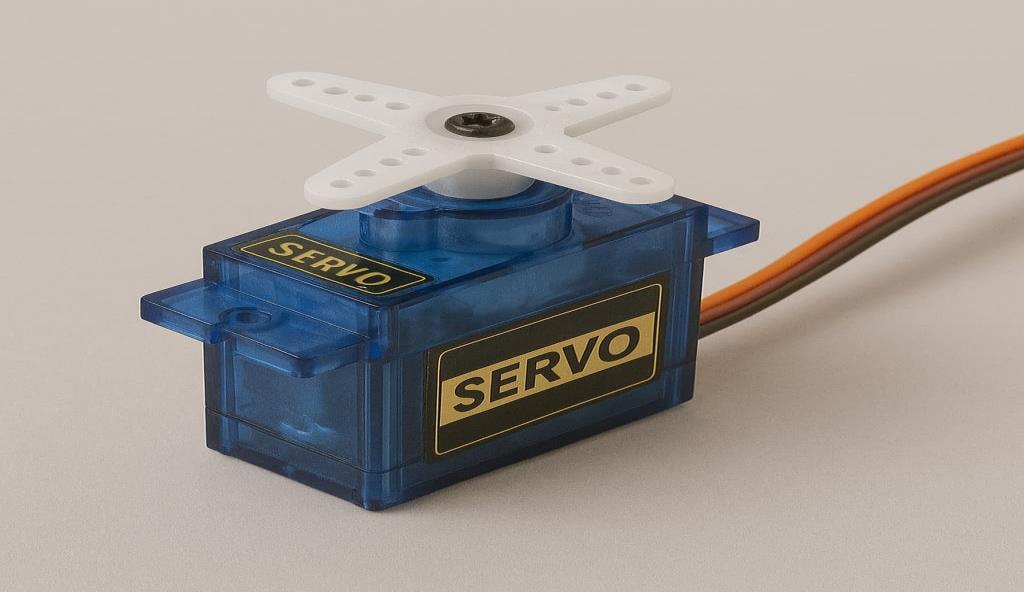
Servo Motor :
A servomotor is a rotating actuator that provides fine control of angular position, velocity and acceleration. It ismadeup ofanappropriatemotorcoupledtoa sensorforpositionfeedback.Italso requires a relatively sophisticated controller, often a dedicated module designed specifically for utilize with servomotors. Servomotors are not another class of motor, on the basis of basic operating principle, but utilizes servomechanisminordertoprovideclosedloopcontrol overanopenloopmotorofgenericform.Servomotors findtheiruseinrobotics,CNCequipmentorautomatedproduction.
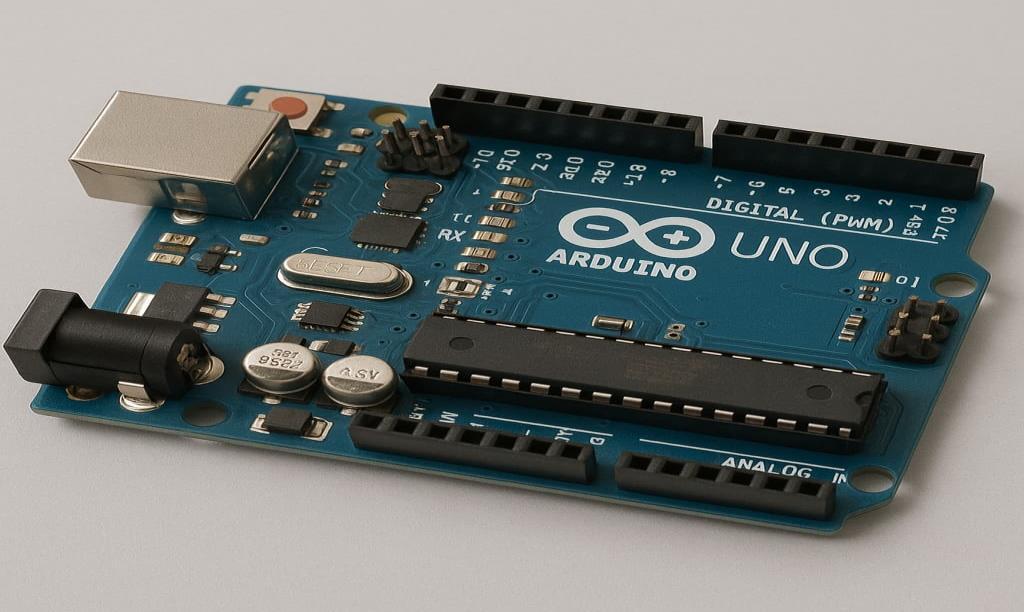
TheArduinoisanopensourceelectronicsplatformbuiltonsimpletoimplementhardwareand software. The open source Arduino program makes it easy to write code and send it to the board. It supports Windows, Mac OSX and Linux. The environment is java based and written in processing and other opensource software. This software is compatible with any Arduino board. The Arduino software IDE has a text editor for coding, a messagefield,atextconsole,atoolbarwithbuttonsforthemostcommonfunction.ItinteractswithArduinoand Genuinohardwaret+ouploadandinteractwithprograms.ProgramswritteninArduinosoftwareare referredto assketches
International Research Journal of Engineering and Technology (IRJET) e-ISSN: 2395-0056
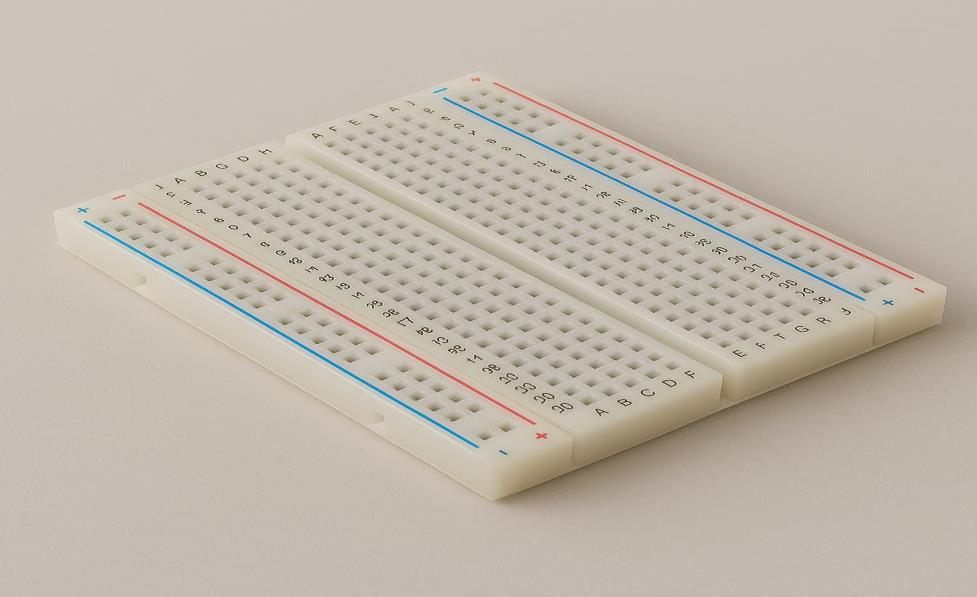
Bread Board :
Breadboardsareoneofthemostbasiccomponentswhenyouarelearninghowtoconstructcircuits.Inthis tutorial,youwilllearnsomethingaboutwhatbreadboardsare,whytheyarenamedbreadboards,andhowtouse one. When you are finished you will have a rudimentary knowledge of how understand how breadboards functionandbecapableofcreatingasimplecircuitonabreadboard.
ADVANTAGES:
1. Radarprocurablevalueisverylow.
2. Workingandmaintenancevalueislow.
3. Distanceactiveresolutionishigh.
4. Radar’sjamistroublesome.
5. Itcanworkinanyplace.
6. NASAusesradiodetectionandrangingtomaptheworldandalternativeplants.
7. Activitygetsupdatedinconclusion.
DISADVANTAGES:
1. LimitedRange.
2. LowAccuracyandResolution.
3. SensitivitytoEnvironmentalConditions.
4. DirectionalLimitations.
Conclusion:
In this paper a system radar system was designed with the help of Arduino, servomotor and ultrasonic sensor which can detect the position, distance of obstacle which comes in its way and converts it into visually representable form. This system can be used in robotics for object detection and avoidance system or can also be used for intrusion detectionforlocationsizes.Rangeofthesystemdependsupontypeofultra-sonicsensorused..WeusedHC-SR04sensor whichrangefrom2to40cm.
Volume: 12 Issue: 05 | May 2025 www.irjet.net p-ISSN: 2395-0072 © 2025, IRJET | Impact Factor value: 8.315 | ISO 9001:2008 Certified Journal | Page1556
International Research Journal of Engineering and Technology (IRJET) e-ISSN: 2395-0056
Volume: 12 Issue: 05 | May 2025 www.irjet.net p-ISSN: 2395-0072
Result:
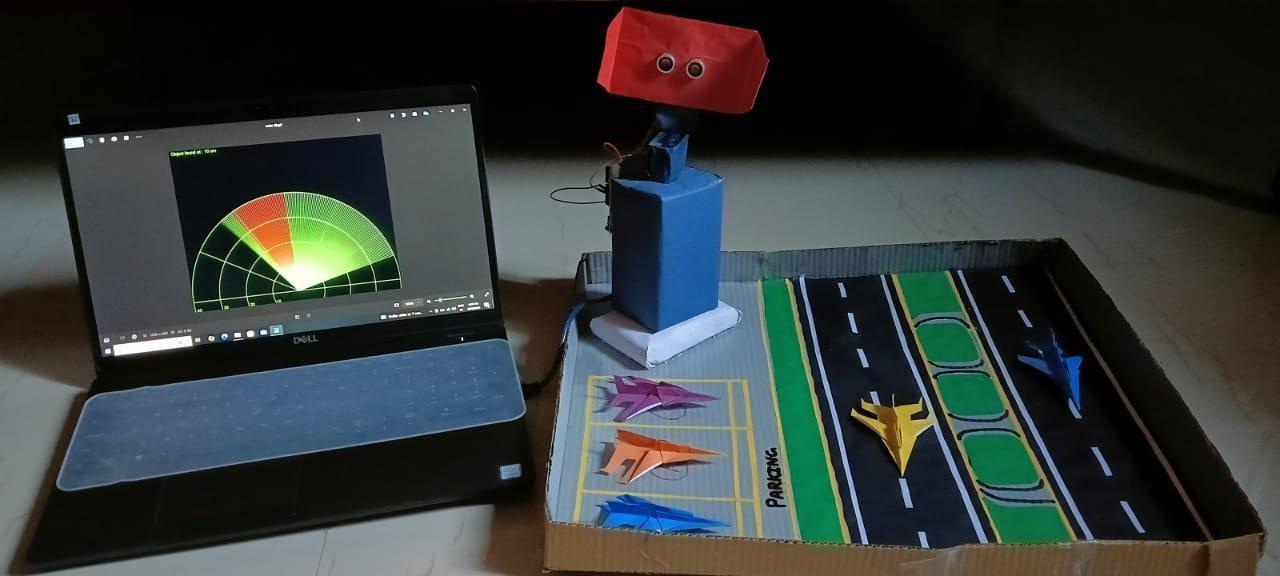
Theradar-basedprototypeeffectivelysimulatedreal-timeaircraftdetectionusinganultrasonicsensorandservo motor.Itaccuratelydisplayedobjectpositionsup to40 cmona radarinterface withlessthan5%error.Thecardboard modelsuccessfullyrepresentedrunwayandparkingmanagement.Thislow-costsystemdemonstratespotentialforsmart airportapplicationsusingbasicsensorandmicrocontrollerintegration.
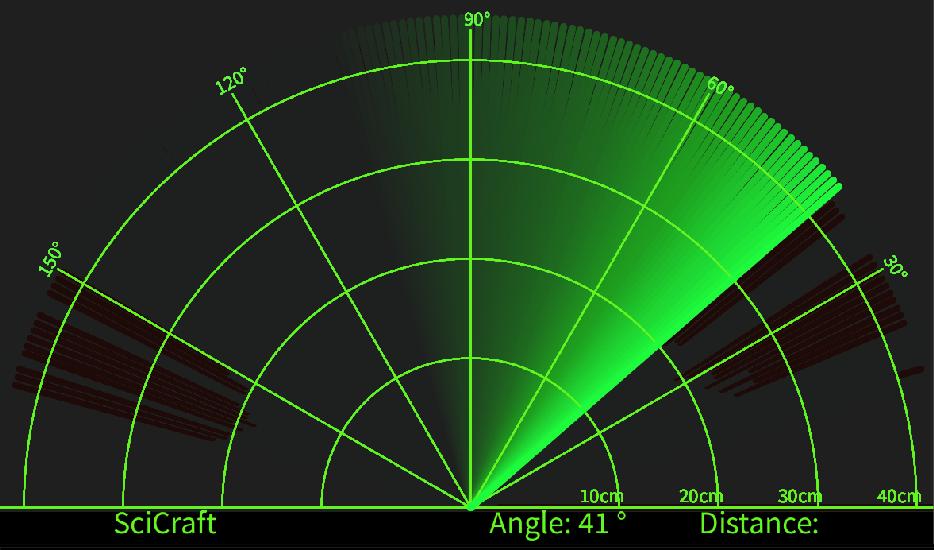
Case I :- When there is no object at a specific distance then it will not Display on screen . Hence there is no object near radarsystemthenitwillshowtotalgreencolouronoverallscreen.
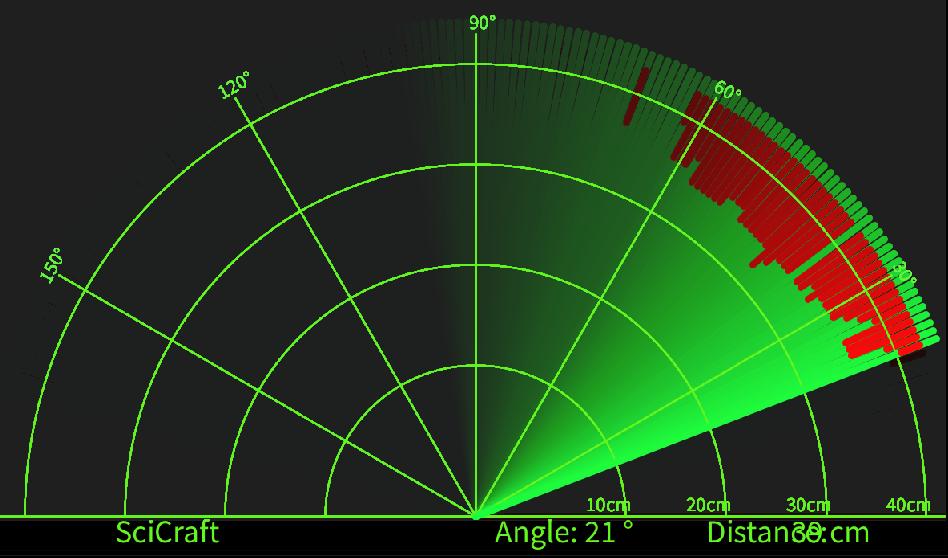
Case II :- When the object is at a distance of 16cmand at a angle of 1280 . Then the red signal will display on screen when the object comes in between the radar from which we can understand the specific distance and angle of the object. The red signal will be shown untill the object is placed infront of the radar. When the object move away from radarthenthescreenwillnotDisplayaredsignalthenthescreenwillbedisplayedingreen.
International Research Journal of Engineering and Technology (IRJET) e-ISSN: 2395-0056
Volume: 12 Issue: 05 | May 2025 www.irjet.net p-ISSN: 2395-0072
Case III :- Whentheobjectisatadistanceof 30cmandataangleof210.Thentheredsignalwilldisplayonscreenwhen theobjectcomesinbetweentheradarfromwhichwecanunderstandthespecificdistanceandangleoftheobject.Thered signalwillbeshownuntilltheobjectisplacedinfrontoftheradar.Whentheobjectmoveawayfromradarthenthescreen willnotDisplayaredsignalthenthescreenwillbedisplayedingreen.
REFERENCES :
[1]G. Bhor, P. Bhandari, R. Ghodekar and S. Deshmukh, "Mini Radar," International Journal of Technical Research and Applications, pp.68-71,2016.
[2]D.B.Kadam,Y.B.Patil,K.V.Chougaleand.S.S.Perdeshi,"ArduinoBasedMovingRadarSystem," International Journal of Innovative Studies in Sciences and Engineering Technology (IJISSET), vol.3,no.4,pp.23-27,2017.
International Research Journal of Engineering and Technology (IRJET) e-ISSN: 2395-0056
Volume: 12 Issue: 05 | May 2025 www.irjet.net p-ISSN: 2395-0072
[3]T. P. Rajan, K. K. Jithin, K. S. Hareesh, C. A. Habeeburahman and. A. Jithin, "Range Detection based on Ultrasonic Principle,"International Journal of Advanced Research in Electrical, Electronics and Instrumentation Engineering, vol.3,no. 2,pp.7638-7643,2014.
[4]P. S. Abhay,. S. K. Akhilesh, P. Amrit and Kriti, "A Review on Ultrasonic Radar Sensor for Security system," Journal ofEmerging Technologies and Innovative Research (JETIR), pp.137-140,2016.
[5]P.P.Arun,M.A.Sudhakar,P.MeghaSunilandS.S.Balaji,"UltrasonicDistanceMeter," SVERIAN Scientific, pp.1-4,2015.
[6]Shamsul A., Tajrian M., “Design of an Ultrasonic Distance Meter”, International Journal of Scientific & Engineering Research,pp.1-10,March2013.
[7]U.Papa,G.D.Core,“DesignofsonarsensormodelforsafelandingofanUAV”,Proc.IEEEMetrol.Aerosp.,pp.346-350, Jun.2015.
[8]Abbay P., Akhilesh S., Amrit P., and Prof Kriti, “A Review on Ultrasonic Radar Sensor for Security system”, Journal of Emerging Technologies and Innovative Research (JETIR),April2016.
[9]Babu Varghese, “Collision Avoidance System in Heavy Traffic & Blind spot Assist Using Ultrasonic Sensor”,International Journal of Computer Science and Engineering Communications-IJCSEC. Vol. 2, Isuue 1, February, 2014ISSN:2347-8586.
[10]S. Bharambe, R. Thakker, H. Patil, K. M. Bhurchandi,“Substitute eyes for blind with navigator using android”, Proc.TexasInstrum.IndiaEdu.Conf.(TIIEC),pp.38-43,Apr.2013.