
International Research Journal of Engineering and Technology (IRJET) e-ISSN:2395-0056
Volume: 11 Issue: 12 | Dec 2024 www.irjet.net p-ISSN:2395-0072

International Research Journal of Engineering and Technology (IRJET) e-ISSN:2395-0056
Volume: 11 Issue: 12 | Dec 2024 www.irjet.net p-ISSN:2395-0072
Sudip Dhakal1, Nilam Giri2, Dharmendra Bohara3, Sujan Simkhada4, Suresh Khati5, Jeevan Shahi6, Yubaraj Kapri7, Umesh Raut8
1-7B.E. -scholar, Department of Civil Engineering, Acme Engineering College, Kathmandu, Nepal 8Lecturer, Department of Civil Engineering, Acme Engineering College, Kathmandu, Nepal
ABSTRACT - The use of concrete in this Planet is increasing day by day. The cement which is used inconcrete consumes large amount of energy and is responsible for the emission of greenhouse gas. So it becomes necessary to find some alternatives i.e. ecofriendly with environment. Fly ash is a powder material of burned coal from thermal power stations which produces cementitious and pozzolanic material. Commonly use of fly ash in concrete for building construction contributes conducive environmental and also reduces the effect of pollutant in site project. Therefore, this study was conducted to investigate the use of fly ash as partial replacement of cement in concrete as a mean of producing more environmental friendly concrete. The content of fly ash as partial replacement of ordinary Portland cement(OPC) is investigated by weight accordingly in range 30%, 40% ,50% ,60% and 70% for grade 20. The mix proportion of concrete was determine using mixdesignmethodaccordingto BritishStandard. The workability of the fresh concrete mixture was evaluated using slump test while compressive strength of cubes concrete was evaluated at 3, 7, 14, 28 days. A total of 12 cubes for each ratio of concrete with size 150mmx150mmx150mm were made. The optimum compressive strength at 28 days of testing was obtained at 30% replacement. With this percentage of replacement, prism of size 100mmx100x500mm was casted and tested under three-point loading system to study the strength characteristics. This test results indicate that workability decreased with an increased in replacement percentage of fly ash. So, fly ash as pozzolanic materials can be used to partially replace ordinary Portland cement in production of concrete.
Keywords: Fly Ash, Portland cement, Compressive Strength.
1.INTRODUCTION
Concreteisawidelyusedconstructionmaterialcomposed of a mixture of cement, water, aggregates (such as sand, gravel,orcrushedstone),andsometimesadmixtures.The cementactsasthebindingagent,which,whenmixedwith water, undergoes a chemical reaction called hydration. This reaction causes the mixture to harden and form a strong, stone-like mass. Aggregates make up the bulk of
the concrete, providing structural integrity and strength. Fine aggregates, like sand, fill in the gaps between coarse aggregates, such as gravel or crushed stone, creating a dense and stable mixture. The proportion of water in the mix is crucial, as it affects both the workability and strength of the final product;too much water can weaken the concrete, while too little can make it difficult to mix andplace.Concreteisknownforitscompressivestrength, makingitidealforstructureslikebuildings,bridges,roads, and dams. However, it has low tensile strength, which is why steel reinforcement is often added to concrete structures to handle tensile forces. Concrete's durability, versatility, and ability to be molded into various shapes make it one of the most essential materials in modern construction.
Cement is one of the special binding materials used in construction. It is a powder, usually made of calcium and silicon oxides, that hardens when it come in contact with water.Cement is produced by roasting limestone and clay at high temperature in a kiln to produce clinker. this clinker is ground into a fine powder and blended with small percentages of gypsum to form cement. Cement is the chief binding element that is used in concrete to bind theaggregates.
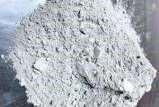
Fly ash is a spherical, powdery byproduct created during the combustion of pulverized coal at thermal power plants. It primarily consists of silica, alumina and iron oxides and is gathered from the flue gases produced by coal-firedboilerspriortoexitingintotheenvironment.Fly
International Research Journal of Engineering and Technology (IRJET) e-ISSN:2395-0056
Volume: 11 Issue: 12 | Dec 2024 www.irjet.net p-ISSN:2395-0072
ash has reinvented itself from once being a disposal material to presently having immense value in the construction domain as a partial substitute of Portland cementinconcrete.Thepozzolaniccharacteristicofflyash andability to reactwithcalciumhydroxidein presence of waterformingcompoundshavingcementitiousproperties makes it a suitable cement substitute. In addition to improving the strength and durability of concrete, this reduces its environmental impact by decreasing carbon dioxide released during cement production. The use offly ash in concrete produces greater work-ability and also minimizestheheatofhydration,thatiswhyitsuitsbetter for large pours and mass concrete structures. The quality of fly ash can vary depending on the coal source and combustion method thus requiring careful selection & testing for specific applications. In concrete, it is used instead of virgin materials and thus a part of more sustainable construction such as the use of industrial waste
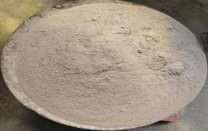
Fine aggregate is a one of the important components of concreteandmortar,consistingofsmalldebristhatfillthe areas between larger aggregates, like gravel or crushed stone,tocreateadenseandcompactmixture.
Typically,first-ratecombinationisherbalsand,howeverit may also include beaten stone sand, synthetic sand, or other similar materials. The particle length of satisfactory combination is normally less than 4.75 mm, with the majorityofparticlesbeingsmallerthan2.36mm.Therole of best fine aggregate in concrete is to provide bulk, enhance workability, and make contributions to the electricity and sturdiness of the very last product. By filling the voids among coarse aggregates, great mixture guarantees a clean and plausible mix, making it less complicatedtopourandendtheconcrete.
Additionally, first-class aggregates help to reduce shrinkageandpreventsegregationoftheconcreteblend.
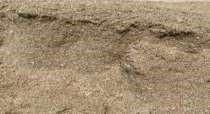
Coarse Aggregate is a main component of Concrete consisting of large inert particles. Typically size of coarse aggregate ranging from 4.75mm to 38mm. Coarse aggregateoccupiesabout60-75%oftheconcretemix.The quality and characteristics of coarse aggregate significantlyaffecttheperformanceofconcrete.Theshape, size, and texture of the aggregate influence the workability, strength, and durability of the concrete. The selection of coarse aggregate depends on the type of construction, the load bearing requirements, and environmental factors. For instance, high-strength concrete used in structural applications may require aggregates with specific properties, such as low absorption and high resistance to weathering. The durability of concrete is also influenced by the mineral compositionandcleanlinessoftheaggregate,asimpurities like clay or organic materials can weaken the bond between the cement paste and aggregate, compromising theconcrete'sintegrityovertime.
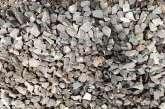
Waterisprimaryappliedinthemixingofconcrete,mortar, and plaster, where it activates the cement, initiating the chemical reaction known as hydration. This process is crucial for the hardening and strength development of these materials, making water indispensable in creating strong and durable structures. Beyond mixing, water is vitalforcuringconcrete.Afterconcreteispoured,itneeds to be kept moist for a specified period to ensure proper hydrationandtopreventcrackingorshrinking.
International Research Journal of Engineering and Technology (IRJET) e-ISSN:2395-0056
Volume: 11 Issue: 12 | Dec 2024 www.irjet.net p-ISSN:2395-0072
Proper curing enhances the strength, durability, and overall quality of the concrete, ensuring the longevity of thestructure. Waterisalso usedinthecompaction ofsoil andaggregates,helpingtoachievethedesireddensityand stability of foundations and earthworks. In addition, it is employed in dust suppression during construction activities, minimizing airborne particles and improving sitesafety.Moreover,waterisnecessaryforcleaningtools, equipment, and surfaces, as well as for maintaining hygiene and sanitation on construction sites. However, managingwateruseefficientlyiscrucialtoavoidwastage, prevent water logging, and ensure sustainable constructionpractices.
2. METHODOLOGY
In this work partial replacement of cement with Fly ash, Experimental investigation is carried out to find the strength characteristics fly ash-based concrete. The cement is replaced by Fly ash in the range of 30%, 40%, 50%,60% and 70% by weight of cement for M20 grade mix. Concrete cubes were casted and tested after 3 days, 7days and 28 days curing for compressive strength and compared with normal concrete specimens. So that percentage ofFlyashisto bedetermined whichgivehigh strength when fixed with cement. By taking that percentageoffly-ash.
MIX DESIGN
The M20 grade concrete is adopted for the present work. Detailedmixproportionisobtainedaspercode
IS10262-2009
Table -1: CalculationofquantityofMaterials
All the fly ash based concrete cubes are tested in compression testing machine to determine the compressive strength at 3, 7, 14 and 28 days as shown in Table5.5andfig5.2.Fromthetestitisclearthattheratio FA30showsthehighstrengthinwhich30%flyashisused &70%cementisused.
Table -2: CompressiveStrengthtest
International Research Journal of Engineering and Technology (IRJET) e-ISSN:2395-0056
Volume: 11 Issue: 12 | Dec 2024 www.irjet.net p-ISSN:2395-0072
Comressive Strength at 3 days(N/mm²)
Comressive Strength at 7 days(N/mm²)
Comressive Strength at 14 days(N/mm²)
Comressive Strength at 28 days(N/mm²)
Fig -6: CompressiveStrengthat3,7,14&28days
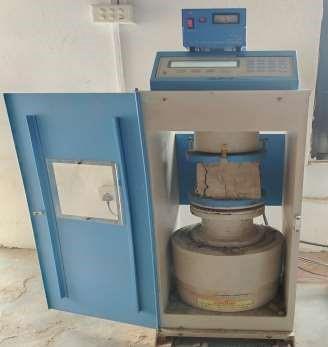
Fig-7: Compressivestrengthtest
SPLIT TENSILE STRENGTH
AllcylindersweretestedinCTMwithreferenceofIS:5161959 after 28 days to determine tensile strength of fiber fly ash-based concrete. The split tensile strength is checkedforFA30(i.e.30%flyash&70%cement).
Table -3: SplitTensileStrengthat28days
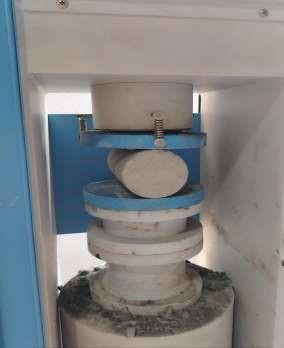
Fig-8: Splittensilestrength SLUMP TEST
The slump test is a simple, practical measure of concrete workabilityorconsistency.
The slump value of our experiment was 110mm (High) which describe high workability and may not respond to wellvibration.
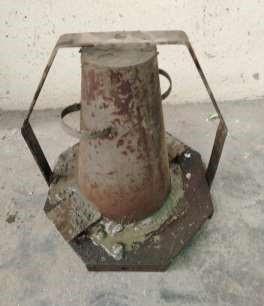
Fig-9: Slumptest
FLEXURAL STRENGTH
Ten prisms for different fiber percentage were casted to test the flexural strength in UTM (Universal Testing Machine) by applying two-point load to understand the pure bending behavior. The test was conducted after 28 daysofcuringandresultsareshowninTable-4
International Research Journal of Engineering and Technology (IRJET) e-ISSN:2395-0056
Volume: 11 Issue: 12 | Dec 2024 www.irjet.net p-ISSN:2395-0072
Table -4: FlexuralStrengthat28days
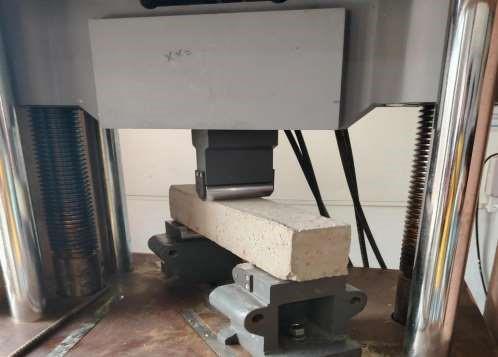
The test results obtained from FA30 was compared with the results obtained from the 100% cement concrete, which shows that replacing the 30% cement by fly ash, the 28 days’ strength of concrete will be reduced by 33.94%.
Thecostofthesizeofcubedecreasesby12.2%when30% cementisreplacedbyflyash
Basedonexperimentalwork,thefollowingconclusionsare drawn:
Experiments on different times suggest that the compressive strength of concrete mixes decrease with increase percentage of Fly Ash. It should be kept in mindthat theoptimumlimitofmixing ofFlyAshis40 % and more than that may not be safe for different concretemixes.
Depending upon the percentage of Fly Ash as well as timeofcuring,thestrengthofconcretewillbevaried.
By the use of pozzolanic material fly ash, the usage of cement can be reduced which will reduce the cost of concretetocertainextent.
It is possible to produce workable concretes with additionofpozzolanicmaterialslikeflyashwhichhave higheconomicalandenvironmentalbenefits.
The cost analysis indicates that percent cement reduction decreases cost of concrete, but at the same timestrengthalsodecreases.
The strength of fly ash-based concrete is less than cementconcrete,thesecanbeusedinlowloadbearing structuresandinconstructionofruralroadanddams.
The slump value from experiment is high which describehighworkabilityandmaynotrespondwellto vibration.
Our study was based on checking strength of concrete with replacement of cement by fly ash without using superplasticizer, weuse Coarse Aggregate of size passing from sieve 12mm and no chemical test of fly ash was conducted,werecommendedtootherresearchertostudy about strength behavior of concrete with using superplasticizeranddochemicaltestofflyash.
[1] Jayanta Chakraborty & Sulagno Banerjee (2016), “ReplacementofCementbyFlyAshinConcrete”,SSRG International Journal of Civil Engineering, Vol. 03, pp. 40-42.
[2] Jagdish Virupakshi Patil (2017), “Partial Replacement of Cement by Fly ash in Concrete Mix Design”, International Research Journal of Engineering and Technology(IRJET),Vol.04,pp.1148-1150.
[3] Usha K N & B K Smitha (2016), “Suitability of Fly Ash in Replacement of Cement in Pervious Concrete”, International Journal of Engineering Research & Technology(IJERT),Vol.05,pp.115-118.
[4] Provera’s. Patil1 & Prof.C.S. Umrani (2024), “A Review Paper on Partial Replacement of Cement by Fly Ashin High-Strength Concrete”, International Journal of Research in Engineering and Science (IJRES), Vol.12, pp.51-58.
[5] MohyS.Fattouh,AhmedS.Abouhalawa(2021),“Effect of Fly ash as a Partial Replacement of Cement on the Compressive Strength of Cement mortar Using North Sinai Martials”, American Journal of Engineering Research(AJER),Vol.10,pp.162-167.
International Research Journal of Engineering and Technology (IRJET)
Volume: 11 Issue: 12 | Dec 2024 www.irjet.net p-ISSN:2395-0072
[6] V. M. Andreola, M. Y. Rajiv da Gloria, D. O. Justo dos Santos,R.D.ToledoFilho(2019),“PartialReplacement of Cement by combination of Fly-ash and Metakaolin inBamboo Bio-concrete”,International Conference on Bio-BasedBuildingMaterials,Vol.10,pp.102-106.
[7] K.V.Sabarish (2017),“ExperimentalStudiesonPartial Replacement of Cement with fly-ash in concrete elements”, International Journal of civil Engineering andTechnology(IJCIET),Vol.08,pp.293-298.
[8] SaifulI,MoinulI,(2010),“StrengthBehaviorofmortar Using Fly Ash as Partial Replacement of Cement”, ConcreteResearchLetters,Vol.01,pp98-106.
[9] Kartikey T, Jatale A, Khandelwal S, (2013), “Effects on Compressive Strength When Cement is Partially Replaced by Fly-Ash”, IOSR Journal of Mechanical and CivilEngineering(IOSR-JMCE),Vol.05,pp34-43.
[10]Jatale A, Tiwari K, Khandelwal S (2013), “Effects on compressive strength when cement is partially replaced by fly-ash”, IOSR Journal of Mechanical and CivilEngineering,Vol.03,pp.34–43
[11]Kiran TG, Ratnam MK (2014), “Fly ash as a partial replacement of cement in concrete and durability study of fly ash in acidic environment”, International Journal of Engineering Research and Development, Vol.10,pp.1-3.
[12]Pitroda J, Zala LB, Umrigar FS (2012), “Experimental Investigations on Partial Replacement of Cement with Fly ash in design mix concrete”, International Journal of Advanced Engineering Technology, IJAET, Vol. 03, pp.6-9.
[13]Namagga C, Atadero RA (2009), “Optimization of fly ash in concrete High lime fly ash asa replacement for cement and filler material”, In World of Coal Ash Conference(WOCA),Lexington,KY,USA.
[14]R. Sri Bhavana, P. Polu Raju and S S Asadi, ExperimentalStudyonBacterialConcretewithPartial Replacement of Cement by Fly Ash, International Journal of Civil Engineering and Technology, 8(4), 2017,pp.201–209.
[15]PitrodaJ,ZalaL.B.,UmrigarF.S,(2012),“Experimental InvestigationsPartialReplacementofCementwithFly Ash in Design mix Concrete”, International Journal of AdvancedEngineeringTechnology,Vol.3,pp126-129.