
International Research Journal of Engineering and Technology (IRJET) e-ISSN: 2395-0056
Volume: 12 Issue: 12 | Dec 2025 www.irjet.net p-ISSN: 2395-0072
International Research Journal of Engineering and Technology (IRJET) e-ISSN: 2395-0056
Volume: 12 Issue: 12 | Dec 2025 www.irjet.net p-ISSN: 2395-0072
I. U. Uju1, I.I. Okonkwo2, B.S. Bere3
1,2, Department of Electrical/Electronic Engineering, Chukwuemeka Odumegwu Ojukwu University, Uli, Nigeria
3, Department of Electrical/Electronic Engineering, Kenule Beeson Saro-Wiwa Polytechnic, Bori, Nigeria
Abstract- Induction machine is reliable, thus very usable in the industry especially its usability in the electric vehicle. A major limitation is the speed variation with load variation. The main objective of this work is to show the effect of load variation on the performance and stability of Dual Stator Induction Machine (DSIM) using PID controller. The analysis involved varying the load using 5N, 10N and 15N with performance metrics like step response analysis (overshoot, rise time and settling time) and Bode plot analysis. To analyse the complex vector model of the Dual Stator Induction Machine, a complete set of simulations were implemented using MATLAB/Simulink software. From the analysis, it was found out that the PID controlled DSIM: under 5N shows moderate torque stability, medium torque overshoot and high current ripple; under 10N shows poor torque stability, high torque overshoot and very high current ripple; under 15N shows unstable/oscillatory torque stability, very high torque overshoot and very high current ripple. The time domain metrics under different loads shows that the PID controlled DSIM: under 5N has an overshoot, rise time and settling time of 4.6%, 0.213s and 0.598s respectively; under 10N has an overshoot, rise time and settling time of 9.4%, 0.186s and 0.594s respectively; under 15N has an overshoot, rise time and settling time of 16-3%, 0.164s and 0.808s respectively. The frequency response shows that for 5N, 10N and 15N, the PID controlled DSIM peak gain is -6.02(at 2.83 rad/s), -9.04dB (at 0,927 rad/s) and -10dB (at 1.17 rad/s) respectively. The implications of the findings are: PID controller has a reactive and limited ability to handle sudden disturbances in the form of load variations. The step response analysis shows that increase in load leads to increased overshoot and relative increase in settling time. The frequency response from Bode plot reveals that with the PID controller (for the DSIM), an increase in load leads to more instability in the system.
Keywords: Load Variation, Performance, Stability, Dual Stator, Induction Machine.
ADualStatorInductionMotororMachine(DSIM)isaninductionmachinewhichhastwoseparatethree-phasestator windings, sharing the same machine core and the common squirrel cage rotor winding [1][2] In the machine, alternating currentisappliedtothestatorandalternatingcurrentsareinducedintherotorbytransformeraction [3] Theasynchronous machinealso known as a three phase induction machine is an Alternating Current (AC) machinewhich converts mechanical energy into electrical energy in the case of generator or converts electrical energy into mechanical energy in the case of a motor. Induction machines are referred to as asynchronous machines because an induction machine always runs at a speed lowerthanthesynchronousspeedinitsmechanism.Synchronousspeedmeansthespeedoftherotatingmagneticfieldinthe stator of the machine [4]. Dual stator Induction machine consists of a standard squirrel-cage rotor and stator with separate windings wound on dissimilar number of poles. Each stator is fed from an independent variable-frequency variable-voltage inverter[5][6]
The DSIM is a rotating machine and as such produces torque unlike the linear induction motor which is basically a rotating squirrel-cage induction motor opened and spread-out flat and produces linear force along its flat axis [7]. An induction motor has more loss and less efficiency when it works at variable speed necessitated by load variation. The rotor and stator are separated by air gap which allows free rotation of the rotor and the magnetic field generated in the stator inducesanemfintherotorbars[8].
Thisresearchseekstoaddresstheeffectofloadvariationontheperformance andstabilityofDSIMusingPIDcontroller.The PIDcontrollerisadevelopmentuponthePIcontrollerwhichisatypeoffeedbackcontrolsystemthatadjuststheoutputsignal toreducethedifferencetheprocessvariableandthesetpoint.
International Research Journal of Engineering and Technology (IRJET) e-ISSN: 2395-0056
Volume: 12 Issue: 12 | Dec 2025 www.irjet.net p-ISSN: 2395-0072
A PID (Proportional-Integral-Derivative) controller is a widely used control loop feedback mechanism in industrial control systems.It combinesthree control actions;proportional,integral,and derivativestoprovidea robust and effective meansof controlling dynamic systems. The PID controller is particularly valued for its simplicity, effectiveness, and ease of implementation.
Theproportionaltermproducesanoutputthatisproportionaltothecurrenterrorvalue,whichisthedifferencebetweenthe desired set point and the actual process variable. The proportional gain kp determines the reaction to the current error. A higherkp resultsinalargeroutputforagivenerror,leadingtoafasterresponse.However,usingonlyproportionalcontrolcan leadtoasteady-stateerror,asitdoesnotaccountforpasterrors.
Theintegral termaccumulatesthe pasterrorsovertime,providinga correctiveactionbasedon thehistoryoftheerror.The integral ki determines how much influence the accumulated error has on the output. This term helps eliminate steady-state errorbyadjustingthecontroloutputbasedonthetotalaccumulatederror.
Thederivativetermpredictsfutureerrorbasedonitsrateofchange,providingadampingeffectthathelpsreduceovershoot andimprovesystemstability.Thederivativegainkddeterminestheinfluenceoftherateofchangeoftheerrorontheoutput. Thistermhelpstoreacttochangesintheerrorquickly.
ThePIDcontrollerisa fundamental toolincontrol engineering,providinga simpleyeteffectivemeansofmanagingdynamic systems.Itsabilitytocombineproportional,integral,andderivativeactionsallowsforimprovedstability.
Asinotheranalysisofsameform,thesimulationresultsarebeendemonstratedontheplatformofMATLAB/Simulink accordingto[9]
A, Dual Stator Induction Machine Model (DSIM)
TheDSIMismadeupofastatorthatcontainstwoidenticalthreephaseswindingsdisplacedbyanelectricangle γ (γ = 30°) and a squirrel cage rotor. It is a very complex system when it comes to machine analysis taking into account its exact configuration withthedistributionofitswindingsanditsowngeometry.Thus,itis necessarytoadoptcertainsimplification hypothesessuchthatthemachineissupposedto be"linear".Thismeansthatthesaturationandthehysteresis effectsofthe magnetic circuits of the machine are neglected. Similarly, the phenomenon causing variations of resistances and inductance are also neglected. The magneto-motive air gap force produced by each winding is assumed to have a sinusoidal spatial distribution, which amounts to neglecting space harmonics. The machineair gap is of constant width, and it is assumed that thetwothree-phasestatorwindingsarebalancedandidentical[10][11] (Holakooie et al, 2019; Levi, 2008). Themodelofthe dualstatorinductionmachineisexpressedbystatespacerepresentationasfollow[12][13][14] (Meroufel et al, 2017; Moati et al, 2018; Yahia et al, 2018):
RepresentingtheDSIMmodelinstatespacemodel,thestateequationoftheformexpressed inequationwasusedasfollows [15] (Moati and Kouzi, 2019):
(1)
[ ] isthestatevector (2) [ ] isthecontrolinputvector (3) Then,thematrices A and B aredeterminedbyobtainingthefollowingequations: [ ] (4)
International Research Journal of Engineering and Technology (IRJET) e-ISSN: 2395-0056
Volume: 12 Issue: 12 | Dec 2025 www.irjet.net p-ISSN: 2395-0072
[ ] (5)
ThePIDcontrollawisexpressedas: ( ) ( ) ∫ ( ) ( ) (6)
where ( )
The classical numerical PI regulator is well suited to regulating the motor torque to the desired values as it is able to reach constantreference.Thetransferfunctiontakestheform[16](Benyoussef, 2022): ( ) ( ) ( ) (7)
Where ( ) ( )
TheimplementationoftheDSIMcontrolstrategyinvolvesseveralsteps.Thegoalistoinvestigateitsperformanceandstability usingconventionalPIDcontrolmethod.Theevaluationconsidersvaryingloadconditions(5N,10N,15N)withcomprehensive performance metrics such as step response analysis (overshoot, rise time, settling time, steady state error) and bode plot analysis Tovalidatethecomplexspace-vector model oftheDSIM,a completesetofsimulationswascarriedout.MATLAB® /Simulink2021bmodelingsoftwarewasusedforthesimulationoftheproposedDSIMduetoitsextensivelibrariesandtools forcontrol,optimizationandsystem identification.Aconceptualized block diagram forthe modeling and simulationsetupis showninFigure1.
DSIM state-space model definition

PID Controller design Simulation/perform ance metrics
The simulation was conducted by replacing the derived state-space model (A, B, C, D) with the actual DSIM and controller parameterstosimulateresponsesforPID.TheMATLABscriptsimulatesaunitstepinput,whichrepresentsadisturbanceload change.Finallyrunningthe simulationtogenerateallcomparativeplotsforeachconditionandcontroller.
AnewMATLABscript(DSIM _Control _Comparison)wascreatedusingthecontrol systemtoolboxtogenerate PID functions. System parameters (Rs, Ld, Lq, km, J, B, P) were defined at the beginning. The state-space matrices (A, B, C, D) were constructed based on DSIM dynamics and stored as an ss (state-space) object. After constructing the state-space, the controllersweremanuallyselected(kp,ki,kd)foreachloopandthencombinedintoadiagonalmatrixforfeedbacklooping.
The code was structured into clear sections (modeling, controllers, simulation, and plotting). The simulation was finally executedwithatimevectort=0:0.01:1,speedof1500RPM,andstepinputsdependingonloadconditions. Systemparameters arespecifiedinTable1 TheMATLABcodesareshowninappendixA,B,C,andD.
International Research Journal of Engineering and Technology (IRJET) e-ISSN: 2395-0056
Volume: 12 Issue: 12 | Dec 2025 www.irjet.net p-ISSN: 2395-0072
Table 1: Dual Stator Induction Machine (DSIM) Parameters.
Parameter
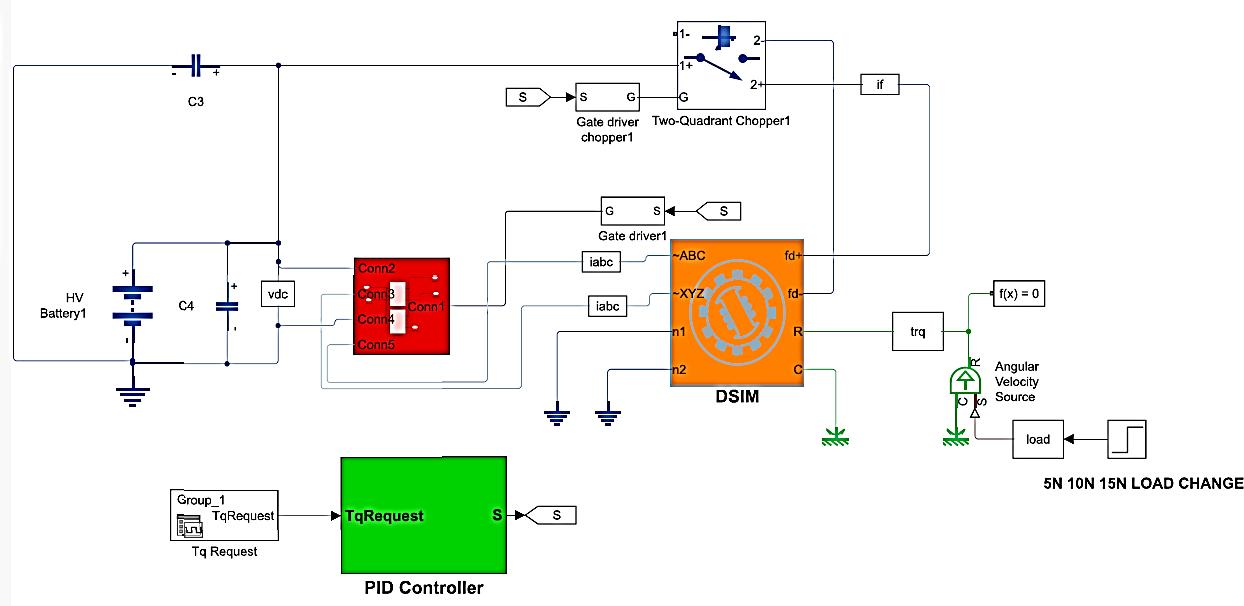
ImplementationoftheproposedPIDbasedDSIMwasdoneusingMATLABscriptsandsubsequentlyinSimulinkenvironment showing the bonds between components. The simulation employs block from the Simulink Simscape Blocksets. The DSIM blockwasobtainedfromthesynchronousmachines(electromechanical)blockset,andthepowerblockwasobtainedfromthe sinkblockset.Figure3.4showstheSimulinkmodelsofthePIDbasedDSIM..

A. Result for Current, Torque and Speed Response of PID-Based DSIM
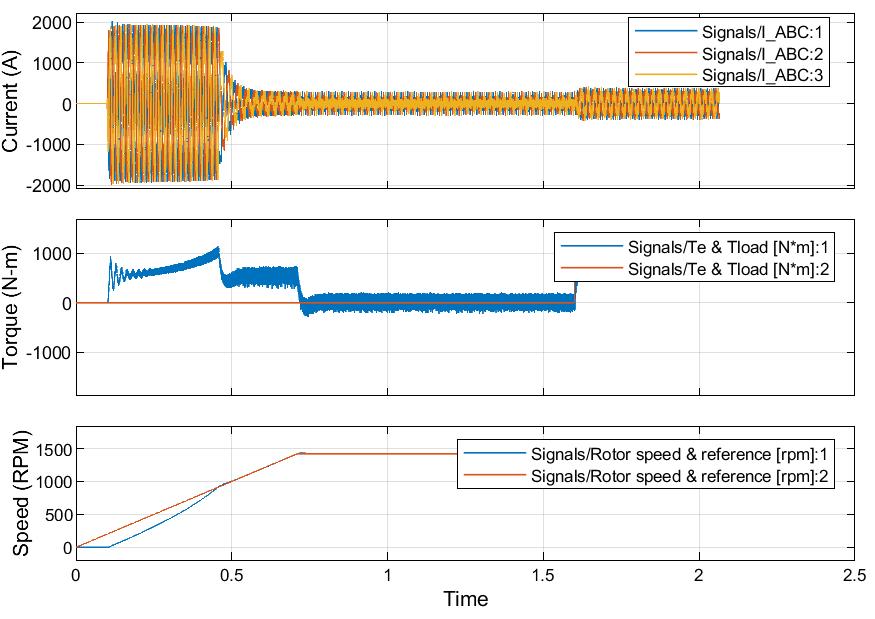
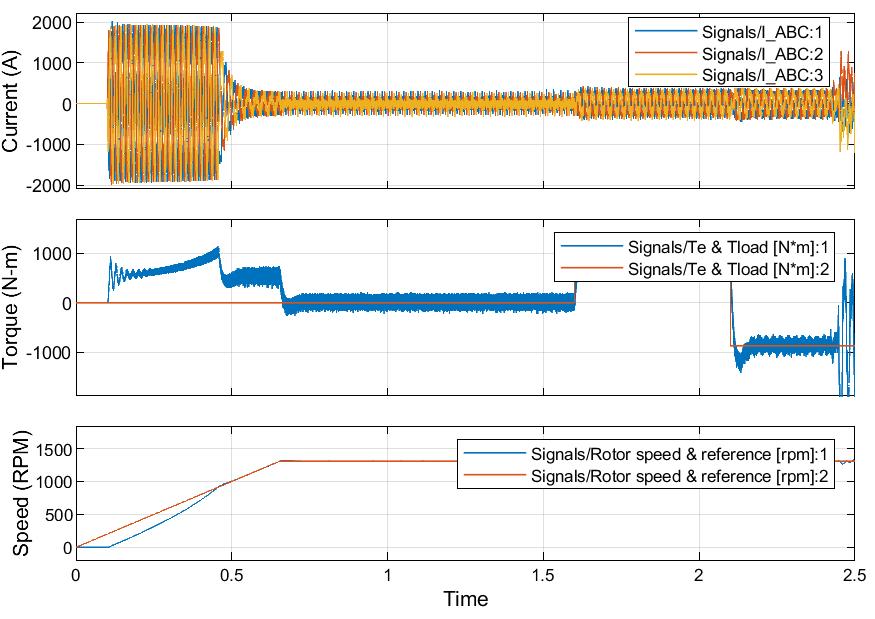
Thissectionpresenttheresultforcurrent,torqueandspeedresponseofPID-BasedDualStatorInductionMachinefor5N,10N and 15N Loads. Figures 3 depicts the PID controller based DSIM outcomes concerning torque, speed, rotor, and stator currents under 5N load change. The stator currents reflect how the machine draws power to meet load demands. With PID control, the current response is generally sharp and sometimes excessive. The electromagnetic torque generated by the machine reflects how the controller counters the applied load. In case of PID control, torque tends to lag behind the load changes. As can be seen, there is an abrupt overshoot from 0.1s to 0.5s before it stabilizes. This indicates the controller’s reactivenatureandlimitedabilitytohandlesuddendisturbances.
© 2025, IRJET | Impact Factor value: 8.315 | ISO 9001:2008 Certified Journal | Page825
International Research Journal of Engineering and Technology (IRJET) e-ISSN: 2395-0056
Volume: 12 Issue: 12 | Dec 2025 www.irjet.net p-ISSN: 2395-0072
Undervaryingloadconditions,thespeedoftheDSIMisacriticalperformancemetric.WithaPIDcontroller,thespeeddeviates from the reference whenever a load is applied. These deviations involve a drop in speed from 1500 RPM to 1400 RPM followedbyaslowerrecovery,asshowninthefigure4.At 10N,PIDovershootincreasesnoticeably.
International Research Journal of Engineering and Technology (IRJET) e-ISSN: 2395-0056
Volume: 12 Issue: 12 | Dec 2025 www.irjet.net p-ISSN: 2395-0072
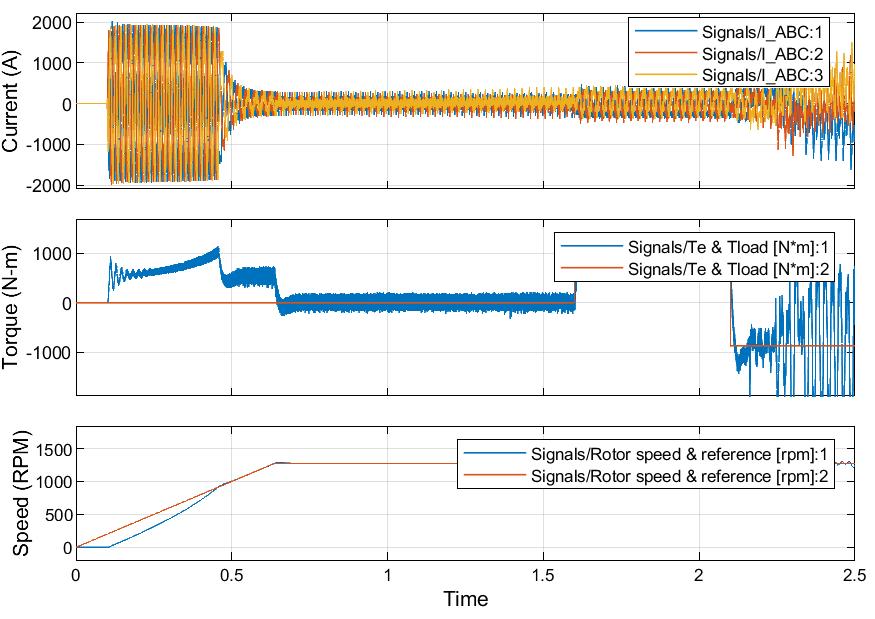
Figure 5 depicts the applied mechanical Load (15N), where response speed and torque are measured against time. Rotor currents, torque, and speed values are depicted on the y-axes, while x-axes indicate time. Load steps cause current spikes, delayed torque rise, and a significant drop in speed. As can be seen, each load step causes a spike in current, often accomplished by ripple or asymmetry between the two stators. PID performs poorly under high load in terms of torque smoothnessandcurrentregulation.Itscontrollawlacksadaptability,resultinginenergyinefficiencyandhigherthermalrisk. TorqueovershootinPIDindicatespoordynamiccontrol,leadingtomechanicalstressandpotentialwear.
B. Step Response Analysis (Time-Domain Response) Results of PID Controlled DSIM
Infigure6,therotorspeedstepresponseofPID-basedDualStatorInductionMachinesunder5Nloaddisturbanceshowsan overshootof4.6%.
International Research Journal of Engineering and Technology (IRJET) e-ISSN: 2395-0056
Volume: 12 Issue: 12 | Dec 2025 www.irjet.net p-ISSN: 2395-0072
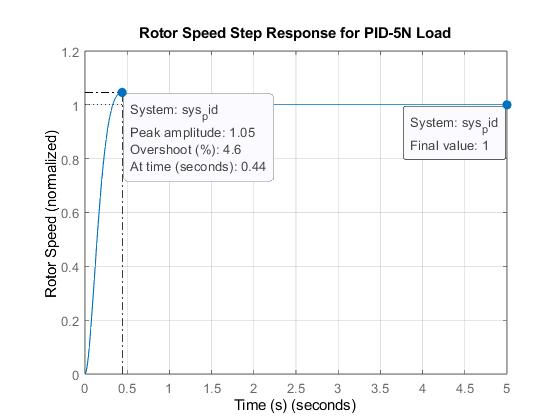
Figure 6:StepresponseofPID-basedDSIMshowingovershoot(5NLoad)
Infigure7,therotorspeedstepresponseofPID-basedDualStatorInductionMachinesunder10Nloaddisturbanceshows an overshootof9.47%duetoincreasedload.
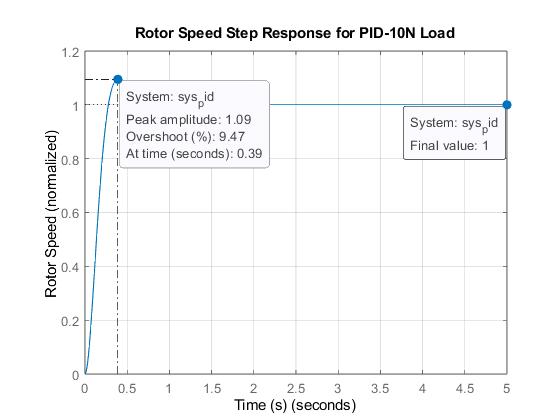
Figure 7: Step response of PID-based DSIM showing overshoot (10N)
Infigure8,therotorspeedstepresponseofPID-basedDualStatorInductionMachinesunder15Nloaddisturbanceshowsan overshootof16.3%.
© 2025, IRJET | Impact Factor value: 8.315 | ISO 9001:2008 Certified Journal | Page828
International Research Journal of Engineering and Technology (IRJET) e-ISSN: 2395-0056
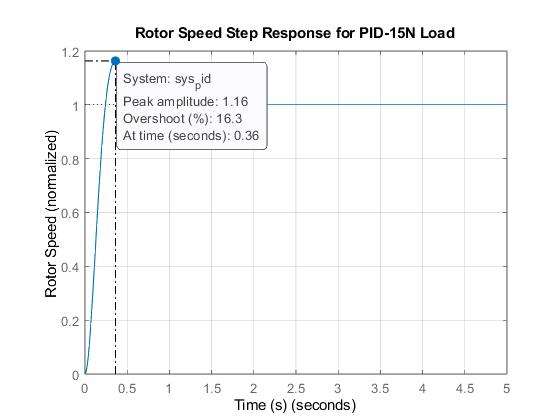
Figure 8: StepresponseofPID-basedDSIMshowingovershoot(15N)
Infigure9,therotorspeedstepresponseofPID-basedDualStatorInductionMachinesunder5Nloaddisturbanceshowsarise timeof0.213secondandsettlingtimeof0.598second.
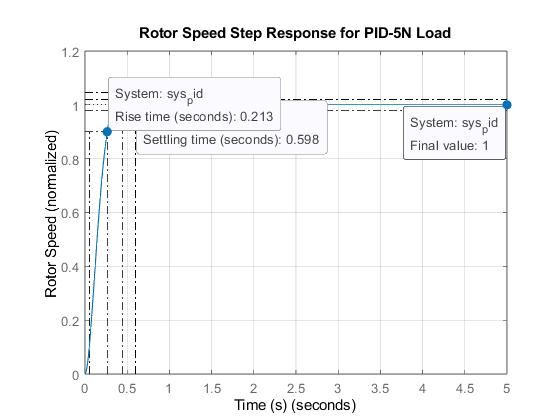
Figure 9: StepresponseofPID-basedDSIMshowingrisetimeandsettlingtime(5Nload)
Volume: 12 Issue: 12 | Dec 2025 www.irjet.net p-ISSN: 2395-0072 © 2025, IRJET | Impact Factor value: 8.315 | ISO 9001:2008 Certified Journal | Page829
International Research Journal of Engineering and Technology (IRJET) e-ISSN: 2395-0056
Volume: 12 Issue: 12 | Dec 2025 www.irjet.net p-ISSN: 2395-0072
In figure 10, the PID-based Dual Stator Induction Machines at 10N load takes a longer time of 0.594 second to settle (or stabilize)and0.186secondtorise.
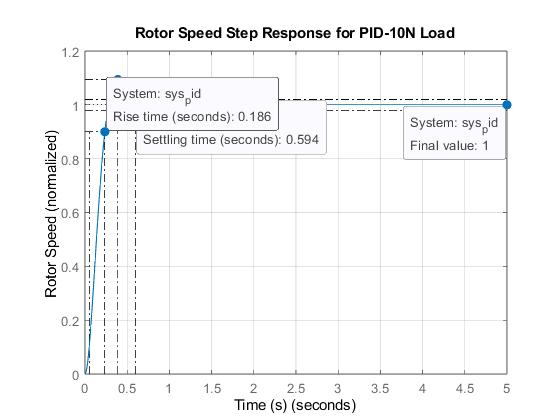
Figure 10: StepresponseofPID-basedDSIMshowingrisetimeandsettlingtime(10N)
Infigure11,therotorspeedstepresponseofPID-basedDualStatorInductionMachinesunder15Nloaddisturbanceshowsa risetimeof0.164second.
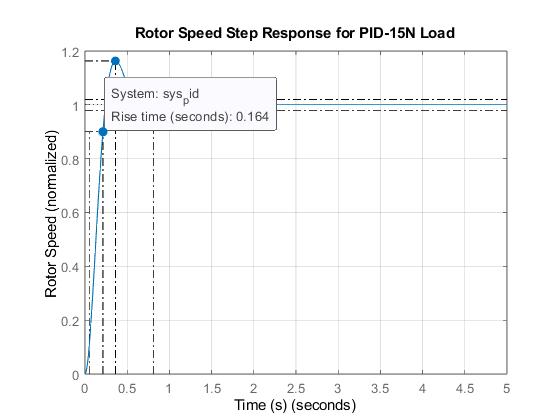
Figure 11: StepresponseofPID-basedDSIMshowingrisetime(15N) Infigure12,therotorspeedstepresponseofPID-basedDualStatorInductionMachinesunder15Nloaddisturbanceshowsa settlingtimeof0.808second.
© 2025, IRJET | Impact Factor value: 8.315 | ISO 9001:2008 Certified Journal | Page830
International Research Journal of Engineering and Technology (IRJET) e-ISSN: 2395-0056
Volume: 12 Issue: 12 | Dec 2025 www.irjet.net p-ISSN: 2395-0072
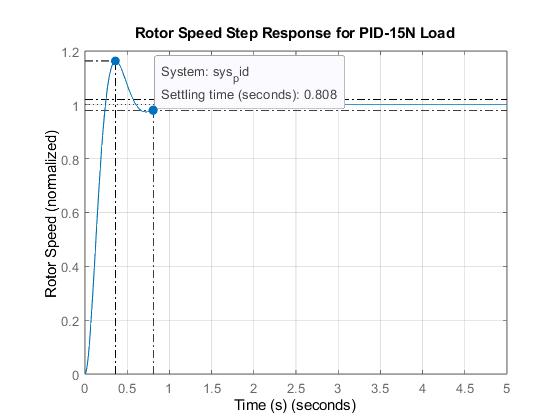
Figure 12: StepresponseofPID-basedDSIMshowingsettlingtime(15N)
Table 6: Time-DomainMetricsunderDifferentLoadConditions
C. Frequency Response (Bode Plot) Analysis of PID Controlled DSIM
ThissectionpresentstheFrequencyResponse(orBodePlot)ResultsofPIDControlledDualStatorInductionMachinefor5N, 10N and 15N loads. In figure 13, the frequency response (Bode Plot) of PID-based Dual Stator Induction Machine under 5N disturbanceshowsapeakgainof-6.02dBatafrequencyof2.83 rad/s.
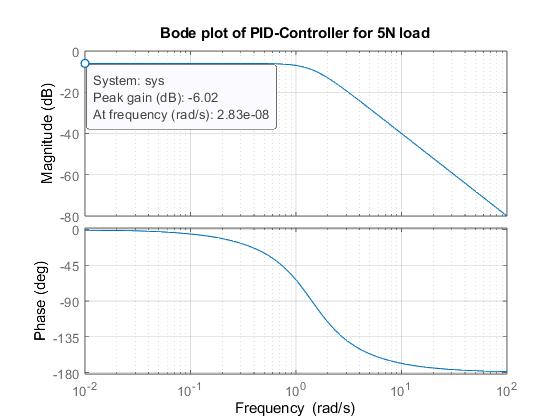
Figure 13: BodeplotofthePID-basedDSIMshowingpeakgain(5N)
International Research Journal of Engineering and Technology (IRJET) e-ISSN: 2395-0056
Infigure14,thefrequencyresponse(BodePlot)of PID-basedDualStatorInductionMachineunder10Ndisturbanceshowsa peakgainof-9.042dBatafrequencyof0.926rad/s.
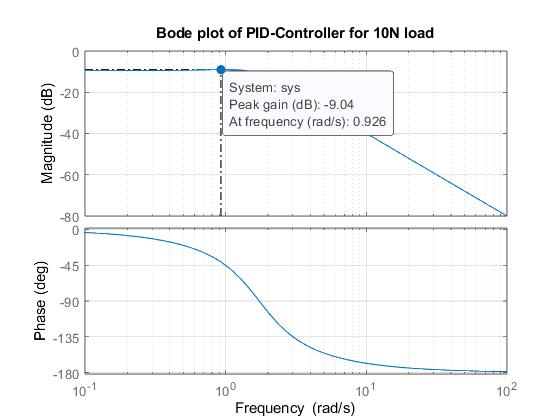
Figure 14: BodeplotofthePID-basedDSIMunder10Nload
Infigure15,thefrequencyresponse(BodePlot)ofPID-basedDualStatorInductionMachineunder15Ndisturbanceshowsa peakgainof-10dBatafrequencyof1.17rad/s.
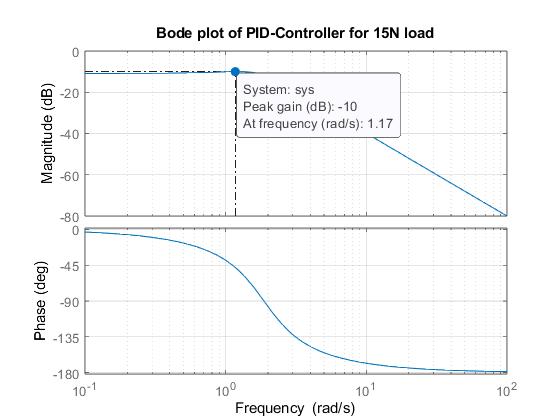
Figure 15:BodeplotofthePID-basedDSIMunder15Nload
Volume: 12 Issue: 12 | Dec 2025 www.irjet.net p-ISSN: 2395-0072 © 2025, IRJET | Impact Factor value: 8.315 | ISO 9001:2008 Certified Journal | Page832
International Research Journal of Engineering and Technology (IRJET) e-ISSN: 2395-0056
Volume: 12 Issue: 12 | Dec 2025 www.irjet.net p-ISSN: 2395-0072
The performance of the Dual Stator Induction Machine was examined under load variation of 5N, 10N and 15N using PID controller. Performancemetricsconsideredinclude overshoot, settling time, and peak time,withfrequencydomainanalysis via Bode plot toassessrobustnessandstabilitymargins.
Thecontroller(PID)hasareactivenatureandlimitedabilitytohandlesuddendisturbancesintheformofloadvariation.With PIDcontroller,thecurrent responseissharpand sometimes excessive. The torquetends tolagbehindduetoloadvariation. Speeddeviatesfromthereferencewheneveraloadisapplied.
Thestepresponseanalysisshowsthatincreaseinloadleadsto(i)increasedovershoot,otherfactorsremainingthesameand (ii)relativeincreaseinsettlingtime.
ThefrequencyresponsesfromBodeplotrevealthatwiththePIDcontroller(fortheDSIM),anincreaseinloadleadsto more instabilityinthesystem.
[1] I.U.UjuandB.S.Bere.‘EvaluationofthePerformanceandStabilityofDual StatorInductionMachineUsing PID and H-InfinityControllers’.International ResearchJournalofEngineering andTechnology,pp628- 646,2025.
[2] B.S.BereandI.U.Uju.‘ImprovementofthePerformanceandStabilityofDualStatorInductionMachineUsing LQR Controller’.InternationalResearch JournalofEngineeringandTechnology,pp598- 614,2025.
[3] M. Mataray and V. Kakkar. ‘Asynchronous Machine Modeling Using Simulink Fed byPWMInverter’. International JournalofAdvancesinEngineering& Technology,Vol.1,Issue2,pp.206-214,2011.
[4] K.Daware(2022), Working principle and types of an Induction Motor ,Available at https://www.electricaleasy.com/2014/02/working-principle-and-types-of.html.
[5] A.R.MunozandT.ALipo.,Dualstatorwindinginductionmachinedrive;IEEETrans.Ind.Appl.36:1369–1379,2000.
[6] A.R. Soman and R.M. Holmukhe. ‘Double Stator Induction Machine for Variable Speed and Variable Torque Applications’.SSRGInternationalJournalofElectricalandElectronicsEngineering,2021
[7] I.D.Nzeife,C.B.MbachuandI,U,Uju.‘ImprovingthePerformanceOfSingle-sidedLinearInduxtionMotorsUsingEdge End Effect Reduction Technique’. International Journal Of Innovative Engineering, Technology and science, Vol. 4, No.1, 2021.
[8] I.U.UjuandU.Asiwe.‘InternationalJournalOfTrendsInScientificResearchandDevelopment’,Vol.2,Issue3, pp287294,2018.
[9] E.OtorandI.U.Uju.‘MathematicalImplementationOf EffectOfIncreaseInDivergenceAngleOfaDiffuserOnSpeed and Power Generation Of HAWT Using Disk Theory’ International Journal Of Innovative Engineering, Technology and science,Vol.4,No.1,2021.
[10]M,H.Holakooie,M.Ojaghi,andA.Taheri ‘ModifiedDTCofaSix-PhaseInductionMotorWithaSecond-OrderSlidingModeMRAS-BasedSpeedEstimator’,IEEE TransactionsonPowerElectronics,34(1),pp.600–611, 2019.
[11]E.Levi.‘MultiphaseElectricMachinesforVariable-SpeedApplications",IEEETransactionsonIndustrialElectronics’, 55(5),pp.1893–1909,2008.
[12] A. Meroufel, S. Massoum, ,A. Bentaallah, P. Wira, F.Z. Belaimeche, and A. Massoum, (2017). Double star induction motor direct torque control with fuzzy sliding mode speed controller, Revue Roumaine des Sciences Techniques-Serie ElectrotechniqueetEnergetique,62(1),pp.31–35,2017.
2025, IRJET | Impact Factor value: 8.315 | ISO 9001:2008 Certified Journal | Page833
International Research Journal of Engineering and Technology (IRJET) e-ISSN: 2395-0056
Volume: 12 Issue: 12 | Dec 2025 www.irjet.net p-ISSN: 2395-0072
[13] Y.Moati,K.Kouzi,A.Bencherif,andS.Bensaoucha.‘NewDesignofNeural Direct Power Control of DSIM Fed by IndirectMatrixConverter’,In:Hatti,M.(ed.)RenewableEnergyforSmartandSustainableCities,ICAIRES 2018,Lecture NotesInNetworksandSystems,Vol.62,Springer,Cham, Switzerland,2018,pp.216–224,2019.
[14] M.Yahia,K.Katia,M.Khalil,andB.Saddam,‘DirectTorqueControltoImprovethe Performances of the DSIM PoweredbyIndirectMatrixConverter’.InternationalConferenceonCommunicationsandElectricalEngineering (ICCEE), ElOued,Algeria,pp.1–5,2018
[15]Y. Moati and K. Kouzi .‘Investigating the Performances of Direct Torque and Flux Control for Dual Stator Induction Motor with Direct and Indirect Matrix Converter, Periodica Polytechnica Electrical Engineering and Computer Science, pp.1-9,2019.
[16] E. Benyoussef and S. Barkat ‘Five-level Direct Torque Control with Balancing Strategy of Double Star Induction Machine’.IntJSystApplEngDev.2020;14(Dci):116–23.
2025, IRJET | Impact Factor value: 8.315 | ISO 9001:2008