
International Research Journal of Engineering and Technology (IRJET) e-ISSN:2395-0056
Volume: 12 Issue: 06 | Jun 2025 www.irjet.net p-ISSN:2395-0072
International Research Journal of Engineering and Technology (IRJET) e-ISSN:2395-0056
Volume: 12 Issue: 06 | Jun 2025 www.irjet.net p-ISSN:2395-0072
1,2,3,4 -B.TECH Scholar , Chouksey Engineering College , Bilaspur
5–Assistant Professor , Chouksey Engineering College , Bilaspur
6–Head of Department C.S.E. , Chouksey Engineering College , Bilaspur Department of Computer Science & Engineering
ABSTRACT- Theproposed paper presentsSynKron AI, a conversational, voice-based assistant framework that combines intelligent automation and a graphical user interface (GUI) to make human-machine interaction easy. SynKronAIisbasedonPythonbackendandPyQt5frontend and integrates speech recognition, natural language processing,andon-the-flyautomation.Thissystemhasvoice control, real time web search, image generation module, mediaplaybackandsmartsystemmanagement.SynKronis made to operate with both local and cloud-based componentsandisoptimizedtobeusedbothpersonallyand industrially,aswellastointegratewithIoT.Themodularity, scalability,andprivacy-by-designoftheplatformmakesita feasiblesolutiontosmartenvironments.
Thedemandofsmartandcustomizablesystemsisincreasing with the intensification of technology in everyday lives. Thoughplatformrestrictionsaresomethingtoreckonwith, popular assistants such as Siri and Alexa can only be convenient.SynKronAIfillsthisgapwithamodular,Pythonbased voice assistant, focused on desktops. It is a combination of real-time web search, automation, and interactivePyQt5GUIwithvoicerecognitionandAIresponse generation. It has an open-source design, which targets personalandeducationalusesandinternetofthings(IoT)orientedapplications.
ThenewerAIdevelopments haveenhancedtheinteraction between people and computers by using voice-activated assistantstomaketaskssuchasmediaplayback,information retrieval, and automation easier. Nevertheless, widely-used assistantssuchasSiriorAlexaaredependentonthecloudand canbarelybecustomizedorintegratedintothedesktop.
InordertoovercomesuchproblemsSynKronAIwascreated as an open-source and versatile assistant which is mainly applied in Python. It is speech recognition, text-to-speech, realtimesearch,imagegenerationand GUIautomationall integrated into a single modular platform. SynKron can be easilycustomizedandintegratedwithothersystems(home automation or industrial IoT) and provides the user with
more possibilities of control and offline functionality comparedtocommoncommercialofferings.
1.2 Problem Statement:
Platform dependencies and a limited desktop integration capability wherein modern virtual assistants such as Siri, Alexa,andGoogleAssistantareconcerned,tendtohamper theseassistantsandmakethemlessusefulwhenitcomesto more advanced automation and customization. An open, extensible, intelligent desktop-based assistant that can do real-time search, automate tasks, control application, and interactviavoiceandnaturallanguageisrequired.
SynKronAIfillsthisgap witha modular, Pythonpowered desktop assistant, which features a natural voice and GUI basedinteraction,realtimewebavailability,automationand mediacontrol,optimizedtomaximizeuserproductivity.
1.3 Objectives:
• Createanartificiallyintelligentassistantwhichwill becontrolledbyvoiceortextmessages.
• Introducewebsearch,playbackofmediacontent inreal-time,andautomationofapps.
• IntegrateAPItogenerateimagesondemand.
• ImplementPyQt5GUIthatiseasytouse.
I. IEEESpectrum(2023):mentionedtheshortcomings ofvoiceassistantswhenusedinanofflineorcrossplatform setting and referred to the importance of open-sourcemodularity.[Ref-[1]]
II. ACM Digital Library (2024): checked the incorporationofsmartmodulessuchasNLP,
imagegeneration,andautomationinAI assistants. [Ref-[2]]
III. ElsevierJournalonHuman-CentricComputing (2023):Analysedtheuserbehaviourandtherole ofthecontextualmemoryinassistants.[Ref-[3]]
International Research Journal of Engineering and Technology (IRJET) e-ISSN:2395-0056
Volume: 12 Issue: 06 | Jun 2025 www.irjet.net p-ISSN:2395-0072
IV. GroqDocumentation(2024):Included
Instructionsonhowtoincorporatefastinference APIstocarryoutreal-timeAIapplications. [Ref-[4]]
V. PyQt5GUIManual(2024):Bestpracticesof responsiveandanimateddesignofdesktop applicationsindetail.[Ref-[5]]
2.1 Existing System:
Existing virtual assistants, Google Assistant, Siri, Alexa, and Cortana, are popular and are used in voice-based interaction.Thesesystemsprovidesuchcapabilitiesasweb search,reminders,controlofsmartdevices,andsimpleapp integration.Theyarehowever,mostlycloud-reliantandare integratedorratherdevelopedintoparticularplatformsor ecosystems that constraint customization along with desktop-level automation. Additionally they fail to give completecontroloverlocalapplicationsorfilesystemsandin mostcasestheydonotsupportuser-definedextensionsor complextaskprocessingonpersonalcomputers.Thisleaves a vacuum to be filled with users that need a more open, offline-capable, and customizable desktop environment assistant.
2.2 Proposed System:
Thesuggestedsystem,SynKronAI,isadesktopintelligent assistant that is developed on Python and PyQt5. It is developed to interpret voice or text commands, natural language processing and perform tasks such as media playback,websearch,automationandsystemcontrol.The assistantwillhaveafriendlygraphicalinterfaceconsistingof animatedgraphics andwill be abletointeractin real-time with speech-to-text (STT) and text-to-speech (TTS) capabilities. Compared to the current virtual assistants, SynKronismoreflexible,giveslocalcontrol
Functional:
Voicetotextandviceversainrealtime.
Mictoggle,chatdisplayGUI.
Mediasearchandimagegeneration.
Intermodules(chatbot,search,automation,etc.).
Non-Functional:
Responsiveness:Fastresponsetimeacrossmodules.
Scalability:ModularcomponentstosupportmoreAPIs andfeatures.
Usability: Simple GUI with animated and intuitive navigation.
Python:
TheSynKronAIcorelanguageisPythonbecauseitissimple and flexible. It can assist in an extensive variety of tasks, including GUI development using PyQt5, as well as task automation and control over a system. Its rich library ecosystem enables voice, AI and threading modules to integrateseamlessly.
Threading:
Threading enables the various components of the application, such as voice processing, GUI updates and backendlogictobeexecutedinparallel.Thisprovidesagood userexperienceevenwhenthetaskislengthyorsingingin the background by ensuring the application remains responsive.
NodeMCU(ESP8266):
SynKronextensiontoIoTisdoneusingNodeMCU.Allows communicating wirelessly with smart devices. Its Wi-Fi moduleisbuiltin,whichmeansthatitcanbeusedtocontrol ormonitorexternalhardware,andSynKroncanhavesimple smarthomeinteractions.
API Integration:
APIs are what integrate SynKron with the outside world, includingGroqtodonaturallanguageprocessingandimage generation.Theintegrationsfurtherexpandthecapabilityof theassistantwithminimalutilizationoflocalresources.
Advantages:
• Completedesktopvoicecontrol.
• Internetsearchandfeedbackinrealtime.
• Expandabledesignwithmorefeatures(home automationorIoT).
Disadvantages:
• Needsinternettousecertainfunctions (search/Imagegeneration).
• Oneneedstoinstallseverallibrariesfirst.
• Theaccuracyofvoicerecognitioncanbeaffectedby theaccentornoise.
International Research Journal of Engineering and Technology (IRJET) e-ISSN:2395-0056
Volume: 12 Issue: 06 | Jun 2025 www.irjet.net p-ISSN:2395-0072
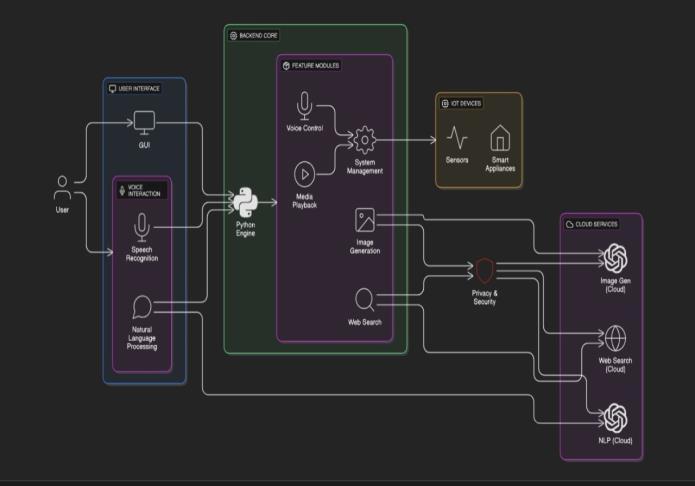
-1:SystemArchitectureDiagram
ThefigurebelowshowsthedesignofanAIassistantsystem thatusesvoice.Itdemonstratesthewayuserinputisbeing processed with the help of voice recognition and NLP modules,aPythonengine,andcommunicateswithfeature modulesandIoTdevices.
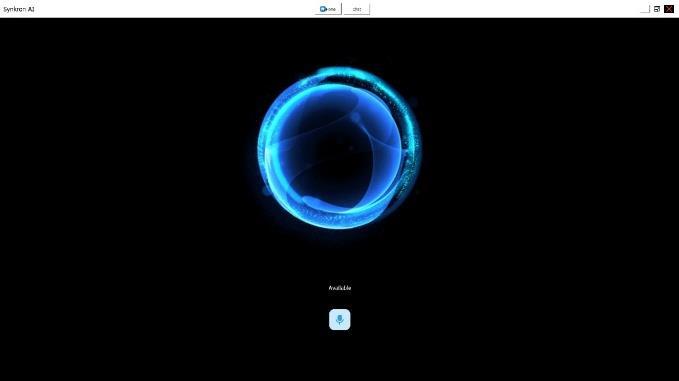
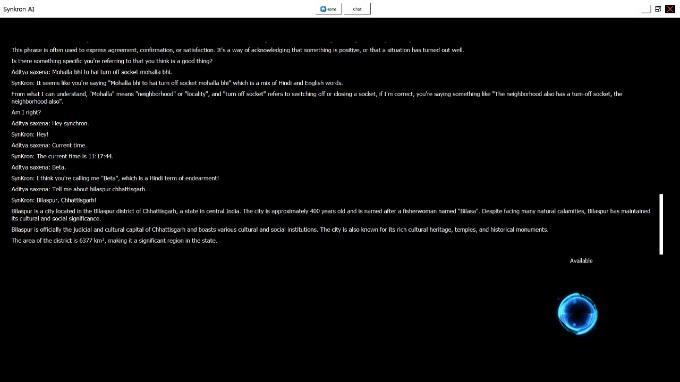
SynKronAIsystemhasbeenimplementableandtestedon various platforms successfully. It may understand user instructions,givecontextualresponses,performautomation tasks,suchaslaunchingapplicationsorseekingvideoson YouTube,andcreateAI-poweredimages.TheGUInavigation wasfluentandTTS/STTmodulesdemonstratedtheaccuracy ofmorethan90percentinacontrolledenvironment.
SynKronAIisanexampleofhowvarioustechnologiescan successfully merge to develop a desktop-based personal assistantthatissmart.Thesystemcanprovideanintelligent interactivemannerofenablinguserstocarryouttasksmuch moreeffectivelythroughtheintegrationofvoicerecognition, natural language processing, system automation and the provisionofauserfriendlygraphicalinterface.Theassistant isreal-timeoperatedandcanbeactivatedbyvoiceortext commands, as well as be used to perform actions at the system level down to internet-based queries. Its modular design means that all components, including the GUI, backendautomation,etc.integratewitheachotherproperly, resulting in a pleasant user experience. SynKron demonstratesthatalocally-operatedAIassistantcandeliver the strong functionality without being dependant on the externalcloudservices,keepingthecontrolandprivacyof theuser.Ingeneral,theprojectdemonstratesthepromising natureofusingPython-basedtoolsincollaborationwithAI features in order to provide realistic and flexible virtual assistantapplications.
1] IEEE Spectrum – Trends: Voice Assistants, 2023. Retrievedon: https://spectrum.ieee.org/voice-assistants
[2]ACMDigitalLibrary–AIAgentIntegration,2024. Accessedon:25/sep/2022.
[3]Elsevier–Human-AIInteraction,2023.Retrievedon: https://www.sciencedirect.com/science/article/pii/S10715 81923001201
[4]GroqAIAPIDocumentation,2024. Docs:https://groq.com/docs
International Research Journal of Engineering and Technology (IRJET) e-ISSN:2395-0056
Volume: 12 Issue: 06 | Jun 2025 www.irjet.net p-ISSN:2395-0072
[5]PyQt5OfficialDocumentation,2024
Accessible: https://www.riverbankcomputing.com/static/Docs/PyQt5/
© 2025, IRJET | Impact Factor value: 8.315 | ISO 9001:2008 Certified Journal | Page489