
International Research Journal of Engineering and Technology (IRJET) e-ISSN: 2395-0056
Volume: 12 Issue: 05 | May 2025 www.irjet.net p-ISSN: 2395-0072
International Research Journal of Engineering and Technology (IRJET) e-ISSN: 2395-0056
Volume: 12 Issue: 05 | May 2025 www.irjet.net p-ISSN: 2395-0072
Aarti
Lad1 , Swaraj Gosavi2 ,
Shubham Panchal
3 , Ruchi Bhale4, Dr. Sheetal Sonawane5
1Aarti Lad, Dept. of Computer Engineering, PICT, Pune
2 Swaraj Gosavi, Author Dept. of Computer Engineering, PICT, Pune
3 Shubham Panchal, Dept. of Computer Engineering, PICT, Pune
4 Ruchi Bhale, Dept. of Computer Engineering, PICT, Pune
5Professor, Dept. of Computer Engineering, PICT, Pune
Abstract - The environmental impact of software engineering processes is increasingly significant. Our study revolves around integrating sustainability metrics into computing and the DevOps cycle, offering insights into the environmental implications of software builds. Research into monitoring energy consumption and resource utilization, highlights the potential for eco-friendly practices in the software development lifecycle. Additionally, the survey providesacomprehensiveoverviewofthevariousapproaches to green computing and the challenges associated with achieving sustainability. Through real-time monitoring and reporting of these metrics, developers and stakeholders can make informed, data-driven decisions, fostering a balance between immediate needs andlong-term sustainability.
Key Words: Green Computing, Sustainability Metrics, Continuous Integration, Continuous Delivery, Real-time Monitoring
Sustainability has emerged as a critical concern across various sectors, including software development. In the context of coding and software engineering, sustainability refers to the practices and methodologies that aim to minimize the environmental impact of software systems throughout their lifecycle. This includes energy-efficient coding,resourceoptimization,andthereductionofcarbon footprints associated with software deployment and operation. According to a report by the Global eSustainability Initiative (GeSI), the information and communication technology (ICT) sector is responsible for approximately3.6%ofglobalgreenhousegasemissions[1]. This figure is expected to rise as demand for computing power and cloudinfrastructurecontinuesto grow, posing challenges for achieving global sustainability goals. Consequently, embedding sustainability principles into software engineering practices is essential, not only for reducingenvironmentalimpactbutalsoforensuringlongtermoperationalefficiency.Softwaredevelopmentpractices, particularly in large-scale systems, are energy-intensive. Codeinefficiencies,resource-hungryalgorithms,andpoor infrastructure management con- tribute significantly to energyconsumption.Inefficientcodingpracticescanleadto
a 20-50% increase in energy consumption in cloud environments[2],anditsenvironmental impactisfurther exacerbated by the continuous integration and delivery (CI/CD) pipelines used in DevOps processes, which are pivotal for enabling rapid development cycles but often come at the cost of excessive computational resource use. This presents a challenge for organizations seeking to balancespeed,scalability,andsustainability.
The integration of sustainability into the software development lifecycle (SDLC) is not merely a trend but a necessitydriven byregulatorypressures,corporatesocial responsibility, and the ethical imperative to protect the environment. Green coding, a concept gaining traction withintheindustry,isanemergingsolutionforoptimizing the SDLC for energy efficiency and reduced carbon emissions. The adoption of green coding principles, particularly CI/CD pipelines, offers a strategic avenue for embedding sustainability into software development processes,andhasthepotentialtoenhancethecapacityof organizationstomonitorandoptimizeenergyconsumption andresourceutilization[3][4].Incorporatingpracticessuch as utilizing energy-efficient programming languages, optimizingalgorithmsforlowerpowerusage,andemploying toolsthatassessthecarbonfootprintofcodedeployments can not only contribute to environmental goals but also enhance overall software performance and reduce costs associatedwithenergyconsumption.
Historically,thefocusofsoftwareengineeringhasbeenon performance, functionality, and scalability, with energy efficiency and environmental impact often relegated to secondary considerations. However, as the energy consumption of IT infrastructure continues to rise, the importanceofenergy-awareandresource-efficientsoftware developmentpracticeshasgainedprominence.
Recent research has highlighted the significance of integratingsustainabilitymetricsintosoftwaredevelopment practices.Forinstance,Fagarasanetal.emphasizetheroleof sustainability Key Performance Indicators (KPIs) in agile software development, suggesting that monitoring these
International Research Journal of Engineering and Technology (IRJET) e-ISSN: 2395-0056
metrics throughout the SDLC can significantly enhance energy-efficientcodingpractices[4].Anothercriticalreview of sustainable software engineering practices underscores thenecessityfortoolsandmethodologiesthatmitigatethe environmentalimpactofsoftwaredevelopment,focusingon energyconsumptionandresourceutilization[5].
Despitetheseadvancements,significantgapsremaininthe integration of sustainability within existing DevOps processes. While many organizations recognize the importance of sustainable practices, only 60% report that sustainabilityisapriorityintheiroperations[6].
This indicates a need for more structured approaches to incorporate sustainability into Continuous Integration and Continuous Deployment (CI/CD) pipelines effectively. The decision-making framework pro- posed by Akbar et al. illustrateshoworganizationscansystematicallyevaluateand prioritize DevOps practices that align with sustainability objectives. One key aspect discussed in the paper is the application of fuzzy Analytical Hierarchy Process (AHP) analysis to prioritize best practices tailored to specific organizational needs [7]. This method allows decisionmakers to evaluate various factors influencing DevOps success,suchasculturalalignment,automationcapabilities, andmeasurementstrategies.
Whilethereisgrowingawarenessoftheneedtoreducethe environmentalimpactoftheseprocesses,moststudiesfocus on code-level or infrastructure-level optimizations rather than end-to-end pipeline sustainability. Although green software engineering has made strides toward reducing energy consumption through efficient algorithms and hardwareoptimizations,theCI/CDpipelineremainsanarea with untapped potential for sustainability improvements. This gap presents a significant opportunity for further research,particularlyinintegratinggreencodingpractices with CI/CD optimization techniques to create holistic sustainablesoftwaredevelopmentprocesses.Thisresearchis driven by two goals: first, to expand the concept of green coding to include optimizations throughout the CI/CD pipeline and second, to help organizations lower their environmental impact while aligning with global sustainability goals. As digital transformation continues, it becomesincreasinglyimportanttoensurethattechnological progressisbothinnovativeandenvironmentallysustainable.
1) Energy Efficiency inSoftware Development [2].:
Summary: The paper discusses the challenges faced by developers in creating energy-efficient software. These inefficiencies lead to increased power consumption in mobiledevicesanddatacenters.Thesoftware’simpacton hardware resources like CPUs, DRAMs, and networks is highlighted, emphasizing the need for better tools and knowledgetoimproveenergyefficiency.
Formula:
E=P×t
Where:
E=Energyinjoules
P=Powerinwatts
t=Timeinseconds
Results: Lack of tools hampers energy efficiency improvement. Reducing execution time may not always lowerenergyconsumptionduetoincreasedCPUcycles.
2) Sustainability in Agile Software Development [4].: Summary: This paper proposes a scoring model that integrates sustainability into agile software development. Themodelbalancesdeliveryperformanceandsustainability throughkeyperformanceindicators(KPIs).
Formula: 1
DH = 1+ ek·(CD−MAD)
Where:
DH=DeliveryHealthscore
CD=CurrentDelay
MAD=MaximumAcceptedDelay
k=Steepnessparameter
Results:Themodelwasvalidatedwithcasestudies, showing enhancedprojectperformanceandsustainability whenbothfactorsareintegrated.
3) Holistic Approach to Sustainable Computing [12].: Summary: This paper introduces the Environmentally Sustainable Computing (ESC) framework, focusing on carbon-awarecomputingandreducingIT’scarbonfootprint throughefficientpracticesacrossvariousdomains,suchas cloudinfrastructure.
Results: The IT sector’s carbon footprint is estimated to be 2.1% to 3.9% of global emissions. Implementing carbon- aware design led to reductions in energyconsumptionandgreenhousegasemissions.
Volume: 12 Issue: 05 | May 2025 www.irjet.net p-ISSN: 2395-0072 © 2025, IRJET | Impact Factor value: 8.315 | ISO 9001:2008
International Research Journal of Engineering and Technology (IRJET) e-ISSN: 2395-0056
Volume: 12 Issue: 05 | May 2025 www.irjet.net p-ISSN: 2395-0072
A set of codes when executed on a computer acquire the CPU, memory and I/O peripherals to perform their operations which leads to electricity consumption for poweringthehard-wareorformanagingthermalemissions. AnIntelPentium4CPUoperatingataclockfrequencyof2.0 GHzhasa powerconsumptionof75.3 W[8]. The average power consumption of servers has significantly risen. For instance,individualserversthatpreviouslyconsumedabout 50wattsbefore2000nowaverageupto250wattsby2008. Theprimaryconsumersofpowerinserversareprocessors andmemory.Asmemoryusagegrows,sodoesitsassociated power consumption. As servers generate heat, cooling systemsbecomeessential,furtherincreasingoverallpower consumption.Theelectricityusedbyserversdoubledfrom 12 billion to 23 billion kilowatt- hours between 2000 and 2005duetothegrowthinthenumberofserversandcooling infrastructure[9].
AccordingtoSchneider’s GuidetoEnvironmentalSustainabilityMetricsforDataCenters [10],thefollowingsustainabilitymetricsarerecommendedtomeasureemissions,
• Totalenergyconsumption
• Powerusageeffectiveness(PUE)
• Totalrenewableenergyconsumption
• Renewableenergyfactor(REF)
• EnergyReuseFactor(ERF)
• Serverutilization(ITEUsv)
Total energy consumption is a fundamental metric that quantifiestheoverallelectricalpowerconsumedbyaserver ordatacenter.Thisincludesbothdirectenergyusage(e.g., poweringtheservers,networkdevices,andcoolingsystems) andindirect energyconsumption (e.g., energy required to manufacture and transport hardware). Power usage effectiveness(PUE)isaratiothatmeasurestheefficiencyof adatacenter’senergyusage,comparingtotalenergyinputto theenergydeliveredtoITequipment.AlowerPUEindicates better energy efficiency. Total renewable energy consumption represents the amount of electrical power derived from renewable sources, such as solar, wind, or hydro, used to operate the servers. Energy Reuse Factor (ERF)measurestheextenttowhichwasteheatfromservers iscapturedandreusedforotherpurposes,suchasheatingor hotwaterproduction,reducingoverallenergyconsumption. Server utilization (ITEUsv) is a metric that assesses how efficientlyserversarebeingused,calculatedastheratioof actualworkloadtothemaximumcapacityoftheserver.
A process executing on a computer consumes CPU and memorywhichleadstopowerconsumptionandheatloss. To measure emissions for a process, the current CPU frequency can be used along with the processor’s power rating.
codecarbon.ioisanopen-sourcePythonlibrarydevelopedto quantify the carbon footprint associated with machine learningmodelsandothercomputationallyintensivetasks. Byintegratingseamlesslywithexistingcodebases,ittracks resource consumption, including CPU usage and energy consumption, while estimating corresponding carbon emissionsbasedonregion-specificcarbonintensityfactors [14].
Thepsutil(PythonSystemandProcessUtilities)libraryisa versatile,cross-platformtooldesignedforretrievingdetailed system information and managing processes. It offers comprehensive functionality for monitoring key system performance metrics, including CPU, memory, disk, and network usage. Due to its lightweight and efficient architecture,psutilcanbeseamlesslyintegratedintolarger applications without introducing significant performance overhead, making it highly suitable for deployment in productionenvironments[15].
1) Measure and track carbon impact: Software Carbon Intensity (SCI) Specification To measure the carbon impact of an application, the Green Software Foundation[GSF]https://greensoftware.foundation/ providedascoringmethodologycalledSCI,calculated asfollows:
SCI =((E∗I)+M)perR)
where,
• E= Energy consumed by a software system. MeasuredinkWh.
• I = Location-based marginal carbon emissions. CarbonemittedperkWhofenergy,gCO2/kWh.
• M = Embodied emissions of a software system. Carbon that is emitted through the hardware on which the software is running.
• R =Functionalunit, which is howthe application scales; per extra user, per API call, per service, etc.
Theincreasingenvironmentalimpactofhumanactivitieshas highlightedtheneedfordeveloperstoadoptsustain- able practices and implement green coding strategies. Before solving a problem, it is essential to thoroughly analyze it. Similarly,beforeincorporatingsustainabilitypracticesinto
International Research Journal of Engineering and Technology (IRJET) e-ISSN: 2395-0056
Volume: 12 Issue: 05 | May 2025 www.irjet.net p-ISSN: 2395-0072
our development cycles, we need to understand the environmental impact of the code we write. This can be achieved by examining the development process and evaluating the associated sustainability metrics, like the energyconsumed,resourcesutilizedandsoon.Greencoding practicesincludetheconceptoflow-codeandno-codewhich allows the users to build the application faster without extensivecoding.Lowcodeandnocodepracticesallowsthe userstobuildapplicationsbyusingthevisualdraganddrop features.Itencouragesthedeveloperstomaintaincleancode by removing the part of code that does not add value, thereby reducing the lines of code and the energy consumption. Efficient and streamlined code can enhance the performance of the application and optimize resource utilization,leadingtolowerenvironmentalimpact.Choosing the right technology stack also plays a crucial role in optimizingthesustainabilityparameters.Resourcescanbe utilized more efficiently by making use of cloud services. Cloudcomputing,whichworksonthe‘payasyougo’model provides auto-scaling capabilities, which means that the resources can be scaled up or scaled down automatically basedonthedemand,ensuringoptimalperformancewhile minimizing waste. Virtualization can also be performed throughcloudservices,whichallowsmultipleinstancesof servers, storage or networks to run on a single physical device.According to a study,a server with no loadorlow loadconsumes70%oftheenergyofitsfullload[16].Hence load balancing of the servers is essentially for energy optimization.
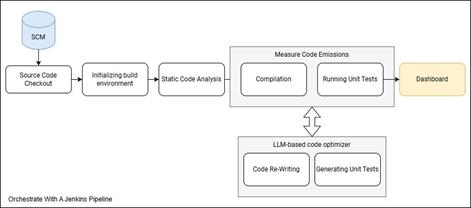
Recent research highlights several key trends that are shapingthefutureofthisdomain,reflectingabroadershift towards sustainability in technology and software engineering.
Agile development, which emphasizes iterative progress andcollaboration,iswidelyadoptedinsoftwareengineering and has seen a recent shift towards incorporating environmental considerations into agile workflows. The Green-AgileMaturityModel(GAMM)proposedbyRashidet al.isasignificantdevelopmentinthisfield[19].Itprovides an evaluation frame- work that helps global software
vendors assess their green- agile maturity, ensuring that sustainabilityisembeddedintoagiledevelopmentfromthe outset. The study also provides insights into the market adoptionofgreen-agilepractices,notingthatthemajorityof surveyed vendors are still in the early stages of maturity whenitcomestosustainability.
Another important trend is the emergence of energyefficientDevOpspractices.Thedecision-makingframework forgreenDevOpsproposedbyAkbaretal.illustrateshow organizationscanoptimizetheirCI/CDpipelinesbasedon energy consumption. The framework, based on fuzzy AnalyticalHierarchyProcess(AHP),helpscompaniesmake environmentally conscious choices throughout their software delivery processes [7]. This method allows decision-makers to evaluate various factors influencing DevOps success, such as cultural alignment, automation capabilities, and measurement strategies. The growing adoptionofcarbon-awareschedulingincloud-basedCI/CD systems is also noteworthy. By scheduling resourceintensive tasks during periods of low carbon intensity, organizations can significantly reduce their energy consumption, thus lowering their environmental impact [17].
Theroleofcloudcomputinginsustainabilityisalsoevolving, as seen in the development of energy-efficient cloud softwaretechnologies.Kataletal.explorevarioussoftware solutions, such as software-defined energy management (SDEM)andenergy-awareschedulingalgorithms,thatcan optimize resource usage, reducing power consumption in cloudenvironmentsthroughdynamicloadbalancing[18].
Several cross-disciplinary approaches seem to be gaining traction in the field, such as the intersection of machine learning,DevOps,andsustainabilityinitiatives.Husometal. propose a solution with their carbon emission-aware machinelearningpipelines.ByoptimizinghowandwhenML modelsaretrainedanddeployed,thesepipelinescanreduce energy consumption and mitigate the carbon footprint associated with large-scale ML operations [17]. As organizations continue to adopt machine learning, integrating sustainability into these pipelines is becoming crucial to balancing innovation with environmental responsibility.Organizationsareincreasinglyawareofthe need to reduce their environmental impact, and the integrationofsustainabilityintocoredevelopmentpractices isbecomingabusinessnecessity.
Curtailing the growing impact of technology on the environmentpresentsseveralchallengesandbarriers.There aremanyapplicationsinanorganizationthatmakeuseof thelegacytechnologies,whichconsumemoreenergyandare not an optimal choice with respect to the environmental impact. In spite of this, the organizations are reluctant
International Research Journal of Engineering and Technology (IRJET) e-ISSN: 2395-0056
Volume: 12 Issue: 05 | May 2025 www.irjet.net p-ISSN: 2395-0072
towardstransformingthemintonewtechnologiesbecause ofthefearofdisruption,leadingtopotentialdowntime.
CI/CDpipelineisessentialforcontinuousreleaseofvarious softwareversions;however,integratingsustainabilityinto CI/CD pipelines and DevOps poses several challenges. Optimizing the sustainability metrics can conflict and compromise with the performance and may compel the developers to choose between energy-efficient and highperformance solutions. The measurement of the sustainabilitymetricsisnotdirectandeasytomeasure, it can be calculated using various ways, any error in the calculation can lead to misleading conclusions. The sustainabilitymetricsparametersmayre-quireadditionof newlayersforthemeasurementmakingtheirmeasurement morecomplex.Initialinvestmentrequiredforadopting[21] green coding practices such as, renewable resources and energyefficienthardwarewiththeirexorbitantcostcanact asabarrier.
Mostoftheorganizationsareunawareoftheenvironmental impactandareresistanttowardsadoptingandinvestingin green computing technology. CI/CD and DevOps aim for continuous and quick delivery of the software which increasestheresourceutilization,astheprimaryemphasis onthespeedandefficiencyofthepipeline.Thisleadstoa trade-offbetween the efficiencyoftheCI/CDpipelineand thesustainabilityofthepipeline.
In conclusion, as the world of software engineering advances, the integration of sustainability metrics into development practices becomes increasingly critical. The riseincomputationaldemand,frequentcodereleases,and rapid infrastructure turnover has intensified the environmentalimpactofsoftwareengineering,particularly throughenergyconsumptionande-wastegeneration.Green IT practices, such as optimizing code, improving CI/CD pipelines, and incorporating sustainability metrics like powerusageeffectiveness(PUE)andenergyreusefactors (ERF),areessentialstrategiestomitigatetheseeffects. By incorporating eco-friendly practices into the software developmentlifecycle,organizationscansignificantlyreduce their carbon footprints while promoting long- term sustainability. Future research should focus on advancing toolsformeasuringandminimizingcodeemissions,refining static analysis techniques for energy efficiency, and improving the alignment of CI/CD processes with sustainabilitygoals.Theintegrationofthesegreenpractices will ensure that the evolution of software engineering continueswithaconscientiousapproachtoenvironmental stewardship.
[1]https://gesi.org/research/gesi-digital-with-purpose-fullreport
[2]Gustavo Pinto and Fernando Castor. 2017. Energy efficiency: a new concern for application software developers. Commun. ACM 60, 12 (December 2017), 68–75.https://doi.org/10.1145/3154384
[3]LeonardoLeite,CarlaRocha,FabioKon,DejanMilojicic, and Paulo Meirelles. 2019. A Survey of DevOps Concepts and Challenges. ACM Comput. Surv. 52, 6, Article 127 (November 2020), 35 pages. https://doi.org/10.1145/3359981
[4]Fagarasan, Cristian, Ciprian Cristea, Maria Cristea, Ovidiu Popa, and Adrian Pisla. 2023. ”Integrating Sustainability Metrics into Project and Portfolio Performance Assessment in Agile Software Development:AData-DrivenScoringModel”Sustainability15, no.17:13139. https://doi.org/10.3390/su151713139
[5]Atadoga,Akoh&Umoga,Uchenna&Lottu,Oluwaseun &Sodiya,Enoch.(2024).Advancinggreencomputing: Practices, strategies, and impact in modern software development for environmental sustainability. World Journal of Advanced Engineering Technology and Sciences. 11. 220-230. 10.30574/wjaets.2024.11.1.0052.
[6]Sriraman,Gopalakrishnan,andShriramRaghunathan. 2023. ”A Systems Thinking Approach to Improve SustainabilityinSoftwareEngineer-ing AGrounded CapabilityMaturityFramework”Sustainability15,no. 11:8766.https://doi.org/10.3390/su15118766.
[7]M.A.Akbar,S.Rafi,A.A.Alsanad,S.F.Qadri,A.Alsanad and A. Alothaim, ”Toward Successful DevOps: A Decision-MakingFramework,”inIEEEAccess,vol.10, pp. 51343-51362, 2022, doi: 10.1109/ACCESS.2022.3174094.keywords:Software; Organizations;Bestpractices;Industries;Guidelines;Data mining;Collaboration;DevOps;bestpractices;fuzzyAHP analysis,
[8]Limbrunner, Nikolai. ”Dynamic macro to micro scale calculationofenergyconsumptioninCI/CDpipelines.” (2023).
[9]Aditi Sharma. “Sustainability Metrics in Software Development Practices in India.” American Journal of Computing and Engineering ISSN 27905586(Online)Vol.7,Issue4,pp24–34,2024
[10]Vartziotis,Tina,IppolytiDellatolas,GeorgeDasoulas, MaximilianSchmidt,FlorianSchneider,TimHoffmann, SotiriosKotsopoulos,andMichaelKeckeisen.”Learnto
International Research Journal of Engineering and Technology (IRJET) e-ISSN: 2395-0056
Code Sustainably: An Empirical Study on LLM-based Green Code Generation.” arXiv preprint arXiv:2403.03344(2024).
[11] Dutta, Kaushik, and Debra Vandermeer. ”A Case for Sustainability and Environment Friendliness in SoftwareDevelopmentandArchitectureDecisionsby Taking Energy-Efficient Design Decisions.” arXiv preprintarXiv:2311.01680(2023).
[12]Pazienza,Andrea&Baselli,Giovanni&Vinci,Daniele & Trussoni, Maria. (2024). A holistic approach to environmentallysustainablecom-puting.Innovationsin Systems and Software Engineering. 20. 1-25. 10.1007/s11334-023-00548-9.
[13] Hayri Acar, Gu¨lfem I Alptekin, Jean-Patrick Gelas, ParisaGhodous.TheImpactofSourceCodeinSoftware on Power Consumption. International Journal of ElectronicBusinessManagement,2016,14,pp.42-52. 〈hal-01496266〉
[14]https://codecarbon.io/
[15]GiampaoloRodola,psutil,GitHub repository, https://github.com/giampaolo/psutil
[16]Pandey,Sunil&Singh,Kumar&Dhar,Puja&Saxena, Saurabh & Bhatnagar, Kumar. (2024). Green Computing: Importance, Approaches, and Practices. 10.1201/9781003515920-8.
[17] Erik Johannes Husom, Sagar Sen, and Arda Goknil. 2024. Engineering Carbon Emission-aware Machine LearningPipelines.InProceedingsoftheIEEE/ACM3rd InternationalConferenceonAIEngineering-Software Engineering for AI (CAIN ’24). Association for Computing Machinery, New York, NY, USA, 118–128. https://doi.org/10.1145/3644815.3644943
[18]Katal,A.,Dahiya,S.&Choudhury,T.Energyefficiency incloudcomputingdatacenters:asurveyonsoftware technologies. Cluster Comput 26, 1845–1875 (2023). https://doi.org/10.1007/s10586-022-03713-0
[19]N.Rashid,S.U.Khan,H.U.KhanandM.Ilyas,”GreenAgile Maturity Model: An Evaluation Framework for GlobalSoftwareDevelopmentVendors,”inIEEEAccess, vol. 9, pp. 71868-71886, 2021, doi: 10.1109/ACCESS.2021.3079194.keywords:Software; Green products; Organizations; Capability maturity model; Sustainable development; Computational modeling; Energy efficiency; Agile software development; green and sustainable software; greenagile maturity model (GAMM);global software development(GSD);agilemethods,
[20]Mihelicˇ,Anzˇe,SimonVrhovec,andTomazˇHovelja. 2023.”AgileDevelopmentofSecureSoftwareforSmall andMedium-SizedEnterprises” Sustainability15,no.1: 801. https://doi.org/10.3390/su15010801
[21]Atadoga,Akoh&Umoga,Uchenna&Lottu,Oluwaseun &Sodiya,Enoch.(2024).Advancinggreencomputing: Practices, strategies, and impact in modern software development for environmental sustainability. World Journal of Advanced Engineering Technology and Sciences. 11. 220-230. 10.30574/wjaets.2024.11.1.0052.
[22] Pooja Verma and Pooja Kadam. ”Survey of Green Computing.” Interna- tional Research Journal of Engineering and Technology 5, no. 6 (2018): 35023507. https://www.irjet.net/archives/V5/i6/IRJETV5I6419.pdf.
Volume: 12 Issue: 05 | May 2025 www.irjet.net p-ISSN: 2395-0072 © 2025, IRJET | Impact Factor value: 8.315 | ISO 9001:2008
| Page