
International Research Journal of Engineering and Technology (IRJET) e-ISSN:2395-0056
Volume: 12 Issue: 05 | May 2025 www.irjet.net p-ISSN:2395-0072
International Research Journal of Engineering and Technology (IRJET) e-ISSN:2395-0056
Volume: 12 Issue: 05 | May 2025 www.irjet.net p-ISSN:2395-0072
Ningxin Huang1 ,Xinyong Wei1 ,Yibo Mao1 ,Yu Pang1
(1. School of Civil Engineering and Architecture, Anhui University of Science and Technology, Huainan, Anhui 232001, China;)
Abstract: To investigate the mechanical properties of alkali-activated rice husk ash cementitious composites under CarbonDioxidemineralizationcuring,thisstudysystematicallyexaminedtheeffectsofricehuskash(RHA)content(0%, 5%,7%,10%),CarbonDioxidemineralizationcuringduration(0,60,120,200min),andfreeze-thawcycles(0,5,15,30) on compressive strength and durability through uniaxial compression tests and freeze-thaw resistance experiments. Microstructural evolution mechanisms were elucidated via X-ray diffraction (XRD) and scanning electron microscopy (SEM). Results demonstrate that specimens with 5% RHA content and 120 min Carbon Dioxide mineralization curing, activatedbyasodiumsilicatesolution(modulus=2),achieveda28-daycompressivestrengthof32.18MPa,representinga 37.79% enhancement compared to the control group. After 30 freeze-thaw cycles, thestrength loss rate remained below 23%. XRD and SEM analyses revealed that calcite (Calcium Carbonate) generated during Carbon Dioxide mineralization filled pore structures, inhibiting frost damage by reducing water penetration, while amorphous Silicon Oxide in RHA facilitatedcontinuouspozzolanicreactionstoformC-S-Hgels,establishinga synergisticfrostresistancemechanism.This research provides theoretical and technical insights for developing low-carbon building materials in cold regions. Non-linear relationships were observed between material performance and key parameters: compressive strength and freeze-thawresistanceinitiallyincreasedandthendecreasedwithprolongedmineralizationduration,whereasincreasing RHAcontentinducedaninitialdeclinefollowedbysubsequentimprovementinperformance.
Keywords: Mineralization curing; Alkali activation; Rice husk ash; Cementitious composites; Freeze-thaw cycles; Mechanical properties; Microstructural mechanisms
Inrecentyears,theglobal constructionindustryhasfaced significantchallengesin pursuingsustainable development.In 2021, China's construction sector accounted for 4.07 billion tons of carbon emissions, with cement production alone contributing 7% of global carbon emissions due to its high energy consumption and substantial Carbon Dioxide release, exacerbating greenhouse effects and environmental degradation. Driven by the "dual-carbon" objectives (carbon peaking and carbon neutrality), the development of low-carbon cementitious materials and carbon capture/utilization technologieshasemergedasapivotalstrategyforthetransformationofthebuildingmaterialsindustry.
China produces over 40 million tons of rice husk annually. While direct incineration of rice husk generates underutilized ash with adverse environmental impacts, calcined rice husk ash (RHA) after organic component removal exhibits chemical and physicochemical properties comparable to reactive supplementary cementitious materials like silica fume, offeringacost-effectiveandabundantalternativetoconventionalcement.However,traditionalcuringmethodsfailtofully exploit its potential. Carbon Dioxide mineralization curing technology, which converts Carbon Dioxide into stable carbonate minerals via reactions between alkaline cementitious materials and Carbon Dioxide to form calcite (Calcium Carbonate), enables permanent Carbon Dioxide sequestration while enhancing the early-age strength and durability of cement-basedcomposites.
International Research Journal of Engineering and Technology (IRJET) e-ISSN:2395-0056
Volume: 12 Issue: 05 | May 2025 www.irjet.net p-ISSN:2395-0072
In traditional Portland cement production, energy consumption and Carbon Dioxide emissions during limestone calcinationandclinkersinteringaccountfor60–70%oftotalemissions,posingacriticalbarriertolow-carbontransition. Alkali-activated cementitious materials, as a sustainable alternative, utilize industrial solid wastes rich in aluminosilicate components to form binding gels, reducing carbon emissions by 60–80%. RHA, an agricultural by-product rich in amorphous SiO2, serves as an ideal silica source for alkali-activated systems. Nevertheless, alkali-activated RHA systems face technical challenges such as uncontrollable setting times and high shrinkage rates. Recent studies suggest that integratingCarbonDioxidemineralizationcuringcanregulatehydrationkinetics:CarbonDioxidereactswithCalcium ion to precipitate calcite, accelerating microstructural densification while compensating for shrinkage via volumetric expansion, thereby synergistically enabling efficient Carbon Dioxide mineralization. Existing research predominantly focuses on standalone mineralization or alkali activation, with limited exploration of their synergistic effects and freeze-thawdurabilitymechanisms.
This study investigates the mechanical performance of Carbon Dioxide mineralization-cured alkali-activated RHA cementitiouscomposites.Throughsystematicexperimentationandmicrostructuralcharacterization,theresearchaimsto reveal theinfluence mechanisms ofRHA content, mineralizationduration,andfreeze-thawcycles on material properties, providingtheoreticalfoundationsfordevelopinghigh-performance,eco-friendlycementitiousmaterials.
2.1 Raw Materials
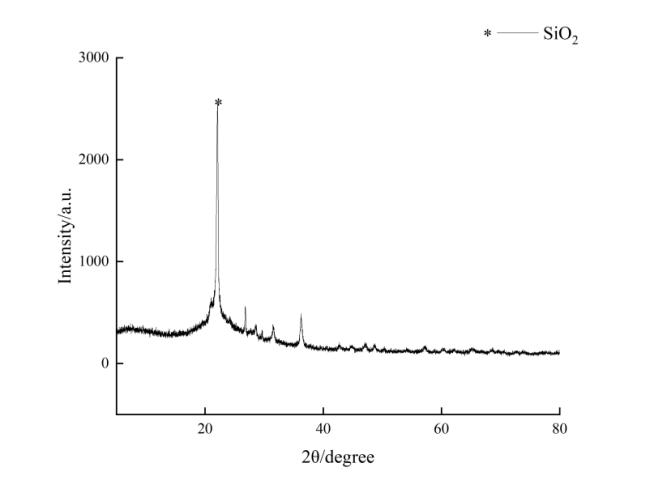
Ordinary Portland cement (Grade 42.5) produced by Huainan Bagongshan Cement Plant was employed as the primary binder. Laboratory tap water served as the mixing water. Fine sand with a fineness modulus of 1.71 was used as the aggregate. Carbon Dioxide gas with 99.99% purity was supplied for mineralization curing. The alkaline activator was formulatedbyblendingsodiumsilicatesolution(SodiumSilicate,modulus=2)withsodiumhydroxide(SodiumHydroxide) pellets. Rice husk ash (RHA), primarily composed of amorphous Silicon Dioxide and Aluminum Oxide as confirmed by X-raydiffraction(XRD)analysis(Fig-1),wasincorporatedasasupplementarycementitiousmaterial.
International Research Journal of Engineering and Technology (IRJET) e-ISSN:2395-0056
Volume: 12 Issue: 05 | May 2025 www.irjet.net p-ISSN:2395-0072
The experimental mix proportions were designed based on orthogonal experimental methodology, with rice husk ash (RHA) content as the primary variable. Key parameters included a water-to-cement (W/C) ratio of 0.44 and a cement-to-sand (C/S) ratio of 0.68. RHA was incorporated as a partial cement replacement at 0%, 5%, 7%, and 10% by mass.DetailedmixformulationsareprovidedinTable-2.
Table-2 Specific Mix Ratios (unit: kg/m³)
Four groups of specimens with distinct mix proportions were prepared, including a control group without rice husk ash(RHA)andgroupswithRHAreplacingcementat0%,5%,7%,and10%(denotedasA0,A1,A2,andA3,respectively). Rawmaterials,includingRHA,cement,sand,andwater,weremeticulouslyproportioned.Cylindricalmolds(50mm×100 mm)wereuniformlycoatedwithlubricanttofacilitatedemolding.
Atwo-stagedry-wetmixingprocedurewasemployed:
1. Drymixing:Cementitiousmaterialsandaggregateswereblendedinamixer(300rpm)for50s.
2. Wet mixing: An alkaline activator solution was introduced, followed by 60 s of mixing to ensure homogeneouspasteformation.
The fresh mortar was then cast into molds and compacted on a vibration table (50 Hz frequency) until air bubbles werefullyexpelled.Specimensurfaceswereleveledimmediatelyaftervibration.
For eachmix proportion, fourreplicates were prepared.Aftercasting,specimens werecured ina controlled chamber for 24h,demolded,andsubjectedtoCarbonDioxidemineralizationcuringfor0,60,120,or200min.Subsequently,specimens were transferred to a standard curing chamber (constant temperature and humidity) for 28 days. Prior to freeze-thaw cyclingtests,specimenswerewater-saturatedfor4days.
2.4
CompressiveStrengthTesting:CompressivestrengthtestingwasconductedinaccordancewithGB/T17671-2021"Method for Testing Cement Mortar Strength". Specimens cured to designated ages were axially loaded on a compression testing machine with parallel surfaces aligned. Triplicate measurements were averaged as the test result. If any individual value deviatedbymorethan±10%fromthemean,itwasdiscarded,andtheremainingvalueswerere-averagedtodeterminethe finalcompressivestrength.
International Research Journal of Engineering and Technology (IRJET) e-ISSN:2395-0056
Volume: 12 Issue: 05 | May 2025 www.irjet.net p-ISSN:2395-0072
Freeze-Thaw Cycling Test:Freeze-thaw resistance was evaluated following GB/T 50082-2009"Standard for Long-Term PerformanceandDurabilityTestingofOrdinaryConcrete".Thefreeze-thawregimecomprisedalternatingcyclesbetween -20 ± 2°C (freezing) and 20 ± 2°C (thawing), with each phase lasting 4 hours, totaling 8 hours per cycle. Specimens with fourdistinctmixproportionsunderwent0,5,15,and30freeze-thawcycles.
X-Ray Diffraction Analysis:Phase composition evolution during freeze-thaw cycles was characterized using an X-ray diffractometer. Pre-dried specimens were pulverized into powders and analyzed with a scanning range of 5–70 (2θ) at 2/min.
Scanning Electron Microscopy (SEM):Fractured fragments from compressive tests were selected for microstructural analysis.Hydrationreactionswereterminatedbyimmersioninanhydrousethanol,followedbydryinginavacuumovenat 50°C for 24 h. Surface morphology and elemental distribution were examined using a field-emission SEM operated with samplessputter-coatedwithgoldtoenhanceconductivity.
3.1 Analysis of compressive strength of cement-based materials under different Carbon Dioxide mineralisation
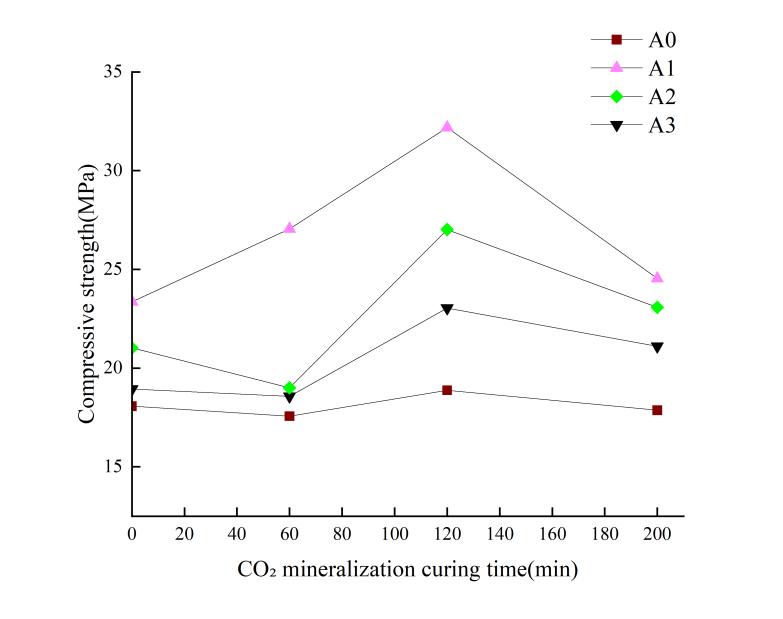
Fig-2 Compressive strength of cement-based materials under different Carbon Dioxide mineralization curing times
Fig-2 illustrates the influence of Carbon Dioxide mineralization curing duration on the compressive strength of alkali-activated rice husk ash (RHA) cementitious composites. As shown in Fig-2, the compressive strength initially increasedandsubsequentlydecreasedwithprolongedCarbonDioxidemineralizationcuring.Themaximumstrengthwas achieved at 120 min of Carbon Dioxide curing, with all mineralized specimens exhibiting higher compressive strengths than the control group. At this optimal duration, the compressive strengths of specimens A0, A1, A2, and A3 reached 18.878MPa,32.183MPa,27.015MPa,and23.044MPa,respectively,correspondingtoincreasesof4.47%,37.79%,28.50%, and21.64%comparedtothecontrolgroup.
These results demonstrate that early-stage Carbon Dioxide mineralization significantly enhances the mechanical performanceofcementitiousmaterials.Thiscanbeattributedtotwosynergisticmechanisms:
International Research Journal of Engineering and Technology (IRJET) e-ISSN:2395-0056
Volume: 12 Issue: 05 | May 2025 www.irjet.net p-ISSN:2395-0072
Accelerated hydration kinetics: Carbon Dioxide reacts with Calcium ions in the alkaline matrix to precipitate nano-sizedcalciumcarbonate(CalciumCarbonate),whichrefinesporestructuresandincreasesmatrixdensity.
Synergistic gel formation: The alkaline environment of RHA facilitates the dissolution of amorphous Silicon Dioxide andAluminumOxide,promotingthegenerationofcalciumsilicatehydrate(C-S-H)gels.Concurrently,CarbonDioxide mineralizationenhancesthepozzolanicreactivityofRHA,leadingtoco-precipitationofCalciumCarbonateandC-S-H gels,therebyreinforcingthecompositemicrostructure.
3.2 Analysis of compressive strength of cement-based materials with different rice husk ash content
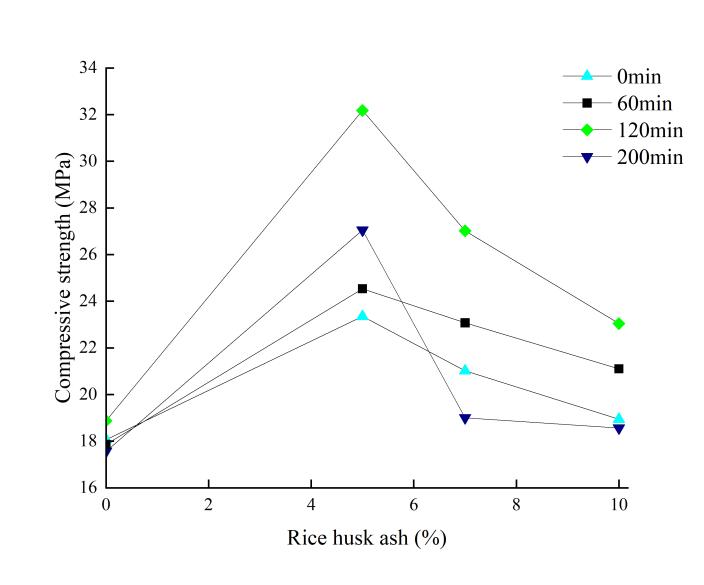
Fig-3 Compressive strength of cement-based materials with different rice husk ash content
Fig-3 demonstrates the effect of rice husk ash (RHA) content on the compressive strength of Carbon Dioxide mineralization-cured alkali-activated cementitious composites. As depicted in Fig-3, compressive strength initially increased and then decreased with rising RHA content, peaking at 5% RHA incorporation. All mineralized specimens exhibitedsuperiorcompressivestrengthcomparedtothecontrolgroup.AtthisoptimalRHAdosage,specimensA0,A1,A2, and A3 attained compressive strengths of 23.356 MPa, 32.183 MPa, 27.045 MPa, and 24.539 MPa, respectively, representingincreasesof29.26%,35.05%,41.34%,and27.20%relativetothecontrol.
These findings confirm that RHA significantly enhances the compressive strength of cementitious materials through two synergisticmechanisms:
Micro-aggregate effect: RHA particles (<50 μm) fill interfacial transition zone (ITZ) voids, reducing porosity and improvingmatrixcompactness.
Pozzolanicreactivity:AmorphousSiliconDioxideandAluminumOxideinRHAreactwithcalciumhydroxide(Calcium Hydroxide) under alkaline activation to form additional calcium silicate hydrate (C-S-H) and calcium aluminate silicatehydrate(C-A-S-H)gels,therebyacceleratinghydrationkineticsandstrengtheningthebinderphase.
The combined effects of pore structure refinement and gel-phase augmentation account for the observed mechanical enhancement, with excessive RHA content (>5%) likely introducing unreacted particles that disrupt microstructural homogeneity.
International Research Journal of Engineering and Technology (IRJET) e-ISSN:2395-0056
Volume: 12 Issue: 05 | May 2025 www.irjet.net p-ISSN:2395-0072
3.3 Static uniaxial compression test of rice husk ash cement-based materials activated by alkaline mineralisation of carbon dioxide under freeze-thaw cycles
3.3.1 Analysis of compressive strength of rice husk ash cement-based materials activated by alkaline mineralisation of Carbon Dioxide under freeze-thaw cycles
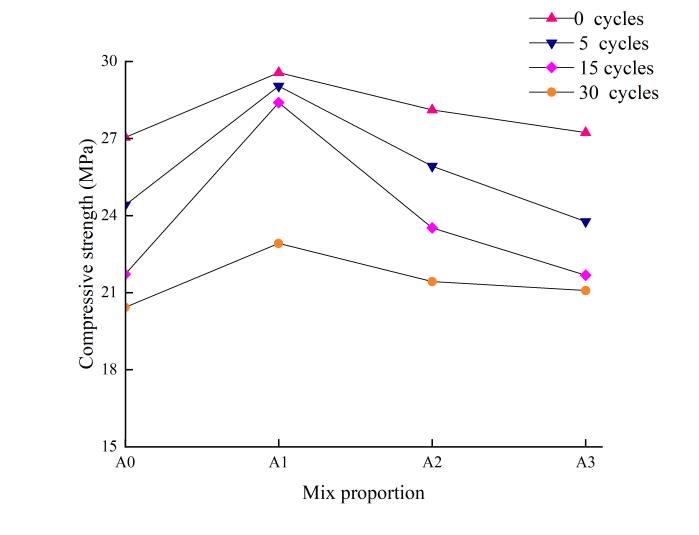
Fig-4 Compressive strength of cement-based materials under freeze-thaw cycles
Fig-4 presents the variation in 28-day compressive strength of alkali-activated rice husk ash (RHA) cementitious composites under freeze-thaw cycles, with specimens subjected to 120-minute Carbon Dioxide mineralization curing at varying RHAreplacementlevels(0%, 5%, 7%, and 10%).Asshown inFig-4, specimens with 5% RHA exhibited superior compressive strength compared to both the RHA-free control group and those with higher RHA dosages. Specifically, compressivestrengthincreasedwithRHAincorporationupto5%butdeclinedat7%RHA,thoughremaininghigherthan the control group. This nonlinear behavior is attributed to the dual roles of amorphous and crystalline Silicon Dioxide phasesinRHA,governedbytheirparticlesizedistributionandreactivity.
Compressivestrengthdecreasedprogressivelywithfreeze-thawcycles,drivenby:
Frost heave stress: Water volume expansion (~9% upon freezing) generated internal tensile stresses, initiating microcracks.
Capillary-ice cyclic damage: Thawing enabled water infiltration into newly formed cracks, followed by re-freezing-inducedcrackpropagation,forminginterconnecteddamagenetworks(Fig-1).
Post-30 cycles, compressive strengths of A0–A3 decreased to 20.427 MPa, 22.915 MPa, 21.432 MPa, and 21.081 MPa, corresponding to reductions of24.47%,22.50%,25.15%, and22.58%, respectively. The 5% RHA group demonstrated optimal frost resistance, attributed to its refined pore structure and minimal microcrack density, effectively mitigating cyclicdamage.
MicrostructuralAnalysis:
AmorphousSiliconDioxide:ImproveddurabilityviaenhancedC-S-Hgelformationandporerefinement.
International Research Journal of Engineering and Technology (IRJET) e-ISSN:2395-0056
Volume: 12 Issue: 05 | May 2025 www.irjet.net p-ISSN:2395-0072
CrystallineSiliconDioxide:Introducedinterfacialdefects,acceleratingfreeze-thawdeteriorationathigherdosages.
This study highlights the critical balance between RHA reactivity and particle size in optimizing frost-resistant, Carbon Dioxide-mineralizedcementitiousmaterials.
3.3.2 Analysis of stress-strain curves of rice husk ash cementitious materials activated by Carbon Dioxide mineralisation curing alkali under freeze-thaw cycles
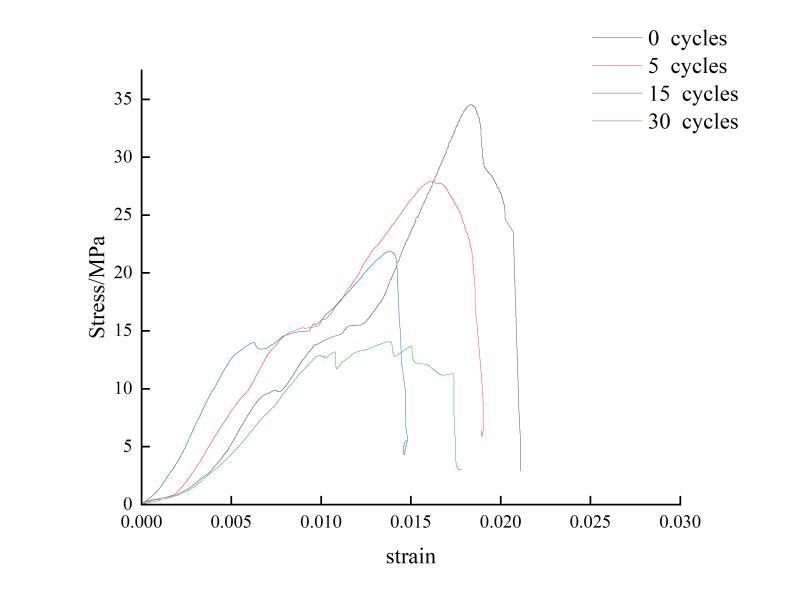
Fig-5 Stress-strain curve of cement-based materials under the freeze-thaw cycle
Fig-5 depicts the stress-strain curves of Carbon Dioxide mineralization-cured alkali-activated rice husk ash cementitious compositesundervaryingfreeze-thawcycles(0,5,15,and30cycles).Allcurvesexhibitaunimodalpattern,characteristic of quasi-brittle materials, indicating significant plastic deformation prior to failure. Analogous to conventional cement-based materials, the deformation process comprises four distinct phases:compaction,elastic deformation,crack propagation,andfailure.
1. CompactionPhase:
Stressincreasesnonlinearlywithstrainasinherentporesaregraduallycompressed,enhancingmatrixdensification.
Calcite (Calcium Carbonate) generated during Carbon Dioxide mineralization partially counteracts freeze-thaw-inducedporeexpansion.However,prolongedfreeze-thawcyclingshortensthisphase,reflectingreduced initialcompactnessduetocumulativefrostdamage.
2. ElasticDeformationPhase:
Anear-linearstress-strainrelationshipemerges,withadiscernibleelasticmodulus.
Progressive freeze-thaw cycles degrade interfacial bonding between calcium silicate hydrate (C-S-H) gels and aggregates,leadingtoadeclineinelasticmodulus.
3. CrackPropagationPhase:
Curve slope increases as internal microcracks initiate and propagate. Calcite deposits delay crack coalescence but cannotfullyoffsetcyclicfrostheavestresses.
International Research Journal of Engineering and Technology (IRJET) e-ISSN:2395-0056
Volume: 12 Issue: 05 | May 2025 www.irjet.net p-ISSN:2395-0072
Repeated freeze-thaw cycles induce cumulative microcrack networks (increased length and density), diminishing load-bearingcapacity.
4. FailurePhase:
Post-peakstress,thecurveentersadescendingbranch,markedbyrapidstressreductionandmacroscopicfailure.
Brittlenessintensifieswithfreeze-thawcyclesduetoenhancedcrackconnectivityandlocalizedbreakdownofcalcite pore-fillingeffects.
Peak Stress Degradation Mechanism:
Peakstressdeclineswithincreasingfreeze-thawcycles.Whilecalciteinitiallymitigatesporosityviaporefilling,itsefficacy diminishesunderprolongedcyclicloading.Keymechanismsinclude:
Frost heave stress: Water volume expansion (~9%) during freezing generates multidirectional tensile stresses, drivingcracknucleation.
Capillary-ice cyclic damage: Thawing enables water infiltration into new cracks, followed by re-freezing-induced expansion,acceleratinginterfacialdebondingbetweengelsandaggregates.
Pore-coalescence: Progressive crack extension and porosity amplification weaken structural integrity, ultimately reducingcompressivestrength.
This study elucidates the interplay between Carbon Dioxide mineralization benefits and frost-induced deterioration, emphasizingthecriticalroleofmicrostructuralstabilityincold-regioncementitiousmaterialdesign.
3.3.3 Analysis of the energy characteristics of rice husk ash cement-based materials activated by Carbon Dioxide-mineralisation under freeze-thaw cycles
The energy characteristics were analyzed based on the First and Second Laws of Thermodynamics, with fundamental equationsgivenasEqs.(1)–(3):
Where:
U=totalenergy
Ue =elasticenergy
Ud =dissipativeenergy
εi=axialstrain
σi=axialstress
Ee=elasticmodulus.
International Research Journal of Engineering and Technology (IRJET) e-ISSN:2395-0056
Volume: 12 Issue: 05 | May 2025 www.irjet.net p-ISSN:2395-0072
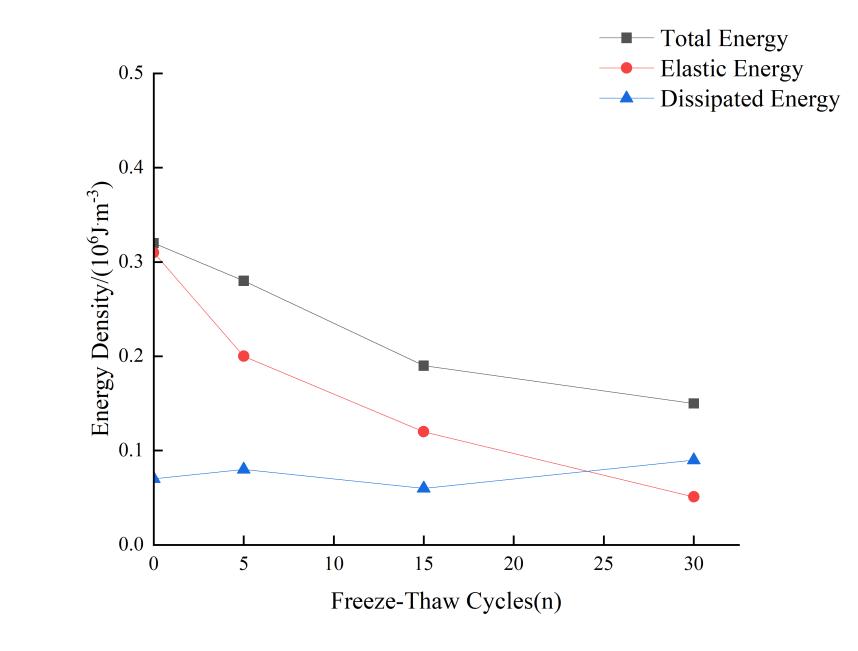
Fig-6 Energy characteristic curves of cement-based materials under freeze-thaw cycles
Fig-6 illustrates the energy characteristic curves of cementitious composites with 120-minute Carbon Dioxide mineralizationcuringand5%ricehuskash(RHA)contentunderprogressivefreeze-thawcycles.Keyobservationsinclude:
EnergyEvolutionTrends
1. TotalEnergyandElasticEnergyDecline:
Totalenergyandelasticenergydecreasedmonotonicallywithincreasingfreeze-thawcycles.
Non-cycled specimens exhibited the highest total energy, attributed to their initial dense microstructure and synergisticpore-fillingeffectsfromcalcite(CalciumCarbonate)generatedduringCarbonDioxidemineralization.
2. DominanceofElasticEnergy(0cycles):
Elasticenergyaccountedfor>80%oftotalenergy,indicatingpredominantelasticdeformationduringearlyloading.
Strong interfacial bonding between calcium silicate hydrate (C-S-H) gels and aggregates, coupled with limited microcrackpropagation,facilitatedefficientelasticstrainenergystorage.
Low dissipation energy (<20%) reflected minimal plastic deformation and crack growth, confirming high material integrity.
Stage-SpecificDegradationMechanisms
1. After5Freeze-ThawCycles:
Totalenergydecreasedby18.5%,withelasticenergycontributiondroppingto~70%anddissipationenergyrisingto ~30%.
Initialfrostheavestressesinducedlocalizedmicrocracks,thoughcalciteporefillingandongoingpozzolanicreactions ofamorphousSiO₂inRHApartiallyrepairedinterfacialdebondingviaC-S-Hgelregeneration.
© 2025, IRJET | Impact Factor value: 8.315 | ISO 9001:2008 Certified Journal | Page1272
International Research Journal of Engineering and Technology (IRJET) e-ISSN:2395-0056
Volume: 12 Issue: 05 | May 2025 www.irjet.net p-ISSN:2395-0072
2. After15Freeze-ThawCycles:
Totalenergydeclinedsharply(42.3%reductionvs.0cycles),withdissipationenergyexceeding35%.
Cyclic "infiltration-freezing-expansion" effects generated multidirectional tensile stresses, accelerating crack propagation.
Localized fracture of calcite fillers and weakened gel-aggregate bonding reduced synergistic mitigation efficacy, despitepartialdamagecompensationbyRHA-derivedC-S-Hgels.
3. After30Freeze-ThawCycles:
Total energy reached its minimum (55.8% reduction vs. 0 cycles), with dissipation energy dominating (>45%) and elasticenergycontributionfallingbelow40%.
Highlyinterconnectedcracksandexacerbated brittlenessindicatedadvanceddamage,characterizedbymacro-crack networksandirreversiblelossofstructuralcohesion.
This analysis quantifies the competing mechanisms between Carbon Dioxide mineralization benefits and frost-induced deterioration,providingcriticalinsightsforoptimizingfreeze-thaw-resistantcementitiousmaterials.
3.3.4 Analysis of the failure modes of rice husk ash cement-based materials activated by Carbon Dioxide-mineralisation curing under freeze-thaw cycles
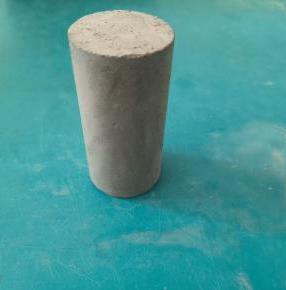
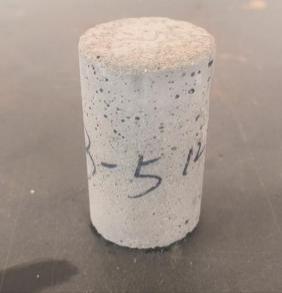
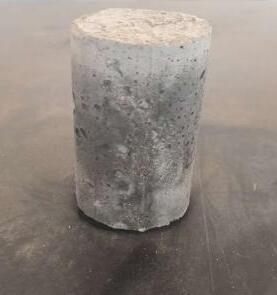
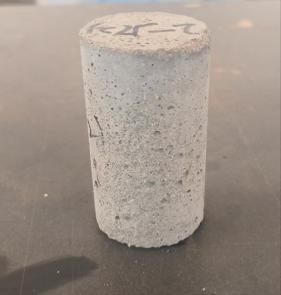
(a) 0 cycles (b) 5 cycles (c) 15 cycles (d)30 cycles
Fig-7 Microstructural diagram of cement-based materials under freeze-thaw cycles
Fig-7illustratestheprogressivesurfacedamageevolutionofalkali-activatedricehuskash(RHA)cementitiouscomposites subjected to Carbon Dioxide mineralization curing (120 min) with 5% RHA replacement under increasing freeze-thaw cycles (0, 5, 15, and 30 cycles). The macroscopic morphological changes, as depicted in Fig-9(a)–Fig-9(d), reveal distinct stage-dependentdegradationpatterns:
0cycles(Fig-9a):
Specimensexhibitedintactsurfaceswithsmoothtextureandsharpedges,indicatingnegligibleinitialdefects.
Structural integrity waspreserved bythe dense matrix reinforcedbycalcite(CalciumCarbonate)precipitation from CarbonDioxidemineralization.
International Research Journal of Engineering and Technology (IRJET) e-ISSN:2395-0056
Volume: 12 Issue: 05 | May 2025 www.irjet.net p-ISSN:2395-0072
5cycles(Fig-9b):
Scatteredmicro-pitsandslightedgeroundingemerged,thoughtheoverallgeometryremainedintact.
Localizedfrostheavestressesinitiatedminorsurfaceerosion,partiallymitigatedbycalcitepore-fillingeffects.
15cycles(Fig-9c):
Pitting density and size increased significantly, accompanied by pronounced edge rounding and localized aggregate exposure.
Cyclic "infiltration-freezing-expansion" mechanisms exacerbated interfacial debonding, compromising surface cohesion.
30cycles(Fig-9d):
Severemacro-damagemanifestedasextensivespalling,roundededges,deeperosionzones,andprominentaggregate protrusion.
Interconnectedmicrocrackspropagatedintomacrocracks,reflectingirreversiblestructuraldisintegration.
MechanisticInterpretation:
The observed damage progression from localized micro-defects to global structural failure correlates with cumulativefrost-inducedstressesoverwhelmingthecomposite’sself-healingcapacity.Keyfactorsinclude:
Calcitedegradation:ProgressivedisruptionofCalciumCarbonatepore-blockingnetworksundercyclicloading.
RHA limitations:Despite amorphous Silicon Dioxide’s pozzolanic reactivity, C-S-H gel regeneration rates were insufficienttocounteractacceleratedcrackpropagationatadvancedfreeze-thawstages.
This morphological analysis underscores the critical threshold (15–30 cycles) beyond which Carbon Dioxide mineralization and RHA synergies fail to sustain material durability, providing actionable insights for frost-resistant materialdesign.
3.3.5 XRD Experiment and Analysis of Cement-Based Materials Under Freeze-Thaw Cycles
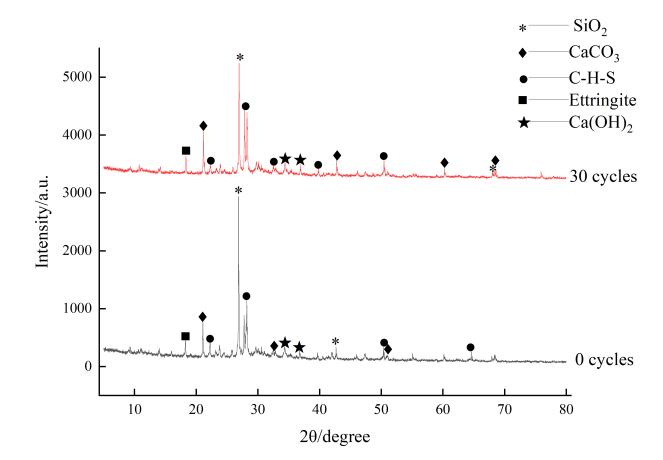
Fig-8 XRD pattern of cement-based materials under freeze-thaw cycles
International Research Journal of Engineering and Technology (IRJET) e-ISSN:2395-0056
Volume: 12 Issue: 05 | May 2025 www.irjet.net p-ISSN:2395-0072
Fig-8 shows the XRD patterns of Carbon Dioxide mineralisation-cured alkaline-activated rice husk ash cement-based materials after 0 freeze-thaw cycles and 30 freeze-thaw cycles. As can be seen from the figure, the XRD patterns of the unfrozenspecimensshowsignificantcalcitediffractionpeaksaround29.4°,indicatingthatCarbonDioxidemineralisation curing effectively solidified Carbon Dioxide. In comparison, after 30 freeze-thaw cycles, the intensity of the Calcium Hydroxide diffraction peaks in the specimens was slightly higher than that in the unfrozen specimens, attributed to the formation of cracks inside the specimens due to freeze-thaw cycles, exposed unreacted Calcium Hydroxide and free CalciumIonsreactwithCarbonDioxideinthelaterstagestoundergosecondarymineralisation(Equation2.1),re-forming CalciumCarbonateandpartiallyoffsettingmineraldissolution.
Ca(OH)2+CO2→CaCO3+H2O (2.1)
The intensity of the Silicon Oxide diffraction peak decreased after freeze-thaw exposure, indicating a reduction in amorphous Silicon Oxide content or detectable crystalline phases. This may result from increased porosity due to freeze-thaw cycles, causing partial detachment of incompletely reacted RHA particles from cracks. Freeze-thaw actions also exacerbate interfacial debonding of unreacted particles in alkali-activated materials, making larger Silicon Oxide particlesinRHA-concrete more susceptible tofrostheavestress-induced detachment.Although partial gel structuresare damaged during freeze-thaw cycles, moisture infiltration during thawing may reactivate the reactivity of residual amorphousSiliconOxideinRHA,facilitatingcontinuouspozzolanicreactionsinthealkalineenvironmenttoformC-S-Hgel (Eq.2.2).Provisetal.notedthatmoisturemigrationduringfreeze-thawcyclespromotesdissolutionandreprecipitationof silico-aluminate phases in alkali-activated systems, reducing amorphous Silicon Oxide content. Consequently, the XRD patternafter30cyclesexhibitsanintensifiedbroadeningpeak(2θ=27°–30°)forC-S-Hgel.
The broadened C-S-H gel diffraction peak (30°–35°) in unfrozen specimens reflects its amorphous structural characteristics.After30cycles,thepeakwidthslightlyincreased,indicatingloosenedinterlayergelstructuresduetofrost heave stress. These results demonstrate that calcite generated via Carbon Dioxide mineralization inhibits freeze-thaw water ingress by pore filling, while RHA supplies reactive silicon sources to promote gel regeneration, forming a dual mechanismof"calcitefilling–gelself-healing."
The pore structure optimization by calcite (Calcium Carbonate) via Carbon Dioxide mineralization can be further explained by the nucleation and growth theory. According to Wu et al., during the initial Carbon Dioxide mineralizationstage,CalciumIonsandCarbonateformnucleionporesurfacesunderalkalineconditions,eventually developingdensecalcitelayers.ThisprocessisgovernedbymineralizationtimeandCarbonDioxidediffusionrates:
Shortmineralizationtime(<60min):Lownucleationdensityandsmallcrystalsizelimitpore-fillingefficiency.
Optimal mineralization time (120 min): Nuclei grow sufficiently to cover pore walls, significantly reducing pore connectivity.
Excessive mineralization time (>120 min): Over-accumulation of calcite may cause localized stress concentrations andmicrocracks,leadingtostrengthdegradation(seeFig-2).
Furthermore,amorphous SiliconOxide inRHA enhancesnucleation byprovidinghydroxyl groupsonitssurface asactive sites for Calcium Ions adsorption, accelerating nucleus formatio. Thus, the synergy between nucleation-growth
International Research Journal of Engineering and Technology (IRJET) e-ISSN:2395-0056
Volume: 12 Issue: 05 | May 2025 www.irjet.net p-ISSN:2395-0072
mechanismsandpozzolanicreactionsiscriticalforimprovingcompressivestrengthand frostresistanceincement-based materials.
3.3.6 Microscopic image of cement-based material under the action of freeze-thaw cycle
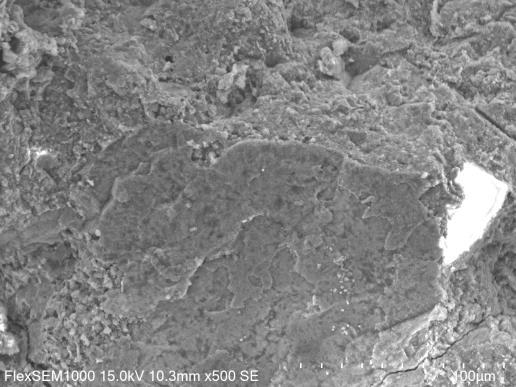
(a) 0 cycles
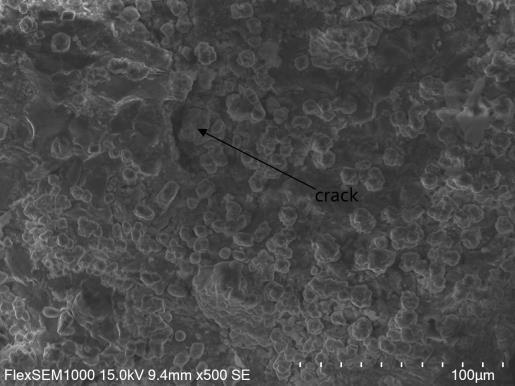
(c) 15 cycles
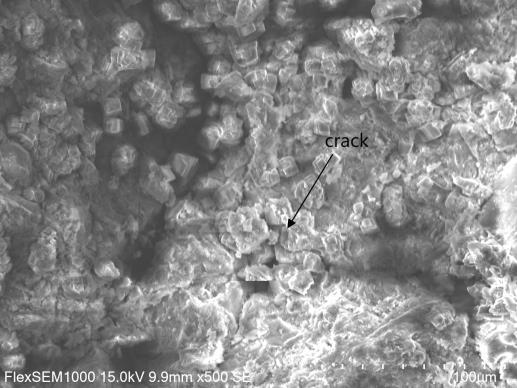
(b) 5 cycles
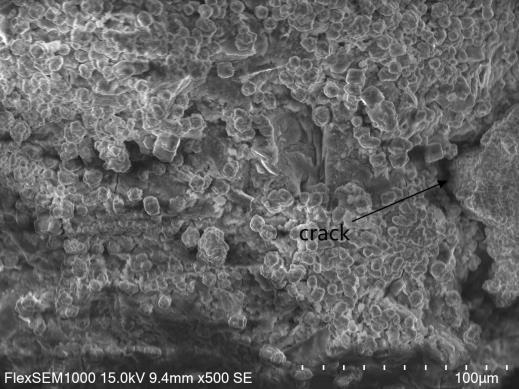
(d) 30 cycles
Fig-9 Microstructural diagram of cement-based materials under freeze-thaw cycles
Fig-9reveals the progressive deterioration mechanisms of Carbon Dioxide mineralization-cured alkali-activated rice husk ash(RHA)cementitiouscompositesunderincreasingfreeze-thawcycles.Keyobservationsinclude:
AsshowninFigure9,thedamagecausedbyfrostheaveforcestotheinterparticlecementationgraduallyintensifieswith theincreaseinfreeze-thawcycles,leadingtocrackinitiationandpropagationwithinthespecimenandultimatelyresulting instructural failure. Inthe earlystagesoffreeze-thawcycles(e.g.,0–5 cycles),specimenscured with 120-minuteCarbon Dioxidemineralizationand containing5%ricehuskash(RHA)exhibiteddenseinternalstructuresduetothepore-filling effect of calcite(CalciumCarbonate) generated by Carbon Dioxide mineralization and the reinforcement of the matrix by C-S-H gel formed through the reaction of amorphous Silicon Dioxide in RHA [14]. This optimized microstructure, characterized by strong particle bonding and low porosity, showed no significant crystalline phases and maintained high structuralintegrity,therebyminimizingfrost-induceddamage.
As freeze-thaw cycles increased (e.g., 15–30 cycles), particle aggregation became evident within the specimens. This phenomenonarisesfromtherepeatedphasetransitionofporewaterbetweenliquidandsolidstates.Duringfreezing,the volume expansion of water (approximately 9%) generates frost heave stresses, enlarging pores and exposing unreacted Calcium Hydroxide, which subsequently reacts with infiltrated Carbon Dioxide to form secondary calcite through carbonation. Concurrently, during thawing, water permeates into newly formed pores, eroding cementitious phases and
© 2025, IRJET | Impact Factor value: 8.315 | ISO 9001:2008 Certified Journal | Page1276
International Research Journal of Engineering and Technology (IRJET) e-ISSN:2395-0056
Volume: 12 Issue: 05 | May 2025 www.irjet.net p-ISSN:2395-0072
weakening interparticle bonds. This process leads to the detachment of larger crystalline Silicon Dioxide particles from RHA, forming isolated grains. Macroscopically, the porosity of the specimens increased significantly with freeze-thaw cycles, accompanied by progressive surface spalling. Specimens subjected to fewer freeze-thaw cycles retained partial interparticle contact, resulting in higher longitudinal wave velocities and compressive strengths, with relatively intact fracturesurfacesandfewerdebrisparticlespost-failure.
Microscopically, the freeze-thaw deterioration of Carbon Dioxide -mineralized alkali-activated RHA cement-based materials is attributed to the synergistic effects of physical expansion (from water-ice phase transitions) and chemical erosion (e.g., gel dissolution). However, the synergistic interaction between calcite (from Carbon Dioxide mineralization) and RHA partially mitigates damage by delaying crack propagation. From a macroscopic perspective, frost heave forces predominantly manifest as triaxial tensile stresses, driven by the volumetric expansion of pore water during phase transitions,whichgeneratesmultidirectionaltensilestressfieldswithinthematerial[15].
Usingricehuskashasabasematerial,water glasswithamodulusof2wasaddedtoactivateitsreactivity.CarbonDioxide mineralisation curing was employed to prepare Carbon Dioxide -mineralised cured alkali-activated rice husk ash cementitious materials. The compressivestrength of the materials increased initiallyand then decreased with increasing ricehuskashcontentandmineralisationcuringtime.Excessivericehuskashcontentadverselyaffectsthestrengthofthe cementitious materials, with an optimal rice husk ash content of 5%. Carbon Dioxide mineralisation curing time of 120 minutesresultedincement-basedmaterialswithacompressivestrengthof32.183MPaat28days,representinga37.8% increase compared to the control group. After 30 freeze-thaw cycles, the strength loss rate was below 23%, meeting the requirementsforengineeringapplicationsinseverelycoldregions.
Carbon Dioxide mineralisationcuring time significantly affectsthecompressivestrength ofcement-based materials,with 120 minutes being the optimal curing time, at which the maximum amount of calcite is formed, and the 28-day compressivestrengthreaches32.18MPa.
Whenthericehuskashcontentis5%,thematerialexhibitsoptimalcomprehensiveperformance,withthemicroaggregate effectandvolcanicashactivitysynergisticallyenhancingdensity.Excessiveaddition(>7%)leadstostrengthreductiondue totheaggregationofcrystallineSiliconOxide.
The peak strength, total energy, and elastic properties of cement-based materials decrease with increasing freeze-thaw cyclecounts.Comparedtounfrozenspecimens,after30freeze-thawcycles,thepeak strengthdecreasedby22.50%,total energydecreasedby53.13%,andelasticpropertiesdecreasedby83.55%.
XRD and SEM analyses indicate that the synergistic effect of Carbon Dioxide mineralisation and rice husk ash increases
Calcium Carbonate content and C-S-H gel regeneration rate after freeze-thaw cycles. The pore-filling effect of calcite crystals significantly reduces freeze-thaw water permeability, while the continuous volcanic ash reaction of amorphous SiliconOxideinricehuskashgeneratesC-S-Hgel,forminga‘physicalbarrier-chemicalrepair’synergisticfreeze-resistance mechanism.
International Research Journal of Engineering and Technology (IRJET) e-ISSN:2395-0056
Volume: 12 Issue: 05 | May 2025 www.irjet.net p-ISSN:2395-0072
1. Kai J ,Peta A . The development of Carbon Capture Utilization and Storage (CCUS) research in China: A bibli ometric perspective [J]. Renewable and Sustainable Energy Reviews, 2020, (prepublish): 110521-
2. Research Report on China Building Energy Consumption and Carbon Emission (2023) [J]. Construction, 2024, (02): 46-59.
3. China Blue Book on Climate Change (2022) was released [J]. China Environmental Monitoring, 2022, (08): 4.
4. Zhang Zhaohui, Lou Zongke. Current research status of rice husk and rice husk ash cement concrete [J]. Sha anxi Agricultural Science, 2010,56 (06): 124-126.
5. Wu Shengkun, Huang Tianyong, Xie Yan, et al. Research progress of carbon dioxide mineralization and curin g cement-based materials [J]. Silicate Bulletin, 2023,42 (06): 1897-1911. DOI:10.16552/j.cnki.issn1001-1625.20 230508.001.
6. Provis L J ,Bernal A S . Geopolymers and Related Alkali-Activated Materials [J]. Annual Review of Materials Research, 2014, 44 (1): 299-327.
7. Ataie F F. Utilization of treated agricultural residue ash as sodium silicate in alkali activated slag systems[J]. Materials, 2021, 14(2): 329.
8. Huang Hao. Study on the mechanism of CO2 mineralization and curing building materials based on hydrated inert cementing materials [D]. Zhejiang University, 2019. DOI:10.27461/d.cnki.gzjdx. 2019.001885.
9. Chen Shan, Wu Anran. Interpretation of new standard (GB / T 17671) [J]. Cement Engineering, 2021, (05): 22-24. DOI:10.13697/j.cnki.32-1449/tu.2021.05.007.
10. Coldlightglow,RongJunming,DingWei,etal.Introductiontotestmethodsstandardforlong-termperformanceand durabilityofordinaryConcreteGB/T50082-2009[J].Constructiontechnology,2010,39(02):6-9.
11. Chopra D, Siddique R, Kunal.Strength, permeability and microstructure of self-compacting concrete containing rice husk ash[J].Biosystems Engineering, 2015, 130: 72-80.
12. Liu Xianghua, Zhang Ke, Liu Wenlian. The effect of load and freeze-thaw on the energy conversion and damage characteristics of multi-fissure sandstone [J]. Journal of Applied Basic and Engineering Science, 2023,31 (03): 715-730.DOI:10.16058/j.issn.1005-0930.2023.03.015.
13. Provis L J ,Bernal A S . Geopolymers and Related Alkali-Activated Materials [J]. Annual Review of Materials Research, 2014, 44 (1): 299-327.
14. Zhou Yuwan, Chen Sili, Yang Kaifeng, et al. Effect of rice husk ash on the mechanical properties of cement-based materials[J].Concrete,2023,(08):82-86.
15. JiaHailiang,LiuQingping,XiangWei,etal.Expansionmodelofsaturatedsandstonedamageunderfreeze-thawcycle [J].JournalofRockmechanicsandEngineering,2013,32(S2):3049-3055.