
International Research Journal of Engineering and Technology (IRJET) e-ISSN: 2395-0056
Volume: 13 Issue: 02 | Feb 2026 www.irjet.net p-ISSN: 2395-0072
STUDY OF VARIOUS MATERIALS USED IN CONSTRUCTION OF ECOFRIENDLY BRICKS: A REVIEW PAPER
Jwala Sakharwade1, Sahil Sonone2 , Anuja Lonare3 , Himanshu Parate4, Hivamkumar Kunjam5 , Laxmikant Tibude6
1,2,3,4,5 Student, Dept. of Civil Engineering, Kavikulguru Institute of Technology and Science, Ramtek, Maharashtra, India
6Asst. Professor, Dept. of Civil Engineering, Kavikulguru Institute of Technology and Science, Ramtek, Maharashtra, India
Abstract – The construction sector is one of the major contributors to resource depletion and environmental pollution due to the extensive use of conventional building materials. Burnt clay bricks requirelargequantitiesofnatural soil andhigh energy for firing which leadstolanddegradation and increased carbon emissions. Fly ash an industrial waste generated from coal-based thermal power plants presents a serious disposal problem but offers significant potential for reuse in construction materials. This review paper examines previous research related to the development of eco-friendly bricks using fly ash as a primary ingredient. The reviewed studies are analyzed based on materials used production techniques. The findings from the literature indicate that fly ash bricks provide adequate strength, reduced water absorption, lower weight and improved sustainability when compared to conventional clay bricks. Based on the literature view it was understood that stone dust and sand possess similar properties. Therefore, stone dust is being utilized as a substitute for sand in our project.
Key Words: Fly ash bricks, Sustainable construction materials, Eco-friendly bricks, Industrial waste utilization,Mechanicalproperties,greenconstruction
1. INTRODUCTION
The construction industry consumes a large number of naturalresourcesandsimultaneouslygeneratesindustrial waste leading to serious environmental concerns. Fly ash producedfromcoal-basedthermalpowerplantsisonesuch wastematerialthatrequiressafeandeffectivedisposal.One sustainable solution is the utilization of fly ash in brick manufacturing.Thisreviewpaperpresentsacriticalanalysis of previous research on the development of eco-friendly bricks using fly ash. The study focuses on material characteristics, strength behavior, durability performance andenvironmentaladvantages.Inaddition,laboratorytest results of cement, fly ash, and stone dust are discussed to evaluatetheirsuitabilityforflyashbrickproduction.Based on the reviewed literature and experimental data fly ash bricks are identified as sustainable alternatives to conventionalburntclaybrickswithreducedenvironmental impactandsatisfactoryperformance.
2. LITERATURE REVIEW
Amar Singh, Kriti Mishra, Mayank Kashyap Himanshu Tiwari, Anjali Tiwari (2025)
This review paper analyzes various studies related to the developmentofenvironmentallyfriendlybricksproducedby incorporating fly ash and agricultural waste materials. It discussesdifferentwasteresourcesutilizedmethodsofbrick production and the evaluation of their physical and mechanicalcharacteristics.Researchshowsthatthepartial replacement of traditional materials with industrial and agro-basedby-productsreducesenvironmentalimpactand supports resource conservation. Several investigations highlight that these sustainable bricks provide sufficient compressivestrength,reduceddensity andbetterthermal insulation when compared to conventional clay bricks. However, challenges such as long-term durability, standardizationofqualityandlarge-scalecommercialization stillneedattention.Inconclusioneco-friendlybricksoffera promising and sustainable alternative for modern constructionpractices.
Bogdan Bogdanov, Irena Markovska, Yancho Hristov, Dimitar Georgiev (2012)
This review paper evaluates earlier studies on the productionofsustainablebrickspreparedusingflyashand differentagricultural wastematerials.It examinesvarious mix proportions, manufacturing processes and the mechanicalandphysicalpropertiesobservedbyresearchers. Incorporating industrial and agro-residues in brick productioncontributestowastemanagementandreduces dependencyonnaturalrawmaterials.Findingsfromseveral studies show that these eco-friendly bricks demonstrate adequate compressive strength, lower unit weight and improved thermal insulation compared to traditional clay bricks. However, challenges related to uniformity of raw materials and long-term performance still need detailed research. Overall, the review highlights that bricks made from waste materials provide a practical and environmentally friendly solution for sustainable construction.
Alae
International Research Journal of Engineering and Technology (IRJET) e-ISSN: 2395-0056
Volume: 13 Issue: 02 | Feb 2026 www.irjet.net p-ISSN: 2395-0072
Shakir, Sivakumar Naganathan, Kamal Nasharuddin Bin Mustapha (2013)
Thisreviewpaperanalyzespreviouslypublishedstudieson thedevelopmentofeco-friendlybricksmadewithflyashand agricultural residues. It examines the types of waste materialsused,manufacturingapproachesadoptedandthe performancecharacteristicsachievedindifferentresearch works. The incorporation of industrial and agro-waste in brickproductionsupportswastemanagementandreduces environmentaldegradation.Manyinvestigationsreportthat such bricks provide satisfactory compressive strength, lighterweightandenhancedthermalinsulationcomparedto conventionalclaybricks.However,concernsrelatedtolongtermdurability,consistencyofrawmaterialsandfeasibility oflarge-scalemanufacturingstillrequirefurtherresearch.In summary,bricksproducedfromwastematerialspresenta sustainableandpromisingsolutionformodernconstruction needs.
Mebrahtom Teklehaimanot, Haregeweni Hailay, Tamrat Tesfaye (2021)
Thisreviewstudyexaminespreviouslypublishedworkon thedevelopmentofsustainablebricksproducedwithflyash and agricultural residues. It summarizes the types of materialsselected,themanufacturingmethodsappliedand the physical and mechanical performance reported by various researchers. The substitution of traditional raw materials with waste-derived components contributes to environmentalprotectionandreducestheconsumptionof natural resources. Findings from multiple studies suggest that these bricks provide adequate compressive strength, reducedweightandimprovedthermalinsulationcompared toconventionalclayunits.Despitethesebenefits,issuessuch aslong-termdurability,uniformqualitycontrolandlargescale implementation still require further investigation. Overall, the findings support the potential of eco-friendly bricksasasustainableoptionformodernconstruction.
Andrea Treasa Figaredo, Mary Dhanya (2018)
This review article gathers and analyzes earlier investigationsontheproductionofsustainablebricksmade fromflyashandagriculturalwastematerials.Itoutlinesthe differentby-productsusedaspartialorcompletesubstitutes for conventional brick components and highlights the manufacturingtechniquesadoptedinvariousstudies.The inclusion of these waste materials in brick fabrication not onlyreducesdisposalproblemsbutalsolowerstheoverall environmentalfootprintofconstruction.Findingsfromthe literature show that such bricks typically achieve satisfactory compressive strength, lighter density and enhancedthermalinsulationwhencomparedwithordinary clay bricks. However, concerns related to long-term durability,variationinrawmaterialpropertiesandtheneed forproperstandardizationstillrequireattention.Overall,the study emphasizes that bricks manufactured from waste
resourcesoffersignificantpromiseforsustainablebuilding practices.
Moh. Tauqeer Moh Mujeeb, Rohan C. Damahe, Preet R. Gupta, Chetan D. Waykar, Sayali S. Gaidhane (2025)
Thisreviewpaperanalyzespreviouslyreportedresearchon thedevelopmentofsustainablebrickspreparedfromflyash and agricultural waste by-products. It examines different mixproportions,productionmethodandthemechanicaland physicalperformanceobservedinearlierstudies.Theuseof industrialandagro-residuesinbrickmanufacturingassists inminimizinglandfillwasteandreducesrelianceonnatural resources. Several research findings suggest that these sustainablebricksprovideadequatecompressivestrength, lighter weight and better thermal insulation than conventional clay bricks. Nevertheless, concerns such as durabilityovertime,uniformmaterialqualityandscalability ofproductionstill needdetailedstudy.Inconclusion, ecofriendlybricksarerecognizedasapracticalandsustainable alternativeformodernconstructionpractices.
Siddhant S. Shah, Prof. Mahesh M. Makwana (2019)
Thisreviewpaperprovidesadetailedevaluationofprevious studiesontheproductionof sustainable bricksdeveloped withflyashandagriculturalwastematerials.Itoutlinesthe various waste products incorporated, the manufacturing methods adopted and the physical and mechanical properties reported by researchers. The integration of waste-based materials into brick production supports efficient waste utilization and helps conserve natural resources. Findings from the literature indicate that such brickscommonlyachievesatisfactorycompressivestrength, lower bulk density and improved thermal insulation compared to traditional clay bricks. Despite these advantages,aspectssuchaslong-termdurability,uniformity of raw materials and large-scale implementation require further investigation. Overall, eco-friendly bricks are consideredapromisingandsustainablealternativeforthe constructionsector.
P. Prathyusha and Kolli Ramujee (2021)
Thisreviewpaperpresentsasummaryofpreviousresearch focusedontheproductionofsustainablebricksmadefrom flyashandagriculturalwastematerials.Itdiscussesvarious mixdesigns,manufacturingmethodsandthemechanicaland physicalpropertiesobservedinearlierstudies.Theuseof industrialandagriculturalby-productsinbrickproduction helps reduce environmental pollution and decreases dependence on natural resources such as clay. Research findings show that these alternative bricks can achieve adequatecompressivestrength,lowerdensityandimproved thermal insulation when compared to conventional clay bricks. However, issues related to durability over long periods,consistencyinrawmaterialqualityandlarge-scale manufacturing require further investigation. Overall,
International Research Journal of Engineering and Technology (IRJET) e-ISSN: 2395-0056
Volume: 13 Issue: 02 | Feb 2026 www.irjet.net p-ISSN: 2395-0072
sustainablebricksareconsideredapromisingsolutionfor environmentallyresponsibleconstruction.
Sayan Ghar, Bidisha Dey (2025)
This review article summarizes earlier research on the productionofenvironmentallyfriendlybricksmadewithfly ash and agricultural by-products. It examines the types of wastematerialsused,manufacturingprocessesadoptedand themechanicalandphysicalpropertiesreportedinvarious studies.Utilizingindustrialandfarm-basedresiduesinbrick production helps manage solid waste efficiently while reducingtheconsumptionofnaturalclayresources.Previous findingsgenerallyshowthatthesebricksachievesatisfactory compressive strength, reduced weight and better thermal insulationcomparedtoconventionalclaybricks.However, furtherresearchisrequiredtoaddressissuesrelatedtolongterm performance, material consistency and large-scale manufacturing feasibility. Overall, sustainable bricks are considered a viable alternative for promoting greener constructionpractices.
M P Iniya, K Sabarinathan, G Shanmugavel Murugan, V Rishi (2025)
Thestudyinvestigatestheproductionofsustainablemasonry blocks by utilizing recycled industrial and agricultural byproducts, mainly flyash (40–60%) and rice husk ash(15–20%), combined with lime, cement, and river sand. The objective is to minimize environmental impacts linked to waste accumulation and to reduce pollution from conventional brick manufacturing, which depends on kiln firing and generates significant carbon emissions. Brick samplesmeasuring230×110×75mmwerepreparedand tested to determine their physical and mechanical performance, including compressive strength and water absorption.Theresultsshowedcompressivestrengthvalues ranging from 5.61 N/mm² to 10.19 N/mm², with one mix proportion performing better than standard clay bricks. Waterabsorptionvalueswereobservedbetween2.94%and 12.47%,remainingwellwithintheacceptablelimitof20%. Thefindingssuggestthatthesesustainablebricksprovidea strong, economical and environmentally friendly option suitable for low-cost housing, particularly in developing regions.
3. CONCLUSION ON LITERATURE REVIEW
Anexaminationofpreviousresearchindicatesthattheuseof flyashandagriculturalby-productsinbrickmanufacturing providesaviableandsustainablealternativetoconventional clay bricks. Available studies suggest that such bricks can attainacceptablecompressivestrength,lighterweightand improved thermal performance, while helping to reduce environmentalimpactandconservenaturalresources.The utilizationofindustrialandagriculturalwastematerialsalso promotes effective waste ` and lessens dependence on traditional raw inputs. However, further investigation is
necessary to address concerns related to durability over time, consistency of raw materials, quality control and scalability of production. Overall, sustainable bricks show considerable potential for green construction, though continued efforts are required to improve standards and supportlarge-scaleimplementation.
4. LABORATORY TEST ON MATERIALS
4.1 Cement
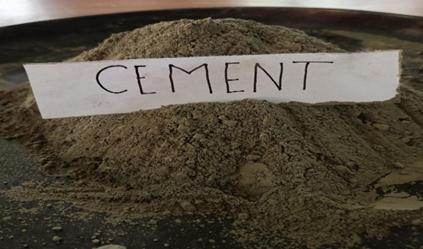
Cementisafinelygroundbindingmaterial widelyused in constructionforproducingconcreteandmortar.Thequality andperformanceofcementareevaluatedthroughseveral important physical tests. The standard consistency test is conducted to determine the amount of water required to prepare a cement paste of normal plasticity, which is essentialforfurthertesting.Theinitialandfinalsettingtime testsareperformedtoassessthetimerequiredforcement paste to begin hardening and to attain sufficient rigidity, ensuringproperhandlingandfinishingduringconstruction. Thesoundnesstestiscarriedouttoevaluatethevolumetric stabilityofcementandtodetectthepresenceofexcessfree lime or magnesia that may cause undesirable expansion. Thesephysicaltestsarefundamentalinunderstandingthe behavior and suitability of cement for safe and durable constructionapplications.
Cement is the main binding material in construction. To ensuregoodqualitybricksorconcrete,differentlaboratory testsareperformedaccordingtoIndianStandard(IS)codes.
Test Including: -
Sr No. Name of Test Result IS Code Recommended Range According to IS Code
1 Normal Consistency ofCement 33% IS4031(Part-4): 1988 26%to33%
2 Initial and Final Setting Time of Cement Initial30min Final450min IS4031(Part-4): 1988 Minimum InitialTime 30min Maximum Final Time
Volume: 13 Issue: 02 | Feb 2026 www.irjet.net
4. 3. Stone Dust
Ash
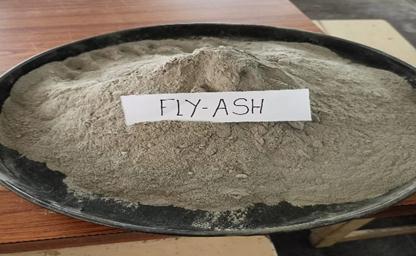
Fly ash is a fine powder produced as a by-product of coal combustioninthermalpowerplantsandiswidelyusedasa supplementarycementitiousmaterialinconcreteandother construction applications. Among its physical properties, specificgravityandfinenessareimportantparametersused toevaluateitsqualityandperformance.Thespecificgravity testisconductedtodeterminetherelativedensityofflyash, which is essential for accurate mix proportioning in concrete. The fineness test, including assessment through sieveanalysisor finenessmodulus,iscarried outtostudy theparticlesizedistributionofthematerial,asparticlesize influences workability, strength development and overall behaviorincementitiousmixes.Thesephysicaltestshelpin understanding the fundamental characteristics of fly ash beforeitspracticaluseinconstruction.
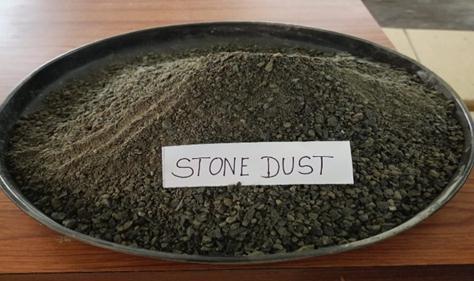
Stonedustisafinematerialobtainedasaby-productduring the crushing of stones and is commonly used as a partial replacementforsandinconstructionworks.Toevaluateits suitabilityasaconstructionmaterial,certainphysicaltests similar to those conducted on other fine materials are performed. The specific gravity test is carried out to determine its relative density, which is important for mix proportioning and volume calculations. The fineness test, includingsieveanalysisorfinenessmodulusdetermination, is conducted to assess particle size distribution, as it influences workability, strength, and compaction characteristicsin concreteormortar. Thesephysical tests helpinunderstandingthefundamentalpropertiesofstone dust and ensure its effective and safe use in construction applications.
3):1963
Bulk Density ofStoneDust 1.48 g/cm3 IS 2389(Part3):1963 & 383:2016 1.4 to 1.5 g/cm3 5 Silt Content ofStoneDust 10% IS 2386(Part2):1963 Up to 15%
5. CONCLUSION
Thelaboratorytestresultsconfirmthatcement,flyash,and stonedustcomplywiththespecifiedIScodestandards.The cementdemonstratesproperconsistency,acceptablesetting
International Research Journal of Engineering and Technology (IRJET) e-ISSN: 2395-0056
Volume: 13 Issue: 02 | Feb 2026 www.irjet.net p-ISSN: 2395-0072
time, suitable fineness, correct specific gravity and good soundness,indicatingreliablequalityandstability.Flyash showsappropriatedensityandparticlefineness,makingit suitable for improving strength and workability in brick production.Thestonedustalsopossessespropergrading, bulk density and controlled silt content. Overall, the materialsareappropriateformanufacturingstrong,durable andgood-qualityflyashbricks.Sincestonedustandsand show nearly similar properties our brick-making project usedstonedustasareplacementforsand.
REFERENCES
[1]. Amar Singh, Kriti Mishra, Mayank Kashyap Himanshu Tiwari, Anjali Tiwari (2025), “Eco-Bond Fly Ash Bricks” Volume13,ISSN:2320-2882
[2]. Bogdan Bogdanov, Irena Markovska, Yancho Hristov, DimitarGeorgiev(2012),“LightweightMaterialsObtainedby UtilizationofAgriculturalwaste”.
[3].AlaeShakir,SivakumarNaganathan,KamalNasharuddin BinMustapha(2013),“DevelopmentofBricksfromWaste Materials”ISSN1991-8178.
[4].MebrahtomTeklehaimanot,HaregeweniHailay,Tamrat Tesfaye(2021),“ManufacturingofEcofriendlyBricksUsing MicroDustCottonWaste”.
[5].AndreaTreasaFigaredo,MaryDhanya(2018) ,“DevelopmentOfSustainableBrickMaterialsIncorporating Agro-waste”Volume05,e-ISSN:2395-0056,p-ISSN:23950072
[6].Moh.TauqeerMohMujeeb,RohanC.Damahe,PreetR. Gupta, Chetan D. Waykar, Sayali S. Gaidhane (2025), “Experimental Investigation of Fly Ash Brick Using PolypropyleneFiberVolume11ISSN:2349-6002”
[7].SiddhantS.Shah,Prof.MaheshM.Makwana(2019),“An Investigational Study on Use of Waste Materials in EcofriendlyFlyAshBricks”Volume6ISSN-2349-5162. [8]. P. Prathyusha and Kolli Ramujee (2021), “The DevelopmentandStudyofFiberReinforcedFlyAshBricks”.
[9].SayanGhar,BidishaDey(2025),“ExploringthePotential of Eco-Polymer Reinforced Bricks (EPR- Bricks) as SustainableConstructionMaterials”Volume-14ISSN:22498958.
[10].MPIniya,KSabarinathan,GShanmugavelMurugan,V Rishi (2025), “Development of Eco-Friendly Bricks using Industrial and Agricultural waste” Volume-11 ISSN: 2395566X
[11].Mr.RiteshKuthe,Mr.RiteshkumarRane,Mr.Shubham Chaudhari, Mr. Shubham Dongare, Mr. Shantanu Upase,
“Experimental Study on fly ash bricks with different compositionofmaterials”.
[12].Mr.KRISHNAN.PISE,Ms.SANJANAB.BAWANKULE,Mr. SHUBHAMS.BOKADE,Mr.PIYUSHN.PRADHAN,Mr.PRASAD G.SAPATE,Ms.SHIVAMRANI,“Manufacturingofeco-friendly buildingmaterialfromAgriculturalwaste”