
International Research Journal of Engineering and Technology (IRJET) e-ISSN: 2395-0056
Volume: 13 Issue: 04 | Apr 2026 www.irjet.net p-ISSN: 2395-0072

International Research Journal of Engineering and Technology (IRJET) e-ISSN: 2395-0056
Volume: 13 Issue: 04 | Apr 2026 www.irjet.net p-ISSN: 2395-0072
Mashair A. Mohamed1 , Ebtihaj A. Mohammed2 , Ammar Babiker3 and Suliman A. Mohamed4
1, 2and 3 (Assistant professor, School of civil engineering, College of engineering/ Sudan University of science and technology, Khartoum, Sudan).
4(Quality manager, ALLIWA for trading and contracting company/ Riyadh, Saudi Arabia)
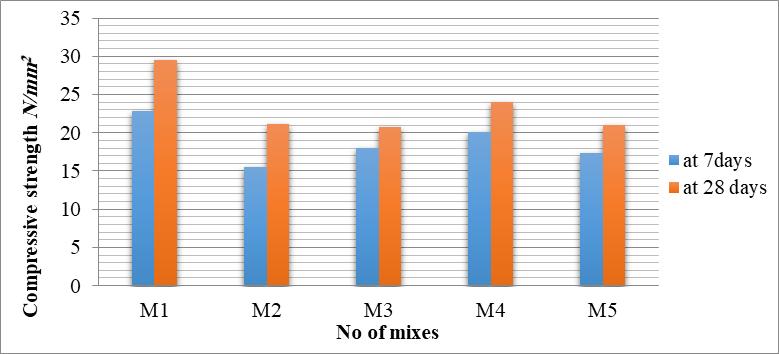
Abstract - The aim of this study is to obtain lightweight concrete by replacing different percentages of refractory brick residues instead of coarse aggregate (15%, 25%, 35% and 45%) in a standard concrete mixture and to observe the extent of the impact on the properties of concrete (weight, workability and compressive strength).It was noted that 35% is the optimal ratio, as it reduced the weight by 3.34% of the standard mixture and obtained a resistance of (24.00 N/mm2) less than the design resistance (25 N/mm2), and that 25% reduced the weight by 2.55% of the standard mixture and gave a resistance of (20.08 N/mm2) less than the design resistance (25 N/mm2) and that 15% reduced the weight by 1.53% of the standard mixture and gave a resistance of (21.15 N/mm2) less than the design resistance (25 N/mm2) and that 45% reduced the weight by 5.89% of the standard mixture and gave a resistance (21.03 N/mm2) less than the design resistance (25 N/mm2), and it was noted that the higher the addition ratio, the less workability. We recommend using ratios close to optimal to obtain more accurate results, taking into account the good immersion of the cubes and immersing the refractory brick residues until saturation before use
Key Words: Concrete, Refractory brick, Workability, Compressive strength.
Severalmilliontonsofsolidwasteisproducedeachyeardue toconstructionanddemolitionactivitiesworldwide.Mostof waste materials are left as a landfill material or illegally dumped.Environmentalimpactcanbereducedbymaking moresustainableuseofthiswaste[1,11].Andbrickwasteis one of the widest wastes. Recently, a growing number of studieshavebeenconductedonusingrecyclingbrickwaste (RBW)toproduceenvironmentallyfriendlyconcrete.[3]
Brick is considered the second most common building materialafterconcrete,andifthereisdamageoccursduring itsproduction,construction,anddemolitionactivities.Itis regardedasCandDwaste.Theabilitytorecyclethebrick wasteinthemanufactureoftheconcreteisconsideredan environmentallyfriendlysubstitutional.Thatsolutionwill notonlydecreasetheproblemofitsdisposalandmoreover helpstominimizetheconsumptionofnaturalmaterials.In addition, brick production does not involve the use of
chemicals, so it considers safe and stable construction materials[13].
Duetomanycountrieshavingrestrictiveconstructionlaws regardingrecycledaggregates(RAs),theuseofRAismainly focusedonnonstructuralpurposes;therefore,itsrecycling as a partial natural aggregate replacement in masonry mortarmixturesrepresentsafeasibleoption].Inthisway, oneobstacletoRFArecyclinghasbeenthecharacteristicsof thematerialitself:highporosityandhigh-waterabsorption [5,6].
Wencui Yang et al investigated the mechanical properties and durability of concrete with recycled clay brick as fine aggregate. The results showed that the compressive strength, the flexural strength and the impermeability of concretedecreasedwiththeincreasingofthereplacement percentofrecycledclaybrick.However,thepermeabilityof concretewiththewatertocementratioof0.35wasstillat the“Low”levelwhenthereplacementpercentwaslessthan or equal to 75%. The carbonation resistance of concrete usingrecycledclaybricksasfineaggregatewasdegraded.[2, 9,12,and14]
Concretecubesmadewithlocalrecycledbricksarecastand tested for overall weight of concrete, moisture content, dynamic modulus of elasticity and compressive strength (nondestructive and destructive methods). The results showed that concrete derived from recycled aggregates attainedlowerstrengththanregularconcrete[3,7and10]
Thisstudywascarriedoutinfewstage.ontheinitialstage, allthematerialandequipment'sneededmustbegatheredor checkforavailability.Thentheconcretemixesaccordingto thepredefinedproportions.Concretesamplesweretested throughconcretetestssuchascubetest.Finally,theresults obtainedwereanalyzedtodrawoutconclusion.
HighperformanceconcretewasdesignedbyusingBSIcuring method. Trail control mixes for 28 days with replacing refractorybrickresiduesofcoarseaggregatewithdifferent percentages 15%, 25%, 35 and 45% respectively from coarse aggregate. The results of laboratory experiments were analyzed and discussed to investigate the refractory brick residues on workability of fresh concrete and compressivestrengthofhardened
Volume: 13 Issue: 04 | Apr 2026 www.irjet.net
2.1 Material Used:
2.1.1Cement:Portlandcementisthemostcommonlyused type of cement in majority of constructions. Ordinary Portlandcementof45grades,fromlocalmarket,ofstandard brandisselectedforuseinthepresentstudy.Theselected cementistestedconformingtoIS:12269-1987toassessits suitabilityforuseinconcreteandtheresultsofthetestsare tabulatedinable1andfigure1
Table 1:Resultsofcementtests
of
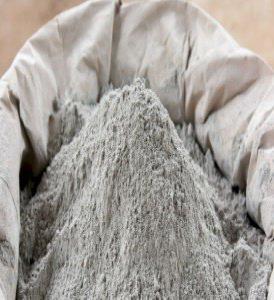
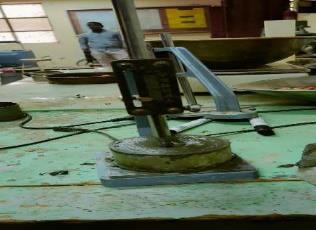
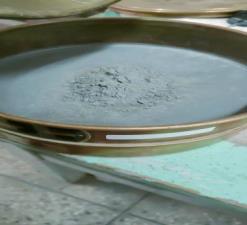
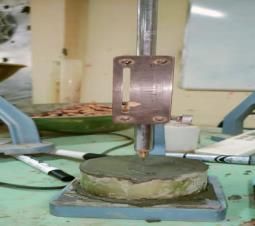
2.1.2 Fine Aggregate: The sand used for experimental program was locally procured. The fine aggregates were testedasperBritishStandardSpecificationBSI:882-1997. Thespecificgravityofsandwasfoundouttobe2.75.(Figure 2)
2.1.3 Coarse Aggregate: Thenaturalbrokenstone(coarse aggregate)usedforthestudywasof20mmsizemaximum.It isconformingBSI:882-1997.Itwasretrievedfromalocal quarry. The shape and quality of aggregate was uniform throughout the project work and the specific gravity was found to be 2.60. Table 2 shows the results of tests of impurities,specificgravityandwaterabsorptionofcoarse andfineaggregates(Figure2)
Table 2: Propertiesofaggregates Experiment
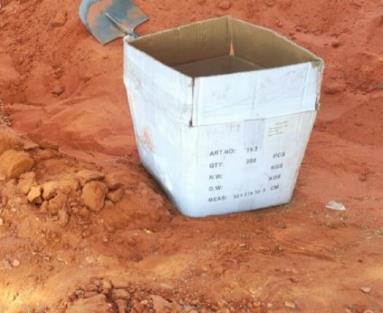
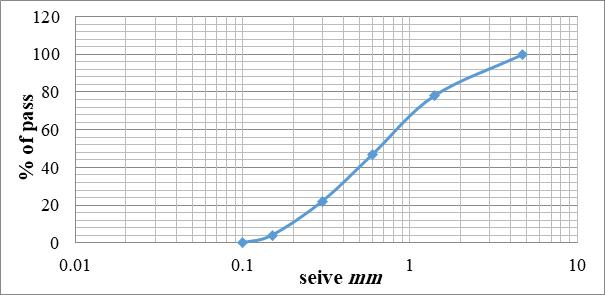
- 4:Sieveanalysisoffineaggregate
2.1.4 Water: The used water from Khartoum city water distributionsystem
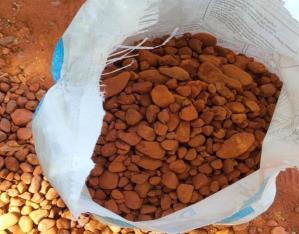
2.1.5 Refractory brick residues: Fig 3 presents the refractory brick residues. The Water Absorption of refractorybrickresidueswasfoundequalto19.09%
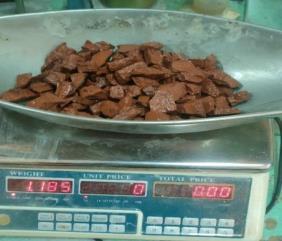
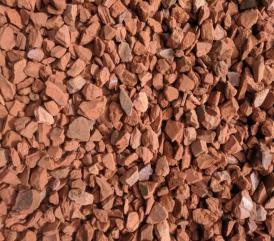
- 5:refractorybrickaggregate
International Research Journal of
(IRJET) e-ISSN: 2395-0056
Volume: 13 Issue: 04 | Apr 2026 www.irjet.net p-ISSN: 2395-0072
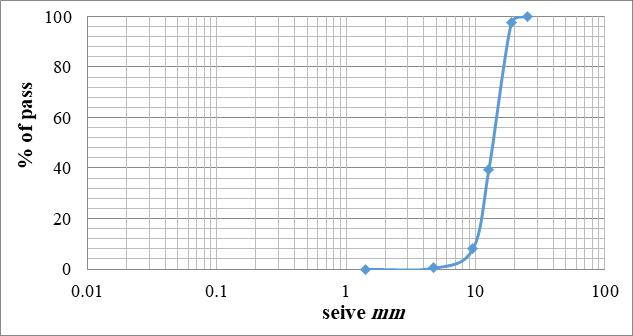
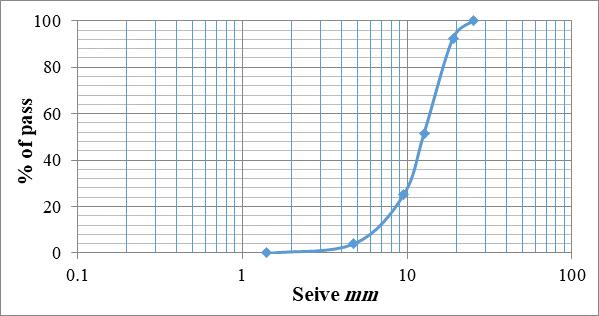
Fig - 6:Sieveanalysisofrefractorybrick aggregate
BSIcuringmethodofmixdesignwasusedformixdesignfor concrete cubes test. concrete specimens with various percentagesofrefractorybrickresidueswereprepared.The details of various mix proportions for different ratios of refractorybrickresiduesat7and28days.
The aggregate dry density used was 1209 kg/m3, and the maximumaggregatesizeuseinallmixeswas20 mm.using standard cubes moulds (150*150*150) mm3 cubes representingeachratio,werecastedandtestedatage7and 28days.
2.2.1 Components of mix materials:
Theconcretemixtoresistcompressiondesign(25 N / mm2), thequantitiesofmaterialsforallthemixturesasillustrated table3:Mixdesign:(densityof2435 kg / m3).andtable4.
Table 3: Amountsofthemixtureofdesign
Table 4: thequantitiesofmaterials
brick residues, result for 15%, 25%, 35% and 45% are shownintables5to17anddepictedgraphicallyinFigures4 to6.
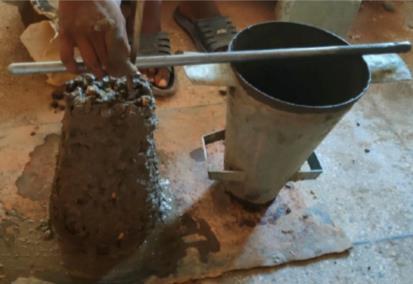
Fig - 7:Slumptest
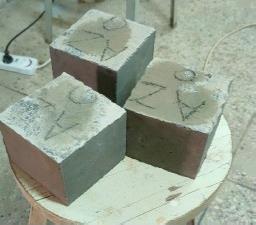
Fig - 8:Concretecubes
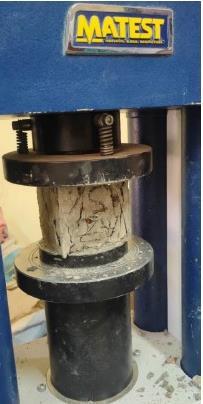
Fig - 9: Compressive Strength Test
Table 5 ResultsofCompressiveStrengthTestsofthe ControlMixat7days
3. Results of Experiments of Fresh and Hardened Concrete:
SlumpandCompressiveStrength(cubesmoulds)Testswere conducted for fresh and hardened concrete presented in figures 7,8 and 9, by adding different ratios of refractory
Volume: 13 Issue: 04 | Apr 2026 www.irjet.net p-ISSN: 2395-0072
Table 6: ResultsofCompressiveStrengthTestsofthe ControlMixat28days
C.
Table 7:ResultsofCompressiveStrengthTestsat7days (15%ofrefractorybrickresidues)
Table 12:ResultsofCompressiveStrengthTestsat28 days(35%ofrefractorybrickresidues)
Table 8: ResultsofCompressiveStrengthTestsat28days (15%ofrefractorybrickresidues)
C.
Table 9: ResultsofCompressiveStrengthTestsat7days (25%of
Table 13: ResultsofCompressiveStrengthTestsat7days (45%ofrefractorybrickresidues)
NO Age
)
Table 14:ResultsofCompressiveStrengthTestsat 28days(45%ofrefractorybrickresidues)
C. NO Age
Table 15: AverageforResultsofslumpTestsusing(%of refractorybrick)
Table 10:ResultsofCompressiveStrengthTestsat28 days(25%of
Table 11: ResultsofCompressiveStrengthat7days(35
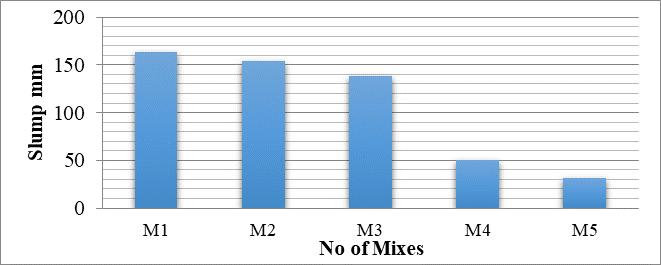
Fig - 10: Relation between slump and number of mixes
International Research Journal of Engineering and Technology (IRJET) e-ISSN: 2395-0056
Volume: 13 Issue: 04 | Apr 2026 www.irjet.net p-ISSN: 2395-0072
Table 16 AverageforResultsofweightat28days
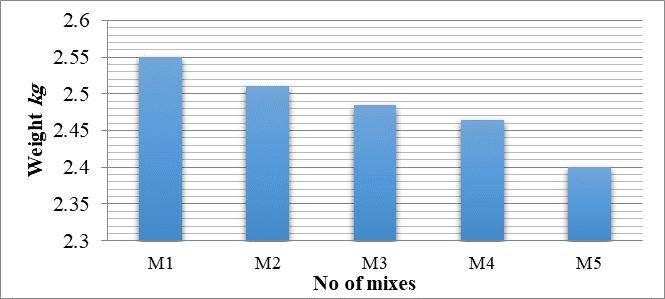
Table 17:AverageforResultsofCompressiveStrengthat 7and28day
HardenedConcrete:Tables16,17andFigures6,7showsthe resultsofaverageCompressivestrengthofconcreteatag7 and 28 days. The compressive strength decreased with increasing amounts of refractory brick residues and also showstheweightofconcretedecreasedwithincreasingthe refractorybrickresiduesthereductionpercentageofweight are(1.53,2.55,3.34and5.89respectivelyforreplacement ratios(15,25,35and45%)
In this study the refractory brick residues were used as a replacementofcoarseaggregatetoinvestigateitseffecton Concrete through the measure of workability for fresh concreteandcompressivestrengthforhardenedconcretein 7and28days.Basedontheresultsitcanbeconcludedthat:
Increaseintherefractorybrickresiduescontentin concretemixesreducesthecompressivestrengthof concrete.Anddecreasedtheworkabilityofconcrete
Obtainedresultssuggestthatusingtherefractory brickresiduesforanotherapplicationforexample concreteblocks
1. Batayneh,M.;Marie,I.;Asi,I.Useofselectedwaste materialsinconcretemixes.//WasteManagement. 27(2007),pp1870-1876.
2. Bheel, N. R., & Shafiq, N. (2020). Properties of concretewithrecycledbrickaggregateandpowder. JournalofBuildingEngineering,32,101680.
M4
M5
Theresultsobtainedfromthedifferenttestsaresummarized anddiscussedasfollowing:
Fresh Concrete: Table 15 and figure 4 present that the slump decreased with increasing the amount of refractory brickresidues
3. Debieb,F.,&Kenai,S.(2008).Theuseofcoarseand fine crushed bricks as aggregate in concrete. Construction and Building Materials, 22(5), 886893.
4. Duaa Jabbar Abdullah. Zena K Abbas and Suhair kadhem abed. Study of Using of Recycled Brick Waste (RBW) to produce Environmental Friendly Concrete:AReview.JournalofEngineeringjournal homepage:www.joe.uobaghdad.edu.iqNumber11 Volume27November2021
5. Fan, C.-C.; Huang, R.; Hwang, H.; Chao, S.-J. The Effects of Different Fine Recycled Concrete AggregatesonthePropertiesofMortar.Materials 2015,8,2658–2672.
6. Ferreira, R.L.; Anjos, M.A.; Nóbrega, A.K.; Pereira, J.E.S.;Ledesma,E.F.Theroleofpowdercontentof therecycledaggregatesofCDWinthebehaviourof renderingmortars.Constr.Build.Mater.2019,208, 601–612.
7. Khalaf,F.M.,&DeVenny,A.S.(2004).Recycledclay brickasaggregateinconcrete.JournalofMaterials
International Research Journal of Engineering and Technology (IRJET) e-ISSN: 2395-0056
Volume: 13 Issue: 04 | Apr 2026 www.irjet.net p-ISSN: 2395-0072
in Civil Engineering, 16 (5), 431-439.Or another possiblereference:
8. Martínez, I.; Etxeberria, M.; Pavón, E.; Díaz, N. (2018)InfluenceofDemolitionWasteFineParticles on the Properties of Recycled Aggregate Masonry Mortar.Int.J.Civ.Eng.,16,1213–1226.
9. Olofinnade,O.M.,&Mohammed,A.(2021).Recycled brick wasteasa partial replacementofcement in concrete. Journal of Cleaner Production, 279, 123671.
10. Riaz Bhanbhro, Irfanullah Memon, Aziz Ansari, Ahsan Shah, Bashir Ahmed Memon, Properties EvaluationofConcreteUsingLocalUsedBricksas CoarseAggregate,SciRes.http://www.scirp.org/jour nal/enghttp://dx.doi.org/10.4236/eng.2014.65025
11. Smith, J. (2020). Sustainable use of construction waste.JournalofEnvironmentalEngineering,146 (5),1-10.
12. Wencui Yang, Xiaoping Cai and Duojie Jiangjiu, BehaviorsofConcretewithRecycledClayBrickas Fine Aggregate, XV International Conference on Durability of Building Materials and Components DBMC2020,Barcelona
13. WongCLMoKHYapSPAlengaramUJ,&LingTC 2018 Potential use of brick waste as alternate concrete-making materials: A review. Journal of cleanerproduction195,226-239.
14. Zhang, S., & Li, Z. (2020). Utilization of recycled brick powder as a supplementary cementitious material in concrete. Construction and Building Materials,262,120080.
BIOGRAPHIES



Dr. Eng.: Mashair Abdelrahim Mohammed Civil Engineering Head of Construction Department College of Engineering, SUST University
Dr. Eng.: Ammar Babiker Siddig Civil Engineering Head of Structure Department College of Engineering, SUST University
Dr. Eng.: Ebtihaj Abuelgasim Mohammed Civil Engineering Assistant Professor, Structure Department College of Engineering,SUSTUniversity
2026, IRJET | Impact Factor value: 8.315 | ISO

Eng.: Suliman Ahmed Mohammed CivilEngineeringQualitymanager,ALLIWA for trading and contracting company, Riyadh,SaudiArabia