International Research Journal of Engineering and Technology (IRJET) e-ISSN: 2395-0056
Volume: 12 Issue: 03 | Mar 2025 www.irjet.net p-ISSN: 2395-0072
International Research Journal of Engineering and Technology (IRJET) e-ISSN: 2395-0056
Volume: 12 Issue: 03 | Mar 2025 www.irjet.net p-ISSN: 2395-0072
Sooraj PM1 , Muhammad Shanoof C2 , Anjali Vijayan E3 , Minushegh P4 , Jithma T5
1234Graduate Student, 5Assistant Professor Department of Civil Engineering, AWH Engineering College Calicut, Kerala, India
Abstract – Cement, sand and coarse aggregate are the basic ingredients for any construction. Sand is a prime material used for preparation of mortar and concrete and which plays a major role in mix design. Nowadays erosion of rivers and considering environmental issues there is a scarcity of river sand. The less availability or shortage of river sand will affect the construction industry. Hence there is a need to find the new alternatives to river sand. There is a need for different materials to replace fine aggregate and one of the major materials is locally available soil. Laterite soil is one of the easily available local soils and using different proportion of available soil along with river sand the required concrete mix can be obtained.
Key Words: Concrete, Laterite, Compressive strength, Split tensile strength, Flexural tensile strength
1.INTRODUCTION
The most widely used construction material in the world is concrete. The demand for these materials constituents has increased significantly as a result of their use in various structures. Continued exploitation of our river sand for its purposes has led to a degradation of the environment and undisturbed depletion of nature reserves. But because of the environmental damage they are causing, for instance by soil erosion or surface water contamination,severalsandminingsiteshavebeenclosed which has resulted in product shortages. In addition, it travels from relatively far locations at high costs because ofitsscarcity.Therehavebeenseveralattemptstoreplace river sand with other materials to produce concrete, one ofthematerialsusedinthisresearchislateriticsoil.
Laterite is a highly weathered soil rich in iron and aluminum oxides, predominantly found in tropical and subtropical regions. Laterite's composition varies depending on geological conditions and weathering. It exhibits diverse geotechnical properties, such as liquid limit, plasticity, and density, influencing its engineering behavior.Chemically,lateriteisrichinsilica,alumina,and iron oxide, with trace elements affecting reactivity and stability. Its mineralogical composition, primarily kaolinite, quartz, goethite, and hematite, determines its mechanical properties. Laterite also shows thermal stability, making it suitable for various engineering applications. In modern construction, laterite is increasingly incorporated into concrete mix designs as a partial replacement for fine aggregates, offering an
environmentally responsible alternative to river sand. Its application extends to road pavements and low-cost housing solutions, particularly in regions where conventional construction materials are scarce or expensive. Concrete where laterite replaces a portion of fine aggregate, has demonstrated mechanical properties comparable to or even superior to traditional concrete, depending on the proportion used. Studies indicate that optimalreplacementlevels,typicallyrangingfrom20%to 30%, contribute to enhanced compressive strength, improved durability, and resistance to environmental degradation, including water absorption, chloride ion penetration, and sulfate attack. While moderate incorporation of laterite contributes to structural integrity, excessive replacement may lead to reduced compressive strength and increased permeability. As a sustainable construction material, laterite presents a viable solution for reducing reliance on depleting natural resources while maintaining structural efficiency. Its integrationintoconcreteandotherbuildingmaterialsnot only mitigates the environmental impact associated with excessive sand extraction but also aligns with global effortstowardsustainabledevelopment
2. MATERIALS AND METHODOLOGY
2.1 Materials
A. Cement
Cement acts as the binder material, a substance used in construction that adheres sets and hardens the material for proper binding. It achieves strength through a chemicalreactionwithwater.ItwasnoticedthatPortland pozzolana cement of 53 grade has a specific gravity of 2.91.
B. Fine aggregate
Fine aggregate, or natural sand, is an accumulation of mineral grains derivedfrom thedisintegrationofrocks.It
International Research Journal of Engineering and
Volume: 12 Issue: 03 | Mar 2025 www.irjet.net
is distinguished from gravel only by the size of the grains orparticles.
Coarse aggregates, characterized by their large particle size, are a crucial component in construction materials. Definedasaggregatesretainingasignificantproportionof particles on a 5mm (0.197 inches) sieve in the US or 4.75mm (0.187 inches) sieve elsewhere, they differ from finermaterials.
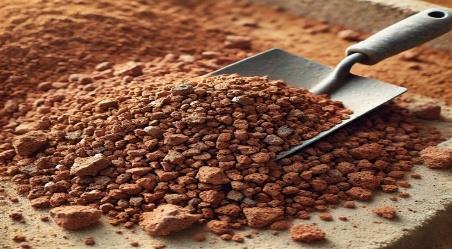
D. Laterite
Thefineaggregateinconcreteispartiallyorfullyreplaced withlaterite.Toreducethecostofproductionofconcrete, the use of laterite as a partial replacement of the fine aggregateisused.
E. Water
Water fit for drinking is generally considered fit for making concrete. Water should be free from acids, oils, alkalis,vegetablesorotherorganicImpurities.
2.2 METHODOLOGY
Topicselection
Materialcollection
Mixdesign
Casting
Curing
Testing
Resultanddiscussion
3. MIX PROPORTION
Table1:mixproportion
4. RESULT AND DISCUSSION
4.1 Slump Test
Table2:Slumptestresult
4.2 Compaction factor
Table3:Compactionfactortestresult
4.3 Compressive Strength
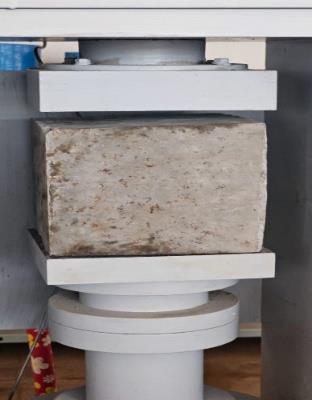
Fig2:Compressivestrengthtest
Table4:Resultofcompressivestrength
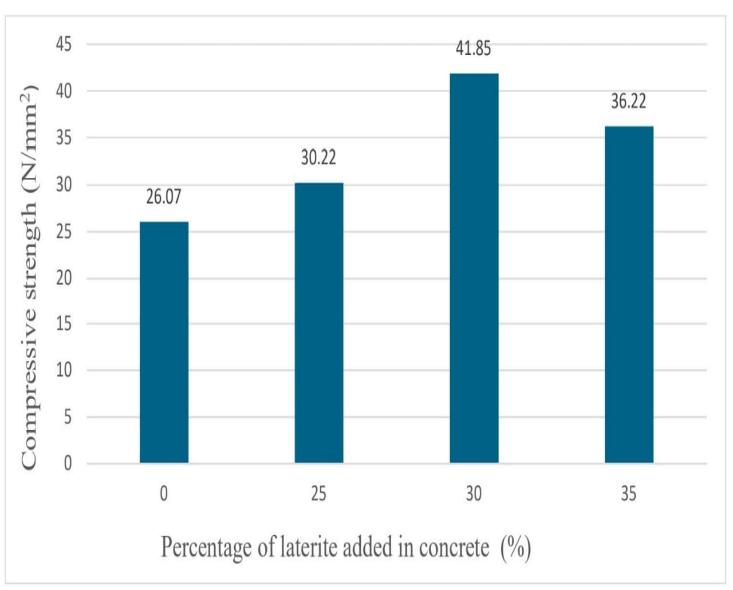
Fig3:compressivestrengthindifferentproportion
International Research Journal of Engineering and Technology (IRJET) e-ISSN: 2395-0056
Volume: 12 Issue: 03 | Mar 2025 www.irjet.net p-ISSN: 2395-0072
Thereplacementoffineaggregatewithlateriteinconcrete significantlyboostscompressivestrength,peakingat 30% content. With 25% laterite, strength increased by 15.92% compared to conventional concrete. At 30%, there was a 60.53% increase, while at 32%, it decreased by 13.45% compared with 30% of laterite. This underscores laterite effectiveness in concrete, with the greatest enhancement seenat30%content.
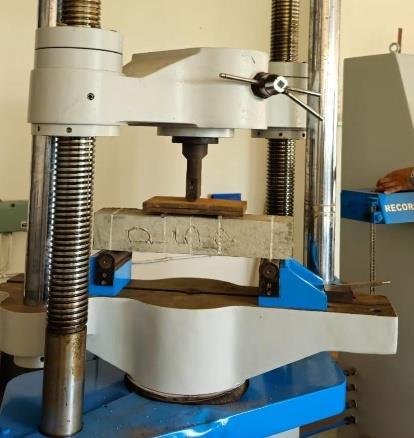
Fig3:Flexuralstrengthtest
Table5:Resultofflexuralstrengthtest
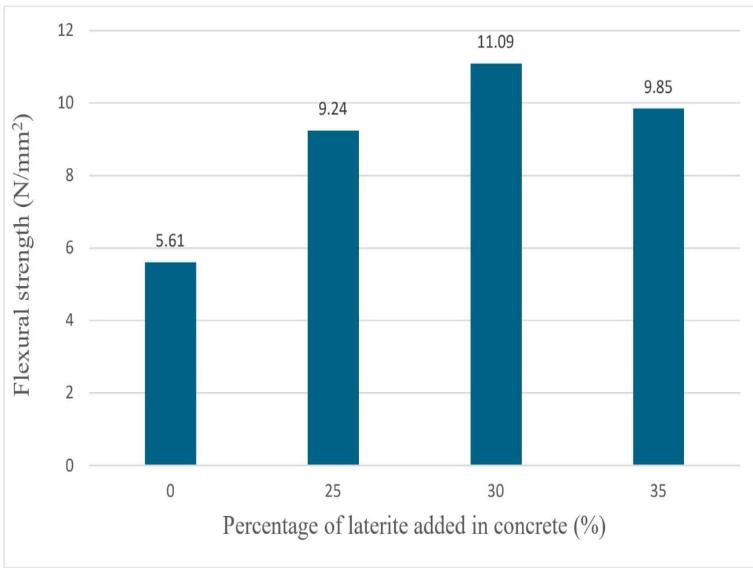
Fig4:Flexuralstrength
The flexural strength of fine aggregate replaced with laterite in concrete increases consistent with the addition of laterite, peaking at 30% content. With 25% laterite, strength increased by 64.7% compared to conventional concrete. At 30%, the increase was 97.68%. At 35% laterite content, 11.04% flexural strength decreases compared with 30%. This improvement underscores the laterite content in concrete matrix, with the highest enhancementat30%content.
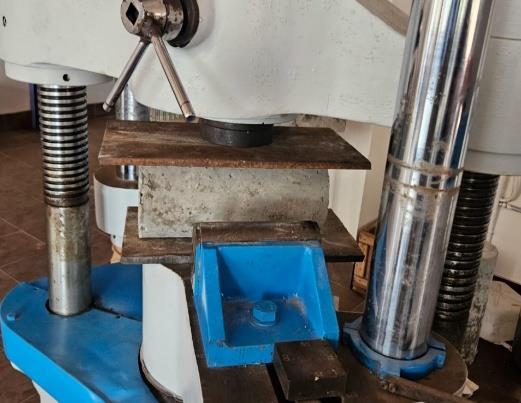
Fig5:Splittensilestrengthtest
Table6:Resultofsplittensilestrengthtest
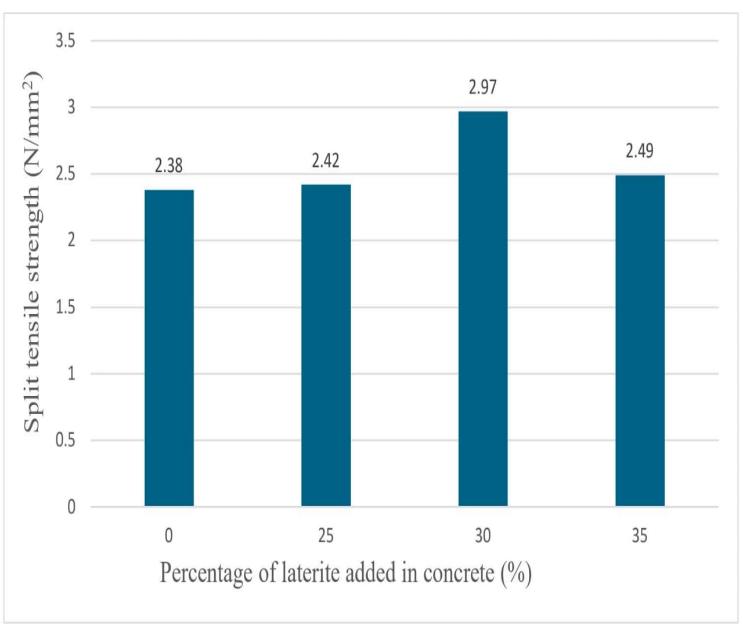

Fig5:Splittensilestrengthindifferentproportion
International Research Journal of Engineering and Technology (IRJET) e-ISSN: 2395-0056
Volume: 12 Issue: 03 | Mar 2025 www.irjet.net p-ISSN: 2395-0072
The split tensile strength of concrete also improves with thereplacementof fineaggregate withlaterite,increasing up to 30% of laterite content. Incorporating 25% laterite results in a significant 1.68% increase compared to conventional concrete. At 30% laterite content, the split tensile strength rises by 24.79% demonstrating further enhancement. While at 35%, it decreased by 16.16% compared with 30% of laterite. The optimum improvement occurs at 30% fine aggregate replaced with laterite content, reaching a split tensile strength 24.79% increaseoverconventionalconcrete.
The replacement of fine aggregate with laterite at 30% resulted in a 60.53% increase in compressive strength, confirming it as the best proportion for improving loadbearing capacity. For laterite replacement, the peak improvementinflexuralstrengthoccurredat30%laterite, showing a 97.68% increase, whereas further replacement led to a reduction in strength. The maximum split tensile strength increase of 24.79% was achieved at 30% replacement, confirming its effectiveness in improving durabilityagainstcracking.
1. Renuka R, Sowmyashree T, Soumyashri R, Chetana M. V. (2018) Journal for Research | Volume04 |ISSN:2395-7549.
2. Anurag Mali, Anant Bharadwaj, Siddharth Pastariya, Shantanu Mehta, Ankita Agnihotri (2022) International Journal of Research Publication and Reviews, Vol 3, no 12, pp 23042308.
3. G. Sabarish M. K. M. V. Ratnam, Dr. A. C. S. V. Prasad Dr. U. Ranga Raju (2015) IJIRST –International Journal for Innovative Research in Science &Technology|Volume2.
4. M. Venkata Rao, V. Siva Rama Raju (2016) M. Venkata Rao. Int. Journal of Engineering Research and Application ISSN: 2248-9622, Vol. 6, Issue 10, (Part -1)pp.39-44.
5. Garba,I.,Kaura,J.M.,Sulaiman,T.A.,Aliyu,I., and Abdullahi, M. FUDMA (2024) Journal of Sciences (FJS) ISSN online: 2616-1370 ISSN print: 2645–2944Vol.8 No.1,pp201 –207.
6. . Santha Kumar, P.K. Saini, Rajesh Deoliya, Aman Kumar Mishra, S.K. Negi (2022) CSIRCentral Building Research Institute, Roorkee, 247 667,India16(2022) 200120.
7. L.O.Ettu,O.M.Ibearugbulem,J.C.Ezeh,andU. C. Anya (2013), Owerri International Journal of Scientific & Engineering Research, Volume 4, Issue 5,ISSN2229-5518.
8. Emmanuel Ogunleye (2023) Global Journal of Engineering and Technology Advances, 16(02), 180–191.
9. Funo Falde, Ikponmwosa, Bright Ukponu (2013), Civil and Environmental Research www.iiste.org ISSN 2224-5790 (Paper) ISSN 22250514(Online) Vol.3,No.10.
10. Joseph O. Ukpata, Desmond E. Ewa, Nwajeibgodwin Success (2020), https://doi.org/10.1038/s41598-023-50998-1
11. Ofuonu Paul Chukwueloka (2023), NAU/2017224056.
12. Kiran Bhat P, Rajasekaran C, and B. B. Das (2024), https://doi.org/10.1088/20531591/ad94d6
13. A. Jayaraman, V. Senthilkumar, and M. Saravanan(2014), IJRET: International Journal of Research in Engineering and Technology ISSN: 2319-1163|ISSN:2321-7308.


Mr Sooraj PM Final Year B-tech student in the Civil Engineering Department at AWH Engineering College Calicut Kerala India.



Mr. Muhammad Shanoof C Final Year Btech student in the Civil Engineering Department at AWH Engineering College CalicutKeralaIndia.



Ms. Anjali Vijayan E Final Year B-tech studentintheCivilEngineeringDepartment at AWH Engineering College Calicut Kerala India.



Mr. Minushegh P Final Year B-tech student in the Civil Engineering Department at AWH Engineering College CalicutKeralaIndia.



Ms. Jithma T. Currently working as an AssistantProfessorinthecivilengineering department at AWH Engineering College CalicutKeralaIndia.Shehasmorethan12 yearsexperience in teachingand one-year Industrial experience. Her interested area isstructuralengineering.