
International Research Journal of Engineering and Technology (IRJET) e-ISSN: 2395-0056
Volume: 12 Issue: 11 | Nov 2025 www.irjet.net p-ISSN: 2395-0072
International Research Journal of Engineering and Technology (IRJET) e-ISSN: 2395-0056
Volume: 12 Issue: 11 | Nov 2025 www.irjet.net p-ISSN: 2395-0072
Asst. Prof. Madhuri Martis1 , Harshitha2, Chaithanya S B3, NaveenKumar4, Deeksha P5
1Assistant Professor, Department of Information Science and Engineering, Bapuji Institute of Engineering and Technology, Davangere, Karnataka, India. 2,3,4,5Bachelor of Engineering, Information Science and Engineering, Bapuji Institute of Engineering and Technology, Davangere, affiliated to VTU Belagavi, Karnataka, India.
Abstract - This project presents a multilingual and emotion-aware Speech-to-Text (STT) system aimed at improvingcommunicationaccessibilityforhearing-impaired users. The system accepts English audio input, performs automatic speech recognition, and enhances the transcript throughnamed-entityhighlighting,part-of-speechemphasis, and keyword-based emotion detection. Additionally, it supports translation of the generated text into regional languages such as Kannada and Telugu to improve inclusivityfornativespeakers.Implementedasalightweight Flask web application, the system integrates ASR, NLP, and translation modules while offering features such as emoji tagging, user-friendly visualization, and PDF export. Experimental testing demonstrates reliable transcription accuracy for short audio inputs and efficient real-time processing, making the system suitable for educational, assistive,andeverydaycommunicationenvironments..
Key Words: Speech-to-Text (STT), Automatic Speech Recognition (ASR), Natural Language Processing (NLP), Emotion Detection, Multilingual Translation, Kannada, Telugu, Accessibility, Hearing-Impaired Users, Flask Web Application, Emoji Tagging, PDF Generation.
Inrecentyears,advancementsinArtificialIntelligence(AI), Automatic Speech Recognition (ASR), and Natural Language Processing (NLP) have significantly improved human–computer interaction. Speech-to-text technologies, in particular, have become essential for accessibility, communication support, and real-time information processing. However, despite progress in ASR and Neural Machine Translation (NMT), many existing systems still strugglewithregionallanguages,emotionalunderstanding, and real-world noise conditions. These limitations make currenttoolslesseffectiveforhearing-impaireduserswho rely heavily on accurate, expressive, and context-aware transcription.
This project focuses on developing a multilingual and emotion-aware Speech-to-Text (STT) system that converts English audio into text, highlights linguistic features, identifiesemotionaltone,andtranslatesthetranscriptinto Kannada and Telugu. The system integrates ASR for transcription, NLP techniques for entity recognition and emotion detection, and lightweight translation models for regional language support. By adding emoji cues and
semantichighlighting,thesystemenhancesreadabilityand user comprehension, especially for individuals with hearingimpairments.
Although current STT systems such as Google Live Transcribe, Microsoft Azure Speech Services, and Whisper provide high accuracy, they often depend on strong internetconnectivity,lackcustomization,orfail tosupport low-resource languages effectively. Many tools also overlook user experience (UX) elements like adjustable text size, contextual feedback, and inclusive design, which areessentialforaccessibility-basedapplications.
This project addresses these challenges by designing a lightweight, web-based application built using Flask that provides fast processing, entity highlighting, emotion tagging, multilingual translation, and PDF export capabilities. The proposed system aims to deliver an accessible, accurate, and user-friendly platform that enhances communication for hearing-impaired users and broadenslinguisticinclusivity.
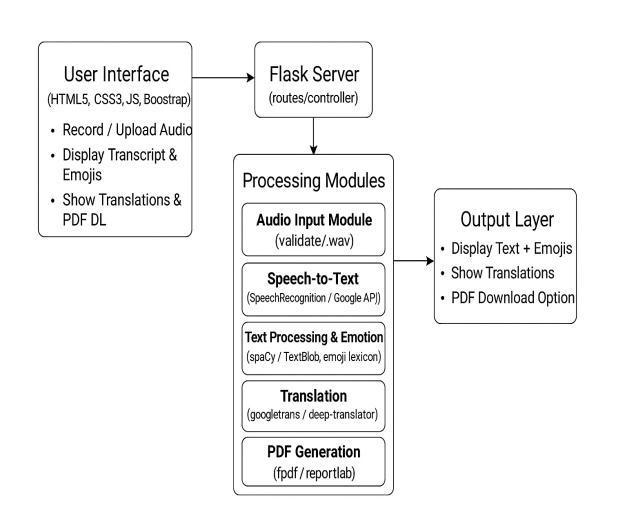
The proposed Speech-to-Text system is designed to be lightweight, modular, and highly accessible for hearingimpaired users. Its architecture ensures accurate transcription, emotion detection, multilingual translation, and smooth user interaction. To guarantee efficient operation,thesystemintegratesseveralcoordinatedlayers andtechnologies.
1 Frontend Layer: The user interface is developed using HTML5,CSS3,JavaScript,andBootstrap,providingasimple and responsive experience. It allows users to upload or record audio, view highlighted transcripts, select translation options, and download the final PDF output withease.
2. Backend Layer: The backend is built using the Flask framework, which manages all user requests, processes audio files, handles NLP operations, and coordinates ASR, emotion detection, and translation modules. This layer controls the data flow between audio input, text processing,translation,andPDFgeneration.
3. Audio Processing & Speech Recognition Module: This module uses Python’s SpeechRecognition library and Google’s Web Speech API to convert uploaded .wav audio into English text. It ensures accurate Automatic Speech

International Research Journal of Engineering and Technology (IRJET) e-ISSN: 2395-0056 Volume: 12 Issue: 11 | Nov 2025 www.irjet.net p-ISSN: 2395-0072
Recognition(ASR)evenundermoderatebackgroundnoise. Itformsthecoreofthesystem’sspeech-to-textcapability.
4. NLP & Emotion Detection Module: Using spaCy and keyword-based sentiment detection, the system analyzes thetranscriptfor:
namedentities
verbsandadjectives
emotion-relatedkeywords(happy,sad,angry,etc.)
Detected emotions are mapped to suitable emoji tags, improvingclarityandexpressivenessforhearing-impaired users.
5. Translation Layer: The translated output is generated using googletrans or Deep Translator, converting English textintoKannadaorTelugu.Thislayerenablesmultilingual accessibilityandenhancesregionalusability.IthandlesAPI request limits and provides fallback translation when needed.
6. PDF Generation Layer: Using FPDF/ReportLab, the system compiles the processed transcript complete with highlights, emojis, and translation into a downloadable PDF. This ensures portability and easy documentation for users.
7. Optional Data Handling Layer: Though the current system does not store user data permanently, it can be extended to use SQLite/MySQL for saving transcripts, translations,andlogsiffutureenhancementsrequireit.
1.2 Key Technologies used
Frontend Interface Development: The user interface is built using HTML5, CSS3, JavaScript, and Bootstrap, providing a clean, responsive, and accessible layout. This enables users to easily upload audio files, view transcripts, select translationoptions,anddownloadPDFs.
Backend Framework: The system uses the Flask web framework to handle user requests, manage audio uploads, run ASR and NLP pipelines, and return processed results. Flask ensures lightweight,fast,andscalablebackendoperations.
Speech Recognition Engine (ASR): Speech-to-text conversion is performed using Python’s SpeechRecognition library integrated with Google Web Speech API, enabling accurate English transcriptionfrom.wavaudiofiles.
NLP Processing – spaCy/TextBlob: Natural language processing tasks such as tokenization, entity recognition, sentiment evaluation, and keyword-based emotion detection are handled using spaCy and TextBlob, making the transcript moreexpressiveandcontext-aware.
Multilingual Translation – Googletrans / Deep Translator: The system incorporates googletrans or deep-
translator to translate English text into Kannada and Telugu, improving accessibility for regional languageusers.
PDF Generation – FPDF / ReportLab: To provide downloadable transcripts, the system uses FPDF orReportLabtogenerateprofessionallyformatted PDF documents that include original text, translations,highlights,andemojis.
AudioHandlingLibraries:Toolssuchaspyduband wave are used for validating and preprocessing audio files, ensuring proper input format and smoothASRprocessing.
User Interface Enhancements: Features like emotion-based emoji tagging, highlighted entities, and modular HTML templates make the interface intuitive and user-friendly for hearing-impaired users.
The proposed Speech-to-Text system supports hearingimpaired users by combining speech recognition, emotion detection, and multilingual translation within a simple web-based design. Its core features focus on improving accessibility,clarity,andreal-timecommunicationsupport.
2.1 Speech Input and Transcription
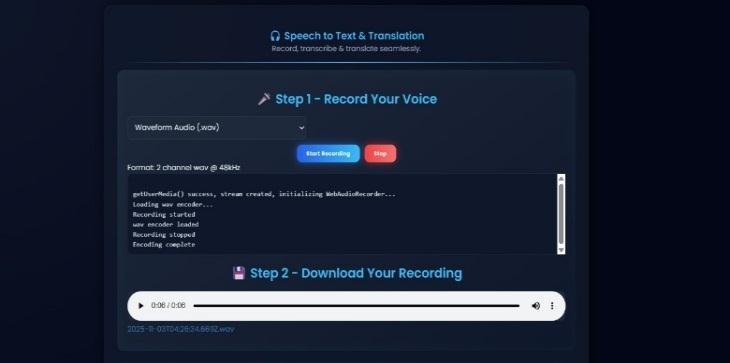
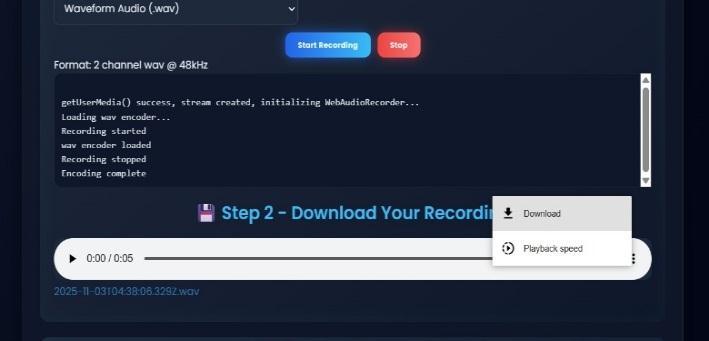
Users can upload or record English audio in .wav formatthroughthewebinterface.
The system converts speech into accurate text usingAutomaticSpeechRecognition(ASR).
It handles different accents and moderate background noise to ensure better transcription quality.
2.2 Emotion and Text Enhancement
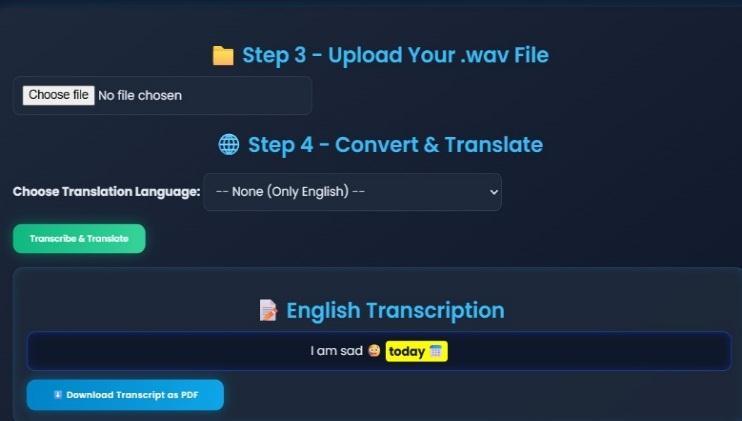
The system detects basic emotions such as happy, sad, angry, or neutral using NLP-based keyword analysis.
Emoji tagging and text highlighting make the transcript more expressive and easier to understandforhearing-impairedusers.
Named Entity Recognition (NER) emphasizes key information like names, places, and dates for clearercontext.
2.3 Multilingual Translation
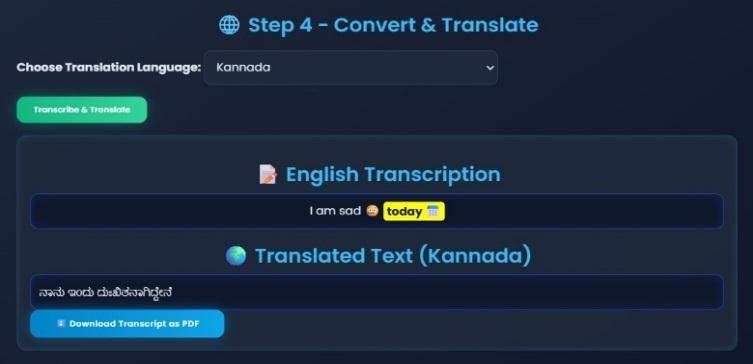
ThetranscribedEnglishtextcanbetranslatedinto KannadaorTelugu.
This feature improves accessibility for regional languagespeakers.
Userscanchoosethepreferredlanguage basedon personalorcommunicationneeds.
International Research Journal of Engineering and Technology (IRJET) e-ISSN: 2395-0056
Volume: 12 Issue: 11 | Nov 2025 www.irjet.net p-ISSN: 2395-0072
The system allows users to download the final transcriptasaPDFfile.
The PDF includes the original text, emojis, highlights,andtranslatedcontent.
This enables users to save, share, or reuse the transcript for educational or communication purposes.
Asimple,clean,andresponsiveinterfacebuiltwith HTML,CSS,JavaScript,andBootstrap.
Users can easily navigate steps like audio upload, transcription,translation,anddownload.
The design supports accessibility for users with limitedtechnicalexperience.
Uploaded audio files are processed temporarily andarenotstored,ensuringuserprivacy.
The system avoids long-term data storage unless extendedforfutureenhancements.
This approach protects sensitive speech informationandmaintainsconfidentiality.
existing solutions are general-purpose and do not fully address the specific communication needs of hearingimpairedindividuals.
The proposed system is a multilingual, emotion-aware Speech-to-Text(STT)webapplicationdesignedspecifically to support hearing-impaired users. It converts English speech into text using Automatic Speech Recognition and enhancestheoutputthroughkeywordhighlighting,named entity recognition, and emoji-based emotion tagging. To improve accessibility, the system also provides translation into Kannada and Telugu, allowing users to view the transcript in their preferred regional language. Built using a lightweight Flask backend, the system enables quick processing, a simple user interface, and seamless interactionwithoutcomplexhardwarerequirements.Users canuploador recordaudio, viewtheprocessedtranscript, anddownloadthefinalresultasaPDF.Thedesignfocuses on accuracy, ease of use, and inclusive communication, offeringa moretailoredsolutionthanexistinggenericSTT tools.
3.
Despite major advancements in speech recognition and translation technologies, developing a lightweight, multilingual, and emotion-aware speech-to-text system remains challenging. Existing tools often struggle to accurately process regional Indian languages like Kannada and Telugu due to limited linguistic resources. Most current systems also lack effective emotion or contextaware features such as semantic highlighting or emojibased expression that can help hearing-impaired users interpret tone and intent. In addition, translation services andAPIsmayfaceinstability,request-sizelimits,andquota restrictions, affecting real-time performance. Therefore, there is a need for a robust web-based solution that can efficientlyconvertspeechintotext,identifyemotionalcues, support multilingual translation, and provide reliable outputforaccessiblecommunication.
Current Speech-to-Text tools like Google Live Transcribe, Microsoft Azure, and IBM Watson provide real-time transcription but depend heavily on internet connectivity and are not customized for hearing-impaired users. Most existing systems lack features such as emotion detection, visual cues, multilingual support for regional languages like Kannada and Telugu, and accessibility-focused interface design. Advanced models like Whisper offer better accuracy but require high computing resources, making them difficult for regular users to deploy. Overall,
The system requires a combination of software and hardware components to enable audio input, speech-totext conversion, emotion detection, translation, and PDF generation. The specifications are designed to ensure fast processing, accurate transcription, and a smooth user experience.
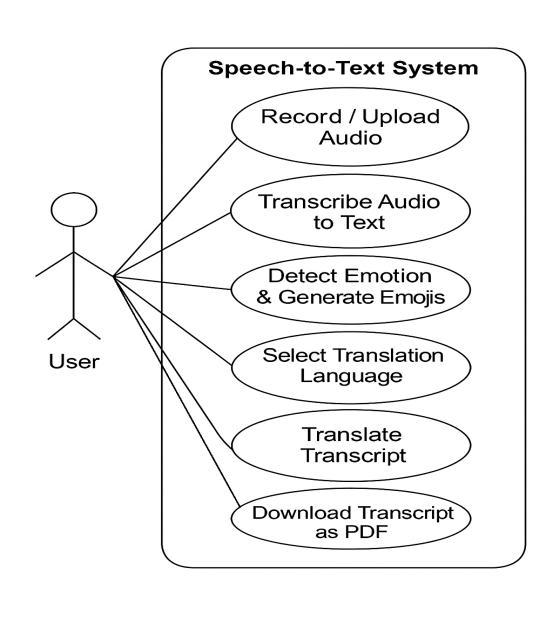
Audio Input: Users must be able to record or upload.wavaudiofilesthroughthewebinterface.
Speech-to-Text Conversion: The system should accurately convert English speech into text using ASR.
Emotion Detection: The system should identify basic emotions (happy, sad, angry, neutral) from thetranscribedtext.
Emoji Representation: Detected emotions should be mapped to suitable emojis for better expression.
Translation: Users should have the option to translatethetranscriptintoKannadaorTelugu.
Display Output: The processed text, emojis, and translation must be shown clearly on the web interface.
PDF Download: Users must be able to download thetranscript(withtranslationandemojis)inPDF format.
International Research Journal of Engineering and Technology (IRJET)
-ISSN: 2395-0056 Volume: 12 Issue: 11 | Nov 2025 www.irjet.net p-ISSN: 2395-0072
4.2 Non-Functional Requirements
Performance: A 10-second audio clip should be processedinunder5seconds.
Reliability: The system should maintain high uptimeandhandleerrorsgracefully.
Usability: The interface should be simple and accessibleforuserswithnotechnicalbackground.
Security: Uploaded audio should not be stored permanently,ensuringprivacy.
Scalability: The system should support multiple usersandbedeployableoncloudplatforms.
Maintainability:Modulardesignshouldalloweasy updatestoASR,NLP,ortranslationcomponents.
4.3 Hardware Requirements
Processor:IntelCorei5/AMDRyzen5orhigher
RAM:Minimum8GB(Recommended16GB)
Storage:Minimum256GBSSDor500GBHDD
Microphone: Built-in or external mic for audio input
Internet Connection: Required for API-based ASR andtranslation
4.4 Software Requirements
Operating System: Windows 10/11 or Ubuntu 22.04
Programming Language: Python3.8+
Framework: Flask
Libraries: SpeechRecognition, spaCy/TextBlob, googletrans,FPDF/ReportLab
Frontend: HTML,CSS,JavaScript,Bootstrap
Browser: GoogleChrome/Firefox
5. System Design
5.1 System Architecture
6. Testing
ThegoaloftestingintheSpeech-to-Textsystemistoverify how the different modules such as the Audio Input Module, Speech Recognition Module, NLP & Emotion DetectionModule,TranslationModule,andPDFGeneration Module work together as a single, unified system. The objective is to ensure that each independently developed componenttransfersdatacorrectlyandproducesaccurate, real-timeresultsfortheuser. HowIntegrationTestingOperates
Identify Integrated Modules:
Modules such as audio upload, speech-to-text conversion, emotion detection, translation, and PDFexportareselectedforcombinedtesting.
Each module is evaluated to ensure it can successfullypassitsoutputtothenextstage.
Define Integration Workflows:
Thefullworkflowistestedstep-by-step: Audio Input → Transcription → Emotion Detection→Translation→PDFGeneration
Scenarios like noisy audio, neutral speech, or translationrequestsareincludedtotestreal-world behavior.
Conduct Integration Tests:
Testaudiofilesareuploadedthroughtheinterface tosimulaterealuserinput.
The system processes the audio through all modules, and the data flow is observed from ASR outputtotranslationandfinalPDF.
Validate Data Flow:
Theoutputofonemodule(e.g.,transcribedtext)is checked as valid input for the next module (e.g., emotiontagging).
International Research Journal of Engineering and Technology (IRJET) e-ISSN: 2395-0056 Volume: 12 Issue: 11 | Nov 2025 www.irjet.net p-ISSN: 2395-0072
Translatedtextisverifiedbeforebeingpassedinto the PDF generation stage to confirm seamless moduleinteraction.
Any transcription errors, translation failures, or emojimismatchesarerecorded.
Correctionsareapplied,andtheentireworkflowis retested to confirm smooth performance and accurateoutputacrossallmodules.
The Speech-to-Text system successfully integrates speech recognition, emotion detection, and multilingual translation into a single, user-friendly web application designedtosupporthearing-impairedusers.Byconverting English audio into text, highlighting key information, taggingemotionswithemojis,andprovidingtranslationto Kannada and Telugu, the system enhances clarity, accessibility,andcontextincommunication.
Overall,theprojectdemonstratesthatcombiningASR,NLP, and translation technologies can bridge communication gapsandprovidea moreinclusivedigital experience. With future enhancements such as advanced ASR models, improved emotion recognition, offline capability, and broader language support the system can evolve into a morepowerfultoolforeducation,assistivecommunication, andeverydayinteractionforhearing-impairedindividuals. The lightweight Flask-based architecture enables fast processing,minimal resourceusage,andeasydeployment, while features like PDF export make the output practical for real-world use. Testing showed reliable transcription accuracy for short audio clips and efficient performance acrossmodules.
[1] M. Supriya, “Enhancing Neural Machine Translation Quality for Low-Resource Dravidian Languages,” Technologies,2024.Availableat:https://www.mdpi.com/
[2]S.M.George,“AReviewonSpeechEmotionRecognition: Recent Advances and Trends,” Journal of Neural Networks and Signal Processing, 2024. Available at: https://www.sciencedirect.com/
[3] K. Machova, “Detection of Emotion by Text Analysis Using Machine Learning,” Frontiers in Psychology, 2023. Availableat:https://www.frontiersin.org/
[4]“LowResourceKannadaSpeechRecognitio usingLattice RescoringandSpeechSynthesis,”IndianJournalofScienceand Technology.Availableat:https://www.indjst.org/
International Research Journal of Engineering and Technology (IRJET) e-ISSN: 2395-0056 Volume: 12 Issue: 11 | Nov 2025 www.irjet.net p-ISSN: 2395-0072
[5]Explosion AI, “spaCy Industrial StrengthNLP,”2024. Availableat:https://spacy.io/
[6] W. Slam, “Frontier Research on Low-Resource Speech Recognition: Techniques and Challenges,” Scientific Reports,2023.Availableat:https://www.nature.com/srep/
[7]M.S.Fahad,“ASurveyofSpeechEmotionRecognitionin NaturalEnvironments,”JournalofSpeechanSignalProcessing, 2021.Availableat:https://www.sciencedirect.com/
[8] H. Lian et al., “A Survey of Deep Learning-Based MultimodalEmotionRecognition,”Entropy,2023.Available at:https://www.mdpi.com/journal/entropy
[9] A. Bisht et al., “Neural Machine Translation for Low Resource Indian Languages,” IETE Journal, 2022. Available at:https://ietejournal.org/
[10] CFILT, “Speech Emotion Recognition Survey,” IIT Bombay,2023.Availableat:https://www.cfilt.iitb.ac.in/
[11]J.deLopeetal.,“AOngoingReviewofSpeechEmotionRecog nition,”2023.Availableat:https://scholar.google.com/
[12] Y. A. Ejigu, “Large Scale Speech Recognition for Low ResourceLanguages,”2024.Availableat:https://arxiv.org/
[13]P.Jainetal.,“PerformanceAnalysisofEnd-to-EndASR Models,” EURASIP Journal on Audio, Speech, and Music Processing,2025.Availableat:https://asmp.eurasipjournals. springeropen.com/
[14 M. Nivaashini,“Deep Neural Machine Translation for IndianLanguages,”Wiley,2024.Availableat:https://www.wil ey.com/
[15] Semantic Scholar, “Neural Machine Translation for Low-Resourced Indian Languages,” 2020–2024. Available at:https://www.semanticscholar.org/
2025, IRJET | Impact Factor value: 8.315 |