
International Research Journal of Engineering and Technology (IRJET) e-ISSN: 2395-0056
Volume: 13 Issue: 04 | Apr 2026 www.irjet.net p-ISSN: 2395-0072

International Research Journal of Engineering and Technology (IRJET) e-ISSN: 2395-0056
Volume: 13 Issue: 04 | Apr 2026 www.irjet.net p-ISSN: 2395-0072
Asitosh Devnarayan Sarmah
Department of History Assam, India
Abstract: This study examines the socio-political evolution of the “Hereditary Mouzadars” of Assam a distinct class of sovereign-like independent nobility whose authority predates British colonial administration. While colonial records later repurposed the title for revenue collection, the original six hereditary families represented the most powerful and wealthiest independent nobles in ancient Assamese history, acting as a geopolitical vanguard against Central Asian incursions. Central to this analysisistheBrahma-Kshatriyasynthesis,auniquesocioreligious identity articulated through Sakta-Tantric oral traditions and Niyoga narratives. By framing these traditions as mechanisms of legitimation rather than purely biological accounts, this paper explores the transitionofa priestly class intoa martial aristocracy and the subsequent systematic erasure of their influence under the British Raj’s administrativeleveling.
Keywords: Assamese Feudalism, Pragjyotishpur, SaktoBamun, Brahma-Kshatriya, Colonial Displacement, Geopolitics.
The historiography of Assam often overlooks the nuancedhierarchies ofpre-colonial landholdersinfavor ofcentralizedAhomorBritishnarratives.Centraltothis neglected history are the Heredi-tary Mouzadars of Pragjyotishpur. Historically, the six hereditary Mouzadars were the most powerful and wealthiest independent nobles in Assamese ancient history. Unlike the 19th-century administrative officials who shared their title, these families functioned as de facto sovereignswithintheirjurisdictions.
Claiming a dual SaktoBamun (Sakta-Brahmin) and Brahma-Kshatriya heritage, they formed a primary geopolitical shield for the Indian mainland. Their strategic position allowed them to fund and direct the defense of the eastern frontier against expansionist Central Asian dynasties. This paper argues that their authority was rooted in a unique martial-priestly synthesis that allowed them to act as “kingmakers” throughmillenniaofdynasticshifts.
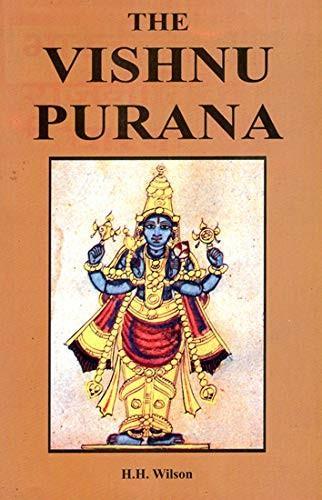
Thetransitionofapriestlyclassintoarulingnobilityisa recurring theme in South Asian state formation. The Mouzadar lineage traces its ori-gins to the Vishnu Purana,claimingdescentfromLordParshuram.
Claimed to have emerged as Rigvedi Brahmins in the Kerala region circa 600 BCE, this community served as
International Research Journal of Engineering and Technology (IRJET) e-ISSN: 2395-0056
Volume: 13 Issue: 04 | Apr 2026 www.irjet.net p-ISSN: 2395-0072
masters of Kalaripayattu and Raj-Gurus (royal preceptors). By merging spiritual bloodlines with royal dynasties through martial and advisory roles, they eventually migrated northwards. Defying the orthodox prohibition of crossing the Kalapani, they settled in Lower Assam and upper Bengal, transitioning into an aristocratic warrior-nobility at the request of the local populacetoprovidestabilityandprotection.
3. The Progenitor Myth and Sakta-Tantric Niyoga
In historical study, oral traditions often provide a “human” counter-narrative to official inscriptions. Local Vamsavalis(chronicles)detail abiological genesisofthe VarmanDynastythroughthepracticeofNiyoga.
3.1 The Consecrated Progenitor
The tradition records a five-day Sakta-Tantric ritual during a period of dynastic infertility. In this narrative, the Mouzadar is deified as a “Naked God” a living embodiment of Shiva called upon to seed the royal womb. The visceral details of this union, including the ritual consumption of the seed, serve a critical historiographical purpose: they establish the Mouzadar families as the biological and spiritual architects of the throne, possessing a vitality that “no common man” couldmatch.
3.2 Saviors of Shakti
This narrative codified the Mouzadars as “Worshippers oftheFemale”(Shakti).Byframingtheunionasadivine blessing that purified the royal vessel, the Mouzadars solidified their status as the ultimate guardians of the kingdom’sfertilityandpoliticalcontinuity.
4. Institutional Structures of Power
The dominance of the six hereditary families was institutionalized through specific feudal mechanisms that maintained their independence from centralized monarchies.
4.1 The Covenant of the Six Swords
Territorial sovereignty was defined by the Covenant of the Six Swords. The possession of these ceremonial blades marked the patriarch as the true Mouzadar, with authority strictly governed by paternal primogeniture. To distinguish their independent status, these families flewtheLionFlag,signalingtheywerenotmeresubjects, but autonomous nobles who could withdraw their warfinancingandsupporttoactaskingmakers.
As the wealthiest nobles, the Mouzadars oversaw a stratified hierarchy of Kannangois (landlords). This system allowed for massive wealth accumulation, which was often used to finance the defense of the Kamarupa kingdomagainstex-ternalthreats,effectivelymakingthe Mouzadars the primary financial engine of the region’s defensearchitecture.
Auniqueaspectofthisnobilityisthelogicregardingthe Janeu (sacred thread). The status of the families was viewedasbiologicalratherthanceremonial.
1. Dormant Status: The “Brahminical spark” was considered inherent in the genes. Even if a generation ceased wearing the thread due to active warfare, the status was never lost; it simplywentdormant.
2. The Right of Reclamation: Any descendant retained the right to “take up the thread” and reactivate their ritual purity without ex-ternal validation,apracticethatallowedthefamiliesto movefluidlybetweenpriestlyandwarriorroles asgeopoliticsrequired.
6. Colonial Erasure and Administrative Leveling
The arrival of the British Raj marked a calculated effort to destroy the independent power of the Hereditary Mouzadars. British officials eradicated the sixth and wealthiest family to prevent potential revolts, leaving onlyfivesurvivinglineages.
Furthermore, following the 1836 shift in administrative scripts, the British conflated the aristocratic Varman withthegenericBarman.Thislinguisticlevelingallowed other communities to adopt the title, intentionally diluting the unique identity and ancestral authority of theoriginalprotectors.
The Hereditary Mouzadars represent a lost chap-ter of Assamese independent nobility. As the wealthiest and most powerful independent nobles of ancient history, their role as biological architects and geopolitical defenders remains a cornerstone of the region’s sociocultural memory. Their legacy persists today in the five surviving ancestral swords, marking a lineage that success-fullysynthesized spiritual purity with sovereign power.
International Research Journal of Engineering and Technology (IRJET) e-ISSN: 2395-0056
Volume: 13 Issue: 04 | Apr 2026 www.irjet.net p-ISSN: 2395-0072
References
[1]Vamsavalis of the Sakto-Bamun Lineage. Unpublished Archival Manuscripts and Local Oral Traditions.
[2]Bhuyan, S. K. Anglo-Assamese Relations, 1771-1826. Department of Historical and Antiquarian Studies, Guwahati.
[3]Gait, E. A History of Assam. Thacker, Spink & Co., 1906.
[4]“The Revenue System and Social Stratification.” IJARESM,Vol.8,Issue2,132-147.
© 2026, IRJET | Impact Factor value: 8.315 | ISO 9001:2008 Certified Journal | Page 4057