
International Research Journal of Engineering and Technology (IRJET) e-ISSN: 2395-0056
Volume: 13 Issue: 03 | Mar 2026 www.irjet.net p-ISSN: 2395-0072

International Research Journal of Engineering and Technology (IRJET) e-ISSN: 2395-0056
Volume: 13 Issue: 03 | Mar 2026 www.irjet.net p-ISSN: 2395-0072
Mr. Rangaswami Bhandari 1 Mr. Swapnil Birajdar 2 , Mr. Chaitanya Bhojane 3 , Mr. Ruturaj Bhopale4 , Mr. Mayur Nanaware5
1,2,3,4, Student, Department of Mechanical Engineering, SPM Polytechnic, Kumathe, Solapur, Maharastra, India 5 Lecturer, Dept. of Mechanical Engineering, SPM Polytechnic college, Kumathe , Solapu , Maharastra, India
Abstract - The Solar Hybrid Power System is an efficient and reliable method of generating electricity by combining solar energy with another power source such as wind energy, battery storage, or conventional power supply. The main objective of this project is to utilize renewable energy sources to produce clean electricity and reduce dependence on fossil fuels. Solar energy is one of the most abundant and ecofriendly sources of energy available in nature. However, solar power generation depends on sunlight availability, which may vary during cloudy weather or nighttime. To overcome this limitation, a hybrid system is developed that integrates solar panels with an additional energy source and battery storage to ensure continuous power supply.
Key Words: Solar Hybrid power system, wind Energy, Solar Energy, eco-friendly, Power Generation
1.INTRODUCTION
ASolarHybridPowerSystemisasystemthatcombinessolar energy with another power source such as batteries, grid electricity,orgeneratorstosupplycontinuousandreliable power.Itusessolarpanelstoconvertsunlightintoelectricity andstoresextraenergyinbatteriesforlateruse.Whensolar powerisnotenough(forexampleatnightorduringcloudy weather),thesystemautomaticallyusesthebackuppower source.Solarhybridpowersystemsarebecomingpopular becausetheyhelpreducetheuseoffossilfuelsanddecrease electricitycosts.Theyareespeciallyusefulinareaswhere electricitysupplyisirregularorwheregridconnectionisnot available. The system usually consists of solar panels, inverter,batterystorage,chargecontroller,andsometimesa gridorgeneratorconnection.Themainadvantageofasolar hybridpowersystemisthatitprovidesuninterruptedpower supply while making use of clean and renewable solar energy. It also helps in reducing carbon emissions and protectingtheenvironment.Thesesystemsarewidelyused in homes, industries, offices, and rural areas for reliable electricity generation. In conclusion, solar hybrid power systemsareanefficientsolutionformodernenergyneeds because they combine renewable energy with backup sourcestoensureastableandsustainablepowersupply.
2. LITERATURE REVIEW
ThedevelopmentofSolarHybridPowerSystemsisclosely associated with the evolution of solar photovoltaic (PV) technology and renewable energy integration. Initially, standalonesolarsystemswerewidelyused;however,their dependency on sunlight limited their reliability. To
overcomethisissue,researchersintroducedhybridsystems thatcombinesolarenergywithotherpowersourcessuchas wind energy, battery storage, diesel generators, and grid supply.
Over the years, advancements in photovoltaic technology, energystoragesystems,andintelligentcontroltechniques havesignificantlyimprovedtheefficiencyandreliabilityof hybrid systems. Modern hybrid systems are designed to ensure continuous power supply by integrating multiple energy sources and optimizing their operation through advancedcontrolstrategies.
Variousresearchstudieshavebeencarried outto analyse the performance, design, and efficiency of solar hybrid systems:
Overall, the literature clearly indicates that solar hybrid power systems offer a reliable, efficient, and sustainable solution for modern energy needs. These systems reduce dependenceonfossilfuels,minimizeenvironmentalimpact, andensureuninterruptedpowersupply,especiallyinrural and remote areas. Continuous research in energy storage, smart control systems, and renewable integration is expectedtofurtherenhancetheperformanceandfeasibility ofhybridpowersystemsinthefuture.
Before you begin to format your paper, first write and savethecontentasaseparatetextfile.Keepyourtextand graphicfilesseparateuntilafterthetexthasbeenformatted andstyled.Donotusehardtabs,andlimituseofhardreturns toonlyonereturnattheendofaparagraph.Donotaddany kindofpaginationanywhereinthepaper.Donotnumbertext heads-thetemplatewilldothatforyou.
Mostexistingsystemsfocusoneithersolarorsolar-wind combinations,butlackproperintegrationandoptimizationof multipleenergysourcesformaximumefficiency.
Thereisaneedforasimple,cost-effective,efficient,and practically implementable solar hybrid power system that ensuresreliablepowersupplywithminimalmaintenance
The demand for electricity is increasing rapidly due to populationgrowth,industrialdevelopment,andtechnological advancements.However,conventionalenergysourcessuch ascoal,diesel,andnaturalgasarelimitedandcontributeto environmentalpollution.
International Research Journal of Engineering and Technology (IRJET) e-ISSN: 2395-0056
Volume: 13 Issue: 03 | Mar 2026 www.irjet.net p-ISSN: 2395-0072
Solarenergyisacleanandrenewablesource,butithasa majorlimitation itdependsonsunlightandcannotgenerate power during night or cloudy conditions. This leads to intermittentandunreliablepowersupply,especiallyinrural and remote areas where grid electricity is not stable or unavailable.
Toovercomethesechallenges,thereisaneedtodevelopa systemthatcan:
Providecontinuousandreliablepowersupply
Utilizerenewableenergyefficiently
Reducedependenceonfossilfuels
Becost-effectiveandeasytomaintain
Therefore, the problem addressed in this project is to design and develop a solar hybrid power system that integrates solar energy with other sources such as wind energyandbatterystoragetoensureuninterrupted,efficient, and eco-friendly power generation for small-scale applications.
ThemainobjectivesoftheSolarHybridPowerSystem projectareasfollows:
1.Tostudytheworkingprincipleofasolarhybridpower system.
2.Todesignanddevelopahybridsystemthatcombines solarpanels,batterystorage,andaninverterforefficient powergeneration.
3.Toprovidecontinuouspowersupplybystoringsolar energyinbatteriesforuseduringnightorlowsunlight conditions.
4.Toreducedependenceonconventionalelectricity sourcesandpromotetheuseofrenewableenergy.
5.Toimproveenergyefficiencyandreduceelectricity costsforresidentialorsmall-scaleapplications.
6.Todevelopanenvironmentallyfriendlysystemthat reducescarbonemissionsandpollution.
7.Tounderstandthecomponentsandoperationofsolar powersystemssuchassolarpanels,chargecontrollers, batteries,andinverters.
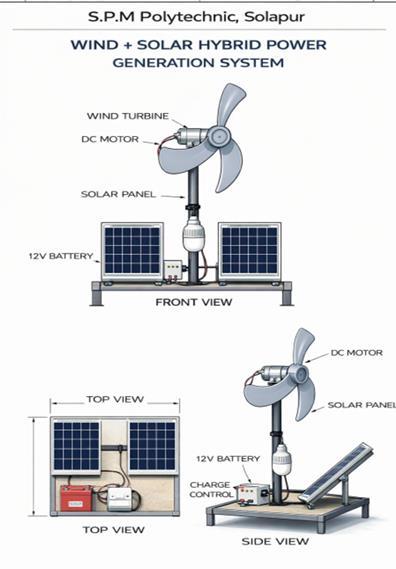
Thesolarhybridpowersystemworksbyconvertingsolar energyintoelectricalenergyandensuringcontinuouspower supplyusingbackupsources.SolarpanelsgenerateDCpower fromsunlight,whichisregulatedbyachargecontrollerand storedinabattery.TheinverterthenconvertsthestoredDC powerintoACpowerforrunningelectricalloads.Whensolar energy is insufficient, the system automatically uses the backupsourcetomaintainuninterruptedpowersupply.
Materialselectionplaysanimportantroleinensuringthe efficiency, durability, and cost-effectiveness of the solar hybridpowersystem.Thematerialsareselectedbasedon strength, availability, corrosion resistance, electrical properties,andeconomicconsiderations.
1. Frame Material
Material Used: MildSteel(MS)
Reason:
Highstrengthanddurability
Easytofabricateandweld
Lowcostandeasilyavailable
2. Solar Panel
Material Used: Silicon-basedphotovoltaiccells
Reason:
Highefficiencyinconvertingsunlighttoelectricity
Longlifespanandlowmaintenance
3. Wind Turbine Blades
Material Used: Plastic/PVC/Aluminum
Reason:
Lightweightforeasyrotation
Goodresistancetoenvironmentalconditions
International Research Journal of Engineering and Technology (IRJET) e-ISSN: 2395-0056
Volume: 13 Issue: 03 | Mar 2026 www.irjet.net p-ISSN: 2395-0072
4. Shaft / Support Pipe
Material Used: Steel
Reason:
Highmechanicalstrength
Supportsturbineloadandrotation
5. Battery
Type Used: Lead-acidbattery(12V)
Reason:
Cost-effective
Reliableenergystorage
Easilyavailable
6. Electrical Wiring
Material Used: Copperwires
Reason:
Highelectricalconductivity
Lowpowerloss
7. Inverter Components
MaterialUsed:Electroniccomponents(semiconductors, PCB)
Reason:
EfficientDCtoACconversion
Compactandreliable
8.Fasteners(Bolts,Nuts,Screws)
MaterialUsed:Steel
Reason:
Strongandsecureassembly
Easyinstallationandmaintenance
Theselectedmaterialsensurethatthesystemisstrong, efficient, economical, and suitable for small-scale applications, while maintaining durability and ease of fabrication.
7.FABRICATION & ASSEMBLY
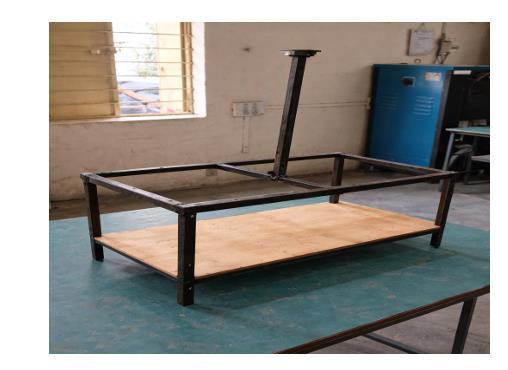
The assembly process of the solar–wind hybrid power model is carried out in several steps. First, a strong base frame is fabricated using mild steel square pipes and a woodenboardtosupporttheentirestructure.Theframeis welded properly to ensure stability. Next, a vertical metal pipeisweldedatthecenterofthebaseframe.Thispipeacts asthesupportstructureformountingthewindturbineand generator. After that, the wind turbine is assembled by attachingthreebladestoacentralhub.Thehubisconnected to a DC motor which acts as a generator. The turbine assembly isthen fixedatthe top ofthevertical pipe.Solar
panelsaremountedonthebaseboardusingboltsorbrackets atanangletocapturemaximumsunlight.Thebattery,switch board, and electrical wiring are installed on the base platform.Electricalconnectionsaremadebetweenthesolar panels, wind generator, battery, and load using insulated wires.Finally,thesystemistestedtoensurethatthesolar panelsandwindturbinegenerateelectricityproperlyandthe outputloadsuchasLEDlightworkscorrectly.
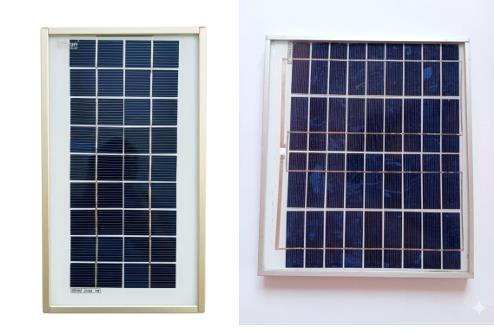
1. Solar Panels Solar panels convert sunlight into electricalenergyusingphotovoltaiccells.
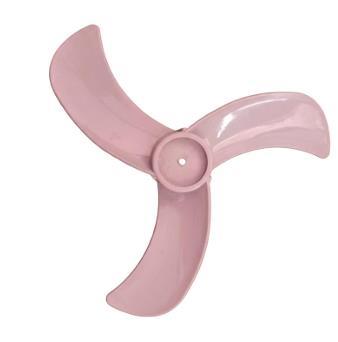
2. Wind Turbine Blades The blades capture wind energyandrotatetoproducemechanicalmotion.
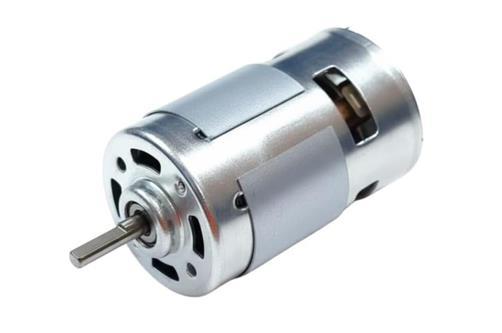
3.DCMotor/GeneratortheDCmotorconvertsmechanical rotationfromtheturbineintoelectricalenergy.
International Research Journal of Engineering and Technology (IRJET) e-ISSN: 2395-0056
Volume: 13 Issue: 03 | Mar 2026 www.irjet.net p-ISSN: 2395-0072
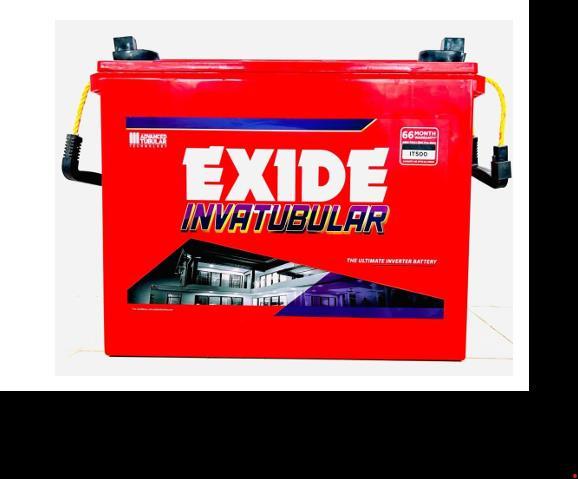
4. Battery The battery stores electrical energy generatedbythesolarpanelsandwindturbine.
5. Support Frame The frame supports the entire structureandkeepsallcomponentsstable
6.VerticalShaft/PipeThepipeholdsthewindturbineata suitableheightforwindflow.
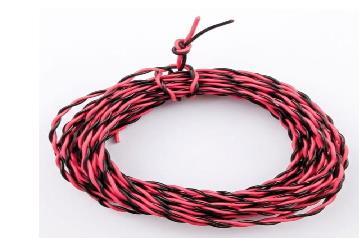
7.ElectricalWiringWiresconnectallelectricalcomponents andallowtheflowofcurrent.
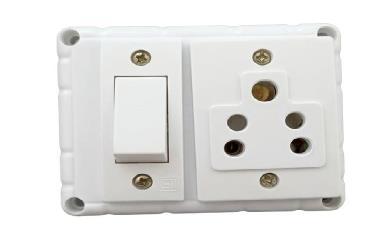
8.SwitchBoardTheswitchcontrolstheelectricaloutputand allowstheloadtobeturnedonoroff.
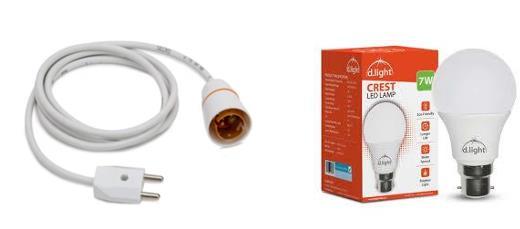
9. LED Lamp / Load The LED lamp is used as a load to demonstratetheelectricitygeneratedbythesystem.
International Research Journal of Engineering and Technology (IRJET) e-ISSN: 2395-0056
Volume: 13 Issue: 03 | Mar 2026 www.irjet.net p-ISSN: 2395-0072
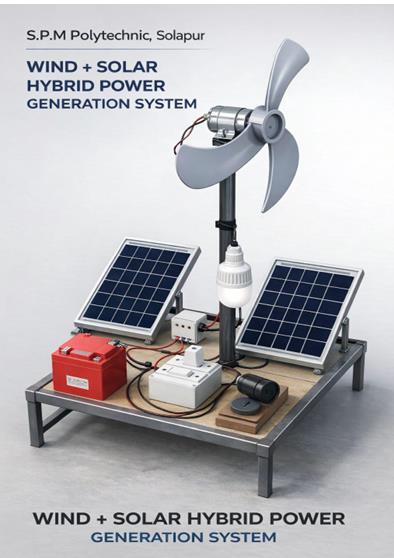
TheWind+SolarHybridPowerGenerationSystemworks bycombiningtworenewableenergysources solarenergy andwindenergy togeneratecontinuouselectricalpower.
1. Solar Energy Generation
Solar panels convert sunlight into Direct Current (DC) electricityusingphotovoltaiccells.Thisenergyissuppliedto thesystemandalsousedtochargethebattery.
2. Wind Energy Generation
The wind turbine rotates when wind flows over the blades.ThisrotationalmotiondrivesaDCmotor(generator), whichconvertsmechanicalenergyintoelectricalenergy.
3. Energy Storage
Bothsolarandwindgeneratedelectricityarestoredina battery. The battery acts as an energy storage unit and suppliespowerwhengenerationisloworunavailable.
4. Power Regulation
A charge controller regulates the voltage and current coming from both sources to protect the battery from overchargingandensuresafeoperation.
5. DC to AC Conversion
TheinverterconvertsstoredDCpowerintoAlternating Current(AC),whichisusedtooperateelectricalloadslike bulbs,fans,andmobilechargers.
Thegeneratedandstoredenergyissuppliedtotheload (LEDbulborappliances).
Duringdaytime→Solarpanelprovidespower
Duringwindyconditions→Windturbinegenerates power
Duringnight/lowenergy→Batterysuppliespower
This hybrid system ensures continuous and reliable power supply by utilizing both solar and wind energy, reducingdependenceonconventionalenergysources.
8.results
TheWind+SolarHybridPowerSystemwassuccessfully fabricatedandtestedunderdifferentoperatingconditions. Thesystemwasabletogenerateelectricalenergyfromboth solarandwindsourcesandstoreitefficientlyinthebattery.
Duringthedaytime,thesolarpanelsgeneratedsufficient electricalpower,whilethewindturbineproducedadditional energywhenwindwasavailable.Thehybridsystemensured a more stable and continuous power output compared to usingasingleenergysource.
The generated energy was stored in a 12V battery and laterusedtooperateelectricalloadssuchasLEDbulbsand mobile charging devices through an inverter. The system performed efficiently under varying environmental conditionsanddemonstratedreliableoperation.
The Wind + Solar Hybrid Power System has wide applications due to its ability to provide reliable and continuouspowersupply:
Usedinruralandremoteareaswheregridelectricityis notavailable
Suitable for residential homes for lighting and small appliances
Usedinstreetlightingsystems
Applicableintelecommunicationtowers
Usedforchargingmobilephonesandsmalldevices
Suitable for farms, small industries, and remote monitoringsystems
Canbeusedasabackuppowersystemduringpowercuts
10. Advantage & disadvantages
10.1 Advantages
Providescontinuouspowersupplyusingtwoenergysources
Environmentfriendly(nopollution)
Reduceselectricitybills
Usesrenewableenergysources
Lowoperatingandmaintenancecost
International Research Journal of Engineering and Technology (IRJET) e-ISSN: 2395-0056
Volume: 13 Issue: 03 | Mar 2026 www.irjet.net p-ISSN: 2395-0072
Suitableforremoteandoff-gridlocations
Increasessystemreliabilityandefficiency
10.2 Disadvantages
Highinitialinstallationcost
Batteryrequiresperiodicmaintenanceandreplacement
Systemdesigniscomplexcomparedtosinglesourcesystems
Outputdependsonweatherconditions(sunlight&wind)
Requiresproperinstallationandmonitoring
11.CONCLUSION
TheWind+SolarHybridPowerSystemisaneffectiveand sustainable solution for electricity generation using renewableenergysources.Thesystemsuccessfullycombines solar and wind energy to produce continuous electrical power.
It improves reliability, reduces dependence on conventionalenergysources,andminimizesenvironmental pollution.Theprojectdemonstratesthathybridsystemscan efficiently generate and store energy for small-scale applicationssuchaslightingandmobilecharging.
Overall, the system is economical in the long run and supports the development of clean and green energy technologies.
12.FUURE SCOPE
Use of high-efficiency solar panels to increase power generationAdoptionofadvancedbatteriesforbetterenergy storageIntegrationofsmartcontrolandmonitoringsystems Expansion for large-scale and rural electrification projects Developmentofmoreefficientwindturbinedesigns
13. REFERENCES
1. John Twidell and Tony Weir – Renewable Energy Resources
2. DuffieandBeckman– Solar Engineering of Thermal Processes
3. G.D.Rai– Non-Conventional Energy Sources
4. IEEEResearchPapersonHybridPowerSystems
5. SpringerandElsevierJournalsonRenewableEnergy
6. Ministry of New and Renewable Energy (MNRE), India
7. NationalRenewableEnergyLaboratory(NREL)
8. InternationalEnergyAgency(IEA)
9. HOMERProandPVsystSoftwareDocumentation