
International Research Journal of Engineering and Technology (IRJET) e-ISSN:2395-0056
Volume: 12 Issue: 01 | Jan 2025 www.irjet.net p-ISSN:2395-0072

International Research Journal of Engineering and Technology (IRJET) e-ISSN:2395-0056
Volume: 12 Issue: 01 | Jan 2025 www.irjet.net p-ISSN:2395-0072
Vishwashree Karhadkar1 , Reshma Kale1 , Chandrakanth Talakokkula1, Salal Ali Khan1
1Master’s Students at St. Francis Xavier University
Abstract - Social engineering is a type of deceptive human behaviour technique used in computer and network security which modifies user mindsets intending to cause harm to users or organizational assets. It consists of various phases applied in this type of attack explaining various types of active and passive attacks which come under social engineering like Phishing, Smishing, and Whaling etc. This type of attack can only be mitigated through proper training and awareness of the users. The following paper discusses from the basics of what is Social Engineering its type and ways of attacks, with that it also give us an idea about the defence mechanism, prevention methods and challenges available which can be implemented to prevent attacks happening under social engineering. This paper also explains the approaches that the corporate world can implement for the employees to have an idea of what and how social engineering attacks look like so they can be prevented.
Key Words: Social engineering, Human Behaviour, Physio-logical behaviour, Manipulation, Harm, Assets, Ethicalperspective,Defencemechanism.
Social engineering attacks are growing more frequent these days, making cyber security less effective. Social engineering is the practice of using trust-building techniques to manipulate people and organizations to get them to divulge private information like Social Security numbers and financial details[1]. Social engineering assaultsoccurfrequentlywhenvictimsclickonemailsthat contain malicious links, receive banking SMS requests for credentials that aren't really from the bank, or receive physical impersonationattemptsfrom people in positions ofpower[2].
Even with the effectiveness of firewalls, antivirus programs, intrusion detection systems, and cryptographic techniques, the danger to cybersecurity remains substantial. Humans trust other humans rather than trusting computers or technologies, this makes humans themostvulnerablelinktocybersecurity.
Taking this as an advantage, cyber criminals manipulate human minds making them reveal their personal information which compromises cybersecurity. Until people are trained to avoid falling for social engineering
assaults, hardware or software solutions will not be able topreventthesekindsofattacks.Cybercriminalsoptedfor theseattackswhentheycouldn'tbreakintoasystemwith notechnicalweaknesses[1].
Major corporations and media outlets have experienced targeted cyber attacks on their information systems, showcasing the vulnerability of even well-established entities. Google faced a significant breach in 2009, RSA's security token system was compromised in 2011, and Facebook encountered a breach in 2013, along with the New York Times. Instances of PayPal customers receiving phishing emails and inadvertently providing attackers withsensitiveinformation,includingcreditcardnumbers, further highlight the severity of these cyber threats. Such recent incidents involving valuable assets are commonly identifiedasAdvancedPersistentThreats[3].
Even though social engineering attacks may follow different processes, they all follow a similar pattern. The described approach involves four distinct stages: 1) acquiring information about the target, 2) establishing a connection with the target, 3) employing gathered information to execute the attack, and 4) ensuring the absence of any detectable traces. Figure 1 illustrates the fourphasesofasocialengineeringattack[1].
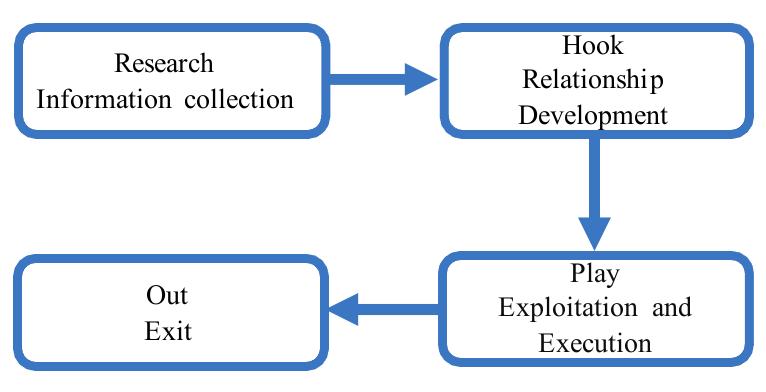
Figure-1:PhasesofSocialEngineeringAttack[1]
1.1 Phases of Social Engineering
1.1.1. Acquiring information about the target
An attacker can use various methods to gather information about their targets. Once they have this information,theycanuseittobuildaconnectionwiththe targetorsomeoneimportantforthesuccessoftheattack.
International Research Journal of Engineering and Technology (IRJET) e-ISSN:2395-0056
Volume: 12 Issue: 01 | Jan 2025 www.irjet.net p-ISSN:2395-0072
The gathered information may include things like phone numbers, birthdates, and details about the organization's structure[4].
1.1.2 Establishing a connection with the target
An attacker might take advantage of a person's trust to create a fake relationship. During the development of this relationship,theattackerwilltrytopositionthemselvesas trustworthybeforeattemptingtoexploitthesituation[4]
1.1.3 Employing gathered information to execute the attack
The person being targeted might be influenced by the 'trusted' attacker to share information like passwords or perform actions, such as creating an account or making reverse phone charges, which wouldn't normally happen. Thiscouldbetheendoftheattack orthestartofthenext step[4]
1.1.4 Ensuring the absence of any detectable traces
In this phase, the attacker strategically exits, leaving no traces behind. This careful retreat is crucial for maintaininganonymityandavoidingdetection.Byleaving no evidence, the attacker aims to escape accountability andmakeitchallengingtoidentifythem[1]
Social engineering attacks are tricky methods used by attackerstotakeadvantage ofhow peoplethink and trick them into sharing private information, giving access they shouldn't, or doing things that can harm a person or company. These assaults rely on psychological manipulationratherthantechnicalexploits.[4]
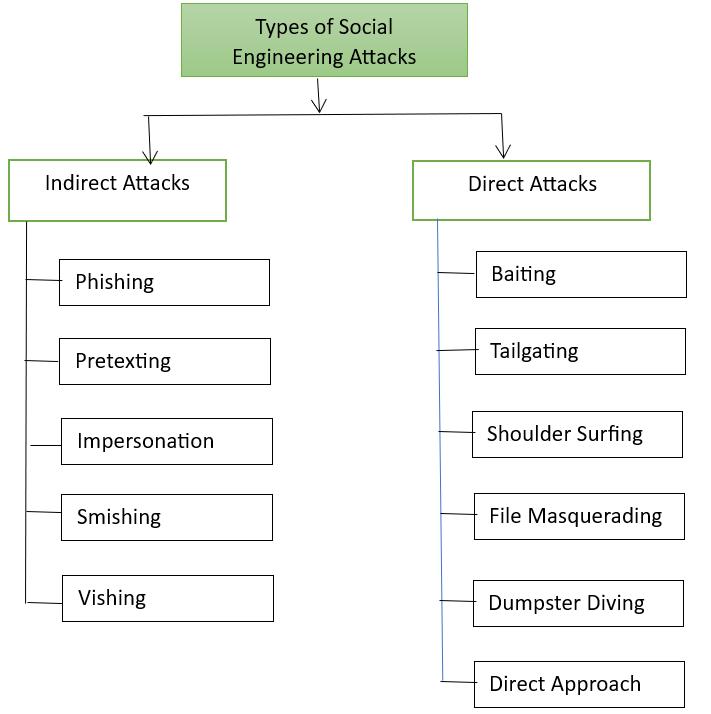
Therearetwotypesofsocialengineeringattacks,Indirect and direct attacks. Indirect attacks are those that can be launched via phone calls, SMS, email, and so on. On the contrary,withdirectattacks,theattackermustbepresent.
2.1 Indirect Attacks
Themostcommonlyusedsocialengineeringattacksare:
2.1.1 Phishing: Attackers send misleading emails, messages,orwebsitesthatappearauthentictofoolpeople into disclosing personal information like passwords, usernames, or financial information. Example - An email that looks like it's from a trusted organization (bank, government, etc.) asking the recipient to click a link and providelogincredentials.[4]
2.1.2 Pretexting: Togaininformationfromthetarget,the attacker fabricates a situation or pretext. To gain trust, they may pose as a coworker, authority figure, or service provider. Example - Pretending to be an IT support technicianandphoninganemployeetorequesttheirlogin credentialsforsystemmaintenance.[1]
2.1.3 Impersonation: To get unwanted access or information, the attacker poses as someone the target knows or trusts, either in person, over the phone, or online.[4]
2.1.4 Smishing: Involves the use of text messages (SMS) to deceive people into disclosing sensitive information, clicking on harmful links, or performing other acts that couldjeopardizetheirsecurity.[4]
2.1.5 Vishing: Attackers use voice communication, commonly over the phone, to impersonate genuine institutions and deceive people into disclosing sensitive information. For example, a phone call from someone
International Research Journal of Engineering and Technology (IRJET) e-ISSN:2395-0056
Volume: 12 Issue: 01 | Jan 2025 www.irjet.net p-ISSN:2395-0072
impersonating a bank official demanding account informationforverification.[4]
2.2.1 Baiting: Attackers offer an enticing offer, such as a free software download or a USB drive, to infect the victim's system or gather information when the victim engages with the bait. For instance, leaving infected USB drivesinapublicplacelabelled"EmployeeSalaries"inthe hopethatsomeonewillplugitintotheircomputer[1]
2.2.2 Tailgating: The attacker physically follows an authorized person into a restricted area without proper authentication.[4]
2.2.3 Shoulder Surfing: Shouldersurfingisatechniquein whichanattacker oversees or"surfs" over anindividual's shoulder to get unauthorized access to sensitive informationsuchaspasswords,PINs,orothersecretdata. Example - An individual typing their ATM PIN at an ATM, and an attacker standing nearby watches and memorizes thePIN.[1]
2.2.4 File Masquerading: File masquerading is a deceptive technique in which an attacker disguises dangerous software or content as a legitimate file to deceive users into opening or running it. This method is frequentlyusedtospreadmalware[4].
2.2.5 Dumpster Diving: Dumpster diving is a physical intrusion tactic in which an attacker searches through trashorrecyclingbinstofindusefulinformation.Thisdata may consist of documents, printouts, or technological gadgets[1].
2.2.6 Direct Approach: The direct approach is a social engineeringtechniqueinwhichanattackerapproachesan individual or target directly and seeks information or accesswithouttheuseofdeception.
3. Defence Mechanism of Social Engineering Attacks
Defence mechanisms of this type of attack include the types of strategies and ways that can mitigate the impact causedbysocialengineering.
Followingaresomeofthedefencemechanisms:
3.1.1 Educational Initiatives for Social Engineering Defence: This approach focuses on continuously educating staff about the different types of social engineering attacks, such as phishing and pretexting. It emphasizes teaching them how to recognize these tactics and respond appropriately. Regular workshops, training sessions, and informational updates play a key role in keepingeveryoneinformedandvigilant[5].
3.1.2 Robust Security Frameworks: Thisaspectinvolves craftingandenforcingcomprehensivepoliciesthatdictate howsensitiveinformationshouldbehandledandsecured. It covers guidelines for robust password creation and management, as well as protocols to follow when a potential security breach occurs. The aim is to create a strongfoundationofpoliciesthatupholdthe integrityand securityoftheorganization[5].
3.1.3 Enhanced Verification with MFA: Multi-factor authentication (MFA) adds an extra layer of security by requiring multiple forms of verification before granting access to systems or accounts. This might include something the user knows (a password), something they have (a security token or phone), and something they are (Biometric verification like fingerprints). This complexity significantly reduces the chances of unauthorized access[6].
3.1.4 Ongoing Security Evaluations: Regular security audits and assessments are akin to systematic health checks for an organization's security framework. These evaluations help in identifying and addressing vulnerabilities and ensuring that security measures are effective and compliant with current standards and threats[7].
3.1.5 Access Control Mechanisms: Thisstrategyisabout implementing stringent access controls to sensitive information.Itinvolvessettinguppermissionsandaccess rights so that only authorized individuals can access specific types of data. This is crucial in preventing unauthorizedaccessandpotentialdatabreaches[8].
3.1.6 Data Transmission Security Protocols: Thisrefers to the use of secure methods for data transmission. It involves encrypting data as it moves across networks to prevent interception or tampering by unauthorized entities. This ensures that sensitive information remains confidentialandintactduringtransmission[8].
3.1.7 Anti-Phishing Training Exercises: These are practical training methods where employees are exposed to simulated phishing scenarios. The goal is to enhance their ability to identify and appropriately respond to real phishingattacks,thusreducingthelikelihoodofsuccessful deception[7].
3.1.8 Preparedness for Security Incidents: An Incident Response Plan is a detailed strategy prepared in advance toaddressandmanagethe aftermathofa securitybreach or cyberattack efficiently and effectively. It includes steps for quick detection, response, containment, and recovery, minimizingpotentialdamage[7].
3.1.9 Authentication Checks for Unusual Requests: Thisinvolvessettinguprigorousverificationprocessesfor any unusual or unexpected requests, especially those
International Research Journal of Engineering and Technology (IRJET) e-ISSN:2395-0056
Volume: 12 Issue: 01 | Jan 2025 www.irjet.net p-ISSN:2395-0072
involvingaccesstosensitiveorfinancialdata.Theaimisto ensure authenticity and prevent fraudulent activities by rigorouslycheckingthevalidityofsuchrequests[6].
3.1.10 Proactive Software Maintenance: This refers to theregularupdatingandpatchingofsoftwareandsystems to protect against known vulnerabilities. Timely updates are crucial in safeguarding against the exploitation of software flaws,particularlythose thatmight beleveraged insocialengineeringattacks[5]
By implementing these detailed strategies, organizations can build a comprehensive Defence against social engineering, effectively reducingtherisk of data breaches andotherCyberthreats.
4.1 Human failure:
Social Engineering is the art of manipulating human behaviourthat’swhyit’shardtodetectbecausetheydon’t rely on technical vulnerabilities and emphasize human manipulation so they can leak private information to the perpetrators. This type of crime targets various kinds of sensitive information but when any individual is targeted so he/she ends up giving their passwords, bank information or access to their computers so the perpetrators can secretly install malicious software. According to research around 23 percent of people accurately manage less than half of the cyber security issues or scenarios and only 4 percent can handle more than90percentofsituations[9].
4.2 Range of attacks:
Attackers use many kinds of active and passive attacks during social engineering, such as identity masquerade, phishing, or playing with the intentions/psychology of humanbehaviour.Aswehavealotofsecurityattacksand only social engineering includes many ways of attack so duringthedesignphaseorperiodicsecuritychecksofour systems keeping all of them in consideration gets very hard for the security teams. On the other hand, in an organizational set implementation of authentication and accesscontrol fordealingwithtypesofsocial engineering is a challenging task to maintain so balancing the smooth day-to-dayoperationsoftheorganizationandstrictaccess control is what needs to be in consideration while designingthesecuritymechanism[10].
Furthermore,Inthetechnological advancementoftoday’s world if the black hate attackers are innovating new techniques for its breakage so the organizations should also do the same for keeping their assets safe which encompasses hands-on many tools such as threat intelligence and staying aware of emerging techniques of
social engineering and making sure to also train the employersaboutit[11].
This type of threat/risk comes from within the organization like by employees or other affiliated members or outsourced persons with any organization who have information regarding the assets, security practices and data of the organization. They can exploit thesecuritymechanismsbydoingsomethingintentionally or unintentionally. In terms of social engineering attacks, thesetypeofpeoplewithevilintentionsandevilmindsets can utilize their knowledge about security mechanisms and processes of an organization’s security towards any formofattack[12].
4.4 Budget constraints:
The limitation of budget can have a drastic effect on the ability of the security team to mitigate the risk which can becausedbysocialengineeringattacks.Thosepeoplewho are not aware of technological attacks nowadays cannot evaluate the impact which can be caused by these events in an organization it is the task of a manager to allocate a budget for any project so making them satisfied with a vast array of these attacks is a hard job. Additionally. Predicting the possibility of a social engineering attack is also not possible for any computer security designer, so budgetalignmentwiththechancesofitshappeningshould beequallycalculated.
4.5 Training limitations:
In almost every work environment specifically information technology-related organizations the focus is all on the technical skills and training but they don’t give muchstressonthetransferableskillslikecriticalthinking, attentiontodetailortrustassessmentandbynotcovering these sides of the information, leaves the employees unprepared for small but important tactics to prevent social engineering attacks. Sometimes the employers also don’t show seriousness towards such sessions, by believing that they already possess technical skills and have enough knowledge about security mechanisms, or they treat it like box ticking scenario which means attending it just as formality by the management rather than truly grasping the importance of security, which can lead to vulnerabilities. Therefore, during mitigating the cybersecurityrisksitisverymuchnecessarytomakethe employees of an organization aware of the intensity of harmwhichcanbeproducedthroughsocialengineering.
Social engineering acts have seen a rap growth in recent years[13] and they have been significant growth at the time of Covid-19 [13]leading to a wide range of attacks
International Research Journal of Engineering and Technology (IRJET) e-ISSN:2395-0056
Volume: 12 Issue: 01 | Jan 2025 www.irjet.net p-ISSN:2395-0072
related to social engineering [13] happening throughout the world.A major reasoncanbe the shift the peopleand organizationalworldhadfromin-persontoWorkingfrom Home (WFH) where people were more on digital devices comparedtobeforeCOVID-19.
Therearealotofscenariosandavarietyofdirectionsand fields where we can check about research happening around for more sophisticated ways to get a solution in the field of social engineering attacks. The reasons why theyaresubdividedintosectionseventhoughweconsider socialengineeringasawholeisbecausesocialengineering can be considered as an act of manipulation, as well as it has psychology involved[13] and if we consider the corporate environment, there are various types of employeeswhichcanfallpreytosocialengineering.It'san interdisciplinary field which has lots of types and lots of solutionsrequiredbasedonthescenarioinvolvedinit.So theresearchdirectionsfurtherhavevariousaspects.
Research has been done about what type of solutions would be optimal for preventing social engineering attacks. The major part of social engineering happens in person within an organization so the main focus automatically falls on the organizational part and mainly the employees. Researchers are suggesting that there should be an internal audit [13] within the organization for all employees to know what's going on and if all of themareonthesamepage.Theothermostimportantone is regarding giving proper training[13] and letting new hirepeopleandemployeesknowabouthowtosecureand protect the content they share on the internet. With that, they should also know what social engineering looks like. Researchersarenowthinkingabouthowtoworkonthese thingsandwhattypeoftrainingitshouldlooklikeforthe HR department people are known to train the new hires. Theotherscenariowheresocialengineeringcanhappenis because managers do not know how and what to understandaboutsocialengineeringattacksandhowthey might come, we can train the people who are on the management level to know. The lack of knowledge within thehigherauthoritycanleadtohighandseveredamageto thewholeorganization.
Researchers are now trying to implement and figure out another type which is sustainability testing[13] which detects and analyzes the attempts made to fabricate and obtain access to a system implemented on the suspected employee.Italsofocusesandworksonhowanysuspected employeewouldplan a social engineering attack in a way to gather or fabricate information from the organization and researchers are being made on how they can be protectedoravoided.
Anothersimilarwaycanbe ofthepenetrationsystem[14] whichdescribesthesamebutadifferentapproachtohow attacks can be thought of and implemented to have successful social engineering attacks using any employee.
Another part of the research has been made on public communication[14] where the organization employee or victimshouldknowaboutwhattypeoflanguageisusedto gain information. This can be done by giving training so thatevenifapersonisabouttogetvictimized,he/shecan recognize the behaviour and communicate way and take stepstoavoidandpreventtheattacks.
As discussed in the research discretion part above, social engineeringattackshavegrowninrecentyears andthat's why there are no available and evident frameworks to be available for the world to study and implement to avoid attacks and detection. An employee or organization can study the framework and implement it to commit to and maintain the security of the organization and can also train it for the new employees joining the organization. It canalsohelpthemanagerstoknowandgivethemaquick guide to learn about the framework. As we have referred totheframeworkFig3,Itgivesusanideaofsusceptibility to the social engineering attack which covers 2 aspects in the given framework. Psychology, business and information technology. All these aspects can be then governed on top by only one perspective which is given ethical prescriptive. It also helps to add to the business discipline[14]withintheorganization.
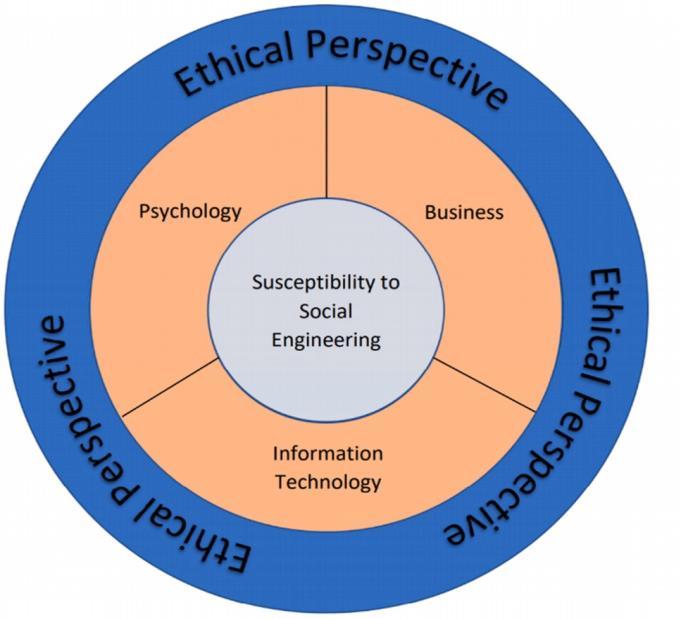
Figure-3:Susceptibilityframeworkforsocial engineering[13]
The idea we would also like to add is to print the framework and paste it into the organizations. As well as make this framework part of the training document. This will help avoid and prevent more social engineering attacks in organizations throughout the hierarchy of employees which is where the most social engineering attacksandvictimscanbefound.
International Research Journal of Engineering and Technology (IRJET) e-ISSN:2395-0056
Volume: 12 Issue: 01 | Jan 2025 www.irjet.net p-ISSN:2395-0072
In conclusion, in this paper, we are addressing the significance of social engineering as a dynamic and evolving threat to cybersecurity. The suggested defence mechanismsandresearchdirectionsserveasafoundation for building resilient systems and fostering a proactive approach to cybersecurity in the face of increasingly sophisticatedsocialengineeringattacks.Itemphasizesthe need for continuous innovation in security measures to stayaheadofevolvingattacktechniques.
The challenges mentioned, including human factors, diverse attack methods, internal security risks, budget constraints, and training limitations, call for ongoing research efforts to refine and enhance defence mechanisms.Theframeworkdiscussedinthefuturescope can be a potential mechanism for organizations to know moreaboutsocial engineeringandthe ethical perspective itadheresto,whichshouldhelpthemtounderstandmore onhowtoexpectitindifferentwaysandsocantheystop andpreventitmakingsocialengineeringattacksharderto beperformedonsuchorganizations.
[1] F. Salahdine and N. Kaabouch, “Social Engineering Attacks: A Survey,” Future Internet, vol. 11, no. 4, Feb. 2019.Available:https://doi.org/10.3390/fi11040089
[2]R.HeartfieldandG.Loukas,“Ataxonomyofattacksand a survey of defense mechanisms for semantic social engineeringattacks,” ACM Comput. Surv.,vol.48,no.3,Art. 37, Dec. 2015, 39 pages. Available: http://dx.doi.org/10.1145/2835375.
[3] K. Krombholz, H. Hobel, M. Huber, and E. Weippl, “Advanced social engineering attacks,” Journal of Information Security and Applications, vol. 22, pp. 113–122, 2015. Available: https://www.sciencedirect.com/science/article/pii/S221 4212614001343
[4]S.Gupta,Isha,A.Bhattacharya,andH.Gupta,“Analysis ofSocialEngineeringAttack onCryptographicAlgorithm,” in 2021 9th International Conference on Reliability, Infocom Technologies and Optimization (Trends and Future Directions) (ICRITO), Noida, India, Sep. 2021. Available: https://ieeexplore.ieee.org/document/9596568.
[5] A. Gupta and B. Sharma, “Comprehensive Review of Defense Mechanisms Against Social Engineering Attacks,” IEEE Transactions on Information Forensics and Security, vol. 18, no. 3, pp. 720–735, Mar. 2023, Avaliable: https://www.researchgate.net/publication/376266487_S ocial_Engineering
[6] L. Nguyen and M. Patel, “Role of Multi-Factor Authentication in Thwarting Social Engineering,” IEEE Security and Privacy,vol.21,no.2,pp.112–119,Apr.2023, doi:10.1109/MSP.2023.2345678.
[7]C.KimandD.Lee,“PhishingSimulationandEmployee AwarenessPrograms:AnEmpirical Study,”in Proceedings of the IEEE International Conference on Cybersecurity and Resilience, pp. 88–95, Jul. 2023, doi:10.1109/ICCR.2023.8912345.
[8] S. Kaur and J. Singh, “Evaluating the Effectiveness of Regular Security Audits in Preventing Social Engineering Breaches,” IEEE Transactions on Dependable and Secure Computing, vol. 20, no. 1, pp. 47–60, Jan. 2023, doi:10.1109/TDSC.2023.4567890.
[9] C. Beaman, A. Barkworth, T. D. Akande, S. Hakak, and M. K. Khan, “Ransomware: Recent advances, analysis, challengesandfutureresearchdirections,” Computers and Security, vol. 111, 2021. Available: https://www.sciencedirect.com/science/article/pii/S016 740482100314X
[10] C. J. Hadnagy, Social Engineering: The Science of Human Hacking, 2nd ed., Jun. 2018. Available: https://theswissbay.ch/pdf/Books/Computer%20science /socialengineeringthescienceofhumanhacking2ndedition. pdf
[11] “Advance techniques for detecting steganographic content in network flows,” IEEE Transactions on Dependable and Secure Computing,2014.
[12] A. Masood and A. Masood, “A Taxonomy of Insider Threat in Isolated (Air-Gapped) Computer Networks,” in 2021 International Bhurban Conference on Applied Sciences and Technologies (IBCAST), Islamabad, Pakistan, pp. 678–685, 2021. Available: https://ieeexplore.ieee.org/abstract/document/9393281 /citations?tabFilter=papers#citations
[13] A. H. Washo, “An Interdisciplinary View of Social Engineering: A Call to Action for Research,” ScienceDirect, vol. 6, no. 100126, Aug.–Dec. 2021. Available: https://www.sciencedirect.com/science/article/pii/S245 1958821000749?via%3Dihub
[14] F. Mouton, M. M. Malan, K. K. Kimppa, and H. S. Venter, “Necessity for Ethics in Social Engineering Research,” ScienceDirect/Elsevier, vol. 55, no. 55, Nov. 2015. Available: https://www.sciencedirect.com/science/article/pii/S016 7404815001224
International Research Journal of Engineering and Technology (IRJET) e-ISSN:2395-0056
Volume: 12 Issue: 01 | Jan 2025 www.irjet.net p-ISSN:2395-0072




Vishwashree Karhadkar
Currently, Pursuing A Master’s In AppliedComputerScienceAtStfx University, Canada Professional Interests Are In Full Stack Web Development, Domain Security, TestingAndMl.
Salal Ali Khan
Currently, pursuing a master’s in AppliedcomputerscienceatSTFX University, Canada Professional interests are in Full Stack Web Development, Domain Security, TestingandML
Reshma Kale
Currently, pursuing a master’s in AppliedcomputerscienceatSTFX University, Canada. Professional interests are testing, ML, domain security, and full-stack web development
Chandrakanth Talakokkula
Currently, pursuing a master’s in AppliedcomputerscienceatSTFX University, Canada Domain and professional interests are in DomainSecurity,TestingandML