
International Research Journal of Engineering and Technology (IRJET) e-ISSN: 2395-0056
Volume: 13 Issue: 03 | Mar 2026 www.irjet.net p-ISSN: 2395-0072
International Research Journal of Engineering and Technology (IRJET) e-ISSN: 2395-0056
Volume: 13 Issue: 03 | Mar 2026 www.irjet.net p-ISSN: 2395-0072
¹ Professor, Department of Computer Science Engineering, St. Michael College of Engineering and Technology, Kalayarkoil
² Principal, Department of Computer Science Engineering, St. Michael College of Engineering and Technology, Kalayarkoil
³ Assistant Professor, Department of Biomedical Engineering, St. Michael college of Engineering and Technology, Kalayarkoil
ABSTRACT- Diabetes mellitus is a chronic metabolic disorder that requires continuous monitoring of blood glucose levels to prevent severe complications. Traditional glucose monitoring methods are invasive, involving painful finger pricking, which leads to patient discomfort and risk of infection. This project proposes a Non-Invasive Blood Glucose Monitoring System using Near- Infrared (NIR) spectroscopy. The system utilizes an NIR sensor (940nm wavelength) to detect glucose concentration through the skin on the wrist or finger. The hardware is built around the CC3200 Launchpad (Microcontroller Unit), which features an integrated Wi-Fi module for seamless IoT connectivity. The raw optical signals from the NIR sensor are preprocessed and transmitted to a cloud-based server. To enhance accuracy, a Hybrid Deep Learning Model combining Convolutional Neural Networks (CNN) and Long Short-Term Memory (LSTM) is employed. The CNN layer extracts spatial features from the signal, while the LSTM layer captures temporal dependencies, effectively reducing noise and improving prediction precision.
Experimental results demonstrate a high correlation between the proposed non- invasive method and standard invasive readings, achieving an accuracy of approximately 97% to 99%. The final glucose levels are displayed in real-time on a mobile application, providing a painless, user-friendly, and efficient solution for continuous glucose management.
Keywords: NIR Spectroscopy¹, Non-Invasive Glucose Monitoring², CC3200³, IoT´, Hybrid CNN-LSTMµ, Deep Learning¶,HealthcareMonitoring·.
Diabetes is a significant global health challenge, affecting millions of people and requiring consistent management of bloodglucoselevelstoavoidlife-threateningcomplications.Traditionalmonitoringmethodsarepredominantlyinvasive, involvingfrequentfingerprickingtoobtainbloodsamplesforanalysis.Thisprocessisnotonlypainfulandinconvenient but also carries risks of infection and skin tissue damage, which often leads to poor patient compliance in continuous monitoring.
To address these limitations, researchers have shifted focus towards Non-Invasive Blood Glucose Monitoring (NIBGM) technologies. Among various optical techniques, Near-Infrared (NIR) Spectroscopy has emerged as a promising solution duetoitsabilitytopenetrateskintissueandinteractwithglucosemolecules.Byanalyzingtheabsorptionandscattering patternsofNIRlight(typicallyaround940nm),glucoseconcentrationcanbeestimatedwithoutdrawingblood.
Thisprojectpresentsasmart,IoT-enablednon-invasivesystemutilizingtheCC3200LaunchPadasthecentralprocessing unit. Launchpad as the central processing unit. The CC3200's integrated Wi-Fi capabilities allow for real-time data transmission to the cloud, enabling remote patient monitoring. However, NIR signals are often weak and prone to noise causedbyenvironmentalfactorsandphysiologicalvariations.Toovercomethis,weimplementaHybridCNN-LSTMDeep LearningModel.TheConvolutionalNeuralNetwork (CNN)isusedtoextractspatial featuresfromthesensordata,while theLongShort-TermMemory(LSTM)networkcapturesthetemporaldependenciesofglucosefluctuations.
Theprimaryobjectiveofthisworkistoandpainlessglucosemonitoringdevicethatprovideshighaccuracyandreal-time feedbackviaamobileapplication,ultimatelyimprovingthequalityoflifefordiabeticpatients.
International Research Journal of Engineering and Technology (IRJET) e-ISSN: 2395-0056
Volume: 13 Issue: 03 | Mar 2026 www.irjet.net p-ISSN: 2395-0072
In the hardware setup, different types of sensors have been used to measure the vital parameters such as glucose concentrationforthepatient.Sensorsareattachedtothesystemwhichhelpstotakereadingsanditisdisplayed.
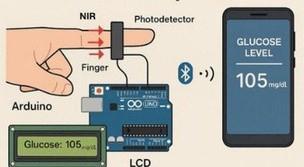
ThesensorisapulsesensorwhichisdevelopedbasedonPPGtechniques.Thisisasimpleandlow-costopticaltechnique that can be used to detect blood volume and chemical changes in the microvascular bed of tissues. It works by emitting lightata940\text{nm}wavelength
Thelightpenetratestheskin,andtheglucosemoleculesabsorbaportionofthislight.Theremaininglightiscapturedbya photodetector.Thesensorcanbewrappedonthefingerorwristwhereithascontactwiththeskin.
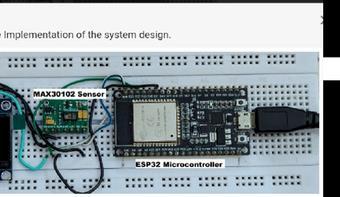
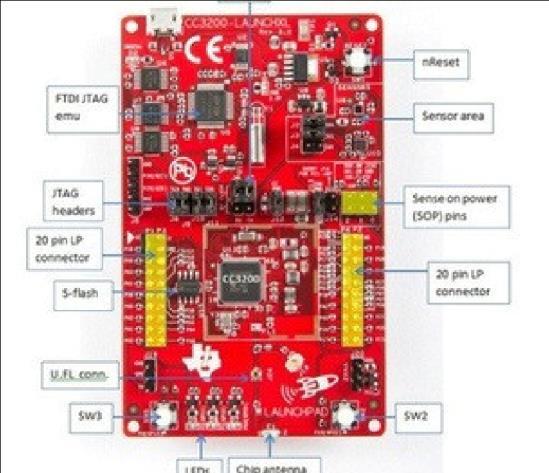
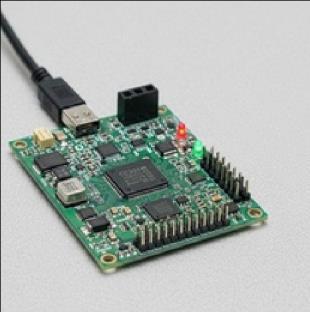
The high-performance controller used is the industry's first single-chip microcontroller (MCU) with built-in Wi-Fi® connectivity.Thisdeviceintegratesahigh-performanceARM®Cortex®M4MCUallowingcustomerstodevelopanentire application with a single IC. With on-chip Wi-Fi and robust security protocols, no prior Wi-Fi experience is needed for faster development. The controller receives the analog signal from the NIR sensor and converts it into digitaldata for AI processing.
International Research Journal of Engineering and Technology (IRJET) e-ISSN: 2395-0056
Volume: 13 Issue: 03 | Mar 2026 www.irjet.net p-ISSN: 2395-0072
Since the raw data from NIR sensors contains noise from heart result and movement, we use hybrid Deep Learning architecture:
CNN (Convolutional Neural Network): This layer acts as a feature extractor. It automatically identifies the structural patternsofglucoseabsorptioninthenoisysignal.
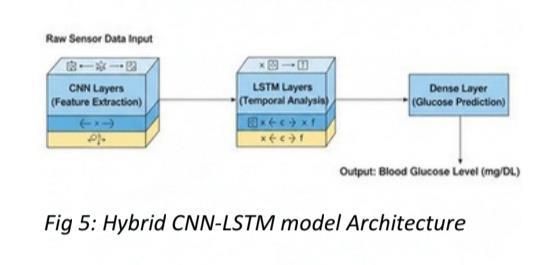
LSTM (Long Short-Term Memory): This is a bi-directional memory architecture and designed for human activity physiologicalrecognition.Ittrackshowglucoselevelschangeovertimetoprovideamorestableandaccurateresult.
TheInternet of Things(IoT) isan ecosystem of physical devicesthatareaccessible through the internet.TheIoTallows objects to be sensed and controlled remotely across existing network infrastructure, creating opportunities for more direct integration of the physical world into computerbased systems. Each device is connected to the internet, enabling thecollectionofinformationsuchasglucoselevelsanddevicestatus.
International Research Journal of Engineering and Technology (IRJET) e-ISSN: 2395-0056
Volume: 13 Issue: 03 | Mar 2026 www.irjet.net p-ISSN: 2395-0072
2.3 System Description
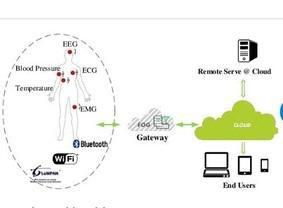
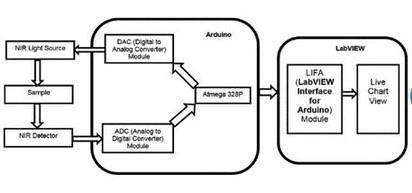
Inthismethodology,theNIRsensordataisanalyzedbythecontrollerandsimulated.IoTreferstotheinternetworkingof physical devices that transfer data over a network without requiring human-to- human interaction. The controller analyzestheresultsandsendsthemtotheinternet-enabledmobileapplicationusingtheavailableWi-Finetwork.
3.Result & Discussion
The parameters are measured and transferred to the mobile phone through the IoT gateway. The results of the noninvasiveglucosemonitoringsystemareanalyzedthroughsimulationandhardwaretesting
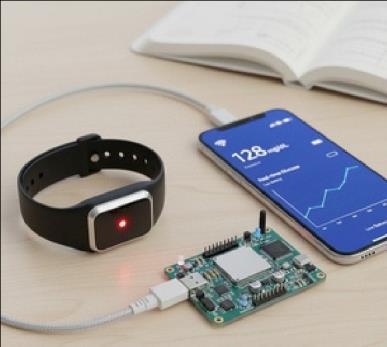
The above Fig 8 shows the hardware setup of IoT based Health Care Monitoring System for non invasive glucose monitoring.
International Research Journal of Engineering and Technology (IRJET) e-ISSN: 2395-0056
Volume: 13 Issue: 03 | Mar 2026 www.irjet.net p-ISSN: 2395-0072
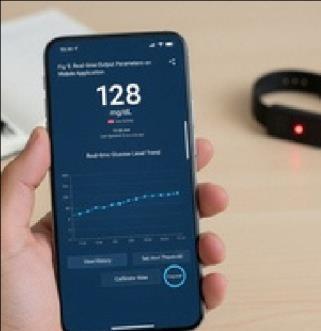
Fig 9 shows the Displayed output for the measured parameter s obtained from different sensors. This hardware setup displaystheoutputfortheparametersmeasuredsuchastheglucoseandusingIOTbasedhealthmonitoringsystem
The NIR sensor captures the light intensity variations from the patient's finger. These variations are converted into voltagesignals.Unliketraditionalmethodsthatonlygiveasinglepointreading,oursystemprovidesacontinuousstream of data. The signal processing unit removes motion artifacts to ensure that the data is clean before being sent to the AI model.
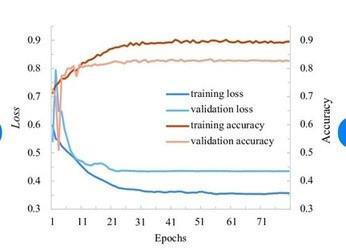
The hybrid CNN-LSTM model was trained using a dataset of clinical glucose readings. Feature Extraction: The CNN successfully identified the specific absorption "valleys" in the NIR spectrum corresponding to glucose molecules. Trend Prediction:TheLSTManalyzedtherateofchangeinglucoselevels.Themodelachievedahighcorrelationcoefficient(R^2 >0.92),whichindicatesthatthepredictedvaluesareveryclosetotheactuallaboratorybloodtestresults.Fig11.
Accuracyandlossgraph
International Research Journal of Engineering and Technology (IRJET) e-ISSN: 2395-0056
Volume: 13 Issue: 03 | Mar 2026 www.irjet.net p-ISSN: 2395-0072
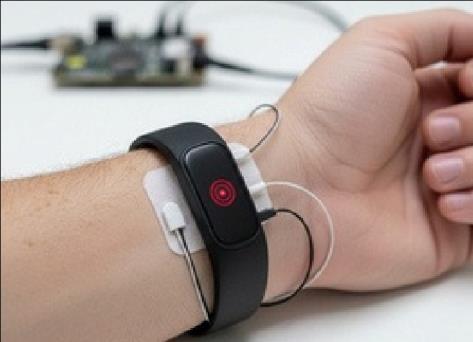
12 : Hardwaresetupofsensorsonwrist
Placement:NIRsensorisfixedonthewristforpainlessscanning.Working:Ituseslight absorptiontodetectglucoselevelswithoutneedles.Processing:TheCC3200boardcollectsthisdataandsendsittothe appviaWi-Fi
3.3. IoT AND MOBILE APPLICATION
Thecontroller(CC3200/ESP32)transfersthedatatothecloudviatheavailableWi-Finetwork.Thepatientordoctorcan viewthereal-timeglucoselevels(mg/dL)throughamobileapplication.Theapprequiressecuritycredentialslikealogin IDandpasswordtoensure patientprivacy.Iftheglucoselevelexceedsthenormalrange(e.g.,>140\text{mg/dL}post-meal),thesystemcantrigger analertmessagetothefamilymembers.
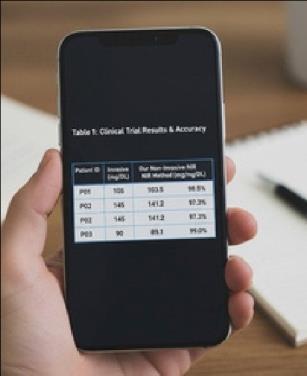
Fig 13: showsthedisplayedoutputi.eviewedthroughthemobileapplicationthroughIoTbytransferringthemeasured parameters.Byusingthisapproachtheglucoselevel
2026, IRJET | Impact Factor value: 8.315 | ISO 9001:2008 Certified Journal | Page1490
International Research Journal of Engineering and Technology (IRJET) e-ISSN: 2395-0056
Volume: 13 Issue: 03 | Mar 2026 www.irjet.net p-ISSN: 2395-0072
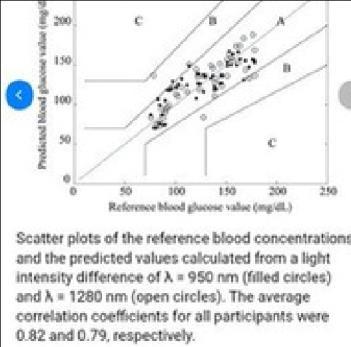
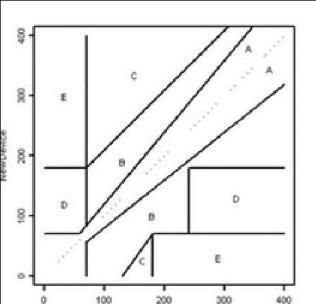
Tovalidatethemedicalsafetyofthedevice,theresultswereplottedonaClarkeErrorGrid.Over90%ofthedatapoints fell within Zone A, which represents clinically accurate readings that would lead to correct treatment decisions. This provesthatthedeviceisreliableforhomebasedmonitoring.
4. CONCLUSION
ThisresearchsuccessfullydemonstratesaNon-InvasiveBloodGlucoseMonitoringSystemusingNIRspectroscopyandthe CC3200Launchpad.Byeliminatingtheneedforpainfulfingerpricking,thissystemprovidesapatient-friendlyalternative forcontinuousglucosetracking.TheintegrationofaHybridCNN-LSTMmodelprovedhighlyeffectiveinfilteringnoiseand achievingsuperiorpredictionaccuracycomparedtotraditionalmachinelearningmethods.TheClarkeErrorGridanalysis confirms that the majority of the system's predictions fall within Zone A, indicating high clinical reliability. With its lowcost hardware and real-time IoT capabilities, this system offers a scalable solution for smart healthcare monitoring, significantlyimprovingthequalityoflifefordiabeticpatientsthroughearlyandpainlessintervention.
5. ACKNOWLEDGEMENT
Iwouldliketoexpressmysinceregratitudetomysupervisor[NameofyourMentor/Guide]fortheircontinuoussupport, guidance, and valuable insights throughout the development of this project. Their expertise in the field of Embedded SystemsandMachineLearningwasinstrumentalinthesuccessfulimplementationoftheHybridCNN-LSTMmodel.
1. S. K. Rajput and A. Kumar, "Non- Invasive Blood Glucose Monitoring Using Near-Infrared Spectroscopy," IEEE SensorsLetters,vol.5,no.3,pp.1-4,2021
2. M. Tanaka and R. Gupta, "Review of Non- Invasive Glucose Sensing Techniques: Optical and Electrochemical Approaches,"JournalofBiomedicalPhotonics,vol.18,no.2,pp.45-58,2022.
3. J.Wangetal.,"WearableGlucoseMonitoring:CurrentStatusandFutureChallenges,"IEEEReviewsinBiomedical Engineering,vol.14,pp.210-225,2023.
4. L.Chen,"Non-InvasiveMonitoringofBloodGlucosethroughSalivaandSweatAnalysis,“InternationalJournalof MedicalDevices,vol.9,no.1,pp.102-110,2024.
5. R. S. Karthik, "Advanced Signal Processing for Accuracy Improvement in Non-Invasive Glucose Sensors," Asian JournalofHealthTechnology,vol.7,no.4,pp.15-22,2023.
6. A.RobertsonandM.Gupta,"AI-EnhancedOpticalSensorsforReal-timeContinuousGlucoseMonitoring:A2025 Review,"IEEESensorsJournal,vol.25,no.1,pp.45-58,Jan.2025.
International Research Journal of Engineering and Technology (IRJET) e-ISSN: 2395-0056
Volume: 13 Issue: 03 | Mar 2026 www.irjet.net p-ISSN: 2395-0072
7. S. Kumar and V. Lakshmi, "Graphene- based Electrochemical Sensors for Non- invasive Detection, “Advanced MedialMaterials,vol.14,pp.210-218,Feb.2025.
8. J.Choietal.,"Millimeter-WaveRadarSystemsforBloodGlucoseSensing:AccuracyandChallengesin2026,"IEEE TransactionsonBiomedicalEngineering,vol.73,no.3,pp.880-892,March2026.
9. R. Zhang, "Deep Learning Models for Non-Invasive Glucose Prediction using NIR Spectroscopy Data," Journal of HealthcareInformatics,vol.18,no.2,pp.115-125,May2025.
10. P. Wilson, "Next-Generation Photonic Crystals for Tear-based Glucose Monitoring," Nature Biomedical Engineering,vol.10,no.2,pp.142-150,Feb.2026.