
International Research Journal of Engineering and Technology (IRJET) e-ISSN: 2395-0056
Volume: 12 Issue: 04 | Apr 2025 www.irjet.net p-ISSN: 2395-0072
International Research Journal of Engineering and Technology (IRJET) e-ISSN: 2395-0056
Volume: 12 Issue: 04 | Apr 2025 www.irjet.net p-ISSN: 2395-0072
Prof.(Dr).S.J.Patil1 , Gayatri Salunkhe2 , Asmita Pawar3, Anushri Powar 4
1234Research Scholar, Dept. of Electronics&Telecommunications Engineering, DKTE Society’s Textile & Engineering Institute (An Empowered Autonomous Institute), Ichalkaranji , Maharashtra, India
Abstract: - Motorcycles in India exhibit a disproportionately high fatality rate compared to other vehicles. Consequently, simply wearing a helmet is inadequatetopreventaccidentsormitigatefatalities.This research presents the Smart Helmet with Emergency Notification System (SHENS) as an advanced solution to this critical safety concern. The SHENS is engineered not only to provide head protection but also to enhance rider safety by autonomously alerting emergency services or pre-designated contacts in the event of an accident. The system integrates sensors, including a gyroscope and accelerometer, to assess the rider’s condition and determine the precise location of the incident. Leveraging the Quectel RM500Q 5G module with Global Navigation Satellite System (GNSS) functionality, the helmet transmits real-time geolocation data to emergency responders, facilitating rapid assistance. By ensuring prompt medical intervention during road accidents, this smart helmet has the potential to significantly reduce fatalitiesandimprovepost-crashsurvivalrates.
Keywords smarthelmet;accidentdetection;emergency alert system; Quectel RM500Q; 5G communication; GNSS; real-timeaccidentnotification.
Theexponentialgrowthoftheglobalpopulationhasledto numerous socio-economic challenges, significantly impacting transportation systems. With India accounting for approximately one-sixth of the world’s population, road travel has become increasingly strenuous due to the escalatingnumberofvehicles.Asofrecentestimates,India hasapproximately 19.75 million registered vehicles [1], contributingtosevereroadcongestionandovercrowding. These conditions, compounded by inadequate infrastructure, are major factors leading to frequent road accidents. Statistical data indicate that nearly 400 fatalities occur daily due to road accidents in India, exacerbatedbya lack ofindividual social responsibility in ensuring road safety. mitigates these challenges, the proposed system introduces an autonomous Smart Helmet with an Emergency Notification System (SHENS), designed to provide immediate assistance in accident scenarios. The Internet of Things (IoT) has emerged as a revolutionary technology, enabling intelligent solutions through integrated hardware,
software,anddataprocessingframeworks[2].The SHENS system is an IoT-driven innovation leveraging advanced sensor networks and communication modules to analyze accident conditions and initiate real-time emergency response mechanisms. The operational algorithm, detailed in the implementation section, illustratesthesystem’sfunctionalityindetectingaccidents and facilitating timely medical intervention, thereby reducing fatalities. Given its life-saving potential, this system could become an indispensable personal safety accessory,akintosmartphones.
Extensive research has been conducted in the domain of road accident prevention and victim assistance to minimize fatalities and enhance travel safety. A summary ofnotablestudiesispresentedbelow.
The study in [3] investigates the enhancement of emergency notification systems in vehicular accidents through machine-to-machine (M2M) communication. This approach autonomously classifies accident severity minor, moderate, or major based on sensor motion analysis, and subsequently notifies emergency services. Additionally, vehicle speed is determined using a Global Positioning System (GPS) module. However, the system haslimitations,primarilyduetotheaccelerometersensor beinginstalledonthevehicle'ssurface,whichpreventsan accurate assessment of the victim’s physical condition. Moreover,relianceoncloud-basedservicesmayintroduce delaysinregionswithpoornetworkconnectivity.
The infrared (IR) sensor is employed to detect whether the helmet is worn by the rider. It consists of an IR transmitterand receiver, whichdetectobstacles based on reflected infrared rays. When the helmet is worn, the sensor detects the rider’s head as a constant obstacle, keeping the system active. If removed, the sensor deactivates the helmet, preventing false emergency alerts caused by accidental helmet falls. This mechanism is crucial for ensuring accurate emergency notifications in SHENS.
International Research Journal of Engineering and Technology (IRJET) e-ISSN: 2395-0056
Volume: 12 Issue: 04 | Apr 2025 www.irjet.net p-ISSN: 2395-0072
The MPU6050 sensor, a 6-axis Inertial Measurement Unit (IMU), integrates a 3-axis accelerometer and 3-axis gyroscopeformotionsensingandorientationtracking.Its keyfunctionalitiesinclude:
Fall Detection – The accelerometer identifies abrupt motion patterns (e.g., falls), while the gyroscope assesses thehelmet’sorientation.Ifasuddendownwardmovement occurswithoutrecoverymotion,analertistriggered.
EmergencyNotification – TheMPU6050transmitsmotion data to a microcontroller (e.g., ESP8266 or Quectel RM500Q), which processes it to determine whether an accident has occurred, triggering an emergency alert if necessary.
Accurate accident localization is achieved through the integration of GPS/GNSS modules within the helmet. The Quectel RM500Q 5G module, equipped with a GPS antenna, retrieves latitude, longitude, and altitude coordinates via satellite triangulation, ensuring precise location tracking. To enhance signal reliability in weak satellite coverage areas, an RF active antenna is incorporated. The collected location data is transmitted via:
5G Network – Enabling low-latency, real-time transmission.
Wi-Fi (ESP8266) – Facilitating location updates to paired devicesorserverswhenconnectedtoalocalnetwork.
TheESP8266microcontrollerorQuectelRM500Qmodule formatsandsendsanemergencyalertwithcriticaldetails, including:
AccidentAlert:"Accidentdetected!"
Location Coordinates: (e.g., Latitude: 18.5204, Longitude:73.8567)
This notification is transmitted via SMS or 5G real-time alerts,ensuringpromptassistancetothevictim.
The development of smart helmet systems has been a focal point in enhancing motorcycle rider safety. Various research initiatives have introduced innovative features aimed at accident prevention and emergency response. This survey examines notable smart helmet systems, comparing their functionalities with the proposed Smart HelmetwithEmergencyNotificationSystem(SHENS).
1. IoT-Based Intelligent and Smart Helmet Using ArduinoKamdietal.developedasmarthelmetintegrated withanArduinoNanomicrocontroller,emphasizingsafety throughmultiplefeatures:
HelmetDetection:Preventsthemotorcyclefrom starting unlessthehelmetisworn.
Alcohol Detection: Utilizes an alcohol sensor to detect the rider'salcoholconsumption,inhibitingvehicleactivationif levelsexceedpermissiblelimits.
Accident Detection and Notification: Employs a vibration sensortodetectaccidentsandsendsemergencymessages topredefinedcontacts.
Limitations: The system's reliance on vibration sensors may lead to false positives, and the use of SMS for emergency alerts could result in delays due to network dependencies.
2. IoT-Based Smart Helmet for Motorbike Activation and RiderActivityMonitoring
Chary et al. introduced a smart helmet system leveraging NodeMCUandvarioussensorstoenhanceridersafety:
Helmet-MotorbikeInterlock:Ensuresthemotorbikestarts onlywhenthehelmetisworncorrectly.
Alcohol Detection: Incorporates an alcohol sensor to prevent vehicle activation upon detecting alcohol consumption.
Mobile Phone Usage Detection: Detects mobile phone usage during riding and immobilizes the motorbike to preventdistractions.
Fall Detection and Alert: Uses a gyroscope to detect falls andsendsreal-timealertsoverIoTplatforms.
Limitations: The system's effectiveness is contingent on continuous internet connectivity, and immobilizing the vehicle during mobile phone usage may pose safety risks incertaintrafficconditions.
3.Voice-ControlledSmartHelmet
Rangan et al. proposed a voice-controlled smart helmet aimedatimprovingridersafetythroughautomation:
Voice Activation: Enables control of various helmet functions via voice commands, enhancing user convenience.
Safety Transit Management: Integrates with intelligent transportation systems to provide real-time traffic updatesandnavigationassistance.
International Research Journal of Engineering and Technology (IRJET) e-ISSN: 2395-0056
Volume: 12 Issue: 04 | Apr 2025 www.irjet.net p-ISSN: 2395-0072
Limitations: The reliance on voice commands may be affected by environmental noise, and the system's integration with existing transportation infrastructure mayrequiresignificantmodifications.
The Smart Helmet with Emergency Notification System (SHENS) distinguishes itself through the following advancements:
Autonomous Emergency Response: SHENS autonomously detects accidents using a combination of gyroscope and accelerometer sensors, ensuring accurate detection of the rider'sconditionwithoutmanualintervention.
Real-Time Location Transmission: Utilizes the Quectel RM500Q 5G module with GNSS capabilities to transmit precise accident location coordinates to emergency services,facilitatingpromptmedicalassistance.
EnhancedCommunicationReliability:Theintegrationof 5G technology ensures low-latency, reliable communication, addressing potential delays associated withSMS-basedsystems.
By focusing on autonomous operation, precise accident detection, and reliable communication, SHENS aims to overcome the limitations observed in previous smart helmet systems, thereby enhancing the safety and wellbeingofmotorcycleriders.
The smart helmet integrates IoT, GNSS, and 5G communicationtoenhanceridersafety.Thesystembegins with problem identification, addressing delayed emergency response in roadaccidents.The objective isto develop a helmet that detects accidents, determines the rider’slocation,andsendsreal-timeemergencyalerts.
The system architecture includes an MPU6050 sensor for motion detection, a GPS module for location tracking, andaQuectelRM500Q5Gmodulefordataprocessingand transmission. A microcontroller manages sensor data and communicates with the 5G module. Components are strategically placed for optimal performance, ensuring accuratedetectionandreliableconnectivity.
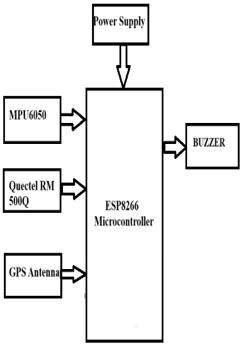
Fig -1:BlockDiagram
For software development, the helmet analyses motion patterns to detect accidents, retrieves real-time GPS coordinates,andtriggersemergencynotificationsvia SMS or internet protocols (HTTP/MQTT). Prototype testing ensures proper functionality, including fall detection accuracy, GPS precision, and 5G alert transmission. Validation tests simulate accidents, assess signal strength,andmeasurenotificationlatency.
To enhance performance, system optimization finetunes sensor sensitivity, improves data processing speed, and enhances power efficiency. The final deployment phase prepares the helmet for production, with potential future upgrades like health monitoring, solar charging, and voice control, making it suitable for various safety applications.
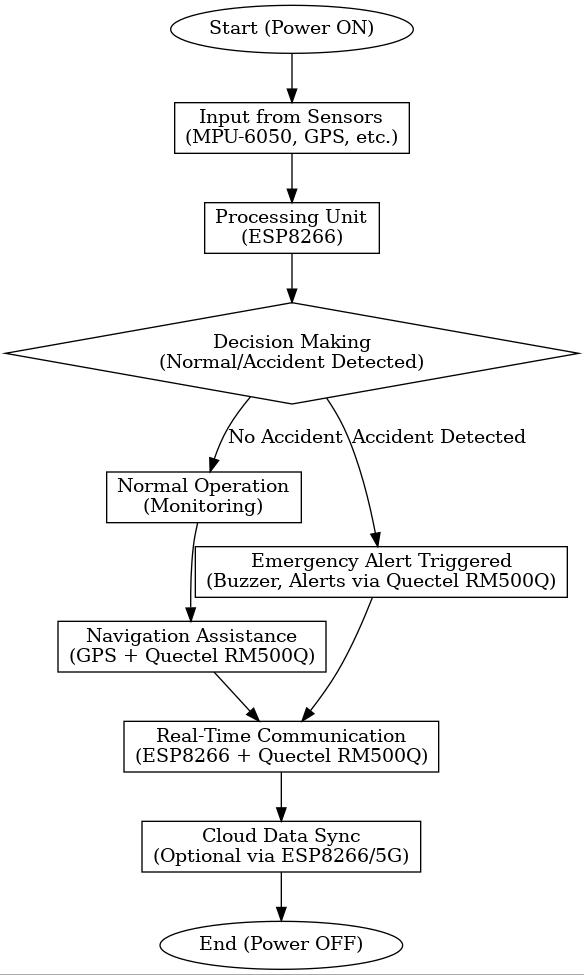
Fromthegivenflowchart
1. System Initialization (Power ON): The helmet systemispoweredon,andsensorsareactivated.
2. Sensor Input Collection: MPU6050 (Accelerometer & Gyroscope): Detects motion and impact. GPS Module: Retrieves real-time location data. Other sensors may assist in data collection.
3. Data Processing (ESP8266 Microcontroller): Processesmotionandlocationdata.Determinesif
International Research Journal of Engineering and Technology (IRJET) e-ISSN: 2395-0056
Volume: 12 Issue: 04 | Apr 2025 www.irjet.net p-ISSN: 2395-0072
an accident has occurred based on sensor readings.
4. Decision Making (Accident Detection): If no accident is detected → Normal operation (continuous monitoring). If accident is detected →Emergencyalertistriggered.
5. Emergency Alert Activation: Buzzer isactivated to indicate an emergency. Quectel RM500Q 5G Module sendsalertstoemergencycontacts.
6. Navigation Assistance: GPS coordinates are shared for accident location tracking. Helps respondersreachtheaccidentsitequickly.
7. Real-Time Communication: ESP8266 and Quectel RM500Q ensure fast transmission of accident alerts over the 5G network. Alerts are sentviaSMS,HTTP,orMQTTprotocols.
8. Cloud Data Synchronization (Optional): Accident data can be stored on a cloud server for further analysis. Enhances tracking and response efficiency.
9. System Shutdown (Power OFF): The system powersdownaftercompletingoperations.
This structured flow ensures quick accident detection, real-time alerts, and emergency response coordination,improvingridersafety.
Thesmarthelmetprojectusing5Gtechnologysuccessfully achieves its primary goal of enhancing rider safety through real-time accident detection, location tracking, and emergency notification. The system reliably detects sudden fallsorimpactsusingthe MPU6050sensor,which monitorsmotionpatterns.Upondetectinganaccident,the helmet utilizes the GPS module and RF active antenna to determine the rider's precise location, ensuring high accuracy even in challenging environments. This data is transmitted via the Quectel RM500Q 5G module, enabling low-latencycommunicationtosendemergencyalertswith location details to predefined contacts. Additionally, a buzzer provides an audible alert to nearby individuals, promoting immediate assistance. The system ensures
International Research Journal of Engineering and Technology (IRJET) e-ISSN: 2395-0056
Volume: 12 Issue: 04 | Apr 2025 www.irjet.net p-ISSN: 2395-0072
continuous and robust operation through an efficient power supply and the integration of a microcontroller, which manages all components seamlessly. Overall, the project demonstrates a practical, scalable, and reliable solution for improving road safety, leveraging the speed andconnectivityof5GtechnologyandIoTadvancements.
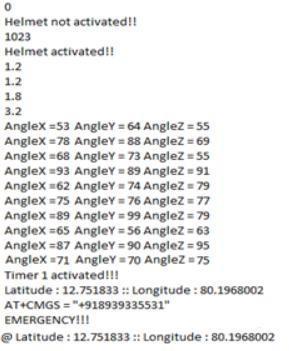

Figure1.Serialmonitoroutputwhenthevictimis conscious.
After the accelerometer sensor determines whether the victim is conscious or unconscious, the need to initiate emergency notification arises. The timer gets set for 90 seconds,ifthevictimisconsciousandfor30secondsifthe person is unconscious. After the timer expires, the GPS module determines the location of the accident. The GPS coordinates are sent to the emergency contact as an SMS usingtheGSMmodule.
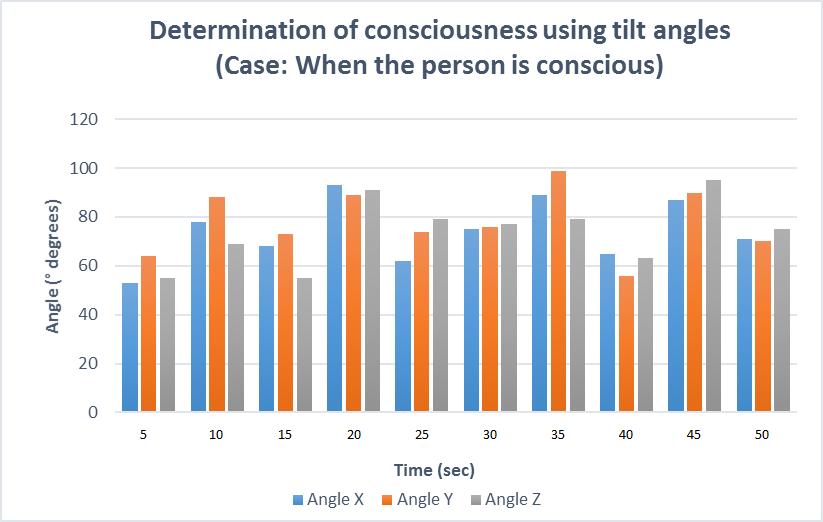
Figure2.Graphicaldeviationsinthetiltangleswhenthe personisconscious
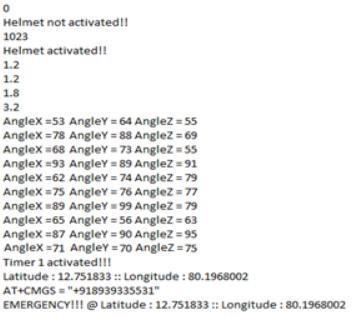

Figure3.Serialmonitoroutputwhenthevictimis unconscious
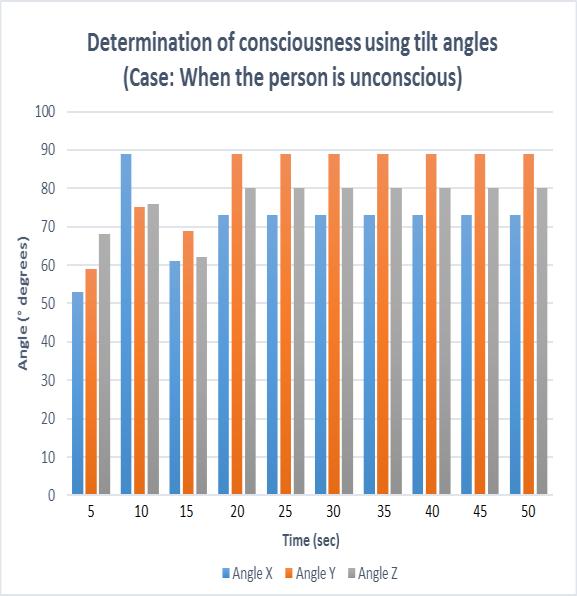

Figure4.Graphicaldeviationsinthetiltangleswhenthe personisunconscious
International Research Journal of Engineering and Technology (IRJET) e-ISSN: 2395-0056
Volume: 12 Issue: 04 | Apr 2025 www.irjet.net p-ISSN: 2395-0072
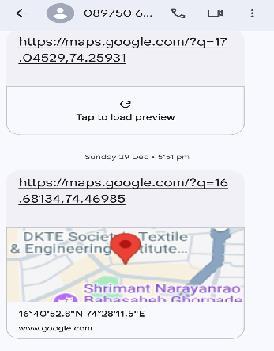
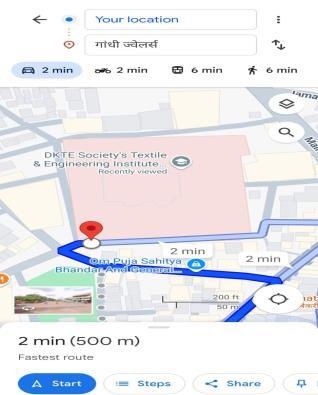
The SMS containing the GPS coordinates is sent to the intended number which is already preprogrammed as soon as the timer gets expired. Fig. 8 indicates the SMS fromSHENSduringtheexperimentalaccident.
The smart helmet using 5G technology is a cutting-edge innovation aimed at enhancing road safety and saving lives during motorcycle accidents. The project integrates multipleadvancedtechnologiestocreateacomprehensive safety system. The MPU6050 sensor detects sudden impacts or falls with high accuracy, ensuring immediate recognition of accidents. The GPS antenna facilitates precise real-time location tracking by capturing and processing signals from GNSS satellites. This data is vital duringemergencies,asithelpsinpinpointingtheaccident site accurately. The Quectel RM500Q 5G module ensures rapid and reliable transmission of this information, leveraging the low latency and high-speed capabilities of 5G networks. Emergency alerts are sent seamlessly to preconfigured contacts or rescue teams, significantly reducing response times. The smart helmet's design also incorporates a buzzer, providing an audible alert at the accident site, and a robust power supply to maintain consistent operation of all components. This system ensures continuous functionality and reliability, making it a dependable tool for real-world applications. The project'ssuccessdemonstratesthepotential ofcombining IoT technologies, advanced communication modules, and safety sensors to address critical issues in transportation. This smart helmet is not only practical and scalable but also adaptable for broader applications. It can be enhanced with additional features such as health monitoring, voice commands, or integration with smart traffic management systems. Furthermore, it serves as a foundation for future advancements in connected safety devices, contributing to the development of smarter and safer transportation ecosystems. By addressing the need for rapid emergency response and accurate accident tracking, this project significantly advances the field of roadsafetyandrider.
For their invaluable advice, support, and knowledge throughout the writing of this paper, I would like to sincerely thank our department head, R.D. Patil Sir, our college's dean, Dr. K.K. Pandyaji Sir, Dr. K.P. Paradeshi, Prof. A.S. Bhandare, Prof. Sudhakar Chougule, Prof. Akshata Bhairshetti, and my friends. Their helpful criticism and support were crucial in determining the course and results of our work. I sincerely appreciate the chancetodevelopandlearnundertheirguidance.
International Research Journal of Engineering and Technology (IRJET) e-ISSN: 2395-0056
Volume: 12 Issue: 04 | Apr 2025 www.irjet.net p-ISSN: 2395-0072
[1] Article from www.knowindia.net online available from http://www.knowindia.net/auto.html.
[2] Gubbi, J., Buyya, R., Marusic, S., and Palaniswami, M. Internet of things (IoT): A vision, architectural elements, and future directions. Future Gener. Compute.Syst.29,7,pp.1645-1660,Sept.2013.
[3] R. Sujatha, N. VijayaRagavan, K.S. Suganya, “IOT: To enhance automatic accident notification using M2M technologies”, International Journal of Scientific&EngineeringResearch,Vol.6,No. 3,pp. 1-4,March2015.
[4] Fogue M, Garrido P, Martinez FJ, Cano JC, Calafate CT, Manzoni P, “A System for Automatic Notification and Severity Estimation of Automotive Accidents”, IEEE Transactions on Mobile Computing, Vol. 13, No. 5, pp. 948 – 963, May2001
[5] “TrafficAccidentAutomaticDetectionAndRemote AlarmDevice”–WangWeiandFanHanbo
[6] Article from the Wikipedia online dated 2015 hosted online available from https://en.wikipedia.org/wiki/Transport_in_India# Two_Wheeler.
[7] ArticleonHelmets.orgonlineavailableonMarch7, 2015from http://www.helmets.org/ideal.htm.
[8] “Fatality Analysis Reporting System General Estimate System – 2011 Data summary” - United StatesDepartmentofTransportation.
[9] K. Sudarsan, P. Kumaraguru Diderot, “Helmet for Road Hazard Warning with Wireless Bike Authentication and Traffic Adaptive Mp3 Playback”, International Journal of Science and Research(IJSR),Vol. 3,No.3,March2014.
[10]L Huan-liang, Q Hong-mei, F Ke, L Dong-lin. “Design of Human – computer interaction helmet for wearable computer”, IEEE International Conference on E -Business and E -Government (ICEE),pp.1-4,May2011.
[11]ArticleonHelmets.orgonlineavailableonMarch7, 2015from http://www.helmets.org/ideal.htm.
[12]K. Sudarsan, P. Kumaraguru Diderot, “Helmet for Road Hazard Warning with Wireless Bike Authentication and Traffic Adaptive Mp3 Playback”, International Journal of Science and Research(IJSR),Vol. 3,No.3,March2014.
[13]L Huan-liang, Q Hong-mei, F Ke, L Dong-lin. “Design of Human – computer interaction helmet for wearable computer”, IEEE International Conference on E -Business and E -Government (ICEE),pp.1-4,May2011.
[14]World Health Organization.2020. Road Traffic Injuries. [ONLINE] Available at: https://www.who.int/news-room/factsheets/detail/road-traffic-injuries. [Accessed 07 February2020]
[15]Asogwa, S.E. The Crash Helmet Legislation in Nigeria: A Before and After Study. Accident AnalysisandPrevention12(1980):213-216
[16][10]Berkowitz,A.TheE_ectofMotorcycleHelmet Usage on Head Injuries and the Effect of Usage LawsonHelmetWearingRates.
[17]Mrs.N.S. Patil. SMART HELMET: AN APPLICATIONOFIOT