
International Research Journal of Engineering and Technology (IRJET) e-ISSN: 2395-0056
Volume: 13 Issue: 04 | Apr 2026 www.irjet.net p-ISSN: 2395-0072

International Research Journal of Engineering and Technology (IRJET) e-ISSN: 2395-0056
Volume: 13 Issue: 04 | Apr 2026 www.irjet.net p-ISSN: 2395-0072
S. Sinai Sanchez1 , Geethakumari. D2 , Nawaz Sherif.M3
1PG Student, Department of Civil Engineering
2Assistant Professor, Department of Civil Engineering
3 Assistant Professor, Department of Civil Engineering
Abstract - Landslides are one of the major geotechnical hazardsaffectinghillyregions,especiallyunderheavyrainfall conditions. This study focuses on the experimental investigation of slope stabilization using sheet piles as a preventivemeasure. A laboratory-scalemodel was developed usinglateriticsoilobtainedfromtheNilgirisregion,andtests were conducted under simulated rainfall conditions. The performance of slopes with and without sheet pile reinforcement was analyzed basedon displacement andtime tofailure. The results indicate that the inclusionofsheet piles significantly reduces soil displacement and delays slope failure. The reinforced slope exhibited nearly 60–70% reductionindisplacementcomparedtotheunreinforcedslope. Thestudyhighlightstheimportanceofembedmentdepthand material stiffness in improving slope stability. The findings suggest that sheet piles can be effectively used as an economical and practical solution for landslide mitigation in vulnerable regions. A laboratory-scale experimental model was used to simulate rainfall-induced slope failure.
Key Words: Sheet pile, slope stability, landslide mitigation, rainfall infiltration, soil displacement, embedment depth
Landslidesarecommoninhillyterrainsandareprimarily triggeredbyfactorssuchasheavyrainfall,soilerosion,and human activities. The stability of slopes depends on the balancebetweendrivingforcesandresistingforces.When the shear stress exceeds the shear strength of soil, slope failureoccurs.
Conventionalstabilizationtechniquessuchasretainingwalls andsoilnailingareeffectivebutoftenrequirehighcostand space.Incontrast,sheetpilesprovideasimpleandefficient method for slope stabilization. Sheet piles act as vertical barriersthatresistlateralsoilmovementandincreasethe factorofsafetyofslopes.
Thisstudyaimstoexperimentallyevaluatetheeffectiveness ofsheetpilesinreducingsoildisplacementandimproving slopestabilityunderrainfallconditions.
Alaboratory-scaleexperimentalmodelwasdevelopedto simulateslopeconditions.
SoilType:LateriticsoilcollectedfromNilgirisregion
SlopeAngle:30°–45°
ModelTank:Transparentacrylicflume
SheetPileMaterial:SteelandPVC
EmbedmentDepth:8–12cm
The soil was compacted in layers to ensure uniform density.Sheetpileswereinstalledatthetoeoftheslope.A controlledwatersupplysystemwasusedtosimulaterainfall conditions.
Displacement of soil was recorded at regular time intervalsforbothreinforcedandunreinforcedslopes.
Thesoilwascompactedatoptimummoisturecontentto achieve uniform density. Care was taken to ensure proper installation of sheet piles without disturbing the soil structure.
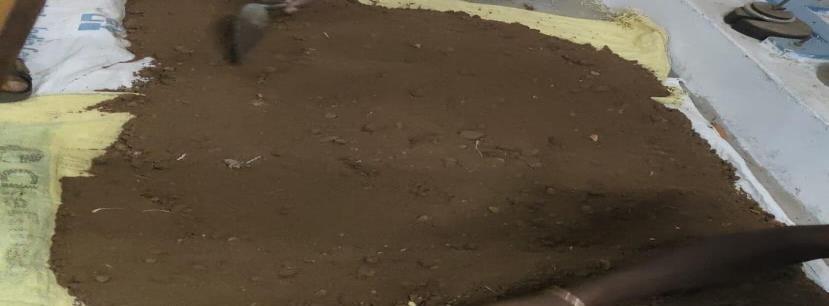
Thesoilusedinthisstudyislateriticsoilobtainedfrom theNilgirisregion.Theengineeringpropertiesofthesoilare asfollows:
SpecificGravity=2.65
Cohesion(c)=22kN/m²
AngleofInternalFriction(φ)=26°
LiquidLimit=42%
PlasticLimit=24%
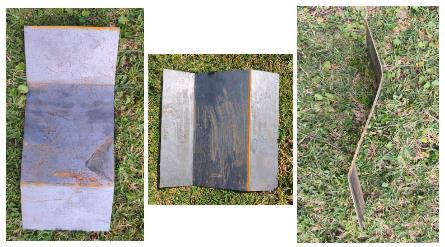
Thesheetpilesusedinthestudyweremadeofsteel.Steel sheetpilesexhibithigherstiffnessandstrengthcomparedto PVC,resultinginbetterresistancetolateralsoilmovement.
International Research Journal of Engineering and Technology (IRJET) e-ISSN: 2395-0056
Volume: 13 Issue: 04 | Apr 2026 www.irjet.net p-ISSN: 2395-0072
3.1 Displacement without Sheet Pile
Table -1: SoilDisplacementWithoutSheetPile
The unreinforced slope showed rapid increase in displacementduetolackoflateralsupport.
3.2 Displacement with Sheet Pile
Table -2: SoilDisplacementWithSheetPile
The reinforced slope showed controlled displacement, indicatingimprovedstability.
3.3 Comparison of Results
Thecomparisonshowsthat:
Displacement is significantly reduced with sheet pile
Rateoffailureisslower
Stabilityisimproved
The reductionindisplacement isapproximately 65–70%, confirmingtheeffectivenessofsheetpiles.
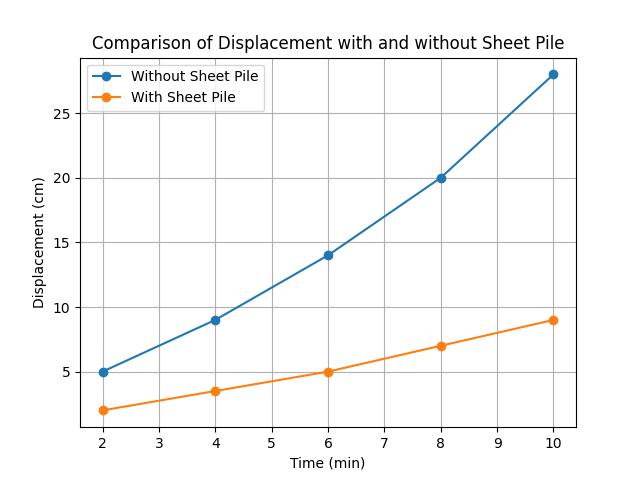
Chart -1:ComparisonofDisplacementwithandwithout SheetPile
Thepercentagereductionindisplacementduetosheetpile reinforcement ranges between 60% and 70%. This significant reduction demonstrates the efficiency of sheet piles in controlling soil movement and improving slope stability.Thisclearlyindicatesthatsheetpilessignificantly improvethefactorofsafetyoftheslope.
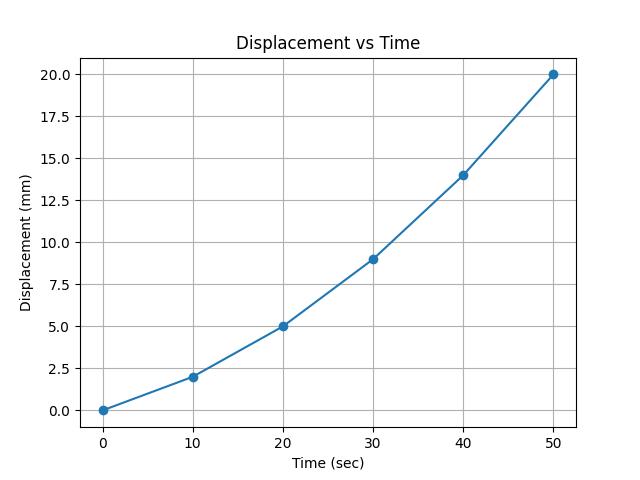
Chart -2:DisplacementvsTimeGraph
Fig.2showsthevariationofdisplacementwithtimeforboth reinforcedandunreinforcedslopes.
3.4 Discussion
Sheet piles improve slope stability by providing passive resistance and intercepting potential failure surfaces. The effectiveness depends on embedment depth and material stiffness. Steel sheet piles perform better due to higher strengthandrigidity.
International Research Journal of Engineering and Technology (IRJET) e-ISSN: 2395-0056
Volume: 13 Issue: 04 | Apr 2026 www.irjet.net p-ISSN: 2395-0072
Rainfallinfiltrationreducessoilstrengthbyincreasingpore waterpressure.However,thepresenceofsheetpileslimits soil movement and delays failure. The improvement in stability is attributed to the passive earth pressure developedbelowtheembedmentdepthofthesheetpile.The increase in resisting force enhances the overall factor of safetyoftheslope.
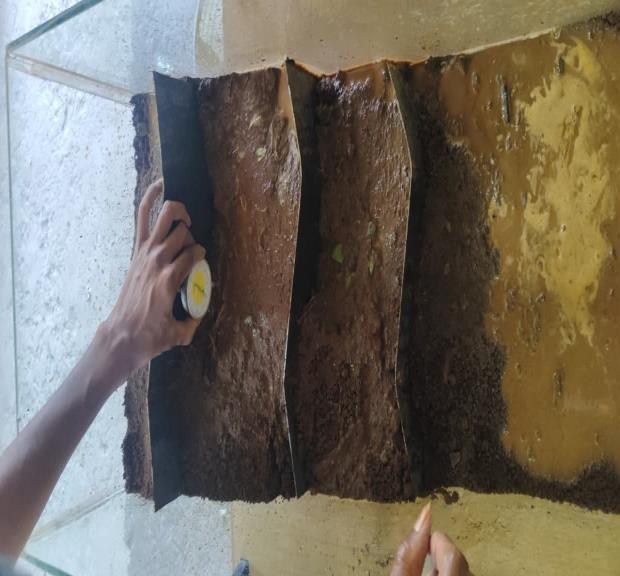
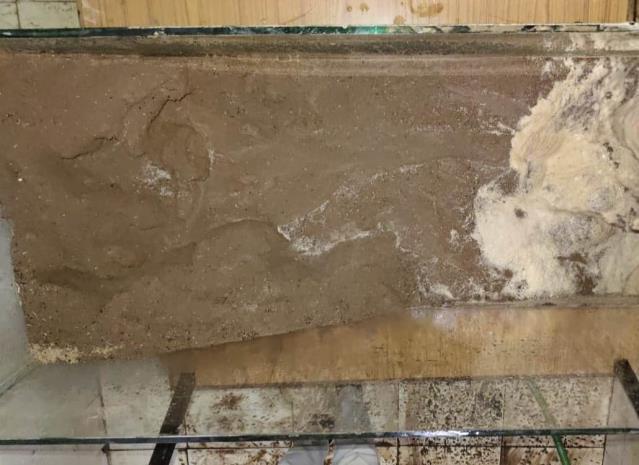
Theexperimentalsetupusedtomeasuresoildisplacementis shown in Fig. 3 & 4 Dial gauges were used to record displacementatregularintervals.
The present study is based on a small-scale laboratory model,andtheresultsmayvaryunderactualfieldconditions due to soil heterogeneity and environmental factors. The rainfall simulation was controlled and may not fully representnaturalrainfallpatterns.Additionally,scaleeffects and boundary conditions of the model may influence the observedbehavior.Thestudyconsiderslimitedvariationsin
embedment depth and material type, and further investigation is required for different soil conditions and field-scaleapplications.Long-termperformanceaspectssuch as durability and corrosion of sheet piles were not considered.
Further studies can be carried out using full-scale field investigations tovalidatetheexperimental findingsunder real conditions. Numerical modeling techniques such as finite element analysis can be used to study soil–pile interactionindetail.Additionally,theperformanceofsheet pilesundervaryingsoiltypes,rainfallintensities,andlongtermconditionscanbeexploredforoptimizeddesign.
The experimental study confirms that sheet piles are effectiveinstabilizingslopesunderrainfallconditions.The mainconclusionsare:
1. Sheetpilessignificantlyreducesoildisplacement.
2. Reinforcedslopesshowdelayedfailurecomparedto unreinforcedslopes.
3. Embedment depth plays a crucial role in stability improvement.
4. SteelsheetpilesperformbetterthanPVC.
5. Sheetpilesareaneconomicalandpracticalsolution forlandslidemitigation.
The results of this study can be effectively applied in landslide-proneregionsforpracticalslopestabilization.
Theauthorswouldliketoexpresstheirsinceregratitudeto the Department of Civil Engineering of CSI College of Engineering,Ketti forprovidingthenecessaryfacilitiesto carry out this research work. The authors also thank the projectguideMrs.GeethaKumariforhervaluableguidance andsupportthroughoutthestudy.
[1]Das,B.M.,PrinciplesofFoundationEngineering,Cengage Learning.
[2] Terzaghi, K., Soil Mechanics in Engineering Practice, Wiley.
[3]Poulos,H.G.,“Slopestabilizationusingpiles,”Canadian GeotechnicalJournal.
[4]Ito,T.andMatsui,T.,“Lateralforcesonstabilizingpiles,” SoilsandFoundations.
[5]Zhao,W.etal.,“Sheetpile–soilinteractionstudy,”Applied Sciences.
International Research Journal of Engineering and Technology (IRJET) e-ISSN: 2395-0056
[6] Kim, S.H. and Lee, D.Y., “Slope stabilization under rainfall,”GeotechnicalEngineering.
[7] Coduto, D.P., Geotechnical Engineering: Principles and Practices,Pearson
Volume: 13 Issue: 04 | Apr 2026 www.irjet.net p-ISSN: 2395-0072 © 2026, IRJET | Impact Factor value: 8.315 | ISO 9001:2008