
International Research Journal of Engineering and Technology (IRJET) e-ISSN: 2395-0056
Volume: 13 Issue: 03 | Mar 2026 www.irjet.net p-ISSN: 2395-0072

International Research Journal of Engineering and Technology (IRJET) e-ISSN: 2395-0056
Volume: 13 Issue: 03 | Mar 2026 www.irjet.net p-ISSN: 2395-0072
Dr.M.VINAYA
BABU1 , J.Shivraj2 , J.Sudheer3 , K.Mahesh4
1 Associate Professor, Department of Computer Science and Engineering 2,3,4 B.Tech Students, Department of Computer Science and Engineering
Teegala Krishna Reddy Engineering College , Telangana, India
Abstract - TherapidgrowthoftheInternetofThings(IoT) has enabled real-time monitoring systems across various industries such as healthcare, logistics, and manufacturing. However,traditionalIoT-basedmonitoringsystemsoftenrely on centralized databases, which are vulnerable to data manipulation, security breaches, and system failures. To address these challenges, this project proposes a secure temperature monitoring system that integrates IoT technology with blockchain to ensure data integrity, transparency, and reliability. In the proposed system, IoT devices continuously collect temperature data from the environmentandtransmitittothesystemthroughanetwork connection. The collected data is then encrypted and converted into hash form before being stored on the blockchain.Duetothedecentralizedandimmutablenatureof blockchain, once the data is recorded it cannot be altered, ensuringtamper-proofstorageandtrustworthyrecords.The system also provides user registration and authentication mechanisms, allowing only authorized users to access realtime and historical temperature data. Administrators can monitortransactionlogs,manageusers,andverifystoreddata through hash validation. This integration of IoT and blockchainimprovessecurity,reliability,andtransparencyin data monitoring systems. The proposed solution is scalable and can be effectively applied in environments where maintaining accurate and secure environmental data is critical.
Key Words: Internet of Things (IoT), Blockchain Technology, Data Security, Temperature Monitoring System, Hash Encryption, Decentralized Storage, RealTime Monitoring.
The Internet of Things (IoT) refers to a network of interconnected physical devices that collect and exchange datathroughtheinternet.IoTtechnologyenablesreal-time monitoring and automation in various sectors such as healthcare,logistics,agriculture,andmanufacturing.Sensors and smart devices continuously gather environmental informationsuchastemperature,humidity,andpressureto supportefficientdecision-making.However,asthenumber ofIoTdevicesincreases,ensuringthesecurityandreliability of the collected data becomes a significant challenge. TraditionalIoTsystemsoftenrelyoncentralizedserversfor storing and managing data, which creates risks related to datatampering,unauthorizedaccess,andsystemfailures[3].
Despite the advantages of IoT systems, they face several securitychallengesduetotheirdistributednatureandlarge numberofconnecteddevices.Centralizedstoragesystems arevulnerabletocyberattacks,datamanipulation,andsingle pointsoffailure.Attackersmayinterceptormodifythedata transmitted from IoT devices, leading to inaccurate monitoringresultsandcompromisedsystemreliability.In applicationssuchastemperaturemonitoringinhealthcare or logistics, inaccurate data may lead to serious consequences. Therefore, ensuring data integrity, transparency,andsecurestorageisessentialfortheeffective operationofIoT-basedmonitoringsystems[4].
Blockchain technology is a decentralized and distributed digital ledger that records transactions securely across multiple nodes. Once information is recorded in a blockchain, it becomes extremely difficult to modify or delete,ensuringdataimmutabilityandtransparency.Each blockcontainsacryptographichashofthepreviousblock, whichlinksallblockstogetherandmaintainstheintegrityof the entire system. Blockchain eliminates the need for centralized authorities and provides secure data sharing among multiple participants in the network. Due to these properties, blockchain has gained significant attention for improvingsecurityinIoTsystems[1].Integratingblockchain withIoTprovidesareliablesolutionforaddressingsecurity issues in IoT networks. Blockchain ensures that data generatedbyIoTdevicesissecurelyrecordedandcannotbe alteredoncestored.ByencryptingandstoringIoTdata in the form of hash values on the blockchain, the system ensures transparency, authenticity, and tamper-proof storage.Thisintegrationallowsauthorizeduserstoverify thestoreddataandmaintaintrustinthemonitoringsystem. Many recent studies have highlighted the benefits of combiningIoTandblockchaintechnologiesforsecuredata managementanddecentralizedmonitoringsystems[6].
Theproposedsystemaimstoprovideasecureandreliable temperaturemonitoringplatformbyintegratingInternetof Things(IoT)deviceswithblockchaintechnology.Thesystem collects temperature data using IoT sensors and stores it securely in a blockchain network to ensuredata integrity, transparency, and protection against tampering. Unlike traditionalcentralizedsystems,theproposedapproachuses decentralizedstoragewheredatacannotbeeasilymodified ordeleted.Thearchitectureconsistsofmultiplecomponents
2395-0056
Volume: 13 Issue: 03 | Mar 2026 www.irjet.net p-ISSN: 2395-0072
includingIoTdevices,encryption mechanisms,blockchain storage,anduseraccessmodules.Initially,usersregisterand logintothesystemtogainauthorizedaccess,afterwhich IoTdevicescontinuouslycollecttemperaturedatafromthe environment and transmit it to the system. The collected dataisprocessedandencryptedusinghashingtechniques, convertingitintoasecurehashvaluebeforebeingstoredin theblockchainnetwork.Blockchainactsasasecurestorage layerthatensuresimmutability,whereeachdatarecordis stored as a block linked with previous blocks using cryptographic hashes, making the data tamper-proof and transparent.Thesystemprovidesauser-friendlyinterface that allows authorized users to monitor real-time temperature readings as well as access historical data for analysis. Additionally, a verification mechanism is implementedwherestoredhashvaluesarecomparedwith newlygeneratedhashestoensuredataintegrityanddetect anyunauthorizedmodifications.TheintegrationofIoTand blockchain enhances system reliability by enabling continuousmonitoring,securedatastorage,andtransparent dataaccess.Overall,theproposedsystemofferssignificant advantagessuchasimprovedsecurity,real-timemonitoring, data integrity, transparency, and scalability, making it suitable for applications in healthcare, logistics, and industrial environments where accurate and secure environmentalmonitoringisessential.
The implementation of the proposed system involves the integration of IoT devices, data encryption techniques, blockchain storage, and a web-based interface to ensure securetemperaturemonitoringanddatamanagement.The system is designed to collect temperature data from IoT sensors, process it securely, and store it in a blockchain networkwhereitcanbeaccessedandverifiedbyauthorized users.Itisdevelopedusingacombinationofhardwareand softwaretechnologies,includingPythonastheprogramming language,Djangoasthewebframework,andHTML,CSS,and JavaScriptforthefrontendinterface.Atemperaturesensor connectedtoamicrocontrollerisusedastheIoTdeviceto continuously measure environmental temperature and transmit the data to the system through an internet connection. Once the data is received, it is processed and convertedintoa secureformatusinga hashingalgorithm, whichgeneratesauniquehashvalueforeachdatarecord, ensuring data integrity and preventing tampering. The processeddata,alongwithitshashvalueandtimestamp,is then stored in a blockchain network where each block is linked to the previous one using cryptographic hashing, ensuring immutability and transparency. The system also includesauser-friendlywebinterfacethatallowsusersto register,login,and monitorreal-timeaswellashistorical temperaturedata,whileadministratorscanmanageusers, monitor system activity, and access transaction logs. Additionally,adataverificationmechanismisimplemented tocomparestoredhashvalueswithnewlygeneratedhashes,
enabling the detection of any unauthorized modifications andensuringthereliabilityofthestoreddata.Overall,the implementation ensures secure data collection, efficient processing, and trustworthy storage, making the system robustandsuitableforreal-timemonitoringapplications.
The proposed system was implemented to evaluate the effectiveness of integrating IoT devices with blockchain technology for secure temperature data monitoring and storage.Thesystemprovidesaweb-basedinterfacewhere userscanregister,login,monitorIoTdevicedata,andverify stored data using blockchain-based hash validation. The resultsdemonstrate thatthesystemsuccessfullyprovides secure data storage, real-time monitoring, and reliable verificationmechanisms.
Thesystemallowsuserstosecurelymanagetheirpersonal information through the User Profile module. After successful login, users can access their profile details, including their name and email information. This feature ensuresthatonlyauthenticateduserscaninteractwiththe systemandaccessIoTmonitoringservices.
The profile interface provides a simple and user-friendly layoutformanagingaccountsettings.

The dashboard provides an overview of all connected IoT devicesinthesystem.Itdisplaysimportantparameterssuch asdeviceconnections,systemload,nodeID,devicestatus, type, and value. This information allows users and administrators to monitor device activity in real time. Through this dashboard, users can easily track the operationalstatusofIoTdevicesandidentifywhetherthe devicesareactiveorinactive.
International Research Journal of Engineering and Technology (IRJET) e-ISSN: 2395-0056
Volume: 13 Issue: 03 | Mar 2026 www.irjet.net p-ISSN: 2395-0072
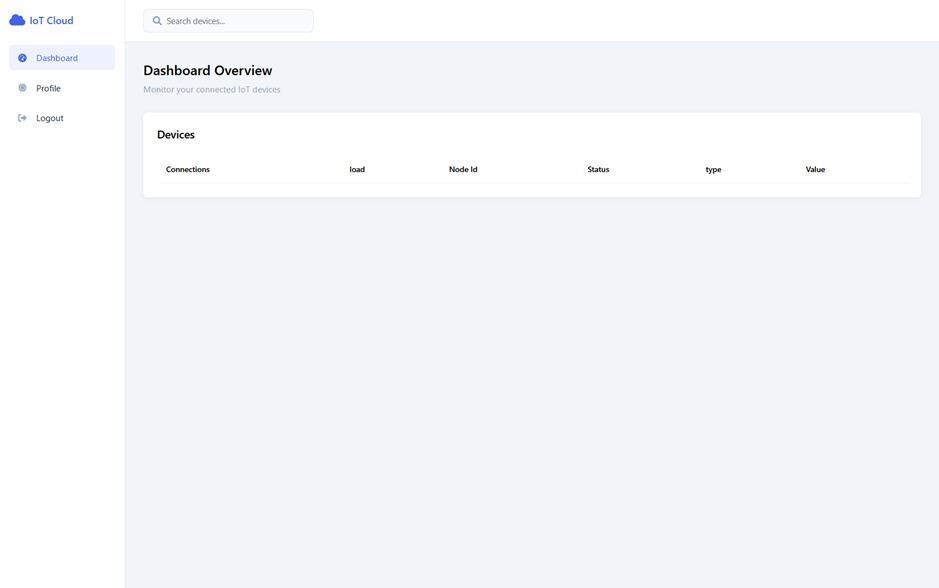
4.3 IoT Device Data Visualization
The system displays IoT device data in a structured table formatthatallowsuserstoviewdevice-relatedinformation clearly. Each device entry includes metrics such as load value, node identifier, operational status, and device type. The system also shows the generated hash value, which representstheencrypteddatastoredintheblockchain.
Thisvisualizationhelpsusersunderstandhowdevicedatais processedandstoredsecurely.
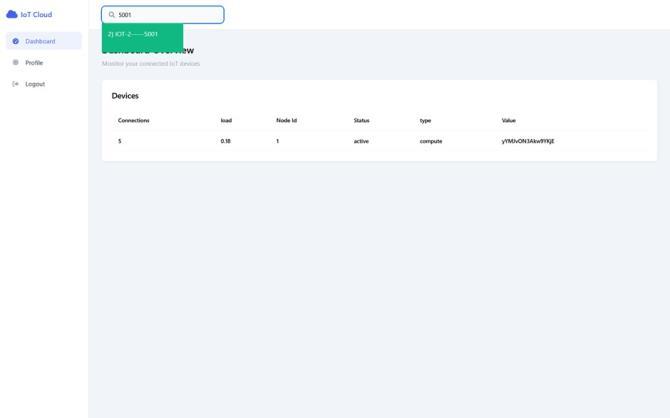
4.4 Data Security and Integrity Verification
The implemented system successfully demonstrates how hash-based encryption combined with blockchain storage ensuresdata integrity.EveryIoTdata recordisconverted into a hash value before being stored. The blockchain structureensuresthatoncethedataisrecorded,itcannotbe alteredordeleted.
The verification mechanism compares stored hash values with newlygenerated hashestoconfirmthat thedata has notbeentamperedwith.Thisimprovestrustandreliability inthemonitoringsystem.
The performance of the proposed system was evaluated basedonthefollowingcriteria:
Parameter Result
DataSecurity High(Blockchain-basedstorage)
DataIntegrity Ensuredthroughhashverification Real-TimeMonitoringSuccessfullyimplemented
SystemReliability Improved due to decentralized storage
UserAccessibility Securelogin-basedaccess
The evaluation results indicate that the system effectively improves data security, transparency, and reliability comparedtotraditionalcentralizedmonitoringsystems.
This project presented a secure temperature monitoring systembyintegratingInternetofThings(IoT)deviceswith blockchaintechnology.Thesystemwasdesignedtoaddress thelimitationsoftraditionalcentralizedmonitoringsystems, which are vulnerable to data manipulation, security breaches, and system failures. By using IoT sensors, the system continuously collects temperature data and processesitinrealtime.Thecollecteddataisthenencrypted usinghashingtechniquesandstoredsecurelyinablockchain network.
The use of blockchain ensures that the stored data is immutable, transparent, and tamper-proof, thereby improvingtrustandreliabilityinthemonitoringsystem.The developedweb-basedinterfaceallowsuserstoregister,log in, and access real-time as well as historical temperature data.Administratorscanmonitorsystemactivities,manage users,andverifystoreddata throughhashvalidation.The results demonstrate that integrating IoT with blockchain significantly enhances data security, integrity, and accessibility. Therefore, the proposed system can be effectivelyappliedinindustriessuchashealthcare,logistics, and manufacturing where accurate and secure environmentalmonitoringisessential.
Althoughtheproposedsystemsuccessfullyprovidessecure temperature monitoring using IoT and blockchain technologies, there are several areas where further improvementscanbemade.Inthefuture,thesystemcanbe enhancedbyintegratingadditionalenvironmentalsensors such as humidity, pressure, and gas sensors to support broadermonitoringapplications.
International Research Journal of Engineering and Technology (IRJET) e-ISSN: 2395-0056
Volume: 13 Issue: 03 | Mar 2026 www.irjet.net p-ISSN: 2395-0072
Another possible improvement is the implementation of advanced blockchain frameworks and smart contracts to automatedatavalidationandaccesscontrolprocesses.This wouldfurtherincreasesystemefficiencyandsecurity.The systemcanalsobeextendedtosupportmobileapplications that allow users to monitor IoT device data remotely throughsmartphones.
Additionally,futureresearchcanfocusonimprovingsystem scalabilitytohandlealargenumberofIoTdevicesandhigh volumes of data. Machine learning techniques can also be integrated to analyze temperature patterns and predict anomaliesautomatically.Theseenhancementswillmakethe systemmoreintelligent,scalable,andsuitableforreal-world industrialapplications.
[1] S. Nakamoto, “Bitcoin: A Peer-to-Peer Electronic Cash System,”2008.
[2]M.A.Ferrag,L.Maglaras,A.Argyriou,D.Kosmanos,and H. Janicke, “Security for 4G and 5G Cellular Networks: A Survey of Existing Authentication and Privacy-Preserving Schemes,”JournalofNetworkandComputerApplications, vol.101,pp.55–82,2018.
[3]K.ChristidisandM.Devetsikiotis,“BlockchainsandSmart ContractsfortheInternetofThings,”IEEEAccess,vol.4,pp. 2292–2303,2016.
[4] A. Dorri, S. S. Kanhere, and R. Jurdak, “Blockchain in InternetofThings:ChallengesandSolutions,”IEEEInternet ofThingsJournal,vol.6,no.2,pp.1–10,2017.
[5]M.Conoscenti,A.Vetrò,andJ.C.DeMartin,“Blockchain fortheInternetofThings:ASystematicLiteratureReview,” IEEE/ACS International Conference on Computer Systems andApplications,pp.1–6,2016.
[6]T.M.Fernández-CaramésandP.Fraga-Lamas,“AReview on the Use of Blockchain for the Internet of Things,” IEEE Access,vol.6,pp.32979–33001,2018.
[7] A. Reyna, C. Martín, J. Chen, E. Soler, and M. Díaz, “On Blockchain and Its Integration with IoT: Challenges and Opportunities,”FutureGenerationComputerSystems,vol. 88,pp.173–190,2018.
[8] W. Viriyasitavat, D. Hoonsopon, and M. Niyato, “Blockchain-based Business Process Management (BPM) FrameworkforServiceCompositioninIndustry4.0,”Journal ofNetworkandComputerApplications,vol.111,pp.14–24, 2018.