
International Research Journal of Engineering and Technology (IRJET) e-ISSN: 2395-0056
Volume: 13 Issue: 04 | Apr 2026 www.irjet.net p-ISSN: 2395-0072

International Research Journal of Engineering and Technology (IRJET) e-ISSN: 2395-0056
Volume: 13 Issue: 04 | Apr 2026 www.irjet.net p-ISSN: 2395-0072
M.Revathy
1, Navida Dayana2 , T. Doraka Mercy Angel 3, P. Nagesh 4 , K. Srinivasulu 5, I. Bindhu 6
1Assistant Professor (Adhoc), Dept. of ECE, JNTUA College of Engineering, Kalikiri, Andhra Pradesh, India 2-5UG Students, Dept. of ECE, JNTUA College of Engineering, Kalikiri, Andhra Pradesh, India
Abstract - People have discovered that one of the most vital aspects of modern life is how digital systems are connecting nowadays. The autonomous GPS-based smart delivery robot, developed in this paper, is among the most advanced delivery systems globally. The researchers implemented the smart delivery robot due to their fascination with the way automation performs on complex urbansurfaces.Thesysteminvolvesaself-navigatingvehicle, and the real time tracking of the machine reflects the designers’ideaoftheconnectionbetweendigitalintelligence and physical logistics. The smart delivery system performs effectivelybecauseitusesavarietyoftechniquesandobjects, suchasGPS,magnetometersensors,andBluetooth,aswellas the principles, for instance, direction sensing and autonomous navigation. The designers used numerous elementsofautomation,forinstance,differentialsteering,to represent comfort, efficiency, and natural movement. The machine contains several repeating processes, including locationtrackingandthecoordinatesinthebackground.The implementation used embedded systems, which created a smooth operation and slightly efficient surfaces; However, the manual delivery includes limitations that tend to be marginally rougher. The machine receives its direction from several sensors, which indicatesGPS location andrepresentwhere thecoordinates want tochangetheheading. Also, the interface of the smart delivery robotcontains wirelessprotocolssuch as Bluetooth, whilethemechanicsinvolveasecuredeliverymechanism,for instance, a password-based system. The engineers used realistic quantities of automation for steering. The communication comprises layers of digital code that are slightly thick, ensuring accurate and efficient navigation towardthedesireddestination.
.Thedeliveryrobot’sstructurehasasenseofdepthsinceitis integratedwithasecurecompartmentand autonomouschassis
Keywords: Autonomous Robot, GPS Navigation, Arduino, IoT, Smart Delivery, Magnetometer, Embedded Systems
In conventional systems, delivery operations were predominantly manual with limited automation. For example,apersonwasneededtotransportthegoods fromoneplacetoanother.Ittookalotoftimeandwas slower.Inthecrowdedareasofthecityoralargearea, itgotcomplicated.Acriticalevaluationoftheexisting delivery system reveals numerous challenges that hamper efficient delivery operations. The current system is heavilyrelianton manual intervention. For instance,deliverypersonnelaretaskedwithmanaging deliveryrecords,whichmustbeupdated.
Overtime,technologyforembeddedsystems,wireless communication,andsensorshasadvancedrapidly,and now autonomous robots have a big potential to upgrade the delivery system. GPS and magnetometer technologyareutilizedtodeterminethepositionand directionofthevehicle.Microcontrollersalsomanage theliveprocessingoftheinputdata,aswellascontrol all operations of the system. In addition, the above technologies allowed designing a smart delivery systemthatrequiredlittlehumanintervention.
This smart delivery robot is made to solve the limitations of the existing system. Currently, location tracking, direction control, and wireless communication perform their functions separately. Theydo not cooperate toform a cohesive, integrated system.Theproductismeantforthedeliveryofitems, which is done by sending the location coordinates in termsoflongitudeandlatitudethroughBluetooth.The robot utilizes this information to independently navigateanddeliverthedesireditem.
A secure delivery compartment is added to enhance the reliabilityof the system as well as the safety. The user can only grant password access to open the compartment. The servo motor is operated to automatically open and close the delivery compartment.
International Research Journal of Engineering and Technology (IRJET) e-ISSN: 2395-0056
Volume: 13 Issue: 04 | Apr 2026 www.irjet.net p-ISSN: 2395-0072
Thesuggestedapproachattemptstomake thefastest delivery, to reduce manual effort, and provide a cost effectiveandscalablesolutionforapplicationssuchas campus delivery, industrial logistics, and smart transportationsystems.
Numerous different researchers devoted their time to delivery systems and technology. A variety of efficient systemsarealreadypresentforautonomousrobotsdelivery operations. Likewise, a number of researchers worked in theareaofnavigationanddevelopedmanyroboticsystems. Other techniques employ GPS-based navigation coupled withwirelesstransmissiontoenablereal-timetrackingand control. Although these systems are designed for outdoor geographicallocations,theydohavelimitationsconcerning the accuracy of position and direction control. Some advanced systems use ultrasonic sensors or cameras to detectobstacles,forexample.Complexityandcostarehigh forthebetternavigationandperformanceofthesesystems. Thedronecommunicationandcontrolthrough smartphoneusingDifferentialSteeringisaparceldelivery projectthatisabasicneed.Moreover,themotiveofthis projectistodesignadronethatcanmanagethesailingand operationofremotelycontrolledaerialdevicesincaptive andfreeflightsituations.
In a traditional delivery system, the delivery of goods takes place by human physical effort that is very timeconsumingandinefficient.Deliveringgoodstoindustrial areas,urbanareas,andlargecampusesisalongstanding problem.Moreover,asthereis nodirectionalortracking control,itengagesindelaysandmisdeliveries.
Existing robotic systems often face limitations such as inaccurate navigation, a lack of smooth movement, and the absence of secure delivery mechanisms. There is a needforanautonomousdeliverysystemthatcannavigate accurately using real time location data, operate with minimal human intervention, and ensure secure and efficientdeliveryofitems.
Thesuggestedapproachisaself-sufficient,GPSbasedsmart delivery robot designed to deliver items efficiently with minimal human intervention. The system consists of
multiple subsystems, including navigation, control, communication,andlocomotion.
TheGPSmoduleofthenavigationsubsystemdeterminesa robot’s location in real-time. The robot's heading information is also provided by the magnetometer. It is possible to implement the control sub-system of the embedded system using Arduino Mega 2560 and Arduino Uno.Alloperationswillbecontrolledbythissub-system.It will analyze information and execute decisions. Besides that,itisgoingtocontrolthemovementofthemotor. The Bluetooth module received from the user communicates the destination coordinates to the communication subsystem. Once the coordinates are received,therobotproceedstotheplaceautomatically.The robot is constantly updated with its position information towardsthe target.Therobotwill move with the help ofa motordriverandDCmotors.
The sudden turningis prevented bychanging thespeed of the wheels to produce curved motion using differential steering.Theuserprovidesthepasswordfortheirdelivery boxasameanstocontrolthesystemfornetworksecurity. Anautomatedservomotorisincorporatedintothesystem foropeningandclosingtheboxafterverification.
This system design is cost effective, scalable, and implementableinreallifesituationslikeCampusdelivery. Industriallogisticsandautomatedtransportationsystems.
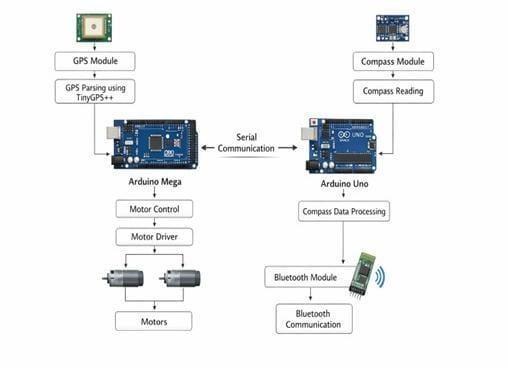
Fig. 1: SystemArchitectureDiagram
International Research Journal of Engineering and Technology (IRJET) e-ISSN: 2395-0056
Volume: 13 Issue: 04 | Apr 2026 www.irjet.net p-ISSN: 2395-0072
HardwareComponents:ArduinoMega,ArduinoUno,NEO6M GPS module, HC-05 Bluetooth module, HMC5883L Magnetometer(Compass),L298NMotorDriver,DCMotors (4-wheel drive), Batteries, Buck Converter, and Power Switches.
SoftwareModule:ArduinoIDE
At this stage, the system is implemented as a basic prototype to validate core functionalities and to ensure scalabilityforlarge-scalereal-worlddeployment.
6.1ArduinoMega(MainController)
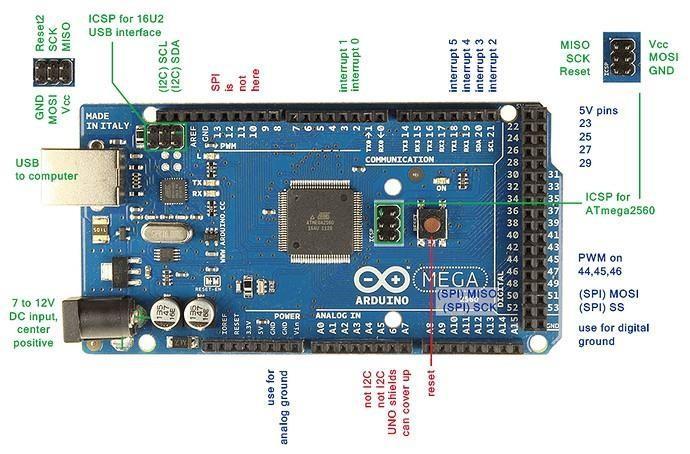
The entire machinery relies heavily on the Mega Arduino componentthattakesupinformationfromtheGPSmodule, Bluetooth, ultrasonic sensor, and the Arduino Uno. After that, it delivers an output signal to the motor driver and servo motor after regulating and changing the data lines with incoming information. Only the Arduino Mega is responsibleforcommunicatingwiththesubsystem.
6.2ArduinoUno(SensorNode)
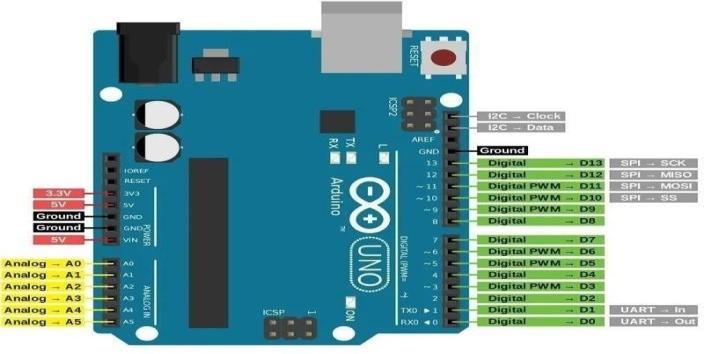
Thisisdedicatedtoprocessingcompassdatafromthe MPU9250sensor.Itcalculatestheheadingdirectionand transmitsthisinformationtotheArduinoMegaviaserial communicationfornavigationcorrection.
6.3GPSModule
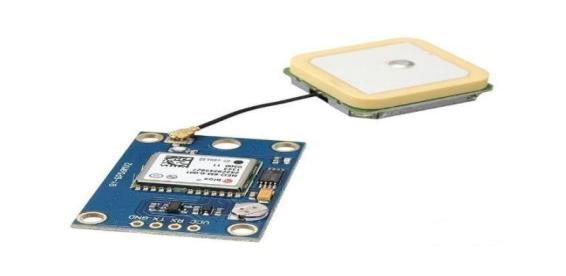

The GPS module provides real time latitude and longitude coordinates of the robot. This data is used by the Arduino Mega to determine the robot’s current position and calculatethedirectiontowardthetargetdestination.
6.4MPU9250Compass(Magnetometer)
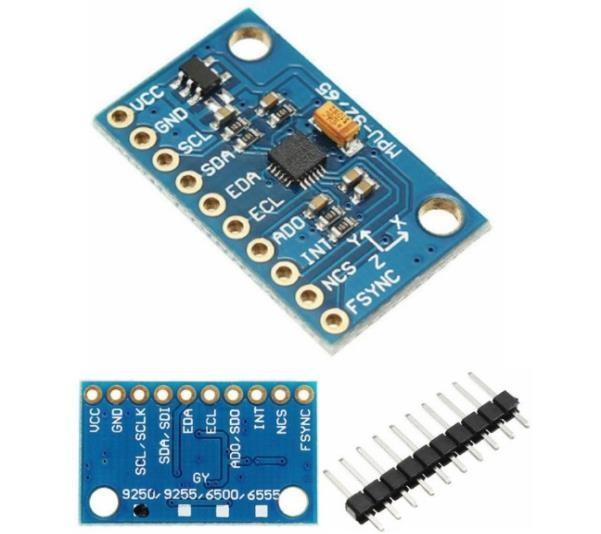
Fig no 5:MPU9250
Thecompasssensorprovidesheadinginformation (direction).Ithelpsthesystemdeterminetheorientationof the robot and enables accurate navigation toward the destination.
International Research Journal of Engineering and Technology (IRJET) e-ISSN: 2395-0056
Volume: 13 Issue: 04 | Apr 2026 www.irjet.net p-ISSN: 2395-0072
6.5BluetoothModule
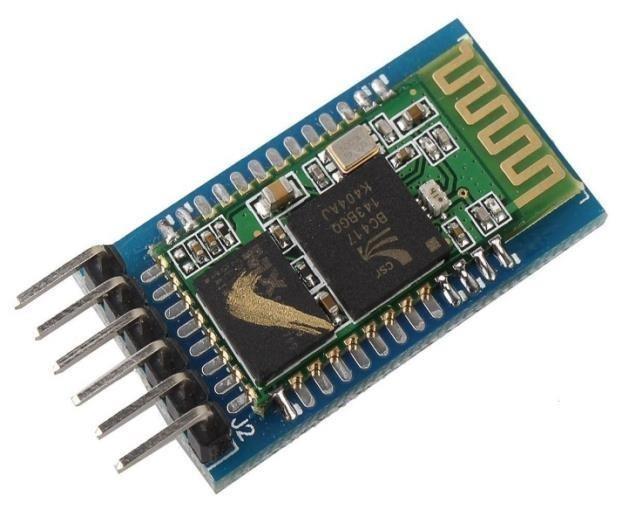
Figno6: HC05BLUETOOTHMODULE
Thismoduleallowswirelesscommunicationbetweenthe robot and a mobile device. The user sends destination coordinates through Bluetooth, which are received and processedbytheArduinoMega.
6.6MotorDriver(L298N)
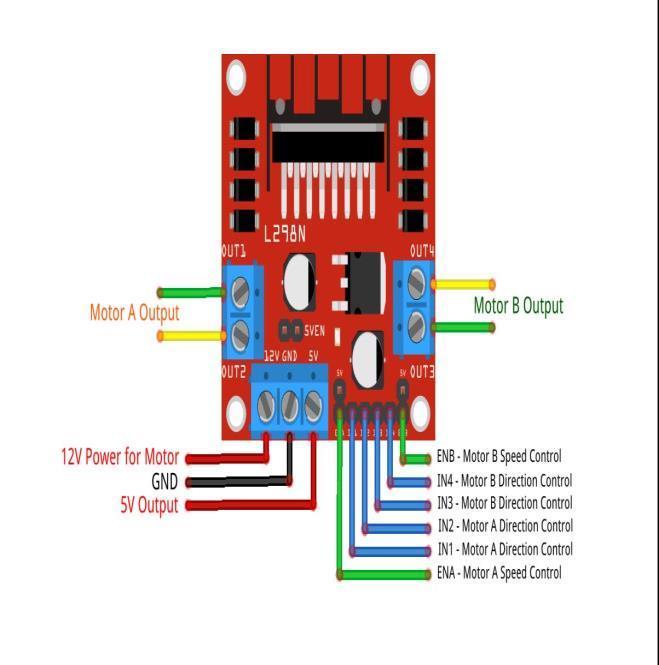
Thisservesasaninterfacebetweenthedirectcurrent and anArduinoMega.ItusesPWMsignalstocontrolthemotors directionandspeedafterreceivingcontrolsignals.
6.7DCMotors(Motor1–Motor4)
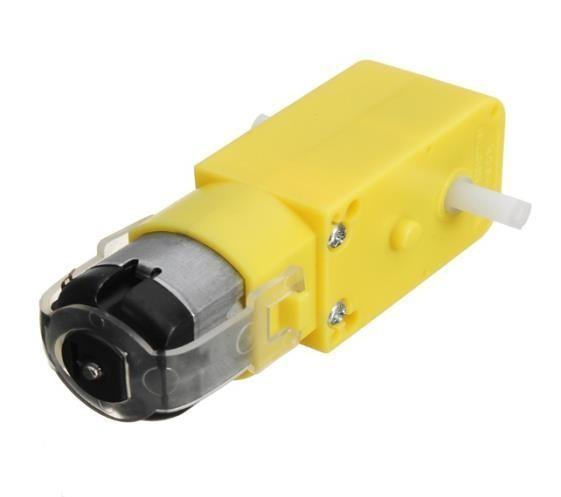
The four DC motors are responsible for the movement of the robot. They are controlled in a differential manner, wherevaryingspeedsofleftandrightmotorsallowsmooth turningandnavigation.
6.8ServoMotor
This is used for delivery mechanism. It opens the delivery compartment when a valid code is entered and automaticallyclosesitaftertheoperation.
6.9UltrasonicSensor
Obstacledetectionisaccomplishedbythissensor.Pausing ormodifyingmovement,itassiststhesysteminpreventing collisionsbymeasuringthedistancetoadjacentobjects.
6.10Buzzer
Thebuzzerprovidesaudioalertsforsystemeventssuchas arrivalatdestination,incorrectpasswordentry,orobstacle detection.
6.11PowerSupply(12V&Batteries)
Thebatteriesprovidethemainpowersourceforthesystem. A 12V supply is used for motors, while other components receive regulated voltage through a power management system.
6.125VRegulator/BuckConverter
Thevoltageregulatorconvertsahigherbatteryvoltagetoa stable 5V supply required for Arduino boards and other
International Research Journal of Engineering and Technology (IRJET) e-ISSN: 2395-0056
Volume: 13 Issue: 04 | Apr 2026 www.irjet.net p-ISSN: 2395-0072
electronic components, ensuring safe and reliable operation.
Component
Specification Function
ArduinoMega ATmega2560 microcontroller Mainsystem controller
ArduinoUno ATmega328P microcontroller Compassdata processor
GPSModule (NEO-6M)
Bluetooth Module(HC05)
Magnetometer (HMC5883L)
MotorDriver (L298N)
Bluetooth Module(HC05)
Magnetometer (HMC5883L)
Satellite-based positioning module Location tracking module
Serial communication (UART) Wireless communication module
3-axis digital compasssensor Provides directiondata
DualH-Bridge motordriver Controlsmotor speedand direction
Serial communication (UART) Wireless communication module
3-axis digital compasssensor Provides directiondata
Software has been developed using Arduino IDE. The autonomous GPS-based smart delivery robot is controlled byanArduinoMega.ArduinoMegatakescareofthevarious operationslikenavigation,drivingmotorcontrol,aswellas communication between the GPS, Bluetooth, and Arduino. The Arduino Uno runs the magnetometer, which sends headingdatabacktotheMegaforcontrol.
The system uses serial communication to interface with GPS,Bluetooth,andsensormodules.GPSdataprovidesrealtime location, while a differential steering algorithm controls motor speeds based on heading error for smooth navigation. Bluetooth is used to receive destination coordinatesfromtheuser.
Additionally,thesoftwareincludesobstacledetectionanda securedeliverymechanismusingaservomotor.Overall,the system ensures efficient real-time processing and reliable autonomousoperation.
Thesystemseemstoacquirethepositionofarobotwiththe helpofaGPSmodule,andatthesametimeusersendsthe coordinates of the destination through a Bluetooth communication. The magnetometer module provides instant heading information while the controller GPS data uses to calculate the required bearing. The distinction betweentherobotscurrentheadingandthedesiredpathis continuouslycalculatedinordertogeneratecontrol signals.
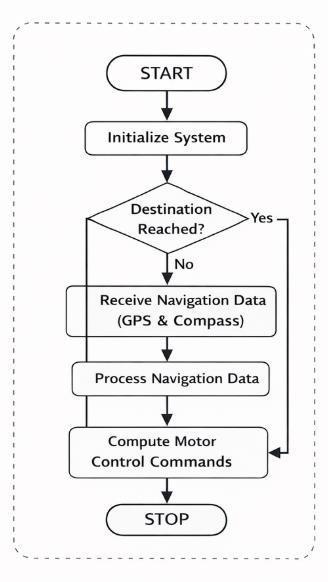
Fig. 9: Flowchartofsystemoperation
Thesteeringis based ona differential mechanismbecause the signals provided to the motors are different. This steering technique doesn’t cause a sudden change in the vehicle’sdirection.Bythebelow,wecansaythattherobot willtakeaturnsmoothlyandgradually.Therobotisableto continuously correct the path and deviations. In order for the robot not to follow the path, it updates information in realtime.
The proposed system successfully demonstrated autonomous navigation using GPS and compass-based direction control. The robot was able to reach the target location with acceptable accuracy and minimal deviation. Differentialsteeringensuredsmoothmovementandstable path correction during navigation. The secure delivery
International Research Journal of Engineering and Technology (IRJET) e-ISSN: 2395-0056
Volume: 13 Issue: 04 | Apr 2026 www.irjet.net p-ISSN: 2395-0072
mechanism using a servo motor functioned reliably upon validinput.
The communication between modules, including GPS, Bluetooth,andthesensornode,wasstablethroughoutthe operation. The system showed consistent performance under different test conditions with minimal delay in response. Realtime path correction improved navigation efficiencyandreducederrors.
9.1 GPSaccuracyandfixacquisition
Theroverwastestedinfiveoutdoorfieldtrialsunderopen skyconditions withHDOPvaluesrangingfrom1.2to1.8. The following table presents the position accuracy measuredataknownreferencepoint:
Table9.1:GPSPositionAccuracy StationaryBenchmark Test
Table9.2:HeadingAccuracy LPFandPhysicalIsolation Comparison
9.2 HEADINGACCURACYANDLPFEFFECTIVENESS
Heading accuracy was evaluated by comparing the magnetometer readings with a reference compass under stationary conditions. The effectiveness of the Low-Pass Filter (LPF) was analyzed by comparing filtered and unfilteredheadingvariationsduringmotoroperation.
Motors ON, LPF(α=0.2)
Motors ON, mastisolated
9.3 FULLMISSIONTRIAL OUT-AND-BACK NAVIGATION
Threecompleteoutandbackmissionswereconductedinan open test area of 20 × 30 metres. The target location was placed 18 metres from the starting point. The following tablepresentstherecordedperformancemetrics.
Table9.3:FullOut-and-BackMissionTrials Performance Summary
International Research Journal of Engineering and Technology (IRJET) e-ISSN: 2395-0056
Volume: 13 Issue: 04 | Apr 2026 www.irjet.net p-ISSN: 2395-0072
dwellobserved
Mission completed
BTtelemetry received Continuous Continuous Continuous
The 3-metre arrival threshold was selected for a GPS uncertainty of approximately 2 metres265 and hence was considered a suitable thresholdat whichthe target can be considered to have been reached. The average arrival accuracyacrossthreetrialsfortheoutwardpathwas[2.1 metres],andforthereturnpath,itwas[2.3metres]andis consistent.
We are proposing a system that'll work easily and deliver the goods to the customer. The system in place is quite efficientandeasytocontrol.
Thegoalofthisprojectistoutilizesmartdeliverytoavoid dependency on manual delivery to reach the accurate destinationwiththehelpofGPSandcompass.Ourproject prototype will be able to reach its targeted position withoutany human intervention. By doing so, it prevents lossofpropertyandalsosavesthecostincurredindelivery.
Using a computerized management system, the delivery orderswillbetransmittedtothedistributioncarriersfrom acentralPC.Alltherobottransporterscantalk.
The use of ultrasonic sensors or LiDAR for obstacle detection can make the delivery drone efficient. Furthermore, the drone can easily be used for long range communication with LoRa or an IoT-based cloud system. The delivery drone project can also be improved by using PIDcontroltobetteritsnavigation.Thedronecanbemade tomovemoreaccuratelywithRTKGPS.Inadditiontothis, multipledeliveriescanhavemulti-waypointnavigation.
[1]Borenstein, J. and Feng, L. (1996). "Measurement and Correction of Systematic Odometry Errors in Mobile Robots," IEEE Transactions on Robotics and Automation,vol.12,no.6,pp.869–880.
[2]Miucic,R.andGould,J.(2008)."AStudyofu-blox NEO-6 GPS Receiver Performance for Vehicular Navigation Applications," Proceedings of the IEEE IntelligentTransportationSystemsConference,pp. 112–117.
[3]Hernandez,J.,Roca,D.,andGibert,V.(2019). "Low-costGPSWaypointNavigationfor Arduinobased Unmanned Ground Vehicles," International Journal of RoboticsResearchandDevelopment,vol. 9,no.2,pp.45–58.
[4]Brooks,R.A.(1986)."ARobustLayeredControlSystem for a Mobile Robot," IEEE Journal on Robotics and Automation,vol.2,no.1,pp.14–23.
[5]Jahangir,A.,Khan,S.,andAli,M.(2017). "Evaluation of Inter-Processor Communication Protocols for Dual-Arduino Sensor Fusion Systems," IEEESensorsLetters,vol.1,no.5,pp.1–4.
[6]Ozyagcilar, T. (2012). "Calibrating an eCompass in the PresenceofHardandSoft-IronInterference,"Freescale SemiconductorApplicationNoteAN4246,Rev.3.
[7]Ziegler,J.,Bender,P.,andLategahn,H.(2010). "ComparisonofIIRandFIRDigitalFiltersforMEMSIMU SensorFusioninRobotics,"IEEEInternational SymposiumonIndustrialElectronics,pp.567–572.
[8]Becker,T.andHerrmann,G.(2015)."HC-05 BluetoothSerialModulePerformanceEvaluationfor MobileRoboticsTelemetry,"ProceedingsoftheACM WorkshoponEmbeddedNetworkedSensors,pp.28–33.
[9]Sinnott,R.W.(1984)."VirtuesoftheHaversine,"Sky andTelescopeMagazine,vol.68,no.2,p.159.
[10]Williams,E.(2011)."AviationFormularyV1.46," [Online].Available: http://www.edwilliams.org/avform.htm.[Accessed: December2024].
International Research Journal of Engineering and Technology (IRJET) e-ISSN: 2395-0056
Volume: 13 Issue: 04 | Apr 2026 www.irjet.net p-ISSN: 2395-0072




Mrs. M Revathy Assistant Professor (Adhoc) at JNTUACEK from the DepartmentofElectronicsand CommunicationEngineering, AP,India

Mr. K. Srinivasulu currently student from Department of Electronics and Communication Engineering from JNTUA College of Engineering,Kalikiri, AndhraPradesh,India
Ms. Navida Dayana currently student from Department of Electronics and Communication Engineering from JNTUA College of Engineering,Kalikiri, AndhraPradesh,India
Ms. T. Doraka Mercy Angel currently student from Department of Electronics and Communication Engineering from JNTUA College of Engineering,Kalikiri, AndhraPradesh,India

Ms. I. Bindhu currently student from DepartmentofElectronicsand Communication Engineering from JNTUA College of Engineering,Kalikiri, AndhraPradesh,India
Mr. P. Nagesh currentlystudentfrom DepartmentofElectronicsand CommunicationEngineering fromJNTUACollegeof Engineering,Kalikiri, AndhraPradesh,India