
International Research Journal of Engineering and Technology (IRJET) e-ISSN: 2395-0056
Volume: 12 Issue: 12 | Dec 2025 www.irjet.net
p-ISSN: 2395-0072
NON-INVASIVE BLOOD GLUCOSE MONITORING DEVICE
Dr. Manjula E1 , Rohini A Tirakannavar2 , Shilpa B Sali 3 , Shilpa M Itnal4 , Zoya Roshan Desai5
1Doctor, SG Balekundri Institute of Technology, Belagavi, Karnataka, India 2,3,4,5Student, SG Balekundri Institute of Technology, Belagavi, Karnataka, India
***
Abstract- Noninvasive glucose sensing has emerged as a key research area, mainly due to the worldwide rise of diabetes, and the drawbacks of the traditional invasive glucose measurement methods. Although finger pricks are accurate, they are painful, inconvenient, and not suitable for continuous monitoring. This paper details the conceptualization, creation, and testing of blood Glucose level without plucking of the blood and creation of a inexpensive, non-invasive glucose measurement system based on Near Infrared (NIR) spectroscopy. The system incorporates an NIR LED source, a photodiode sensor, an Adriano-based processing unit, and a Wi-Fi module for wireless data transmission. The prototype decodes the signals of the reflected NIR light from human skin to find the glucose concentration. Experimental findings show that the behavior is quite promising and therefore, suitable for the very first stage of research and implementation in the academic field. This research is a step forward in portable health monitoring and can serve as a model for the community, in terms of system architecture, the calibration process, and performance evaluation, all of which are easily reproducible.
Keywords- Non-Invasive monitoring, NIR spectroscopy, IOT healthcare, Adriano, Glucose estimation, biomedical electronics.
1. Introduction
Diabetes mellitus is on its way to becoming the main health problem that is rapidly expanding all over the globe. The (WHO-WORLD HEALTH ORGANIZATION ) has been reporting that the number of individual diagnosed with diabetesworldwidehasexceeded422millionandthetrend is going to be even steeper in a pretty short time in the future. To be able to manage the disease well and avoid long-term complications it is necessary to constantly monitor blood glucose levels. Unfortunately, the currently prevalent invasive methods entail noxious skin puncture by means of lancets,hencethecausedpain,riskforinfection,andtestfrequencyloweringduetouserdiscouragement.
Non-Invasive monitoring solutions have been discussed when talking about state-of-the-art sensing technologies. In particular, Near-Infrared (NIR) spectroscopy is the dominant promising one since it ia well suited to go through the tissue and bond with glucose Molecules.GlucosehassignificantabsorptionpeaksintheNIRwavelengthband(700-2500nm).
Thisinventionisintendedtocomeupwithapocket-size,easy-to-operate,andlow-pricenon-Invasiveglucosemonitoring prototype. The system incorporates an NIR LED source, a photodiode, and an ESP8266 Wi-Fi module for wireless communication.Thegoalistopresentaproof-of-conceptprototypethatcanperformglucoselevelestimationfromanonbloodsource.
1.1 LITERATURE SURVEY
Multiple Research studies have been widely explored on the non-invasive glucose monitoring by different principles. Theseprinciplesincludeoptical,thermal,ultrasonic,andelectromagneticsensing.
A. Optical Glucose Sensing-
Near-infrared(NIR)spectroscopyhasbeenoneofthemostintensivelystudiedmethodsinthisarea.Theresearcherslike Ikeda et al. demonstrated that glucose molecules absorb specific NIR wavelengths, thus allowing concentrations to be estimatedby.
B. Challenges in Previous Studies-
• Previous research studies have identified multiple significantchallenges:
•Signalnoiseduetoskinthicknessvariation•Ambientlight Interference
•Non-linearopticalabsorptionpatterns
International Research Journal of Engineering and Technology (IRJET) e-ISSN: 2395-0056
Volume: 12 Issue: 12 | Dec 2025 www.irjet.net
p-ISSN: 2395-0072
• Calibration requiring individual skin properties. These limitations impact the level of accuracy and repeatability. In addition, enhancements in sensors, microcontrollers, and digital filtering have turned up the reliability of low-cost opticalsystemstoagreatextent.
C. GapsAddressedinthisWork-Thisresearchoffers:
•Asimplifiedandreproduciblehardwareprototype
•Low-costcomponentssuitableforacademicresearch
•Wirelessmonitoringcapability
•Basiccalibrationmethodology.
2. METHODOLGY
The methodology presents the entire sequence of hardware, sensing, signal processing, and calibration steps that were implementedtodeveloptheprototype.
System Architecture
The system comprises four essential elements: Optical Sensing Unit – NIR LED (940 nm) and photodiode fixed on the oppositeedgesofthefingertip,SignalConditioningCircuit–Photodiodeoutputisamplifiedandfiltered,ProcessingUnit–ArudinoUNOfunctionsasatoolfordigitizationandcomputation,OutputandConnectivity–LCDdisplayandESP8266WiFimodule,Dataprocessing:Startswiththeopticalsignalandendswiththeestimationofglucoseonthedisplay.
Optical Sensing Mechanism NIR Illumination
Light from a Near-Infrared LED with 940nm wavelength travels through the fingertip. Part of this light is absorbed by glucosemolecules,whiletherestgoesout.
PhotodiodeDetection–AphotodiodeplacedoppositetheLEDcollectsthetransmittedlight.Whentheamountofglucose concentration fluctuates, it also changes the amount of light that reaches the detector. This change in light creates variationscanbequantified.
Signal Conditioning Stage
The Photodiode generates a very small current, which has to be converted and cleaned before digital processing. The conditioning circuit has - a Trans impedance amplifier to convert current to voltage, Band-Pass filter to remove noise, motionartifacts,andambientlightinterference,Avoltageamplificationstageisemployedtoelevatethesignaldetected to a level which is suitable for input to the Arduino. At this point, the microcontroller is ensured to receive only those opticalmodificationswhicharerequiredforaccurateprocessing.
Digital Processing and Glucose Estimation
TheArduinotakesonseveralroles:
1) Analog-to-Digital Conversion – The conditioned signal is sampled by the ADC and averaged to lessen noise. Besidesthis,italsoinvolvespeakvoltage;Normalizedtransmittedintensity,Absorptionindexvalues.
2) Regression- Based Calibration – By comparing optical readings with standard glucometer values, a polynomial regressionmodelisgenerated.Thecalibratedmodelisthenemployedtodetermineglucoselevel,reducesignal variations,andimproveoverallmeasurementaccuracy.
Display and wireless Output
The estimated glucose value is shown to the user by a 16X2 LCD. For remote monitoring, the ESP8266 module can be connectedtotheapporcloudservice.Thesystemsupportsreal-timedataupdatesandcontinuoustracking.
Calibration Procedure
Theprocessofcalibrationisthekeytoprecision.Itinvolved:Gatheringsensorreadings,measuringreferencevalueswith a glucometer, using regression to relate both data sets, updating the coefficients in the Arudino Program and, finally, performingCalibrationrepeatedlyuntiltheerrorreachedanacceptablelevel.
International Research Journal of Engineering and Technology (IRJET) e-ISSN: 2395-0056
Volume: 12 Issue: 12 | Dec 2025 www.irjet.net
Framework
Besidessecurity,theframeworkfeaturesadaptiveintelligencethatcanlearneachuser’sbehavioralpatterns,whichallows the system to tailor reminders, anticipate confusion or stress, and regulate support as the patient’s cognitive condition evolves. Being aware that a lot of care environments have unstable internet connectivity, the system is also designed for dependable offline working through local data storage, uninterrupted operation of essential modules, and fallback communicationmethods,suchasSMSorBluetooth,foremergencies.
Tomakethetechnologyaccessibletoindividualswithlimiteddigitalliteracyorcognitiveimpairments,thesystemhasbeen created to be simple, intuitive, and easy to use. The interface is intended to be inclusion and intuitive, with simplified controlsforcaregiversandclearvisual,auditory,andmultilingualoptionsforpatients.Altogether,thesefeaturesareaimed atcreatingamoretrustworthy,adaptable,anduser-friendlysolutionthatmeetsthechallengesofdementiacareinthereal world.
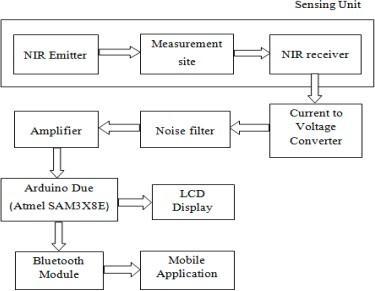
A. Block Diagram
Thesystemcanmonitorglucoselevelinaperson'sbloodbyutilizationofNIRlightemittedfromaspecializedsourceanda photodetectorthatissituatedontheoppositesideofthefingertip.When NIRlighthitsthebiologicaltissue, intheblood. Portion of the light is absorbed dependingontheglucoselevels,whiletheotherisallowed to pass through the fingertip. Thestrengthofthetransmittedlightvariesaccordingtothequantityofglucosepresentintheblood,makingitpossibleto estimatetheconcentration.
The photo detector is employed to capture the transmitted light signal and produces minor current, which is then converted into voltage. This voltage is filtered to remove Noise and is amplified to a level that may be utilized by the microcontroller.
The conditioned signal is delivered to the Arduino microcontroller, where it is digitally processed. A second- order regression model is utilized for glucose level estimation. The glucose concentration that has been determined is visually presentedontheLCDscreenandatthesametime,itissentviaBluetoothtoamobileapplication.Hence,thisinformation accessibletotheuserviahis/hermobilephone.
WI-FIModule:
ESP 8266 Description:
The ESP8266 is a WIFI module based on a single chip compact system-on-chip (SoC) with the TCP/IP stack already included,whichmakesanymicrocontrollercapableofconnectingtoa Wi-Finetwork.BesidesWi-Fiandinternetprotocol stack, it can work as a stand-alone device with its own application or as a Wi-Fi co- Another processor. ESP8266 comes with AT command firmware, which allows easy communication with Arduino boards, thus adding wireless capabilitieseasilyasifbyaWi- FiShield. One ofthe cheapest and most populardevices out there is also supported by a largeandconstantlygrowingdevelopercommunity.
The module contains enough computational power and onboard memory to directly interface with sensors and other
p-ISSN: 2395-0072 application-specifichardware.ItcanverywellbeapartofIoT-drivendesigns.
International Research Journal of Engineering and Technology (IRJET) e-ISSN: 2395-0056
Volume: 12 Issue: 12 | Dec 2025 www.irjet.net p-ISSN: 2395-0072
In an Internet of Things (IoT) environment, numerous devices -usually embedded software-equipped- either communicates with the internet or among themselves. Individually, these are very limited in their capabilities so they havetobeinterconnectedinordertofunction properly.TherealpowerofIoTiswhenthesedevicesconnecttoacentral service,whichmanagesdata,handlescommunication,andperformsfunctionsrangingfromsimplemonitoringtocomplex analytics. This service is the backbone of the ecosystem that guarantees the smoothness of the interaction among all connectedelements.
TheunitsupportsWi-Fi802.11b/g/nstandards,andthuscanuseWi-FiDirect(P2P)alongwithsoft-APmode.Itisafully integrated TCP / IP protocol stack kind of device and alsoincludesaTRswitch, balun,low-noiseamplifier(LNA), power amplifier,andmatchingnetworkforefficientRFperformance.ThedevicealsohaskeypartslikePLLs,regulators,aDCXO, andpowermanagementunits.
It has a maximum output power of +19.5dBm in 802.11b mode and extremely low power-down leakage current of less than 10 µA. The device is equipped with 1 MB of flash memory, and a low power 32-bit CPU, which can function as an applicationprocessor.Afewofthe connectivityoptionsareSDIO1.1/2.0,SPI,andUARTinterfaces.
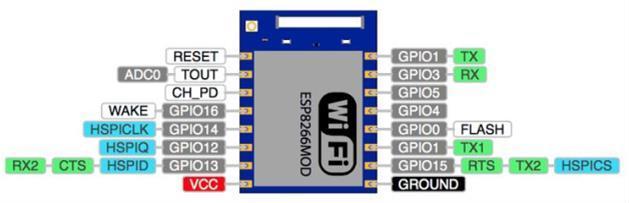
Fig.3.2
Thing speak
The internet of things (IOT) represent a system made up of 'connected things'. These things generally consist part of an embeddedoperatingsystemandtheabilitytocommunicatewiththeinternetorwiththe'neighboring'things.Oneofthe coreelementsofagenericIoTsystemthatactsasabridgeforvarious'things'isanIoTservice.Aninterestingimplicationof 'things'thatmakeuptheIoTsystemsisthatthingsalonecannotdoanything.Theymustatleastbecapableofconnectto other 'things'. However, the real power of IoT is obtained when the 'things' connect to a 'service' either directly or through other'things'.Insuchsystems,theserviceactsasaninvisiblemanagerbyofferingfunctionalities thatrangefrom simple data collection and monitoring to complex data analytics. The diagram below shows where an IoT service is positioned.
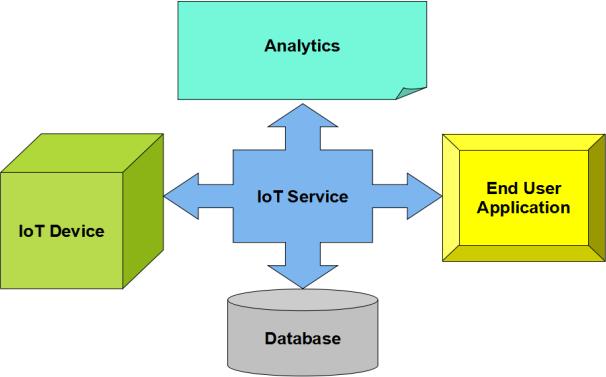
Fig. 3.3 ProgramtheArudinoUNOtofunctionasanISP Arduino IDE Compiler:
ThisprocessgoesbeyondthesimpleideaofprogramminganArduinoonabreadboard.Firstofall,amicrocontrollerwith apre-installedbootloadermustbeusedorthebootloaderhastobeloadedmanuallyifitdoesnotthere.(Abootloaderisa
International Research Journal of Engineering and Technology (IRJET) e-ISSN: 2395-0056
Volume: 12 Issue: 12 | Dec 2025 www.irjet.net
p-ISSN: 2395-0072
smallprogramstoredonthemicrocontrollerthatallowsuploadingsketchestothechip).Itisimportanttopointoutthatnot allATmega328chipsareconfiguredinthesameway.
InordertoputthebootloaderItisuptoserveandconfigured ontheArudinoUNOIn-SystemProgrammer(ISP),which givesitthefunctionalityofthesoftware-basedmicrocontroller.
Steps:
1. OpentheArudinoIDESoftware onyourcomputer.
2. Start the Arudino ISP example sketch under File → Examples.
3. ForIDEversion1.0findtheheartbeatfunctionvoidandchangethedelayvaluefromdelay(40);todelay(20);.
4. Connect the Arduino UNO to your PC and make sure that it has no connection with the breadboard circuit at this moment.
5. Choose the right UNO board from the Tools → Board menuanduploadthesketch
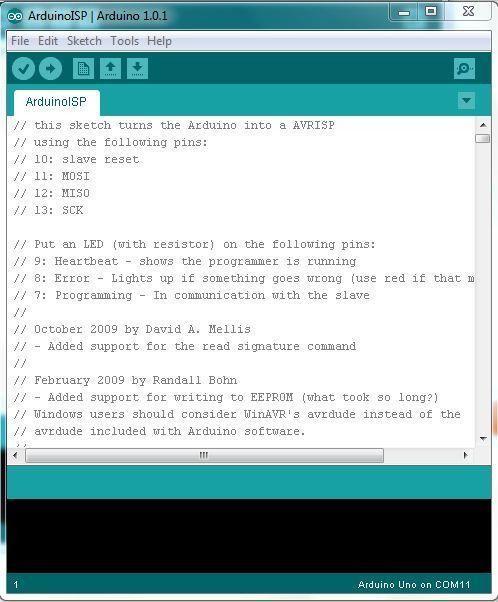
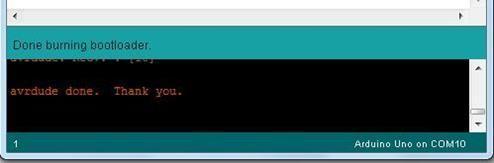
Inthe ArduinoIDEopentheTools menu andselectArduino UNOundertheBoardsettings.Afterthat,choosethecorrect serial port that is connected to your device. Then set the Programmer option to Arduino as ISP. Once all configurations havebeensetandthenuse thetoolsmenu to burnthe boot loader. The IDE will thenshow a message that indicates the writing of the boot loader to the target board, and it may be need a short duration to complete. Success boot loader messageOncethebootloaderisinstalled,aconfirmation
”Congrats: You are now set to transfer sketches to the Arudino connected on a bread board!”
3. CONCLUSION AND FUTURE SCOPE
Everypartincludedwithinthesystemhardwarehasbeenchosenandputtogether withthemainobjective of thisdeviceistogoodfunctioning,smoothlyand efficiently. The inclusion of each module in the proposed system has beenbuiltwithadefiniteidea,thusleadinguptotheoverallcapabilityofthegadget.Backedbycurrenttechnologyand advancedintegrated circuits,the projectis in its mature stage, imakingthem inappropriate forfrequent orcontinuous use. Hence, to address these issues, this project proposes a non-invasive glucose monitoring technique based on near-
International Research Journal of Engineering and Technology (IRJET) e-ISSN: 2395-0056
Volume: 12 Issue: 12 | Dec 2025 www.irjet.net p-ISSN: 2395-0072
infrared (NIR) LED sensing. The glucose value obtained by the photo detector is processedAnd displayed both on the LCD screen as well as the connected mobile application. This compact non-invasive instrument is a dependable and easy-to-usedevicefordiabetesmanagementthatisequallysuitableforhomeuse,aswellashealthcareinstitutions.
Possibilityofimprovedprecisionthroughprogressinsensortechnology.
Incorporation ofartificial intelligenceforreal-timedataprocessingandpredictioninsight..
Improved connectivity features could allow the device to be smoothly integrated into bigger healthcare networksanddigitalmonitoringplatforms.
Componentminiaturizationforbetterportabilityanduserconvenience.
Implementationofcloud-basedanalyticsforpersonalizedhealthcaremanagement.
REFERENCES
[1] S.Vanaja,R.Babu T,M.Malathi,K.K.Saxena,J.J.Jeya Sheela, S.Suruthi, S.B. Stalin,N. Nagaprasad,R.Krishnaraj, D. Bandhu, and U. Reddy, “Non-invasive glucometer monitoring system through optical based near-infrared sensor method,” Computer Methods in Biomechanics and Biomedical Engineering:ImagingandVisualization,vol.12, no. 1, pp. 12-24,Apr.2024,doi:10.1080/216811.63.2024.2327423
[2] M. Naresha, V. S. Nagaraju, S. Kollem, J. Kumar, and S. Peddakrishna, “Non-invasive glucose prediction and classificationusingNIR technology with machinelearning,” Comput. Methods Programs Biomed.,vol. 232, pp.100-110, 2024,doi:10.1016/j.cmpb.2024.107365.
[3] W. Oñate, E. Ramos-Zurita, J.-P. Pallo, S. Manzano, P. Ayala, and M. V. Garcia, “NIR based electronic platform for glucose monitoring for the prevention and control of diabetes mellitus,” Sensors, vol. 24, no. 13, p. 4190, 2024, doi: 10.3390/s24134190.
[4]D.DiFilippo,F.N.Sunstrum,J.U.Khan,andA.W.Welsh,“Non-invasiveglucosesensingtechnologiesandproducts:A comprehensivereviewforresearchersandclinicians,”Sensors,vol.23,no.22,p.9130,2023,doi:10.3390/s23229130.
[5] P. S. K. Reddy, D. Mahesh, C. U. Teja, M. Janaki, and K. Mannem, “Non-invasive glucose monitoring using NIR spectroscopy,”JournalofPhysics:ConferenceSeries,vol.2325, no. 1, p. 012021, 2022, doi: 10.1088/17426596/2325/1/012021.
[6] M.Shokrekhodaei,D.P.Cistola,R.C.Roberts,andS.Quinones,“Non-invasiveglucosemonitoringusingopticalsensor and machine learning techniques for diabetesapplications,” IEEE Access, 10.1109/ACCESS.2021.3084191. vol. 9, pp. 73029–73045,2021,doi:
[7]L.Tang,S.Chang,C.-J.Chen,andJ.-T.Liu,“Non-invasivebloodglucosemonitoringtechnology:Areview,”Sensors,vol. 20,no.23,p.6925,Dec.2020,doi:10.3390/s20236925.
[8] R.I.R.Javier,A.O.Baloloy,N.B.Linsangan,andI.V.Villamor,“Portablenoninvasive glucometerusingnear-infrared sensor and Raspberry Pi,” in Proc. 4th Int. Conf. Electrical, Telecommunication and Computer Engineering (ELTICOM), Manila,Philippines,2020,pp.116-120,doi10.1109/ELTICOM51256.2020.9230496.
[9]D. S. Deepthi, N. S. Valke, P. J. P., A. K. Sai, and G. Sajjan, “Non-invasivebloodglucosemeasurementsystem,”inProc. IEEE Int. WIE Conf. Electrical and Computer Engineering (WIECON-ECE), 2019, pp. 1–5, doi: 10.1109/WIECON ECE48653.2019.9019919.