
International Research Journal of Engineering and Technology (IRJET) e-ISSN:2395-0056
Volume: 12 Issue: 04 | Apr 2025 www.irjet.net p-ISSN:2395-0072
International Research Journal of Engineering and Technology (IRJET) e-ISSN:2395-0056
Volume: 12 Issue: 04 | Apr 2025 www.irjet.net p-ISSN:2395-0072
Ayush Pandey, Adik Yadao
Dept. of Mechanical Engineering, G. H. Raisoni College of Engineering and Management, Maharashtra, India
Abstract - Thisstudyfocusesonthestructuralanalysisand design optimization of wind turbine blades to enhance efficiency, reliability, and cost-effectiveness. Wind turbine blades experience complex loads, including aerodynamic forces, gravitational effects, and extreme weather conditions.Ensuringtheirdurabilityandmaximizingenergy capture efficiency is crucial for sustainable wind energy systems. Finite element analysis (FEA) is employed to evaluate stress distribution, deflection, natural frequencies, and failure modes such as buckling, delamination, and fatigue. The study compares conventional glass-fiberreinforced composites with advanced carbon-fiber composites to determine optimal material choices for strength,weight,andcostbalance.
Optimization techniques, including genetic algorithms and gradient-based methods, refine blade design parameters such as length, airfoil shape, chord distribution, and twist angle. These approaches aim to minimize blade mass while maintaining structural integrity and performance. Material distribution is also optimized to enhance recyclability and sustainability. Manufacturing constraints and cost considerations are integrated into the design process, exploring innovations like hybrid materials and adaptive structures. The findings contribute to the development of next-generation wind turbine blades, supporting the expansionofefficientandsustainablewindenergysolutions.
Windmills, iconic structures of ingenuity and sustainability, have graced landscapes for centuries as symbols of innovation and utility. These remarkable machines harnessthepowerof wind to perform essential tasks, making them a cornerstone of human development and a testament to our relationship with nature. Originating over a thousand years ago, windmills were initiallydesignedtogrindgrainintoflourandpumpwater, playingavitalroleinagricultureandearlyindustry.
At their core, windmills are marvels of mechanical engineering. Their sails or blades catch the wind's kinetic energy, converting it into rotational motion to power machinery.Thissimpleyeteffectiveprincipleunderscores humanity's enduring quest to harness renewable resources. Over time, windmills evolved in design and purpose, from the traditional post and tower mills of
medievalEuropetothesleek,modernturbinesgenerating cleanelectricitytoday.
Beyond their functional significance, windmills carry cultural and aesthetic value. They stand as picturesque landmarks in rural landscapes, often evoking a sense of nostalgia and harmony with the environment. In an era increasingly focused on sustainability, windmills and their contemporary counterparts, wind turbines underscore the importance of renewable energy in combatingclimatechange.
Whether viewed as historical artifacts, practical tools, or symbols of a greener future, windmills inspire awe and remind us of humanity’s ability to innovate in harmony with nature. Their story is a journey through time, intertwining tradition, technology, and an enduring relianceonthepowerofthewind.
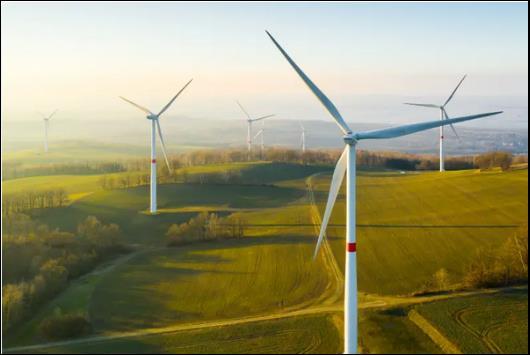
Windmill blades are the defining feature of windmills, embodying the essence of harnessing wind energy and transformingitintomechanicalorelectricalpower.These dynamic components, designed to capture the kinetic energy of the wind, are vital to the functionality and efficiencyofwindmills,bothtraditionalandmodern.Their evolutionreflectscenturies ofengineeringinnovationand adaptationtochangingneedsandtechnologies.
The journey of windmill blades begins with their rudimentary wooden designs in early windmills, used primarily for grinding grain or pumping water. These
International Research Journal of Engineering and Technology (IRJET) e-ISSN:2395-0056
Volume: 12 Issue: 04 | Apr 2025 www.irjet.net
early blades were simple yet effective, leveraging basic aerodynamic principles to rotate and drive machinery. Over time, advancements in materials and understanding of wind dynamics revolutionized their design. Today, modernwindturbinesareequippedwithsleek,precisionengineered blades made of advanced composites like fiberglass and carbon fiber, designed to maximize energy capture while withstanding harsh environmental conditions.
Aerodynamic optimization plays a critical role in blade design, ensuring that they can generate power efficiently at varying wind speeds. From a cultural perspective, windmill blades are iconic, seen spinning atop historic millsintheEuropeancountrysideortoweringturbineson modern wind farms. Their visual presence often symbolizes humanity's ingenuity and commitment to sustainableenergy.
As the demand for renewable energy grows, windmill blades stand at the forefront of innovation, enabling cleaner,greenersolutionstopowertheworld.Theyserve as both a bridge to the past and a beacon of progress, showcasing the harmonious integration of nature and technology.
The size and number of blades vary depending on the windmill's purpose. For electricity generation, modern turbines often feature three blades for optimal balance, efficiency, and reduced noise. These blades are not only technological marvels but also represent the synergy betweenengineeringandrenewableenergyinnovation.
Thedesignofwindmillbladesisacornerstoneofmodern wind energy systems, directly influencing their efficiency, performance, and environmental impact. As the primary componentresponsibleforcapturingthekineticenergyof the wind, these blades are marvels of engineering, combining advanced materials and aerodynamic principlestooptimizeenergyconversion.
A well-designed windmill blade maximizes energy capture by utilizing an airfoil shape, precision angles, and lightweight materials. The challenge lies in balancing strength, durability, and cost while ensuring the blades canendureharshweatherconditionsandfluctuatingwind loads over their lifespan. Modern innovations, such as smart materials and recyclable designs, have further advancedbladetechnology,makingitintegraltotheglobal pushforrenewableenergy.
Understanding the complexities of windmill blade design offers insight into the interplay between engineering ingenuity and environmental stewardship, driving the evolutionofsustainableenergysolutions.
p-ISSN:2395-0072
Theoptimizationofwindmillbladedesignisessentialfor enhancing the efficiency, reliability, and sustainability of wind energy systems. As wind energy continues to play a criticalroleintransitioningtorenewableenergy,thereisa growing need to maximize the performance of windmills whileminimizingcostsandenvironmentalimpacts.
Maalawi and Badr [1] examined the mechanical interaction between turbine blades and the electric generator, focusing on strategies for controlling pitch and rotational speed. Their study highlights the complexity of this problem, which involves numerous factors, relationships, and constraints. Designing optimal blades requires addressing aerodynamic, structural, and control challenges. Nevertheless, the design process can be effectively handled through an iterative and step-by-step approach. In aerodynamic optimization, the blade is modeled as a series of cross-sections along the pitch axis, with each section characterized by its aerofoil profile, chord length, and attachment angle, influenced by both collectiveandlocaltwistangles.
Thresher and Dodge [2] explored how the blade’s pitch angleisdeterminedbythebroadercontrolstrategyofthe wind energy system. Accurately computing the airflow around rotating blades remains a highly complex task. Solving the three-dimensional Navier-Stokes equations withinarotatingframeprovidesdetailedinsightsintothe wind flow and the forces exerted on the turbine surfaces, but the associated computational costs make this approachimpracticalfortypicaldesignandanalysiswork.
Tangler [3] explained that the Blade Element Momentum (BEM) theory offers a simplified, one-dimensional approach to modeling blade aerodynamics. Despite its simplifications, it is widely used in the wind energy industry because it can predict blade performance with reasonableaccuracy.
United Technologies Corporation [4] conducted a comprehensive experimental modal analysis, employing a hydraulic shaker and multiple accelerometers to measure one edgewise and two flapwise accelerations at approximately 20 blade stations. The resulting frequency response functions were compared to outcomes from a three-dimensional shell element finite element (FE) model. Their study focused on analyzing the dynamic characteristics associated with the seven lowest natural frequencies.
LarsenandKretz[5]utilizedmodalanalysistechniquesto identify dominant mode shapes in medium-sized wind turbine blades. Their approach successfully captured the primary modes related to the three lowest natural
International Research Journal of Engineering and Technology (IRJET)
Volume: 12 Issue: 04 | Apr 2025 www.irjet.net
frequencies by analyzing the transfer function between a sinusoidalforceappliedatthebladetipandaccelerometer responsesrecordedacrossupto68bladestations.
Larsen, Hansen, Baumgart, and Carlén [6] evaluated the dynamic behavior of wind turbine blades, including natural frequencies, damping ratios, and mode shapes, through modal analysis methods. Their work, conducted on the LM 19m blade, provides insights applicable to various blade designs. They assessed measurement reliability using standard deviations and coefficients of variation, notinghighaccuracyin natural frequenciesand damping but greater variability in mode shape assessments.Primarydeflectionmodesexhibitedminimal uncertainty, whereas secondary, particularly torsional, deflections showed higher error margins. Although systematic errors such as blade support flexibility and sensor arrangement were acknowledged, they were not quantified.
Dimitriadis [7] assessed the performance of Horizontal Axis Wind Turbines (HAWTs) using two analytical methods: Computational Fluid Dynamics (CFD) and Blade Element Momentum Theory (BEMT). He compared the results from both methods, conducting both twodimensional and three-dimensional analyses to study the flowfieldsaroundturbineblades.Dragandliftcoefficients were evaluated against available experimental data, revealing the superior accuracy and advantages of CFD modelingcomparedtoBEMT.
Dhurpate,Sutar,andKale[8]analyzedtheperformanceof a small horizontal-axis wind turbine rotor blade using variousairfoil types.Thestudyassumedlow windspeeds and low Reynolds numbers, using a single airfoil type acrossthe bladespan.Therotor, witha2-meterdiameter andthreeblades,wasmodeledusingfourdifferentairfoils, with a tip speed ratio of 7. Among all tested airfoils, the E387airfoildemonstratedthebestperformance.
SolandandThuné[9]studiedtherotorbladeperformance of a wind turbine with a diameter of 165 meters. They used computational tools such as XFLR5 and QBlade for simulations, applying the Blade Element Momentum Theory for analysis. Their findings detailed rotor performance under various operational loads and indicatedthattheNACA63-6XXandNACA64-6XXairfoils offered the best performance improvements compared to othertestedairfoils.
Kale,Birajdar,andSapali[10]designednewairfoilshapes to enhance wind turbine performance, creating distinct airfoilsfortherootandtipsections.TheyemployedBlade Element Momentum Theory in designing a small wind turbine blade and conducted numerical analysis using
p-ISSN:2395-0072
QBladesoftware. Their resultswere compared withthose fortheNACA2412andSG6042airfoils,furthercomparing the performance of blades constructed with different individualairfoilsusingthesamesoftware.
Mahri and Rouabah [11] conducted a dynamic stress evaluation on a wind turbine blade, which was designed using blade element theory. Their analysis incorporated beamtheoryfordynamicbehaviorandutilizedbothfinite elementmodelingandblademotionequationstoperform modalanalysis.
Edon [12] designed a 38-meter blade for a 1.5 MW wind turbineusingthebladeelementmomentum(BEM)theory. In his proposed future work, he introduced a chord distribution formula, which has been implemented in this study.
Giguere and Selig [13] presented a methodology for optimizing blade geometry in wind turbine rotor design. Theirapproachutilizedpre-programmedsoftwaretoolsto enhancebothstructuralandcost-efficiencymodels.
Jureczko, Pawlak, and Mezyk [14] applied BEM theory in blade design and used ANSYS software to calculate the blades’ natural frequencies. Mode shapes were determined using a Timoshenko twisted, tapered beam elementformulation.Ageneticalgorithmwasemployedto optimize the blade’s performance by reducing vibrations, loweringcosts,increasingoutput,andimprovingstability.
Guo,Wu,Xu,andLi[15]developeda1.5MWwindturbine rotor with a 35-meter blade length using MATLAB. Their results confirmed the viability of MATLAB for large-scale turbine design, highlighting itscost-effectiveness in earlystage aerodynamic analysis and performance optimization. Computational fluid dynamics (CFD) results wereusedforvalidation.
Carcangiu [16] utilized the FLUENT CFD tool to gain detailed insights into fluid flow behavior over wind turbine blades, contributing to more precise aerodynamic assessments.
Jackson et al. [17] carried out a preliminary study for designing a 50-meter-long wind turbine blade using both fiberglass and carbon fiber composite materials. Adjustments in cross-sectional thickness were made to improve structural performance, and aerodynamic analyseswereconductedforbothcleanandcontaminated surfaceconditions.
Wang et al. [18] investigated turbines of three different sizestodevelopacost-optimizationmodelthatmaximized annual energy output. By using an enhanced BEM model integrated with blade structural dynamics, they
International Research Journal of Engineering and Technology (IRJET) e-ISSN:2395-0056
Volume: 12 Issue: 04 | Apr 2025 www.irjet.net
successfully demonstrated reduced energy production costs.
Karam and Hani [19] implemented a multi-dimensional optimization technique to maximize the blade’s natural frequency. The optimization process considered parameters such as cross-sectional area, radius of gyration,andchordlength,andtheapproachprovedtobe computationallyefficient.
Hsu[20]developeda theoreticalframeworkforanalyzing twisted, tapered beams using the spline collocation method.Theprovidedexpressionsforcross-sectionalarea andmomentofinertiaareusedasabasisinthiswork.
Rao and Gupta [21] analyzed twisted, tapered, rotating Timoshenkobeamsusingthefiniteelementmethod.They derived the stiffness and mass matrices through shape functions and determined the natural frequencies by reformulatingtheproblemintoaneigenvalueanalysis.
Hillemer et al. [22] designed wind turbines with power outputs exceeding 5MWby scalingexisting rotor models. Usingsimplebeamtheory,theyassessedstresses,bending moments, and natural frequencies. To reduce blade weight,airfoil shell thicknesses,aswellaswebandflange dimensions,wereadjustedacrosssections,constrainedby requirementsforstructuralstrengthandminimalmass.
Gooden [23] studied the two-dimensional aerodynamic properties of the FX 66 S 196 V1 airfoil, which is used in this report. The investigation focused on lift and drag coefficientsovervariousReynoldsnumbers.
Bharath [24] designed a 45-meter blade for a wind speed of 12 m/s using BEM theory, calculating flow angles, thrust, torque, and power. The blade was modeled as a hollow tapered beam, with stiffness and mass matrices derived from the cross-sectional area and moment of inertia. Chord length dictated the taper, and airfoil thickness defined the height. Natural frequencies were evaluated in both axial and transverse directions. OptimizationusingMATLAB’s fmincon functionfocusedon maximizing power and minimizing mass under different constraintscenarios,yieldingoptimizedchordprofilesand performancevisualizations.
Milleretal.[25]providedanoverviewofrecentadvances in simulation techniques, tools, and applications for wind energy. The industry increasingly depends on CFD to design innovative turbines, though BEM remains more prevalentinearlydesignphasesduetoitssimplicity.They emphasized the need for new tools that integrate CFD earlier in the process and highlighted the role of algorithmic optimization in minimizing reliance on trialand-errormethods.
p-ISSN:2395-0072
Madsen et al. [26] and parallel studies using bladeresolved rotor models often excluded hub geometry, yet CFD techniques successfully captured spanwise and tip flow patterns. These flow features significantly influence aerodynamic loads both within and outside the rotor plane.
Horcas et al. [27] found that tools like HAWC2, based on OpenFAST physics models, tend to overestimate loads on 10 MW turbines at sub-rated wind speeds. Moreover, these tools often underestimate the performance benefits of curved blade tips. Due to their reliance on fixed drag polars and limitations in gradient calculations, their effectiveness for optimization is reduced, especially when refiningairfoilshapes.
Batay et al. [28] demonstrated that aerostructural optimizationcanenhancewindturbinebladeperformance by reducing blade mass, which contributes to higher energyoutputandcostsavings.Theyrecommendedfuture work focus on improving optimization techniques and expandingthemtoawiderrangeofturbinetypes.
Jureczko, Pawlak, and Mezyk [29] created a generalpurpose numerical model for wind turbine blade optimization and developed a software tool for multiobjective discrete-continuous optimization. Using ANSYS parametric modeling, users can vary blade thickness and key dimensions. The tool incorporates a modified genetic algorithm to optimize performance based on multiple objectivesunderspecifiedconstraints.
Chattot [30] argued that while an optimal rotor does not strictly meet the Betz limit at each blade section, it does satisfy the condition on average across the Trefftz plane. The optimization problem remains well-posed in inviscid flow as long as the airfoil’s maximum lift coefficient is respected. The study concluded that viscous effects have minorinfluenceontheidealbladeshape,mainlyreducing overall efficiency. The method is adaptable to geometric constraints, such as optimizing for a given chord distribution.
Fuglsang and Madsen [31] introduced a direct design method for horizontal-axis wind turbines, employing numerical optimization and various computational models. These included aerodynamic, structural, aeroelastic (time-domain), extreme load, and noise prediction analyses. They also estimated manufacturing costsbasedondesignloads.
Jureczko, Pawlak, and Mezyk [32] (in a follow-up study) again emphasized their optimization software, capable of creating diverse blade models through ANSYS scripting. The tool applies a modified genetic algorithm for
International Research Journal of Engineering and Technology (IRJET) e-ISSN:2395-0056
Volume: 12 Issue: 04 | Apr 2025 www.irjet.net
optimizing blades against several criteria under various constraints.
Schubel and Crossley [33] noted that the three-blade horizontal-axis configuration dominates today’s wind turbine market due to its efficiency, control, and scalability. Supported by a global supply network, this design continues to outperform alternatives. Blade geometriesarecarefullyshapedtoenhanceaerodynamics, withincreasingwidth,twist,andthicknessnearthehubto withstand higher bending moments. While current innovations focus on scaling turbine size, future advancements may prioritize performance enhancements via new materials and airfoil designs, especially as physicalgrowthreachespracticallimits.
Thedevelopmentandoptimizationofwindturbineblades is a complex, multidisciplinary process involving aerodynamic efficiency, structural integrity, and control strategies.Thewidespreadadoptionofthehorizontal-axis, three-blade configuration has been driven by its proven performance, scalability, and cost-effectiveness. Studies utilizing Blade Element Momentum Theory (BEMT) have provided a reliable foundation for blade design, while more advanced methods like Computational Fluid Dynamics (CFD) and Finite Element Method (FEM) offer detailed insights into flow behavior and structural dynamics, albeit at higher computational costs. Researchers have demonstrated that blade optimization, whetherthroughgeneticalgorithms,MATLAB-basedtools, or multi-criteria approaches, can lead to significant improvementsinenergyoutput,reducedmaterialuse,and increasedreliability.
Experimental and modal analyses have furthered understanding of blade dynamics, highlighting the importance of accurately predicting natural frequencies and damping characteristics. Airfoil selection remains critical, with performance varying based on Reynolds number, tip speed ratio, and blade span location. As turbine sizes increase, maintaining the balance between aerodynamic performance and structural strength becomes increasingly important. Future innovations are expected to focus on integrating high-fidelity simulations with optimization techniques, aiming to enhance performance while addressing limitations in transport, manufacturing, and environmental impact. Overall, continuous refinement in design tools and methodologies ensuresongoingprogressinwindturbinetechnology.
p-ISSN:2395-0072
1. K.Y. Maalawi, M.A. Badr, A practical approach for selecting optimum wind rotors, Renewable Energy. 28 (2003)803-822.
2. R.W. Thresher, D.M. Dodge, Trends in the evolution of wind turbine generator configurationsand systems.WindEnergy,1(1998)70–86.
3. J.L. Tangler, The Nebulous art of using windtunnel airfoil data for predicting rotor Performance, 5 (2002)245-257.
4. Experimental modal analysis for WTS-3 wind turbine (1981). Report HSER 8205, Hamilton standard divisionofUnitedTechnologiesCorporation.
5. Larsen, G.C. and Kretz, A. (1995). Experimental DeterminationofStiffnessDistributionsandMode Shapes ofWindTurbineBlades.Riso-R-773(EN).
6. Larsen, G. C., Hansen, M. H., Baumgart, A., & Carlén, I. (2002). Modal analysis of wind turbine blades. Denmark.ForskningscenterRisoe.Risoe-RNo.1181
7. Dimitriadis E., Missirlis D. and Martinopoulos G. 2014EuropeanWindEnergyAssociation,Barcelona.
8. DhurpateP.R.,SutarK.B.andKaleS.A.2016Imp. J.Interdiscip.Res.2(6)5.
9. SolandT.andThunéS.,2012BachelorThesis.
10. Kale S. A., Birajdar M. and Sapali S. N. 2016 J. Altern.EnergySourcesTechnol.6(1).
11. Z.L. Mahri, M.S. Rouabah, “Calculation of dynamic stresses using finite element method and prediction of fatiguefailureforwindturbinerotor“WseasTransactions OnAppliedAndTheoreticalMechanics,Issue1,Volume3, January2008
12. Mickael Edon, “38 meter wind turbine blade design,internshipreport“
13. Philippe Giguere and Selig, “Blade Geometry Optimization For The Design Of Wind Turbine Rotors” AIAA-2000-0045
14. M.Jureczko,M.Pawlak,A.Mezyk,“Optimizationof wind turbine blades“, Journal of Materials Processing Technology167(2005)463–471
15. Tingting Guo, Dianwen Wu, Jihui Xu, Shaohua Li, “The Method of Large-scale Wind Turbine Blades Design BasedonMATLABProgramming”,IEEE
International Research Journal of Engineering and Technology (IRJET) e-ISSN:2395-0056
Volume: 12 Issue: 04 | Apr 2025 www.irjet.net p-ISSN:2395-0072
16. Carlo Enrico Carcangiu, “CFD-RANS Study of Horizontal Axis Wind Turbines” ,Doctor of philosophy Thesisreport
17. K.J.Jackson, et al., “Innovative design approaches for large wind turbine blades”, 43rd AIAA Aerospace SciencesMeetingand Exhibit10 - 13 January2005, Reno, Nevada
18. WangXudong,etal.,”Bladeoptimizationsforwind turbines”, Wind Energy. 2009;12:781–803, Published online29April2009inWileyInterscience
19. Karam Y, Hani M, ”Optimal frequency design of wind turbine blades”, Journal of Wind Engineering and IndustrialAerodynamics90(2002)961–986
20. Ming-Hung Hsu, “Vibration Analysis Of PreTwisted Beams Using The Spline Collocation Method”, Journal of Marine Science and Technology, Vol. 17, No. 2, pp.106-115(2009)74
21. S. S .Rao, R.K Gupta ,” Finite Element Vibration Analysis Of Rotating Timoshenko Beams”, Journal of Soundandvibration(2001)242(1),103}124
22. B. Hillmer et al.,” Aerodynamic and Structural Design of Multi MW Wind Turbine Blades beyond 5MW”, JournalofPhysics:ConferenceSeries75(2007)012002
23. J.H.M. Gooden, ”Experimental Lowe speed Aerodynamic Characteristics of the Wortmann FX 66-S196 V1 Airfoil”, http://www.standardcirrus.org/FX66-S196V1-Gooden.PDF
24. Bharath Koratagere Srinivasa Raju 2011 “Design optimization of a wind turbine blade” The University of TexasatArlington.
25. Miller, A.; Chang, B.; Issa, R.; Chen, G. Review of computer-aided numerical simulation in wind energy. Renew.Sustain.EnergyRev. 2013,25,122–134.
26. Madsen,M.H.A.;Zahle,F.;Sørensen,N.N.;Martins, J.R.Multipointhigh-fidelityCFD-basedaerodynamicshape optimization of a 10 MW wind turbine. Wind Energy Sci. 2019, 4,163–192.
27. Horcas, S.G.; Ramos-García, N.; Li, A.; Pirrung, G.; Barlas, T. Comparison of aerodynamic models for horizontalaxiswindturbinebladesaccountingforcurved tipshapes. WindEnergy 2023, 26,5–22.
28. Batay, S.; Baidullayeva, A.; Zhao, Y.; Wei, D.; Baigarina, A.; Sarsenov, E.; Shabdan, Y. Aerostructural Design Optimization of Wind Turbine Blades. processes 2024,12,22.
29. Jureczko, M.; Pawlak, M.; Mezyk, A. Optimisation of wind turbine blades. J. Mater. Proc. Technol. 2005, 167, 463–471.
30. Chattot, J.J. Optimization of wind turbines using helicoidal vortex model. J. Sol. Energy Eng. Trans. ASME 2003, 125,418–424.
31. Fuglsang, P.; Madsen, H.A. Optimization method for wind turbine rotors. J. Wind Eng. Ind. Aerodyn. 1999, 80,191–206.
32. Jureczko, M.; Pawlak, M.; Mezyk, A. Optimisation of wind turbine blades. J. Mater. Proc. Technol. 2005, 167, 463–471.
33. Schubel, Peter J., and Richard J. Crossley. 2012. "WindTurbineBladeDesign" Energies 5,no.9:3425-3449.