
International Research Journal of Engineering and Technology (IRJET) e-ISSN: 2395-0056
Volume: 13 Issue: 02 | Feb 2026 www.irjet.net p-ISSN: 2395-0072
International Research Journal of Engineering and Technology (IRJET) e-ISSN: 2395-0056
Volume: 13 Issue: 02 | Feb 2026 www.irjet.net p-ISSN: 2395-0072
Aksharbhai
Miyani1 , Nikhil Ghelani2 , Pratik Solanki3 , Prof. Reena Desai4
1,2,3
Student, Dept. of Computer Application, Gyanmanjari Innovative University (GMIU), Bhavnagar, Gujarat, India
4(Guide) Assistant Professor, Dept. of Computer Application, GMIU, Bhavnagar, Gujarat, India
Abstract – The accelerating convergence of artificial intelligence (AI) and cyber security has fundamentally altered the threat landscape, creating both unprecedented defensive capabilities and novel attack vectors that challenge decades of established security assumptions. This review synthesizes research across machine learning–driven in- trusion detection, AIpowered offensive tooling, adversarial machine learning, and automated threat intelligence to map the current state of knowledge at this critical intersection. Drawing on over seventy peer-reviewed studies, framework documentation from MITRE ATT&CK and ATLAS, and threat-intelligence reports from ENISA, NIST, Crowd Strike, and Mandiant, we trace how deep learning supplanted signature-based detection, how generative models now craft polymorphic malware and hyperpersonalized phishing at scale, and how reinforcement-learning agents autonomously probe network perimeters. We identify a persistent asymmetry: offensive applications of AI mature faster than their defensive counterparts, partly because adversaries face no regulatory or ethical constraints on model deployment. The review further examines adversarial machine learning model poisoning, evasion, and extraction as a meta-threat that undermines the very AI systems designed to protect digital infrastructure. Through comparative analysis of defensive architectures including AI-augmented Security Orchestration, Automation, and Response (SOAR) pipelines, Extended Detection and Response (XDR) platforms, and behavioral analytics engines, we evaluate the practical readiness of each approach. Real-world case studies of deepfakeenabled fraud, LLM- generated exploit code, and autonomous vulnerability discovery ground the discussion in operational reality. We conclude by charting critical research gaps explain ability in security models, cross-domain transfer of adversarial robustness, and the governance vacuum surrounding dual-use AI and propose a structured agenda for future investigation. This review is intended to serve as a unified reference for researchers, practitioners, and policymak- ers navigating the rapidly shifting terrain where artificial intelligence meets cyber security.
Keywords – Artificial Intelligence, Cyber security, Threat Intelligence, Adversarial Machine Learning, Automated Attacks, Intrusion Detection, Deep fakes, Large Language Models, Cyber Defense, AI Governance
Fewdevelopmentsinthehistoryofinformationsecu-rityhavecompressedtimelinesasviolentlyasthemain-streaming oflarge-scaleartificial intelligence. Between2020and 2024,thecyber securitycommunitywitnesseda qualitativeshift: threatactorsmovedfromexperimentingwithmachinelearningmodelstooperationalizingthematscale[1,2]. The2023 Verizon Data Breach Investigations Report noted that social-engineering attacks the category most amenable to AIdriven personalization accounted for a record share of initial access vectors [3]. Concur- rently, defenders began deploying neural-network–based intrusion detection, behavioral analytics, and automated incident-response pipelines, creatinganarmsracewhosedynamicsarestillpoorlyunderstood[4].
This convergence is not accidental. The same capabil- ities that make modern AI powerful pattern recognition over massive corpora, language generation indistinguish- able from human output, policy optimization in adversarial environments map directly onto both attack and defense requirements. A spear-phishing engine and a phishingdetection classifier share the same underlying transformer architecture; the difference lies in the objective function and theethicalframeoftheoperator[5,6]. Recognizingthissymmetryisessentialtoanyseriousanalysisofthefield.
ThenotionthatAIcouldbeweaponizedwasanticipatedwellbeforethecurrentwave. Brundageetal.warnedin2018that advances in AI would “expand the set of actors who are capable of carrying out [cyber] attacks, the rate at which these actorscancarrythemout,andthesetofplau-sibletargets”[7].Thatforecasthasbeenlargelyvalidated.SeymourandTully demonstratedautomatedspearphishingonsocialmediaasearlyas2016[8];by2023,researchersshowedthatGPT-class models could generate contextually convincing phishing emails at a fraction of the cost of hu- man operators [5]. The implications extend well beyond phishing. Pa Pa et al. examined ChatGPT’s capacity to produce functional malware components, finding that while safety filters block direct requests, prompt-injection and in- direct methods frequently
International Research Journal of Engineering and Technology (IRJET) e-ISSN: 2395-0056
Volume: 13 Issue: 02 | Feb 2026 www.irjet.net p-ISSN: 2395-0072
succeed [9]. Greshake etal. fur- therdemonstratedthatLLM-integratedapplicationscanbe weaponizedthroughindirect promptinjection,blurringtheboundarybetweenthemodelandtheattacksurface[10].
Criminalecosystemshavelongembracedautomation botnets, exploitkits,andphishing-as-a-serviceplatformspredate the deep learning era but AI introduces a quali- tative leap. Machinelearning allows attack tools to adapt in real time: polymorphicmalwarethatrewritesitssig- naturebeforeeachpropagationattempt,credential-stuffingenginesthatlearn login-formstructuresacrossheteroge-neouswebsites,andransomwarethatselectsencryptiontar-getsbasedoninferred file value [11,12]. Reinforcement- learning agents have been shown to discover viable pene- tration paths in simulated enterprisenetworkswithouthu-manguidance,reducingtheexpertisebarrierforwould-beattackers[13,14].
The economic calculus is equally alarming. Genera- tive AI lowers the marginal cost of producing high-quality attack artifacts emails,exploitcode,fraudulentvoiceclips towardzero,whilethecostofdefendingagainsteachnewvariant remainssubstantial[15]. Thisasymme-trysuggeststhatthecurrentperiodmayrepresentastruc-turalshiftinattacker–defendereconomics,notmerelyanincrementalescalation.
1.3 The Imperative for AI-Driven Defense
IfAIexpandstheattacker’stoolkit,italsooffersthemostcrediblepathtoscalabledefense. Signature-baseddetec-tion,the dominantparadigmforthreedecades,cannotkeep pace with adversaries who generate novel artifacts per en-gagement [16]. Machine learning models trained on net- worktelemetry,endpointbehavior,andlogsemanticshave demonstrated superiordetectionofzero-daythreats,lateral movement,andinsideranomalies[17–19]. Deeplearn- ingarchitectures particularly recurrent and transformer- based models have shown promise in processing sequen- tial security data at scale[20,21].
YetdefensiveAIintroducesitsownvulnerabilities.Ad-versarialmachinelearningresearchhasshownthatclassi-fierscan beevadedwithcarefullycraftedperturbations[22,23],thattrainingdatacanbepoisonedtointroduceback-doors[24,25], and that model parameters can be extracted through query-based attacks [26]. The defender who re- lies on AI without understanding these failure modes risks a false sense of security a concern that Taddeo et al. have called the “doubleedgedsword”oftrustingAIincyberse-curity[27].
1.4 Scope and Contributions of This Review
This paper offers a comprehensive, literature-driven re- view of the intersection between artificial intelligence and cybersecurity.Unlikenarrowlyscopedsurveysthataddress individual sub-problems (e.g., ML-based intrusion detec- tion alone), we adopt a holistic perspective that encom- passes offensive AI, defensive AI, adversarial robustness, threat intelligenceautomation,andthegovernancechal-lengesthatbindthem.
The principal contributions of this review are as follows:
C1. Asystematicsynthesisofoverseventypeer-reviewedstudies,frameworkdocuments,andindustryreportsspanning 2014–2024,organizedaroundaunifiedtax-onomyofAIrolesincybersecurity.
C2. A comparative analysis of AI-driven defensive architectures IDS/IPS, behavioral analytics, SOAR, and XDR groundedinempiricalfindingsandopera-tionaldeploymentevidence.
C3. Anin-depthexaminationofadversarialmachinelearn-ingasa meta-threat thatjeopardizestheintegrityofAI-based defensesthemselves.
C4. A critical evaluation of AI-enabled offensive capabili- ties, including automated exploit generation, deepfake social engineering,andLLM-assistedmalwarecre-ation,withreal-worldcasestudies.
C5. Identification of key research gaps, contradictions in existing literature, and a structured agenda for future investigation.
Theremainderofthispaperisorganizedasfollows.Sec-tionIIestablishesfoundationalconceptsattheintersec-tionofAI and cybersecurity. Section III surveys the AI- augmented threat landscape. Section IV examines auto- mated attack methodologies. SectionVreviewsAI-drivendefensivesystems.SectionVIdiscussesAI-enabledthreatintelligence. Section VII treats adversarial machine learn- ing. Section VIII presents illustrative case studies. Sec- tion IX addresses ethics,
International Research Journal of Engineering and Technology (IRJET) e-ISSN: 2395-0056
Volume: 13 Issue: 02 | Feb 2026 www.irjet.net p-ISSN: 2395-0072
policy, and governance. Section X projects future trends. Section XI maps research gaps, and Section XII closes with concludingremarks.
BeforeexamininghowAIreshapesbothoffenseanddefense,itisworthrevisitingtheintellectuallineagethatbroughtthe field to its present state. The application of ma- chinelearning tosecurity problems is olderthanthecurrent hype cycle suggests;whathaschangedisthescaleofdataavailable,theexpressivenessofmodels,andtheadversarialsophisticationof theoperatingenvironment.
EarlyapplicationsofMLincybersecuritywereover-whelminglyfocusedonintrusiondetection. BuczakandGuven’s2016 surveydocumenteddecadesofworkap-plyingdecisiontrees,randomforests,supportvectorma-chines,andnaïveBayes classifiers to network traffic clas- sification [17]. These methods worked well in controlled laboratory settings but struggled with concept drift, class imbalance, and the high false-positive rates that made oper- ational deployment impractical[16].SommerandPaxson’s influential2010critiquearguedthatthe“closed-world”as- sumptions underlying most ML security research fixed feature spaces, stationary distributions, balanced datasets bore little resemblance to productionenvironments[16].Theirworkremainsausefulcautionagainstuncriticalen-thusiasm.
Bythemid-2010s,deeplearningarchitecturesbegantoaddresssomeoftheselimitations. Convolutionalneuralnetworks (CNNs) proved effective at extracting spatial fea- tures from raw byte sequences and system-call traces, while recurrent architectures (LSTMs, GRUs) captured temporal dependencies in network flows [18, 28]. The key advan- tage was representation learning: deep models could dis- coverrelevantfeatureswithouthand-engineering,reducing the domain expertiserequiredfordeployment[20].
The narrative that deep learning universally outperforms classical methods oversimplifies a more textured reality. Apruzzeseetal.’s2023 evaluationfound thatgradient- boosted ensemblesmatched or exceededdeep modelsonseveral benchmark intrusion-detection tasks, particularly when training data were limited [29]. Shaukat et al.reached a similar conclusion in their 2020 survey, noting that lo- gistic regression and random forests remained competitive for binary classification tasks where interpretability wasvalued [19]. Deep learning’s advantages tend to emerge in three specific conditions: (1) large and heterogeneous datasets, (2) tasks requiring raw-input processing without feature engineering, and(3)scenarioswheresequentialorspatialstructureinthedatacarriesdiscriminativeinforma-tion[21,30].
The trade-off landscape is further complicated by adver- sarial robustness. Simple linear models, while less accurate on clean data, can be more resistant to gradient-based eva- sionattacks becausethey present a simpler loss surfacefor the attacker to manipulate [22]. Deep networks, conversely, are notoriously vulnerable to small perturbations that are imperceptible to human analysts but cause confident mis- classification [23]. This creates a paradox for security architects: themostpowerfuldetectionmodelsmayalsobethemostfragileinadversarialsettings.
Modernthreatintelligence(TI)extendswellbeyond rawindicatorsofcompromise(IOCs). TounsiandRais’s2018survey distinguished three layers of intelligence strategic, operational, and tactical each requiring differ- ent analytical methodsandservingdifferentdecisionmak- ers[31].MachinelearningenterstheTIpipelineatmultiple points: naturallanguage processing (NLP) extracts struc- tured threat data from unstructured reports and dark-web forums;clustering algorithms group related IOCs into cam- paigns; and predictive models forecast likely next targets based on historical attackpatterns[32,33].
Wagner etal.examinedthe sharingdimension,findingthatwhileplatformssuchasSTIX/TAXIIhavestandard- izeddata exchange, the quality and timeliness of shared in- telligencevaries widely across sectors [34]. Theintegration of AI into sharingplatformsraisesadditionalconcerns:au-tomatedenrichmentcanamplifyerrorsifupstreamdataarepoisoned,and model-generatedIOCsmaycarrybiasesin-heritedfromtrainingcorpora.
International Research Journal of Engineering and Technology (IRJET) e-ISSN: 2395-0056
Volume: 13 Issue: 02 | Feb 2026 www.irjet.net p-ISSN: 2395-0072
Two frameworks have become indispensable for organiz- ing knowledge about adversary behavior in AI-influenced environments. MITREATT&CKprovidesacompre-hensivetaxonomyoftactics,techniques,andprocedures(TTPs)based onobservedreal-worldintrusions[35]. Itsstructuredformatenablesautomatedmappingofdetectionrulestoadversary behaviors,acapabilityexploitedbymostmodernSIEMandXDRplatforms[36].
MITRE ATLAS (Adversarial Threat Landscape for AI Systems) extends this paradigm to AI-specific threats [37]. ATLAS documents techniques such as model evasion, data poisoning, model inversion, and supply-chain compromise of ML pipelines,fillingagapthatATT&CK designedforconventionalITinfrastructure doesnotcover. Theexis-tenceofATLAS reflects a growing recognition that AI sys- tems are not merely tools for security but are themselves attack surfaces requiring dedicated threat modeling. The interplay between ATT&CK and ATLAS is instructive: an attacker might use ATT&CK techniques to gain initial net- work access and then pivot to ATLAS techniques to com- promise the ML-based detectionsystemthatguardstheen-vironment.
ThereleaseofGPT-3in2020anditssuccessors marked a discontinuity in the AI-security relationship. Large lan- guage models (LLMs) possess capabilities code genera- tion, natural-language reasoning, multi-step planning that map onto bothoffensiveanddefensiveworkflowswithmin-imaladaptation[38]. Xuetal.’s2024systematicreviewcataloguedLLM applicationsrangingfromautomatedvul-nerabilityanalysisandpatchgenerationtophishing-emailsynthesisandsocialengineering chatbots [39]. Yao et al. surveyed the security and privacy risks intrinsic to LLMs themselves, including promptinjection,training-datamem-orization,andmodelalignmentfailures[40].
Thedual-usecharacterofLLMsintensifiesthegover-nancechallengesdiscussedinSection IX.UnlikenarrowMLmodels thatrequire domain-specific training,a singlefoundation modelcanserveoffensive, defensive, andneu- tralapplications dependingsolelyontheprompt.Thisver-satilitycomplicatesregulatoryeffortsthatattempttocon-trolAImisuseatthe modellevelratherthantheapplicationlevel.
Theincorporationofartificialintelligenceintothead-versary’sarsenalhasnotmerelyexpandedthevolumeofattacks it haschangedtheir character. Historically,cy-berthreatsscaledthroughautomationofrepetitivetasks:botnets replaying credential lists, exploit kits scanning for known vulnerabilities. AI introduces adaptivity, en- abling attacks that learn from defensive responses and ad- just in flight. This section surveys six domains where AI- augmented threats have materializedorarecrediblyantici-pated.
Phishingremainsthesinglemostcommoninitialaccessvector,accountingforroughly15%ofbreachesinthe2023Verizon DBIR[3].Traditionalphishingreliedonmassdis- tributionandstatisticalluck;AIdramaticallyshiftsthiscal- culus. Large languagemodelscangeneratecontextuallytailoredemailsthatreferencethetarget’srecentpublica-tions,organizational role,orsocial-mediaactivity,achiev-ingclick-throughratesthatsurpasseventhoseofexperthu-mansocialengineers[5].
Seymour and Tully’s 2016 experiment on automated Twitter-based spear phishing was among the first empirical demonstrations[8].Theirsystemcombinedsocial-networkreconnaissancewithNLP-generatedluremessages,achiev-inga click-throughrateexceeding30%. Theinterveningyearshaveonlyamplifiedthethreat. Alkhalil etal.docu-mentedthe evolution from template-based phishing to AI- personalized campaigns that adapt their language to the victim’s communication style, making them substantially harder forbothhumansandtraditionalfilterstodetect[44]. Basit et al. complementedthisoffensiveviewwithasur-veyofAI-enabledphishingdetectiontechniques,notinganironicarmsrace: thesameNLPmodelsusedtogenerateconvincingphishingarenowdeployedtodetectit[6].
Deepfakesrepresentperhapsthemostviscerallyalarm-ingapplicationofgenerativeAItocybersecurity.Tolosana etal.’s 2020 survey catalogued the rapid maturation of face- swapping and voice-cloning technologies, driven primarily by generative adversarial networks (GANs) [45]. The se- curity implications are twofold. First, attackers can im- personate trusted individuals in video or audio commu- nications, bypassing authentication schemes that rely on voice-print or visual verification. Second, the mere ex- istence of deepfake technology erodes trust in legitimate communications a
International Research Journal of Engineering and Technology (IRJET) e-ISSN: 2395-0056
Volume: 13 Issue: 02 | Feb 2026 www.irjet.net p-ISSN: 2395-0072
phenomenonWesterlundtermedthe“liar’sdividend”[46].
Mirsky and Lee’s comprehensive survey traced the deep- fake creation and detection ecosystem, noting that detec- tion methods consistently lag behind generation methods by twelve to eighteen months [41]. Theasymmetry is struc- tural: generatorsneedonlyproduceoutputsindistinguish-ablefromrealdatainasinglemodality,whiledetectorsmustidentify artifacts across all possible generation meth- ods. Industry reports from CrowdStrike and Mandiant have documented operational use of deepfake audio in business email compromise (BEC) schemes, with losses in individ- ual incidents exceeding$25million[2,47].
The capacity of LLMs to generate functional code ex- tends naturally to malicious payloads. Pa Pa et al.’s 2023study systematically tested ChatGPT’s ability to pro- duce malware components keyloggers, reverse shells, file encryptors finding that while direct requests were usu- allyblocked bysafety filters, task decomposition and role- playing prompts circumvented protections in the majority of cases [9]. This finding exposes a fundamental limitation of alignment-based safety: filtersoptimizedfornatural-languageinstruction-followingcanbebypassedbyrefor-mulatingmaliciousintentas benignsub-tasks.
Yaminetal.examinedthebroaderweaponizationland-scape,classifyingAI-generatedthreatsintointelligence-gathering, payload-generation, and delivery-optimization
Table 1: ComparativeAnalysisofAI-PoweredCyberThreats
Threat Category AI Technique
Primary Vector Target Maturity Key Reference
AI-PoweredPhishing LLMtextgeneration; NLP Email,SMS,social media Humanusers
Hazell[5]
DeepfakeSocialEng. GAN;voicecloning Video/audiocalls;BEC Executives, finance Medium Mirsky[41]
LLMMalware Generation Code-genLLMs Polymorphicpayloads Endpoints, servers
AIVulnerability Discovery DLcodeanalysis; fuzzing Zero-dayexploits Software, firmware
AutonomousBotnets RL;GANtrafficdisguise DDoS,lateral movement Networkinfra
AIInfluence Operations LLMcontentgen.;bots Socialmedia,news Publicopinion
Medium PaPa[9]
Medium Li[42]
Truong[4]
[43]
categories [15]. Their analysis highlights that the barrier to entry for malware development has been substantially lowered: individuals without traditional programming ex- pertise can now produce functional exploits by iteratively promptinganLLM,effectivelydemocratizingcapabilitiesthatwerepreviouslyrestrictedtoskilledoperators.
3.4 AI-Assisted Vulnerability Discovery
Automated vulnerability discovery is not new fuzzers like AFL have been staples of security testing for years butAI augmentation introduces qualitative improvements. Deep-learning–based approaches such as VulDeePecker analyze source code semantics to predict vulnerability loca- tions with precision that exceeds pattern-matching heuris- tics [42]. Shoshitaishvili et al. surveyed the state of bi- nary analysis techniques, documenting the increasing role of symbolic executionguidedbylearnedheuristics[48].
The offensive implication is straightforward: if ML mod- els can identify vulnerabilities more efficiently than hu- man analysts, attackers armed with similar models can discover zero-days faster than vendors can patch them. The DARPA Cyber Grand Challenge (2016) demonstrated that fully autonomous systems could discover, exploit, and patch vulnerabilities in real time, establishing a proof-of- concept for AI-driven cyber autonomy. The dual-use char- acter of vulnerability-discoveryAI essentialfordefensivehardeningyetequallyusefulforoffensiveexploitation exemplifiesthe
International Research Journal of Engineering and Technology (IRJET) e-ISSN: 2395-0056
Volume: 13 Issue: 02 | Feb 2026 www.irjet.net p-ISSN: 2395-0072
governancechallengesdiscussedinSec-tionIX.
Classical botnetsoperateon command-and-control (C2) architectures that create single points of failure. AI- augmented botnets could, hypothetically, operate with decentralized decision-making: each node running a lightweight reinforcement-learningagentthatselectsprop- agationstrategies, evasiontechniques,andC2fallback channelsbasedon thelocal network environment[4]. Whilefullyautonomous AIbotnets remainlargelythe- oretical,thebuilding blocks GAN-based network traf- fic disguise [49, 50], RL-driven lateral movement strate- gies [51] have been individually demonstratedinresearchsettings.
Gibert et al.’s survey on machine learning for malwareclassification implicitly highlights the offensive flip side: if classifiers learn to distinguish malware families by be- havioral signatures, adversaries can train GANs to gener- ate samples that mimic benign behavior distributions while retaining malicious functionality [52]. This adversarial coevolution attackmodelsinformingdefensemodels,andviceversa isadefiningfeatureofthecurrentthreatland-scape.
Beyondtechnicalinfrastructureattacks,AIenablesso-phisticatedinformationoperations.Generativemodelscanproduce propaganda, disinformation, and fake personas at scale, blurring the line between cybersecurity and infor- mation security. The ENISA 2023 Threat Landscape re- port identified AI-generated disinformation as a top-ten threat, particularly in the context of election interference and geopoliticalconflict[43]. Microsoft’sDigitalDefense Report 2023 similarly documented state-sponsored actors using AI-generated content to amplify influence campaigns across socialmedia platforms [53]. Theseoperations do not directlycompromisetechnical systemsbut erodethetrustinfrastructure onwhichdigitalsocietiesdepend aformofdamagethatishardertodetectandhardertore-mediatethanatraditional breach.
While the previous section mapped the threat landscape, this section examines the technical mechanisms by which AI enablesattackautomation.Thedistinctionmatters:thelandscapedescribes what isbeingattacked;thissectionad-dresses how AIoperationalizesthoseattacksateachstageofthekillchain.
4.1
Traditional exploit development requires deep under- standing of target architectures, memory layouts, and ex- ecution flows skills concentrated among a small pool of specialists. AI threatens to commoditize this ex- pertise. Neuralnetwork–based approaches to automatic exploit generation (AEG) learn patterns from historical vulnerability–exploit pairs and can synthesize novel ex-ploits for previously unseen vulnerabilities [54]. Li et al.’s VulDeePecker system demonstratedthatdeeplearningmodelscouldnotonlydetectvulnerabilitiesbutalsochar-acterizethemwith sufficient granularitytoguideexploitconstruction[42].
TheintegrationofLLMsintoexploit-developmentwork-flowsaddsanotherdimension. AskilledattackercanuseanLLM asacode-generationassistant,producingshell-code,ROPchains,orformat-stringpayloadsthroughiter-ativeprompting [39]. UnlikeclassicalAEGtoolsthatre-quireformalspecifications,LLMscanworkfromnatural-languagedescriptionsof thetargetvulnerability,lower-ingtheexpertisebarrierfurther. ExperimentalevidencesuggeststhatLLM-assistedexploit developmentreducestime-to-exploitby40–60%forknownvulnerabilityclasses,thoughsuccessratesdropsignificantlyfor novelorcom-plexvulnerabilitytypes[38].
Penetration testing systematically probing networks for exploitable weaknesses is a natural candidate for AI automation.Thetaskcanbeformulatedasasequentialde-cisionproblem:givena partiallyobservednetworktopol-ogy, select the next action (scan, exploit, pivot) that maxi- mizestheprobabilityofreachingatargetasset.Thisformu- lation mapsdirectlyontoreinforcementlearning(RL)[14].
GhanemandChentrainedRLagentsonsimulatedenter-prisenetworksanddemonstratedthattheycoulddiscovermultistepattackpathsthatmatchedorexceededthoseidentifiedbyhumanpenetrationtesters[13]. Schwartz andKurniawati extendedthiswork usingpartiallyob- servableMarkov decisionprocesses(POMDPs)tomodel theattacker’sincomplete knowledgeofthenetworktopol- ogy[14]. Nguyen and Reddi’ssurvey documented the broaderapplicationofdeepRLto
International Research Journal of Engineering and Technology (IRJET) e-ISSN: 2395-0056
Volume: 13 Issue: 02 | Feb 2026 www.irjet.net p-ISSN: 2395-0072
cybersecurity, noting that while automated penetration testing is the most mature ap- plication, challenges remain in transferringpoliciestrainedinsimulationtoreal-worldenvironments[51].
The defensive corollary is equally important: the same RL-based penetration testingtools can beused by red teams and security auditors to stress-test defenses before real ad- versaries do. McKinnel et al. conducted a meta-analysis of AI in penetrationtestingandvulnerabilityassessment,findingthatautonomoustoolsdiscovered15–20%morevulnerabilities thanmanualtestingaloneincontrolledex-periments,thoughtheyalsoproducedhigherfalse-positiverates[54].
Credential thefthasevolved frombrute-forcedictio- naryattackstoAI-optimized campaigns. Machinelearn- ingmodels trainedonleakedpasswordcorporacangener-atestatisticallylikelypasswordsforspecificdemograph-ics, languages, or organizations, dramatically improvingtheefficiencyofofflinecracking[55]. CombinedwithAI- generatedphishingpages thatdynamicallymimictargetlo- ginportals,theentirecredential-harvestingpipelinecanop- erate with minimal human oversight.
The CrowdStrike 2024 Global Threat Report docu- mented a 75% year-over-year increase in identity-based at- tacks, aributing much ofthegrowth toautomationofcre- dential harvesting and replay [2]. Mandiant’s M-Trends 2023report identified compromised credentials as the lead- ing initial access vector in incidents they investigated, sur- passing exploitationofpublic-facingapplicationsforthefirsttime[47].
Ransomware has undergone a remarkable evolution from opportunistic screen lockers to targeted, data-exfiltrating operations.AIaugmentationaddsseveralcapabilities:au-tomatedtargetselectionbasedonvictimfinancials,intelli-gent file prioritization that encrypts high-value assets first to maximize leverage, and adaptive command-and-control that evadesnetwork-leveldetection[11].
Razaullaetal.’s2023surveydocumentedtheconver-genceofransomware-as-a-service(RaaS)businessmod-elswithAI capabilities, notingthataffiliateprograms now offer AI-powered tooling as a competitive differentiator. Theimplications are significant: even unsophisticated affil- iates can deploy ransomware variants that exhibit adaptive behavior traditionallyassociatedwithadvancedpersistentthreats.
The individual capabilities surveyed above reconnaissance, weaponization, delivery, exploitation, and action-onobjectives canbechainedintoend-to-endautomatedattackpipelines. Figure1illustrateshowAIaugmentseachphase oftheattacklifecycle,frominitialreconnaissancethroughexfiltration.
ThekeyinsightisthatAIdoesnotmerelyacceleratein-dividualphases itenables closed-loop attackautomationinwhich the output of one phase dynamically informs the next. An RL-based penetration agent, for example, uses the results of automatedreconnaissancetoselectexploits,observestheoutcome,updatesitsnetworkmodel,andre-plans allwithout human intervention [13]. This closed- loop character qualitatively distinguishes AI-driven attacks from script-based automation.
IftheprecedingsectionspaintasoberingpictureofAI-enabledoffense,thissectionexaminesthedefensivearse-nal. The corepremiseisstraightforward: humananalysts
International Research Journal of Engineering and Technology (IRJET) e-ISSN: 2395-0056
Volume: 13 Issue: 02 | Feb 2026 www.irjet.net p-ISSN: 2395-0072


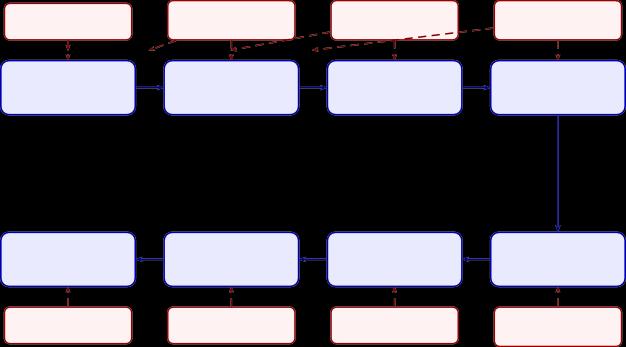


Figure 1: AI-augmented cyber attack lifecycle. Each phase is annotated with the AI techniques that enhance its automation, adaptivity, and evasion capabilities. Traditional attack phases (outer ring) are mapped to their AI-enabled counterparts (inner annotations).cannot scale to the volume, velocity, and variety of mod- ern threats, and AI offers the mostviablepathtobridg- ingthisgap. Thepracticalchallenge distinguishinggen-uinethreatsfrombackgroundnoiseat machinespeedwith-outintroducingunacceptablefalse-positiverates remainsformidable.
5.1 AI-Driven Intrusion Detection and Prevention Sys- tems
Intrusion detectionhas beenthedominant proving groundforML-basedsecurity research. Khraisat etal.’s2019survey identified over 200 published studies on ML- based IDS, covering anomaly detection, misuse detection, and hybrid approaches [56]. Liu and Lang categorized themethodologicallandscapeintoshallowmethods(SVM, randomforest, kNN) and deep methods (CNN, LSTM, au- toencoder), noting that deep methods consistently outper- formed on datasets with high-dimensional feature spaces but showed marginal improvements on well-curated, low- dimensional features [57].
Ahmadetal.’s2021systematicreviewassessed130stud-iesspanningbothclassicalanddeep-learningIDS,conclud-ingthat while detection accuracy on benchmark datasets (NSL-KDD, CICIDS 2017) routinely exceeds 99%, these figures are misleading indicatorsof real-worldperfor- mance[58]. Thedisconnectarisesfrom several sources: benchmark datasets containsyntheticoroutdatedtraffic,classimbalanceisartificiallycorrected,andevaluationrarelyaccountsforadversarial evasion. Bridgesetal.ex-tendedthiscritiquetohost-basedIDS,documentingsim-ilargapsbetweenlaboratoryaccuracy andoperationalef-fectiveness[59].
5.2
Where network-level IDS monitors traffic, behavioral analytics focuses on the patterns of users and entities login times, access patterns, data movement volumes to identify anomalies indicative of compromise. Sarker’s 2021 overviewofdeepcybersecuritypositionedUEBAasa criticalcomplementtoperimeter-baseddetection,partic-ularlyfor detectinginsiderthreatsandcompromisedcre-dentialsthatbypassednetworkcontrols[30].
Thetechnicalchallengeisestablishingreliablebase-linesindynamicenvironments. Dasguptaetal.notedthatbehavioral models must continuously adapt to organiza- tional changes new employees, role transitions, seasonal workload variations without triggering false alerts [55]. Federated learning has been proposed as a solution for multi-tenant environments, allowing behavior models to be trained across organizational boundaries without sharing raw data [62], thoughthesecurityoffederatedlearningit-selfiscontested(seeSectionVII).
XDRplatformsrepresentanarchitecturalevolutionfromsiloeddetectiontoolstowardintegratedthreatmanage-ment.By correlating telemetry across endpoints, networks, email, cloud workloads, and identity providers, XDR sys- tems aim to reconstruct full attack narratives from frag- mented signals [36]. The AI component in modern XDR is twofold: crossdomaincorrelationenginesthatusegraph-basedmodelstolinkseeminglyunrelatedevents,andprior-itizationalgorithms thatrankincidentsbyestimatedimpactandconfidence[53].
Microsoft’sDigitalDefenseReport2023disclosedthattheirXDRplatformprocessesover65trillionsignalsdaily,usingAI toreducethemediandetection-to-response gap from hours to minutes for automated response work- flows [53]. While
International Research Journal of Engineering and Technology (IRJET) e-ISSN: 2395-0056
Volume: 13 Issue: 02 | Feb 2026 www.irjet.net p-ISSN: 2395-0072
thesefiguresarevendor-reportedandshouldbetreatedwithappropriateskepticism,theysuggestthatAI-augmentedXDR ismovingfromaspirationtoop-erationalrealityatmajorcloudproviders.
5.4 Security Orchestration, Automation, and Response (SOAR)
SOAR platforms automate incident-response work- flows through predefined playbooks triggered by detec- tion events. Islametal.’smulti-vocalreviewfoundthatSOARadoptionreducedmeantimetorespond(MTTR)by60–80%insurveyed organizations, primarily by automat- ing tier-1 alert triage and standardizing containment ac- tions [60]. AI enhances SOARintwoways:NLP-basedalertenrichmentthatextractsactionablecontextfromun-structuredlogdata,anddecisionsupportmodelsthatrec-ommendresponseactionsbasedonhistoricalincidentout-comes.
The integration of SOAR with AI-based detection cre- ates a tempting but risky feedback loop. If the detection model generatesafalsepositive,theSOARplaybookmayexecuteanautomatedcontainmentaction(e.g.,quarantin-
Table 2: ComparativeAnalysisofAI-DrivenDefensiveApproaches
Approach Core ML Technique
NetworkIDS (Anomaly)
NetworkIDS (Signature+ML)
Host-basedIDS
Behavioral Analytics(UEBA)
SOAR/Playbook Automation
Autoencoder,LSTM, IsolationForest
HybridCNN-RF, gradientboosting
System-callsequence RNN,file-accessgraph analysis
Bayesian networks, clustering, temporal CNN
Decisiontrees,NLPfor alerttriage
XDRPlatforms Cross-domain correlation,graph neuralnetworks
Strengths
Unknown-threat detection;nosignature updatesneeded
Limitations Key References
HighFPR;concept drift;adversarial evasion [56–58]
LowFPR;interpretable decisions Missesnovel attacks;rule maintenance overhead [17,29]
Detectsfileless&livingoff-the-landattacks
Insiderthreat detection;credential abusediscovery
Reducesanalyst workload60–80%; standardizesresponse
Holisticvisibility;crosstelemetrycorrelation
Performance overhead;OS dependence [12,59]
Requireslong baselines;privacy concerns [30,55]
Brittletonovel attackpatterns; integration complexity [60,61]
Vendorlock-in; data-volume challenges [36,53]
ing a host or blocking an IP), causing operational disruption without human review. Uetz et al. developed the SOCBED testbedpreciselytoevaluatesuchend-to-endautomationpipelinesunderrealisticconditions,findingthatwithoutcareful thresholdcalibration,automatedresponseamplifiesthecostoffalsepositivesratherthanreducingit[61].
Proactive threat hunting searching for evidence of compromise that evades automated detection has tradi- tionally beenapurelyhumanactivity,reliantonthehunter’sintuitionanddomainexpertise.AIisbeginningtoaugmentthisprocess. Machinelearning models trainedonhistorical hunting outcomes can suggest high-yield hypotheses, prior- itizeassetsfor investigation,andautomatethetediousdata-retrievalstepsthatconsumemostofahunter’stime[63].
Threat intelligence (TI) has evolved from a manual, report-drivendisciplineintoadata-intensivepipelinewhere machine learningplaysanincreasinglycentralrole. Thevolumeofthreatdata vulnerabilitydisclosures,malwaresamples,darkweb chatter, network telemetry has grown beyond the capacity of human analysts to process, creating a natural entry pointforAIaugmentation.
International Research Journal of Engineering and Technology (IRJET) e-ISSN: 2395-0056
Volume: 13 Issue: 02 | Feb 2026 www.irjet.net p-ISSN: 2395-0072


Figure 2: IntegratedAIsecurityarchitectureshowingtherelationshipbetweenAI-powereddetection(IDS/IPS,UEBA), correlation(XDR),automation(SOAR),andproactivehuntinglayers.Arrowsindicatedataanddecisionflows.
TheAIsecurityarchitectureintegratingthesedefensivelayersisdepictedinFigure2
6.1 Predictive Threat Intelligence
The most ambitious application of AI to TI is prediction: forecasting attacks before they occur. Sun et al.’s survey distinguishedbetweenshort-horizonprediction(e.g.,fore-castingthenexttargetofanactivecampaignwithinhours)and strategicprediction(e.g.,identifyingwhichvulnerabil-ityclasseswillbeexploitedinthecomingquarter)[32].Theformer hasshownpromisingresultsusingtime-seriesmodelsoverIOCstreams,whilethelatterremainslargelyaspirationaldue tothechaoticdynamicsofthethreatland-scape.
Schlette et al. examined the intelligence cycle from a se- curity incident response perspective, finding that AIbasedenrichment (automated IOC scoring, entity resolution, re- port summarization) significantly reduced analyst workload during the processing and analysis phases [33]. How- ever, they cautioned that over-reliance on automated enrichment risks creating a monoculture: if multiple organiza- tions use the same enrichment models, an adversary who understandsthemodel’sblindspotscancraftthreatsthatevadedetectionuniformlyacrossallsubscribers.
Thescaleofsecuritytelemetryinlargeorganizations billionsoflogeventsperdayacross endpoints, fire- walls,cloud services,andidentityproviders demandsdis-tributed analytics frameworks. Zeadally et al. surveyed theapplicationof big-datatechniques(MapReduce,streamprocessing,graphanalytics)tocybersecurity,notingthattheprimarychallengeis not computation but data quality: noisy, incomplete, and inconsistent logs degrade model per- formance regardless of algorithmicsophistication[64].
Li et al.’s cross-disciplinary survey argued that the inte- gration of AI with security big-data analytics is hampered by a talent gap: security analysts lack ML expertise, while data scientists lack security domain knowledge [65]. This observation helps explain why many AI-security tools re- main underutilized in operational settings despite strong benchmarkresultsinresearchcontexts.
Effectivedefenserequiresnotjustgeneratingintelli-gencebutsharingitacrossorganizationalboundaries. Wag-neretal.’s surveydocumentedtheevolutionofsharingplat- formsfrominformalmailingliststostructuredframeworks such as STIX (StructuredThreatInformationeXpression)and TAXII(TrustedAutomatedeXchangeofIndicatorIn-formation)[34]. AI enhancessharingintwoways:auto-matedtranslationofunstructuredthreatreportsintostruc-turedSTIXbundlesusing NLP,andanomalydetectionap-pliedtoincomingfeedstofilterunreliableoroutdatedin-telligence.
Tounsi and Rais’s analysis identified a persistent ten- sion between sharing breadth and intelligence quality [31]. Broad sharingincreasesthechancethatarelevantIOCreachestherightdefender,butalsoincreasesthenoisefloorandtheriskof intelligence poisoning a variant of data poisoning in which an adversary injects false IOCs into shared feeds to either overwhelmanalystsorcalibrateper-ceptionsofwhichthreatvectorsareactive.
International Research Journal of Engineering and Technology (IRJET) e-ISSN: 2395-0056
Volume: 13 Issue: 02 | Feb 2026 www.irjet.net p-ISSN: 2395-0072
TheAIthreatintelligencepipelinesynthesizingthesecomponentsisdepictedinFigure3.
Adversarialmachinelearning(AML)occupiesauniqueposition in this review: itis simultaneously a tool forat-





Figure 3: AI-enabledthreatintelligencepipeline.Rawdatafrommultiplesources(darkweb,OSINT,telemetry)flows throughNLP-basedextraction,ML-drivenenrichment,andpredictiveanalyticsbeforeproducingactionableintelligence. Feedbackloopsfromincidentresponsecontinuouslyretrainmodels.






Figure 4: Taxonomyofadversarialmachinelearningattacksorganizedbyphase,goal,andattackerknowledge.Eachleaf nodecorrespondstoaspecificattackclassdiscussedinthetext.
tackers seeking to evade AI-based defenses and a research discipline aimed at hardening those defenses. The ten- sion between these roles makes AML the most intellec- tually demanding and practically consequential topic at the AIsecurityintersection.
FollowingthestructureoftheMITREATLASframe- work [37]andthetaxonomies proposed byBiggioandRoli [66]and Chakrabortyetal.[67],adversarialthreats toMLsystemscanbeorganizedalongthreeaxes: the at- tack phase (training vs. inference), the attacker’s goal (in- tegrity, availability, or confidentiality), and the attacker’s knowledge (white-box, grey-box,orblack-box). Figure4illustratesthistaxonomy.
Evasion attacks crafting inputs that cause a deployed model to misclassify are the most extensively studied class of AML threats. Goodfellow et al.’s Fast Gradi- ent Sign Method (FGSM) demonstrated that even minimal, humanimperceptible perturbations to input data could flip classifier outputs with high confidence [22]. Subsequent work by CarliniandWagnerintroducedoptimization-based
International Research Journal of Engineering and Technology (IRJET) e-ISSN: 2395-0056
Volume: 13 Issue: 02 | Feb 2026 www.irjet.net p-ISSN: 2395-0072
Table 3: SummaryofAdversarialMachineLearningAttackTypes
Attack Type Phase Knowledg e Goal Primary Defense Key Work
FGSM Inference White-box Evasion Adversarialtraining
Goodfellow[22]
PGD Inference White-box Evasion Certifieddefenses Madry[68]
C&WAttack Inference White-box Evasion Detection+ensembling Carlini[23]
IDSGAN Inference Black-box Evasion Featurehardening Lin[50]
Clean-Label Poison Training Grey-box Backdoo r Datasanitization Shafahi[25]
BadNets (Trojan) Training White-box Backdoo r Neuralcleanse Gu[24]
ModelExtraction Inference Black-box Theft Querylimiting; watermarking Tramèr[26]
DataPoisoning Training Grey-box Integrity Robuststatistics Goldblum[69]
Attacksthatproduceperturbationsclosertotheimpercepti-bilityboundary,establishingwhatremainsthegoldstan-dard for evaluating robustness [23]. Madry et al. proposed projected gradient descent (PGD) as a principled adversar- ial trainingdefenseandshowedthatmodelstrainedagainst PGDattacksachievemeasurablyhigherrobustness,though at a significantcostinclean-dataaccuracy[68].
Inthecybersecuritycontext,evasionattackstargetintru-siondetectionsystems,malwareclassifiers,andspamfil-ters. Lin etal.’sIDSGANusedgenerativeadversarialnet-workstomodifymalicioustrafficfeaturessuchthattheywereclassifiedas benign by black-box IDS models while preserving attack functionality [50]. Rigaki and Garcia demonstrated a similar techniquefordisguisingmalwareC2trafficaslegitimatewebbrowsing[49]. Theseresultschallengetheassumptionthat ML-baseddetectionisinher- entlysuperiortosignature-based methods:if anadversarywith knowledge ofthe detection model’sarchitecturecanreliablyevadeit,theinvestmentinMLmayyieldafalsesenseofsecurity[29].
Apersistentdebateintheliteratureconcernsthe prac- tical feasibility ofevasionattacks. Papernotetal.ar- guedthatthe computational cost and access require- ments of white-box attacks limit their operational deploy- ment [70], while subsequentworkontransferability thephenomenonwherebyadversarialexamplescraftedagainstonemodelalsofoola different model suggests that black- box evasion is more practical than initially assumed [22]. The resolution of this debatehassignificantimplicationsfordefensiveresourceallocation.
Datapoisoningattackstargetthetrainingpipelineratherthanthedeployedmodel. Byinjectingcarefullycraftedsamples into the training dataset, an attacker can bias the learned decision boundary to create backdoors or degrade overall accuracy.Shafahietal.demonstrated“clean-label”poisoning,inwhich the injected samplescarrycorrectla- belsandare individuallybenign,makingthemdifficulttodetectthroughmanualinspection[25].
Goldblum et al.’s comprehensive treatment of dataset security documented the expanding attack surface as ML practitioners increasingly rely on web-scraped, crowd-sourced, or third-party training data [69]. In cybersecu- rity applications,poisoningrisksareparticularlyacuteformodelstrainedonsharedthreat-intelligencefeeds(seeSec-tionVI): an adversary who contributes false IOCs to a shared platform can degrade the detection models of all downstream consumerssimultaneously.
Guetal.’sBadNetsworkestablishedtheconceptofNeu-ralTrojanattacks,whereapoisonedmodelbehavesnor-mallyon cleaninputsbutexhibitsattacker-chosenbehaviorwhenaspecifictriggerpatternispresentintheinput[24].Thesupplychain implications are severe: organizations that deploy pre-trained or fine-tuned models from untrusted sources risk inheritingembeddedbackdoorsthatareunde-tectablethroughstandardevaluationmetrics.
International Research Journal of Engineering and Technology (IRJET) e-ISSN: 2395-0056
Volume: 13 Issue: 02 | Feb 2026 www.irjet.net p-ISSN: 2395-0072
Model stealing attacks aim to reconstruct a proprietary model’s parameters or decision boundary through query ac- cess alone.Tramèretal.’sseminalworkdemonstratedthatlinearmodels,decisiontrees,andshallowneuralnetworksdeployed behind prediction APIs could be replicated with high fidelity using a modest number of queries [26]. While deeper networkspresentgreaterextractionchallenges,sub- sequent research has shown that knowledge distillation techniques canapproximateevenlargemodelstowithinoperationallyusefulaccuracy.
In cybersecurity, model stealing has a particularly per- nicious implication: if an attacker can extract a copy of a deployedIDSclassifier,theycanmountwhite-boxeva-sionattacksagainstitoffline,thendeployevasionpayloadsagainst the production system with high confidence of suc- cess [66]. This two-stage attack extraction followed by evasion invalidatesthecommonassumptionthatblack-boxdeploymentprovidessufficientprotectionforsecuritymodels.
Defensivestrategiesspanseveralcategories. Adversar- ial training augmentsthetrainingsetwithadversarialex-amples, improvingrobustnessatthecostofclean-dataac-curacy[68]. Certified defenses provideprovablerobust-nessguarantees within bounded perturbation regions but scale poorly to high-dimensional inputs. Input preprocess-ing (randomized smoothing,inputtransformation)attemptstoneutralizeadversarialperturbationsbeforetheyreachthemodel[67]. Model ensembling diversifies the decision sur- face, making it harder for a single adversarial example to fool all ensemble members.
No single defense currently provides satisfactory protec- tion across all attack types. Carlini and Wagner’s evalu- ation methodologyrevealedthatmanypublisheddefenseswerecircumventedbyadaptiveattacks[23],establishinganimportant methodologicalprinciple:defensesmustbeeval- uated against adversaries that are aware of and adapted to the specific defensemechanism,notmerelyagainststaticattackmethods.
Abstractanalysisbenefitsfromgroundinginconcretein- cidents. This section presents four case studies that illus- trate how AI capabilities both offensive and defensive have manifested in operational environments. Each case is reconstructedfrompublishedreports,academicanalyses,andindustrythreatintelligence.
8.1
paigns
The evolution from template-based phishing to AI- personalized campaigns reached a notable inflection point in 2023, when threat intelligence firms began attribut- ing specific campaigns to LLM-assisted content genera- tion. CrowdStrike’s 2024 Global Threat Report docu- mented multiplecampaigns bystate-affiliated actors using AI-generated lure emails that incorporated recently pub- lished information about targets scraped from LinkedIn profiles, academic publications,andorganizationalweb-sites[2].
Thedistinguishingfeatureofthesecampaignswaslin-guisticsophistication. Unlikeearlierphishingoperationsthatwere detectable through grammatical errors, awkward phrasing, or cultural incongruities, the AI-generated emails exhibited native-level fluency in multiple languages and adapted their register to match the target’s professional con- text [5]. Defensive teams reported that traditional content- based phishing filters trained on corpora of older, cruder phishing attempts failed to flag the new generation of AI- crafted lures, necessitating retraining on updated datasets and the developmentofstylometricdetectionmethodsthatanalyzewriting-styleconsistencyratherthancontentalone.
Inawidelyreported2023incidentdocumentedbyMan-diant,attackersusedAI-clonedvoicesamplestoimper-sonatea multinationalcorporation’sCFOduringavideoconference, authorizinga$25milliontransfertoattacker-
International Research Journal of Engineering and Technology (IRJET) e-ISSN: 2395-0056
Volume: 13 Issue: 02 | Feb 2026 www.irjet.net p-ISSN: 2395-0072


Figure 5: Deepfakeattacklifecycle:frompublicdatacollectionthroughmodeltraining,contentgeneration,andsocial deliverytoexploitation,withdetectioninterventionpointshighlighted.
controlled accounts [47]. The attack exploited two vulner- abilities: the availability of voice training data (recorded earnings calls and media interviews are publicly accessi- ble for senior executives) and the absence of multi-factor authenticationforhigh-valuefinancialauthorizationscon-ductedviavideocall.
Theincidentcatalyzedindustryinterestindeepfake de- tectionforreal-timecommunications. Tolosana etal.noted that whileframe-leveldeepfakedetectioninpre-recordedvideoachievedaccuracyabove95%onbench-markdatasets,realtime detection during live video calls remained unreliable due to compression artifacts, network jitter, and the need for sub-second latency [45]. The case underscores a recurring theme in this review: detection technology lags behind generationtechnology,andthegapiswidestinoperationalconditions.
ThepracticalcapabilityofLLMstoassistinmalwarede-velopmentmovedfromtheoreticalconcerntodocumentedreality in2023.PaPaetal.’ssystematicevaluationshowedthatChatGPTcouldgeneratefunctional components reverseshells, keyloggers, file encryption routines when prompted through task decomposition, even though direct malwaregenerationrequestswereblockedbysafetyfil-ters[9].
Underground forums subsequently documented threat actorssharing“jailbreak”promptsandworkflowguidesfor using commercial LLMs to accelerate malware develop- ment [40]. The Microsoft Digital Defense Report 2023 identified LLMassisted code generation as an emerging threat vector, noting that while current safety guardrails prevent the most straightforwardmisuse,“sufficientlymo-tivatedactorswithmoderatetechnicalskillcancircumventthem”[53].
What makes this case study particularly instructive is the dual-use nature of the underlying capability. The same LLM featuresthatenablemalwaregeneration codecompletion,debuggingassistance,explanationoflow-levelconstructs are also invaluable for legitimate security re- search, red teaming, and education. This duality defies simple regulatory solutionsandarguesfordefense-in-depthapproachesthatdonotrelysolelyonmodel-levelcontentfiltering.
The DARPA Cyber Grand Challenge (CGC) of 2016 remains the most vivid demonstration of AI-driven au- tonomous vulnerability discovery. Seven fully autonomous systems competed in a Capture-the-Flag tournament, dis- covering, exploiting, and patching vulnerabilities in real time without human intervention [48] The winning sys- tem, Mayhem (developed by ForAllSecure), combined symbolic execution, fuzzing, and binary analysis to iden- tify and patch vulnerabilitiesfasterthanmosthumancom-petitors.
Post-CGC developments have extended this capability. VulDeePecker applied deep learning to source-code vulner- ability detection,achievingprecisionandrecallratesthatexceededrule-basedstaticanalyzers[42]. TheintegrationofLLMsinto vulnerabilitytriage usingnatural-language modelstoreasonaboutcodesemantics, generateproof-of- concept exploits, andproposepatches hasfurthercom-pressedthevulnerabilitylifecycle[39].
Fordefenders,thesetoolsoffertheprospectoffindingandfixingvulnerabilitiesbeforeadversariesdo.Forattack-ers,the sametools provideanautomated path fromvulner- ability discovery to weaponization, reducing the time and expertise required to develop operational exploits [54]. The net security effect depends on a race condition: whether defenders adoptthesetoolsfasterandmorebroadlythanattackers,aquestionthatremainsempiricallyunresolved.
International Research Journal of Engineering and Technology (IRJET) e-ISSN: 2395-0056
Volume: 13 Issue: 02 | Feb 2026 www.irjet.net p-ISSN: 2395-0072
Thetechnicalanalysisinprecedingsectionsrevealsare-curringtheme:thesameAIcapabilitiesservebothattack-ersand defenders,andthelinebetweenlegitimatesecurityresearchandoffensivecapabilitydevelopmentisuncom-fortablythin. Thisdual-usecharacterelevatesgovernancefromaperipheralconcerntoacentralchallenge.
Brundageetal.’s2018reportonthemalicioususeof AIarticulatedthedual-useproblemwithunusualclarity:restricting access to powerful AI models impedes defen- sive research just as effectively as it constrains attack- ers [7]. The subsequent release of increasingly capable open-source models (LLaMA, Mistral, Falcon) has made access-control strategieslargelymootforfoundationmod-els,shiftingthegovernancedebatetowardapplication-layercontrolsandpostdeploymentmonitoring.
The cybersecurity community faces a version of this dilemma that is more acute than most other domains. Pub- lishing vulnerability research enables defenders to patch but also provides attackers with exploitation guides. Pub- lishing adversarialMLtechniquesenablesdefenderstotestrobustnessbutalsoprovidesattackerswithevasionblueprints. This tension is not new responsible disclo-sure has been debated for decades but AI amplifies its consequences by loweringtheexpertiserequiredtooper-ationalizepublishedknowledge[27].
The concept of responsible AI encompassing fairness, transparency, accountability, and safety has been exten- sively discussed in general contexts [71, 72] but has re- ceivedcomparatively limitedattentionincybersecurity ap- plications. Capuano et al.’s survey on explainable AI in cybersecurity highlighted a fundamental tension: secu- rity models must be interpretable enough for analysts to trust their outputs, yet the most interpretable models tend to be the easiest for adversariestoreverse-engineerandevade[73].
Google’s Secure AI Framework (SAIF) represents an in- dustry attempt to operationalize responsible AI principles specificallyforsecurityapplications[74]. SAIFextendsconventionalAIsafetyframeworkswithsecurity-specificguidance on model supply-chain integrity, adversarial ro- bustness testing, and least-privilege access to model ca- pabilities. Its adoption by a major cloud provider sig- nals growing recognition that AI security requires purpose- built governance frameworksratherthangenericAIethicsguidelines.
9.3
The regulatory environment for AI in cybersecurity is fragmented and rapidly evolving. The European Union’s AI Act classifies AI systems by risk level and imposes requirements ranging from transparency obligations for limited-risk systems to outright prohibition of certain high- risk applications [75]. Cybersecurity applications occupy anambiguous position in this taxonomy: defensive AI tools are generally considered beneficial, but the same tools re- purposed offensivelycouldfallunderhigh-riskorprohib-itedcategories.
IntheUnitedStates,theNISTAIRiskManagementFrameworkprovidesvoluntaryguidancefororganizationsdeployingAI systems,withspecificattentiontosecurityimplications[76]. Theframework emphasizescontextual evaluation: therisk profileofanAIsystemdependsnotonlyonitstechnicalcharacteristicsbutonthedeploymentenvironment,threatmodel, andorganizationalgovernancecapacity.ThiscontextualapproachcontrastswiththeEU’smoreprescriptiveclassificationbasedregime.
Cath et al. compared US, EU, and UK approaches to AI governance, finding significantdisagreements ontheappro- priate balance between innovation incentives and precau- tionaryregulation[77]. Incybersecurityspecifically,overlyrestrictive regulation risks pushing AI security research and development to less regulated jurisdictions, creating geo- graphic asymmetriesindefensivecapability.
International Research Journal of Engineering and Technology (IRJET) e-ISSN: 2395-0056
Volume: 13 Issue: 02 | Feb 2026 www.irjet.net p-ISSN: 2395-0072


Figure 6: ProposedgovernanceframeworkforAIincybersecurity:fourpillarsrestingoninternationalcooperation,guidedbyNISTAI RMFandEUAIActprinciples.
The geopolitical dimension cannot be ignored. Nation- states are investing heavily in both offensive and defensive AI capabilities, with limited international norms governing their use [4]. The ENISA AI cybersecurity challenges re- port identifiedtheabsenceofinternationalagreementsonAI-enabledcyberoperationsasacriticalgovernancegap,notingthat existingframeworks(TallinnManual,Budapest Convention) predate the AI era and lack provisions for au- tonomous or semi-autonomouscyberweapons[78].
The prospect of AI vs. AI cyber conflict (discussed fur- ther in Section X) introduces additional policy challenges. Autonomoussystems thatcandetect,attribute,andrespond to cyberattacks at machine speed raise questions about escalationdynamics,proportionality,andaccountabilitythatexistinginternationallawisill-equippedtoaddress[7].
Drawing on the literature surveyed above, we identify four pillars for an effective governance framework at the AIcybersecurityintersection:
1. Tiered access controls: Differentiatedaccesstohigh-riskcapabilities(e.g.,autonomousexploitgeneration)basedon demonstratedneedandaccountabilitystruc-tures.
2. Mandatory adversarial robustness testing: Requiring AI systems deployed in security-critical roles to undergo standardizedadversarialevaluationbeforedeployment.
3. Transparency with limits:Publishingmodelarchitec-turesandevaluationmethodologieswhilerestrictingac-cessto pre-trainedweightsoptimizedforoffensiveap-plications.
4. International coordination:Establishingnormsforre- sponsible disclosure of AI-security vulnerabilities and limits onautonomouscyberweapons,analogoustoarms-controlframeworks.
Extrapolating from the trajectories documented in this review, several emerging directions are likely to define the next phaseoftheAI-cybersecurityrelationship.Weground these projections in published research while acknowledg- ing the inherentuncertaintyoftechnologicalforecasting.
The convergence of reinforcement learning, automated exploit generation, and AI-driven command and control points toward a future in which cyber operations are conducted with minimal human oversight. Nguyen and Reddi’s survey documentedthematurationofRL-basedcy-beragentsfromproof-of-conceptdemonstrationstosys-temscapableofmultistepattackexecutioninrealisticsim- ulatedenvironments[51].Sewaketal.projectedthatwithin a decade, autonomous agents will handle routine penetra- tion testing, incident response, and threat hunting with hu- man oversight limited to strategicdecisions[63].
Thepolicyimplicationsareprofound. Autonomousof-fensivecybertoolscompressthedecisionloopfromhoursordays toseconds,raisingconcernsaboutinadvertentes-calation,attributionuncertainty,andtheerosionofhumanjudgmentin contextswheretheconsequencesoferroraresevere[7]. Internationallawhasyettograppleseriouslywiththeprospect
International Research Journal of Engineering and Technology (IRJET) e-ISSN: 2395-0056
Volume: 13 Issue: 02 | Feb 2026 www.irjet.net p-ISSN: 2395-0072
ofAIsystemsthatcanindependentlyde-cidetolaunch,escalate,orde-escalatecyberoperations.
As both attackers and defenders deploy increasingly so- phisticated AI systems, the cybersecurity landscape may evolve towardanadversarialequilibriuminwhichthepri- marycompetitiveaxisismodel qualityratherthanhuman expertise. GAN-based attack evasion versus adversarially trained detection [50,68], LLM-generated phishing versus LLM-powered contentanalysis[5,6],andRL-drivenpen-etrationversusRL-hardenedperimeterdefense[13,14]al-readyprefigurethis dynamic.
Truongetal.’sanalysisofAIinoffenseanddefensespec- ulated that this arms race may stabilize around an equi- librium where neither side achieves persistent advantage, analogous to the outcome of adversarial training dynam- ics in GAN theory[4]. However,theanalogyisimper-fect: unlikeGANtraining,thecybersecurityarmsraceinvolvesheterogeneous actorswithasymmetricresources,objectives,andrisktolerances.
Theintersectionofquantum computingandAI-driven cybersecurityintroducesboththreatsandopportunities.Mosca’s 2018analysisestimatedthatquantumcomput- erscapableofbreakingRSA-2048andECCcryptography
Table 4: ComparisonofMajorAIGovernanceFrameworksforCybersecurity
Framework Issuing Body Scope Approach Cyber Focus
AIRMF1.0[76] NIST(USA) AllAIsystems Voluntary, risk-based Moderate securitymentioned EUAIAct[75] EuropeanParliament AIinEUmarket Mandatory,tieredrisk Limited dual-useprovisions MITREATLAS[37] MITRECorp. AI/MLsystems Threattaxonomy High AIattack-focused GoogleSAIF[74] Google CloudAIservices Best-practices guide High supply-chain,robustness ENISAAIThreats[78] ENISA(EU) AIthreatlandscape Advisoryreport High threatcataloguing
couldemergewithin15–20years,necessitatingaproactive transition to post-quantum cryptographic standards [79]. AI has a role to play in this transition: machine learn- ingmodelscanoptimizepost-quantumkey exchangepro- tocols, identifyquantum-vulnerablecryptographicimple-mentationsinlegacycodebases,andacceleratethedesignofquantumresistantalgorithms.
Conversely,quantummachinelearning leveragingquantumcomputingtotrainmorepowerfulmodels couldamplify bothoffensiveanddefensiveAIcapabilities. Pi-randolaetal.’ssurveyonquantumcryptographynotedthatquantumkey distribution (QKD) promises information- theoretically secure communication channels [80], but the practical deployment of QKD networks remains limited by distance constraints, cost, and integration complexity with classical infrastructure.
The concept of self-healing networks systems that au- tonomously detect, isolate, and remediate security incidents without human intervention represents the logical end- point of defensive AI automation. Liang et al. surveyed the application of ML to IoT security, noting that the scale and heterogeneity of IoT deployments make manual inci- dent responseimpracticalandautonomousremediationes-sential[81].
Key technical challenges include ensuring that au- tonomous remediation actions do not cause greater opera- tional disruptionthantheincidentstheyaddress,maintain- ingresilienceagainstadversarial manipulationofthe re- mediation systemitself,andestablishingaccountabilityforautonomousdecisionsthataffectsystemavailability[82].TheNISTAIRisk Management Framework acknowledges these challenges but provides limited operational guidance for their resolution [76].
As AI systems assume greater autonomy in security- critical decisions, explainability transitions from a de- sirable property to a functional requirement. Arrieta et al.’s comprehensive survey on explainable AI (XAI) catalogued methods ranging from post-hoc interpretation (SHAP, LIME) to inherently interpretable architectures (at- tention
International Research Journal of Engineering and Technology (IRJET) e-ISSN: 2395-0056
Volume: 13 Issue: 02 | Feb 2026 www.irjet.net p-ISSN: 2395-0072
mechanisms, decision lists) [72]. In cybersecurity,explainability serves dual purposes: enabling analysts to validate model outputs (reducing over-reliance on opaque classifiers) and supporting forensic investigation when au- tomated systemstakeconsequentialactions[73].
Thetensionbetweenexplainabilityandadversarialrobustness interpretablemodelsareeasierforattackerstoreverseengineer remainsanactiveareaofresearchwithnosatisfactoryresolutiontodate.
The literature reviewed in this paper reveals not only sub- stantial progress but also significant lacunae areas where fundamentalquestionsremainunanswered,whereempiri-calevidencecontradictsprevailingassumptions,orwherethe researchcommunity’sattentionhasbeendisproportion- ately focused on tractable sub-problems at the expense of more consequentialones.Thissectionorganizesthesegapsintothematicclusters.
The most persistent gap in AI-security research is the dis- connect between benchmark performance and real-world effectiveness. ThesurveysbyAhmadetal.[58],SommerandPaxson[16],andApruzzeseetal.[29]collectivelydoc-ument a field in which 99%+ detection accuracy on stan- dardized datasets coexists with widespread dissatisfaction among practitionerswhodeploythesesystems.
The root causes are well understood: benchmark datasets are static, balanced, and often synthetic, while produc- tion environmentsaredynamic, imbalanced,andadver- sarial. Whatislessunderstoodishowtoclosethis gap.TheSOCBED testbed[61]andsimilarinitiativesrepresent steps toward more realistic evaluation, but the community lacks consensus onstandardizedevaluationprotocolsthataccountforadversarialevasion,conceptdrift,andopera-tionalconstraints.
Open problem: Developing evaluation methodologies for AI-based security tools that are predictive of real- world performance,withstandardizedadversarialbench-marksthatevolvealongsidethethreatlandscape.
Adversarial ML researchhasproduced a rich theoret- ical understandingofmodel vulnerabilities,but muchof thiswork operatesunderidealizedthreatmodels. White- boxaccess,unlimitedquerybudgets, andperfectknowl-edgeofthedata distributionarestandardassumptionsthatrarelyholdinpractice[70].Conversely,themostpracticalattacks thosethat operatewithlimitedaccessandnoisyfeedback areunderstudiedrelativetotheirreal-worldrel-evance[66].
Contradiction in literature:Goodfellowetal.andsub-sequentworksuggestthatadversarialtransferabilitymakesblackboxattackspractical,whilePapernotetal.arguethatpracticalconstraintssignificantlylimitreal-worldapplica-bility.This contradiction remains unresolved and has direct implications for how much organizations should invest in adversarial robustnessversusotherdefensivemeasures.
11.3
Most AI-security models are trained and evaluated on a single data modality (network traffic, system calls, mal- ware binaries).Real-worldattacks,however,spanmultiplemodalities: a phishing email (NLP)deliversa malicious attachment (binary analysis) that establishes network per- sistence (traffic analysis). XDR platforms attempt cross- domain correlation,buttheMLmodelsunderlyingthemrarelygeneralizeacrossdomains[36,53].
Open problem: Developing multi-modal security mod- els that can learn representations transferable across net- work, endpoint,andapplication-layerdata,analogoustofoundationmodelsinNLPandcomputervision.
11.4
Despite the frameworks discussed in Section IX, there is no internationally recognized standard for evaluating or regulatingAIsystemsusedincybersecurity. TheNIST AIRMF[76]andEUAIAct[75]providegeneralguid-ancebutlack cybersecurity-specific provisions. MITRE ATLAS [37] documents AI-specific threats but does not prescribe defensive standards.
Open problem: Creating a governance framework that addresses the unique characteristics of AI in cybersecurity
International Research Journal of Engineering and Technology (IRJET) e-ISSN: 2395-0056
Volume: 13 Issue: 02 | Feb 2026 www.irjet.net p-ISSN: 2395-0072
dual-use capabilities, rapid capability evo- lution, asymmetric attacker-defender dynamics without stifling legitimate research.
High-quality labeled security data is scarce. Organiza- tions are reluctant to share incident data due to legal li- ability, reputational risk, and competitive concerns. Fed- erated learning has been proposed as a privacy-preservingalternative, butitssecurityguaranteesarethemselvescon-tested[62]. Theresultisafieldwheremostmodelsaretrainedonasmall numberofpublicdatasetsthatmaynotrepresentthediversityofreal-worldthreatenvironments.
Open problem: Developing practical mechanisms for collaborative model training across organizations that pre- serve privacy,resistpoisoning,andproducemodelsgener-alizabletodiverseenvironments.
Thetensionbetweenmodelinterpretabilityandadver-sarialrobustness(discussedinSectionsVIIandX)remainswithout a satisfactory theoretical resolution. Existing work approaches explainability and robustness as separate op- timization objectives [72, 73]; a unified framework that characterizesthefundamentaltrade-offcurvewouldsignif- icantly advance bothfields.
Based on the gaps identified above, we propose a struc- tured research agenda organized into immediate (1–3 year), medium-term(3–7year),andlong-term(7+year)priori-ties:
1. Immediate: Standardized adversarial evaluation bench- marks; cross-organizational data-sharing frameworks with differentialprivacyguarantees;explainabilitystan-dardsforsecurity-criticalAIdeployments.
2. Medium-term: Multi-modal security foundation mod- els; international norms for AI-enabled cyber opera- tions; provablyrobustdetectionunderrealisticthreatmodels.
3. Long-term: Autonomous defensive agents with formal safety guarantees; unified theory of the explainabilityrobustnesstrade-off;quantum-resilientAIsecurityar-chitectures.
ThisreviewhastraversedtheAI-cybersecuritylandscapefrom foundational methods tofrontierchallenges,synthe- sizing over seventy studies to construct a coherent picture of a field in rapid, consequential evolution. Several conclu- sions emergewithparticularforce.
First,theasymmetrybetweenoffensiveanddefensiveAIadoptionisstructural,notincidental. Attackersoperatewithout regulatory constraints, ethical review, or account- ability requirements, enabling faster iteration and deploy- ment of AI capabilities. Defenders, by contrast, must nav- igate compliance frameworks, organizational inertia, and the practical challenge of integrating AI into legacy security architectures. Closing this gap requires not only technicainnovation but institutionalreformsthatacceleratedefen-siveAIdeploymentwithoutcompromisingsafety.
Second,adversarialmachinelearningisnotanichecon- cern buta meta-threat that conditionsthereliabilityof everyAIbased security tool. The literature consistently shows that models achieving near-perfect accuracy on clean data can be systematically degraded through evasion, poi- soning, and extraction attacks. Any organization deploy- ing AI-based defenses without adversarial robustness test- ing is, in effect, building its security on assumptions that a motivated adversary will invalidate. The MITRE ATLAS framework provides a starting point for threat modeling AI- specific attack surfaces,butoperationalizingitsguidanceremainsaworkinprogressformostorganizations.
Third,thegovernancelandscapeisconspicuouslyunder-developedrelativetothetechnicalcapabilitiesitmustreg-ulate. TheEUAIAct,NISTAIRMF,andSAIFframe-workrepresentimportantsteps,butnoneadequatelyad-dressestheunique characteristics of AI in cybersecurity: the dual-use nature of capabilities, the speed of capabil- ity evolution, the asymmetric attacker–defender dynamic, and the geopolitical dimensions of AI-enabled cyber opera- tions. International coordination on norms for autonomous cyber weapons and responsible disclosure of AI-security vulnerabilities is not merelydesirable itisurgent.
International Research Journal of Engineering and Technology (IRJET) e-ISSN: 2395-0056
Volume: 13 Issue: 02 | Feb 2026 www.irjet.net p-ISSN: 2395-0072
Fourth,thefieldsuffersfromapersistentevaluationgap. Benchmarkaccuracydoes notpredictoperationaleffective-ness, andtheresearchcommunity’srelianceonasmall numberofaging,staticdatasetsproducesadistortedpictureofpractical readiness. The development of standardized, adversarially robust evaluation protocols is a prerequisite for translating laboratoryadvancesintoreal-worldsecurityimprovements.
Looking forward, the trajectory is toward greater au- tonomy on both sides of the attacker-defender divide. Reinforcement-learningagentsthatautonomouslyplanand execute multi-step attacks, AI systems that detect, con- tain, and remediate intrusions without human intervention, and generative models that produce novel attack artifacts at marginal cost near zero collectively define a landscape in which human judgment remains essential for strategic decisionsbutisincreasinglyaugmented andinsomecases,replaced bymachineintelligenceattheoperationallevel.
Thechallengeforthecybersecuritycommunityistohar-nessAI’sdefensivepotentialwithoutbeingundonebyitsoffensive applications, to build robustness into AI-based defenses without sacrificing the interpretability that en- ables human oversight, and to develop governance frame- works that are agile enough to keep pace with a technol- ogy whose capabilities evolve faster than any regulatory cy- cle. This review has mapped the terrain; navigating it will require sustainedcollaborationacrossacademia,industry,andgovernment ataskasmuchinstitutionalasitistech-nical.
[1] B.Guembe,A.Azeta,S.Misra,V.C.Osamor,L.Fernandez- Sanz, and V. Pospelova, “The emerging threat of AI-driven cyberattacks: Areview,” Applied Artificial Intelligence,vol.36,no.1,p.2037254,2022.
[2] CrowdStrike, “2024 global threat report,” CrowdStrike, Tech. Rep., 2024. [Online]. Available: https://www. crowdstrike.com/global-threat-report/
[3] Verizon,“2023databreachinvestigationsreport,”VerizonBusiness, Tech. Rep., 2023. [Online]. Available: https: //www.verizon.com/business/resources/reports/dbir/
[4] T. C. Truong, Q. B. Diep, and I. Zelinka, “Artificial intelli- genceinthecyberdomain: Offenseanddefense,” Symmetry, vol.12,no.3,p.410,2020.
[5] J. Hazell, “Spear phishing with large language models,” arXiv preprint arXiv:2305.06972,2023.
[6] A.Basit,M.Zafar,X.Liu,A.R.Javed,Z.Jalil,andK.Ki-fayat,“AcomprehensivesurveyofAI-enabledphishingat-tacks detectiontechniques,” Telecommunication Systems,vol.76,pp.139–154,2021.
[7] M. Brundage, S. Avin, J. Clark, H. Toner, P. Eckersley, B. Garfinkel, A. Dafoe, P. Scharre, T. Zeitzoff, B. Filar, and Others, “The malicious use of artificial intelligence: Forecasting,prevention,andmitigation,” arXiv preprint arXiv:1802.07228,2018.
[8] J.SeymourandP.Tully,“Weaponizingdatascienceforso-cialengineering: AutomatedE2EspearphishingonTwitter,”in Proceedings of Black Hat USA,2016.
[9] Y.M.T.PaPa,S.Tanizaki,T.Kou,M.VanEeten,K.Yosh-ioka,andT.Matsumoto,“Anattacker’sdream? exploringthe capabilitiesofChatGPTfordevelopingmalware,” arXiv preprint arXiv:2308.06857,2023.
[10]K.Greshake,S.Abdelnabi,S.Mishra,C.Endres,T.Holz,andM.Fritz,“Notwhatyou’vesignedupfor: Compro-mising real-world LLM-integrated applications with indirect prompt injection,” in Proceedings of the ACM Workshop on Artificial Intelligence and Security (AISec),2023.
[11]S. Razaulla, C. Fachkha, C. Markarian, A. Gawanmeh, W. Mansoor, S. Taha, and M. Asim, “The age of ran- somware: A survey on the evolution, taxonomy, and re- search directions,” IEEE Access,vol.11,pp.40698–40723, 2023.
International Research Journal of Engineering and Technology (IRJET) e-ISSN: 2395-0056
Volume: 13 Issue: 02 | Feb 2026 www.irjet.net p-ISSN: 2395-0072
[12]D. Ucci, L. Aniello, and R. Baldoni, “Survey of machine learning techniques for malware analysis,” Computers & Security,vol.81,pp.123–147,2019.
[13]M.C.GhanemandT.M.Chen,“Reinforcementlearningforefficientnetworkpenetrationtesting,”in Information,vol. 11,no.1,2020,p.6.
[14]J.SchwartzandH.Kurniawati,“Autonomouspenetrationtestingusingreinforcementlearning,”in Proceedings of the AustralasianJoint Conference onArtificial Intelligence,2019,pp.2–14.
[15]M. M. Yamin, B. Katt, and V. Gkioulos, “Weaponized AI for cyber attacks,” Journal of Information Security and Applications,vol.57,p.102722,2021.
[16]R.SommerandV.Paxson,“Outsidetheclosedworld: Onusingmachinelearningfornetworkintrusiondetection,”in Proceedings of the IEEE Symposium on Security and Pri- vacy,2010,pp.305–316.
[17]A.L.BuczakandE.Guven,“Asurveyofdataminingand machinelearningmethodsforcybersecurityintrusiondetection,” IEEE Communications Surveys & Tutorials,vol.18,no.2,pp.1153–1176,2016.
[18]Y.Xin,L.Kong,Z.Liu,Y.Chen,Y.Li,H.Zhu,M.Gao, H.Hou,andC.Wang,“Machinelearninganddeeplearningmethodsforcybersecurity,” IEEE Access,vol.6,pp.35365–35381,2018.
[19]K. Shaukat, S. Luo, V. Varadharajan, I. A. Hameed, and M.Xu,“Asurveyonmachinelearningtechniquesforcy-bersecurityinthelastdecade,” IEEE Access,vol.8,pp. 222 310–222354,2020.
[20]M. A. Ferrag, L. Maglaras, S. Moschoyiannis, and H. Jan- icke, “Deep learning for cyber security intrusion detection: Approaches, datasets, and comparative study,” Journal of Information Security and Applications, vol. 50, p. 102419, 2020.
[21]S. Gamage and J. Samarabandu, “Deep learning methods in network intrusion detection: A survey and an objective com-parison,” Journal of Network and Computer Applications,vol.169,p.102767,2020.
[22]I. J. Goodfellow, J. Shlens, and C. Szegedy, “Explain- ing and harnessing adversarial examples,” arXiv preprint arXiv:1412.6572,2015.
[23]N.CarliniandD.Wagner,“Towardsevaluatingtherobust-nessofneuralnetworks,”in Proceedings of the IEEE Symposium on Security and Privacy,2017,pp.39–57.
[24]T.Gu,B.Dolan-Gavitt,andS.Garg,“BadNets:Identifyingvulnerabilitiesinthemachinelearningmodelsupplychain,” in Proceedings of the Machine Learning and Computer Se- curity Workshop,2017.
[25]A.Shafahi, W.R.Huang, M.Najibi, O.Suciu, C.Studer, T. Dumitras, and T. Goldstein, “Poison frogs! targeted clean-label poisoning attacks on neural networks,” in Proceedings of the International Conference on Neural In- formation Processing Systems (NeurIPS),2018,pp.6103–6113.
[26]F.Tramèr,F.Zhang,A.Juels,M.K.Reiter,andT.Ris-tenpart,“StealingmachinelearningmodelsviapredictionAPIs,” in Proceedings of the USENIX Security Symposium,2016,pp.601–618.
[27]M.Taddeo,T.McCutcheon,andL.Floridi,“Trustingartifi-cialintelligenceincybersecurityisadouble-edgedsword,” Nature Machine Intelligence, vol.1, no.12, pp.557–560, 2019.
[28]S.MahdavifarandA.A.Ghorbani,“Applicationofdeeplearningtocybersecurity:Asurvey,” Neurocomputing,vol.347, pp.149–176,2019.
International Research Journal of Engineering and Technology (IRJET) e-ISSN: 2395-0056
Volume: 13 Issue: 02 | Feb 2026 www.irjet.net p-ISSN: 2395-0072
[29]G. Apruzzese, M. Colajanni, L. Ferretti, A. Guido, and M.Marchetti, “Ontheeffectivenessofmachineanddeeplearningforcybersecurity,” Computers & Security,vol.123, p.102867,2023.
[30]I.H.Sarker,“Deepcybersecurity: Acomprehensiveoverviewfromneuralnetworkanddeeplearningperspec-tive,” SN Computer Science,vol.2,p.154,2021.
[31]W.TounsiandH.Rais,“Asurveyontechnicalthreatintelli-genceintheageofsophisticatedcyberattacks,” Computers & Security,vol.72,pp.212–233,2018.
[32]N.Sun,J.Zhang,P.Rimba,S.Gao,L.Y.Zhang,andY.Xi-ang,“Data-drivencybersecurityincidentprediction:Asur-vey,” IEEE Communications Surveys & Tutorials,vol.21,no.2,pp.1744–1772,2019.
[33]D.Schlette,M.Caselli,andG.Pernul,“Acomparativestudyoncyberthreatintelligence:Thesecurityincidentresponse perspective,” IEEE Communications Surveys & Tutorials,vol.23,no.4,pp.2525–2556,2021.
[34]T.D.Wagner,K.Mahbub,E.Palber,andA.Strainovic,“Cy-berthreatintelligencesharing: Surveyand researchdirections,” Computers & Security,vol.87,p.101589,2019.
[35]MITRE Corporation, “MITRE ATT&CK: A globally- accessible knowledge base of adversary tactics and techniques,” MITRE,Tech.Rep.,2023.[Online].Available:https://attack.mitre.org
[36]C.LawsonandP.Firstbrook,“Innovationinsightforex- tendeddetectionandresponse,” Gartner Research,2020,reportID:G00719984.
[37]MITRECorporation,“MITREATLAS:AdversarialthreatlandscapeforAIsystems,”MITRE,Tech.Rep.,2022.[Online]. Available:https://atlas.mitre.org
[38]F. N. Motlagh, M. Hajizadeh, M. Majd, P. Rashidi, T. Hwang, and A. M. Rahmani, “Large language mod- els in cybersecurity: State-of-the-art,” arXiv preprint arXiv:2402.00891,2024.
[39]H. Xu and Others, “Large language models for cyber security: A systematic literature review,” arXiv preprint arXiv:2405.04760,2024.
[40]J.YaoandOthers,“Asurvey onlargelanguagemodel (LLM)securityandprivacy: Thegood,thebad,andtheugly,” High-Confidence Computing,vol.4,no.2,p.100211, 2024.
[41]Y.MirskyandW.Lee,“Thecreationanddetectionofdeep-fakes: Asurvey,” ACM Computing Surveys,vol.54,no.1, pp.1–41,2022.
[42]Z. Li, D. Zou, S. Xu, X. Ou, H. Jin, S. Wang, Z. Deng, and Y. Zhong, “VulDeePecker: A deep learning- based system for vulnerability detection,” arXiv preprint arXiv:1801.01681,2018.
[43]European Union Agency for Cybersecurity (ENISA), “ENISA threat landscape 2023,” ENISA, Tech. Rep., 2023. [Online].Available: https://www.enisa.europa.eu/publications/enisa-threat-landscape-2023
[44]Z. Alkhalil, C. Hewage, L. Nawaf, and I. Khan, “Phishing attacks: Arecentcomprehensivestudyandanewanatomy,” Frontiers in Computer Science,vol.3,p.563060,2021.
[45]R.Tolosana,R.Vera-Rodriguez,J.Fierrez,A.Morales, andJ.Ortega-Garcia,“Deepfakesandbeyond:Asurveyofface manipulationandfakedetection,” Information Fusion,vol.64,pp.131–148,2020.
International Research Journal of Engineering and Technology (IRJET) e-ISSN: 2395-0056
Volume: 13 Issue: 02 | Feb 2026 www.irjet.net p-ISSN: 2395-0072
[46]M.Westerlund,“Theemergenceofdeepfaketechnology: A review,” Technology Innovation Management Review,vol.9, no.11,pp.39–52,2019.
[47]Mandiant, “M-Trends 2023: Special report,” Mandiant (Google Cloud), Tech. Rep., 2023. [Online]. Available: https://www.mandiant.com/m-trends
[48]Y. Shoshitaishvili, R. Wang, C. Salls, N. Stephens,M. Polino, A. Dutcher, J. Grosen, S. Feng, C. Hauser, C.Kruegel,andG.Vigna,“SOK:(Stateof)TheArtofWar:Offensivetechniquesinbinaryanalysis,”in Proceedings of the IEEE Symposium on Security and Privacy,2016,pp.138–157.
[49]M. Rigaki and S. Garcia, “Bringing a GAN to a knife- fight: Adapting malware communication to avoid detec- tion,” arXiv preprint arXiv:1711.02442,2018.
[50]Z.Lin,Y.Shi,andZ.Xue,“IDSGAN:Generativeadversar- ial networks for attack generation against intrusion detection,” arXiv preprint arXiv:1809.02077,2018.
[51]T.T.NguyenandV.J.Reddi,“Deepreinforcementlearningforcybersecurity,” IEEE Transactions on Neural Networks and Learning Systems,vol.34,no.8,pp.3779–3795,2023.
[52]D.Gibert,C.Matú,andJ.Planes,“Theriseofmachinelearningfordetectionandclassificationofmalware: Re-search developments,trendsandchallenges,” Journal of Network and Computer Applications,vol.153,p.102526,2020.
[53]Microsoft, “Microsoft digital defense report 2023,” Microsoft, Tech. Rep., 2023. [Online]. Available: https://www.microsoft.com/en-us/security/security-insider/microsoft-digital-defense-report-2023
[54]D.R.McKinnel,T.Dargahi,A.Dehghantanha,andK.-K.R. Choo,“A systematic literaturereviewand meta-analysis on artificialintelligenceinpenetrationtestingandvulnerabilityassessment,” Computers & Electrical Engineering,vol.75, pp.175–188,2019.
[55]D. Dasgupta, Z. Akhtar, and S. Sen, “Machine learning in cybersecurity: Acomprehensivesurvey,” The Journal of Defense Modeling and Simulation,vol.19,no.1,pp.57–106,2022.
[56]A.Khraisat,I.Gondal,P.Vamplew,andJ.Kamruzzaman, “Surveyofintrusiondetectionsystems: Techniques,datasets andchallenges,” Cybersecurity,vol.2,no.1,p.20,2019.
[57]H.LiuandB.Lang,“Machinelearninganddeeplearningmethodsforintrusiondetectionsystems:Asurvey,” Applied Sciences,vol.9,no.20,p.4396,2019.
[58]Z. Ahmad, A. Shahid Khan, C. Wai Shiang, J. Abdullah, and F. Ahmad, “Network intrusion detection system: A systematic study of machine learning and deep learning ap- proaches,” Transactions on Emerging Telecommunications Technologies,vol.32,no.1,p.e4150,2021.
[59]R. A. Bridges, T. R. Glass-Vanderlan, M. D. Iannacone, M.S.Vincent,andQ.Chen,“Asurveyofintrusiondetec-tionsystemsleveraginghostdata,” ACM Computing Sur- veys, vol.52,no.6,pp.1–35,2019.
[60]C.Islam,M.A.Babar,andS.Nepal,“Amulti-vocalreviewofsecurityorchestration,” ACM Computing Surveys,vol.54,no. 2,pp.1–45,2021.
[61]R.Uetz,C.Hemminghaus,L.Hacklaender,P.Schlipper,and M.Henze,“SOCBED: A self-contained open-sourcecyber- attack experimentation testbed,” ACM Digital Threats: Research and Practice,vol.2,no.3,pp.1–17,2021.
[62]V. Mothukuri, R. M. Parizi, S. Pouriyeh, Y. Huang, A. De- hghantanha, and G. Srivastava, “A survey on security and privacyoffederatedlearning,” Future Generation Computer Systems,vol.115,pp.619–640,2021.
International Research Journal of Engineering and Technology (IRJET) e-ISSN: 2395-0056
Volume: 13 Issue: 02 | Feb 2026 www.irjet.net p-ISSN: 2395-0072
[63]M.Sewak,S.K.Sahay,andH.Rathore,“Deepreinforce-mentlearningintheadvancedcybersecuritythreatdetection andprotection,” Information Systems Frontiers,vol.25,pp.2039–2057,2023.
[64]S. Zeadally, E. Adi, Z. Baig, and I. A. Khan, “Harnessing artificial intelligencecapabilities to improvecybersecurity,” IEEE Access,vol.8,pp.23817–23837,2020.
[65]J.-h.Li,“Cybersecurity meets artificial intelligence: A sur- vey,” Frontiers of Information Technology & Electronic Engineering,vol.19,no.12,pp.1462–1474,2018.
[66]B.Biggio and F.Roli,“Wild patterns: Ten yearsafter the rise ofadversarial machinelearning,” Pattern Recognition, vol.84,pp.317–331,2018.
[67]A.Chakraborty,M.Alam,V.Dey,A.Chattopadhyay,and D.Mukhopadhyay,“Asurveyonadversarialattacksanddefences,” CAAI Transactions on Intelligence Technology,vol. 6,no.1,pp.25–45,2021.
[68]A. Madry, A. Makelov, L. Schmidt, D. Tsipras, and A.Vladu,“Towards deeplearningmodelsresistanttoad- versarialattacks,”in Proceedings of the International Conference on Learning Representations (ICLR),2018.
[69]M. Goldblum, D. Tsipras, C. Xie, X. Chen, A. Schwarzschild, D. Song, A. Madry, B. Li, and T. Goldstein, “Dataset security for machine learning: Data poisoning, backdoor attacks, and defenses,” IEEE Transactions onPatternAnalysisandMachine Intelligence,vol.45,no.2,pp.1563–1580,2023.
[70]N. Papernot, P. McDaniel, S. Jha, M. Fredrikson, Z. B. Ce- lik, and A. Swami, “The limitations of deep learning in adversarialsettings,”in Proceedings of the IEEE European Symposium on Security and Privacy,2016,pp.372–387.
[71]L. Floridi, J. Cowls, M. Beltrametti, R. Chatila, P.Chazerand,V.Dignum,C.Luetge,R.Madelin,U.Pa-gallo,F.Rossi,andOthers,“AI4People anethicalframe-work foragoodAIsociety:Opportunities,risks,principles,andrecommendations,” Minds andMachines,vol.28,no.4, pp.689–707,2018.
[72]A.B.Arrieta,N.Díaz-Rodríguez,J.DelSer,A.Bennetot, S.Tabik,A.Barbado,S.García,S.Gil-López,D.Molina, R. Benjamins, and Others, “Explainable artificial intelli- gence(XAI): Concepts, taxonomies, opportunities andchallengestowardresponsibleAI,” Information Fusion,vol.58, pp.82–115,2020.
[73]N.Capuano,G.Fenza,V.Loia,andC.Stanzione,“Explain- ableartificialintelligenceincybersecurity:Asurvey,” IEEE Access,vol.10,pp.93575–93600,2022.
[74]Google, “Secure AI framework (SAIF): A concep- tual framework for secure AI systems,” Google, Tech. Rep., 2023.[Online].Available: https://safety.google/cybersecurity-advancements/saif/
[75]EuropeanParliament,“Regulation(EU)2024/1689 theAI act,” European Union, Tech. Rep., 2024. [Online]. Available: https://eur-lex.europa.eu/eli/reg/2024/1689
[76]National Institute of Standards and Technology, “Artificial intelligence risk management framework (AI RMF 1.0),” NIST,Tech.Rep.NISTAI100-1,2023.
[77]C. Cath, S. Wachter, B. Mittelstadt, M. Taddeo, and L.Floridi,“Artificialintelligenceandthe‘goodsociety’:The US,EU,andUKapproach,” Science and Engineering Ethics,vol.24,pp.505–528,2018.
[78]European Union Agency for Cybersecurity (ENISA), “AI cybersecurity challenges: Threat landscape for artificial
International Research Journal of Engineering and Technology (IRJET) e-ISSN: 2395-0056
intelligence,” ENISA, Tech. Rep., 2021. [On- line]. Available: https://www.enisa.europa.eu/publications/ artificialintelligence-cybersecurity-challenges
[79]M.Mosca,“Cybersecurityinanerawithquantumcomput-ers:Willwebeready?” IEEE Security & Privacy,vol.16,no. 5, pp. 38–41, 2018. S. Pirandola, U. L. Andersen, L. Banchi, M. Berta, D.Bunandar, R.Colbeck, D.Englund,T. Gehring,C.LupoC.Ottaviani,andOthers,“Advancesinquantumcryptogra-phy,” Advances in Optics and Photonics,vol. 12,no.4,pp.1012–1236,2020.
[80]F. Liang, W. G. Hatcher, W. Liao, W. Gao, and W. Yu, “Machine learning for security and the internet of things: The good,thebad,andtheugly,” IEEE Access,vol.7,pp.158126–158147,2019.
[81]A.Humayed,J.Lin,F.Li,andB.Luo,“Cyber-physicalsys-temssecurity asurvey,” IEEE Internet of Things Journal,vol. 4,no.6,pp.1802–1831,2017.
Volume: 13 Issue: 02 | Feb 2026 www.irjet.net p-ISSN: 2395-0072 © 2026, IRJET | Impact Factor value: 8.315 | ISO 9001:2008 Certified Journal | Page284