
International Research Journal of Engineering and Technology (IRJET) e-ISSN:2395-0056
Volume: 11 Issue: 12 | Dec 2024 www.irjet.net p-ISSN:2395-0072

International Research Journal of Engineering and Technology (IRJET) e-ISSN:2395-0056
Volume: 11 Issue: 12 | Dec 2024 www.irjet.net p-ISSN:2395-0072
Shalini B N 1 and Priya M K2
1Senior Grade Lecturer
Department of Computer Science & Engineering, Government Residential Women’s polytechnic, Shivamogga, Karnataka, India
2Senior Grade Lecturer,Department of Computer Science &Engineering,Government polytechnic,Ramanagara, Karnataka, India
Abstract
This study presents a robust agricultural decision support system employing machine learning techniques for crop recommendation,fertilizerprescription,anddiseaseanticipation,integratingessentialagricultural indicatorssuchassoil nutrientlevels,pH,precipitationtrends,andcropvarieties.Throughpreprocessingandmodeltraining,thesystemutilizes Random Forest and Naive Bayes algorithms for crop and fertilizer prediction, achieving commendable accuracy rates of 99.09%and99.2%,respectively,whilediseasepredictionreliesontheResNet-9model.Byempoweringfarmerswithwellinformed choices regarding crop selection, optimal fertilization techniques, and disease control, the system enhances agricultural efficiency and sustainability. This research significantly contributes to precision agriculture, promoting sustainable methodologies and safeguarding food security through enhanced crop productivity and optimized resource allocation.
Keywords Convolutional Neural Networks, Disease Detection Deep Learning, Agricultural Productivity. Crop Recommendation&FertilizerRecommendation,MachineLearning.
This project harnesses machine learning to assist farmers in making informed decisions regarding crop selection, fertilizer application, and disease control. By analyzing factorslikesoilnutrients,rainfallpatterns,croptypes,and leaf images, it delivers personalized recommendations. Utilizing advanced algorithmssuchas RandomForest and NaiveBayes,thesystemaimsforhighpredictionaccuracy, ultimately optimizing agricultural practices for increased productivityandsustainability.Throughtheintegrationof diverse data sources, it addresses key challenges faced by farmers, aiming to enhance crop yield while minimizing resourcewastageandenvironmentalimpact.
The developed system provides a user-friendly interface for easy access and interpretation of recommendations, empowering farmers with actionable insights and contributing to the advancement of precision agriculture. Combining cutting-edge technology with practical solutions to real-world agricultural problems, the project bridges the gap between traditional farming methods and modern data-driven approaches. Collaboration with agricultural experts ensures relevanceandapplicability to the farming community, with an emphasis on simplicity and usability to cater to the diverse needs of farmers worldwide. Driven by a commitment to improving food security and promoting sustainable farming practices, the project envisions a future where technology serves as a powerful tool for agricultural development,
revolutionizing farming through data-driven decisionmakingandinnovativesolutions.
SamyakShrimali et al. achieved an accuracy of 95.7% and an F1 score of 96.1% in detecting crop diseases using the MobileNetV2 model architecture and image filters [1]. Leninisha Shanmugam et.al. proposed a methodology for the automatic detection of plant diseases using remote sensing images [2]. The model described in the research papers makes use of the PlantVillagpreventpe dataset, whichcontainsasubstantialnumberofimagesfortraining and testing. Specifically, the dataset used in the research includes 11993 images with 11 different classes of plant diseases [3].54,305 photos of 38 different plant disease classes [4], and a dataset providing good variations in color, orientation, and size of leaves for plant disease identification [5]. These diverse datasets enable the modelstolearnandgeneralizeeffectively,resultinginhigh accuracy rates ranging from 97.73% to 99.80% in disease classification and identification tasks. The utilization of such extensive datasets is crucial for training robust models capable of accurately identifying various plant diseases and pests in agricultural settings. The crop recommendation models discussed in the provided contexts utilize machine learning algorithms like Random Forest, KNN,Decision Tree, andothers to suggestsuitable cropsbasedonfactorssuchassoilnutrientvalues(N,P,K),
International Research Journal of Engineering and Technology (IRJET) e-ISSN:2395-0056
Volume: 11 Issue: 12 | Dec 2024 www.irjet.net p-ISSN:2395-0072
rainfall, and pH levels. These models aim to enhance crop production by recommending the most appropriate crops for specific environmental conditions[6][7]. By analyzing various parameters like nitrogen, phosphorus, potassium, humidity,temperature,andothersoilcharacteristics,these systems help prevent soil degradation and maintain crop health[8].TheRandomForestalgorithm,inparticular,has shown promising results in accurately predicting the best cropchoicesforgivenlandbasedontheinputparameters, thus aiding farmers, researchers, and policymakers in making informed decisions regarding crop management and planning. The paper addresses the challenge of crop diseases in agriculture and proposes a deep-learningbased framework for accurate disease prediction. The research discussed in the context utilizes deep learning methods and computer vision technology to train a deep convolutional neural network (DNN)on a dataset of plant leaf images to detect diseases. The study involved thousands of images of healthy and infected plant leaves for training the deep learning model, achieving high accuracy in disease classification [9]. Additionally, the research compared the performance of three deep learning models (CNN, VGG16, VGG19) on a dataset of 9,127 annotated plant images, with CNN demonstrating the highest accuracy of 0.97 and an F1 score of 0.95 [10]. Thestudyalsoemphasizedtheimportanceofearlydisease diagnosisandprecisecategorizationofplantleafdiseases, showcasing the potential of deep learning algorithms in thisfield[11].
The methodology for the Raita Mitra system project, encompassing crop recommendation, fertilizer recommendation,andplantdisease
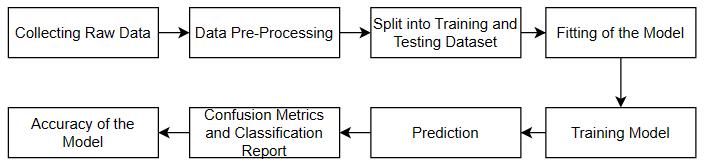
Figure 1: Steps involved in the methodology classification using machine learning alongside a Python Flask-based web application for the front end, involves a systematicapproach.
A. Data Collection:
We gather relevant data from various sources including historical crop yields, soil nutrient levels, weather conditions, and images of plant leaves with associated diseaselabels.WemaintainourdatasetonGitHubforeasy
accessandcollaboration.Thedatasetusedinourprojectis anaugmentedversionoftheoriginalPlantVillageDataset, created through offline augmentation techniques. The original dataset, containing approximately 87,000 RGB images of healthy and diseased crop leaves categorized into38differentclasses,canbefoundattheprovidedlink. We have divided the total dataset into 70295 images for trainingandvalidation16705setsand 14plants,number ofdiseases 26, followingan 80/20ratio whilepreserving the directory structure. Additionally, we have created a separatedirectorycontaining33testimagesforprediction purposes. Crop recommendation dataset for using 2201 and Fertilizer recommendation dataset for using 23 differenttypesofcrops.
B. Data Preprocessing:
Before training our models, we clean the data to remove anynoiseandinconsistencies.Thisensuresthequalityand reliabilityofourpredictions.Thecollecteddatasetofplant disease was separated into Healthy and Disease labels, Images in the dataset are 3 to 4 MB in size, which consumesalotofmemoryandtimeforprocessing,Images wereresizedtoshapeWecanseetheshape(3,256,256)of the image. 3 is the number of channels (RGB) and 256 x 256isthewidthandheightoftheimage.
Figure 2 shows some of the samples of labeled datasets usedfortheproposedwork.
ResNet9
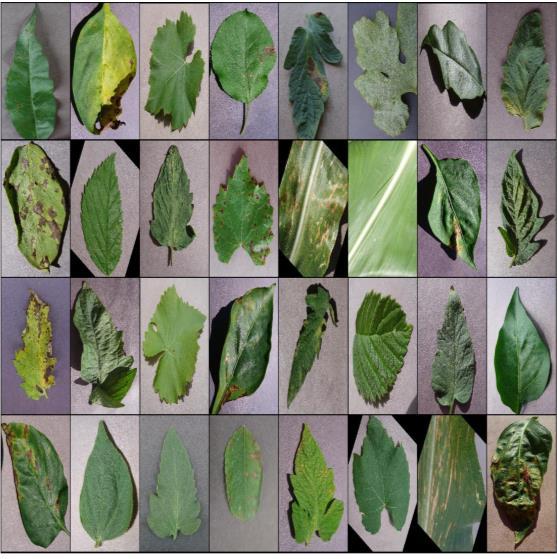
2: Examples of our labeled dataset
2: Examples of our labeled dataset
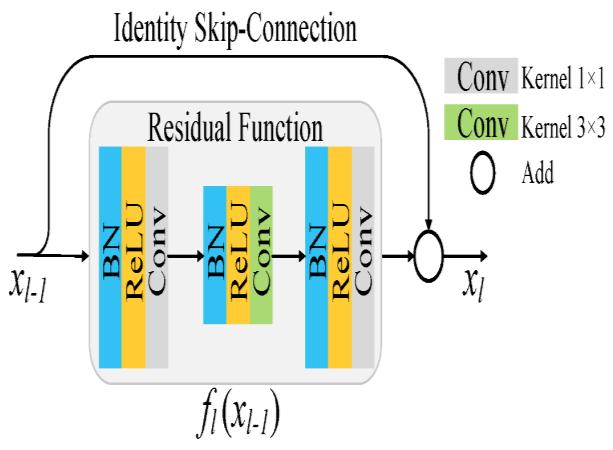
In ResNets (Residual Networks), the architecture introduces residual blocks to tackle the limitations of traditional neural networks, particularly in training very deep networks. Unlike in conventional neural networks where each layer sequentially feeds into the next layer, in ResNets,residualblocksareemployed.Theseblocksallow the flow of information not only to the subsequent layer but also directly to the layers that are 2-3 hops away. The primary purpose of using residual blocks is to mitigate
International Research Journal of Engineering and Technology (IRJET) e-ISSN:2395-0056
Volume: 11 Issue: 12 | Dec 2024 www.irjet.net p-ISSN:2395-0072
overfitting, a scenario where the validation loss stops decreasing and starts increasing while the training loss continues to decrease. By enabling direct connections between layers across multiple hops, ResNets facilitate better gradient flow during training, thereby addressing thevanishinggradientproblemcommonlyencounteredin deepneuralnetworks.
C. Data Splitting:
Wesplitourdatasetintotrainingandtestingsetsusingan 80:20ratio. This allowsus to evaluate the performance of ourmodelseffectively.
D. Model Development:
We develop machine learning models using popular algorithms such as Random Forest and Naive Bayes. Random Forest is used for crop and fertilizer recommendation, while Naive Bayes is utilized for plant diseaseclassification.
E. Model Training:
Our models are trained on the training data to learn patterns and relationships within the dataset. This step is crucialforaccuratepredictions.
F. Model Testing:
We evaluate the performance of our models using the testing data to ensure they generalize well to unseen data and provide reliable recommendations. The dataset used inourprojectisanaugmentedversionoftheoriginalPlant Village Dataset, created through offline augmentation techniques.Theoriginaldataset,containingapproximately 87,000 RGB images of healthy and diseased crop leaves categorized into 38 different classes, can be found at the provided link. We have divided the total dataset into training 70295 images for training and validation 16705 sets and several plants 14 Number of diseases 26 following an 80/20 ratio while preserving the directory structure. Additionally, we have created a separate directory containing 33 test images for prediction purposes
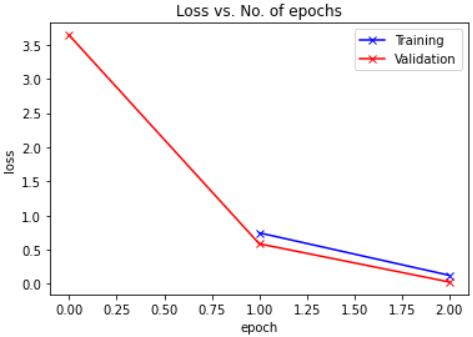
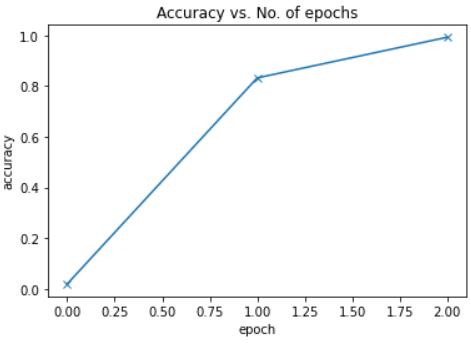
Figure 5: Training for proposed Resnet model(b)Accuracy vs. epoch graphs
Below, Figure 6 illustrates the accuracy of crop and fertilizerrecommendations.
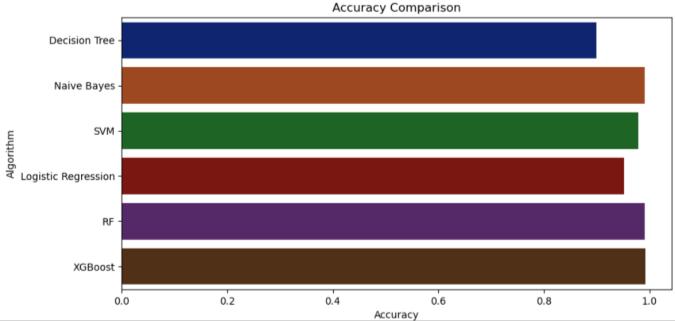
Figure 6:Accuracy of crop and fertilizer
International Research Journal of Engineering and Technology (IRJET) e-ISSN:2395-0056
Volume: 11 Issue: 12 | Dec 2024 www.irjet.net p-ISSN:2395-0072
Table 1: Crop &Fertilizer Accuracy Table
Algorithm Result
DecisionTree 0.9%
NaïveBayes 0.99%
SVM 0.97%
LogisticRegression 0.95%
RandomForest 0.99%
XGBoost 0.993%
G. Interpretation of Model Prediction
Step 1: When the Crop recommendation or Fertilizer recommendation Predict button is enabled the following “ResultPage”willbeopened.

Figure 7:Crop Recommendation
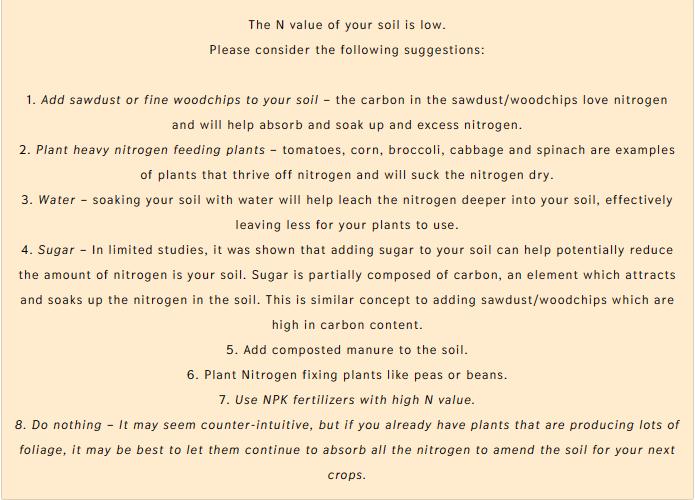
Figure 8: Fertilizer Recommendation
Step 2: When the “Classify Image is clicked both the original image and Predicted images will be classified proposed Res net model and its predicted class and suggestionwillbedisplayed”
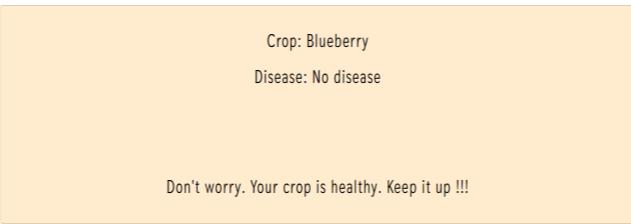
Figure 9:Predicted Crop and Disease
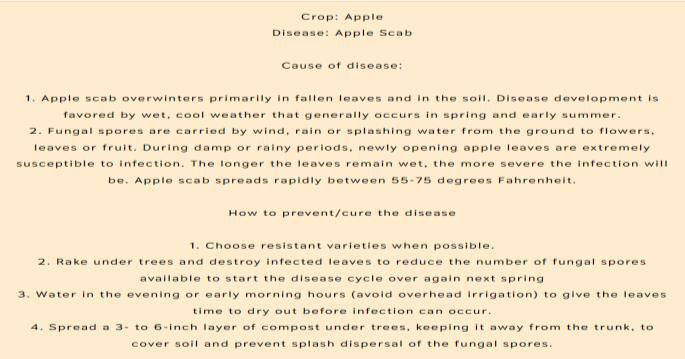
Figure 10:Plant Disease Detection
H. Model Evaluation:
Once our models are trained and evaluated, we integrate them into a unified system using Python Flask. This lightweight web application framework allows us to developauser-friendlyinterfaceforfarmerstoinputtheir dataandreceiverecommendations.
H. Model Testing
Step 1: When the code for the GUI is run in Jupiter notebook the application will execute and the below shownscreenwillbeopened.ItcontainstheHomepage

Figure 11:Raita Mitra page
International Research Journal of Engineering and Technology (IRJET) e-ISSN:2395-0056
Volume: 11 Issue: 12 | Dec 2024 www.irjet.net p-ISSN:2395-0072
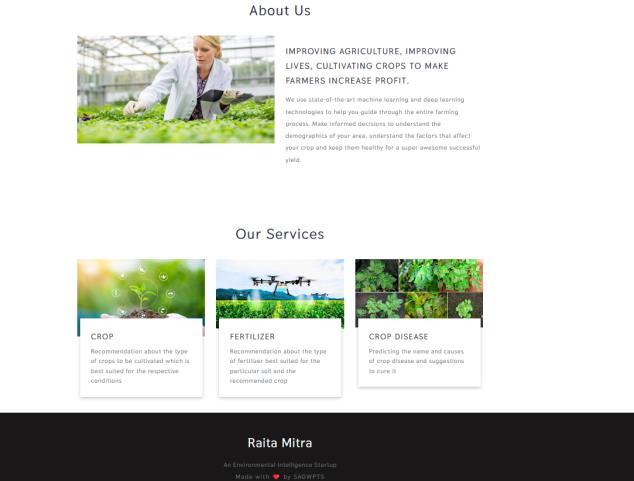
Figure 12:Home Page
Step 2: When the “Crop” or “Fertilizer” button is clicked, the following screen to crop recommendation interface willbeopened.Inputshouldbegivenintextform.
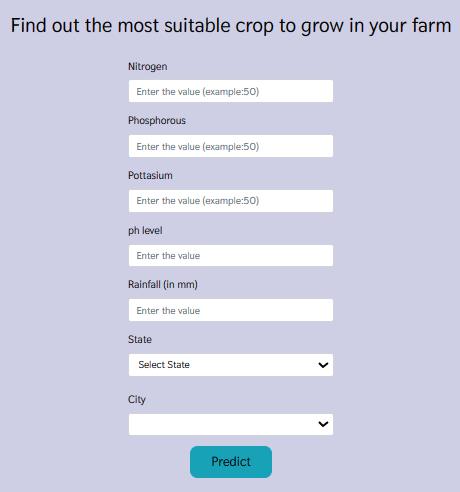
Figure 13:Crop Recommendation
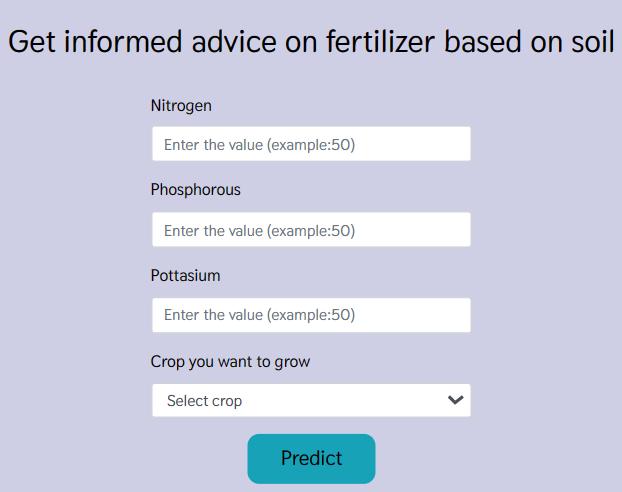
14:Fertilizer Recommendation
Step 3: The selected file will be uploaded and the Predict button will be enabled on the screen. Click on the Predict buttontoPredicttheimage.
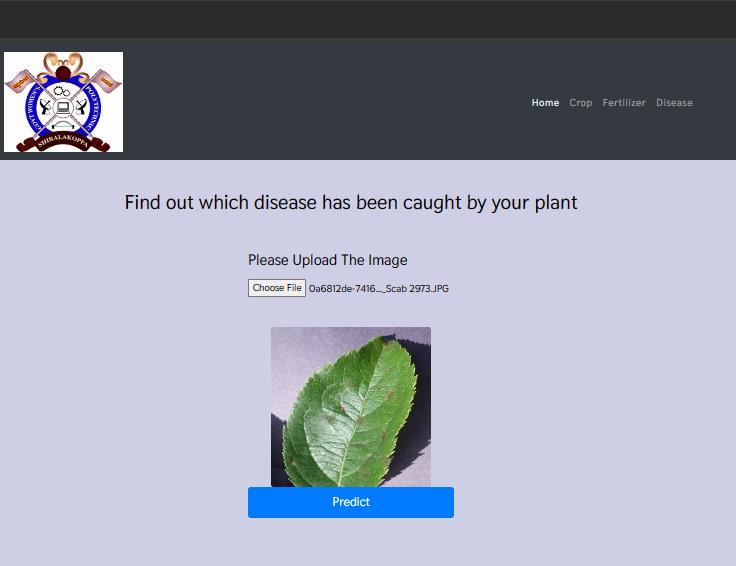
Figure 15:Plant Disease Detection
I.System Maintenance:
We continuously monitor the performance of our system andupdateourmodelswithnewdatatoimproveaccuracy. Additionally, we gather feedback from users to enhance the web application interface and add new features as needed. Flask's flexible architecture facilitates seamless updates and maintenance. By following these steps, we aim to provide farmers with accurate and timely recommendations for crop selection, fertilizer usage, and plant disease management, ultimately improving agriculturalproductivityandsustainability.
International Research Journal of Engineering and Technology (IRJET) e-ISSN:2395-0056
Volume: 11 Issue: 12 | Dec 2024 www.irjet.net p-ISSN:2395-0072
The capstone project has reached a significant milestone with the successful integration of crop recommendation, fertilizer recommendation, and plant disease detection features into the Raita Mitra ML application. Leveraging ResNets for image classification, particularly in distinguishing between healthy and diseased plants, has yieldedimpressiveresults.Bycarefullytuningparameters and employing techniques such as learning rate scheduling,gradientclipping,andweightdecay,theResNet model has achieved impeccable accuracy, correctly predicting every image in the test set without errors. Additionally,incorporating ResNet-9hasfurtherbolstered the application's capabilities, while the random forest algorithm has demonstrated exceptional accuracy, reaching 99%. These advancements hold promise for optimizing crop yield, resource management, and disease prevention for farmers. Looking ahead, there remain opportunitiesforfurther refinementand expansionof the application'sfunctionalityandusability.
The future enhancement of the Raita Mitra project includes integrating AI for real-time disease detection, multi-lingual support, weather forecast integration, and mobileappdevelopment.
More data can be collected manually via web scrappingtomakethesystemmoreaccurate
Additional plantimages canbecollected to makethe diseasedetectionpartmorerobustandgeneralized
We express deep gratitude to our guide, Mr. Umesha D K, and the Head of the Computer Science & Engineering departmentfortheirinvaluablesupport.Specialthanksto our Principal, Mr. D S Ravishankar, and all lecturers for their assistance. Additionally, we appreciate the unwavering encouragement from our parents, classmates, and supporters. Their contributions were essential to the successfulcompletionofthisproject.
1. SamyakShrimali, detecting crop diseases using the MobileNetV2 model architecture and image filters, 04 Jul2023-Advancesintechnologyinnovation-Vol.8,Iss: 3,pp192-209
2. Leninisha Shanmugam, automatic detection of plant diseasesusingremotesensingimages,01Aug2023
3. Guangyuan Zhang, Kefeng Li, Peng Wang, Zhenfang Zhu,14Jul2023-FrontiersinPlantScience
4. Anita Shrotriya, Akhilesh Kumar Sharma, Nitesh Pradhan,09Mar2023-pp191-196
5. A lightweight Deep Convolutional Neural network modelforplantdiseaseidentification,09Mar2023
6. Guangyang Deng, Chen Dong, Jiabo Chen, Jiaxing Gao, Crop planting recommendation algorithm based on ensemble learning,26 Jun 2023-Vol. 12721, pp 127211D-127211D
7. P. Kumar, Kusum Lata, Sushant Jhingran, Crop recommendation using machine learning algorithms,11 May 2023-pp 100-103, published in InternationalConferenceonDatabaseTheory
8. Crop Recommendation System using Random Forest AlgorithminMachine,04May2023
9. Plant Disease Detection Using Image Processing and Deep Learning, D Bhaskar15 Jun 2023-Indian Scientific Journal Of Research In Engineering And Management-Vol.07,Iss:06
10. Plant Leaf Disease Detection using Deep Learning, 31 May 2023-International Journal For Science TechnologyAndEngineering(InternationalJournalfor Research in Applied Science and Engineering Technology)-Vol.11,Iss:5,pp3458-3461
11. Plant Leaf Disease Detection and Classification using Deep Learning Tech 30 May 2023-International Journal For Multidisciplinary Research (International JournalForMultidisciplinaryResearch)-Vol.5,Iss:3