
International Research Journal of Engineering and Technology (IRJET) e-ISSN: 2395-0056
Volume: 13 Issue: 03 | Mar 2026 www.irjet.net p-ISSN: 2395-0072

International Research Journal of Engineering and Technology (IRJET) e-ISSN: 2395-0056
Volume: 13 Issue: 03 | Mar 2026 www.irjet.net p-ISSN: 2395-0072
Kalpana Singh1 , Raj Kumar Verma1
1Department of Physics, Agra College, Agra Dr. Bhimrao Ambedkar University, Agra, (U.P.), India
Abstract - In Agra, India, this study examines precipitation-driven wet scavenging of particulate matter (PM10) throughout the monsoon and non-monsoon seasons in 2021–2022. To test the effectiveness of rainfall-induced clearance, real-time PM10 concentrations were recorded prior to (BR), during (DR), and following (AR) rain events. Because of increased precipitation scavenging, the mean PM10 concentration was much lower during the monsoon season (48.86 µg m⁻3) than it was during the nonmonsoon season (196.41 µg m⁻3). The Marshall–Palmer raindrop size distribution was used to determine the size-dependent scavenging coefficient (Λ, s⁻1), which was then numerically integrated in Python. Rainfall intensity and scavenging rate showed strong positive associations (R² > 0.99), although wind speed had the greatest climatic influence (R² = 0.93). The findings show that hygroscopic development, wind-driven turbulence, and rainfall intensity all work together to control aerosol removal efficiency. The results offer region-specific parameterisation that is helpful for managing urban air quality and atmospheric modelling.
Key Words: Wet scavenging, PM10 concentration, Rain Intensity, Scavenging coefficient, Urban air pollution, Monsoon dynamics.
1.INTRODUCTION
Itisindisputablethatpollutiondispersingclosetoemissionsourcesisinfluencedbyclimateconditions.Thevolume andvariabilityofpollutionarelikelytobesignificantlyinfluencedbymeteorologicalconditions,whichcanaffectboththe concentrationanddilutionofpollutants[SeinfeldandPandis1998,vanderWalJT2000].Oneofthemainprocessesinfluencing thevolumereductionofsolidparticlesisthedepositionofsolidparticles.
Whenatmosphericaerosolparticlesimpactandmixwithraindrops,theyarescavengedbybothin-cloudandbelowcloudprocesses[ConnanO,MaroD,andSantachiaraG,2013].Inordertotransmitpollutantsfromtheairtotheground, scavengingisanessentialaction[GoncalvesFF2000].Itisconsequentlyoneofthemostimportantprocessestomaintaina balancebetweentheoriginsandoutflowofaerosolparticles[ChateDMetal2003].Theterm"wetbelow-cloudscavenging" describesanysituationinwhichvariousformsofprecipitation,suchasrain,snow,fog,andice,removeairborneparticles. Becauseparticlesofdifferentsizesandshapesaredepositedandmovedtotheground-levelzoneduringthisprocess,belowcloudscavengingseemstobemoreimportantfromthestandpointofhumanhealthandthequalityoftheatmosphere(BaeSY etal.2006).Thisclaimissupportedbythefactthatbelow-cloudscavenging wherethemainprocessisthecollisionofsolid particleswithraindrops usuallyreleasesthePMsthatposeanimmediaterisktohumanhealth[KimJ-E,etal2012].
Thecomplicatedprocessofwetaerosolscavengingisaffectedbyanumberofoutsidevariables,includingrainfall intensity, droplet size, particle size distribution, and the chemical makeup of the water. temperature of the surrounding environment,aswellasthechemicalandphysicalcharacteristicsofaerosolanddroplets,aswellastheregionwhereaerosol anddropletscollide[ZhaoH,etal.2006].Theunderstandingofwetparticlematterscavengingiscurrentlyatastagewhere moreinsight isgraduallybeing gained. When modelling long-distanceair pollution transmissionandchemical substance transfer,wetdepositionapproachesareessential.Below-cloudscavengingofaerosolparticlesisfrequentlydescribedbythe idea of collisions between raindrops and particulate matter [Chate DM et al 2003]. Higher rainfall intensities frequently improve PM₄¹ removal because more and larger raindrops provide more surface area for particle capture. According to research,scavengingratiosincreasesignificantlywithrainfallrateandPM₂¹concentrationsdecreaserapidlyduringperiodsof heavyrainfall. However,moderaterainfallmaynothavemuchofanimpactonPM₄¹levelsbecauseofsmallerdropletsizesand inadequatekineticenergytoefficientlyscavengecoarseparticles.ThewidelyusedMarshall–Palmerraindropsizedistribution providesatheoreticalbasisformeasuringtherelationshipbetweenrainfallrateanddropconcentrationanddiameter,allowing researcherstocomputescavengingcoefficientsmoreprecisely[Marshall,J.S.,&Palmer,W.McK.1948].Thecurrentwork
International Research Journal of Engineering and Technology (IRJET) e-ISSN: 2395-0056
Volume: 13 Issue: 03 | Mar 2026 www.irjet.net p-ISSN: 2395-0072
offersseason-specificparameterisationofPM₄¹scavengingunderdifferingmonsoonandnon-monsoonregimesinNorthern India,supportedbyhigh-correlationstatisticalvalidation,incontrasttootherstudiesthatmainlyconcentratedongeneralised wetdepositionprocesses.
Theobjectivesofthisstudyareto:(1)quantifyPM10variationduringBR–DR–ARphases;(2)estimateprecipitation scavengingcoefficientsusingtheMarshall–Palmerdistribution;(3)evaluatemeteorologicalcontrols;and(4)compare monsoonandnon-monsoonregimes.
2. Study area and method
One of India's major cities is Agra. It is located in north central India (27.18˚N 78.02˚E), with the Thar Desert of Rajasthanencirclingtwo-thirdsofitsperiphery(SE,W,andNW).Agrahas1.6millionpeople,accordingtothe2011Census. Agra'sclimateishotanddryinthesummer,withdailyaveragesbetween21.9˚Cand48˚C,andbetween4.2˚Cand31.7˚Cinthe winter.Agra'sclimatemaybebroadlyclassifiedintofourseasons:winter(DecembertoFebruary),summer(MarchtoJune), monsoon(JulytoSeptember),andpost-monsoon(OctobertoNovember). TheannualrainfallinAgraisaboutare736.6mm andthewindusuallycomefromwestandnorth-westdirection.
3. Description of sampling site
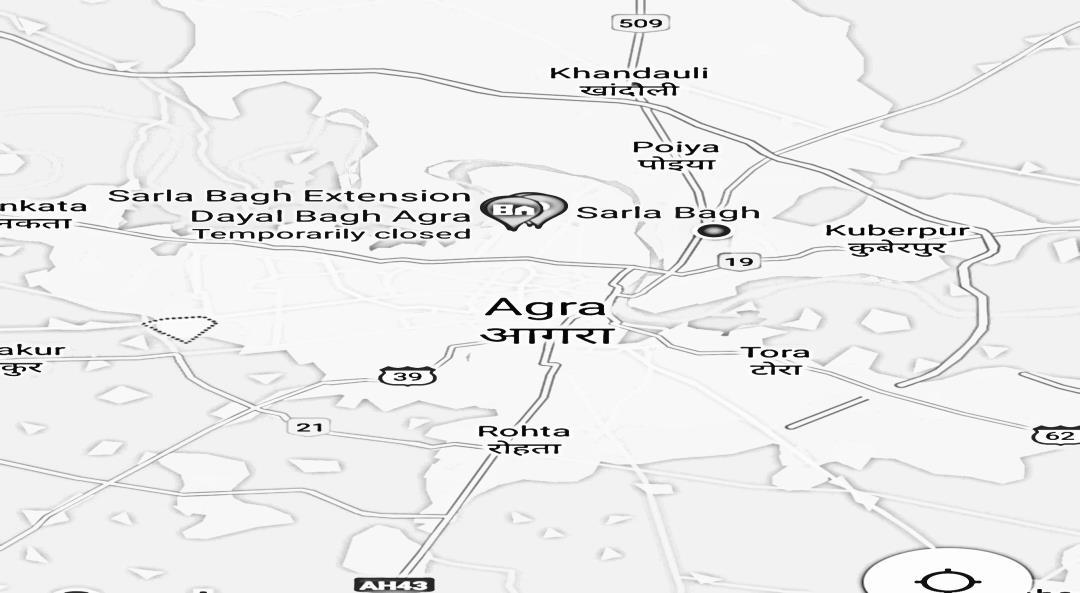
FromOctober2021toSeptember2022,thestudywascarriedoutintheSarlaBaghExtensionDayalBaghlocationin Agracity.Figure1showsamapofthesamplesiteanditsenvirons.ThechosenlocationwaswithinthecityofAgra.Traffic emissions,industrialemissions,nearbyeconomicactivity,etc.werethemaincausesofairpollution.Dependingontheseasonal variationsinwindanddirection,thesesourceshaveasignificantimpactonthesite.ThehourlyPM10concentrationwas monitored and compared during periods of rainfall and no precipitation in order to ascertain the purification impact of precipitation.
4. Sample collection
PM₄¹samplesweretakenatthesite25feetabovethegroundusingaportableequipment.Threesetsofsampleswere gatheredintotal:BeforeRain(BR),DuringRain(DR),andAfterRain(AR)events.Rainintensitywascalculatedbymeasuring theamountofrainandcollectingrainwatersamplesusingthebottleandfunnelmethod.Althoughshowersinthisareaare oftensomewhatbrief,theycanoccasionallybeextremelyintense.ForabetterunderstandingofPM10aerosolwashout,the meteorologicaldata(temperature,relativehumidity,winddirection,andspeed)isshowninTable1.
International Research Journal of Engineering and Technology (IRJET) e-ISSN: 2395-0056
Volume: 13 Issue: 03 | Mar 2026 www.irjet.net p-ISSN: 2395-0072
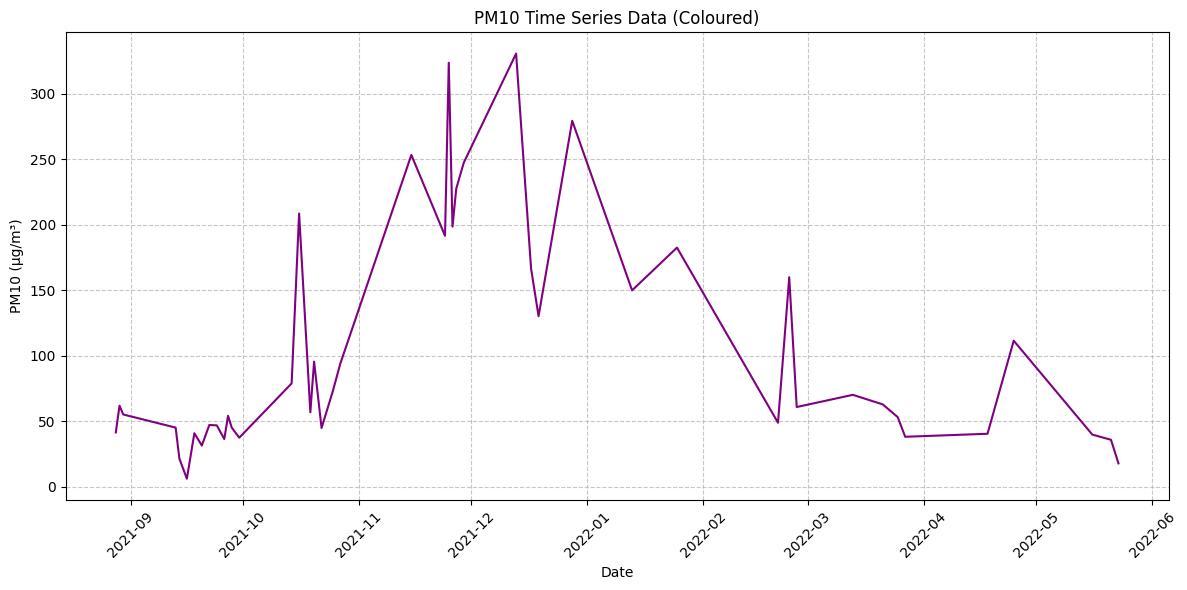
TimeSeriesofPM10LevelsHighlightingWinterPeaksinAgra
ThePM10timeseriesgraphshowsvariationsinparticulatematterconcentrationsbetweenSeptember2021andJune2022, withnotablepeaksinDecember2021andJanuary2022.Seasonalimpactsandpotentialconnectionstoclimaticor human variablesareindicatedbytheseincreasednumbers.Allthingsconsidered,thegraphichighlightstheunpredictabilityofair qualityandthesignificanceofongoingobservationtospotpollutionepisodesandevaluatemitigationinitiatives.
Table 1: Meteorologicalparameters,rainintensityandPM₁₀samplingdurationthroughouteachsetofthemeasurements
Date of Rain events
International Research Journal of Engineering and Technology (IRJET) e-ISSN: 2395-0056
Volume: 13 Issue: 03 | Mar 2026 www.irjet.net p-ISSN: 2395-0072
BRBeforeRain,DRDuringRain,ARAfterRain,PM10ParticulateMatter≤10μmindiameter,WS:WindSpeed:WD:Wind Direction:RH:RelativeHumidity
Thedurationofeachsamplingforeachsetofmeasures,BR,DR,andAR,aswellasthesamplingtimeforeachofthethree setsofsamplesgiveninthetable,aredeterminedbythesinglerainevent.IntheAgraregion,rainsaretypicallyquitebrief, althoughoccasionallytheycanbeextremelyintense.Rainfalllastsfor15to30minutes,withanintensityof3.2to20mmhr¹¹ duringmonsoonseasonsand1.74to44mmhr¹¹duringnon-monsoonseasons.TheDayalbaghEducationalInstituteprovided themeteorologicaldata.
5 Method: Scavenging Rate Estimation
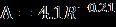
Theprecipitationscavengingcoefficient( )foraerosolparticleswascalculatedusingtheMarshall–Palmer raindropsizedistribution(MarshallandPalmer,1948):

Where
N(D)=numberofraindropsperunitvolumewithdiameterD,

Thegeneralexpressionforthe size-dependent scavenging coefficient Λ(dp)is:
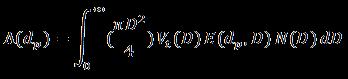
Where:
Terms
=aerosolparticlediameter
=raindropdiameter
International Research Journal of Engineering and Technology (IRJET) e-ISSN: 2395-0056
Volume: 13 Issue: 03 | Mar 2026 www.irjet.net p-ISSN: 2395-0072

=terminalfallvelocityofraindrop(Atlasetal.,1973)
=collectionefficiency(Slinn,1984)

=Marshall–Palmerraindropsizedistribution

UnitsofΛ(dp)= s⁻¹
Thisequationtellsushowfastparticlesofsize areremovedfromtheatmospherebyraindropsfollowingthe MPdropsizespectrum. withv(D)=9.65-10.3exp(-0.6D)astheterminalvelocityparameter(Best,1950).Diffusion,interception,and impactioneffectswereincludedincollectionefficiencyE(a,D)(Slinn,1983).Simpson'srulewasusedfor numericalintegration,andtheresultsareexpressedins〖^(-1).〗
AllmodelcomputationsinthisworkwereperformedusingthePythonprogramminglanguage(version3.x) duetoitsopen-sourcenature,transparency,andextensiveuseinatmosphericscience.TheMarshall–Palmer exponentialdropsizedistributionwasimplementedasauser-definedfunction[Atlas,D.,Srivastava,R.C.,& Sekhon,R.S.1973]toallowdynamicevaluationfordifferentrainfallrates.Raindropterminalvelocitieswere computedusingtheempiricalformulation,andaerosol-dropcollectionefficienciesweredeterminedusingsizedependentrelations[Slinn,W.G.N.(1984)]. ThescavengingcoefficientΨ(dp)wasobtainedbynumerically integratingthetraditionalscavengingequationusingscipy.integrate.quad.Alldataarraysweremaintained usingNumPy,andparameterstudies(suchasalteringparticlesizeandrainfallrate)wereautomatedusing Pythonloopsandvectorisedoperations.Thiscomputationalframeworknotonlyprovidesafullyreplicable scenariobutalsofacilitatestheextensionormodificationofscavengingparameterizationsinfuturestudies.
6.1 PM10 level distribution
Figure2displayedthePM10valuesforthreesetsofsamplesthroughoutthemonsoonandnon-monsoonseasons.Theimpact ofparticulatematterwashoutfromtheatmosphereisshown inFig.2.ThemeanPM10intheDRsamplewasfoundtobe considerablylowerthanthemeanoftheBRsamples.
International Research Journal of Engineering and Technology (IRJET) e-ISSN: 2395-0056
Volume: 13 Issue: 03 | Mar 2026 www.irjet.net p-ISSN: 2395-0072
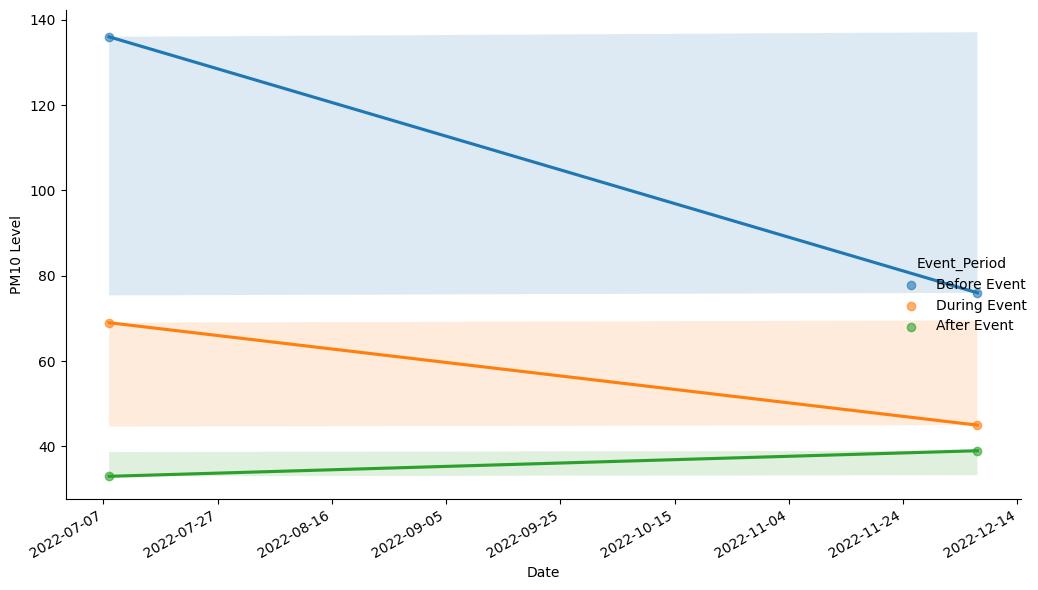
Fig.3 ThisgraphshowsthreesetofPM10(Before,duringandafter)levelinmonsoonseasons.
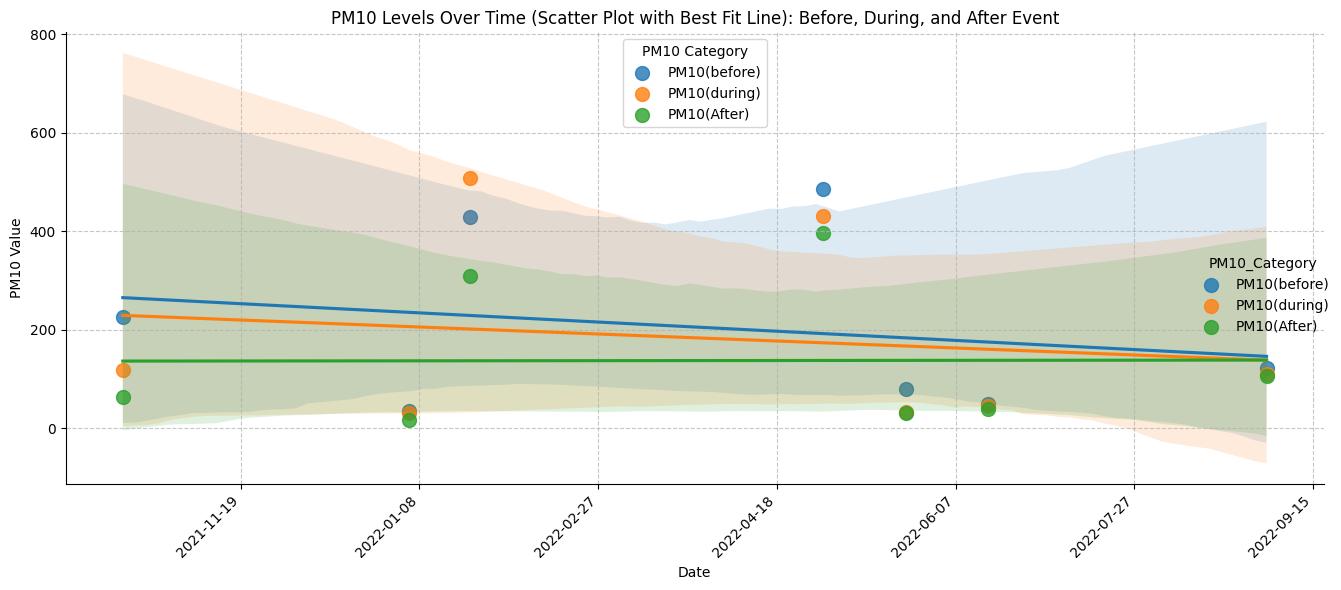
Fig.4 ThisgraphshowsthreesetofPM10(Before,duringandafter)levelinnon-monsoonseasons.
Theaccumulationofparticulatematteremittedfrommultiplesourcesmaybethecauseofthedecreaseinthemean PM level seen from DR to AR. Measuring aerosol concentrations prior to and following rain episodes can be helpful in controllingthefactorgeneratingaerosolloadingintheatmosphere,accordingtoMarshall,J.S.,&Palmer,W.McK.(1948). Accordingtoanumberofstudies[Atlas,D.,Srivastava,R.C.,&Sekhon,R.S.(1973)],aerosolwashoutisalsodependenton raindropcollectingefficiency,whichisfurtherdependentonraindropsize/area,aerosoldiameter,andBrowniandispersionof aerosolsintheatmosphere. Aerosols'hygroscopicpropertiesalsohaveamajorimpactonclimate,atmosphericprocesses,and health problems (Slinn, W. G. N. 1984, Chate and Pranesha 2004, Chate and Kamre 1997, Tang 1996). Additionally, hygroscopicity is crucial for the creation of Cloud Condensation Nuclei (CCN), which alter the volumes and patterns of precipitationinaparticulararea[Hiller1991].Particlediameterandrelativehumidityhaveanimpactonaerosolhygroscopic development[Gysesletal.2002,Ferronetal.2005].Thewashoutofpollutantsandaerosolsintheatmosphereistherefore
© 2026, IRJET | Impact Factor value: 8.315 | ISO 9001:2008 Certified Journal | Page1922
International Research Journal of Engineering and Technology (IRJET) e-ISSN: 2395-0056
Volume: 13 Issue: 03 | Mar 2026 www.irjet.net p-ISSN: 2395-0072
influencedbyrainintensity,aerosolparticlesize,andhygroscopicgrowth[Reuteretal.,2009].ThepurposeofcollectingPM₂ₒ before,during,andafterarainstormwastodeterminehowtheconcentrationofPM₂ₒaerosolschanged.
7 Statistical evaluations of atmospheric scavenging processes under Meteorological Variability.
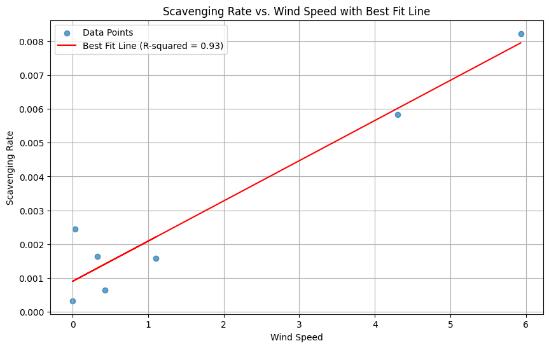
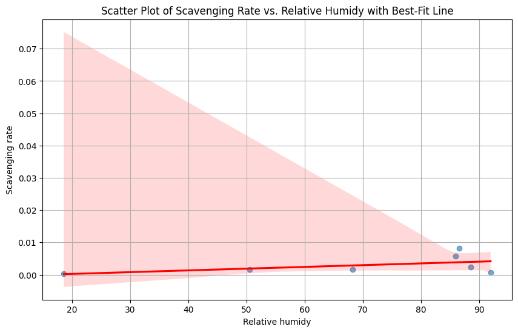
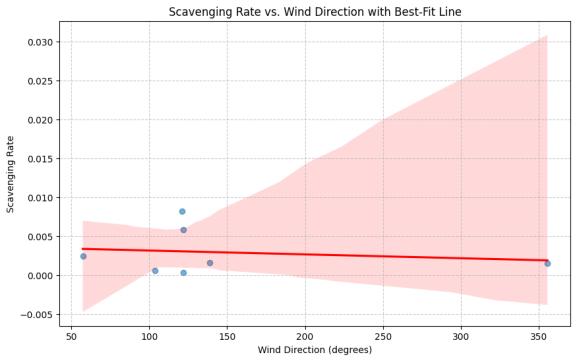
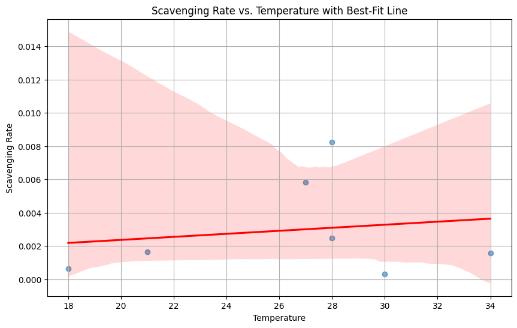
Figure 5 illustratestherelationshipbetweenscavengingrateandmeteorologicalparameters(windspeed,winddirection, temperature,andrelativehumidity)duringthenon-monsoonseason.
Thescatterplotanalysisshowclearcorrelationsbetweenimportantclimaticparametersandscavengingrate.AnR2valueof 0.93indicatesastrongpositivecorrelationbetweenwindspeedandscavengingrate,indicatingthathigherwindvelocity improvesparticleremovalthroughturbulentmixingandcollisionmechanisms.Theplotofwinddirectionvsscavengingrate, ontheotherhand,revealsaweak andambiguous trend witha largeconfidenceinterval surroundingtheregressionline, suggestingthatcomplicatedsource-receptordynamicsmaymakedirectionalflowaloneanunreliablepredictorofscavenging effectiveness.Relativehumidityalonemaynothaveasignificantimpactonthescavengingprocessinthisdataset,asevidenced by the modest positive correlation between relative humidity and scavenging rate, the large confidence interval, and the notabledataspread.Finally,thereisaslightpositivecorrelationbetweentemperatureandscavengingrate,whichmaybedue toimproveddropletproductionandcondensationprocessesincolderclimates.Theseresultshighlightthemultifacetednature ofatmosphericscavenging,wheretheeffectivenessofremovingparticlesfromtheatmosphereisinfluencedbyacombination ofheatconditions,moistureavailability,andwind-drivenmotion.
International Research Journal of Engineering and Technology (IRJET) e-ISSN: 2395-0056
Volume: 13 Issue: 03 | Mar 2026 www.irjet.net p-ISSN: 2395-0072
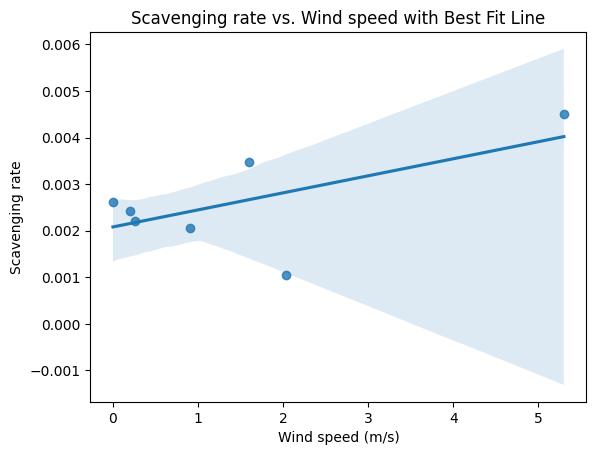
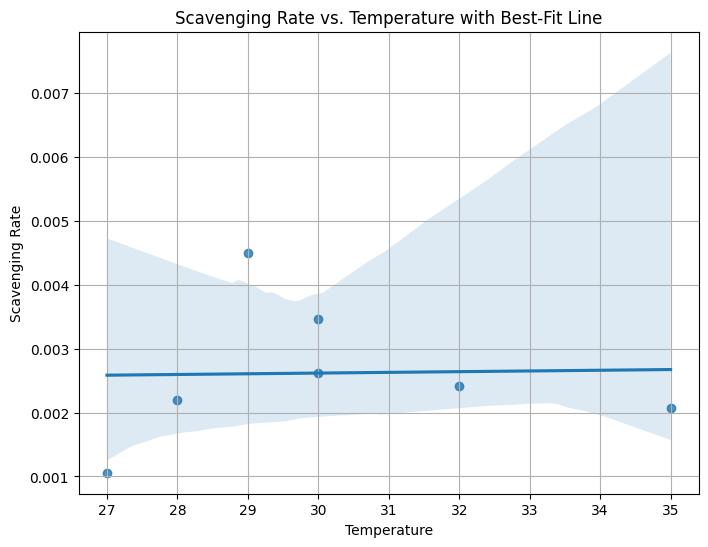
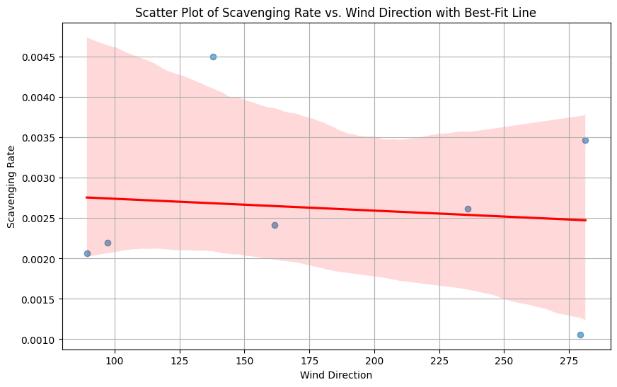
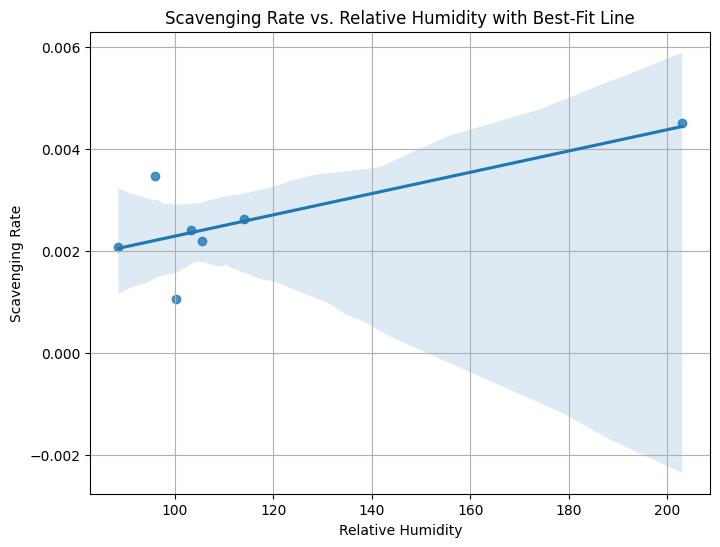
Figure 6 presentstherelationshipbetweenscavengingrateandmeteorologicalparametersduringthemonsoonseason. Strongerwindsimproveparticleremoval,astheanalysisdemonstratesthatthescavengingrateriseswithwindspeed.Certain windpatternsmaylowerscavengingeffectiveness,asindicatedbyamodestnegativetrendwithwinddirection.Additionally, thereisapositiveassociationbetweentemperatureandscavengingrates,suggestingthatwarmersettingsmayencourage higherrates.Thescavengingratetendstorisealongwithrelativehumidity.Thesecorrelationsdemonstratehowclimatic variablesaffectatmosphericpurificationprocesses.
SummarystatisticsdataarepresentedinTable.2includingdataregardingtheselectedairpollutant(PM₁ₒ),meteorological parameters,andtheprecipitationanalysesduring2021-2022yearexperiment.Theanalysesoftheseparametersfoundthatthe Table. 2: PM₁ₒandmeteorologicalparameterscharacterization
International Research Journal of Engineering and Technology (IRJET) e-ISSN: 2395-0056
Volume: 13 Issue: 03 | Mar 2026 www.irjet.net p-ISSN: 2395-0072
Note:T–temperature,RH–relativehumidity,WS–windspeed,WD–winddirection,Avg.–average,Med.–median,Min.–minimum,Max–maximum.
ThedescriptivedatashowthatPM₂¹concentrationsandrelatedmeteorologicalparametersvariedsignificantlyoverthecourse oftheinvestigation.Withameanvalueof121.35µgm⁻³andahighstandarddeviation(140.48),PM₁¹levelsrangedfrom13.60 to438.30µgm⁻³,indicatingsignificanttemporaloscillationsprobablycausedbyseasonalclimaticcircumstances,especially duringmonsoonandnon-monsoonseasons.Withanaverageof28.24°Candamoderatestandarddeviationof4.17,theair temperaturerangedfrom21.0to35.0°C,indicatingcomparativelystablethermalconditions.Withameanof1.95ms⁻¹,the windspeedrangedfromcalmcircumstances(0.00ms⁻¹)to5.90ms⁻¹;theobservedvariability(standarddeviation=2.35)and lowerquartilevaluessuggestfrequentlow-windconditionsthatmaypromotepollutantaccumulation.Withameanof148.09° andasignificantstandarddeviation(90.31),winddirectionshowedabroaddispersionfrom57.30°to355.60°,suggesting varyingairflowregimesandseveralpossiblesourceinfluences.
Withameanof82.45%andastandarddeviationof22.65%,relativehumidityrangedfrom17%to100%,indicatinggenerally moistairconditionsduringrainfallepisodes.Inordertopreservephysicalconsistency,valuesthatexceeded100%during periods of heavy precipitation were capped at 100% during data preprocessing and were ascribed to sensor-related supersaturationartefacts.Overall,thestrongseasonalandatmosphericrestrictionsguidingPM₂¹concentrationdynamicsand wetscavengingefficiencyarehighlightedbythesignificantdiversityacrossmeteorologicalparameters.
Twoimportantmechanismsthataccountforthemoistscavengingofaerosolsfromtheatmospherearerainoutandwashout. Thewashoutofdifferentatmosphericspeciesisbestexplainedbythequantityorintensityofrainfall[20].Figure4
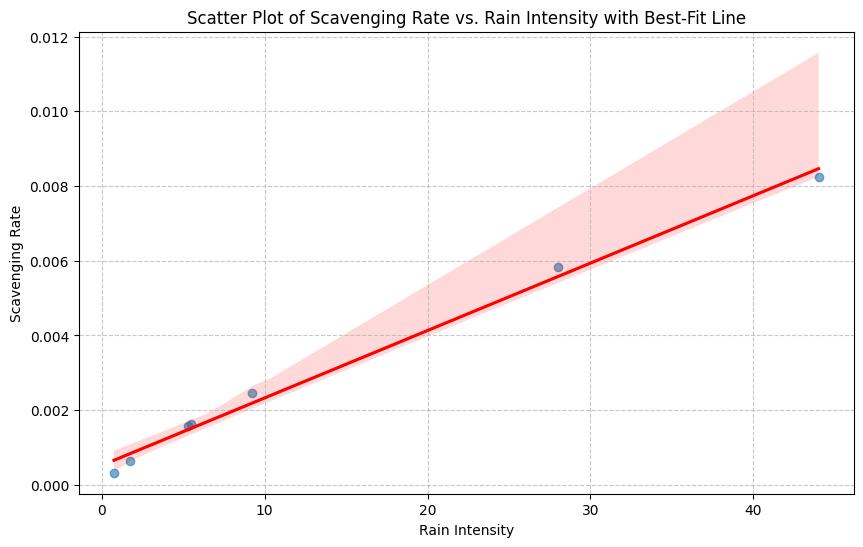
Figure 7 showsthecorrelationbetweenrainfallintensityandthecalculatedscavengingrateduringthemonsoonseason. TheBRaerosolconcentrationlevelswerealreadyverylowbecauseofpreviousrain,whichwashedtheaerosolsaway,which explainsthepoorremovalshowninFigure3.Itshouldbementionedthataerosolconcentrationsbeforerain,aswellasthe lengthandintensityoftherain,allaffecttheremovalofcontaminants.Therainintensityplaysanimportantroleinscavenging ofPM₁ₒconcentration.ThiscorrelationstudyexplainstherelationshipbetweenPM₂ₒscavengingrateandrainintensity.
International Research Journal of Engineering and Technology (IRJET) e-ISSN: 2395-0056
Volume: 13 Issue: 03 | Mar 2026 www.irjet.net p-ISSN: 2395-0072
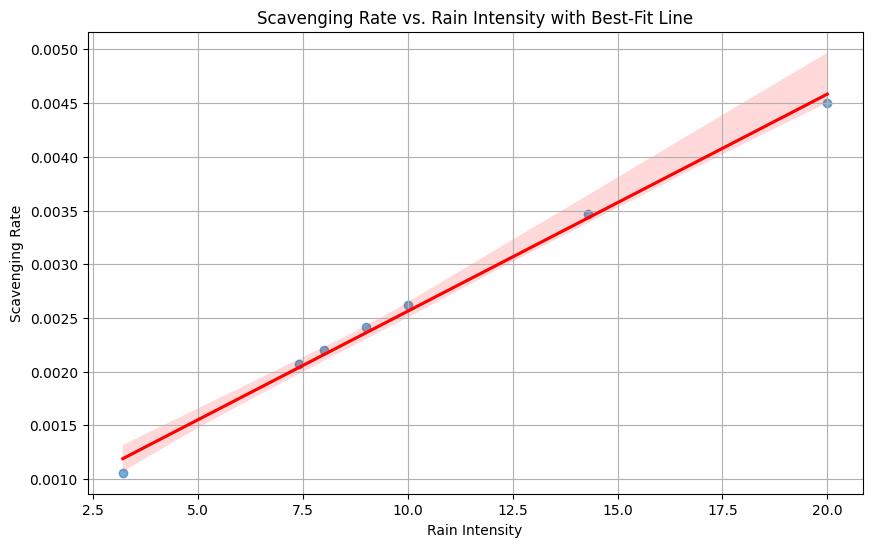
Figure 8 representstherelationshipbetweenrainfallintensityandscavengingrateduringthenon-monsoonseason. TheSRofPM10concentrationintherainwaterwashigherduringthenon-monsoonseasonthanitwasduringthemonsoon season.Theseparticlescanbeeasilyremovedfromtheatmospherebecauseoftheirlargersizeandincreasedhygroscopicity. Thebuildupoftheaerosolcontentswasobservedinadditiontoremoval.Duringthestudyperiod,PM10boundSR(M)showed a positive correlation (R²=0.9965) with rain intensities, while SR(NM) showed a high positive correlation (R²=0.9977). Correlation studies revealed this relationship between the rate of PM10 scavenging and the intensity of the rain. SR was significantlyimpactedbyrainfallintensity(R).Overall,higheratmosphericscavengingofthePM10concentrationwasshown bythepercentagedeclinefromBRtoDRandfromDRtoAR.
Conclusion
ThecurrentstudyshowshowrainfallintensitysignificantlyaffectsPM₄¹eliminationthroughwetscavenginginNorthernIndia undermonsoonandnon-monsoonmeteorologicalregimes.ItisevidentfromasystematiccomparisonofPM₂¹concentrations duringtheBeforeRain(BR),DuringRain(DR),andAfterRain(AR)phasesthatthereisasignificantdecreaseinparticulate matterlevelsduetoprecipitation.Enhancedscavengingeffectivenessundersustainedmonsoonalrainfallcircumstancesis confirmedbythemuchloweraveragePM₄¹concentrationduringthemonsoonseason(48.86µgm⁻³)comparedtothenonmonsoonperiod(196.41µgm⁻³).
Scavengingrateandimportantclimaticparameterswereshowntohavestrongstatisticalcorrelations.Themostsignificant predictor(R2=0.93)waswindspeed,highlightingthecontributionofairturbulenceonparticleclearance.Temperaturehada moderatebutdiscernibleimpact,whilerelativehumiditypromotedimproveddepositionthroughhygroscopicdevelopment. Furtherevidencethatlongerandheavierrainfall episodesgreatlyincreasePM₄¹ washoutefficiencycomesfrom a strong positiveassociationbetweenrainfallintensityandscavengingrate.
Theslowre-accumulationofPM₂¹afterprecipitationemphasisesthetransientcharacterofrain-inducedaircleansing,even when rainfall events substantially lowered particle concentrations. A repeatable and physically based methodology for predictingsize-dependentscavengingcoefficientsisprovidedbyapplyingtheMarshall-Palmerraindropsizedistributionin conjunctionwithnumericalintegrationinPython.
Overall,thisstudyoffersregion-specificinsightsintowetscavengingdynamicsinamonsoon-dominatedurbanenvironment andcontributestoimprovedatmosphericmodeling,seasonalairqualityforecasting,andevidence-basedpollutionmitigation strategies.
International Research Journal of Engineering and Technology (IRJET) e-ISSN: 2395-0056
Funding Declaration
Theauthorsdeclarethatnospecificfundingwasreceivedforthisresearchfromanyfundingagencyinthepublic,commercial, ornot-for-profitsectors.
Acknowledgements
Theauthorsexpresstheirgratitudetothecollegeforitsinstitutionalsupportinenablingthisresearch.Theyalsothank theCentralPollutionControlBoard(CPCB)forprovidingairqualitydata,theIndiaMeteorologicalDepartment (IMD)for meteorological observations, and other publicly available sources utilized in this study. No specific grants from public, commercial,ornot-for-profitfundingagencieswerereceivedforthisresearch.
References
AtlasD,SrivastavaRC,SekhonRS(1973)Dopplerradarcharacteristicsofprecipitationatverticalincidence. RevGeophysSpacePhys11:1–35.
BaeSYetal(2006)Developmentandevaluationofanexpressionforpolydisperseparticlescavenging coefficientforbelow-cloudscavengingasafunctionofrainintensityusingthemomentmethod.JAerosolSci.
ChateDM,KamraAK(1997)Collectionefficienciesoflargewaterdropscollectingaerosolparticlesofvarious densities.AtmosEnviron31:1631–1635.
ChateDM,PraneshaTS(2004)Fieldstudiesofscavengingofaerosolsbyrainevents.JAerosolSci35:695–706.
ChateDMetal(2003)Scavengingofaerosolsandtheirchemicalspeciesbyrain.AtmosEnviron.
ConnanO,MaroDetal(2013)Wetanddrydepositionofparticle-associatedmetals(Cd,Pb,Zn,Ni)inarural wetlandsite,MaraisVernier,France.AtmosEnviron.
FerronGAetal(2005)Hygroscopicpropertiesofambientparticlesaturban,semi-urbanandruralsitesin CentralEurope.AtmosEnviron39:343–352.
GoncalvesFFetal(2000)Modellingandmeasurementsofbelow-cloudscavengingprocessesinthehighly industrialisedregionofCubatao,Brazil.AtmosEnviron.
GyselMetal(2002)Hygroscopicityofaerosolparticlesatlowtemperatures:theoreticalandexperimental propertiesoflaboratorygeneratedaerosols.EnvironSciTechnol36:63–68.
HillerFC(1991)Healthimplicationsofhygroscopicparticlegrowthinthehumanrespiratorytract.JAerosol Med4:1–23.
KimJEetal(2012)FactorsinfluencingatmosphericwetdepositionoftraceelementsinruralKorea.AtmosRes.
MarshallJS,PalmerWMcK(1948)Thedistributionofraindropswithsize.JMeteorol5:165–166.
ReuterJetal(2009)AnewperspectiveonhydroclimatevariabilityinnorthernSouthAmericaduringtheLittle IceAge.GeophysResLett36.
Volume: 13 Issue: 03 | Mar 2026 www.irjet.net p-ISSN: 2395-0072 © 2026, IRJET | Impact Factor value: 8.315 | ISO 9001:2008 Certified Journal | Page1927
International Research Journal of Engineering and Technology (IRJET) e-ISSN: 2395-0056
SantachiaraGetal(2013)Atmosphericaerosolscavengingprocessesandtheroleofthermophoreticand diffusiophoreticforces.AtmosRes.
SeinfeldJH,PandisSN(1998)Atmosphericchemistryandphysics:fromairpollutiontoclimatechange.Wiley, NewYork.
SlinnWGN(1984)Precipitationscavenging.In:PruppacherHR,KlettJD(eds)Atmosphericsciencesandpower production.USDepartmentofEnergy,pp466–532.
TangIN(1996)Chemicalandsizeeffectsofhygroscopicaerosolonlightscatteringcoefficient.JGeophysRes Atmos101:19245–19250.
TurahogluFS,NuhogluAetal(2005)ImpactofmeteorologicalparametersonSO2andTSPconcentrationsin Erzurum,Turkey.Chemosphere59:1633–1642.
vanderWalJT,JanssenLHJ(2000)AnalysisofspatialandtemporalvariationsofPM10concentrationsinthe NetherlandsusingKalmanfiltering.AtmosEnviron34:3675–3687.
ZhaoHetal(2006)MonteCarlosolutionofwetremovalofaerosolsbyprecipitation.AtmosEnviron.
Volume: 13 Issue: 03 | Mar 2026 www.irjet.net p-ISSN: 2395-0072 © 2026, IRJET | Impact Factor value: 8.315 | ISO 9001:2008 Certified Journal | Page1928