
International Research Journal of Engineering and Technology (IRJET) e-ISSN: 2395-0056
Volume: 13 Issue: 05 | May 2026 www.irjet.net p-ISSN: 2395-0072

International Research Journal of Engineering and Technology (IRJET) e-ISSN: 2395-0056
Volume: 13 Issue: 05 | May 2026 www.irjet.net p-ISSN: 2395-0072
Akash Chaudhary1 , Purnendu Gupta2 , Anjali Yadav3
1UG student of the Department of Information Technology , Goel Institute Of Technology and Management Lucknow, Uttar Pradesh, India
2 UG student of the Department of Information Technology, Goel Institute Of Technology and Management Lucknow, Uttar Pradesh, India
3 Assistant Professor of the Department of Information Technology, Goel Institute Of Technology and Management Lucknow Uttar Pradesh, India ***
Abstract- This project develops an AI-based career recommendation and job matching system using intelligent automationtostreamlinetherecruitmentandcareerguidanceprocess.ByintegratingNaturalLanguageProcessing(NLP) and Machine Learning techniques, the system analyzes user resumes and matches them with relevant job opportunities, reducing manual effort and improving decision accuracy. Built on modern web technologies and Python-based frameworks,theplatformautomatesresumescreening,skillextraction,andpersonalizedjobrecommendationsalongwith real-time feedback.Resultsindicatethatthesystemsignificantlyreducescandidatefilteringtimecomparedtotraditional manual methods. The system provides a seamless, intelligent, and user-friendly solution suitable for job seekers, educationalinstitutions,andrecruitmentplatforms.
Key Words: Artificial Intelligence, Career Recommendation, Job Matching, Resume Analysis, Intelligent Automation, Natural Language Processing (NLP), Machine Learning, FastAPI, PostgreSQL
Careerguidanceandrecruitmentprocesseshaveevolvedintocomplexoperationsinthemoderndigitalera,requiringthe analysis of large volumes of candidate data, job requirements, and dynamic industry trends. Despite the availability of online job portals, the primary challenge remains the inefficiency of manual resume screening and generic job recommendations.Currentsystemsoftenrelyonkeyword-basedfilteringandrequireuserstonavigatethroughnumerous listings, which is time-consuming and often leads to mismatched opportunities. As the job market becomes increasingly competitive and data-driven, there is a growing need for intelligent systems capable of understanding user profiles and deliveringaccurate,personalizedcareerrecommendationstoimprovedecision-makingefficiency.
The emergence of Artificial Intelligence (AI) and Machine Learning technologies provides a viable solution to these challenges. By incorporating AI-driven algorithms and Natural Language Processing (NLP), the system can automatically analyzeresumes,extractrelevant skills,andmatchcandidates withsuitablejobroles. Intelligentsystemscan nowhandle repetitiverecruitmenttasks suchasresumescreening,jobfiltering,andskill assessment withouthumanintervention. This enables job seekers to receive more precise recommendations while allowing recruiters to focus on strategic hiring decisionsratherthanmanualfilteringprocesses.
This research focuses on developing a cohesive platform that bridges the gap between candidate profiles and job opportunities using a centralized database managed by an AI engine. By utilizing intelligent automation and NLP techniques, the system can identify skill gaps, recommend relevant job roles, and enhance overall employability. In this paper, through the integration of Python-based frameworks and modern web technologies, we aim to improve existing recruitment methodologies. Our focus is on creating a smart, efficient, and scalable ecosystem where AI acts as an intelligentassistantforcareerdevelopmentandjobmatchingacrossvariousdomains.
The primary objective of this phase is to distinguish and select appropriate scientific methodologies and architectural techniquesapplicabletothedesignofanAI-driveneventmanagementsystem.Theemployedtechniquesencompassrealtime voice processing, natural language understanding, automated scheduling algorithms, and cloud-based data synchronization. The aim is to exploit successful research approaches in human-computer interaction to improve the efficiency of task execution within the application environment. These chosen methodologies enable theseamle
International Research Journal of Engineering and Technology (IRJET) e-ISSN: 2395-0056
Volume: 13 Issue: 05 | May 2026 www.irjet.net p-ISSN: 2395-0072
development of core functionalities, including voice-activated report generation, interactive scheduling interfaces,attendeemanagement,andautomatednotificationservices.Thepursuitofaneffectiveandpurposefulsolution includestheutilizationofresearchtechniquesthataretechnicallygrounded,user-centric,andincompliancewithmodern dataprivacyandautomationstandards.
The main aim of this project is to construct the AI-based career recommendation and job matching system through an intelligent applicationwith features forimproved user experience and automated decision-making. The key objectives of theprojectinclude:
• [1]ResumeAnalysisandParsing:Userscanuploadtheirresumes,whichwillbeanalyzedusingNLPtechniques toextractrelevantinformationsuchasskills,education,andexperienceforfurtherprocessing.
• [2]PersonalizedJobRecommendation:Thesystemwillrecommendsuitablejobopportunitiestousersbasedon theirprofile,skills,andpreferencesusingmachinelearningalgorithms.
• [3] Skill Gap Analysis: The platform will identify missing or required skills for desired job roles and provide suggestionstoimproveuseremployability.
• [4]UserProfileManagement: To ensurea personalized experience, a user profilesystem will beimplemented whereuserscanmanagetheirdata,preferences,andcareerinterests.
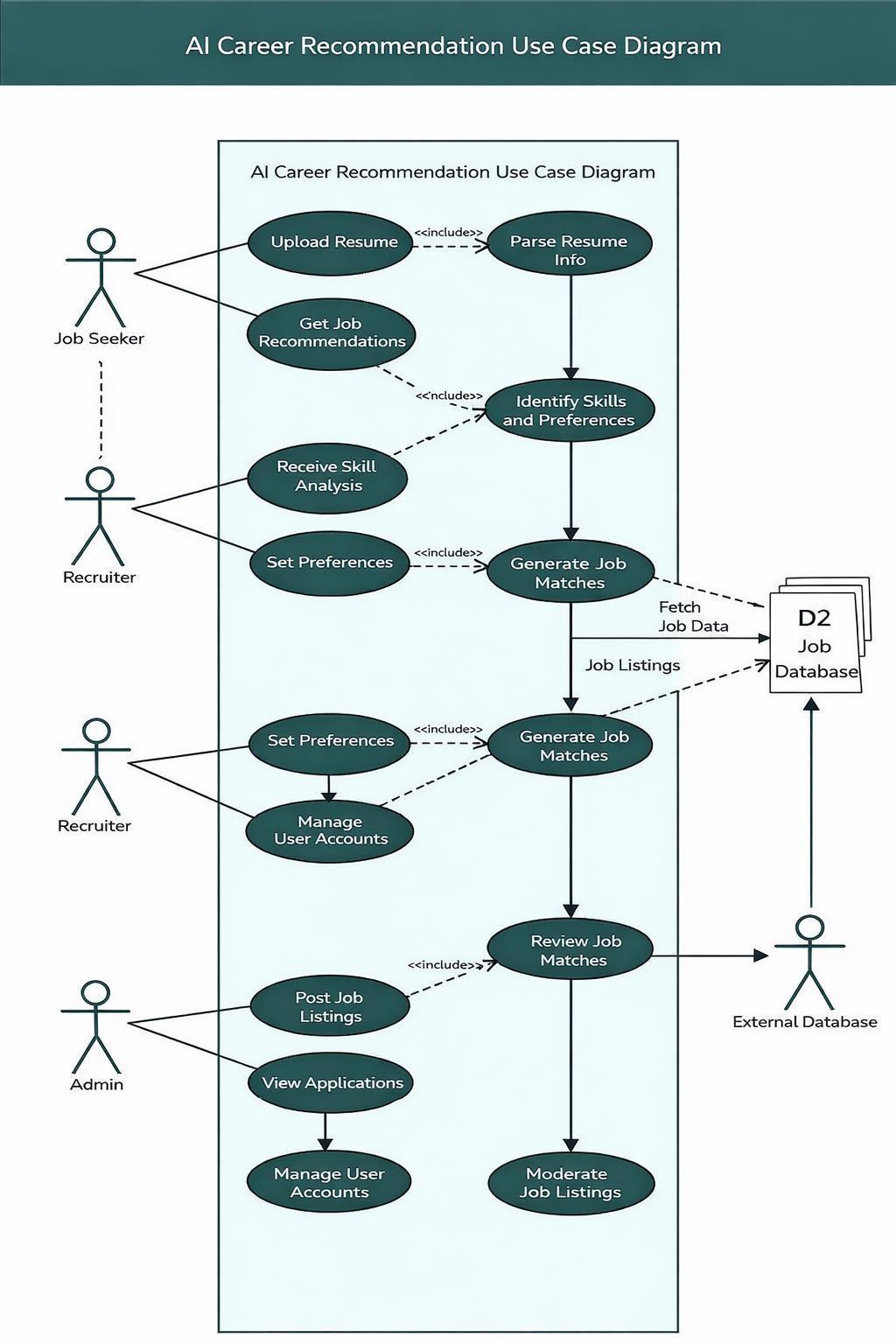
• [5]Role-BasedAccessControl: Implement role-basedaccessfordifferentuserssuch asjobseekers, recruiters, andadministratorstoensuresecureandefficientsysteminteraction.
• [6] Intelligent Recommendation Engine: Employ machine learning and NLP models to analyze user data and generateaccuratejobmatchingandcareerguidancesuggestions.
• [7] Real-Time Data Interaction: Utilize database systems such as PostgreSQL to ensure efficient data storage, retrieval,andreal-timeinteractionwithintheplatform.
• [8]JobFilteringand Search Optimization: Provideadvancedfilteringandsearchcapabilitiestohelpusers find relevantjobopportunitiesquicklyandefficiently.
• [9]AutomatedNotificationsandUpdates:Useintegratednotificationservicestoprovideuserswithupdateson jobapplications,recommendations,andsystemactivitiesinrealtime.
[1]ThescientificandengineeringcommunityisincreasinglyexploringtheintegrationofArtificialIntelligence(AI) and intelligent automation in recruitment and career guidance systems, resulting in a growing body of research focused on improving user interaction, decision-making accuracy, and job matching efficiency. StudiesbyvariousresearchershighlighthowAI-drivenrecommendationsystemsenhanceuserengagementby providing personalized and data-driven career suggestions. Additionally, research on digital platforms emphasizes the importance of adaptive interfaces and intelligent systems in transforming traditional recruitmentpractices.
[2]Optimization of recruitment processes through data-driven analysis has been widely studied. Researchers have demonstrated that automated resume screening and candidate evaluation significantly improve efficiency and reduce manual workload. Machine learning-based systems are capable of analyzing large datasets to identify patterns in hiring trends, thereby enabling more accurate and scalable recruitment solutions. Studies also highlight the role of real-time data processing in enhancing decision-making within careerguidanceplatforms.
[3]Several studies have focused on user behavior and motivation in digital career platforms. Research indicates that personalized recommendations, feedback mechanisms, and interactive interfaces play a crucial role in improvinguserengagementandsatisfaction.Furthermore,studiesonemploymenttrendssuggestthataligning userskillswithindustrydemandsisessentialforeffectivejobmatchingandlong-termcareerdevelopment.
[4]The literature also includes advancements in deep learning techniques for resume classification and job recommendation. Hybrid models combining Natural Language Processing (NLP) and machine learning algorithmshaveshownsignificantimprovementsinextractingmeaningfulinsightsfromunstructuredresume data.Theseapproachesenhancetheaccuracyofskillidentification,jobmatching,andcandidateprofiling.
[5]The integration of cloud computing and data management technologies has further strengthened modern recruitment systems. Research highlights how cloud-based platforms enable scalable storage, real-time processing,andseamlessaccesstojob-related data.Additionally,studiesemphasizetheimportanceofsecure
International Research Journal of Engineering and Technology (IRJET) e-ISSN: 2395-0056
Volume: 13 Issue: 05 | May 2026 www.irjet.net p-ISSN: 2395-0072
datahandlingandprivacyinmanagingsensitiveuserinformationwithincareerplatforms.
[6]Recent advancements in NLP and machine learning have enabled automated extraction and classification of resume content. Researchers have demonstrated that intelligent systems can effectively analyze textual data, identifyrelevant skills, and categorize candidates based on job requirements. These developments underlinetheimportance of automation in improving recruitment workflows and reducing human bias.
[7]The growing adoption of intelligent recommendation systems has led to the development of smart career guidance platforms.Studies suggestthat AI-drivensystemscanprovidepersonalizedjobsuggestions,predict careerpaths,andassistusersinidentifyingskillgaps.Suchsystemscontributetoimprovedemployabilityand betteralignmentbetweencandidatesandjobopportunities.
[8]Researchondecision-makingprocessesindigitalenvironmentshighlightstheroleofAIinassistinguserswith complexchoices.Intelligentsystemscananalyzemultiplefactors,includinguserpreferences,experience,and industry trends, to provide optimized recommendations. These capabilities enhance the effectiveness of job matchingsystemsandimproveusersatisfaction.
[9]Deeplearning-basedmodels,suchasConvolutionalNeuralNetworks(CNN)andotheradvancedarchitectures, have been applied to classification and prediction tasks in recruitment systems. These models demonstrate high accuracy in analyzing structured and unstructured data, making them suitable for large-scale job recommendationplatforms.
[10]Furthermore, studies on user behavior and system interaction emphasize the importance of adaptive and intelligent interfaces in career platforms. AI systems that learn from user interactions can continuously improverecommendationaccuracyandsystemperformanceovertime.
[11]Recentresearchalsohighlightstheroleofpredictiveanalyticsinrecruitmentsystems.Byanalyzinghistorical dataanduserbehavior,AIsystemscanforecastjobtrendsandrecommendfuturecareeropportunities.This enablesuserstomakeinformeddecisionsandstaycompetitiveinthejobmarket.
[12]Collectively, these studies provide valuable insights into the application of AI, machine learning, and datadriven technologies in recruitment and career guidance systems. Building upon these advancements, this project aims to develop an intelligent AI-based career recommendation and job matching system that enhances efficiency, accuracy, and user experience while promoting data-driven decision-making in modern recruitmentenvironments.
ToconstructaneffectiveAI-basedcareerrecommendationandjobmatchingsystem,theproposedalgorithmsupportsthe workflow by analyzing user resumes and job data using advanced Natural Language Processing (NLP) and machine learning techniques. The algorithm employs a deep learning-based approach for high accuracy in extracting user skills, experience, and preferences while classifying job requirements. The system first captures user inputs in the form of resumes or profile data through the application interface. These inputs undergo a preprocessing phase using NLP techniquesandintelligentmodulestoextractrelevantfeaturessuchasskills,qualifications,anddomainexpertise.
Theemployedmachinelearningmodels,adaptedfromestablishedframeworksinintelligentrecommendationsystems,are utilizedtomatchcandidateprofileswithsuitablejobopportunities. Thesystemintegratesa recommendationenginethat comparesuserdatawithjobdescriptionsstoredinthedatabaseandgeneratespersonalizedsuggestions. Additionally,classificationtechniquesareappliedtocategorizejobsanduserprofilesintopredefineddomains,improving theaccuracyandrelevanceofrecommendations.Theintegratedsearchandfilteringmechanismallowsuserstoexplorejob opportunitiesefficientlyandtrackapplicationstatusinrealtime.
Furthermore, the platform includes a skill analysis module that identifies gaps between user capabilities and job requirements, providing recommendations for improvement. A dedicated interface is implemented to guide users with career-related insights and resources. The system also manages user profiles and recruiter data, enabling role-based interactionandpersonalizedexperiences.Thisproposedmethodology,combiningintelligentautomationanddata-driven techniques, is designed to be a scalable and user-friendly solution that enhances recruitment efficiency and supports informedcareerdecision-makingwithintheapplicationecosystem.
Volume: 13 Issue: 05 | May 2026 www.irjet.net p-ISSN: 2395-0072
Iterative Waterfall Model: The project follows an extended waterfall model, combining the structured approach of the traditional waterfall with the flexibility of an iterative framework. This approach enables a phased development process while allowing continuous improvements based on user feedback and system performance.Requirements Gathering (Initial Phase): * The first step is to collect and document the entire set of projectrequirementsaccurately.
1.RequirementsGathering(InitialPhase):
• Thefirststepinvolvescollectinganddocumentingallprojectrequirementsindetail.
• Key elements include identifying core features such as resume analysis, job recommendation, skill gap detection,userprofilemanagement,androle-basedaccesscontrol.
2.SystemDesign(InitialPhase):
Theteamdevelopsaninitialsystemarchitectureoutliningdataflowandsystemcomponents.
This phaseincludesselectingappropriatetechnologiessuchasFastAPIforbackenddevelopment,PostgreSQL fordatabasemanagement,andmachinelearningmodelsforrecommendationsystems.
3.Implementation(IterativePhase):
Theimplementationbeginswithcoremodulessuchasresumeparsingandjobrecommendation.
Afunctionalprototypeisdeveloped,focusinginitiallyonspecificcomponents.
Modules are iteratively improved through testing and real-world data evaluation to enhance accuracy and systemperformance.
4.Testing(IterativePhase):
Rigoroustestingisconductedforeachmoduleofthesystem.
Testing focuses on resume parsing accuracy, recommendation precision, database operations, and user interfacefunctionality.
Identifiedissuesareresolvedthroughiterativerefinementstoensuresystemreliabilityandperformance.
5.Integration(IterativePhase):
Differentsystemcomponentsareintegratedintoaunifiedplatform.
Dataflowbetweenmodulesistestedtoensureseamlessinteractionandaconsistentuserexperience.
6.UserFeedback(IterativePhase):
Feedbackiscollectedthroughtestingphasesanduserinteraction.
The systemisrefined based onusersuggestionstoimproveusability, recommendationaccuracy,andoverall functionality.
7.Documentation(Ongoing):
Comprehensivedocumentationismaintainedthroughoutthedevelopmentlifecycle.
Thisincludessystemarchitecture,APIdocumentation,andusermanuals.
8.Deployment(FinalPhase):
Thefinalversionofthesystemisdeployedforreal-worldusage.
Final validation ensures all modules including resume analysis, job recommendation, and user management functioncorrectly.
9.MaintenanceandUpdates(Post-Deployment):
Continuousmonitoringisperformedafterdeployment.
Updates, bug fixes, and feature enhancements are implemented based on user feedback and system performance.
1.Natural Language Processing (NLP) and Machine Learning: This project utilizes NLP techniques and machine learningalgorithmstoanalyzeresumes,extractrelevantskills,andgenerateaccuratejobrecommendations.
2.Python-Based Frameworks (FastAPI): The backend is developed using FastAPI, providing high performance, scalability,andefficientAPIhandlingforintelligentautomationprocesses.
3.Database Management (PostgreSQL): PostgreSQL is used for structured data storage, ensuring efficient data retrieval,management,andreal-timeinteractionwithinthesystem.
4.FrontendTechnologies(React):TheuserinterfaceisdevelopedusingReacttoprovideaninteractive,responsive, anduser-friendlyexperienceforjobseekersandrecruiters.
5.Recommendation System Algorithms: Machinelearning-based recommendationtechniquesareimplementedto
International Research Journal of Engineering and Technology (IRJET) e-ISSN: 2395-0056
Volume: 13 Issue: 05 | May 2026 www.irjet.net p-ISSN: 2395-0072
matchuser profileswithsuitablejobopportunitiesandimprovedecision-makingaccuracy.
Such technologies enable the AI-based career recommendation system to address challenges in traditional recruitment processes by providing intelligent automation, personalized recommendations, and efficient datadrivensolutions,therebyenhancingoverallsystemperformanceanduserexperience.
For Developers:
Hardware Platform:
o Processor: Corei3orHigher
o RAM: 4GBorabove
o GPU: Optional(formachinelearningmodeltraining)
o Hard Disk: 100GBorabove
Software Platform:
o Development Environment: PythonIDEs(e.g.,PyCharm)orVSCode
o Backend Framework:FastAPI
o Frontend Framework:React
o Database:PostgreSQL
o Operating System: Windows10orabove/Linux/macOS For Users:
Hardware Platform:
o Processor: Snapdragon450equivalent orabove
o RAM: 2GBorabove
o ROM: 16GBorabove
Software Platform:
o Web Browser:Chrome,Firefox,orEdge(latestversion)
o Operating System: Android11.0orabove/Windows/iOS
8. SYSTEM DESIGN
8.1 E-R Diagram
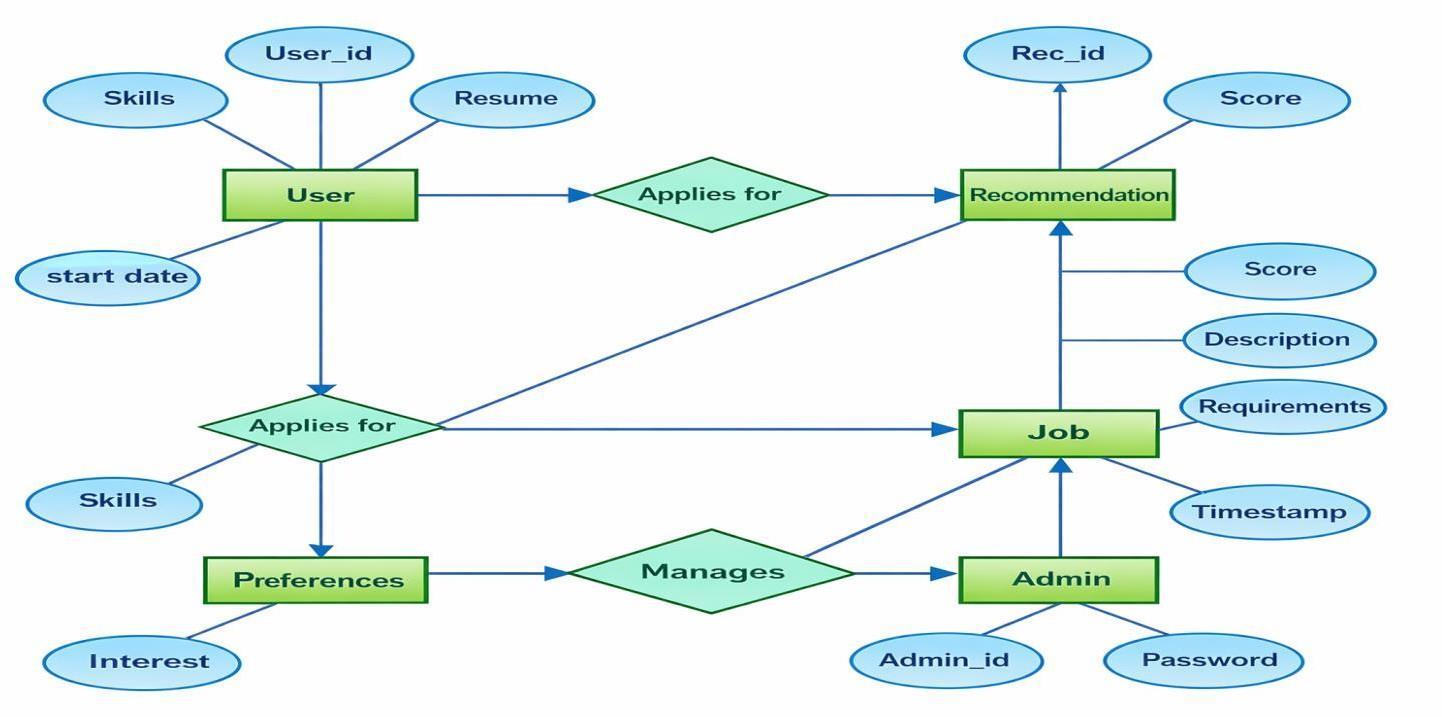
Figure 1 E-RDiagram
International Research Journal of Engineering and Technology (IRJET) e-ISSN: 2395-0056
Volume: 13 Issue: 05 | May 2026 www.irjet.net p-ISSN: 2395-0072
8.2
International Research Journal of Engineering and Technology (IRJET) e-ISSN: 2395-0056
Volume: 13 Issue: 05 | May 2026 www.irjet.net p-ISSN: 2395-0072
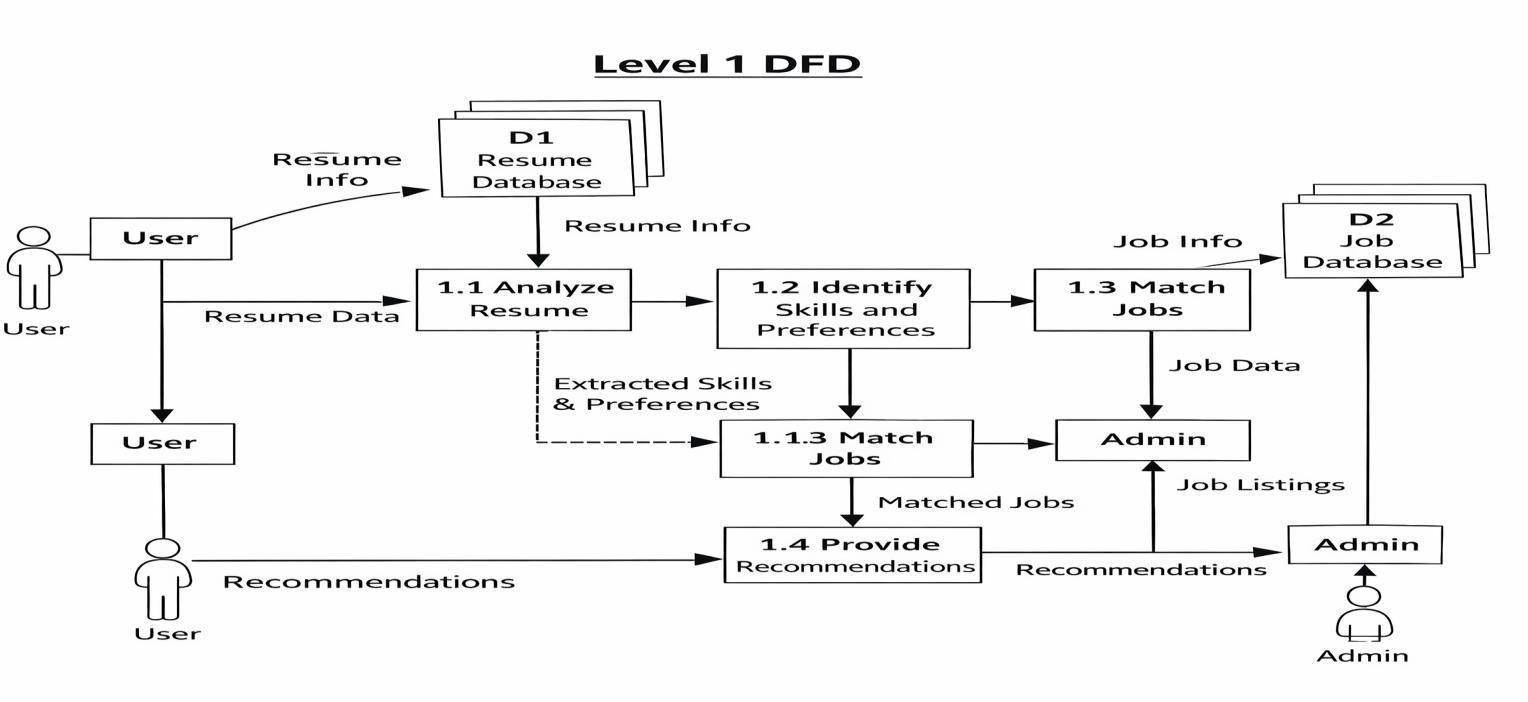
Data Flow Diagram
International Research Journal of Engineering and Technology (IRJET) e-ISSN: 2395-0056
Volume: 13 Issue: 05 | May 2026 www.irjet.net p-ISSN: 2395-0072
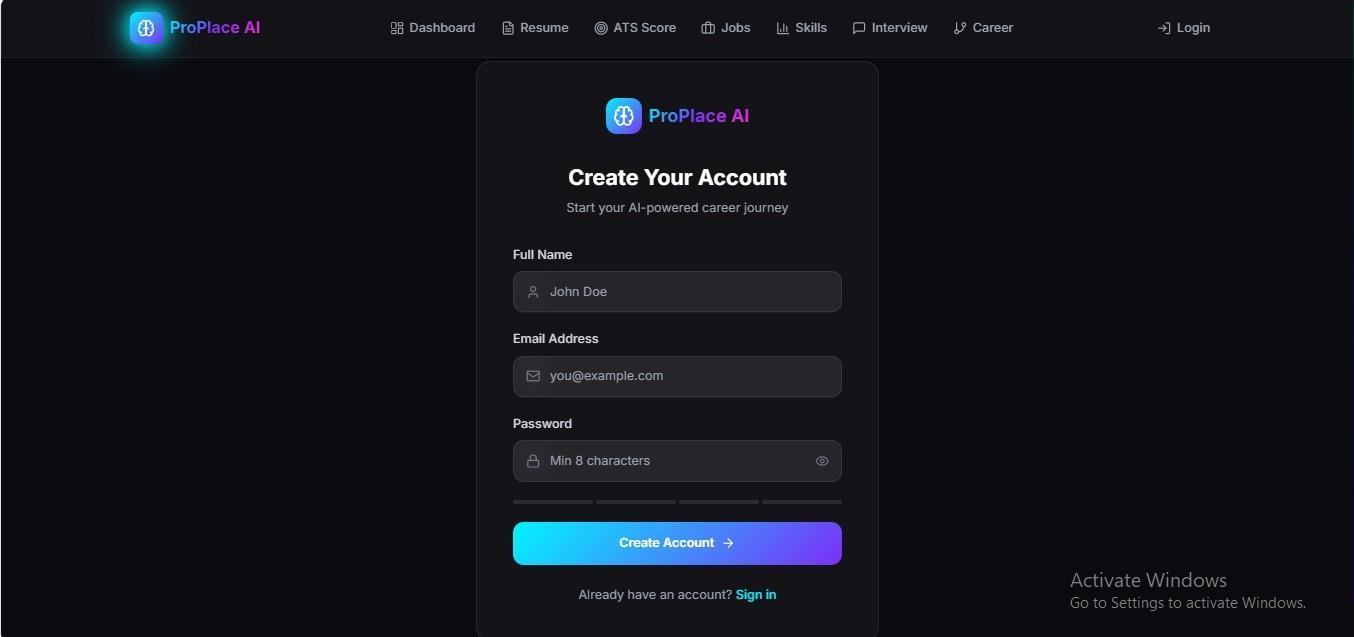
9.2 User Signup Screen:
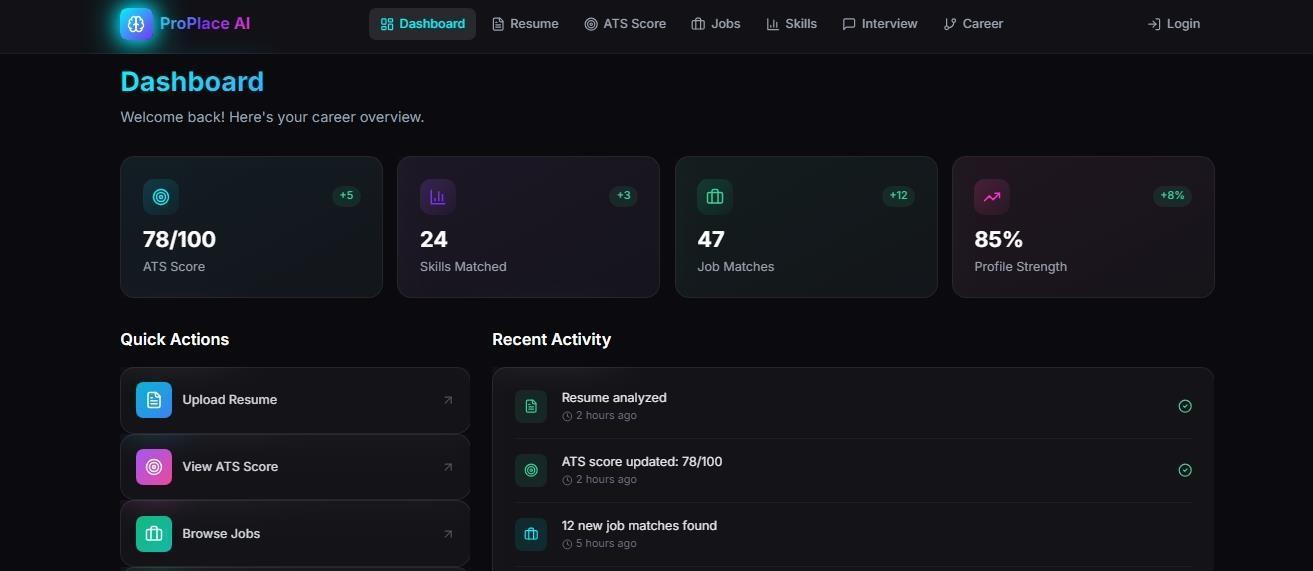
9.3 User Dashboard:
International Research Journal of Engineering and Technology (IRJET) e-ISSN: 2395-0056
Volume: 13 Issue: 05 | May 2026 www.irjet.net p-ISSN: 2395-0072
International Research Journal of Engineering and Technology (IRJET) e-ISSN: 2395-0056
Volume: 13 Issue: 05 | May 2026 www.irjet.net p-ISSN: 2395-0072
International Research Journal of Engineering and Technology (IRJET) e-ISSN: 2395-0056
Volume: 13 Issue: 05 | May 2026 www.irjet.net p-ISSN: 2395-0072
International Research Journal of Engineering and Technology (IRJET) e-ISSN: 2395-0056
Volume: 13 Issue: 05 | May 2026 www.irjet.net p-ISSN: 2395-0072
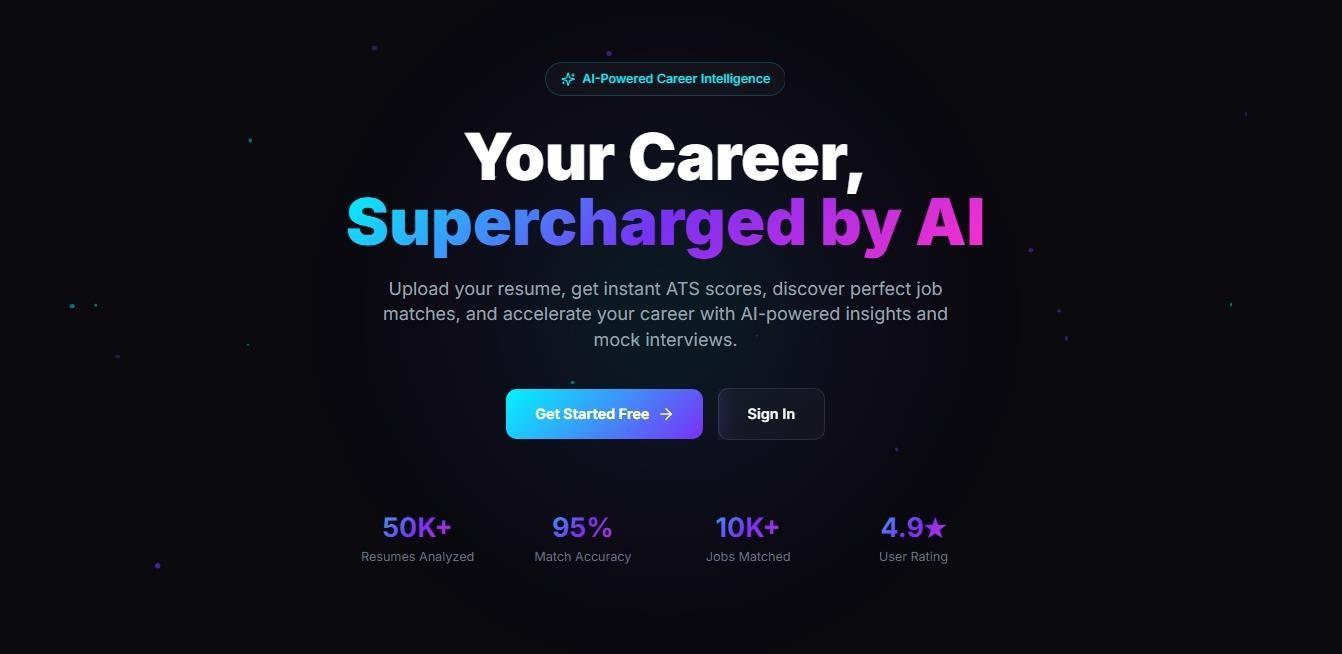
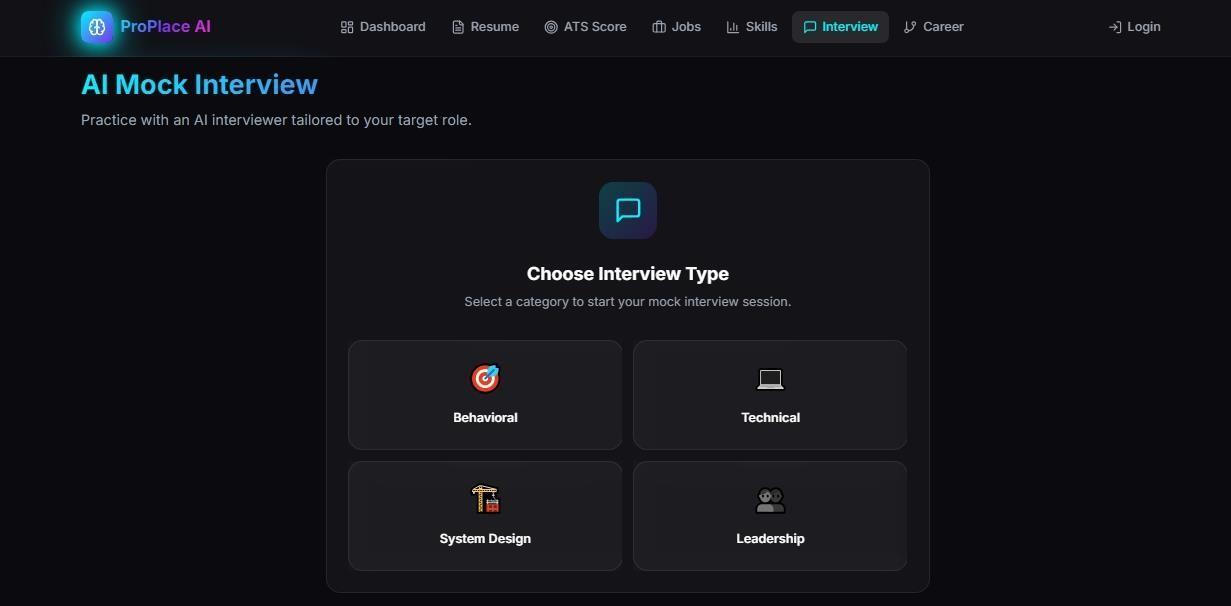
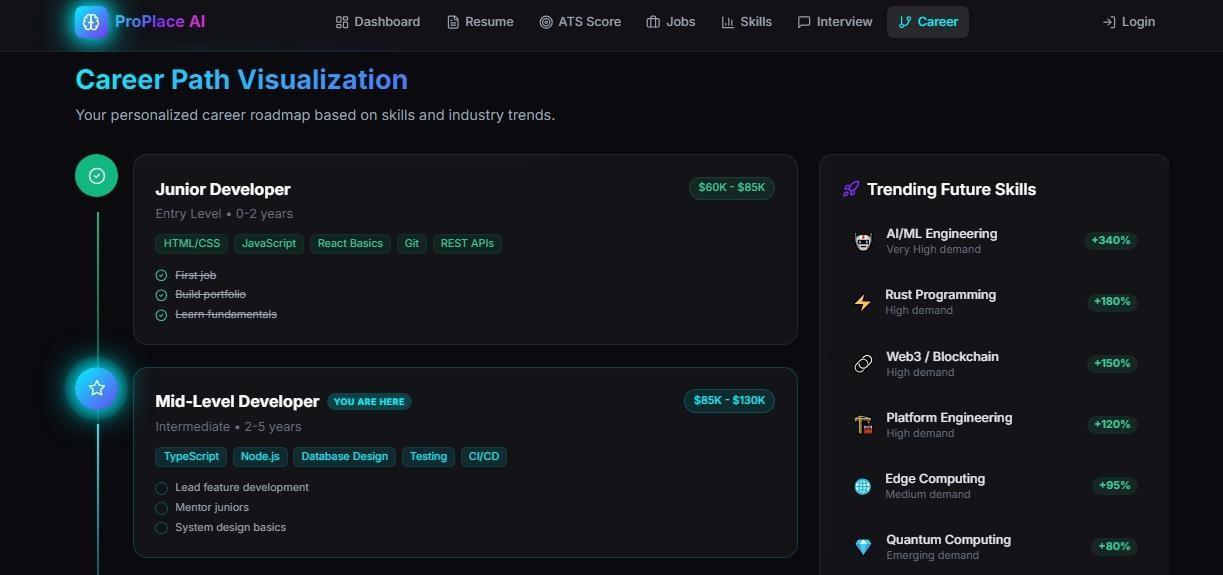
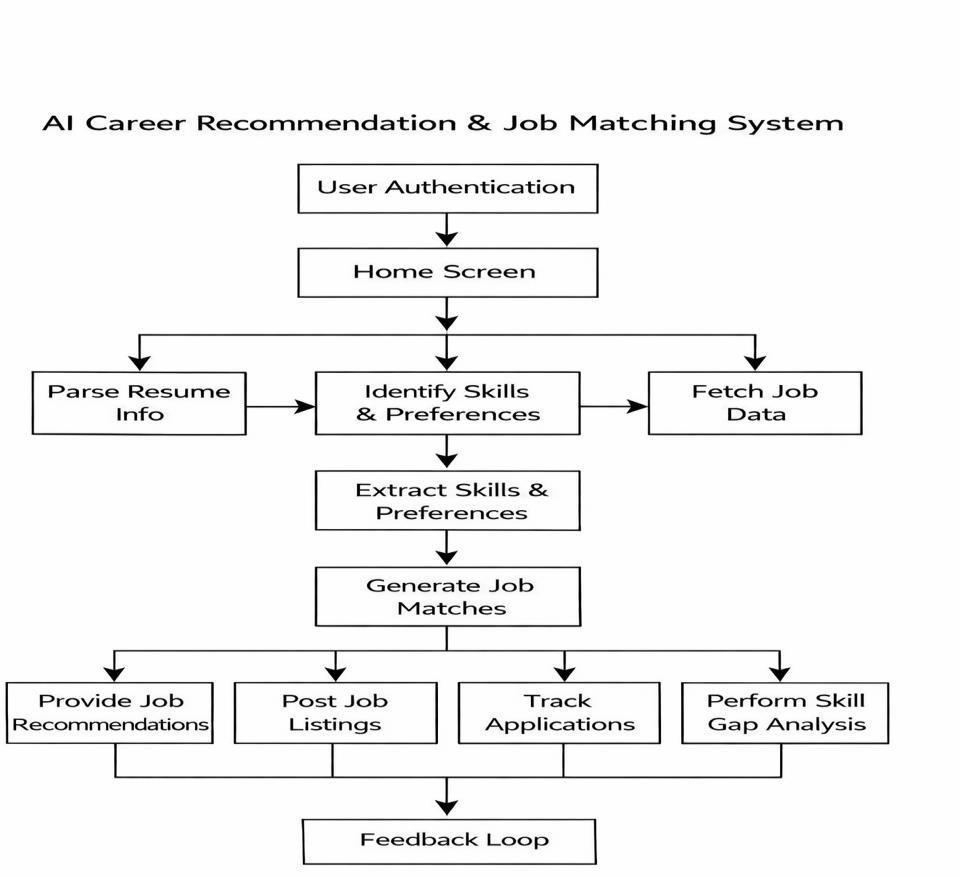
The application flow begins with an authentication mechanism where users are required to log in or register into the system. Upon successful authentication, the user is redirected to the Home Screen; otherwise, they remain on the login page to ensure secure access. The Home Screen acts as a central dashboard, providing access to key features such as ResumeUpload,JobRecommendations,SkillAnalysis,JobSearch,andProfileManagement.
Thesesectionsenableuserstointeractwiththesystemefficiently:
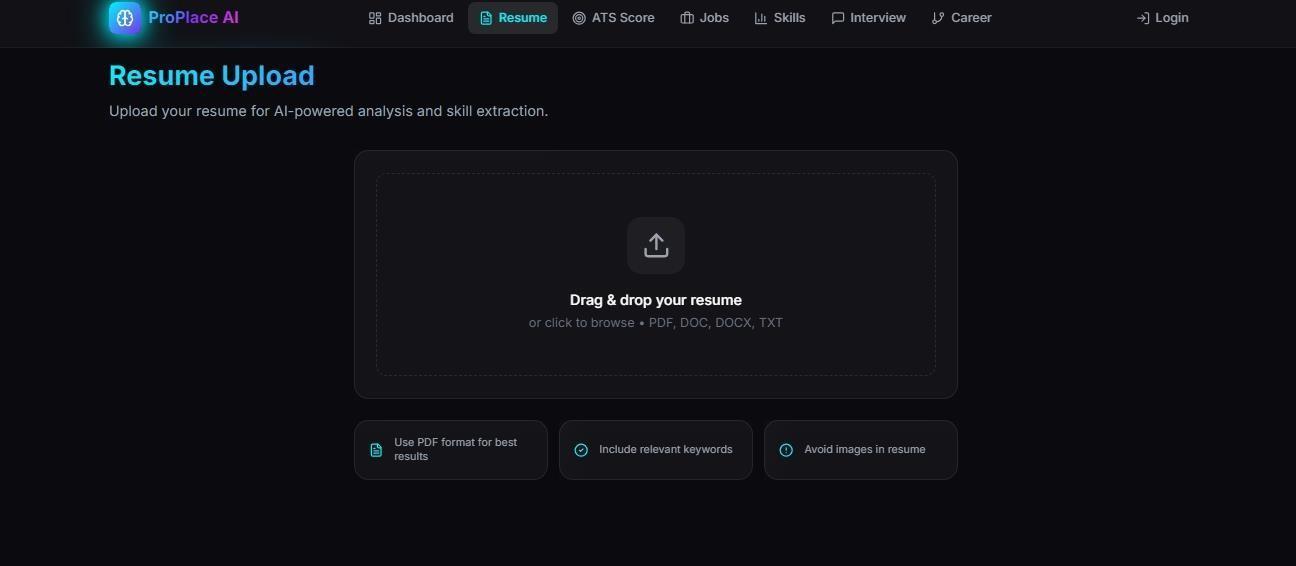
Resume Management: Userscanuploadandmanagetheirresumes,whichareanalyzedbythesystemtoextractrelevant skills,qualifications,andexperience.
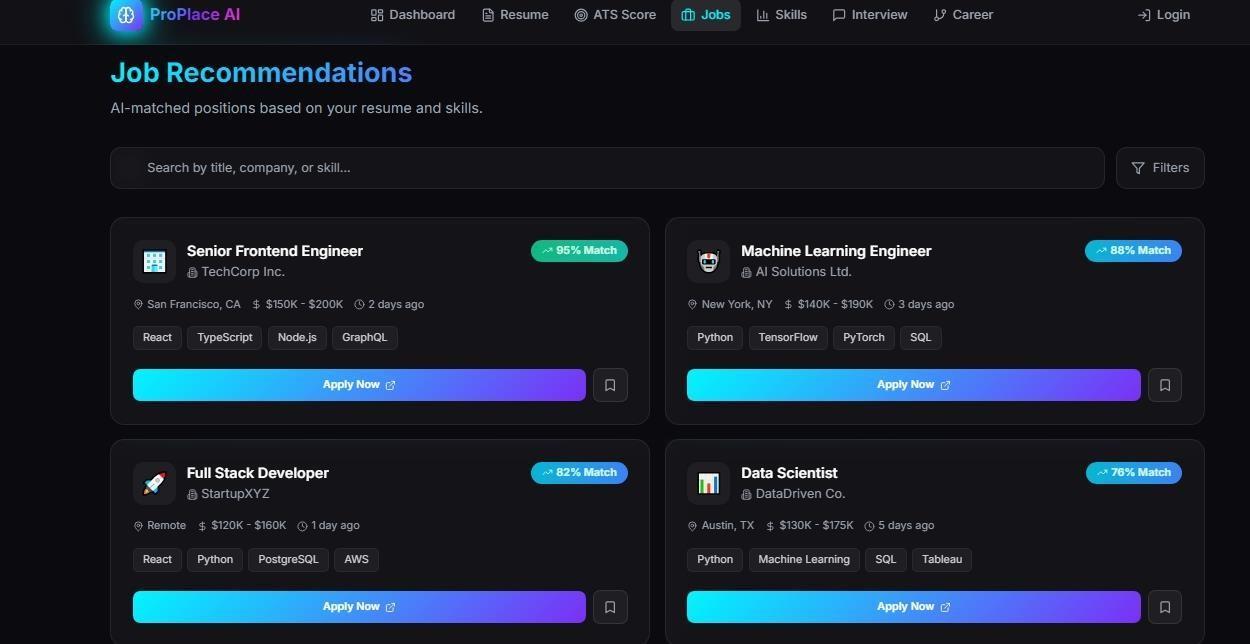
Job Recommendations: The system provides personalized job suggestions based on the user’s profile, skills, and preferencesusingAI-drivenalgorithms.
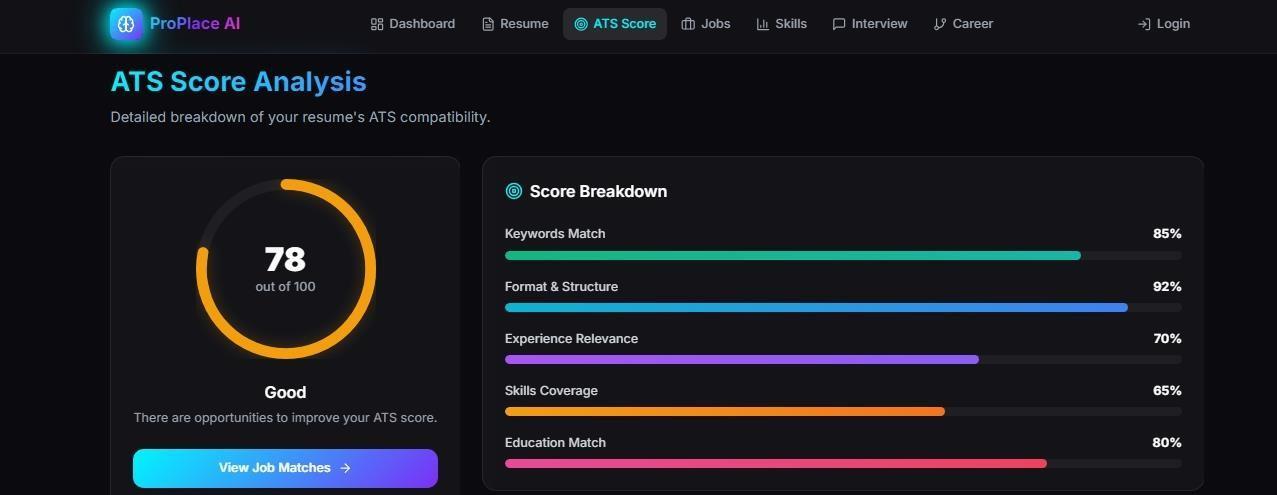
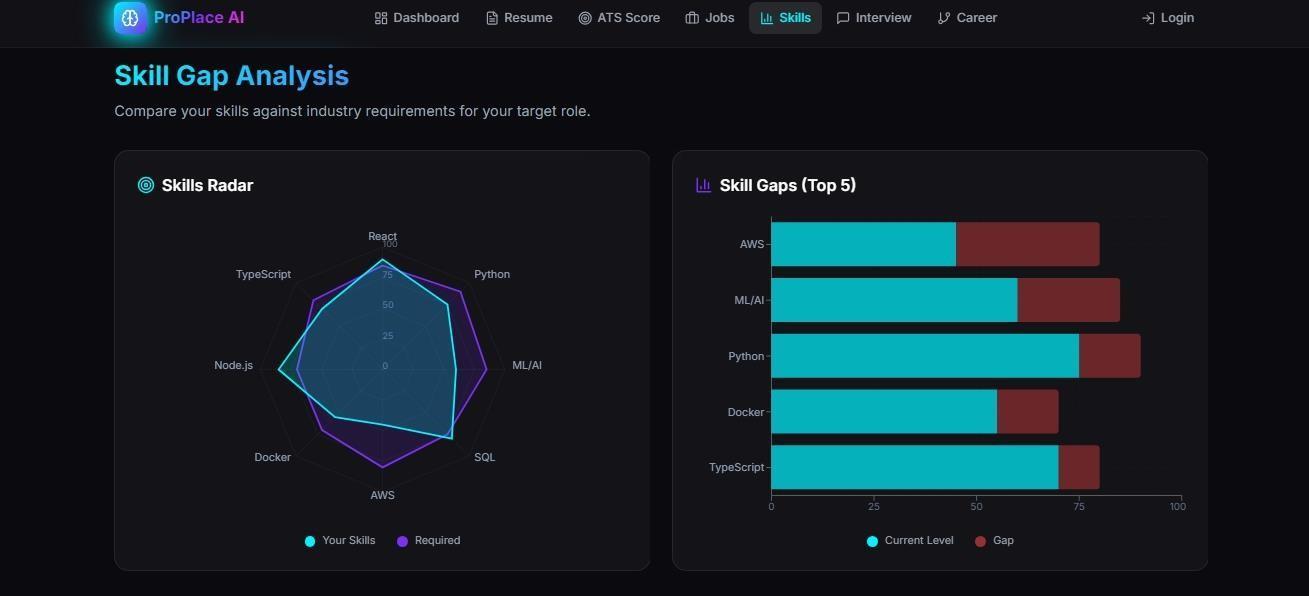
Skill Analysis: Users can view identified skill gaps and receive suggestions for improvement to enhance their employability.
Job Search and Filtering: Theplatformallowsusers tosearchand filterjobopportunities basedoncriteriasuch as role, location,andrequiredskills.
Application Tracking: Users can monitor the status of their job applications and track progress in real time. Personalization: AdedicatedProfilesectionenablesuserstoupdatepersonaldetails,preferences,andcareerinterestsfor improvedrecommendationaccuracy.
This structured workflow ensures smooth navigation, efficient data processing, and intelligent decision support, making thesystemhighlyuser-friendlyandeffectiveindeliveringaccuratecareerrecommendationsandjobmatchingservices.
TheresearchpresentsthesuccessfuldevelopmentofanAI-basedcareerrecommendationand jobmatchingsystemusing Python-based frameworks and modern web technologies. The system utilizes advanced Natural Language Processing (NLP)andmachinelearningmodelstoimprovetheaccuracyofresumeanalysis,skillextraction,andjobrecommendation. By leveraging intelligent algorithms, the platform enhances the efficiency of candidate-job matching and reduces manual effortintherecruitmentprocess.
Theimplementationensuresaresponsiveanduser-friendlyinterfacethroughcross-platformdevelopmenttools,enabling seamless interaction for users across different devices. The integration of a structured database system allows efficient storageandretrievalofuserprofiles,joblistings,andrecommendationdatainrealtime.Additionally,thesystemprovides
International Research Journal of Engineering and Technology (IRJET) e-ISSN: 2395-0056
Volume: 13 Issue: 05 | May 2026 www.irjet.net p-ISSN: 2395-0072
personalized job suggestions, skill gap analysis, and application tracking features, which significantly improve user engagement and decision-making.This solution demonstrates how advanced AI technologies can streamline recruitment workflows,improveaccuracyinjobmatching,andprovideascalableandefficientplatformforcareerguidance.Thesystem highlightsthepotentialofintelligentautomationintransformingtraditionalhiringprocessesintoamoredata-drivenand user-centricapproach.
Eventually,theAI-basedcareerrecommendationandjobmatchingsystemis developed asa comprehensive solution that integrates profile analysis, job recommendation, and continuous feedback mechanisms. Unlike traditional recruitment methods, the system incorporates several innovative features, including automated resume parsing, intelligent job matching, skill gap analysis, and personalized user profiling, enabling individuals to efficiently identify suitable career opportunities. The algorithm leverages insights and data from established research to enhance accuracy in recommendationanddecision-makingusingmachinelearningmodelsandintelligentautomationtechniques.
Such a framework aligns with the advancement of modern recruitment technologies, as highlighted in previous studies emphasizing the importance of AI and data-driven approaches in analyzing complex datasets. The system effectively addresses the challenges of inefficient job matching and manual screening processes by providing an automated and scalablesolution.Thisapproachaimstoimprovetheprecisionandreliabilityofcareerrecommendationswhilepromoting a more structured and intelligent recruitment process. As a robust and adaptive system, it demonstrates the practical effectivenessofAIinsolvingreal-worldemploymentchallengesandsetsthefoundationforfutureenhancementsinsmart careerguidanceandrecruitmentautomation,contributingtowardlong-termdigitaltransformationandefficiency.
[1]Kumar, D., & Ratten, V., “Artificial Intelligence in Recruitment: A Systematic Literature Review,” Journal of IntelligentSystemsandApplications,2025.
[2]Halim, A. H. A., Rahman, M., & Ali, S., “The Transformative Role of Artificial Intelligence in Recruitment and HiringSystems,”InternationalJournalofAdvancedComputerScience,2023.
[3]Kota, M., “AI Automation in Job Matching Using Predictive Algorithms,” International Journal of Computer ScienceEngineeringandTechnology,2026.
[4]John, H., Smith, L., & Brown, K., “AI Powered Job Recommendation System,” International Journal of EngineeringResearch&Technology(IJERT),2024.
[5]Sanap, I., “Resume Analysis and Job Recommendation Using Machine Learning,” International Journal of InnovativeResearchinComputerScience,2024.
[6]Ergen, F. D., “Artificial Intelligence Applications in Human Resource Management,” Journal of Business Research,2021.
[7]Wirtz,J.,Patterson,P.,Kunz,W.,&Gruber,T.,“ArtificialIntelligenceinInformationSystems,”JournalofService Management,2021.
[8]Buhalis, D., & Law, R., “Progress in Information Technology and Digital Platforms,” Tourism Management Journal,2008.
[9]Getz,D.,“Data-DrivenDecisionMakingandDigitalSystems,”RoutledgePublications,2012.
[10]Backman, K., “Research Trends in Intelligent Systems and Automation,” Springer Journal of Information Systems,2018.