
International Research Journal of Engineering and Technology (IRJET) e-ISSN: 2395-0056
Volume: 13 Issue: 04 | Apr 2026 www.irjet.net p-ISSN: 2395-0072

International Research Journal of Engineering and Technology (IRJET) e-ISSN: 2395-0056
Volume: 13 Issue: 04 | Apr 2026 www.irjet.net p-ISSN: 2395-0072
Mr. Navinkumar Dhopre1, Miss. Aishwarya Godre2 , Miss.Durga Mundhe3 , Miss.Sadhana Somwanshi4 , Miss. Shital Musmade5
1Asst. Professor, Department of CSE, Gramin Technical & Management, Campus, Vishnupuri, Nanded. (MH) India
2UG Student Department of CSE Gramin Technical & Management Campus, Vishnupuri, Nanded. (MH) India
3UG Student Department of CSE Gramin Technical & Management Campus, Vishnupuri, Nanded. (MH) India
4UG Student Department of CSE Gramin Technical & Management Campus, Vishnupuri, Nanded. (MH) India
5UG Student Department of CSE Gramin Technical & Management Campus, Vishnupuri, Nanded. (MH) India
Abstract -The rapid increase in vehicles across urban areas has rendered parking management a significant and persistent challenge. Drivers frequently spend considerable time searching for available parking spaces, leading to traffic congestion, fuel wastage, and environmental pollution. This paper proposes a Predictive Smart Parking Availability System that employs machine learning techniques to address these challenges. The system analyzes historical parking data including time, date, location, and occupancy patterns to predict future parking space availability. A machine learning model is trained to identify recurring patterns in parking usage and generate accurate predictions. The predicted results are displayed through a user-friendly, webbased interface, enabling drivers to make informed parking decisions and contributing to improved urban parking management efficiency.
Key Words: SmartParkingSystem;MachineLearningAlgorithms;ParkingAvailabilityPrediction;IntelligentTransportation System;SmartCityInfrastructure;DataAnalytics;MapAPIIntegration.
Therapidgrowthofurbanpopulationsandthecorrespondingriseinprivatevehicleownershiphavecreatedsubstantial challengesinmanagingparkingfacilitiesacrossmoderncities.Indenselypopulatedurbanareas,locatinganavailableparking spacehasbecomeacommonandtime-consumingproblem,particularlyincommercialdistricts,transporthubs,andresidential zones.Driversoftenspendsignificanttimesearchingforvacantparkingspaces,contributingtoincreasedtrafficcongestion, higherfuelconsumption,andenvironmentalpollution.Theseissuesunderscoretheurgentneedforintelligentandefficient parkingmanagementsystemscapableofimprovingurbanmobilityandreducingunnecessaryvehicularmovement.Traditional parkingmanagementsystemsareprimarilydesignedtoprovideinformationoncurrentavailability.Althoughsuchsystems assist drivers in identifying free slots, they frequently fail to offer predictive insights regarding future availability. This limitationhighlightstheneedforadvancedsystemsthatcananalyzehistoricalparkingdataandforecastdemandinadvance. Withtherapidadvancementofdataanalyticsandmachinelearningtechnologies,ithasbecomeincreasinglyfeasibletoidentify andanalyzecomplexpatternswithinlargedatasets.Machinelearningmodelscanbetrainedonhistoricalparkingrecordsto uncoverrelationshipsamongvariablessuchastime,location,andoccupancylevels.Byleveragingthesepatterns,intelligent systemscanestimatetheprobabilityofparkingspaceavailabilityatspecificlocationsandtimes,enablingmoreaccurateand proactive parkingmanagement. Thispaper presentsa Predictive Smart ParkingAvailabilitySystemthatutilizesmachine learningtechniquestoforecastparkingavailabilityinurbanenvironments.Thepredictedresultsarepresentedthroughan interactive, web-based interface, allowing users to check expected parking availability before reaching their destination. Furthermore,theproposedsystemcontributestotheadvancementofIntelligentTransportationSystems(ITS)andsupports thedevelopmentofsmartcityinfrastructure.Thenoveltyoftheproposedsystemliesinthedevelopmentofapredictivesmart parkingframeworkthatcombinesmachinelearning-basedpredictionwithinteractiveweb-basedvisualizationwithinasingle unifiedplatform.Thekeycontributionsareasfollows:
1.Amachinelearning-basedparkingavailabilitypredictionmodelthatanalyzeshistoricaldatatoforecastfutureparking spaceavailability.
2.Adata-drivenparkinganalysismechanismthatidentifiespatternsbetweentime,location,andoccupancylevels.
3.Aninteractivemap-basedparkingvisualizationsystemthatdisplayspredictedavailabilityformultiplelocationsinnear realtime.
4.Asmartparkingmanagementinterfaceallowinguserstocheckavailability,reserveslots,andmakeinformeddecisions beforereachingtheirdestination.
International Research Journal of Engineering and Technology (IRJET) e-ISSN: 2395-0056
Volume: 13 Issue: 04 | Apr 2026 www.irjet.net p-ISSN: 2395-0072
Therapidgrowthofvehiclesinurbanareashascreatedseriouschallengesinparkingmanagement.Manydriversspenda significantamountoftimesearchingforavailableparkingspaces,whichleadstotrafficcongestion,increasedfuelconsumption, andenvironmentalpollution.Severalstudieshavefocusedondevelopingsmartparkingsystemsthatprovideinformation aboutparkingavailabilityandhelpdriverslocatefreeparkingslotsefficiently.
Traditionalparkingsystemsmainlydependonsensorsinstalledinparkingspacestodetectwhetheraslotisoccupiedorfree These systems transmit real-time data to a central server and display availability information through mobile or web applications.Althoughsensor-basedsystemsprovideaccuratereal-timeinformation,theyoftenrequirehighinstallationand maintenancecosts.Asaresult,researchershavestartedexploringalternativeapproachesthatrelyonhistoricalparkingdata andpredictivemodelstoestimateparkingavailabilitywithoutrequiringextensivehardwareinfrastructure.Inmanyurban environments,parkingusagefollowscertainpatternsbasedontime,location,anddayoftheweek.Byanalyzingthesepatterns, itispossibletodevelopintelligentsystemsthatcanestimateparkingdemandandassistdriversinplanningtheirparking decisionsinadvance.
Basedonobservationsandanalysisofurbanparkingconditions,thefollowingproblemswereidentified:
1.Driversspendasignificantamountoftimesearchingforavailableparkingspacesinbusyurbanareas.
2.Thelackofreliableparkinginformationleadstotrafficcongestionandunnecessaryfuelconsumption.
3.Manyexistingparkingsystemsonlydisplaycurrentavailabilityanddonotprovidefutureparkingpredictions.
4.Parkingmanagementinmanycitiesisstillperformedusingtraditionalandinefficientmethods.
5.Driversoftenneedtomanuallysearchmultiplelocationstofindanemptyparkingspace.
6.Thereisnointegratedplatformthatallowsuserstoviewparkingavailabilityandmakereservationsinadvance.
7.Theabsenceofpredictivesystemsmakesitdifficultfordriverstoplantheirparkingbeforereachingtheirdestination.
Toaddressthe above problems,a Predictive SmartParkingAvailabilitySystemusingMachineLearningis proposed.The proposedsystemwill:
•Analyzehistoricalparkingdatasuchastime,location,andoccupancypatternstounderstandparkingbehavior.
•Usemachinelearningalgorithmstopredictthefutureavailabilityofparkingspaces.
•Provideaweb-basedplatformwhereuserscancheckpredictedparkingavailability.
•Displayparkinglocationsonaninteractivemapinterfaceforeasynavigation.
•Allowuserstobookparkingslotsinadvance,reducinguncertainty.
•Providedata-driveninsightstoimproveparkingmanagementandtrafficflow.
Withthissolution,driverswillnolongerneedtomanuallysearchmultipleparkingareastofindanavailableslot.Thesystem willprovidepredictedparkingavailabilityinadvance,helpingusersplantheirparkingefficientlyandreduceunnecessary trafficmovement.
Thelackofparkingspacesisbecomingaseriousproblemasthenumberofvehiclesontheroadcontinuestoincreaseevery day.Findinganavailableparkingspotisoftendifficult,especiallyinlargecitiesorinareaswheremajoreventssuchassports orculturalprogramsareorganized.Toaddressthisissue,anintegratedparkingsystemisproposedasapossiblesolution. Althoughasignificantamountofresearchhasbeenconductedonthedevelopmentofsmartparkingsystems,manyofthese systemsdonoteffectivelyaddressreal-timedetectionofincorrectparkingortheautomaticcollectionofparkingfees.The proposed system combines a real-time parking reservation system with a smart payment method, which helps improve parkingmanagementandprovidesbenefitstobothusersandsociety.
International Research Journal of Engineering and Technology (IRJET) e-ISSN: 2395-0056
Volume: 13 Issue: 04 | Apr 2026 www.irjet.net p-ISSN: 2395-0072
Withrapidurbanization,parkingdifficultieshavebecomeincreasinglyprominent.Toaddressthisissue,thispaperdesignsand implementsanintelligentparkingsystembasedonWeChatMiniPrograms.Thesystemprovidesuserswithconvenientparking spaceinquiry,reservation,andnavigationfunctionswhileenablingreal-timeparkingspacemanagementforadministrators.It adoptsafront-endandback-endseparationarchitecture,utilizingWXML,WXSS,andJavaScriptforthefrontendandWeChat CloudDevelopmentforthebackend.Keyfeaturesincludeparkingspacequery,reservation,licenseplatemanagement,and payment.
TheAndroidparkingslotbookingapplicationenablesendusers(drivers)tosavetimeandmoneywhileavoidingparkinglot congestion.Inthisapplication,theendusermustfirstregisterandlogin,thenselectanavailableparkingslottoreserve, specifythedurationofparking,andcompletethepaymentprocess.Theapplicationwastestedonarealdevice,and28enduserparticipantsprovidedfeedback.Resultsshowedthat85.7%ofrespondentsbelievedparkingshouldbecategorized,and 100%preferredusingane-Walletasapaymentmethod.Regardingusability,85.7%ofparticipantsreportedtheapplication waseasytouse,while14.3%rateditasaverage.
TheissueofvehiclesbeingrandomlyparkedonbusyroadscanbeeffectivelyaddressedthroughaSmartParkingSystemwith onlinereservationcapabilities.Thissystemprovidesreal-timeinformationaboutavailableparkingspaces,enablingdriversto quicklylocatenearbyparkingspotsandreservespacesinadvance.Byofferingaccurateparkingavailabilityinformation,the systemhelpsreduceroadcongestionandminimizesthetimedriversspendsearchingforparking,whilealsoenablingefficient managementandregulationofparkingspaces.
AsmartparkingsystemcanbedevelopedusingtheInternetofThings(IoT),consistingofsensors,processingcapabilities,and softwarethatconnectandsharedatathroughtheinternet.Thesystemprovidestwotypesofparkingslots:instantparkingand reservation-basedparking.Latencytestsshowaverageresponsetimesof5.24sforparkingdataupdates,3.98sforunparking, 6.7sforOTPverificationandgateopening,3.64sforanti-theftnotifications,and5.21sforalarmactivation.Quantitative evaluationandblack-boxtestingresultedinanoverallsystemaccuracyof96.67%.
Aparkingreservationsystemallowsdriverstoreserveparkingspotsinadvancefromanywhere,providingconvenienceand reducingthetimespentsearchingforparking.Theonlineparkingreservationsystemoffersfeaturessuchaslocatingavailable slots and sending advance notifications about parking availability directly to users' mobile devices. It promotes a more environmentally friendly approach to transportation by reducing unnecessary vehicle movement, and empowers administratorsbyenablingthemtoaddorremovevehicleswhenrequired.
System Architecture
Theproposedsystemfollowsamulti-tierarchitecturecomprisingafrontendwebinterface,abackendserver,arelational database,andamachinelearningpredictionmodule.Historicalparkingdataiscollectedandstoredinthedatabase,servingas theprimaryinputformodeltraining.Themachinelearningmodelanalyzespatternsinparkingusageacrossdifferentlocations, times,anddaystogenerateavailabilitypredictions,whicharedeliveredtousersthroughadynamic,map-basedwebinterface.
Thesystememployssupervisedmachinelearningalgorithmstrainedonhistoricalparkingoccupancydata.Inputfeatures includethedate,timeofday,dayoftheweek,andparkinglocationidentifier.Thetargetvariableisthepredictedoccupancy
International Research Journal of Engineering and Technology (IRJET) e-ISSN: 2395-0056
Volume: 13 Issue: 04 | Apr 2026 www.irjet.net p-ISSN: 2395-0072
rateorbinaryavailabilitystatusofeachparkingslot.ThetrainedmodelisintegratedwiththebackendserverthroughanAPI endpoint,enablingreal-timepredictionqueriesfromthefrontendinterface.
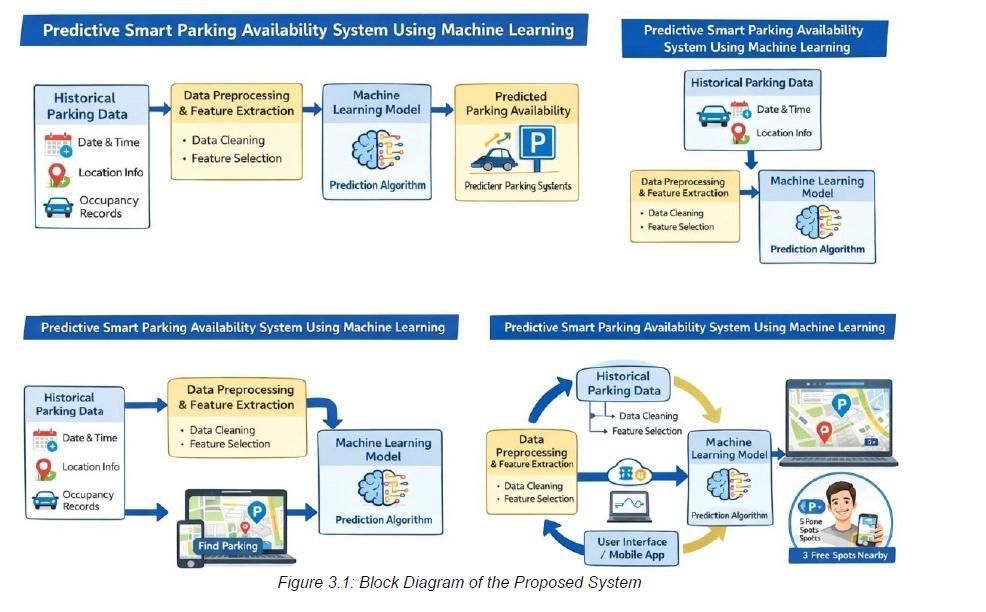
Block Diagram
Figure3.1illustratestheoverallblockdiagramoftheproposedsystem,depictingtheinteractionsamongtheuser interface,backendserver,database,machinelearningmodule,andmapAPI.
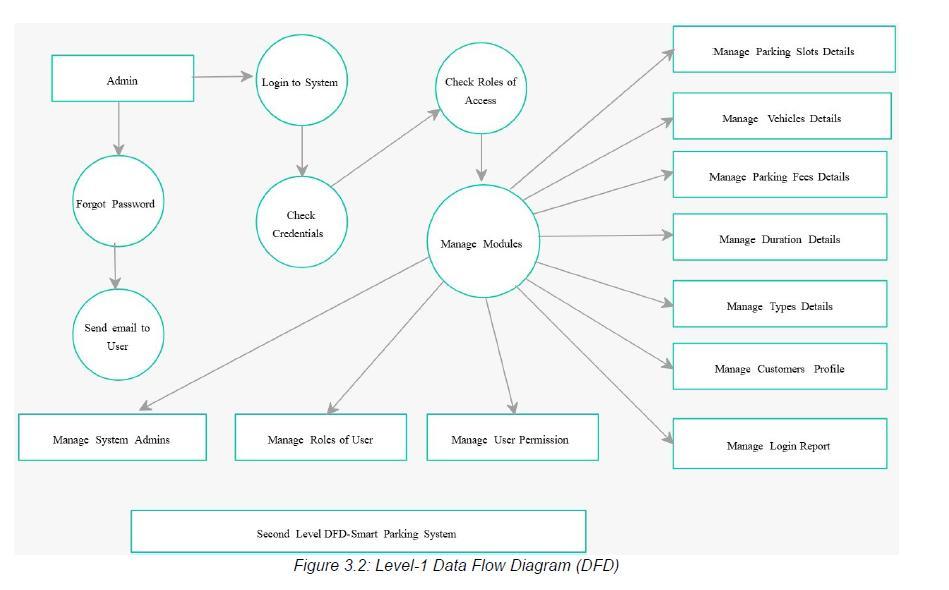
Data Flow Diagram (DFD)
Figure 3.2 presents the Level-1 Data Flow Diagram, showing the flow of data between the user, the web application, the database,andthemachinelearningpredictionengine
International Research Journal of Engineering and Technology (IRJET) e-ISSN: 2395-0056
Volume: 13 Issue: 04 | Apr 2026 www.irjet.net p-ISSN: 2395-0072
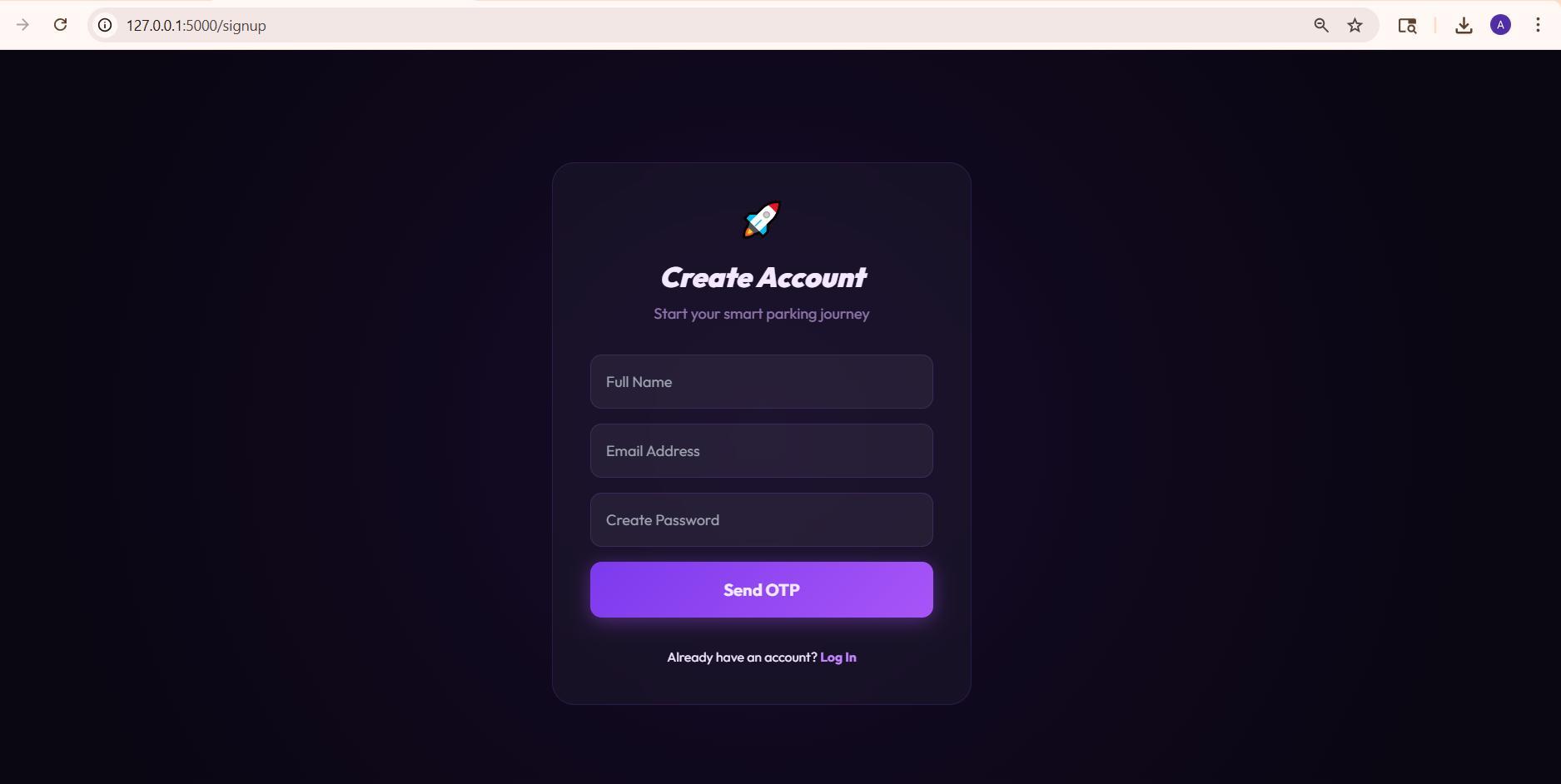
Thesystemisimplementedasaweb-basedapplicationcomprisingseveralfunctionalmodules,eachaddressingaspecific aspectoftheparkingmanagementworkflow.
The home page presentsthe primarynavigationmenu, includingHome,Features,Contact,Login,andSignUpsections.A prominentbannerwitha'GetStarted'call-to-actionbuttonguidesuserstowardaccessingtheparkingavailabilityfeatures quickly.

International Research Journal of Engineering and Technology (IRJET) e-ISSN: 2395-0056
Volume: 13 Issue: 04 | Apr 2026 www.irjet.net p-ISSN: 2395-0072
IRJETsampletemplateformat,Defineabbreviationsandacronymsthefirsttimetheyareusedinthetext,evenaftertheyhave beendefinedintheabstract.AbbreviationssuchasIEEE,SI,MKS,CGS,sc,dc,andrmsdonothavetobedefined.Donotuse abbreviationsinthetitleorheadsunlesstheyareunavoidable.

International Research Journal of Engineering and Technology (IRJET) e-ISSN: 2395-0056
Volume: 13 Issue: 04 | Apr 2026 www.irjet.net p-ISSN: 2395-0072
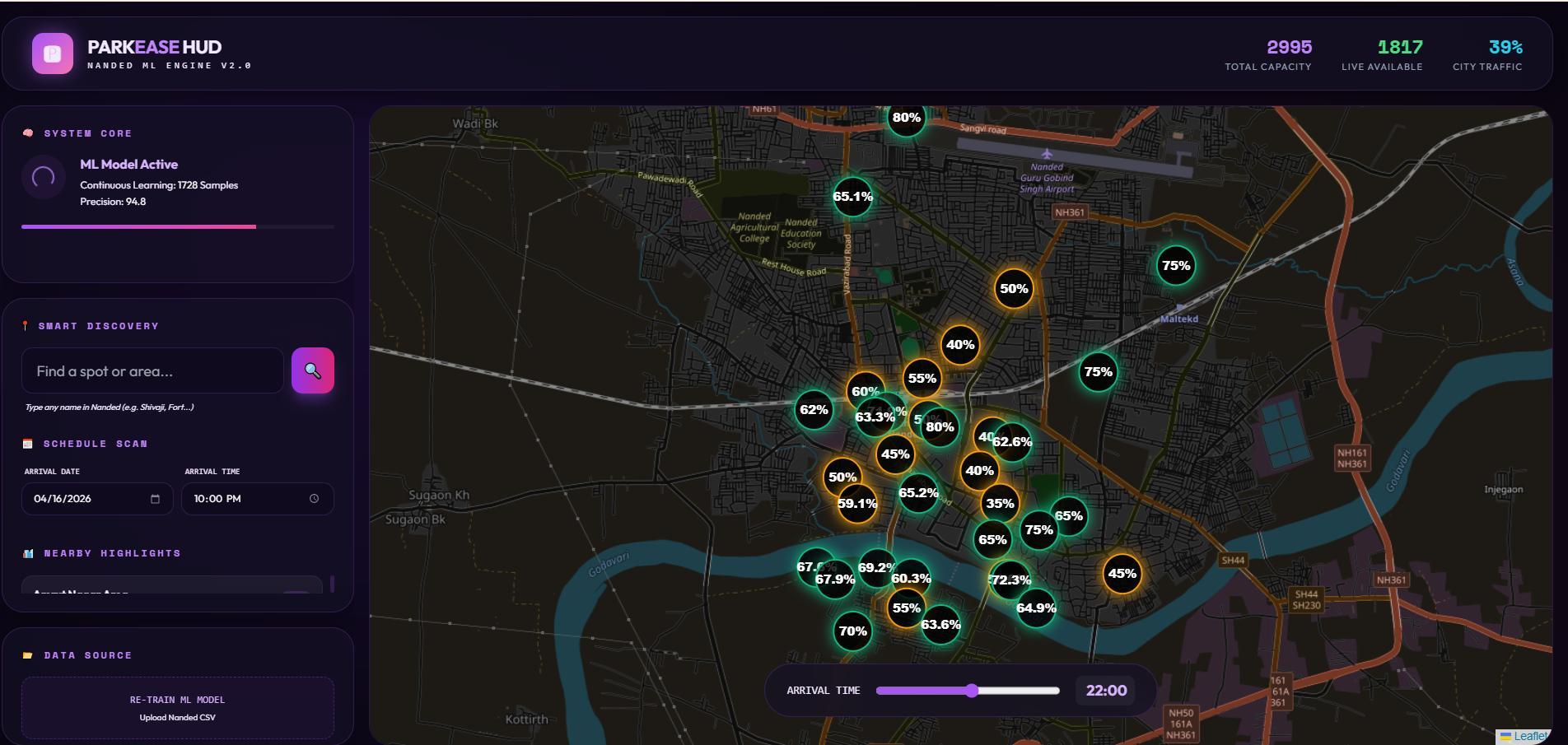
Uponsuccessfulauthentication,usersareredirectedtothemaindashboardfeaturinganinteractivemapinterfacepoweredby theGoogleMapsAPI.Thedashboardincludesalocationsearchbar,dynamicmapmarkersindicatingparkinglocations,and popupwindowsdisplayingreal-timeandpredictedparkingavailabilityinformationforeachfacility.
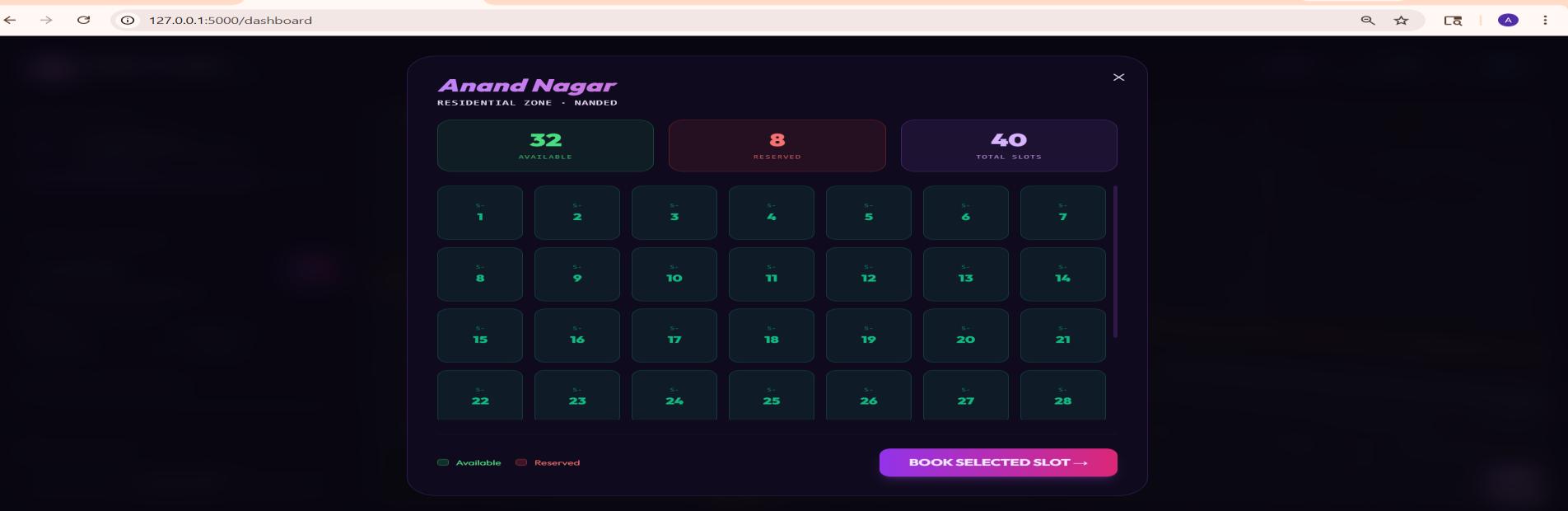
Theslotbookingmoduledisplaysagridofavailable,reserved,andoccupiedslotsataselectedlocation.Userscanview total,available,andreservedslotcounts,thenselectanunoccupiedslottoinitiatethebookingprocess.
International Research Journal of Engineering and Technology (IRJET) e-ISSN: 2395-0056
Volume: 13 Issue: 04 | Apr 2026 www.irjet.net p-ISSN: 2395-0072
Thebookingconfirmationmodulerequiresuserstoprovidevehicledetails,name,emailaddress,mobilenumber,and identificationinformationbeforefinalizingareservation.Thesystemvalidatesinputs,updatesslotstatusinthedatabase, andgeneratesabookingconfirmationfortheuser

TheSmartParkingSystemintegratesthefrontend,backend,database,machinelearningmodel,andGoogleMapsAPIintoa cohesivesingle-systemarchitecture.ThefrontendcommunicateswiththebackendthroughRESTAPIsutilizingJSON-based data exchange to manage authentication, slot selection, and booking operations. The backend server processes booking requests,updatesslotstatusinrealtime,andstoresuserinformationsecurely.Themachinelearningmoduleoperatesasa separateservice,receivingqueriesfromthebackendandreturningparkingavailabilitypredictionsbasedonhistoricaldata.A comprehensive testing strategy was adopted to validate system functionality. Unit tests were conducted on individual components, including authentication, the booking workflow, and the prediction API. Integration tests verified correct interactionamongallcomponents.End-to-endtestingconfirmedthatmapintegration,slotbooking,datapersistence,and predictionfeaturesfunctionreliablyundervariousconditions,ensuringsecureandconsistentsystemoperation.
TheSmartParkingSystemisdesignedwithsecurityandlegalcomplianceasfoundationalrequirements.Userauthenticationis enforcedusingsecurecredentialvalidation,andallsubmitteddataisvalidatedpriortoprocessingtopreventunauthorized accessandinjection-basedvulnerabilities.Alluser-relatedinformation,includingvehicledetails,contactinformation,and bookingrecords isstoredsecurelyandmanagedinaccordancewithapplicabledataprotectionregulationsandinformation technology compliance standards. A double-booking prevention mechanism verifies slot availability in real time before confirminganyreservation. Securecommunicationchannelsbetweenthe frontendandbackendprotectuserdataduring transmission,collectivelyensuringsafeoperationanduserprivacy.
The proposed Predictive Smart Parking Availability System was implemented and evaluated to assess its functional correctness,usability,andpredictioncapability.Thesystemsuccessfullydemonstratedtheabilitytoprocesshistoricalparking data,trainamachinelearningmodeltoidentifyoccupancypatterns,andgeneratepredictionsforfutureparkingavailabilityat selectedlocations.Theweb-basedinterfacewasfoundtobeintuitiveandresponsive,allowinguserstoregister,searchfor
International Research Journal of Engineering and Technology (IRJET) e-ISSN: 2395-0056
Volume: 13 Issue: 04 | Apr 2026 www.irjet.net p-ISSN: 2395-0072
nearbyparking,viewpredictedavailabilityonaninteractivemap,andcompleteslotbookingswithinaminimalnumberof steps. Integration testing confirmed that REST API endpoints for authentication, slot selection, and booking functioned correctly,withdataaccuratelypersistedacrossalloperations.
Themachinelearningmodeldemonstratedconsistentperformanceinidentifyingtime-basedandlocation-basedoccupancy patterns. Predictions providedusers with actionable information foradvance parking planning. The incorporation of the GoogleMapsAPIsignificantlyenhanceddashboardusabilitybyprovidinggeospatialcontexttoparkinglocationdata.Overall, thesystemvalidatedthefeasibilityandeffectivenessoftheproposedapproachforintelligenturbanparkingmanagement.
This paper has presented a Predictive Smart Parking Availability System that leverages machine learning techniques to addressthepersistentchallengesofurbanparkingmanagement.ByintegratingGoogleMapsAPI,amachinelearning-based predictionmodule,andareal-timewebapplication,thesystemprovidesuserswithaccurateparkingavailabilityforecastsand enablesadvanceslotreservations,therebycontributingtothereductionoftrafficcongestion,fuelwastage,andenvironmental pollution. The proposed system is scalable and adaptable, making it suitable for integration within broader smart city infrastructureandIntelligentTransportationSystem(ITS)initiatives.Futureenhancementsmayincludethedevelopmentofa dedicatedmobileapplication,integrationofreal-timeIoTsensordataformoreaccurateoccupancydetection,andadoptionof advanceddeeplearningmodelstoimprovepredictionaccuracy.Theproposedsystemthusestablishesasolidfoundationfor continuedresearchanddevelopmentinthedomainofintelligenturbanparkingmanagement.
[1] R.C.G.Raji,A.Muhammad,A.B.Aboobacker,K.Jamshidha,andJ.Shemeem,"AndroidbasedIntegratedParkingSystem forReal-TimeParking,"in Proc. International Conference on Automation, Computing and Renewable Systems (ICACRS), IEEE,2022,pp.304–309.
[2] Y.Wang,X.Xu,andX.Huang,"Cloud-basedSmartParkingWeChatApplet,"in Proc. IEEE 5th International Conference on Software Engineering and Artificial Intelligence (SEAI),IEEE,2025,pp.292–296.
[3] R.Pandimeena,V.Saumiya,R.Sarala,andR.Deepalakshmi,"IntelPark:WebsiteBasedAdvanceParkingBookingSystem withNumberPlateDetection,"in Proc. International Conference on Advances in Computing, Communication and Applied Informatics (ACCAI),IEEE,2024.
[4] [4]Md.M.Haque,Md.A.Rahman,andMd.M.Gani,"AReservation-basedSmartParkingSystemforUrbanAreas,"in Proc. 12th International Conference on Electrical and Computer Engineering (ICECE),IEEE,2022,pp.28–31.
[5] K.S.Karthikeyan,R.Kumari,andA.Sarkar,"Spypark:TheInnovativeMobileApplicationforOnlineParkingReservation," in Proc. IEEE Fifth International Conference on Advances in Electronics, Computers and Communications (ICAECC),IEEE, 2023.
[6] A.Android-BasedBookingApplicationforSmartParkingSystem,in Proc. International Conference on Smart Systems and Inventive Technology (ICSSIT),IEEE,2022.