
International Research Journal of Engineering and Technology (IRJET) e-ISSN: 2395-0056
Volume: 12 Issue: 12 | Dec 2025 www.irjet.net p-ISSN: 2395-0072
International Research Journal of Engineering and Technology (IRJET) e-ISSN: 2395-0056
Volume: 12 Issue: 12 | Dec 2025 www.irjet.net p-ISSN: 2395-0072
VISHWA M1 , VIYAAN J2 , AKASH K3 , KASI VISHWANATH S4
1III Year, Dept of Mechanical Engineering, Lakshmi Ammal Polytechnic College, Tamilnadu, India
2III Year, Dept of Mechanical Engineering, Lakshmi Ammal Polytechnic College, Tamilnadu, India
3III Year, Dept of Mechanical Engineering, Lakshmi Ammal Polytechnic College, Tamilnadu, India
4III Year, Dept of Mechanical Engineering, Lakshmi Ammal Polytechnic College, Tamilnadu, India
Abstract - This Project is entitled “Fabrication of Treadmill Bicycle". Innovative hybrid systems are a response to the growing demand for environmentally sustainable fitness and mobility options. One such idea is the Treadmill Bicycle, a novel human-powered vehicle that combines the concepts of a treadmill and a bicycle. The treadmills are not used to harness power; rather, they are fitness devices that allow us to run or walk a shorter distance while using the same principle.
Through the concept of a treadmill, human energy is converted into motion by the machine. People can use this equipment for fitness and for short-distance transport. The system consists of a treadmill belt fixed to a frame and linked to the back wheel by a chain or gear system. The drive train spins when the user walks or runs, allowing for forward propulsion. The treadmill bicycle is environmentally beneficial because it does not utilize any organic fuels. Pollution of any kind is not encouraged by treadmill bicycles.
Keywords: TreadmillFrame,WalkingBelt,Rollers,Bearing, Sprocket,Wheel.
1. INTRODUCTION
Walking and cycling are two common fitness activities. A treadmill allows indoor exercise, but it limits natural movementandoutdoorexposure.Abicycleenablestravel, but requires pedaling power. The Treadmill Bicycle combinesthesetwoideasintoasingleunit,wherewalking action serves as the driving unit. The project focuses on creatingalightweightsystem,improvingusercomfort,and offeringaneco-friendlymobilityoption.
Atraditionalbicyclerequirespedaling,andsomeusersare not**comfortablewithit.Thereisaneedforasystemthat supports natural walking and still allows movement from oneplacetoanother.
1.2
The objective of this project is to develop a mechanically stable and energy-efficient Treadmill Bicycle capable of transforming linear walking motion into rotational drive. Theaimincludesdesigning arobustframe,optimizingthe belt-roller mechanism, reducing frictional losses, and
ensuring safe, smooth operation. Additionally, the project seeks to create a cost-effective prototype suitable for practical demonstration and short-range human-powered mobility.
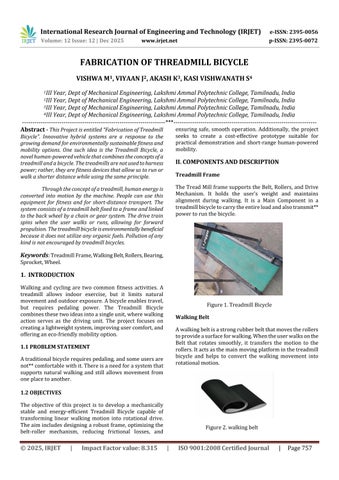
Treadmill Frame
TheTreadMillframesupportstheBelt,Rollers,andDrive Mechanism. It holds the user’s weight and maintains alignment during walking. It is a Main Component in a treadmillbicycletocarrytheentireloadandalsotransmit** powertorunthebicycle.
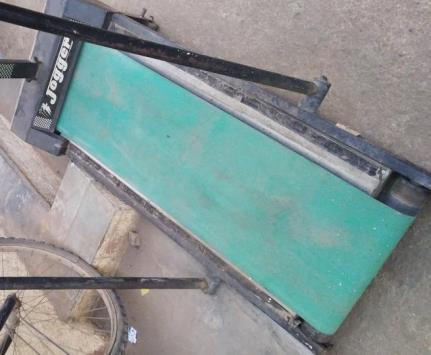
Walking Belt
Awalkingbeltisastrongrubberbeltthatmovestherollers toprovideasurfaceforwalking.Whentheuserwalksonthe Belt that rotates smoothly, it transfers the motion to the rollers.Itactsasthemainmovingplatforminthetreadmill bicycle and helps to convert the walking movement into rotationalmotion.
Research
Volume: 12 Issue: 12 | Dec 2025 www.irjet.net p-ISSN: 2395-0072
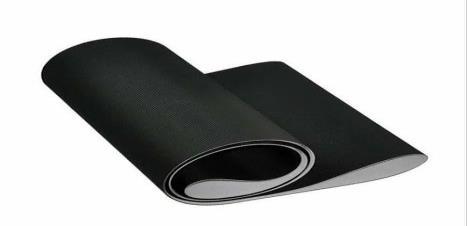
Rollersarecylindricalshaftsplacedatthefrontandrearof thetreadmill belt.As theuserwalks,thebeltrotatesthese rollers.Therearrollerisconnectedtothechaindrive,making it the key component that converts the belt’s motion into rotationalpower.Rollersmustbesmooth,perfectlyaligned, andsupportedbybearingsforefficientmovement.
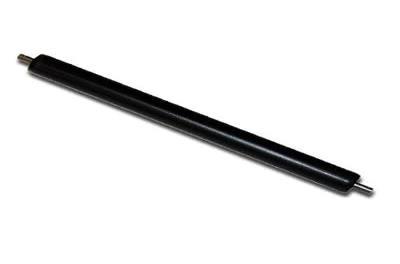
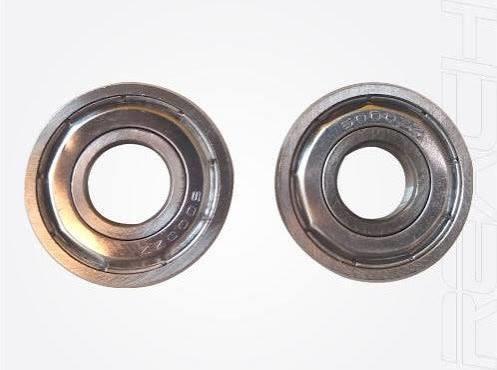
Bearings are mechanical elements that support rotating shaftswhilereducingfriction.Inthis project,bearings are fittedattheendsoftherollershaftstoensuresmooth,lowresistancerotation.ThishelpstomovetheBeltinfreelyand increase the efficiency of motion transfer, and also to preventtheenergylossesduetofriction
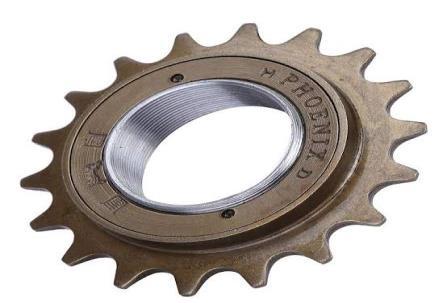
Sprockets are toothed wheels that engage with the chain. Therollersprocketconvertsthebelt’srotationalenergyinto chain motion, while the rear wheel sprocket uses that motiontorotatethewheel.Thesizeandtoothcountofthe sprocketsdeterminethespeedandtorqueofthebicycle.
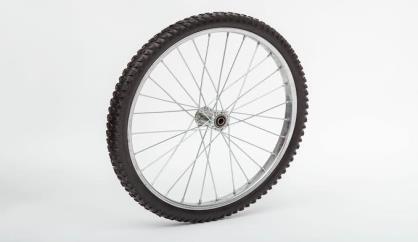
TheBicyclewheelactsasthefinaloutputcomponentofthe transmissionsystem.Whentherollerrotatesanddrivesthe chain,thetorqueistransferredtotherearwheel.Asaresult, thewheelturnsandpushesthebicycleforward.Astandard bicycle wheel is used because it is lightweight, easy to maintain,andprovidesgoodtraction.
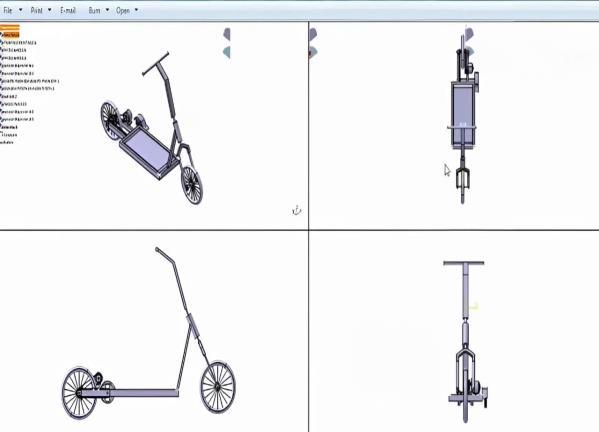
When the user walks on the belt, the belt moves in the oppositedirection.Thismotionrotatestherollers,especially therearrollerthatisconnectedtoasprocket.Thesprocket drivesthechain,whichturnsthewheelsprocketandrotates the rear wheel. As the wheel rotates, the bicycle moves forward. Steering is handled using the handlebars, and braking is done using the bicycle’s braking system. The entiremovementreliesonhumanwalkingpower.
The Treadmill Bicycle uses no fuel and creates zero pollution. Users can exercise outdoors while also moving fromoneplacetoanother.Itencouragesphysicalfitnessand offers a simple mobility method for short distances. The mechanism is easy to maintain and provides a smooth walking-baseddrivingexperience.
International Research Journal of Engineering and Technology (IRJET) e-ISSN: 2395-0056
Volume: 12 Issue: 12 | Dec 2025 www.irjet.net p-ISSN: 2395-0072
Thetreadmillbicycleisa*kindofvehiclethatcanbeusedin parks,campuses,residentialareas,andopenpathways.Itis also useful for fitness training, therapy sessions, and the demonstration of mechanical energy conversion in educationalprojects.
Thesystemcanbeimprovedbyaddingalightframe,better beltmaterials,andshock-absorbingmounts.A solarpanel andasmallbattery-poweredassistmotorcanhelptheuser onslopes.Digitalmetersforspeed,distance,andcaloriescan alsobeincluded.Withfurtherdevelopment,themodelcan beturnedintoahybridfitness-transportvehicle.
TheTreadmillBicycleisasimpleandeffectivedesignthat integrates walking and mobility in one system. The prototype shows that walking motion can be successfully convertedintoforwardtravelusingabelt,roller,andchain arrangement. Theconceptsupportseco-friendlytraveland offersahealthierformofmovement.Withfutureupgrades, themodelcanbecomea modern,fitness-focusedpersonal vehicle.
[1]. Kale R.D., Khedkar A.K., Pathare P.P., Shete N.N., Mr. Abuj D, "TREADMILL BICYCLE”, International Journal of Advance Engineering and Research Development, Volume 5, Special Issue04,Feb.-2018.
[2]. Juned Barade, Anup Janwe, Kashif Ali Nawab, Saif Khan, "Treadmill Bicycle”, International Research Journal of Engineering and Technology (IRJET), Volume:04Issue:03|Mar-2017.
[3]. Prof. Pradeep M. Ingole and Mukund Manas "Ergonomic design of bicycle handle.” International Journal of Emerging Technology and Advanced Engineeringvol.5,pp.472-481, April2015

VISHWA M, IIIrd Year Mechanical Department,LakshmiAmmalPolytechnic College,Kovilpatti.



VIYAAN J, IIIrd Year Mechanical Department,LakshmiAmmalPolytechnic College,Kovilpatti.
AKASH K, IIIrd Year Mechanical Department,LakshmiAmmalPolytechnic College,Kovilpatti
KASI VISHWANATH S, IIIrd Year MechanicalDepartment,LakshmiAmmal PolytechnicCollege,Kovilpatti.