
International Research Journal of Engineering and Technology (IRJET) e-ISSN: 2395-0056
Volume: 13 Issue: 01 | Jan 2026 www.irjet.net p-ISSN: 2395-0072
International Research Journal of Engineering and Technology (IRJET) e-ISSN: 2395-0056
Volume: 13 Issue: 01 | Jan 2026 www.irjet.net p-ISSN: 2395-0072
Sohini Banerjee1 , Dr. Shweta M. Barhate2
1Research Scholar, Department of Electronics and Computer Science, RTM Nagpur University, Nagpur, Maharashtra, India
2Associate Professor, Department of Electronics and Computer Science, RTM Nagpur University, Nagpur, Maharashtra, India
Abstract - Learning disability encompasses the unique challenges faced by a student to acquire process and demonstrate any knowledge or skill. Identification oflearning disability students helps the educators to create an inclusive environment enabling the students to reach their full potential. The paper delves deep into the machine learning based personalized learning pathways, prediction of student performances, intervention with assistive technologies, math related educational tools and games along with behavior analysis using machine learning. Classification algorithms of machine learning analyses and learns patterns from the dataset. This study analyses the statistics of all the features of the dataset and creates models with different classification algorithms like Logistic Regression, Decision Tree, Random Forest, K-nearest neighbor, Support Vector Machine and XG Boost for predicting quarterly goal for these students. Finally the results are comparedby creating theconfusionmatrixand computing the accuracy, precision, recall and F1 score to predict the optimum models for the purpose.
Key Words: Dyscalculia, Learning Disability, Logistic Regression, Decision Tree, Random Forest, K-nearest neighbour, Support Vector Machine, XG Boost, Accuracy, Precision, Recall, F1 Score.
Learningdisability,aneurologicaldisordercanrangefrom specific academic areas to broader cognitive functions. Specific learning disability affecting a student’s ability related to understanding, learning and performing math related task is called dyscalculia. Dyscalculia affects academic performance as students struggle with number sense, basic arithmetic, and mathematical reasoning. Students with dyscalculia experience difficulties with number identification, patterns, geometrical shapes and basic mathematical operations. Machine Learning has proved to be a powerful tool used for the detection and diagnosisofDyscalculia.Classificationalgorithminmachine learningplaysavitalroleincategorizingdataintoanumber of predefined labels and thus helps in automatic decision makingbyanalysinglargedatasetsandimprovingaccuracy. Thispaperdiscussesthecomparisonofafewclassification algorithms for predicting quarterly goals for students
sufferingfromdyscalculiabyanalysingthedifferentfeatures relatedtodyscalculia.
Severalstudieshavebeenproposedtostudydata from variouscognitivetestsbymachinelearningandidentifying thestudentswithdyscalculiawithgreataccuracy.[1]Astudy suggeststhatadaptivetestscanbeimplementedtoadjustthe difficulty based on the individual's response and machine learningalgorithmscanbeusedtoidentifypatternsinlarge datasets for identifying dyscalculia. [2] Another research highlights the need of machine learning to enhance the learningexperiencebyapplyingadaptivealgorithmstodetect dyscalculia.ItalsosummarizesthevariousAIadvancements especiallyinthefieldofscreeningandinterventiontoolsto provide tailored interventions. [3] Application of ConvolutionalNeuralNetworks(CNNs)tomodelthefactors associated with dyscalculia y simulating impaired neural connections through dropout is suggested in another research. [4] Various algorithms like Support Vector Machines (SVM), Simple Logistic Regression, Naive Bayes, andRandomForestare explored to identify dyscalculia so that the challenges in its diagnosis can be addressed. [5] Furtherresearchhasbeendoneinexploringtheabilitiesof complex algorithms for the detection of dyscalculia by analyzingmedicaldata.[6]Substantialworkhasbeendone forthedevelopmentofasystemtoenhancethedetectionof Dyscalculiathroughmachinelearningandhencereducingthe effortsrequiredbehindthetraditionaldetectionprocess.[7] Anotherstudyshowsproposesaknowledge-basedanalytical toolutilizingamachinelearningdecisiontreealgorithmto identifymathematicaldifficultiesassociatedwithdyscalculia instudents.[8]Machinelearningcanalsobeappliedtocreate adaptive assessment tools for promotion of inclusive educationalenvironment.[9]
Research shows machine learning-based personalized learningpathdecision-makingmethodthatcanbeadapted for children with Dyscalculia. By analysing learners' behavioural data and mastery of knowledge points, the
International Research Journal of Engineering and Technology (IRJET) e-ISSN: 2395-0056
Volume: 13 Issue: 01 | Jan 2026 www.irjet.net p-ISSN: 2395-0072
method predicts the difficulty of mathematical concepts tailored to individual needs. This approach allows for dynamic adjustments in learning path recommendations, providing refined support that enhances learning experiences and outcomes for children with Dyscalculia, ultimatelyaddressingtheiruniquechallengesinmastering mathematical skills. [10] Another model the Dynamic Feedback-Driven Learning Optimization Framework (DFDLOF)suggestspersonalizingeducationalpathwaysby analysingstudent’sdatausingmachinelearning.Real-time feedbackforanalysinglearningpathwaysisaspecialfeature of this framework. [11] “Ganitha Piyasa”, an innovative machine learning application uses a Random Forest Classifier to predict a child's improvement leading to the creation of personalized learning pathways. [12] Similar studies suggest supervised machine learning techniques helpsinanalysingalearner'sperformanceandpreferences and customizing resources and learning paths. This methodologynotonlyaddressesspecificchallengesfacedby students with Dyscalculia but also emphasizes the significance of data security, algorithmic fairness, and transparency for formulating personalized learning solutions.[13]
Machine learning can help in predicting student performance by understanding the patterns of their historical data. Applying the same procedure on children affected with dyscalculia would help to address their challenges and needs. This may lead to improve their academic outcomes. [14] Random Forest and K-Nearest Neighbour models can predict grades with high accuracy based on past academic achievements and core subject scores. Same model can be deployed for learners with dyscalculiainnearfuture.[15]
Thepaperdoesnotspecificallyaddressmachinelearning applications in assistive technologies for children with dyscalculia. It focuses on PosiCalculia, an adaptive virtual environmentthatpersonalizeslearningexperiencesthrough assessment tools and adaptive serious games to improve mathematical skills. [16] The paper does not specifically addresstheuseofmachinelearninginassistivetechnologies forchildrenwithdyscalculia.Itfocusesontheeffectiveness of the Mathlete tool in improving early numeracy skills throughtraditionalandadaptivelearningmethods.[17]
Research proves that gamified learning materials formulated to teach basic numeracy skills to 4-6-year-old children with dyscalculia through visualization helps in improvingtheirgradesconsiderably.[18]Machinelearning canalsovalidateneuralshiftsbyanalysingneurocognitive
signatures as evident in another study. [19] Educational toolslikeExergamesforchildrendeploysmachinelearning tocreatepersonalizedlearningpaths.[20]
Bothdetectionandinterventionstrategiesforbehaviour analysis of children with dyscalculia can be done using Machine learning. Identification of patterns in learning behaviours and cognitive responses can help in designing tailorededucationalresourcesforthesestudents.Decision treealgorithmhasprovedtobesuccessfulinearlydiagnosis andinterventionofdyscalculia.[21]Anotherstudyexplores anIntelligentSystemutilizingdatafromthedisMATappto identify children affected with dyscalculia. Logic ProgrammingandCase-Basedproblemsolvingtechniques helpinenablingeffectivebehaviouranalysisinthisscenario. [22]
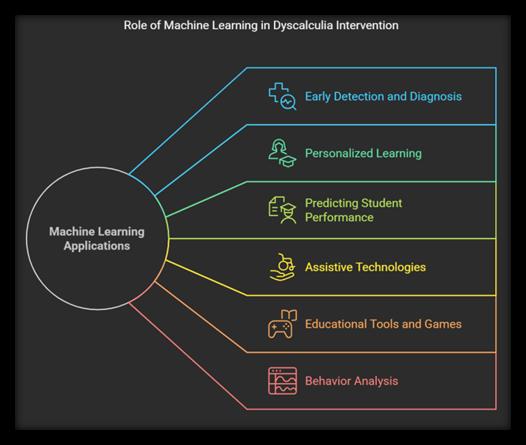
Substantial work has been done in the field of dyscalculia with machine learning mostly for early diagnosis and screening of dyscalculia, creating personalized games, assistivetechnologiesandappsforchildrenwithdyscalculia, behavior analysis and prediction of student performance. Thereisagapinresearchrelatedtocreationofclassification model for goal prediction of students with dyscalculia. Furtherstudiescanprovetobebeneficialinthisdirection.
a) To create a classification model that predicts quarterly learninggoalsforstudentswithdyscalculia basedontheir currentmathematicalabilities.
b)Toidentifykeyfeaturesinfluencinggoalachievementin dyscalculic students, such as number identification, arithmeticreasoning,andspatialunderstanding.
c) To compare the effectiveness of different classification algorithmsinaccuratelypredictingstudentgoals.
International Research Journal of Engineering and Technology (IRJET) e-ISSN: 2395-0056
Volume: 13 Issue: 01 | Jan 2026 www.irjet.net p-ISSN: 2395-0072
d) To evaluate the proposed model using standard classification metrics (e.g., accuracy, F1-score, precision, recall)andsuggestanoptimalmodelforthesame.
5.1 Dataset
This study uses self-generated dataset acquired from school containing 100 samples of students suffering from dyscalculiaoftheagegroup5to7yearswitheightfeatures asshowninTable1.Thedatasetcontaining100recordshas no missing values. The dataset consist of 7 features and 4 categoriesoflabeledgoals.
Table -1: Featuresusedandtheirdescription
Nameofthe Feature Description
noid
NumberIdentification(0=no,1=yes)
Rtlt RightLeftOrganisation(0=no,1=yes)
symid SymbolIdentification(0=no,1=yes)
plcv PlaceValueIdentification(0=no,1=yes)
Co CarryOverinAddition(0=no,1=yes)
Br BorrowinSubtraction(0=no,1=yes)
Rea ArithmeticReasoning(0=no,1=yes)
5.2 Methodology
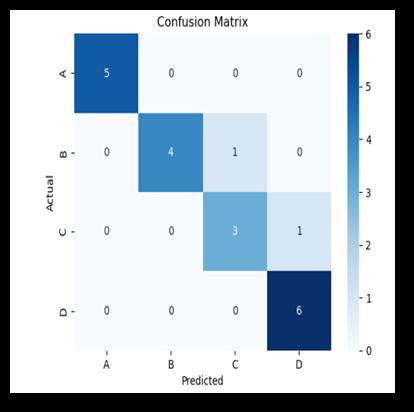
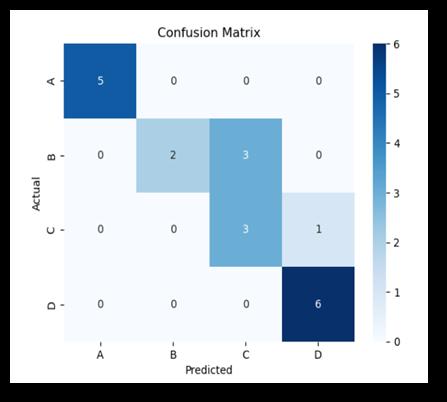
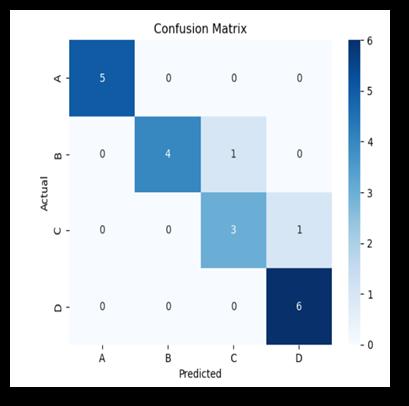
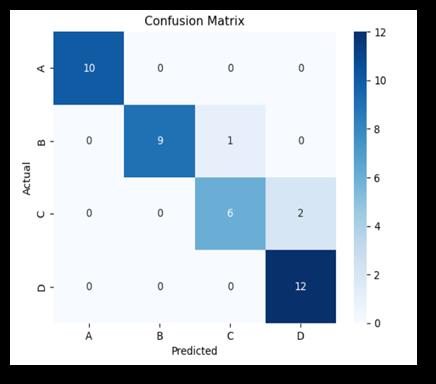
All the key features related to goal prediction are collectedfromthestudentsandtheirgoalsareassignedwith thehelpofspecialeducators.ThefourgoalsA,B,CandDare numberrecognitionandcount,identifyingshapes,patterns and basic mathematical operations respectively. Statistical analysis and visualization of data with charts and graphs resultedinuncoveringthedependenciesofgoalpredictionon different features. Finally classification models are trained with the data using various algorithms like Logistic Regression, Random Forest, SVM, KNN, Decision Tree, XG Boost andtheirconfusion matrixis drawn tocompare the resultsusingdifferentclassificationmetrics.
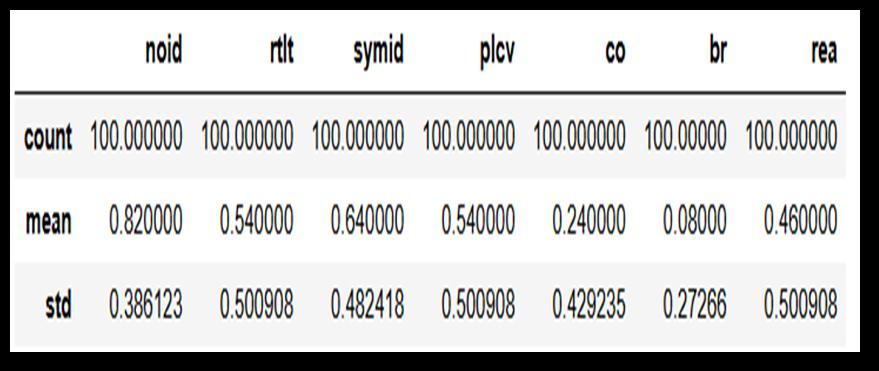
Fig-2: Count,Meanandstandarddeviationofallthe features.
International Research Journal of Engineering and Technology (IRJET) e-ISSN: 2395-0056
Volume: 13 Issue: 01 | Jan 2026 www.irjet.net p-ISSN: 2395-0072
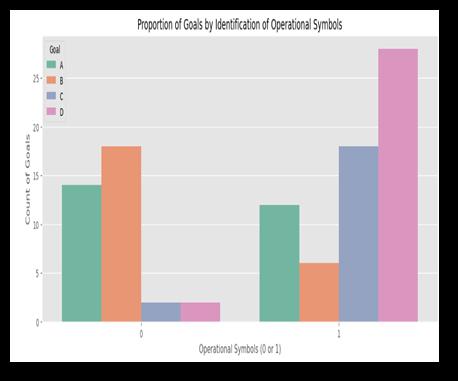
ProportionofGoalsbyIdentificationofOperational Symbols
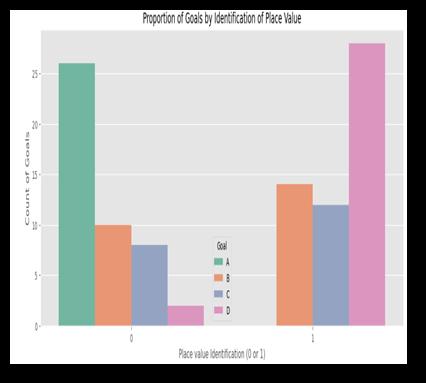
ProportionofGoalsbyIdentificationofPlaceValue
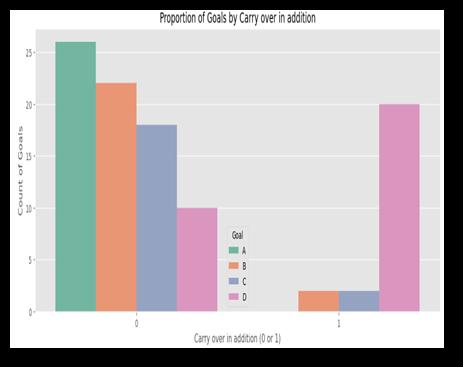
ProportionofGoalsbyIdentificationofCarryOver inAddition
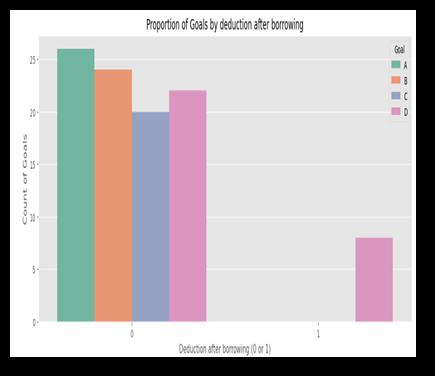
ProportionofGoalsbyIdentificationofDeduction afterBorrowing
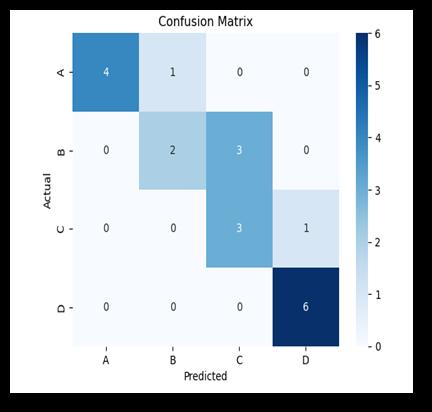
ConfusionMatrixforLogisticRegression
International Research Journal of Engineering and Technology (IRJET) e-ISSN: 2395-0056
Volume: 13 Issue: 01 | Jan 2026 www.irjet.net p-ISSN: 2395-0072
forRandomForest
ConfusionMatrixforDecisionTree
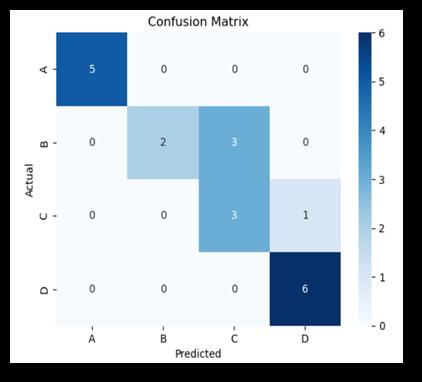
Fig-16: ConfusionMatrixforXGBoost
Table -2: ValueofWeightedAverageofClassification MetricsforMachineLearningAlgorithms
Volume: 13 Issue: 01 | Jan 2026 www.irjet.net p-ISSN: 2395-0072
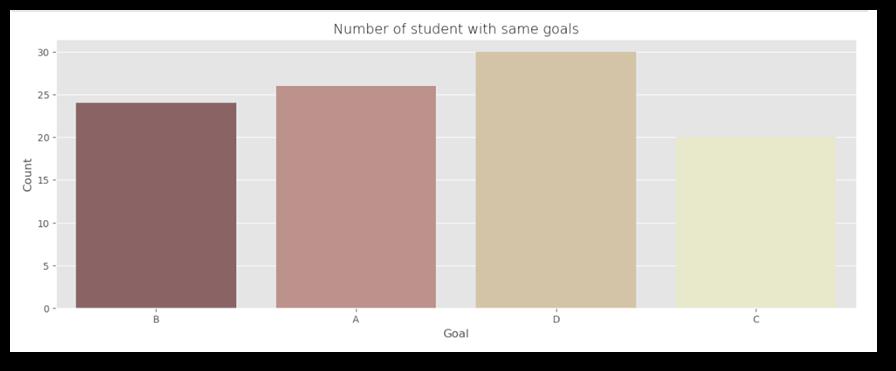
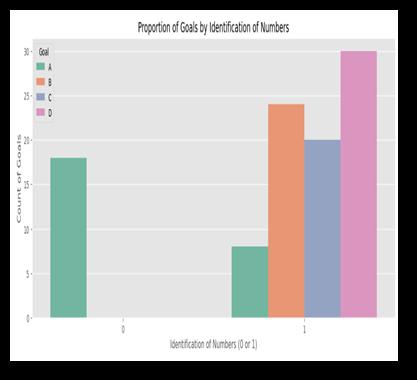
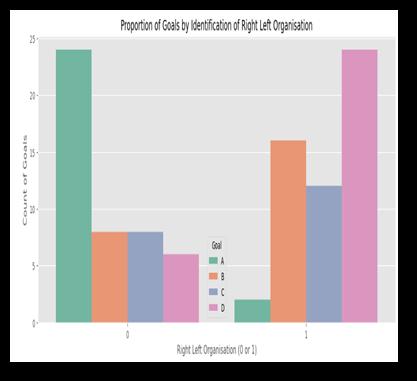
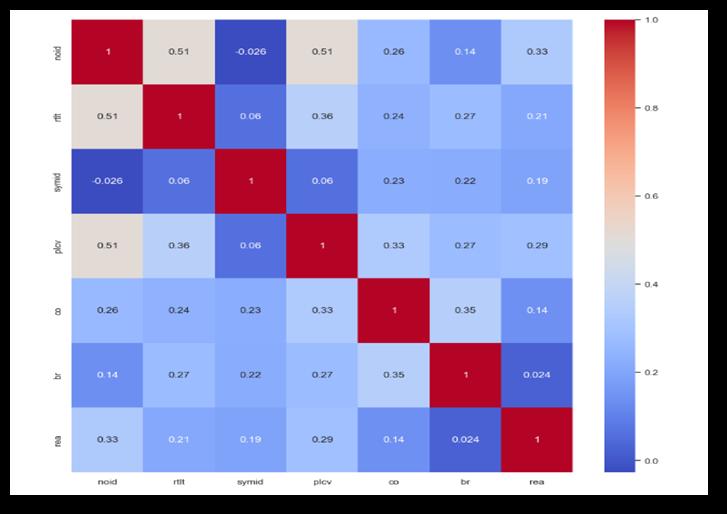
Count value is 100 for each sample indicates absence of missingvalue.Accordingtothedatasetonaverage,students correctlyidentifynumbers82%ofthetimewhereasmostof the students suffering from dyscalculia struggle with carryover in addition and borrowing in subtraction as evidentinFig2.Fig3showsGoalDhasthehighestnumberof students, followed by Goal A, Goal B and finally Goal C signifying that the dataset is not perfectly balancedacross goals and hence all classification metrics needs to be considered. Students who struggle with number identificationaremostlyassignedfoundational Goal Aand students who can identify numbers are more likely to be assignedadvancedGoalsB,C,andDasevidentfromFig4.For Fig5GoalAdominatesamongstudentswhostrugglewith right-left organization, while Goals B, C, and D increase significantlyforstudentswhohavemasteredit.Accordingto Fig6studentswhoareunabletoidentifyoperationalsymbols are mostly assigned Goals A and B and students who can identifyoperationalsymbolsaremostlyassignedGoalsCand D.Studentswhoareabletoidentifyplacevaluesaremostly assignedGoalDasevidentinFig7.Fig8andFig9suggests masteryofcarryoveranddeductionafterborrowingishighly associated with Goal D, indicating advanced mathematical skillsandhencethestudentswhocanperformCarryOverin Additionorborrowinginsubtractionareprimarilyassigned GoalD.
Data of weighted average of the classification metrics suggeststhatDecisionTree(0.925accuracy,0.93precision, 0.93recalls,0.92F1-score)performsthebestonthedataset andisabletocapturethepatternonourdataveryefficiently butmightnotgiveexactpredictionsforunseendatadueto overfitting.RandomForestandKNNbothperformverywell (0.90accuracy,0.91precision,0.90recall,0.90F1-score)and can be considered to a safer and robust option. Random Forest benefits from ensemble learning and thus reduces overfittingandimprovesgeneralization.KNNworkingwell suggests that our dataset has clear class boundaries in feature space that is similar students tend to have similar quarterlygoals.SVMandXGBoostbothhave0.80accuracy andsimilarprecision,recall,andF1-scorevaluesandwould also prove to be useful for classification purpose. Logistic Regression has the lowest accuracy (0.75) and F1-score (0.74) implying that the dataset is likely non-linearly separable,makingsimplelinearmodelslesseffectiveinthis case. XG Boost shows lower accuracy and might improve afterhyperparametertuning.
7. FUTURE SCOPE
Personalized teaching material, resources and learning pathwayscanbedesignedbasedonthepredictedgoalsso thateachstudent withdyscalculiacanbeupgradedtothe
next level. This model can also be generalized to different gradelevelstoidentifydyscalculiapatterns.Studentswith differentgoalscanbeprovidedwithdifferentgamebased learningmodulesformakingtheteachinglearningmaterials moreinteractiveandimmersive.AIbasedtutorscanalsobe implementedforadaptivelearningpathways.
[1] S. Taslimipoor, "Detecting semantic difference: A new model based on knowledge and collocational association,”ComputationalPhraseology,pp.311-324, 2020.
[2] S.Bhushan,etal,“AI-EnhancedDyscalculiaScreening:A Survey of Methods and Applications for Children,” Diagnostics(Basel),14(13),2024.
[3] G. Delagrammatika, et al, “AI advances in specific learning disorders education: The case of dyscalculia anddyslexia,”WorldJournalofBiologyPharmacyand HealthSciences,19(2),pp.203–217,2024.
[4] R. Jay, et al, “Using Convolutional Neural Networks to Explore The Effect of Impaired Subitizing in Dyscalculia,” Princeton International School of MathematicsandScience,2023.
[5] K. Dhingra, et al, “Identification of dyscalculia using supervisedmachinelearningalgorithms,”In20212nd International Conference on Smart Electronics and Communication(ICOSEC),2021.
[6] N. Giri, et al, “Detection of Dyscalculia Using Machine Learning,” 5th International Conference on CommunicationandElectronicsSystems(ICCES), IEEE, pp.1–6,2020.
[7] A. Subramanyam, et al, “Dyscalculia Detection Using MachineLearning,”pp.111–120,Springer,2019.
[8] A. Devi, et al, “Knowledge Based Analytical Tool for Identifying Children with Dyscalculia,” pp. 703–711, Springer,Singapore,2021.
[9] S.Bhushan,etal,“AI-EnhancedDyscalculiaScreening:A Survey of Methods and Applications for Children. Diagnostics,”14(13),2024.
[10]Y. Zhang, “Machine Learning-Based Personalized Learning Path Decision-Making Method on Intelligent EducationPlatforms.InternationalJournalofInteractive Mobile Technologies,” International Journal of Interactive Mobile Technologies, 18(16), pp. 68–82, 2024.
[11]C. Song, et al, “Implementing the Dynamic FeedbackDriven Learning Optimization Framework: A Machine
International Research Journal of Engineering and Technology (IRJET) e-ISSN: 2395-0056
Volume: 13 Issue: 01 | Jan 2026 www.irjet.net p-ISSN: 2395-0072
Learning Approach to Personalize Educational Pathways,”AppliedSciences,14(2),2024.
[12]A.N.Upathissa,etal,(2023).“GanithaPiyasa:Effective Lesson Delivery Method for Graphical Dyscalculia Students,” 023 5th International Conference on AdvancementsinComputing(ICAC),Colombo,SriLanka, pp.263–267,2023.
[13]Z. Li, “A Review of Personalized Education Based on Machine Learning,” Science and Technology of Engineering,ChemistryandEnvironmentalProtection, 2024.
[14]A.John,“AnAnalysisofMachineLearningAlgorithmsfor PredictingStudentPerformance,”InternationalJournal ofAdvancedResearchin Science,Communicationand Technology,pp.657–660,2024.
[15]S.Nott,etal,“StudentAcademicPerformancePrediction using Machine Learning with Various Features and Scenarios”,In202428thInternationalComputerScience andEngineeringConference(ICSEC), pp.1–6,2024.
[16]N. Hocine, et al, “PosiCalculia: an adaptive virtual environmentforchildrenwithlearningdifficulties,”In 2023 International Conference on Innovations in IntelligentSystemsandApplications(INISTA),IEEE,pp. 1–6,2023.
[17]K. Dhingra, et al, “Mathlete: an adaptive assistive technologytoolforchildrenwithdyscalculia,”Disability and Rehabilitation: Assistive Technology, Taylor & Francis,pp.1–7,2022.
[18]M. Ramadhan, et al, “Development of Gamified Mathematics Learning Material for Treating Children with Dyscalculia at Age 4 - 6 Years Old,” In 2023 7th International Conference on New Media Studies (CONMEDIA),IEEE,pp.304–309,2023.
[19]F. Wang, et al, “Neural-informed Digital Game-based Intervention for Young Learners with Mathematical DevelopmentalVariability”,EuropePMC,2023.
[20]J.Duval,etal,“ReimaginingMachineLearning’sRolein AssistiveTechnologybyCo-DesigningExergameswith ChildrenUsingaParticipatoryMachineLearningDesign Probe,” In Proceedings of the 25th International ACM SIGACCESSConferenceonComputersandAccessibility, pp.1-16,2023.
[21]A. Devi, et al, “Knowledge Based Analytical Tool for Identifying Children with Dyscalculia,” pp. 703–711, Springer,Singapore,2021.
[22]F. Ferraz, et al, “An Artificial Intelligence Approach to Dyscalculia,”Springer,Singapore,pp.205–214,2016.


An energetic and versatile Computer Science Trainer with 15+yearexperience,whoisableto teachacrossawiderangeofAIand ITtopics.Sohinicomestoyouwith a strong background in planning lessons, organizing extracurricular activities and web developmentfortheinstitute.
Assistant Professor in Computer Science at the Department of ElectronicsandComputerScience, Rashtrasant Tukadoji Maharaj, NagpurUniversity,Nagpur