
International Research Journal of Engineering and Technology (IRJET) e-ISSN: 2395-0056
Volume: 12 Issue: 03 | Mar 2025 www.irjet.net p-ISSN: 2395-0072
International Research Journal of Engineering and Technology (IRJET) e-ISSN: 2395-0056
Volume: 12 Issue: 03 | Mar 2025 www.irjet.net p-ISSN: 2395-0072
Alen Jose1 , Arjun A T2 , Bilahari Sagar3 , Nufais Basheer4 , Shijina.B5 , Athira R Kurup6
12345Department of Computer Science and Engineering, TOMS College of Engineering Mattakara, India 4Assistant Professor ***
Abstract - Agriculture is important for human livelihoods andfinances,buttraditionalfarmingfaceschallengessuchas climate, resources and environmental issues. Accuracy Using technology to increase agricultural production provides a revolutionarysolutionReduceenvironmentalimpact.Benefit from data -driven techniques, It optimizes inputs such as water, fertilizers and pesticides to improve food quality and important in the midst of production efficiency, which increases the demand for global food. this project A user suggests a friendly application that integrates IoT, AI and machine learning To give real -time insight to farmers. Important features include crops and fertilizers Recommendations, soil monitoring and effective irrigation control, Promote permanent agricultural practices. The purpose of the app is to increase productivity, Resource use andenvironmentalprotection,simplifyagriculturalprocesses.
Key Words: Precision Agriculture, IoT in Farming, Machine Learning in Agriculture, Sustainable Farming, Climate-Resilient Agriculture, Soil Health Monitoring, Crop Recommendation System, Global Food Security, Water Use Efficiency
Itpresentsaninnovativeapproachtomeetingthechallenges facing traditional agricultural practices. Along with increasingglobaldemandforfoodandclimatechange,alack ofresourcesandenvironmental decline,thechangeinthe agricultural sector is strictly decisive by the change solutions. The project proposes a state application that integratesartificialintelligence(AI),InternetofThings(IoT) andMachineLearning(ML)technologiestobringrevolution inagriculture.Theaimoftheapplicationistoproviderealtime,data-driftinsightsonsoilhealth,weatherconditions, croprecommendationsandirrigationcontrol,sothatthey can adapt resource use, increase productivity and use permanent practice. By taking advantage of advanced technologies, the project tries to bridge traditional agriculture and modern accurate agriculture, strengthen farmerstomakeinformeddecisionsandcontributetomore flexibleanddurableagriculturalaxes.
InternetofThings(IoT)isatransformativetechnique thatincludesanetworkofinteractedequipmentthatisable
to communicate and share data on the Internet. These devices,usuallyequippedwithsensorsandsoftware,enable thecollectionandexchangeofreal-timeinformation,sothat theycanrespondwiselytotheenvironment.Inagriculture, IoT allows smart decisions and improves agriculture practicesbyintegratingdata-drivenequipment.IoTiswidely adoptedinagricultureinagriculturebecauseoftheabilityto solveimportantchallengesandincreasedifferentagricultural processes. For example, accurate agriculture uses IoT to adapt resources such as water, fertilizers and pesticides, ensuringefficientanddurableagriculture.Thesoil,weather patternsandsurveillanceofrealtimeofreal-timecropsallow farmers to make informed decisions, reduce the risk and maximize the return. In addition, IoT – controlled future analysisequipmenthelpsfarmerstoestimatechallengessuch asinsecttransitionorunfavorableclimaticconditions,and ensuresactivemeasures.Thedemandtoincreaseglobalfood is inspired by population growth, and further outlines the importance of IoT in agriculture. IoT addresses problems suchaslackofresources,unexpectedweatherandsoil,which can greatly affect the crops. Addition agriculture often depends on historical knowledge, lack of accuracy and adaptabilityprovidedbyreal-timedata.ByintegratingIoT, farmers can cross these boundaries, improve resource management,reducecostandadoptpermanentpracticeto effectivelymeetfutureagriculturalneeds.
Thedemandingsituationsthattheagriculturalzonefaces areseriousandsevere,rangingfromunpredictableweather conditionstoinadequatewaterassets,deteriorationofsoils, and attacks through pests, aside from the fluctuations in market fees. All those matters affect productiveness and sustainability. Depending on traditional agricultural practices,oftengeneralizedrecommendationsandmanual tracking,diverseagriculturalneedsareinadequatetomeet the dynamic requirements. This AI-PRE procedure Agriculture app is designed to apply these challenges through advanced, customized and actionable insight throughadvancedpostanalysis,gadgetstudiesandreal-time tracking.Thesesatelliteimages,climateforecast,soilsensors and historical crops trying to bind facts to adapt to any usefuluseofresourcesfromtotalperformance,expectrisk reducing and decorating the exact crop control. Steps for decisions, future abstinence growth, cost efficiency and
International Research Journal of Engineering and Technology (IRJET) e-ISSN: 2395-0056
Volume: 12 Issue: 03 | Mar 2025 www.irjet.net p-ISSN: 2395-0072
The development of a comprehensive system aimed at bringingtraditionalrevolutionCultivationPracticethrough Integrationofstate-of-the-arttechnologiesInternetofThings (IoT),ArtificialIntelligence(AI)andMachineLearning(ML). it the project wants to solve specific challenges in the agriculturalsector,suchasinefficientresourceutilizationuse, timely and accurate data deficiency and decisions under scienceProcessesbyofferingatechnicalsolutionthatsuits theneedsofmodernagriculture.Theapplicationisdesigned to distribute the following main functions and functional Relations: Monitor in real-time Soil parameters such as moisturecontent,temperatureandpHlevels;Real-timedata Enablestheuserandblindfarmersintheinterfacetoinform theinterfaceDecisiononhealthcontrolofwaterandsoil.In addition, system an AI-operated crop and fertilizer recommendationsystemprovidesrecommendationsforcrop choices based on earth properties, weather forecasts and regionalagriculturalpatterns.Machinelearningmodelswill provide fertilizer suggestions to the crop Types, soil conditions and expected dividends, reduce waste and promotedurableCultivationpractices.Anothermainfeature of the predictive analysis system is that insight is offered Possibleriskasapestinsectinfectionorunfavorableweather conditions using historical and real -time data. Alerts and notifications will at least enable active measures Crop damage and financial loss. In addition, the purpose of the systemistooptimizetheresourcesUsebyprovidingprecise irrigation recommendations based on soil moisture levels and weather forecast, ensure effective Exercise to use the system fully, delay in adoption in potentially limited areas technical literacy. Furthermore, the systemis designed for scalabilitytoincludeadditionalfunctions.Forexample,pest control handling, weather -based crop planning and integrationSupplychainnetworks.Itcanalsobetiedupwith government programs to give it Grants or technical assistance,andencouragestheadoptionwidely.moresubtle AI-algorithmcanbeaddedevenmoreaccurateandindividual offersRecommendationsinthefuture.Accurateagricultural applicationprovidesatransformativeapproachtomodern Farming, addressing important problems and promoting permanent practice. Involved Advanced technologies, the purposeofthisprojectistostrengthenfarmerswithactionrichinsights,increaseresourceefficiency,contributetomore durableandflexibleAgriculturalecosystem.Thescopeofthis projectislarge,asoccasionsExpansionandintegration,itisa valuabletoolforthefutureofagriculture
The main goal of accurate agriculture is to present traditional agriculturefor modern, technologycompanies’ solutions. The purpose of this project is an increase in
efficiency, productivity and stability through spontaneous integration of IoT units, AI and machine learning. By addressing special challenges that farmers face, trying to strengthen them withactioninsight, the project resultsin better decisions and crop dividends. One of the most important goals of the mission is to provide real-time trackingofsoilconditions.ThedevicecoverstheIoTsensor to degree big soil parameters which includes moisture content,temperature,andpHdegrees.Thesematricesare importanttorecognizeearthfitnessandoptimizeirrigation practicebydistributingaccurately,itactivatesreal-timedata to the farmers, uses the user through the dysfunction interfacetoprovideacOneofthemostimportantgoalsofthe mission isto providereal-time tracking ofsoilconditions. The device covers the IoT sensor to degree big soil parameterswhichincludesmoisturecontent,temperature, andpHdegrees.Thesematricesareimportanttorecognize earthfitnessandoptimizeirrigationpracticecuratewater management, optimal crop growth, and reduce water turnover.Anotherimportantgoalisthedevelopmentofthe AI Interest Counselling System for crop and fertilizer handling. The system will analyze earth figures, weather forecasts,andhistoricalagriculturalpatternstorecommend themostappropriatecropsforagivensetofrelationships.In addition,itwillprovideananalogfertilizerproposalbased on the soil's nutrition level, crop type, and development phase. It reduces the overweight of fertilizer, reduces the costofagriculture,andpromotesenvironmentallydurable practice. By using machine learning algorithms, the application ensures these recommendations develop and improve over time after more data is collected. The assignmentalsocreatesacharacteristicofDestinyanalysis tolessenthechance.Often,insectsariseatafewdegreesin infections, sicknesses and unfavorable weather activities. The software program traditionally appoints a thing to realize the model and analyze the information of actualtime, which gives preliminary warnings and velocity to lessen those risks. Take preventive measures and reduce losses. The important aim of the device is to optimize the usageofassets.Agricultureinbigcomponentreliesuponon sources together with water, fertilizer, and power. Their overusecanleadtoeconomicandenvironmentalissues.The application guarantees that those resources are used correctly,wastedecreases,andenvironmentalconsequences arereduced.Thisadaptationnothandiestreducesoperating expensesforfarmersbutadditionallycontributestolengthytimeperiodbalanceinagriculture.Anotherintentionofthe mission is to bridge the virtual divide in agriculture by meansofprovidinganavailableanduser-pleasantplatform. Manyfarmers,inparticularinruralregions,lackgetrightof entry to superior technologies and the improvement of technicalknow-how.Theapplicationisdesignedtobecushy and much less high priced, ensuring that it is able to be accompanied through manner of farmers with minimal education.Thisallowstheagriculturaltechnologytoprovide inclusivefronttocorrectandpermitfarmerstogainfrom present day progress. Finally, the enterprise to create a
International Research Journal of Engineering and Technology (IRJET) e-ISSN: 2395-0056
Volume: 12 Issue: 03 | Mar 2025 www.irjet.net p-ISSN: 2395-0072
scalableandbendyissuewhichcanadaptsolutionstotheAType agricultural and agricultural needs. By adjusting for accuratesoilsortsandcropalternatives,theunitguarantees bigscalepreventioninspecificgeographicalareas.Itisalso designedforfateboom.
The project is in line with several research domains in accurate agriculture, artificial intelligence and IoT-based smartagriculture.Theprimaryresearchsectorfocuseson accurateagriculture,wheretheIoTsensorisusedtomonitor soil moisture, temperature and humidity. It allows automated irrigation systems and AI-operated crop and fertilizers,whichensureoptimaluseofresourcesandhigh crops. Another important research aspect is artificial intelligenceinagriculture,wheremachinelearningmodels predict optimal crop choices based on soil condition and climate patterns. In addition, real -time climate data integrationforclimate -smartagriculturereducestherisk generatedbythepatternofunexpectedweather.Theuseof Wireless Sensor the work (WSN) and Cloud Computing improvesfarmmonitoring,whichenablesdatacollectionin realtimeandfutureanalysistomakebetterdecisions.
Data collection is the first step of the application of deep learninginprecisionagriculture.Theappcollectsdatafrom satellite image providers, meteorological agencies, soil sensors deployed in the field, and historical databases for crop performance. In this bigger dataset, information on crop health indicators, soil moisture level, temperature variations,orevenpestinfestationpatternswouldbefound. Traditionally, after that, data has to be pre-processed to cleanit,normalizeit,andprepareitfortraining.Thisdeep learningapproachconsistsofdesigningandtraininganeural network architecture that will lend itself to agricultural applications.Convolutionalneuralnetworksmaybeusedfor spatial data, in extracting features related to crop health, vegetation indices, and land use patterns. It makes use of Recurrent Neural Networks (RNNs) or Long Short-Term MemoryNetworks(LSTMs) networksfortime-seriesdata analyses,suchasweatherforecastsandcropgrowthstages. Such networks are trained on labelled datasets where an outcomevariableiscorrelatedtoinputfeatures,forinstance, crop yields or pest occurrences or irrigation needs. Deep learning models within the app will extract meaningful featuresfromrawdatainordertomakethepredictionsand recommendations. For instance, Convolutional Neural Networks(CNNs)canprocesssatelliteimagestodetermine the vegetation health status, crop stress indicators, or outbreaks of pests through visible patterns. Recurrent NeuralNetworks(RNNs)analyzethepastweatherdatato predictthefuturetrendsinweatherthatmayhaveeithera positive or negative effect on crop growth and irrigation
timing.Ontheintegrationofsuchinsight,thisappprovides farmerswithpreciserecommendation
It is an AI-based app model architecture for precision agriculture,whichcarriesthegoalofhandingoverasturdy, scalable, highly green system that integrates several advanced technologies to supply very correct agricultural insights. This structure has its base built from a multilayered framework: records ingestion, preprocessing, evaluation, and recommendation layers. It consumes high volumesfromseveralassets,includingsatellitephotographs, weather forecasts, soil sensors, drone surveillance, and historical crop overall performance. The pre-processing layercleans,normalizes,playsfunctionextractionforterrific input,andpassesitonforsimilarlyevaluation.Theanalysis layer could be supported by using state-of-the-art gadget masteringalgorithmsthatcouldmethodexcessive-decision picturestakenfromsatellitesanddronestosongcrophealth andtimesofpestassaults.ConvolutionalNeuralNetworks shouldinterpretthesehigh-decisionphotographsforcrop fitness and the early detection of pests, whilst Recurrent Neural Networks can deal with time-series facts from weather forecasts and soil sensors to predict choicest irrigationschedulesandclimaterelatedrisks.Tolearnthe technique, the dress integrates production from many fashionthatpopsthefutureforaccuracyandreliability.The counseling synthesizes the insight that emerges to the farmers and the domains to generate reference -based advice based on the analysis team. It provides a userfriendly interface that expresses guidelines in easily accessible formats to farmers, with multilingual auxiliary foodsfordifferentdemographics.Real-timemonitoringand commentsmechanisms are builtwithinthestructure,and thru this very concept, the software continuously updates and the dynamic field processes the recommendations against situations. In addition, there is an element for aggregationfortrendcalculationsinagricultureatregional and national level and aggregation of unknown data. The data collected in decision -making helps with decision makers,researchersandagriculturalextensiveservices.It iscloselylinkedinarchitecturetoincludesafetyforfarmers and its utility morality. This multilayer architecture will provide accurate, time and reference -specific support, drivingproductivity
ComputertextandgeneralizationinthedevelopmentofAIbased applications for accurate agriculture are two important aspects. These techniques increase the performanceofmachinelearningmodelsbyincreasingdata diversityandsecuringthestrengthofthemodel.Byusing data text and generalization strategies, the AI models can provide accurate prediction and recommendation of agricultural practices in different agricultural situations.
International Research Journal of Engineering and Technology (IRJET) e-ISSN: 2395-0056
Volume: 12 Issue: 03 | Mar 2025 www.irjet.net p-ISSN: 2395-0072
Datasetgrowth:Thedatasetgrowthmodelreferstoexpand boththesizeandvariabilityofthetrainingdatatoimprove performance. Different growth techniques are used in accurate agriculture to achieve this. Such a technique is synthetic data paper, including different agricultural conditionssuchasdifferentweatherlandscapes,soiltypes andcropgrowthstagesThisapproachallowsthemodelto normalizeunderbroaderconditions.
Another method is parameter variation, where large agriculturalfactorssuchassoilmoisturelevels,nutritional materialsandinsectinfectionratesaremodifiedtoincrease data diversity. Models can provide more accurate recommendationstoknowhowdifferentfactorsaffectcrop healthandproductivity
Temporalreinforcementisanotherimportanttechniquethat involves capturing data from different time periods to capture seasonal patterns and long -term climate change. This method uses historical trends and simulated future scenarios to increase model learning. In addition, geographicaldiversificationensuresthatdatafromdifferent climaticregionsandsoilconditionsareincludedindatasets. This allows the AI model to make favorable recommendationstoIndia'svariousagriculturalscenarios andecologicalfactors.
Generalization Technology: Generalization has a model's ability to perform well on overlooked data, and ensures accurate predictions and recommendations in different agriculturalscenarios.Manytechniqueshelptoachievethis. Cross validations, especially methods such as fold-cross validation,assesstheperformanceofthemodelondifferent data, prevent overfitting and ensure that the model is not verydependentontrainingdata.Regularizationtechniques, such as L1 and L2 regularization, punish very complex models, prevent them from capturing noise instead of a meaningfulpattern.
Learningdressesimprovegeneralizationbycombiningmany models.Techniquessuchasincrease,reducingoverfit and increasing accuracy from different models. The domain enables the adaptation model to adapt to different agricultural conditions, which by fixing them with fieldspecificdataensuresufficientlyindifferentsettings.
Finally, strong training procedures include noise and variabilityintrainingdatatocreatemodelsthatcanhandle theuncertaintyintherealworld.Thisinvolvesusingwaiver layersinthenervousnetwork,injectingGossiannoiseinto inputdataandimplementingdatatextduringtraining.These strategieshighlightthemodelinmanytypesofconditions, making them more flexible and effective in accurate agriculture.
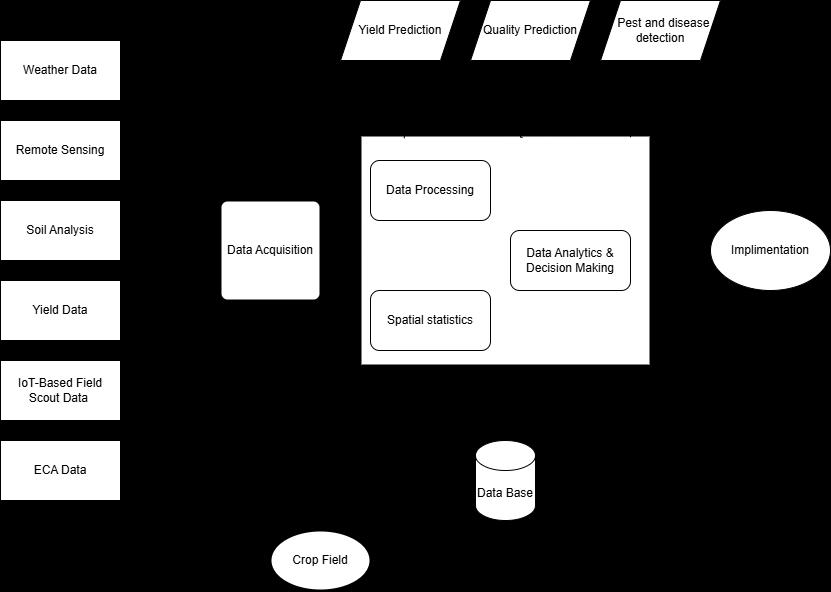
The real-time feedback and monitoring system is an essentialpartofthisAI-drivenappthatenablesfarmstotake proactivecontrolofalltheiroperationsandrespondontime againsttheconstantlychangingconditionsinthefields.The system is driven by cutting-edge technologies and data consolidation,whereinitprovidesinsightandactionitems around the clock for optimizing agricultural activities towards productivity improvement. The core of any realtime monitoring system is the ongoing reception of data fromdevicesindependentlyplantedintheinteriorofafarm. Someofthedevicesareasfollows:
• Sensor Networks: Soil sensors planted all over the farm landsensesoilmoisture,temperature,pH,andotherbasic nutrientsatconvenienttimes.Receptionofdatainreal-time will enable farmers to keep a close watch and plan for irrigationandfertilizationinadvance.
•WeatherStations:Built-inweatherstationstransmitrealtimemeteorologicalinformationontemperature,humidity, windspeed,andrainforecasts.Farmersusethisinformation to forecast weather patterns and therefore plan crop managementactivitiesaccordingtoplanting,irrigation,and harvesting.
Real-TimeAlertsandNotifications:Itusesaveryadvanced alert system that promptly alerts farmers of any vital developmentinthefield.Thealertsaretriggeredeitherby deviation from set thresholds or anomaly detection in patternsofdata.Amongtheimportantalertsystemfeatures are:
•OutbreaksofPests:Imagerecognitionalgorithmsdetecting outbreaks of pests trigger real-time alerts to farmers. Prompt notification enables farmers to adopt a localized
International Research Journal of Engineering and Technology (IRJET) e-ISSN: 2395-0056
Volume: 12 Issue: 03 | Mar 2025 www.irjet.net p-ISSN: 2395-0072
approachtopestcontrolandthusminimizethedamageto cropswhileminimizingchemicalpesticides.
•Deficiencyofnutrients:Soilsensorsprovidereal-timesoil nutrientlevelsmeasurementsandgivewarningsignalsto the farmer if some nutrient levels go below optimum threshold levels, enabling him to fertilize them appropriately:cropmaintenanceandreturnsmaximization.
•WeatherEvents:Weatherforecastsandreal-timeweather information from stations update farmers on upcoming weather events like storms or drought. Warnings notify farmersengagedinprotectiveactivities,suchasirrigation schedule adjustments or the implementation of soil conservationtechniquestopreventlikelycroploss.
FeedbackLoopandAdaptiveManagement:Ageneralcrucial component of the real-time monitoring mechanism is a feedbacklooptoenableongoingimprovementandadaptive managementofpractice.Thefarmerswouldbeencouraged toprovidefeedbackontheappropriatenessandadequacyof the recommendations, as well as on how the application performs within their particular practice context. This feedback is collected via user interfaces and surveys incorporatedwithintheapp.Themostimportantfeaturesof thisfeedbackloopare:
•UserInterface:Theapp'ssimpleinterfacesupportsrealtime data visualization, notifications, and access to personalized suggestions. Farmers can interact with this interface and give feedback regarding the relevance and feasibilityoftheirfarmingoperationoutcomes.
•InterviewsandSurveys:Regularsurveys andinterviews with farmers constructively gather qualitative input regarding their experience of using the app. Feedback essentially allows usability problems, points of improvement,andfurtherfeaturesthatfarmerscanbenefit fromtobeidentified.
• Evolution of Machine Learning Algorithms: Ongoing learningfrom the feedback information,machinelearning algorithms would optimize recommendation models and subsequentpredictionsontheirown.Intheprocessoftime, theappwouldbecomeattunedbystudyinghistorictrendsof feedbacktobeevenmoreinkeepingwithfarmers'likesand productionrequirements.
Usage of a reliable real-time surveillance and feedback processwouldbringaboutseveralbenefitsforfarmersand farming:
•BetterDecisionMaking:On-timeavailabilityofinformation richwithinsightsderivedfromthedataempowersfarmers totakeadecisiononcropmanagementpractices,usageof resources,andriskmitigationstrategies.
• Increased Productivity: Early diagnosis allows for early interventionandoptimizestheseagriculturalinputs water,
fertilizers,andpesticides inexactlytherightamount,atthe correcttime,toincreasecropyieldwhileminimizingcostsof production.
•Sustainability:Themechanismsustainsenvironmentally friendly farming practices by reducing the environmental impactbysource-basedresourcemanagementandreduces theusageofchemicals.
•Resilience:Thiscouldentailbetterreactionstoexogenous factors suchasclimaticvariabilityormarketfluctuations andmakefarmingoperationsmoreresilient.
IoT sensors are instrumental in offering real-time information on numerous environmental and soil parameters.Incorporatingthesesensorstakestheprecision agricultureapplicationtothenextlevelwithmoreaccurate, data-drivensuggestionsforfarmoperations.IoTsensorsfill thegapbetweenthephysicalanddigitalworldsbyoffering location-based,accurateinformation,equippingfarmerswith actionableinsightstoimprovetheirpractices.
ItusesaseriesofdifferentIoTsensorstoregulatedifferent areasofagriculture.Watercontentinsoilsensorsareusedto detect the volumetric amount of water in soil so that irrigationisoptimizedandoverwateringorunderwateringis prevented. Soil temperature and ambient air temperature sensorsdetecttoensurethatcropsgrowhealthilyandassist with the earlydetection of temperature-sensitivepestand diseaseinfections.pHsensorsrecordsoilacidityoralkalinity to ascertain the balance between plant needs and the conditionofsoil.Nutrientsensorsscanthemajornutrients nitrogen,phosphorus,andpotassiumandgiveadvisoriesto utilize fertilizers for these accordingly. Weather sensors measuretemperature,humidity,wind,andrainfallreadings and help predict the weather as well as organize farm activities for it. Sunlight intensity is tracked using light sensors, assessing photosynthesis activity and optimizing plantingofcropsaccordingtolightconditions.
Usage of IoT sensors has some basic advantages. There is real-timemonitoringthatprovidesconstantfeedbackonkey environmental and soil conditions, thus facilitating quick actionincaseofaflaw.Sensorreadingsmaketheutilization ofresourceslikewater,fertilizers,andpesticidespreciseto thepoint,avoidingwastageandensuringsustainability.From theincorporationofsensordataandmachinelearning,the system improves decision-making through actionable recommendations like optimized irrigation timing and nutrientsupply.Thesesensorsalsocontributetocostsavings throughmeansofimprovedresourceoptimizationandthe ability to detect problems like water stress, nutrient imbalance, or infestation at an early stage, thus avoiding probablelosses.
International Research Journal of Engineering and Technology (IRJET) e-ISSN: 2395-0056
Volume: 12 Issue: 03 | Mar 2025 www.irjet.net p-ISSN: 2395-0072
Integration of IoT sensors into the precision agriculture system is a multi-step process. Initially, IoT sensors are deployed across industries to gather soil, weather, and environmental information in real-time. Sensors use communicationprotocolssuchasMQTTorHTTPtoforward datatoacentralizedsystemthroughwirelesstechnologies such as Wi-Fi, Zigbee, or LoRaWAN. The data gathered is noise-filtered before it is fused into the application's database. Machinelearningalgorithms analyze this sensor datatocreateactionablerecommendations,whichareshown on the application's interface in the form of interactive dashboards, maps, and charts. Real-time notifications and alertsalsoensurethatuserscanactonsensordatainaswift manner.
Thoughitisbeneficial,theuseofIoTsensorsalsocomeswith problems.Connectivity,especiallywheremobilecoverageis weak, may hamper data transfer. This can be resolved by adopting low-power, wide-area network (LPWAN) technology such as LoRaWAN. Power for sensors is a problem,too,whichcanberesolvedthroughtheuseofsolarpoweredIoTdevicesinordertoremainoperationalwithout break.IoTsensorsareexpensiveforsmallfarmers,butcosteffectiveandscalableoptionscanmakeitmoreaffordable.In addition,thelargevolumesofsensordatahaveatendencyto clog the system, and therefore cloud and edge computing solutionsmustbeemployedforeffectivedatamanagement.
The use of IoT sensors significantly enhances the system architecture by turning these sensors into data collection nodes.Sensor-to-cloudandconsequentlycloud-to-AI-based decision-makingplatformdataflowfacilitatestheoperation withoutanyhindrance.Thisadvancedsystemarchitecture yieldssomeanticipatedresultssuchasincreasedaccuracyof recommendationsbecauseofenhancedgranularityofdata, minimizedenvironmentalimpactthrougheffectiveutilization ofresources,andenhancedcropproductionatreducedcosts, hencebecomingeconomicallybeneficialtofarmers.
Therefore, marrying the precision agriculture application with the IoT sensors introduces the application more challenging, data-driven, and effective for the current agriculture. Through addressing important challenges, delivering actionable facts, and enabling practices, the sensors enable farmers to make informed decisions and attainincreasedproductivity.
The development of AI-based applications for accurate agriculture rests on precautions and advance exposure of various data sets, making the spine of this innovative technique.Thisprocessforcestocollectextensivedatafrom many sources to gain a broad understanding of the agricultural landscape. Important data sources include weatherfiguresforecastservicestodeterminestrongand
climatic conditions from real-time and historical weather stations and to limit production practices. IoT-based soil sensors, distributed in areas, monitoring of frequent soil moisture, temperature, pH levels and nutrients, enabling accurateirrigationandfertilizationadjustment.Inaddition, the drone is equipped with multicultural and thermal camerasandhigh-resolutionimages,whichallowstheinitial detection of problems such as detailed evaluation of crop healthandinsectinfections.Historicalcropdata,previous returns,insectoutbreaksandagriculturalpractices,arealso integrated to increase the accuracy of the prediction and providevaluablereferences.
Pre -treatment of these different data sets is equally important, and ensures quality, stability and uniformity beforeanalysis.Techniquessuchasnoisereductionareused to eliminate irrelevant or contaminated data, which improvesdata setsafety.Normalizationadjustsdata from different sources on a general scale or in disintegration, convenience meaningful comparisons, while functional extractions highlight the main features - for example, the properties of specific soil from satellite images or sensor readingfromsensorreading-relevanttotheinsight.Data integrationthenmergesthesesourcesofanintegrateddata set,whichcapturesthecomplexinteractionbetweenfactors affectingAgriculture
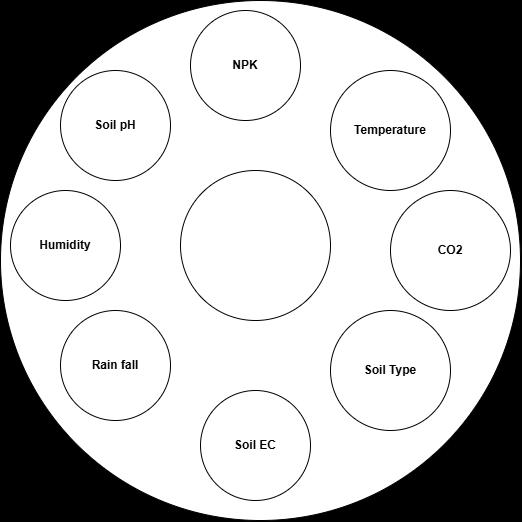
Crop selection
Accurateagriculturecaneasilybeachieved,supportedbythe proposedmodeldevelopmentandtrainingphaseoftheAIbasedapp.Theotherwilllearnfrompre-developeddataina bid for the selection and applications of new machine
International Research Journal of Engineering and Technology (IRJET) e-ISSN: 2395-0056
Volume: 12 Issue: 03 | Mar 2025 www.irjet.net p-ISSN: 2395-0072
learningalgorithmsselectedandapplicabletofarmers.This processbeginswiththeappropriatechoiceofalgorithms:For thefunctionsofimagerecognition,suchassatelliteanddrone images crops of health assessment, and time series data analysisrelatedtoweatherpatternsandsoilmoisturelevels. Thepatternsofthesetrainedalgorithmslearnhistoricaland real-timedatatoenableaccuratepredictions.Thetraining processinvolvesstrictverificationagainstindependentdata setstoensurethatthemodelsobtainedarereliableandcan benormalizedfornewdata Hyperprimesettingisusedon modeladaptation;Thisisdonebysettingthelearningspeeds andbatchforms,whicharerejuvenatedbasedontest-andthurtytestsandmodelevaluation.Thentrainedmodelsare integratedintotheappoftheapp,sodecisionsfacilitaterealtimeanalysiswithsupport. Thisstronggrowthandtraining methodwouldbeimportanttocompletetherelevantinsights relevant from the AI model, and allow farmers the opportunitytooptimizetheirpracticeagainstbetterreturn returns.
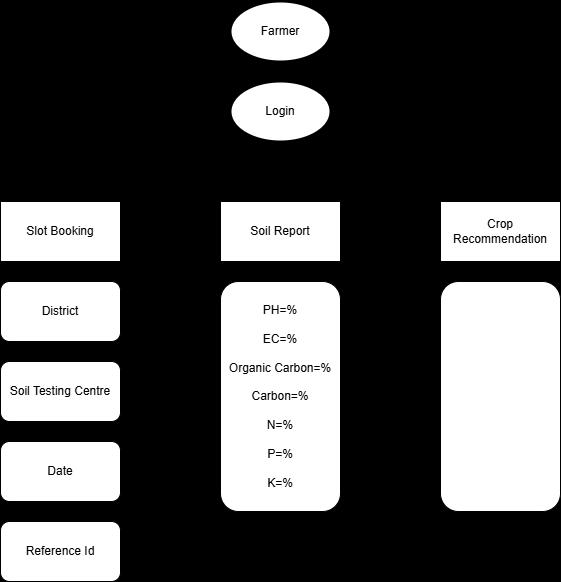
Bysoil reportitwill recommend thefarmerto whichcrop to growin theirfield
Theimplementationofthereal-timeimplementationofthe AI-basedappforaccurateagricultureandworkincludesdata collection,processing,analysisandspontaneousintegration ofuserinteractions, to ensure thatfarmersreceivetimely andaction-richinsults.Basedoncontinuousdatacollection, theappreceivesinformationfromsatelliteimages,IoTsoil sensors and weather stations. This information is then immediately sent to the cloud, where this data is a prepropulsion for cleaning, generalization and integration. In addition -St condition -As - -species -machine learning
models such as CNN -er and RNNS patterns, crop health prediction and process data streams in real time for the effect of weather conditions with personal advice. This insight is then treated through the Backend system of the appandispresentedonthefarmer'ssmartphoneonauserfriendly interface. It provides real -time warning, crop health, optimal irrigation plan, insect control smart or visualsoftheircropsintheformofgradingupdatesonthe health updates. The app also has a self -reporting feature built-in,whichgivesfarmerstherighttopostcommentsor experiences that will be used to continuously update and improvethemodel.Thisprocessensuresthatrealtimewill return to these changing circumstances, thus keeping the appsresponsibleforchangingagriculturalpracticesagainst sustainable return improvement measures, the apps are responsible for accurate and timely guidance. The implementationofthereal-timeimplementationoftheAIbasedappforaccurateagricultureandworkincludesdata collection,processing,analysisandspontaneousintegration ofuserinteractions, to ensure thatfarmersreceivetimely andaction-richinsults.Basedoncontinuousdatacollection, theappreceivesinformationfromsatelliteimages,IoTsoil sensors and weather stations. This information is then immediately sent to the cloud, where this data is a prepropulsion for cleaning, generalization and integration. In addition -St condition -As - -species -machine learning models such as CNN -er and RNNS patterns, crop health prediction and process data streams in real time for the effect of weather conditions with personal advice. This insight is then treated through the Backend system of the appandispresentedonthefarmer'ssmartphoneonauserfriendly interface. It provides real -time warning, crop health, optimal irrigation plan, insect control smart or visualsoftheircropsintheformofgradingupdatesonthe health updates. The app also has a self -reporting feature built-in,whichgivesfarmerstherighttopostcommentsor experiences that will be used to continuously update and improvethemodel.Thisprocessensuresthatrealtimewill return to these changing circumstances, thus keeping the appsresponsibleforchangingagriculturalpracticesagainst sustainable return improvement measures, the apps are responsibleforaccurateandtimelyguidance.
TheprecisionagricultureappbasedonAIhasemergedasa worthwhile tool in the enhancement of agricultural productivityandsustainability.Theoutcomesoftheproject identify the revolutionizing potential of incorporating cutting-edge technologies into conventional farming practices.Theappequippedfarmerswithaccurate,real-time information,whichallowedthemtomaximizetheirfarming techniquesandincreasecropyields.Throughcasestudies and lessons learned, the app succeeded in closing the knowledge gap by empowering farmers through the provision of decision-support tools that made use of data analytics.Theabilityoftheapptopredictoccasionswhen
International Research Journal of Engineering and Technology (IRJET) e-ISSN: 2395-0056
Volume: 12 Issue: 03 | Mar 2025 www.irjet.net p-ISSN: 2395-0072
therewasa likelihoodthatcropsneededadditional water and fertilizers resulted in reduced wastage and lower expensesforfarmers.Thisefficiencyledtomoresustainable farmingpracticesbyreducingtheenvironmentalimpactof farming operations. The cloud scalable infrastructure and modularity of the app provide the flexibility to adjust to variousregionsandcrops.Theappcanbecustomizedand scaled to fit the particular needs of diverse farming communities.Theprojectshowcasedhugeadvantagesbut alsorevealedissuesincludingthenecessityforongoingdata update,adoptionofnewtechnologies,andfillingthedigital literacygapamongfarmers.Futureimprovementsneedto beonaugmentingthedataquality,diversifyingthecapability oftheapp,andintegratingextensivetrainingandsupportfor the farmers. Conclusion: The app based on artificial intelligence for precision agriculture is an important milestoneforthetransformationofagriculture.Throughthe combineduseofAIandIoT,theappcantransformfarming techniques to become more efficient, sustainable, and resistant to the vagaries of climate change as well as resource scarcity. Further investment in technology and training farmers will play a key role in unlocking the full potentialofprecisionagriculture.
[1]Y.Zhou,X.Yang,L.Wang,andY.Ying,“Awirelessdesign of lowcost irrigation system using zigbee technology,” in 2009 International Conference on Networks Security, Wireless Communications and Trusted Computing, vol. 1. IEEE,2009,pp.572–575.
[2] N. Wang, N. Zhang, and M. Wang, “Wireless sensors in agriculture and food industry recent development and future perspective,” Computers and electronics in agriculture,vol.50,no.1,pp.1–14,2006.
[3]P.Tripicchio,M.Satler,G.Dabisias,E.Ruffaldi,andC.A. Avizzano, “Towards smart farming and sustainable agriculturewithdrones,”in2015internationalconference onintelligentenvironments.140–143.IEEE,2015,pp.
[4]Y.Liu,X.Ma,L.Shu,G.P.Hancke,andA.M.Abu-Mahfouz, “From industry 4.0 to agriculture 4.0: Current status, enabling technologies, and research challenges,” IEEE transactions on industrial informatics, vol. 17, no. 6, pp. 4322–4334,2020.
[5] S. Ivanov, K. Bhargava, and W. Donnelly, “Precision farming:Sensoranalytics,”IEEEIntelligentsystems,vol.30, no.4,pp.76–80,2015.
[6]O.Gulec,E.Haytaoglu,andS.Tokat,“Anoveldistributed cds algorithm for extending lifetime of wsns with solar energyharvesternodesforsmartagricultureapplications,” IEEEAccess,vol.8,pp.58859–58873,2020.
[7] Y. E. M. Hamouda and C. Phillips, "Optimally heterogeneous irrigation for precision agriculture using wirelesssensornetworks",ArabianJ.Sci.Eng.,vol.44,no.4, pp.3183-3195,Apr.2019.
[8]C.ArunandK.LakshmiSudha,"AgriculturalManagement using Wireless Sensor Networks – A Survey", 2012 2nd International Conference on Environment Science and BiotechnologyIPCBEE,vol.48,2012.
[9]D.Anurag,S.Roy,andS.Bandyopadhyay,“Agro-sense: Precision agriculture using sensor-based wireless mesh networks,” in 2008 first itu t kaleidoscope academic conference-innovationsinngn:Futurenetworkandservices. IEEE,2008,pp.383–388.
[10] K. Paramathma, M. A. Kumar, P. Ranjith, and C. S. SanthoshReddy,“Developmentofaibasedappforprecision agricultureinindia,” in 2023IEEERenewableEnergyand SustainableE-MobilityConference(RESEM),2023,pp.1–5.
[11]SiuliRoyandSomprakashBandyopadhyay,"ATest-bed on Real-time Monitoring of Agricultural Parameters using WirelessSensorNetworksforPrecisionAgriculture".
[12]V.DharmarajandC.Vijayanand,"Artifificialintelligence (AI)inagriculture",Int.J.CurrentMicrobiol.Appl.Sci.,vol.7, no.12,pp.2122-2128,2018.
[13]M.S.Farooq,S.Riaz,A.Abid,K.AbidandM.A.Naeem, "A survey on the role of IoT in agriculture for the implementationofsmartfarming",IEEEAccess,vol.7,pp. 156237-156271,2019.
[14]T.N.Gia,L.Qingqing,J.P.Queralta,Z.Zou,H.Tenhunen andT.Westerlund,"EdgeAIinsmartfarmingIoT:CNNsat theedgeandfogcomputingwithLoRa",Proc.IEEEAFRICON, pp.1-6,Sep.2019.
[15] M. Roopaei, P. Rad and K.-K.-R. Choo, IEEE Cloud Comput.,vol.4,no.1,pp.10-15,Jan.2017.