
International Research Journal of Engineering and Technology (IRJET) e-ISSN: 2395-0056
Volume: 13 Issue: 01 | Jan 2026 www.irjet.net p-ISSN: 2395-0072
PHYTOGENIC FABRICATION AND CHARACTERIZATION OF CHITOSAN NANOPARTICLES USING PLECTRANTHUS VETTIVEROIDES: ASSESSMENT OF BACTERICIDAL ACTIVITY
C.
GAYATHRI 1, A. KAMALESH 2, K. KAVIYA 3, A.
KIRUTHIGA
4
1, Associate professor, Sri Vijay Vidyalaya College of Pharmacy, Nallampalli. 2,3,4, Students, B. Pharm, Sri Vijay Vidyalaya College of Pharmacy, Nallampalli. ***
ABSTRACT- Chitosan nanoparticles (CNPs) have attracted significant interest owing to their excellent biocompatibility, biodegradability, and inherent antimicrobial properties. In this study, chitosan nanoparticles were biosynthesized using the ethanolic root extract of Plectra thus vettiveroides through the ionic gelation method. The formation and physicochemical characteristics of the synthesized nanoparticles were analysed using UV–Visible spectroscopy and Scanning Electron Microscopy (SEM). UV–Visible spectral analysis displayed a distinct absorption peak at 234 nm, indicating successful nanoparticle synthesis. SEM images demonstrated predominantly spherical nanoparticles with minor aggregation. The antibacterial efficacy of the biosynthesized chitosan nanoparticles was assessed against Staphylococcus aureus, Bacillus cereus, Escherichia coli, and Klebsiella pneumoniae using the agar well diffusion technique. Among the tested pathogens, Klebsiella pneumoniae showed the highest susceptibility to the nanoparticles. These findings highlight the potential of Plectranthus vettiveroides-mediated chitosan nanoparticles as effective antibacterial agents with prospective applications in biomedical andpharmaceutical fields.
Keywords: Chitosan nanoparticles; Plectranthus vettiveroides; Ionic gelation; Antibacterial activity; SEM; UV–Visible spectroscopy.
1. INTRODUCTION
Chitosanisanaturallyderived polyatomicbiopolymerobtainedthroughtheDEacetylationofchitinandiswidelyvalued for its biodegradability, biocompatibility, low toxicity, and inherent antimicrobial properties. Owing to the presence of reactive amino functional groups, chitosan can be readily fabricated into nanoparticle form, which has attracted considerable attention in biomedical and pharmaceutical fields, particularly for antimicrobial applications and drug delivery systems. However, many conventional nanoparticle synthesis techniques rely on hazardous chemicals and energy-intensiveprocesses,therebyrestrictingtheirsuitabilityforbiologicaluse.
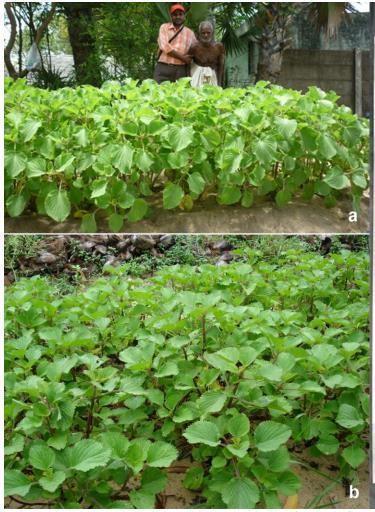
Inrecentyears,greensynthesisapproachesutilizingplant-derivedmaterialshavegainedprominenceasenvironmentally friendly and sustainable alternatives for nanoparticle production. Plectranthus vettiveroides, an aromatic medicinal plant belongingtothefamilyLamiaceae,istraditionallyusedforvarioustherapeuticpurposesandisknowntopossessadiverse range of bioactive phytochemicals with antimicrobial properties. The phytoconstituents present in its root extract can potentiallyfunctionasnaturalcross-linking,reducing,andstabilizingagentsduringnanoparticlesynthesis.
Thepresentstudyaimstoestablishasimple,safe,andeco-friendlymethodforthesynthesisofchitosannanoparticles using Plectranthus vettiveroides rootextractviatheionicgelationtechnique.Itishypothesizedthatthephytochemicalsin therootextractplayacrucialroleinpromotingnanoparticleformationandenhancingAntibacterialefficacy.Thisworkis significantasitintroducesagreenstrategyforproducingbiologicallyactivechitosannanoparticleswithpromising applicationsinpharmaceuticalandbiomedicaldomains.
International Research Journal of Engineering and Technology (IRJET) e-ISSN: 2395-0056
Volume: 13 Issue: 01 | Jan 2026 www.irjet.net p-ISSN: 2395-0072
2.
MATERIALS AND METHODS
Materials
Chitosan and sodium tripolyphosphate (TPP) were purchased from Sigma-Aldrich (USA). Acetic acid was obtained from HiMedia Laboratories, Chennai, India. All reagents and chemicals used in this study were of analytical grade and used withoutfurtherpurification.
Collection and Preparation of Plant Extract
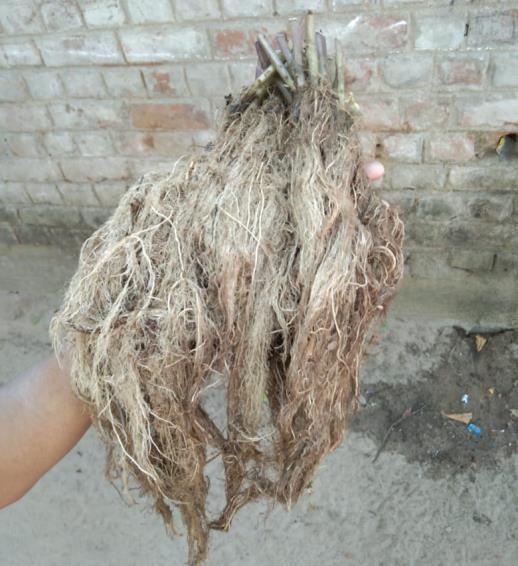
The roots of Plectranthus vettiveroides were collected from the Kodumudi Dam region, Cuddalore District, Tamil Nadu, India, and taxonomically authenticated by a qualified botanist. Collected roots were thoroughly washed with distilled watertoremovedebris,shade-driedatroomtemperature,andpulverizedintoafinepowder.Thepowderedmaterialwas subjectedtoethanolextraction,followedbyfiltration.Theresultingextractwasstoredat4°Cuntilfurtheruse.
Synthesis of Chitosan Nanoparticles
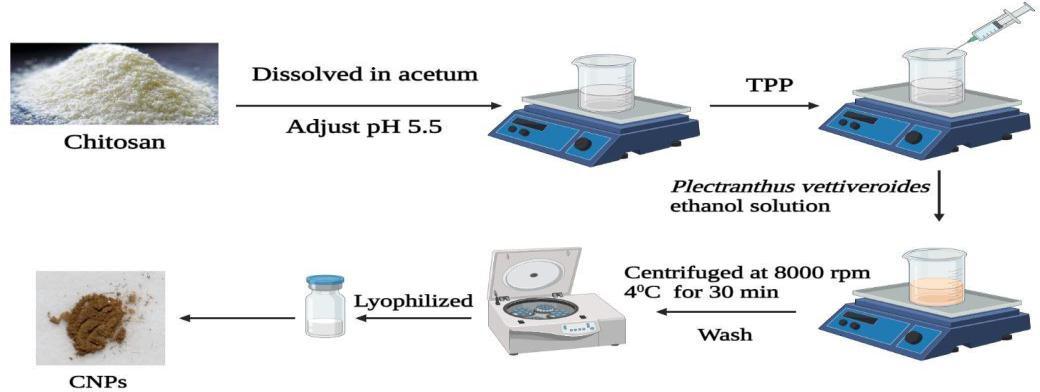
Chitosan nanoparticles were prepared using the ionic gelation technique. Chitosan was dissolved in 1% (v/v) acetic acid solution and the pH was adjusted to 5.5 using sodium hydroxide. A sodium tripolyphosphate (TPP) solution was then added dropwise to the chitosan solution under continuous magnetic stirring. The Plectranthus vettiveroides root extract was introduced into the chitosan solution prior to TPP addition. The formation of nanoparticles was indicated by the appearanceofturbidity.Thesynthesizednanoparticleswerecollectedbycentrifugation,washedrepeatedlywithdistilled watertoremoveunboundsubstances,andlyophilizedforfurthercharacterizationandanalysis.
International Research Journal of Engineering and Technology (IRJET) e-ISSN: 2395-0056
Volume: 13 Issue: 01 | Jan 2026 www.irjet.net p-ISSN: 2395-0072
Antibacterial Activity
TPP–chitosan nanoparticles (TCs) were synthesized using the ionic gelation approach involving electrostatic interaction betweenchitosanandTPPanions, withminor modificationstopreviouslyreported protocols.In brief,20mgof chitosan was dissolved in 10 mL of 1% (v/v) acetic acid under constant magnetic stirring at room temperature, and the pH was adjusted to 5.5. A TPP solution (2 mg/mL; 3.5 mL) was then added gradually to the chitosan solution with continuous stirring. The appearance of a clear opalescent suspension confirmed the formation of chitosan nanoparticles, which was furtherstabilizedbyshort-durationsonication.
Forthesynthesisof Plectranthus vettiveroides–encapsulatedTPP–chitosannanoparticles,1mLofethanolicrootextract(3 mg/mL)wasslowlyintroducedintothechitosansolutionpriortotheadditionofTPP,followedbythesameionicgelation process.Thenanoparticlesformedwereharvestedbycentrifugationat8,000rpmfor30minutesat4°C.Thesupernatant was discarded, and the nanoparticle pellet was washed three times with double-distilled water to remove unbound constituents. The final purified nanoparticles were freeze-dried and stored for subsequent characterization and antibacterialevaluation.
3. RESULTS AND DISCUSSION
Analytical Characterization
UV-Vis spectroscopy
UV-Visible spectroscopy is basically used for the identification of chemical products and their qualitative analysis. The moleculesoratomsabsorbUV-Visibleradiationandtheirelectronsareexcitedfromlowerenergylevelstohigherenergy levels. In the present study, we have obtained the broad peaks at 234 nm; this indicates the formation of chitosan nanoparticlesatsuchwavelength(fig4).
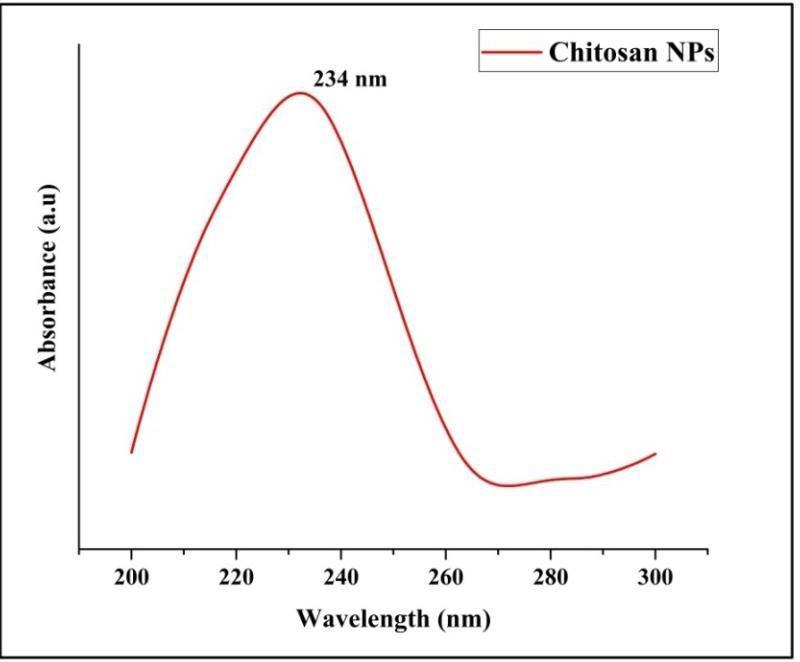
no: 4 UV-VisiblespectroscopyofCNPssynthesizedusing Plectranthus vettiveroides rootextract.
Scanning Electron Microscopy (SEM)
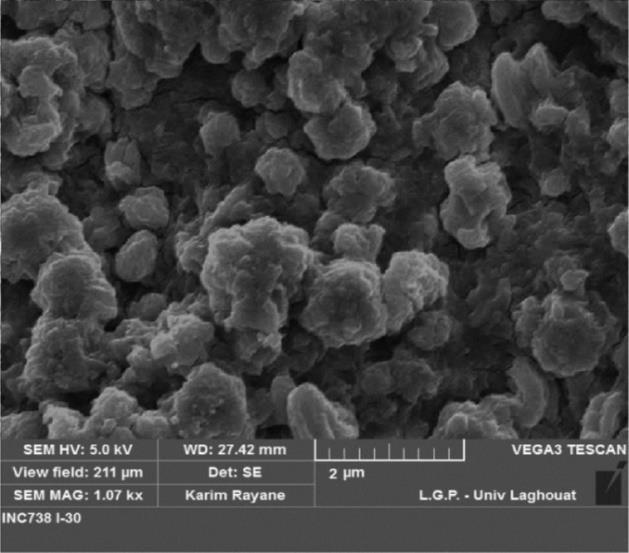
ThesurfacemorphologyoftheCNPssynthesizedusing Plectranthus vettiveroides rootextractwasstudiedusingSEM.The SEM image wasshown in fig5.The SEM resultsrevealedthe presence ofagglomeratesofnanoparticlesand showed that thesphericalmorphologywasinhighresolution.
International Research Journal of Engineering and Technology (IRJET) e-ISSN: 2395-0056
Volume: 13 Issue: 01 | Jan 2026 www.irjet.net p-ISSN: 2395-0072
Antibacterial Activity
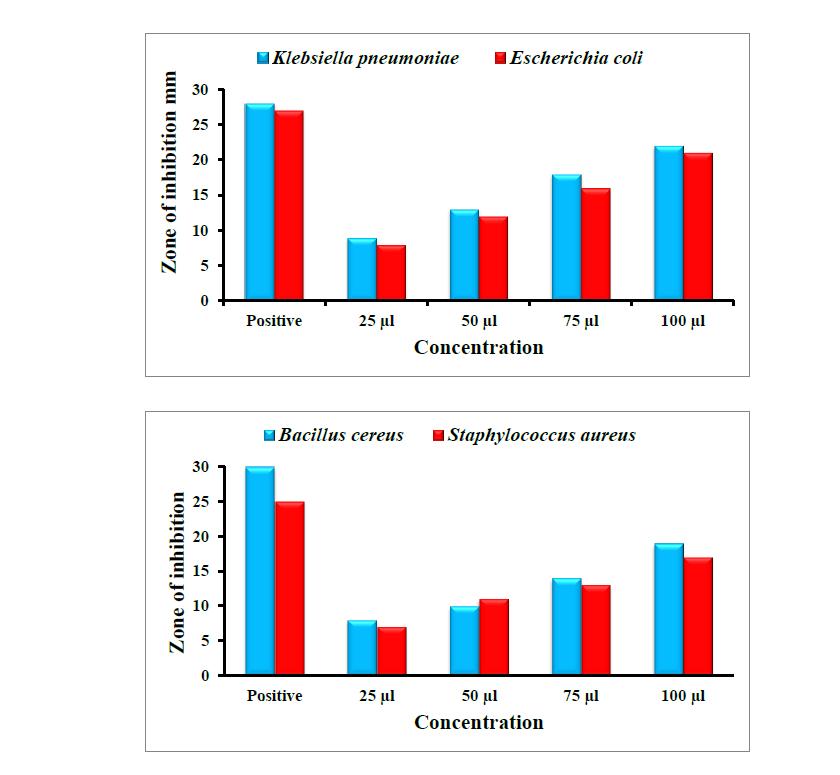
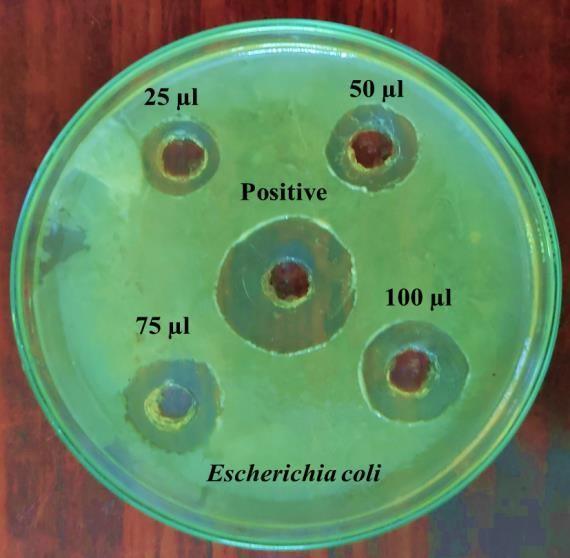
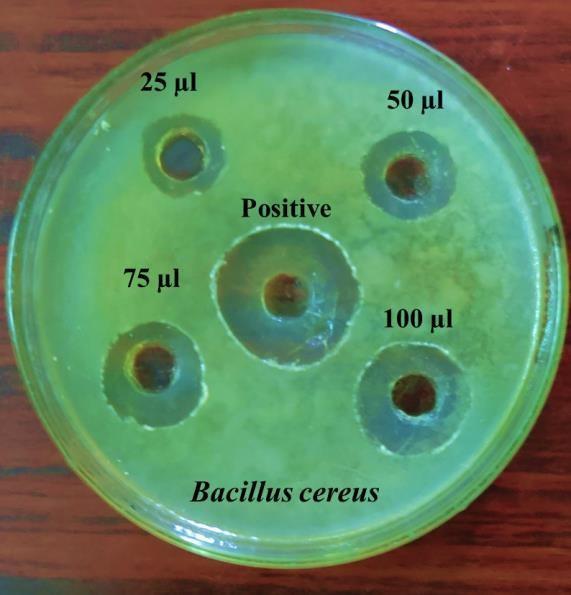
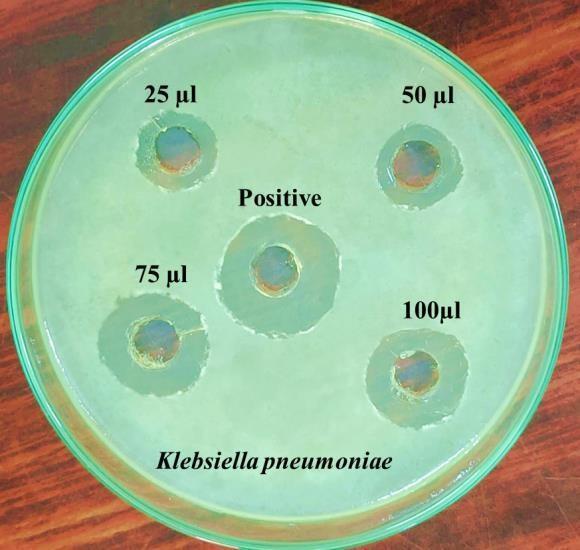
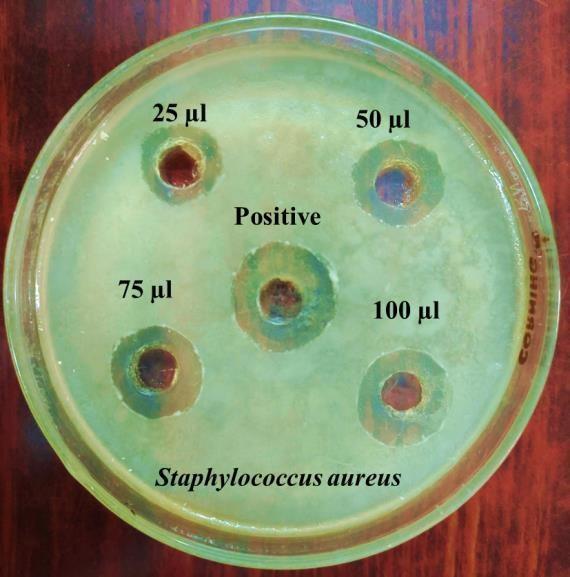
The antibacterial potential of chitosan nanoparticles (CNPs) was evaluated using the well diffusion method against four bacterial pathogens: Staphylococcus aureus, Bacillus cereus, Escherichia coli, and Klebsiella pneumoniae. The biosynthesized chitosan nanoparticles, prepared using Plectranthus vettiveroides root extract, exhibited inhibitory effects against all tested strains. Notably, the antibacterial activity was more pronounced against Gram-negative bacteria comparedtoGram-positivebacteria, likelyduetodifferencesinthestructural compositionoftheircell walls.Amongthe pathogens tested, Klebsiella pneumoniae showed the largest zone of inhibition (24 mm), followed by Escherichia coli (20 mm), Bacillus cereus (18 mm), and Staphylococcus aureus (16 mm) at a nanoparticle concentration of 100 μL. These findingsareconsistentwithpreviousreportsdemonstratingstrongantibacterialactivityofchitosannanoparticlesagainst Klebsiella pneumoniae and Escherichia coli
International Research Journal of Engineering and Technology (IRJET) e-ISSN: 2395-0056
Volume: 13 Issue: 01 | Jan 2026 www.irjet.net p-ISSN: 2395-0072
The mechanism of antibacterial activity of chitosan NPs may be attributed to the penetration and disintegration of the membranebysmaller-sizedNPswhichleadtocelllysis.ThereleaseofH2O2 fromthesurfaceofchitosanNPsalsoreported as the possible mechanism for bactericidal activity. The generation of H2O2 is highly dependent on the surface area of chitosan and the generated H2O2 penetrates the cell membrane and causes damage to kill the bacteria. The presence of alkaloids, terpenoids, flavonoids, tannins, carbohydrates, sterols, saponins, proteins, and amino acids in Plectranthus vettiveroides root extract showed potential bio reducing activity and also bactericidal activity against the tested bacteria whichcouldbeusefulforbiomedicalapplication
International Research Journal of Engineering and Technology (IRJET) e-ISSN: 2395-0056
Volume: 13 Issue: 01 | Jan 2026 www.irjet.net p-ISSN: 2395-0072
4. CONCLUSION
Chitosan nanoparticles were successfully synthesized via a biogenic approach using the ethanolic root extract of Plectranthus vettiveroides. UV–Visible spectroscopy confirmed nanoparticle formation with a characteristic absorption peak at 234 nm, while SEM analysis revealed predominantly spherical morphology. The biosynthesized nanoparticles exhibited significant antibacterial activity against Klebsiella pneumoniae, Escherichia coli, Bacillus cereus, and Staphylococcus aureus, with the strongest effect observed against Klebsiella pneumoniae. These results demonstrate that Plectranthus vettiveroides-mediated chitosan nanoparticles are a promising, eco-friendly option for developing effective antimicrobialagentswithpotentialapplicationsinpharmaceuticalandbiomedicalfields.
5. REFERENCE
1.Ajitha,B.;AshokKumarReddy,Y.;Reddy,P.S.BiogenicnanoscalesilverparticlesbyTephrosiapurpurealeafextractand theirinbornantimicrobialactivity.SpectrochimActaPartA:MolBiomolSpect.2014,121,164-172.
2. Amidi M, Romeijn SG, Borchard G, Junginger HE, Hennink WE, Jiskoot W. Preparation and characterization of proteinloadedN-trimethylchitosannanoparticlesasnasaldeliverysystem.JControlledRelease.2006;111:107-116.
3. Bulmer C, Margaritis A, Xenocostas A. Production and characterization of novel chitosan nanoparticles for controlled releaseofrHu-Erythropoietin.BiochemEngJ.2012;68:61-69.
4.CalvoP,RemunanLopezC,VilaJatoJ,AlonsoM.Novelhydrophilicchitosanpolyethyleneoxidenanoparticlesasprotein carriers. J Appl Polym Sci. 1997;63:125-132. Dyer A, Hinchcliffe M, Watts P, Castile J, Jabbal-Gill I,Nankervis R, Smith A, Illum L. Nasal delivery of insulin using novel chitosan based formulations: a comparative study in two animal models betweensimplechitosanformulationsandchitosannanoparticles.PharmRes.2002;19:998-1008.
5.CherianJacobK,AnewspeciesofColeus,JournalofBombayNaturalHistoricalSociety,42,2021,320-322.
6. Elumalai K, S. Velmurugan. Green synthesis, characterization and antimicrobial activities of zinc oxide nanoparticles fromtheleafextractofAzadirachtaindica(L.)-2015.DOI:10.1016/J.APSUSC.2015.03.176
7.G.Gopalakrishnan,andC.K.Dhanapal,In-vitroantioxidantactivityofmethanolicextractofrootofColeusvettiveroides (Jacob)WorldJournalofPharmacyandPharmaceuticalSciences,3(7),2014,1623-1629.
8.Kadiyala,U.,Tulari-Emre,E.S.,Bahng,J.H.,Kotov,N.A.,VanEpps,J.S.:Unexpectedinsightsintoantibacterialactivityofzinc oxidenanoparticlesagainstmethicillinresistantStaphylococcusaureus(MRSA).Nanoscale10,4927–4939(2018)
9.KavithaK,BakerS,RakshithD,KavithaH,HariniB,SatishS.Plantsasgreensourcetowardssynthesisofnanoparticles. IntResJBiologicalSci.2013;2:66-76.