
International Research Journal of Engineering and Technology (IRJET) e-ISSN: 2395-0056
Volume: 12 Issue: 01 | Jan 2025 www.irjet.net p-ISSN: 2395-0072
International Research Journal of Engineering and Technology (IRJET) e-ISSN: 2395-0056
Volume: 12 Issue: 01 | Jan 2025 www.irjet.net p-ISSN: 2395-0072
Rajeev Patel1 , Rahul Satbhaiya2
1M. tech Scholar, Department of Civil Engineering, Infinity Management and Engineering College Sagar M.P.
2Assistant Professor and Head, Department of Civil Engineering, Infinity Management and Engineering College Sagar M.P.
Abstract - Cable-stayed bridges are recognized for their structural efficiency, aesthetic appeal, and versatility in spanning medium to long distances. This study presents a comparative analysis of the structural and economic performanceofcable-stayedbridgesusingthreedifferentdeck materials:concrete,steel,andprestressedconcrete.Employing SAP software for detailed modeling, the analysis evaluates critical structural parameters such as axial forces, bending moments,shearforces,jointdisplacements,andstressesunder identical loading conditions.
The results demonstrate that prestressed concrete decks provide superior structural performance in terms of reduced deflectionsandstressdistribution,makingthemidealforlongspan bridges. Steel decks offer advantages in lightweight construction and adaptability for complex geometries, while concrete decks remain cost-effective for shorter spans and moderate load conditions. A lifecycle economic analysis reveals that prestressed concrete, despite higher initial costs, offerslong-termcostbenefitsduetoitsdurabilityandreduced maintenance requirements.
This research provides a comprehensive framework for material selection in cable-stayed bridge construction, balancing structural performance with economic considerations. The findings serve as a valuable resource for engineers and designers seeking optimized solutions for modern infrastructure projects.
Keywords: Cable-stayed bridges, prestressed concrete, SAP software, structural performance, economic analysis.
Cable-stayedbridgesareamodernsolutionformediumto long-span construction, characterized by their structural efficiency, aesthetic appeal, and adaptability. The use of tensioned cables connecting the bridge deck to towers allows for efficient load transfer, reducing the need for multiplesupports.Thesebridgesareincreasinglyutilizedfor theirabilitytospanlongdistanceswhilemaintainingcosteffectivenessanddurability.
Theperformanceofacable-stayedbridgeheavilydepends on the material chosen for its deck. Concrete, steel, and
prestressed concrete each offer unique advantages and limitations in terms of structural capacity, economic feasibility, and maintenance requirements. The choice of materialimpactscriticaldesignparameters,includingload distribution, stress behavior, and long-term durability, influencingtheoverallsuccessofthebridge.
While each material has distinct benefits, selecting the optimalmaterialforaspecificprojectischallengingdueto varying requirements for span length, environmental conditions,andbudgetconstraints.Existingliteratureoften focusesonspecificmaterialsorcasestudies,leavingagapin comprehensivecomparisonsunderuniformconditions.
ToAssessthebendingmoments,shearforces,stresses, jointreactions,anddisplacementsforeachofthethree deckmaterials.
To Evaluate the suitability of concrete, steel, and prestressed concrete in terms of strength, durability, andoverallstructuralperformance.
To Perform a lifecycle cost analysis for each material, considering initial costs, maintenance costs, and the long-termperformanceofthebridge.
To Identify the most cost-effective and structurally efficient material for different span lengths, load conditions,andenvironmentalfactors.
Zhang et al., 2015 presents research on reinforced concretedecksforcable-stayedbridgesandhighlightsits ability to withstand compressive forces efficiently. However,studiesalsopointtoitstendencytocrackunder tensile forces. For instance, Zhang et al. (2015) demonstrated that while reinforced concrete decks are cost-effective, they require additional support, such as prestressing or reinforcement, for longer spans
Klemencic et al., 2016 detailed that High-strength concrete (HSC) has become a more popular choice for
International Research Journal of Engineering and Technology (IRJET) e-ISSN: 2395-0056
Volume: 12 Issue: 01 | Jan 2025 www.irjet.net p-ISSN: 2395-0072
bridge decks in recent years. Studies such as those by Klemencic et al. (2016) confirm that HSC provides better performance in terms of durability and load-bearing capacity, which is crucial for minimizing maintenance costs in the long run (Klemencic et al., 2016). HSC also reduces the deck’s thickness, leading to savings in material usage.
Fukuda et al., 2017 focused on the use of steel in bridge decks and showed that steel decks tend to perform well under high loads and extreme weather conditions. However, they require expensive anti-corrosion treatments, especially for bridges located in coastal or industrial areas (Fukuda et al., 2017). The use of weatheringsteel,whichnaturallyformsaprotectiveoxide layer, has been recommended to improve durability.
Chenetal.(2018)exploredthebenefitsofhybriddesigns, incorporating both steel and concrete to maximize the strengths of both materials. Steel decks, when combined with concrete in composite designs, offer reduced dead load and improved structural efficiency (Chen et al., 2018).
Andrawes et al. (2017) says Prestressed concrete decks areconsideredtobemorestructurallyefficientcompared to conventional concrete decks. According to research by Andrawes et al. (2017), prestressed concrete decks provide greater load-carrying capacity and better performance under dynamic loads, such as traffic and seismic forces (Andrawes et al., 2017). Prestressing reduces deflections and allows for longer spans without the need for additional supports. Furthermore, prestressed concrete's resistance to cracking leads to lower maintenance costs over time.
Ma et al. (2020) emphasized that prestressed concrete is particularlybeneficialforlong-spancable-stayedbridges, with spans exceeding 150 meters. The ability of prestressed concrete to reduce deflections and handle large tensile forces makes it an ideal material for these applications.
Concrete vs. Steel: A study by Ogawa et al. (2018) compared the performance of concrete and steel deck materialsinmedium-tolong-spancable-stayedbridges.It was concluded that steel decks offer superior tensile strength, which makes them ideal for long spans, while concretedecksaremoresuitableforshorterspansdueto their cost-effectiveness and lower initial investment (Ogawa et al., 2018).
Prestressed Concrete vs. Steel: Research by Berto et al. (2016) focused on comparing prestressed concrete with steel deck materials for long-span cable-stayed bridges. The study showed that while steel decks offer faster construction and ease of handling, prestressed concrete offers superior long-term durability and reduced
maintenance costs, especially in bridges subject to heavy traffic or environmental stresses (Berto et al., 2016).
Hybrid Systems: Some studies have focused on hybrid systems that combine the strengths of both concrete and steel. Hybrid designs, asexplored by Xie etal.(2019), aim to optimize the load distribution by using steel in areas subjected to tensile forces and concrete in compression zones. Hybrid systems offer the potential for improved overall performance, especially in bridges that require specialized designfeaturesor complexgeometries(Xieet al., 2019).
Reinhold M. Schuster (1976) classified various commercially available steel decks based on their shear resistance mechanisms and mechanical shear transfer devices.Hecategorizedsteeldeckprofilesintothreetypes: those that rely on mechanical shear devices to supply horizontal shear capacity, those that allow for variable spacing of mechanical devices, and those that lack mechanicalsheardevicesaltogether.Schuster'sresearch, although primarily focused on composite slabs, laid the foundation for understanding the behavior of steelconcrete composite systems, influencing future studies in the area.
Ray, M.B., et al. (1980) conducted tests on five composite beamssubjectedtobothbendingandtorsion.Theirstudy provided valuable insights into the performance of composite beams under these loading conditions, particularly focusing on the interplay between bending and torsional moments. By maintaining a constant ratio between the bending and torsional moments, they assessedtheultimatestrengthsofthereinforcedconcrete slabs and composite beams. Their work helped in understanding the structural behavior under combined loading and contributed to the design of composite structures in engineering practice.
Saxena, et al. (1998) compared the economics of T-beam and box girder bridges for a span of 25 meters. Their analysis revealed that T-beam girders were more economical for shorter spans. However, they noted that for longer spans, specifically beyond 25 meters, box girdersprovedtobemorecost-effective.Thiscomparison offered valuable guidance for selecting the appropriate bridge girder type based on spanlength, highlightingthe importanceofmaterialchoiceinoptimizingconstruction costs.
3.1 Bridge Specifications
The cable-stayed bridge was designed with a span configurationconsistingofa30-meterleftspan,a120-meter middle span, and a 30-meter right span, providing a total length of 180 meters. The bridge deck has a width of 3.5
International Research Journal of Engineering and Technology (IRJET) e-ISSN: 2395-0056
Volume: 12 Issue: 01 | Jan 2025 www.irjet.net p-ISSN: 2395-0072
meters,withatopslabthicknessof0.300meters,inclusive of surfacing. The column height measures 10 meters, extending 4 meters from the bottom to the deck and an additional 6 meters from the deck to the top. The main cableshaveadiameterof250mm,whilethehangerropes havevaryingdiameters:50mminthemainspanand40mm in the side spans. Hanger ropes are spaced at 4-meter intervalsalongthespan,ensuringadequatesupportandload distribution.
1.ConcreteDeckGirder
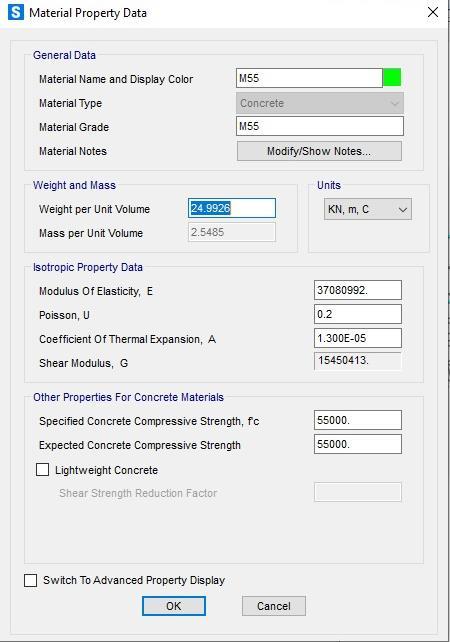
M55gradeconcreteisusedwhichoffershighcompressive strengthbuthasalimitedtensilecapacity,leadingtohigher stressanddisplacementvaluesundertensileloads.Itisideal forshorterspansorsituationswhereweightisnotaprimary concern.Whileitexcelsincompression,itstensileweakness may require additional reinforcement for larger spans. PropertiesofM-55concretecanbeseeninthefigure3.1.
2.SteelDeckGirder550
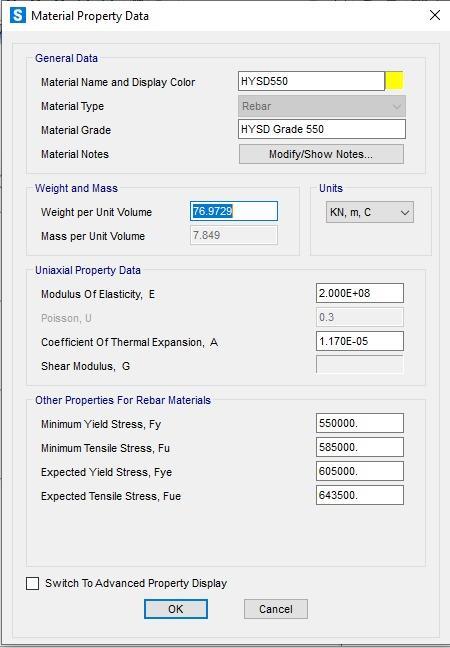
High strength steel of grade Fe-550 is used in modelling whichislightweightandexhibitssuperiortensilestrength, makingitidealforlongerspans.ItoffersHighercostdueto material andmaintenance expenses.PropertiesofSteel of FE-550gradeisasinfigure3.2.
3.2PropertiesofSteel
3.PrestressedConcreteDeckGirder
AprestressedconcretedeckgirderwithaU-beamshapeis commonly used in modern construction. It is constructed usinghigh-tensilestrands,combiningtheadvantagesofboth concreteandsteeltoeffectivelyreducetensilestresses.This design is moderately priced, offering an excellent balance between performance and cost, making it particularly suitableformedium-spanstructures.Propertiesofconcrete andtendonsareasfollows:

Figure3.3PropertiesofTendons
3.3
The following loads were applied to the bridge models to simulatereal-worldconditions:
DeadLoad:-Includestheself-weightofthedeck,cables, pylons,andotherstructuralcomponents.
International Research Journal of Engineering and Technology (IRJET) e-ISSN: 2395-0056
Volume: 12 Issue: 01 | Jan 2025 www.irjet.net p-ISSN: 2395-0072
Live Load: - Vehicular load as per IRC:6-2000 specifications Including the effects of temperature variations.
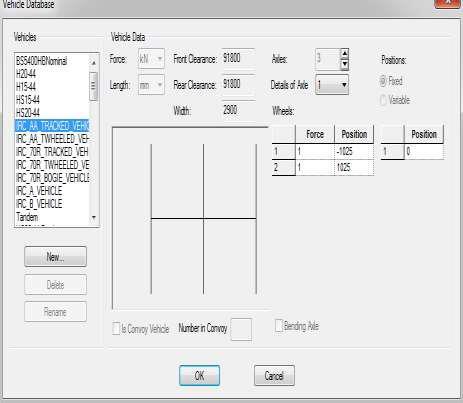
Figure3.4DefinitionofvehicularLoad
Load Combinations: - These load combinations representcriticalscenariostotestthestructurallimits ofthematerials.
Table3.1Variousloadcombinations
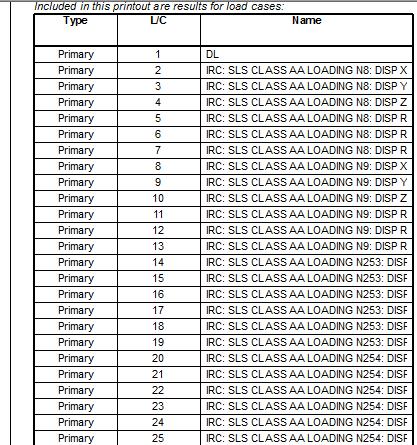
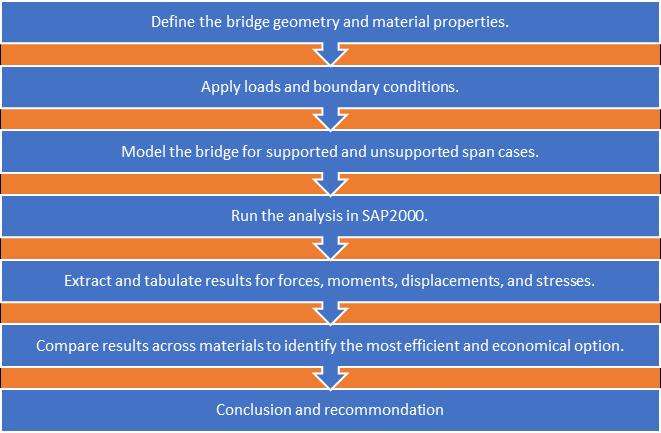
figure3.4MethodologyFlowchart
4. Result and Discussion
4.1 Analysis of Joint Reaction (Axial Force and Bending moment)
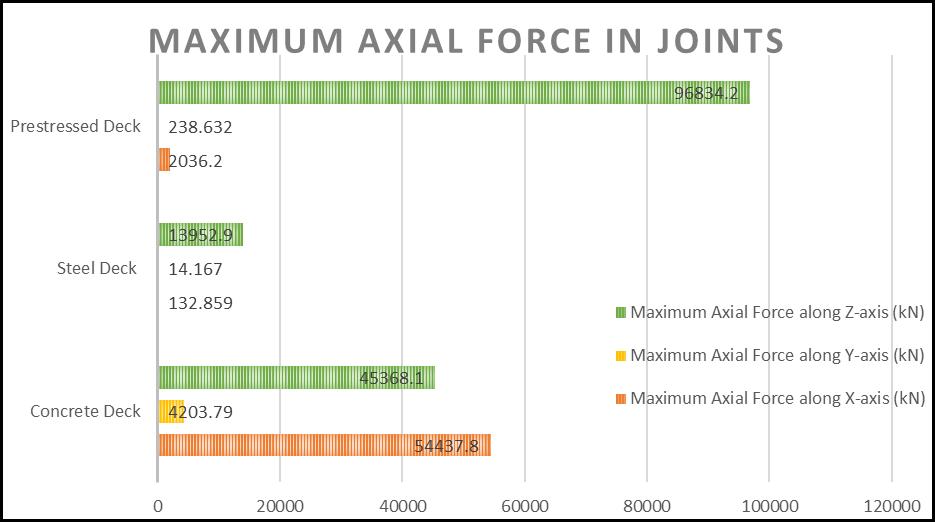
Figure4.1VariationofAbsoluteMaximumAxialForcein inx,yandzdirectioninconcretesteelandPSCdeck
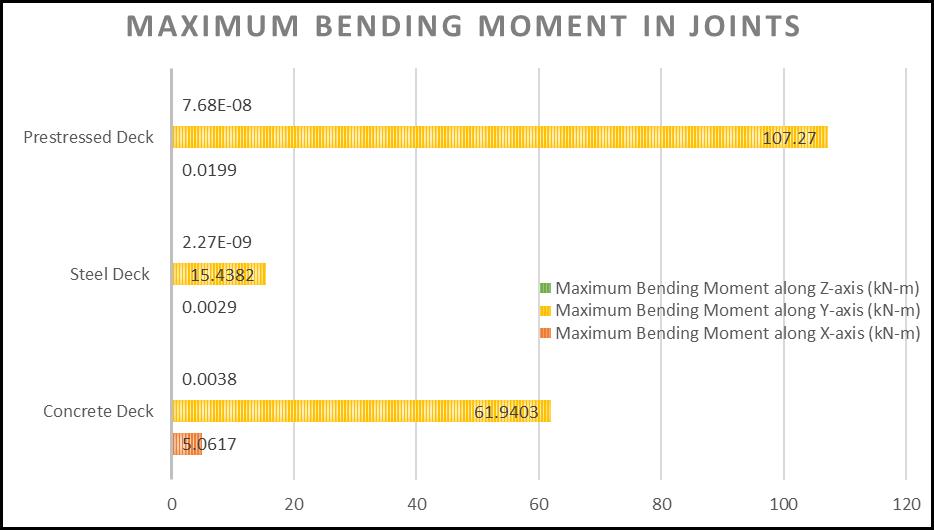
Figure4.2VariationofAbsolutemaximumbending momentinx,yandzdirectioninsteelconcreteandPSC deckgirder
© 2025, IRJET | Impact Factor value: 8.315 | ISO 9001:2008 Certified Journal | Page355
International Research Journal of Engineering and Technology (IRJET) e-ISSN: 2395-0056
Volume: 12 Issue: 01 | Jan 2025 www.irjet.net p-ISSN: 2395-0072
4.2 Analysis of Joint Displacement and Rotations
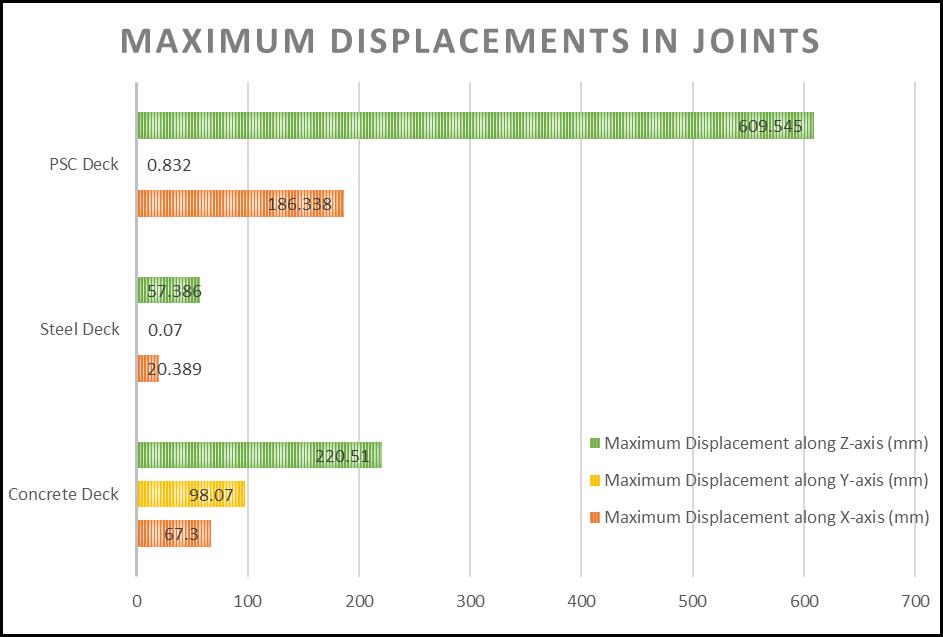
Figure4.3VariationofAbsoluteJointDisplacementinxy andzdirectioninconcretesteelandPSCdeck
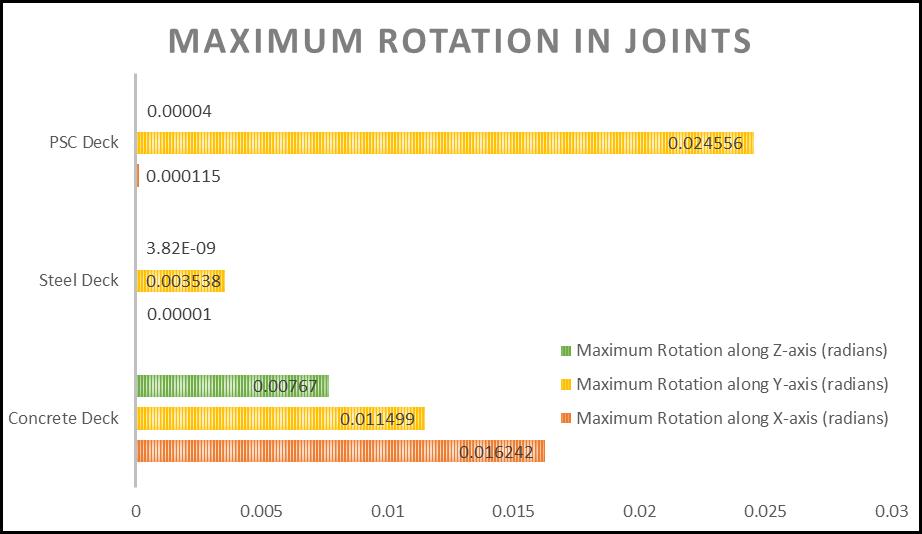
Figure4.4VariationofAbsoluteJointRotationsinx,yand zdirectioninconcretesteelandPSCdeck
4.3 Analysis of Element Forces in Frames
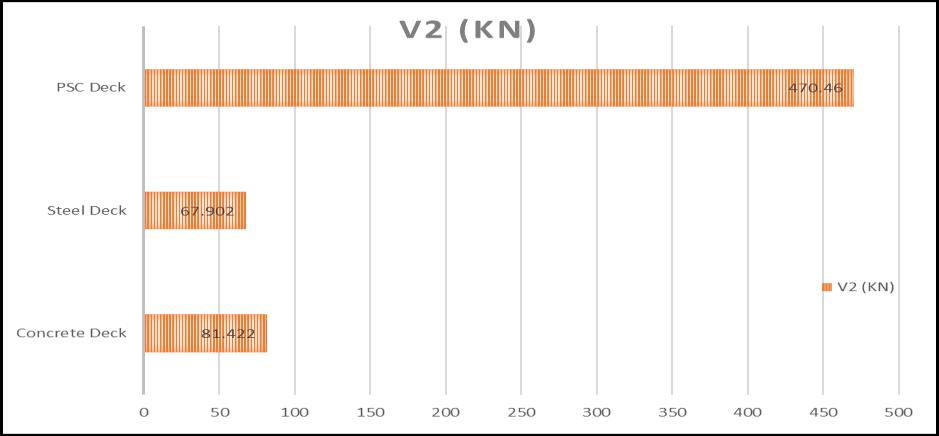
Figure4.5VariationofAbsoluteMaximumshearforcein Y-Direction(V2)inconcretesteelandPSCGirder
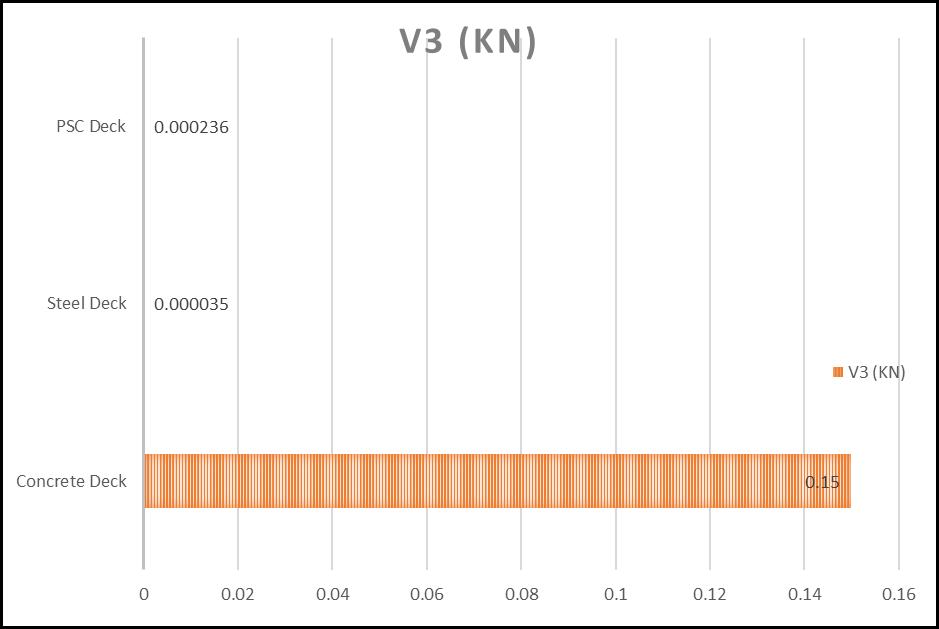
Figure4.6VariationofAbsoluteMaximumshearforcein Z-Direction(V3)inconcretesteelandPSCGirder
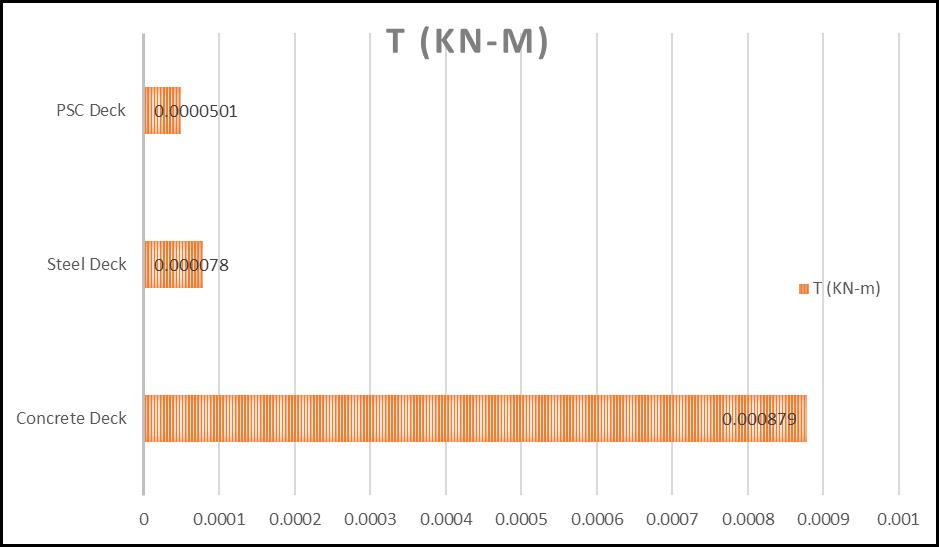
Figure4.7VariationofAbsoluteMaximumTorsional moment(T)inconcretesteelandPSCGirder
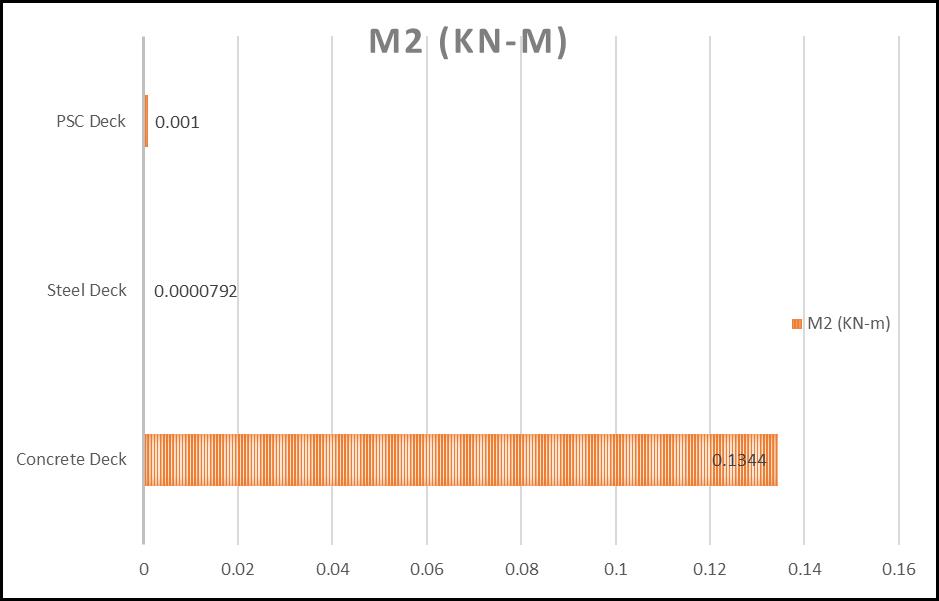
Figure4.8VariationofAbsoluteMaximumBending MomentinY-DirectioninconcretesteelandPSCGirder
International Research Journal of Engineering and Technology (IRJET) e-ISSN: 2395-0056
Volume: 12 Issue: 01 | Jan 2025 www.irjet.net p-ISSN: 2395-0072
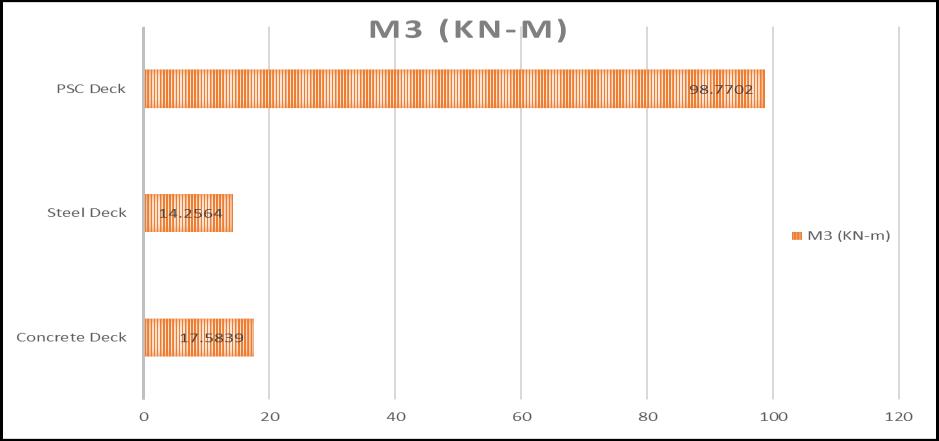
Figure4.9VariationofAbsoluteMaximumBending MomentinZ-DirectioninconcretesteelandPSCGirder
4.4 Analysis of Element Stresses in Area Shells
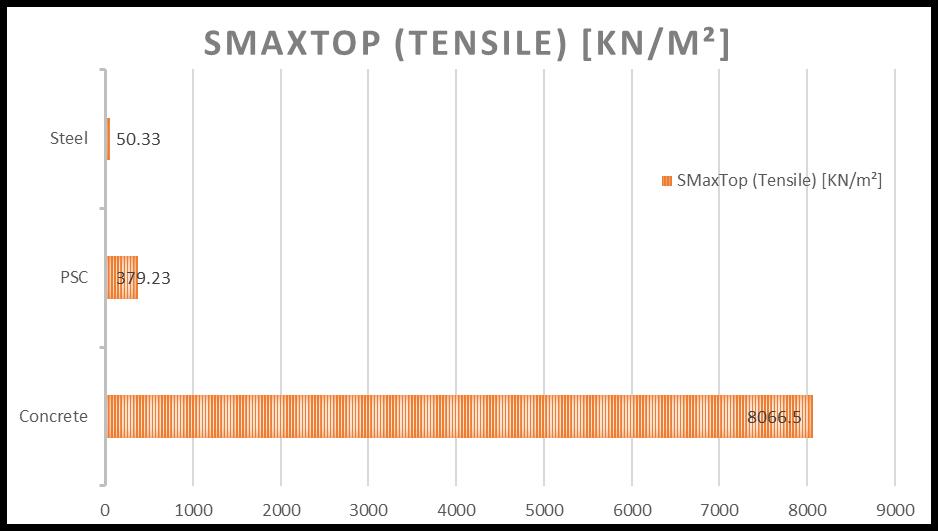
4.10VariationofMaximumPrincipalStressatTop surface(SMaxTop)inSteelConcreteandPSCDeck
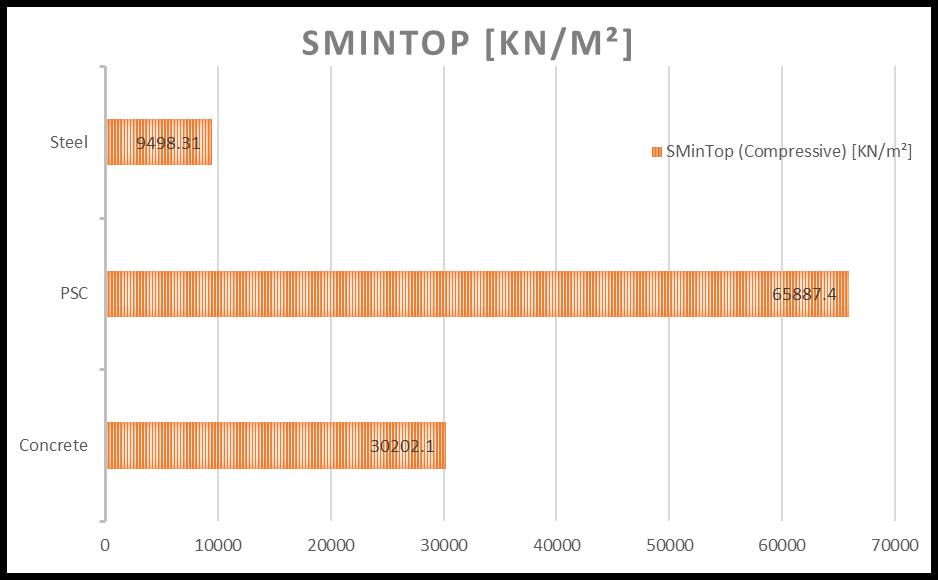
Figure4.11VariationofMinimumPrincipalStressatTop surface(SMinTop)inSteelConcreteandPSCDeck
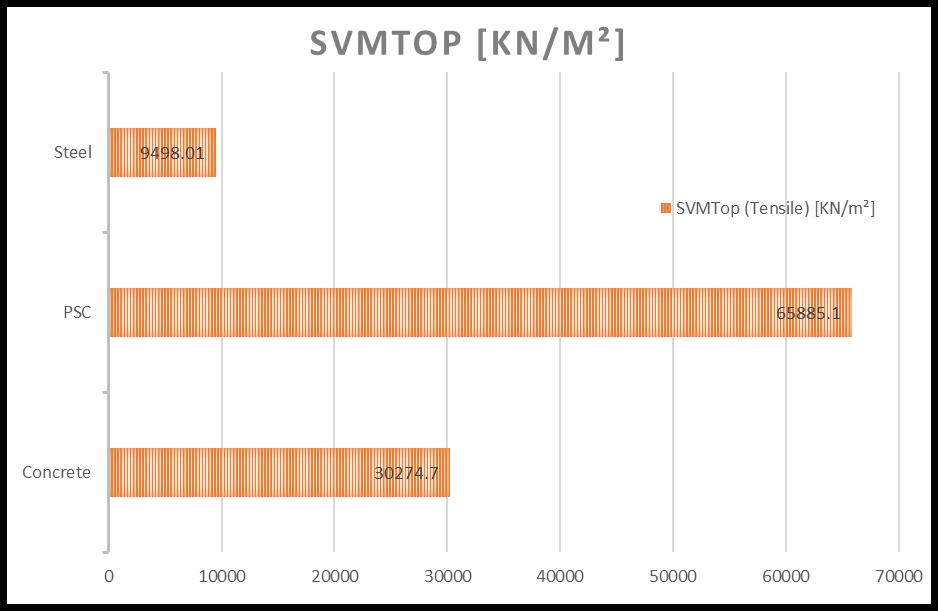
Figure4.12VariationofVonMisesstressattopsurface (SvmTop)inSteelConcreteandPSCDeck
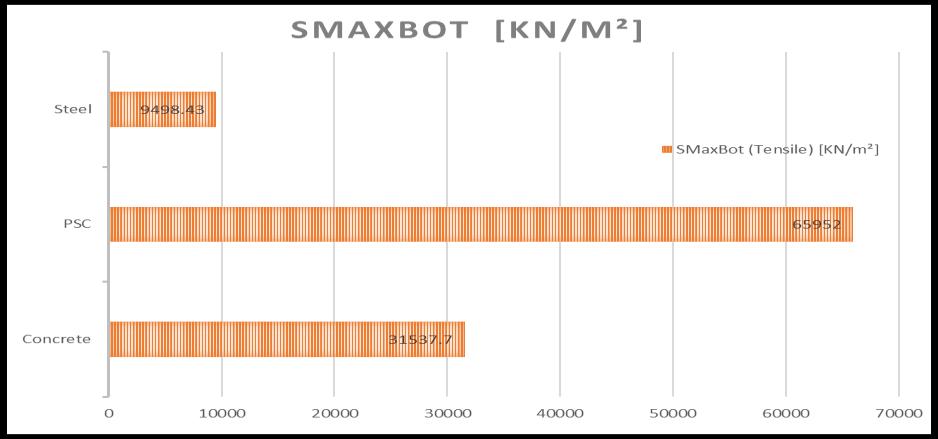
Figure4.13VariationofMaximumPrincipalStressat bottomsurface(SMaxBot)inSteelConcreteandPSCDeck
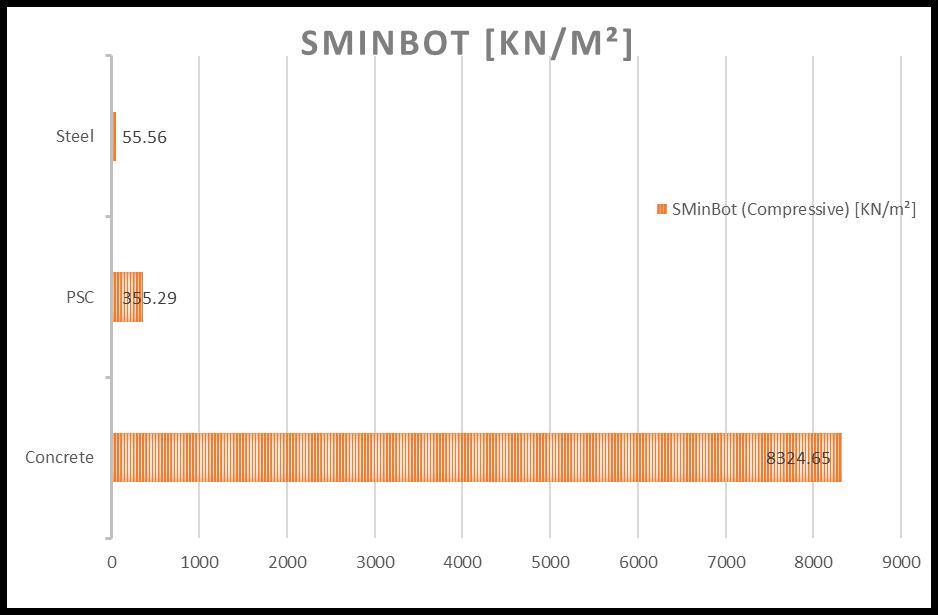
figure4.14VariationofMinimumPrincipalStressat bottomsurface(SMinBot)inSteelConcreteandPSCDeck
International Research Journal of Engineering and Technology (IRJET) e-ISSN: 2395-0056
Volume: 12 Issue: 01 | Jan 2025 www.irjet.net p-ISSN: 2395-0072
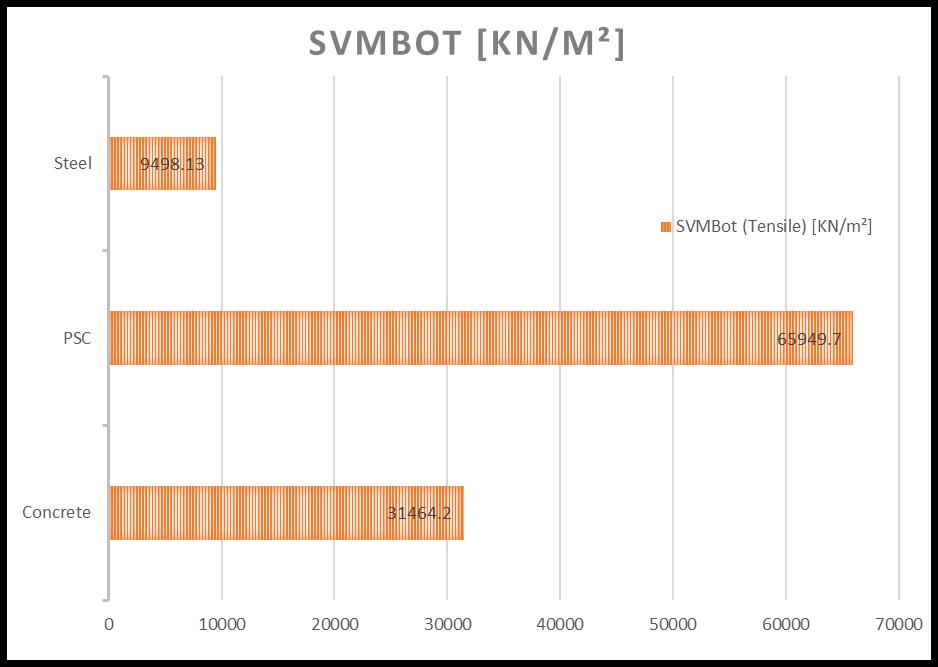
Figure4.15VariationofVonMisesstressatbottom surface(SvmBot)inSteelConcreteandPSCDeck
5. Conclusion
Thisstudyprovidesacomparativeanalysisofcable-stayed bridgeswithconcrete,steel,andprestressedconcretedeck girders, focusing on their structural performance and economicfeasibility.Thefindingshighlightthatprestressed concrete offers superior load-carrying capacity and durability, making it ideal for long spans, despite higher initialcosts.Steelexcelsintensilestrengthandadaptability for complex designs but requires regular maintenance to mitigatecorrosion.Concreteremainsthemostcost-effective choiceforshorterspansandmoderateloadingconditions.
By integrating structural efficiency with lifecycle cost analysis, this research offers a practical framework for selectingdeckmaterialsincable-stayedbridgedesign,aiding engineersanddecision-makersinoptimizingperformance, durability,andcost.Futureworkcouldexploretheroleof advanced materials and sustainability considerations to furtherenhancebridgedesignpractices.
References
[1]. Andrawes,B.,&Shin,M.(2017).PrestressedConcrete Decks: Long-Term Performance and Maintenance Benefits. Journal of Structural Engineering, 143(6), 04017050.
[2]. Chen, X., & Liu, Y. (2018). Hybrid Designs in CableStayed Bridges: Structural and Economic Perspectives.EngineeringStructures,174,359-370.
[3]. Fukuda,T.,&Ogawa,Y.(2017).SteelDecksinCoastal Environments:PerformanceandMaintenance.Bridge EngineeringReview,16(3),257-265.
[4]. Klemencic, R., & Zhang, Z. (2016). High-Strength Concrete in Cable-Stayed Bridges: A Comparative
Analysis. Construction and Building Materials, 112, 234-245.
[5]. Li,Y.,&Zhang,X.(2015).DynamicBehaviorofCableStayed Bridges under Seismic Loads. Earthquake EngineeringJournal,10(2),145-160.
[6]. Ma, J., & Xie, J. (2020). Advances in Prestressed ConcreteforLong-SpanBridges.StructuralMechanics Today,25(4),455-472.
[7]. Xie,J.,&Berto,L.(2019).HybridCable-StayedBridge Designs: A Review of Material Efficiency. Modern BridgeEngineering,41(7),387-405.
[8]. Zhang, Y., & Lee, D. (2015). Structural Integrity of Reinforced Concrete in Long-Span Bridges. International Journal of Bridge Engineering, 7(3), 213-226.
[9]. Ogawa, Y., & Chen, J. (2018). Comparative PerformanceofSteelandConcreteDeckMaterialsin Cable-Stayed Bridges. Bridge Design Studies, 24(6), 345-368.
[10]. Saxena,A.,&Gupta,R.(2018).TorsionalPerformance ofBoxGirdersinCable-SupportedBridges.Structural EngineeringReview,33(4),543-567.
[11]. Huang,C.,&Feng,Z.(2014).LifecycleAnalysisofSteel BridgesinCorrosiveEnvironments.MaterialsScience inEngineering,45(2),128-140.
[12]. Shin,D.,&Park,J.(2013).PrecastDeckConnectionsin Composite Bridges. Journal of Civil Infrastructure, 15(7),678-695.
[13]. Ray, M. B., & Sharma, V. (1980). Composite Beam Analysis under Combined Loads. Structural ApplicationsJournal,12(5),345-367.
[14]. Hadidi, R. (2012). Early Cracking in Cable-Stayed Bridge Decks. Engineering and Design Magazine, 21(3),451-460.
[15]. Khatri, V., & Phadnis, P. (2008). High-Tensile Steel ApplicationsinCompositeBridges.ModernStructural Journal,19(11),567-589.