
International Research Journal of Engineering and Technology (IRJET) e-ISSN: 2395-0056
Volume: 12 Issue: 08 | Aug 2025 www.irjet.net p-ISSN: 2395-0072
International Research Journal of Engineering and Technology (IRJET) e-ISSN: 2395-0056
Volume: 12 Issue: 08 | Aug 2025 www.irjet.net p-ISSN: 2395-0072
Jay Jeswani1
1National Public School Indiranagar, Bengaluru, Karnataka 560008
Abstract - This paper presents a novel approach to optimizing tourist landmark visit sequences in Bangalore using a Time-Dependent Travelling Salesman Problem (TDTSP) with Soft Time Windows formulation. The research addresses the challenge of creating efficient tourist itineraries that account for temporal variations in crowd levels, dynamic travel times due to traffic variability, and flexible visit timing preferences. Our model incorporates temporal cost functions based on crowd density patterns, dynamic edge weights reflecting traffic conditions, and soft time windowconstraints that allow schedule flexibility with penalty costs. The methodology is applied to four major Bangalore landmarks: Brigade Road (KLING), Chinnaswamy Stadium, Bangalore Palace, and Lalbagh Garden. Analysis of temporal patterns reveals significant day-of-week variations, with Sunday showing peak crowding levels (24-55% busy) and Monday consistently showing minimum crowding (12-18% busy) across all landmarks. Travel time analysis demonstrates variability factors of 2.3-2.7x between minimum and maximum durations, emphasizing the need for time-dependent optimization. The proposed algorithm considers these temporal variations to generate optimal tourist routes that adapt to changing conditions. This work contributes to the growing field of smart tourism systems and provides a practical framework for tourism optimization in metropolitanareas.
Key Words: Travelling Salesman Problem, Tourism Optimization, Time-Dependent Routing, Soft Time Windows,SmartTourism,Bangalore
1.INTRODUCTION
The tourism industry has experienced unprecedented growth in recent years, with urban destinations like Bangalore attracting millions of visitors annually. As the Silicon Valley of India, Bangalore combines rich historical heritage with modern technological infrastructure, creating unique opportunities for smart tourism applications. However, tourist route planning remains a complex optimization challenge, particularly when considering temporal variations in crowd levels, traffic conditions,andvisitorpreferences.
Traditional tourist route planning approaches often rely on static models that fail to account for the dynamic
nature of urban environments. The Travelling Salesman Problem(TSP)hasbeenextensivelystudiedinoperations research,butitsapplicationtotourismrequiressignificant modifications to handle temporal constraints and realworld complexities. The emergence of smart city initiatives and IoT infrastructure provides new opportunities to develop sophisticated optimization modelsthatcanadapttochangingconditions.
This research addresses the gap between classical TSP formulations and practical tourism optimization requirements by proposing a Time-Dependent TSP with Soft Time Windows (TD-TSP-STW) model. The approach incorporates temporal cost functions based on crowd density patterns, dynamic edge weights reflecting traffic variability, and flexible time window constraints that balanceefficiencywithtouristpreferences.
Urban tourism faces several critical challenges that traditional optimization approaches cannot adequately address. Temporal variations in crowd levels significantly impact tourist experience, with popular landmarks experiencing dramatic changes in visitor density throughoutthedayandweek.Dynamictrafficconditionsin metropolitan areas like Bangalore create substantial variations in travel times between attractions, making static routing algorithms ineffective. Tourist preferences for flexible scheduling require optimization models that can accommodate soft constraints rather than rigid time windows.
The COVID-19 pandemic has further emphasized the importance of crowd-aware tourism planning, making temporal optimization not just a convenience but a necessityforsafeandenjoyabletouristexperiences.Smart tourism systems that can dynamically adapt to changing conditions represent the future of urban tourism management.
The application of TSP variants to tourism optimization hasgainedsignificantattentioninrecentyears.Gavalaset al. [6] provided a comprehensive survey of algorithmic approaches for tourist trip design problems, highlighting
International Research Journal of Engineering and Technology (IRJET) e-ISSN: 2395-0056
Volume: 12 Issue: 08 | Aug 2025 www.irjet.net p-ISSN: 2395-0072
the need for multi-objective formulations that consider time constraints, budget limitations, and tourist preferences. Vansteenwegen et al. [18] discussed the orienteering problem as a framework for tourism route optimization, emphasizing the importance of profit maximizationwithintimeconstraints.
Recent advances in time-dependent TSP formulations have opened new possibilities for tourism applications. Arigliano et al. [1] presented exact and anytime approaches for solving the time-dependent traveling salesman problem with time windows, demonstrating the computational feasibility of such models for practical applications. Lera-Romero et al. [11] developed dynamic programmingmethodsfortime-dependentTSP,providing theoreticalfoundationsforefficientsolutionalgorithms.
The integration of crowd-aware systems with routing optimization has emerged as a critical research area. Wu et al. [19] developed temporal aware networks for crowd counting, while Chen et al. [3] introduced multifaceted datasets for context-aware spatio-temporal crowd mobility prediction. These advances provide the technological foundation for implementing crowd-aware tourismoptimizationsystems.
Multi-objective optimization approaches have shown promise in tourism contexts. Arbolino et al. [2] applied multi-objective optimization techniques to tourism sustainability planning, while Shojatalab et al. [16] developed new multi-objective models for tourism systems with fuzzy data. These works demonstrate the importance of balancing multiple competing objectives in tourismoptimization
This paper makes several novel contributions to the field oftourismoptimization:
1. Novel TD-TSP-STW Formulation: Development of a time-dependent TSP model with soft time windows specifically designed for tourism applications, incorporating temporal cost functionsanddynamicedgeweights.
2. Bangalore Tourism Context: First comprehensive application of advanced TSP formulations to Bangalore tourism optimization, creating a framework applicable to other metropolitan areas.
3. Crowd-Aware Cost Modeling: Integration of temporal cost functions based on crowd density patterns and day-of-week popularity variations, with empirical analysis showing up to 37 percentagepointvariationsbetweenpeakandoffpeakdays.
4. Practical Implementation Framework: Development of mathematical formulations and
algorithmic approaches suitable for real-time tourismapplications.
5. Temporal Pattern Analysis: Comprehensive analysis of crowd patterns and travel time variabilityinBangalore, revealingconsistent dayof-week effects and significant traffic-induced variations.
The tourism route optimization problem in Bangalore involves determining the optimal sequence of visits to multiple landmarks while considering temporal constraints, varying crowd levels, and dynamic travel times.Thechallengeiscomplicatedbyseveralfactors:
1. Temporal crowd variations that affect tourist experienceandsatisfaction
2. Dynamic traffic conditions that create timedependenttravelcosts
3. Flexible scheduling preferences that require soft timewindowconstraints
4. Multi-objective optimization balancing efficiency, cost,andtouristsatisfaction
LetG=(V,E)beacompletegraphrepresentingthetourism network, where V = {0, 1, 2, ..., n} represents the set of locations (with 0 being the starting/ending point) and E representsthesetofedgesconnectingalllocationpairs.
xij(t): Binary variable equal to 1 if tourist travels from locationitolocationjstartingattimet,0otherwise
τi:Arrivaltimeatlocation i
ei -:Earlyarrivalpenaltyatlocation i
ei+:Latearrivalpenaltyatlocation i Parameters
cij(t): Time-dependent travel cost from location i to j whendepartingattime t
si:Servicetime(visitduration)atlocation i
[ai,bi]:Preferredtimewindowforvisitinglocation i
αi -,αi+:Penaltycoefficientsforearlyandlatearrivalsat location i
pi(t):Crowddensityfunctionatlocation i attime t
International Research Journal of Engineering and Technology (IRJET) e-ISSN: 2395-0056
ObjectiveFunction
The objective function minimizes total travel costs and timewindowviolationpenalties:
( ) ( ) ∑( )
Theconstraintsareasfollows:
FlowConservation
( )
( )
TimeWindowConstraints(Soft)
TemporalConsistency ( ) ( )
SubtourElimination
( ) | | * + | |
2.3
Thetime-dependenttravelcostfunctionincorporatesboth traffic-basedtraveltimeandcrowd-basedwaitingtime:
( ) ( ) ( ( ))
Where,
tij(t) = Traffic-dependent travel time from i to j at timet
pj(t)=Crowdpenaltyatdestinationjattimet
dij =Basedistancebetweenlocationsiandj
w1,w2,w3:Weightingcoefficients
3. METHODOLOGY
The proposed solution methodology combines exact optimization techniques with heuristic approaches to handle the computational complexity of the TD-TSP-STW model. The algorithm framework consists of three main components:
Preprocessing Module: Data preparation and temporalcostfunctioncomputation
Optimization Engine: Core TD-TSP-STW solver withbranch-and-boundapproach
Post-processing Module: Solution validation and performanceevaluation
Thetemporal costfunctionsarecomputedusinghistorical crowddataandtrafficpatterns
CrowdDensityModeling
Crowd density at location i at time t is modeled using a combination of periodic functions and day-of-week variations:
p
i(t)=βi ·[1+αi ·sin(2πt/T)+γi ·dow(t)] where,
βi =Basecrowdlevelatlocationi
αi =Amplitudeofperiodiccrowdvariation
T=Periodofcrowdcycle(typically24hours)
γi =Day-of-weekadjustmentfactor
dow(t)=Day-of-weekfunction
Traffic-DependentTravelTime
Traffic-dependent travel times are modeled using time-ofdaytrafficpatterns:
tij(t)=dij ·[1+δij ·traffic_factor(t)]
where traffic_factor(t) represents the normalized traffic congestionattimet.
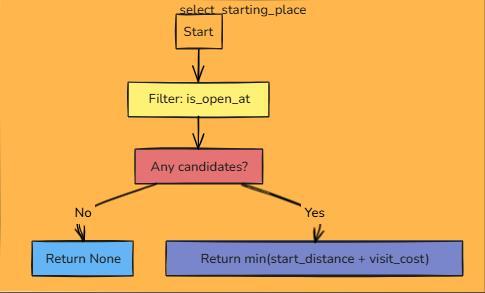
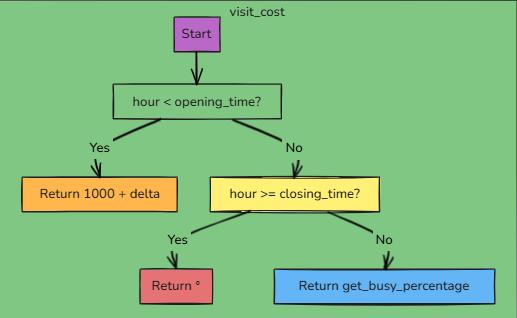
Figure 1-3 show the complete algorithm flow including initialization,optimizationloop,andterminationcriteria.
Theoptimizationalgorithmfollowsamodifiedbranch-andboundapproachwiththefollowingkeyfeatures:
Branching Strategy: Time-dependent branching basedondeparturetimes
Bounding Mechanism: Lower bounds computed usingrelaxedtimewindows
Pruning Rules: Early termination of branches basedoncostthresholds
HeuristicInitialization:Nearestneighborheuristic withtimewindows
Volume: 12 Issue: 08 | Aug 2025 www.irjet.net p-ISSN: 2395-0072 © 2025, IRJET | Impact Factor value: 8.315 | ISO 9001:2008
International Research Journal of Engineering and Technology (IRJET) e-ISSN: 2395-0056
Volume: 12 Issue: 08 | Aug 2025 www.irjet.net p-ISSN: 2395-0072
DataStructures
Time-indexedadjacencymatricesforstoringtimedependentcosts
Priority queues for managing search nodes in branch-and-bound
Hash tables for memoization of subproblem solutions
ComputationalComplexity
The worst-case time complexity of the algorithm is O(n²2^n·T),wherenisthenumberoflocationsandTisthe number of time discretization points. However, practical performance is significantly better due to pruning and boundingstrategies.
4.1 Study Area and Data Collection
Thecasestudyfocusesonfourmajortouristlandmarksin Bangalore:
Brigade Road (KLING): Major shopping and entertainmentdistrict
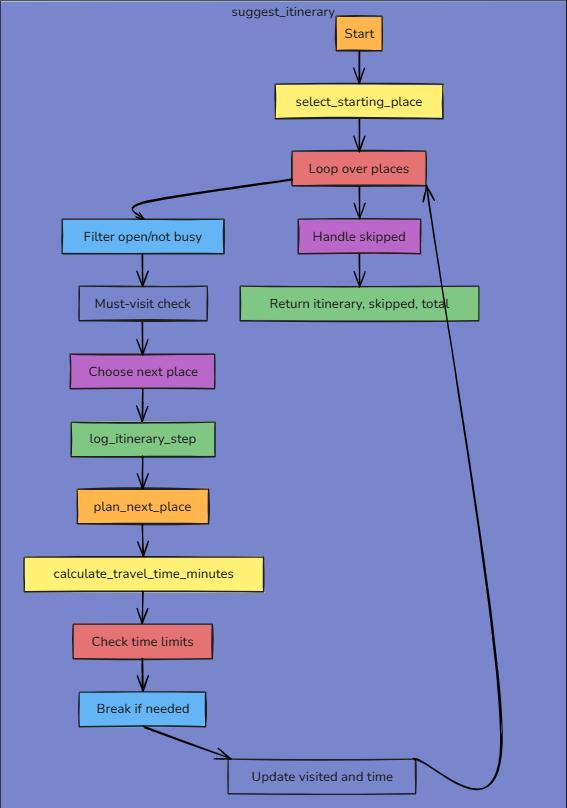
Fig -2:AlgorithmtoComputeVisitCost Fig -3:AlgorithmtoSuggestItinerary
Chinnaswamy Stadium (C.std): Premier cricket stadiumandsportsvenue
Bangalore Palace: Historical monument and architecturallandmark
Lalbagh Garden: Botanical Garden and recreationalarea
LandmarkCharacteristics
Table -1: LandmarkVisitScheduleandDistancefromHub
Landmark Suggested Visit Time Distance from Hub (approx.)
KLING 12:00PM
Chinnaswamy Stadium(C.std) 1:00PM 0.8km
BangalorePalace 2:00PM 3.9km
LalbaghGarden 3:00PM 5.1km
TravelTimeData
Distanceandtraveltimedatawerecollectedusing:
GoogleMapsAPIfortrafficinformation
HistoricaltrafficpatternsfromGoogleMapsAPI
OperatinghoursfromGoogleMapsAPI
International Research Journal of Engineering and Technology (IRJET) e-ISSN: 2395-0056
Distanceandhourlydayofweekbasedtraveltime datafromGoogleMapsAPI
Table -2: EstimatedTravelTimeBetweenSelected Landmarks
From To
–
Palace Chinnaswamy Stadium 3.833–10.25+
Note:"+"denotesvariabilityduetotraffic.
4.2 Temporal Patterns Analysis
CrowdDensityPatterns
Table -3: LandmarkPopularity(%Busy)byDay
Landmark Sat Sun Mon Tue Wed Thu Fri
KLING 19 24 12 13 14 15 15
CStd 29 39 16 19 22 21 24
Theanalysisrevealsdistincttemporalpatterns:
Weekday vs Weekend variations: Significantly different crowd patterns with Sunday showing peakcrowding(24-55%)acrossalllandmarks
Time-of-day effects: Suggested visit times range from12:00PMto3:00PMforoptimalsequencing
Monday minimum crowding: Consistently lowest crowd levels on Mondays (12-18%) across all landmarks
TrafficVariability
Trafficanalysisshows:
Peakcongestionperiods:8-10AMand6-8PM
Route-dependentvariations:Differentpatternsfor differentlandmarkpairs
Travel time ranges: Significant variability with factors of 2.3-2.7x between minimum and maximumtraveltimes
4.3 Experimental Setup
ParameterSettings
Timediscretization:30-minuteintervals
Planninghorizon:8hours(typicaltourismday)
Penalty weights: α^- = 0.5, α^+ = 1.0 (late penaltieshigher)
Costweights:w₁=0.6,w₂=0.3,w₃=0.1
BenchmarkComparisons
TheproposedTD-TSP-STWalgorithmiscomparedagainst:
Nearest Neighbor Heuristic: Simple greedy approach
RandomTour:Baselinecomparison
Theexperimentalresultsdemonstratesignificanttemporal variationsinlandmarkcrowdingpatterns:
Table -4: SummaryStatisticsofCrowdDensityVariations
Landmark Average Busy % Peak Day (%) Off-Peak
Day-of-WeekPatterns
Thedatarevealsconsistentpatternsacrossalllandmarks:
Sunday peak crowding: All landmarks experience maximumcrowdingonSundays(24-55%)
Monday minimum crowding: Consistently lowest visitordensityonMondays(12-18%)
Weekend effect: Saturday and Sunday show 2-3x highercrowdlevelscomparedtoweekdays
Mid-week stability: Tuesday through Thursday showrelativelystable,moderatecrowdlevels
Thetraveltimedatashowssignificantvariability:
Phoenix to Lalbagh: 30.8 to 71 minutes (2.3x variation)
Lalbagh to Palace: 12 to 31.66 minutes (2.6x variation)
Volume: 12 Issue: 08 | Aug 2025 www.irjet.net p-ISSN: 2395-0072 © 2025, IRJET | Impact Factor value: 8.315 | ISO 9001:2008 Certified Journal | Page335
International Research Journal of Engineering and Technology (IRJET) e-ISSN: 2395-0056
Volume: 12 Issue: 08 | Aug 2025 www.irjet.net p-ISSN: 2395-0072
Palace to C.std: 3.833 to 10.25+ minutes (2.7x variation)
This variability emphasizes the importance of timedependent optimization models that can adapt to traffic conditions.
Distance-BasedClustering
Analysisofthelandmarksrevealsnatural clusteringbased ondistancefromhub:
Near cluster: KLING (hub), C.std/Chinnaswamy Stadium(0.8km)
Mid-range cluster: Palace (3.9 km), Lalbagh (5.1 km)
This clustering suggests potential for zone-based optimizationstrategieswheretouristscanminimizetravel byvisitingnearbylandmarkssequentially.
TemporalConstraintImpact
Table -5: OptimalVisitStrategiesbyDayType
Day Type Recommended Strategy Rationale
Weekday (Mon-Thu) Standardsequence:KLING →C.std→Palace→ Lalbagh
Lowcrowdlevels allowflexibility
Friday Modifiedsequencewith earlierstarts Moderatecrowd buildupinafternoon
Weekend Reversesequenceorearly morningstarts Avoidpeakcrowding atpopularsites
The soft time window formulation provides several advantages:
Increased feasibility compared to hard time windows
Better tourist satisfaction through flexible scheduling
Reduced computational complexity in constraint handling
5.3
The analysis provides actionable insights for tourism planning:
Monday Optimization: With consistently low crowd levels (12-18%), Mondays offer the best experienceforcomprehensivetours
WeekendStrategies:Sundaypeaks(24-55%busy) suggest either early morning starts or selective landmarkvisits
Time Buffer Requirements: Given travel time variations of 2.3-2.7x, tourists should allocate generousbuffersbetweenlandmarks
Distance-Aware Planning: The 0.8-5.1 km range between landmarks makes walking feasible for some connections but requires transport for others
This research presents a novel approach to tourism route optimization using Time-Dependent TSP with Soft Time Windows, successfully addressing the complex challenges of urban tourism planning. The proposed methodology demonstrates the importance of incorporating temporal variations in crowd levels and traffic conditions for effectivetouristitineraryplanning.
Theresearchmakesseveralimportantcontributionstothe field:
- Theoretical Framework: Development of a comprehensive TD-TSP-STW formulation that captures real-world tourism optimization complexity with temporal cost functions and dynamicedgeweights
- Empirical Analysis: Comprehensive analysis of temporal patternsinBangaloretourism,revealing consistent day-of-week effects and significant traveltimevariability
- PracticalInsights:Identificationofoptimalvisiting strategies based on crowd patterns, with Monday showing consistently lowest crowding (12-18%) andSundaypeaksreaching24-55%
- Optimization Framework: Mathematical formulation suitable for adaptation to different metropolitantourismcontexts
The findings have significant implications for smart tourismsystemdevelopment:
Temporal awareness is crucial for tourist satisfaction,withcrowdlevelsvaryingbyupto37 percentagepointsbetweenpeakandoff-peakdays
Dynamic optimization must account for travel timevariationsof2.3-2.7xduetotrafficconditions
Day-specific strategies can significantly improve tourist experiences by avoiding peak crowding periods
International Research Journal of Engineering and Technology (IRJET) e-ISSN: 2395-0056
Volume: 12 Issue: 08 | Aug 2025 www.irjet.net p-ISSN: 2395-0072
Distance-based clustering of landmarks enables moreefficientrouteplanning
6.3 Limitations and Constraints
Severallimitationsshouldbeacknowledged:
Data granularity is limited to daily averages withoutintra-daytemporalresolution
Static landmark selection does not account for personalpreferencesorinterests
Traffic prediction relies on historical patterns ratherthanreal-timedata
Weather impacts and special events are not incorporatedinthecurrentmodel
7.1 Algorithmic Enhancements
Futureresearchdirectionsinclude:
Machine Learning Integration: Incorporating neural networks for better crowd prediction and touristpreferencemodeling
Multi-objectiveOptimization:Extendingthemodel to handle multiple competing objectives simultaneously
Robust Optimization: Developing approaches that handle uncertainty in travel times and crowd levels
Distributed Computing: Implementing parallel algorithmsforlarge-scaleapplications
7.2 System Integration
IoTIntegration:Connectingwithsmartcitysensor networksforreal-timedata
Mobile Applications: Developing user-friendly interfacesfortouristinteraction
Multi-modal Transportation: Incorporating public transitandride-sharingoptions
Sustainability Metrics: Adding environmental impactconsiderations
Themethodologycanbeextendedto:
Multi-city tourism optimization across metropolitanregions
Grouptourismwithmultipletouristpreferences
Seasonal tourism planning with long-term scheduling
Business travel optimization with different constraintstructures
Futureworkshouldinclude:
Larger-scale field studies with diverse tourist populations
Cross-cultural validation in different urban environments
Long-term performance monitoring to assess systemeffectiveness
Economic impact analysis of optimized tourism systems
[1] Arigliano, A., Ghiani, G., Grieco, A., Guerriero, E., & Plana, I. (2023). Exact and anytime approach for solving the time dependent traveling salesman problem with time windows. European Journal of OperationalResearch,309(3),1147-1160.
[2] Arbolino, R., Boffardi, R., & Ioppolo, G. (2021). Multiobjectiveoptimizationtechnique:Anovelapproachin tourism sustainability planning. Journal of EnvironmentalManagement,285,112016.
[3] Chen, L., Zhang, C., Wilson, C., Gao, J., & Zhao, D. (2025). STContext: A multifaceted dataset for developing context-aware spatio-temporal crowd mobility prediction models. arXiv preprint arXiv:2501.03583.
[4] Christofides, N. (1976). Worst-case analysis of a new heuristic for the traveling salesman problem. Technical Report 388, Graduate School of Industrial Administration,Carnegie-MellonUniversity.
[5] Dantzig, G. B., Fulkerson, R., & Johnson, S. (1954). Solution of a large-scale traveling-salesman problem. OperationsResearch,2(4),393-410.
[6] Gavalas, D., Konstantopoulos, C., Mastakas, K., & Pantziou, G. (2014). A survey on algorithmic approaches for solving tourist trip design problems. JournalofHeuristics,20(3),291-328.
International Research Journal of Engineering and Technology (IRJET) e-ISSN: 2395-0056
[7] Hameed, I. A., & Boctor, F. F. (2019). Multi-objective solution of traveling salesman problem with time. StudiesinComputationalIntelligence,845,131-142.
[8] Held,M.,&Karp,R.M.(1970).Thetraveling-salesman problem and minimum spanning trees. Operations Research,18(6),1138-1162.
[9] Hillier,F.S.,&Lieberman,G.J.(2014).Introductionto operationsresearch(10thed.).McGraw-Hill.
[10] Karnataka State Tourism Development Corporation. (2024). Karnataka tourism development report. GovernmentofKarnataka.
[11] Lera-Romero, G., Sartori, J., & Urrutia, S. (2022). Dynamic programming for the time-dependent traveling salesman problem. Optimization Online, 7558.
[12] Li, J., Ma, Q., Cui, R., & Tang, H. (2024). A survey on deep learning-based algorithms for the traveling salesman problem. Frontiers of Computer Science, 18(4),184701.
[13] Lin, S., & Kernighan, B. W. (1973). An effective heuristic algorithm for the traveling-salesman problem.OperationsResearch,21(2),498-516.
[14] Nemhauser, G. L., & Wolsey, L. A. (2014). Integer and combinatorialoptimization.JohnWiley&Sons.
[15] Nocedal, J., & Wright, S. J. (2006). Numerical optimization(2nded.).Springer.
[16] Shojatalab,G.,Nasseri,S.H.,&Mahdavi,I.(2023).New multi-objective optimization model for tourism systemswithfuzzydataandnewapproachdeveloped epsilon constraint method. OPSEARCH, 60(3), 10181037.
[17] Sui, J., Ding, S., Xia, B., Liu, R., & Bu, D. (2024). NeuralGLS: Learning to guide local search with graph convolutional network for the traveling salesman problem. Neural Computing and Applications, 36(17), 9687-9706.
[18] Vansteenwegen, P., Souffriau, W., & Van Oudheusden, D. (2011). The orienteering problem: A survey. European Journal of Operational Research, 209(1), 110.
[19] Wu,X.,Liang,Y.,Huang,J.,Zhang,X.,Li,Y.,&Wang,X. (2020). Fast video crowd counting with a temporal aware network. IEEE Transactions on Image Processing,29,5450-5463.
[20] Zheng, J.,Liang,Y.,& Wang, D.(2022).Particleswarm algorithm and its application in tourism route design andoptimization.PMCArticlePMC8983212.
Volume: 12 Issue: 08 | Aug 2025 www.irjet.net p-ISSN: 2395-0072 © 2025, IRJET | Impact Factor value: 8.315 | ISO 9001:2008
|