
International Research Journal of Engineering and Technology (IRJET) e-ISSN: 2395-0056
Volume: 12 Issue: 05 | May 2025 www.irjet.net p-ISSN: 2395-0072
International Research Journal of Engineering and Technology (IRJET) e-ISSN: 2395-0056
Volume: 12 Issue: 05 | May 2025 www.irjet.net p-ISSN: 2395-0072
Praveen Kumar Singh1 , Abhishek Upadhyay2, Nagendra Dhakar3
1Research Scholar, Mewar University, Chittorgarh, Rajasthan
2Assistant Professor, Civil Engg. Department, Mewar University, Chittorgarh, Rajasthan
3Assistant Professor, Civil Engg. Department, Suresh Gyan Vihar University, Jaipur, Rajasthan
Abstract - Thispaperexaminestheeffectivenessofvarious projectdeliverymodelsemployedbytheNationalHighways AuthorityofIndia(NHAI)forhighwayinfrastructureprojects. ThroughcasestudyanalysisofEngineering,Procurementand Construction (EPC), Build-Operate-Transfer (BOT), and Public-Private Partnership (PPP) models, this research compares performance in terms of cost, time, and quality. Findingshighlighttherelativestrengthsandweaknessesof eachmodel,withrecommendationsforoptimizingdelivery mechanisms. A focus on digital tools and improved stakeholder coordination is presented, along with policy recommendations.
Keywords: Project Delivery Models, Infrastructure Management, Performance Analysis.
1.INTRODUCTION
India'sroadtransportinfrastructureplaysacriticalrolein economicgrowthanddevelopment.TheNationalHighways Authority of India (NHAI) is responsible for the planning, development, and maintenance of over 1,45,000 km of nationalhighways.Asthedemandforefficienttransportation systemsgrows,NHAIhasadoptedvariousProjectDelivery Models (PDMs), including Engineering, Procurement, and Construction (EPC), Build-Operate-Transfer (BOT), and Public-PrivatePartnership(PPP).However,challengessuch as cost overruns, delays, and quality compromises persist. Thisresearchinvestigatestheeffectivenessofthesedelivery models by analyzing the performance of selected NHAI highwayprojects.Thestudyaimstoidentifybestpractices, evaluate model-specific strengths and weaknesses, and provide recommendations for improving project delivery outcomes.
Thischaptercriticallyexaminesexistingliteratureonproject deliverymodels,focusingonEPC,BOT,andPPPmodelsin highway infrastructure. Various international studies have explored the effectiveness of these models, highlighting challenges such as cost overruns, delays, and stakeholder satisfaction.Bhattacharjee&Sahoo(2020) haveidentified that HAM provides financing flexibility; involves reduced developer risk, Sharma & Gupta (2019) have analyzed privatesectorefficiencyandrisk-sharingmechanismintheir
studyonPPPmodels.Whereas, Vyas&Desai(2016) have studiedBOTmodelandidentifiedkeyrisksandmitigation strategiesinBOTprojects
Key research gaps are identified, including the need for betterrisk-sharingstrategies,theintegrationofdigitaltools inprojectmonitoring,andtheneedformorecomprehensive post-project evaluations. Several scholars have proposed performance-based contracts, enhanced financial structuring, and the adoption of advanced technologies to improveprojectoutcomes.
This research adopts a case study-based methodology to evaluatetheeffectivenessoftheEPC,BOT,andPPPmodels usedinNHAIhighwayprojects.Thestudyexaminesthree selected case studies representing these models: NH44 (EPC), NH48 under HAM (BOT), and Eastern Peripheral Expressway (PPP). Data was collected through a combination of primary interviews, secondary project reports,andfieldobservations.Performancemetricssuchas costefficiency,timeadherence,qualityofconstruction,and risk allocation effectiveness were analyzed using SWOT analysis, comparative analysis, and thematic analysis techniques.
Dimension Key Variables / Parameters
Project Delivery Models
Project Performance Indicators
Risk Management Practices
Enabling Factors
EPC,BOT(Toll/Annuity),HAM,PPP
CostEfficiency,TimeAdherence,Quality ofConstruction,LifecycleMaintenance, StakeholderSatisfaction
RiskIdentification,RiskAllocation,Risk Mitigation, Force Majeure Handling, DisputeResolutionMechanisms
Institutional Capacity, Financing Structure,PolicySupport,UseofDigital MonitoringTools(BIM,GIS,IoT)
International
Volume: 12 Issue: 05 | May 2025 www.irjet.net
The case study analysis section presents a detailed evaluation of three key highway projects under different deliverymodels.Thefindingssuggestthateachmodelhasits ownstrengthsandchallenges.TheEPCmodelisbestsuited forlow-risk,government-fundedprojectsbutstruggleswith timedelaysandcostoverruns.TheBOT(HAM)modeloffers balancedrisk-sharingandcostcontrolbutfaceschallenges intrafficestimationand delayedfunddisbursements. The PPPmodelleveragesprivatesectorefficienciesbutishighly sensitivetodemandforecastsandrevenuegeneration.
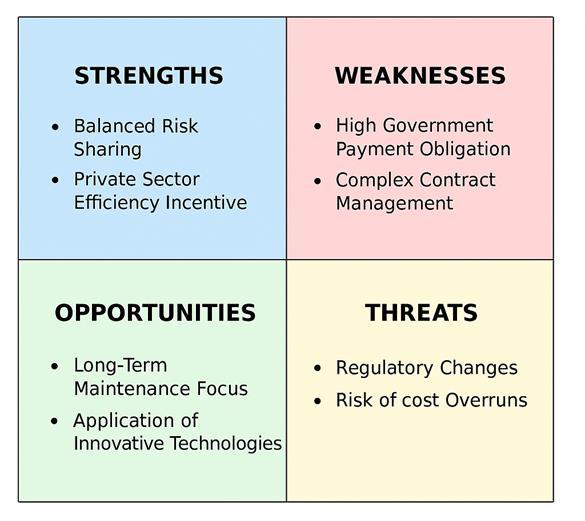
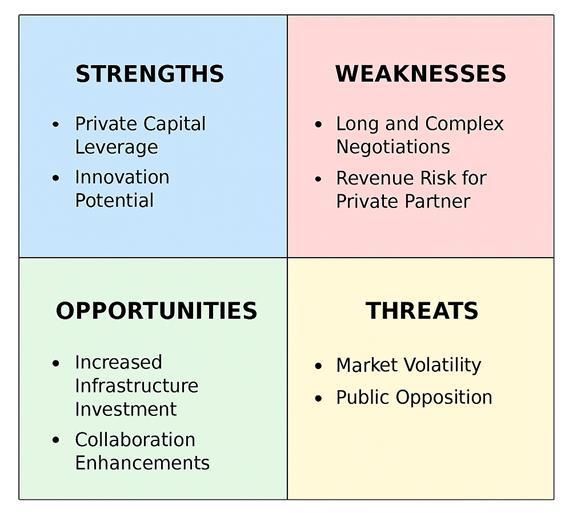
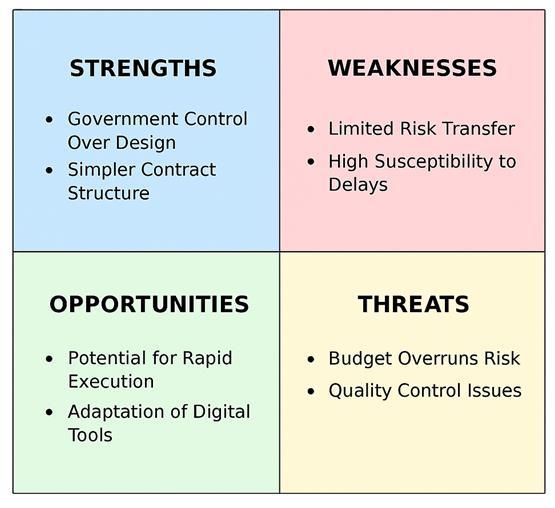
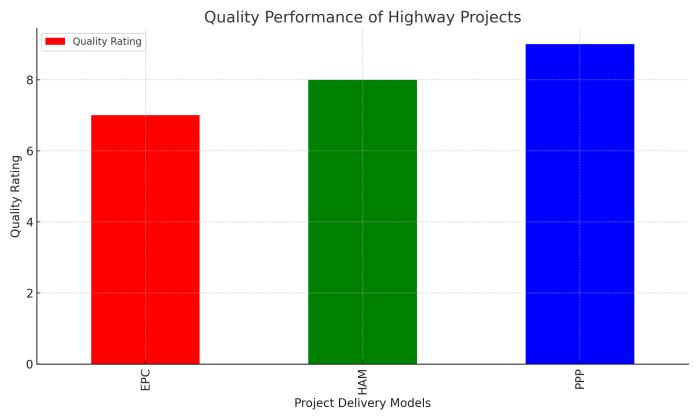
The comparative evaluation of the three models revealed severalkeyinsights.TheHAMmodeldemonstratedsuperior cost efficiency and stakeholder satisfaction due to its balanced risk-sharing approach. The EPC model, while providing better time adherence, suffered from cost overruns and lacked flexibility to handle unforeseen circumstances.ThePPPmodel,despiteofferinghigh-quality construction, was burdened by high financial risks and significantdelays.
International Research Journal of Engineering and Technology (IRJET) e-ISSN: 2395-0056
Volume: 12 Issue: 05 | May 2025 www.irjet.net p-ISSN: 2395-0072
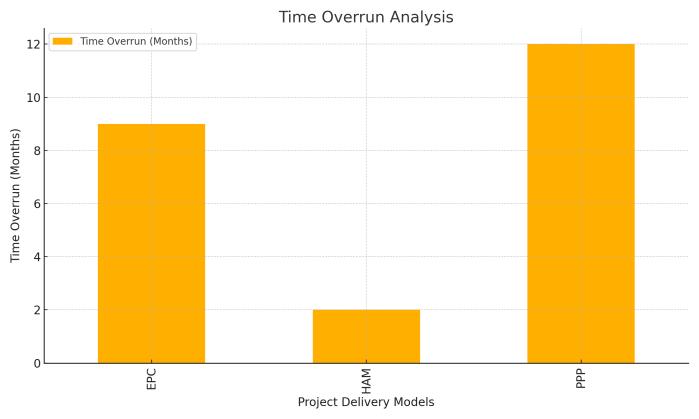
Figure 5: Time Over-run Analysis
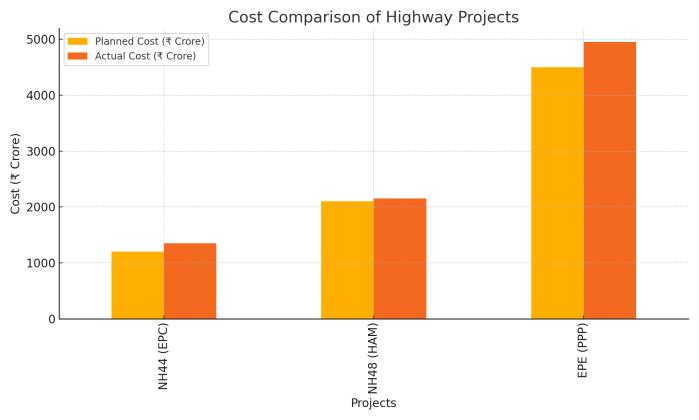
Figure 6: Cost Comparisons of Highway Projects
Table 3: Effectiveness of Risk Allocation
Model Risk Sharing Structure
EPC Risk largely retained by government
HAM
PPP
Table 4: Model Recommendations
Project Condition
Recommended Model Reason
Fully governmentfunded with design controlneeded EPCModel
Balanced risksharing with stable financingrequired HAM (Hybrid AnnuityModel)
Large-scaleprojects requiring private innovation and operation PPP (BOT Toll / Annuity)
Suitable for lowcomplexity, timeboundprojectswith government financing.
Shared financial responsibility reduces developer stress and ensures timeadherence.
Encourages private sectorefficiencybut requires strong demandprojections and revenue assurance mechanisms.
Effectiveness
Low;weakflexibilityfor costortimevariation
Balanced between NHAI anddeveloper High; shared risks reducedisputes
Revenueandfinancingrisk mostlyondeveloper
Low; skewed risk leads to stress for private partners
6. Recommendations and Best Practices
Based on the findings, this paper proposes the following recommendationsforoptimizingprojectdeliveryinNHAI:1. Adoption of performance-based maintenance contracts (PBMC)toensurehigh-qualitypost-constructionoutcomes. 2.Improvedrisk-sharingmechanisms,withclearguidelines onriskallocationacrossthedeliverymodels.3.Integration ofdigitaltoolssuchasGIS,BIM,andIoTtoenhanceproject monitoringandreducecost/timeoverruns.
6. Conclusion
Thisstudyconcludesthatwhileeachprojectdeliverymodel hasitsmerits,theHybridAnnuityModel(HAM)emergesas the most balanced in terms of cost control, time management,andstakeholdersatisfaction.Futureresearch should focus on refining these models and incorporating emergingtechnologiestofurtheroptimizehighwayproject deliveryinIndia.
1. Bhattacharjee,A.,&Sahoo,P.(2020).Analysisofthe Hybrid Annuity Model in Indian road projects: A case study of national highways. International JournalofCivilEngineeringandTechnology,11(3), 45–52.
2. Sharma, K., & Gupta, R. (2019). Public-private partnership in Indian infrastructure projects: Lessons learned and challenges. Journal of InfrastructureDevelopment,10(4),29–34.
3. Reddy,P.K.,&Kumar,R.(2017).Bestpracticesin highway construction: Case studies of NHAI projects.NationalRoadResearchJournal,22(2),72–79.
4. Vyas,P.,&Desai,A.(2016).Riskmanagementunder BOT. International Journal of Construction Risk Management,4(1),44–56.
5. Mehra, P., & Gupta, T. (2022). Financial viability analysis of HAM projects in India. Journal of FinancialEngineering,10(2),145–161.
International Research Journal of Engineering and Technology (IRJET) e-ISSN: 2395-0056
Volume: 12 Issue: 05 | May 2025 www.irjet.net p-ISSN: 2395-0072
6. Ahmed,R.,&Singh,P.(2019).Publicsectorcapacity and private sector participation in road projects. InternationalJournalofProjectManagement,37(3), 498–509. https://doi.org/10.1016/j.ijproman.2018.10.003
7. IRC:37. (2018). Guidelines for design of flexible pavements.IndianRoadsCongress,NewDelhi.
8. NHAI. (2017). Annual report: National Highways AuthorityofIndia.NHAIPublications,NewDelhi.
9. NITIAayog.(2023).RoadmapforrevampingPPPin Indian infrastructure. NITI Aayog Policy Paper Series.
10. WorldBank.(2015).Public-privatepartnershipsin infrastructure: Lessons from global experience WorldBankPublications.
2025, IRJET | Impact Factor value: 8.315 | ISO 9001:2008