
International Research Journal of Engineering and Technology (IRJET) e-ISSN:2395-0056
Volume:11Issue:12|Dec2024 www.irjet.net p-ISSN:2395-0072

International Research Journal of Engineering and Technology (IRJET) e-ISSN:2395-0056
Volume:11Issue:12|Dec2024 www.irjet.net p-ISSN:2395-0072
Shrivarshan N K1, Sahana Mahesh2, Anbuchelvan A P3
1,2&3 Student, School of Computer Science Engineering and Information Systems, SCORE Vellore Institute of Technology, Vellore, Tamil Nadu, India
Abstract - This paper presents a novel multi-model neural network and fuzzy-based system for hand gesture recognition, leveraging the combined strengthsofConvolutionalNeuralNetworks(CNN)and FuzzyInferenceSystems(FIS).Theproposedapproach aims to enhance gesture detection accuracy by integrating a fuzzy logic-based edge detection mechanism with a CNN model for improved feature extraction and classification. The Fuzzy Inference System is designed to detect edges in hand gesture images by applying fuzzy rules and membership functions, which reduces the complexity and noise in the input data. The edge-detected images are then fed into the CNN for training, resulting in a more efficient recognition process with improved accuracy and reduced computational costs. Experimental results demonstrate that the proposed system outperforms traditional CNN-based approaches in terms of recognition accuracy and robustness across varying lighting conditions and hand shapes. This innovative combination ofCNN andfuzzylogicprovides a reliable and efficient solution for hand gesture recognition, with potential applications in human-computer interaction, sign language interpretation, and virtual reality.
Keywords – Convolutional Neural Networks, Edge Detection, Fuzzy Inference Systems, Hand gesture analysis,HumanComputerInteraction
Hand gesture recognition is a critical area of research in human-computer interaction (HCI), offering intuitive and non-invasive methods for users to interact with digital environments. Traditional approaches to hand gesture recognition primarily rely on deep learning techniques, such as Convolutional Neural Networks (CNNs), which have demonstrated significant success in extracting complex features from images. However, CNN-based models often face challenges in handling noise, variations inlighting,andcomplexbackgrounds,whichcanadversely affectrecognitionaccuracy.
To address these limitations, this paper proposes a novel hand gesture recognition system that combines the capabilities of CNNs with a Fuzzy Inference System (FIS).
The FIS is employed to perform edge detection on input images by applying fuzzy logic-based rules, thereby reducing noiseand enhancingthemostsalientfeatures of hand gestures. The pre-processed, edge-detected images are then utilized to train a CNN model, which focuses on learning discriminative features essential for accurate gesture classification. This hybrid approach aims to improve the robustness and accuracy of hand gesture recognition systems, especially in challenging real-world environments.
The remainder of the paper is structured as follows: Section II discusses related work in the field of hand gesture recognition. Section III describes the proposed multi-model CNN-Fuzzy system, detailing the architecture and the fuzzy logic-based edge detection process. Section IV presents the experimental setup and results, highlighting the performance of the proposed system compared to conventional methods. Finally, Section V concludes the paper with a discussion on future research directions.
Hand gesture recognition (HGR) has been an active research area due to its applications in human-computer interaction, sign language recognition, and automation. Various techniques and models have been developed to enhance the accuracy and robustness of HGR systems, involving different sensors, machine learning algorithms, anddeeplearningmodels.
Sharmaetal.(2023)proposedatime-distanceparameterbased HGR system using multiple ultra-wideband (UWB) radars to capture hand gestures. Their approach demonstrated the potential for UWB radars in accurately detecting and recognizing hand movements by leveraging time and distance parameters. This method is beneficial for environments where conventional cameras may face challengesduetolightingorobstructions.
Another study by Sharma et al. (2023) explored the application of machine learning techniques in HGR. They conducted an extensive review of different machine learning methods, including support vector machines, decision trees, and deep learning models, highlighting the advantages and limitations of each approach in
International Research Journal of Engineering and Technology (IRJET) e-ISSN:2395-0056
Volume:11Issue:12|Dec2024 www.irjet.net p-ISSN:2395-0072
recognizing hand gestures. This study provides a comprehensive understanding of the strengths and weaknessesofvariousmachinelearningmodelsforHGR.
Kang et al. (2023) developed a hand gesture recognition systembasedonsurfaceelectromyography(sEMG)signals usinga binarizedneuralnetwork.Thisapproachaimedto reduce computational complexity while maintaining high accuracy by binarizing the network's weights and activations. The study demonstrated that sEMG-based systemscouldbeeffectiveinscenariosrequiringreal-time performancewithminimalcomputationalresources.
Huang et al. (2023) focused on real-time automated detection of hand gestures of older adults in home and clinical settings. They employed a deep learning-based approach that utilized temporal and spatial information fromvideosequences,achievinghighrecognitionaccuracy in real-time scenarios. This study highlights the importance of adapting HGR systems for specific demographic groups, such as the elderly, where gesture recognition can play a crucial role in monitoring and assistance.
Sahoo et al. (2023) proposed DeReFNet, a dual-stream dense residual fusion network designed for static hand gesture recognition. The network integrates dense connections and residual learning to capture both global and local features effectively. Their method showed improved recognition rates compared to other conventional deep learning models, demonstrating the effectiveness of integrating multiple feature streams in gesturerecognitiontasks.
Miah et al. (2023) introduced a multistage spatial attention-based neural network for hand gesture recognition. Their approach utilized spatial attention mechanisms to focus on significant regions of the input images, enhancing the model's ability to discriminate between similar gestures. The study demonstrated the efficacy of attention mechanisms in improving the recognitionaccuracyofdeeplearningmodels.
Damaneh et al. (2023) employed a convolutional neural network (CNN) with feature extraction methods using ORB descriptors and Gabor filters for static hand gesture recognition in sign language. The integration of ORB and Gabor filters enhanced the model's ability to capture essential features, leading to improved recognition performancecomparedtoconventionalCNNs.
Gao et al. (2023) developed a hand gesture teleoperation systemfordexterousmanipulatorsinspacestationsusing monocularhandmotioncapture.Thisstudydemonstrated the feasibility of applying hand gesture recognition in remote and constrained environments, where traditional inputdevicesmaynotbepractical.
Bora et al. (2023) proposed a real-time Assamese sign language recognition system using Mediapipe and deep learning. Their method achieved high accuracy and realtime performance, demonstrating the potential of deep learning frameworks like Mediapipe for low-resource languageapplications.
Qahtan et al. (2023) conducted a comparative study evaluating sign language recognition systems based on wearable sensory devices using a single fuzzy set. Their research highlighted the importance of fuzzy logic in handling uncertainty and imprecision in gesture recognition, providing insights into the potential advantages of fuzzy-based systems over traditional methods.
Sarkar et al. (2023) presented a human activity recognition model using sensor data combined with a spatial attention-aided CNN and a genetic algorithm. This model showed enhanced performance in recognizing complex gestures by optimizing feature selection and modelparametersthroughgeneticalgorithms.
Das et al. (2023) proposed a hybrid approach for Bangla sign language recognition using deep transfer learning models with a random forest classifier. This method integrated the strengths of deep learning and traditional machine learning to achieve high recognition accuracy, particularlyinlow-resourcelanguagecontexts.
These studies collectively highlight the diversity of approaches in hand gesture recognition, ranging from sensor-basedsystemsandmachinelearning algorithmsto deep learning frameworks incorporating attention mechanisms and fuzzy logic. The integration of various techniques, such as spatial attention, fuzzy logic, and multi-sensor data, demonstrates the evolving nature of HGR technologies aimed at improving accuracy, robustness,andadaptabilityindiverseapplications.
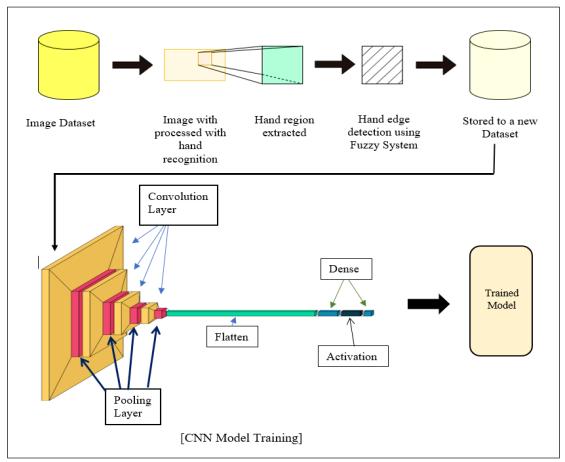
Figure-1:Anoutlineofproposedarchitecture.
International Research Journal of Engineering and Technology (IRJET)
Volume:11Issue:12|Dec2024 www.irjet.net p-ISSN:2395-0072
a. Fuzzy Membership Functions:
Membership functions specify how each value in an input setfitsintoaparticularfuzzyset.Inthismethodology,the input variable (gradient magnitude) is categorized using triangularmembershipfunctions
b. Fuzzy Rules:
Theinferencesystem'srulebaseismadeupoffuzzyrules, which define the relationship between input and output variables. In this system, the rules are defined based on thegradientmagnitude:
Rule 1: The edge strength is low if the gradient magnitudeislow.
Rule 2: The edge strength is medium if the gradient magnitudeismedium.
Rule 3: The edge strength is high if the gradient magnitudeishigh.
c. Fuzzy Inference:
The fuzzy inference system receives an input (gradient magnitude) and applies the fuzzy rules to determine the degree of activation for each fuzzy set in the output variable.Thisprocessinvolvestwosteps:
Fuzzification: The input value is assigned to the relevant fuzzy sets based on their membership functions.
Rule Evaluation: The system combines the activated rulestodeterminetheoutputfuzzysetactivations.
d. Defuzzification:
Theactivatedoutputfuzzysetsarecombinedtoproducea crisp output value. This process is known as defuzzification. In this case, centroid defuzzification is used, which calculates the center of mass of the activated fuzzysetstodeterminethefinaloutputvalue.
3.2CNNArchitecture
a. Convolutional Layers:
The model begins with a convolutional layer consisting of 32 filters of size 5x5, utilizing a ReLU (Rectified Linear Unit)activationfunction.32uniquefeaturesareextracted from the input images by this layer. Additional convolutional layers are added, each with a different number of filters and sizes, to capture multiple features andaspectsoftheinputimage.
b. Max Pooling Layers:
After eachconvolutional layer,a max-poolinglayer with a poolsizeof2x2andastrideof2x2isadded.
c. Flatten Layer:
After the final max-pooling layer, a flatten layer is introduced to convert the 2D feature maps into a 1D feature vector, preparing the data for fully connected layers.
d. Fully Connected Layers:
The architecture includes a dense (fully connected) layer with 512 units, which serves as a high-level feature extractor from the flattened feature vector, followed by a ReLU activation function to introduce non-linearity. The finaldenselayerconsistsof10unitscorrespondingtothe 10classesintheclassificationtask,followed bya softmax activation function to convert the output into class probabilities.
e. TrainingConfiguration:
The batch size is set to 128. The model is trained over 10 epochs, allowing the entire dataset to be passed through thenetwork10times,optimizingtheweightsforaccurate predictions.
4.1 ImageDataset:
We have used Hagrid dataset, which is a dataset containing 12gb of images of various gestures like call, like,dislike,etc.
4.2 HandRecognition:
In this project, the MediaPipe framework was employed for hand detection and bounding box extraction. MediaPipe offers a comprehensive suite of pre-trained machine learning models and processing pipelines specifically designed for various computer vision tasks, including hand tracking. Leveraging MediaPipe's Hand Tracking solution, the system efficiently localizes and tracks the user's hand in real-time video streams or images. By utilizing this technology, the project benefits from MediaPipe's robustness and accuracy in detecting hand landmarks and estimating hand poses. Moreover, MediaPipe's lightweight and optimized implementation enable seamless integration with the overall system architecture, ensuring real-time performance and responsiveness. This choice of technology simplifies the hand detection process, allowing the project to focus on subsequent stages such as feature extraction and gesture recognition.
International Research Journal of Engineering and Technology (IRJET) e-ISSN:2395-0056
Volume:11Issue:12|Dec2024 www.irjet.net p-ISSN:2395-0072
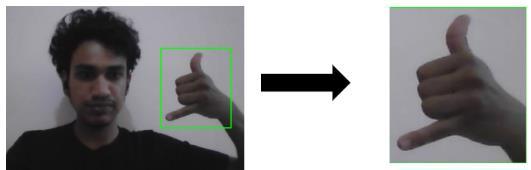
Figure-2: Depictstheprocessofextractingtheregionof interestfromtheoriginalimage.
4.3 EdgeDetectionusingfuzzy:
In this project, a fuzzy inference system (FIS) was employed to enhance edge detection using gradients. The FIS takes as input the gradient magnitude and gradient direction calculated from the edge-detected image. These gradient-based features serve as linguistic variables within the FIS, representing the intensity and orientation of edges in the image. The FIS is designed with linguistic terms such as "low," "medium," and "high" for both gradient magnitude and direction. Fuzzy rules are formulated to map combinations of gradient magnitudes and directions to fuzzy sets representing the likelihood of an edge being present at a particular location and orientation. By incorporating fuzzy logic, the system can effectively handle uncertainties and variations in edge characteristics, enhancing the robustness of edge detection. The FIS outputs a fuzzy set representing the degree of edge presence, which is then defuzzified to obtain a crisp edge detection result. Through this approach, the FIS augments traditional gradient-based edge detection methods, providing a more adaptive and context-aware solution for edge detection in various imagingconditions.
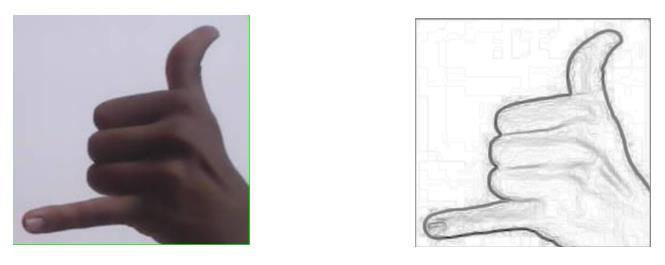
Figure-3: Depictstheprocessofextractingtheedge detectedimageusingfuzzyrules.
4.4 StoringDataset:
The above edge detected images are stored into a new folderandaremadeasdatasetwhichwouldbeprocessed bythesysteminCNN.
4.5 CNN:
Convolutional Neural Network (CNN) model using the Keras library for image classification tasks. The architecture consists of several layers aimed at progressively extracting and learning features from input images. Beginning with a convolutional layer employing 32 filters, each 5x5 in size, the model applies rectified
linear unit (ReLU) activation to introduce non-linearity. Subsequent max-pooling layers with 2x2 windows downsample the feature maps, reducing spatial dimensions while retaining important information. Additional convolutional layers follow a similar pattern, graduallyincreasingthenumberoffilterstocapturemore complexfeatures.Thefinallayersincludeaflattenlayerto transform the 2D feature maps into a 1D vector and a dense layer with 512 neurons and ReLU activation to process extracted features. Finally, a dense output layer with 10 neurons and softmax activation classifies input images into 10 distinct categories, yielding the predicted classwiththehighestprobability.
Evaluation of a Convolutional Neural Network (CNN) model for image classification tasks. Through the model.fit() function, the CNN model undergoes training using the specified training dataset (x_train and y_train) over a defined number of epochs, with data processed in batches for computational efficiency. Concurrently, the validationdataset(x_testandy_test)isutilizedtomonitor the model's performance on unseen data. Following training, two plots are generated using Matplotlib: one depictingthemodel'slossoverepochs,aidinginassessing convergence and potential overfitting, and another illustratingthemodel'saccuracyevolutionduringtraining and validation, providing insights into its generalization capabilities and performance trends. These visualizations serve as valuable tools for assessing and optimizing the CNNmodel'sperformanceandtrainingdynamics.
5.1.Experimentalresults
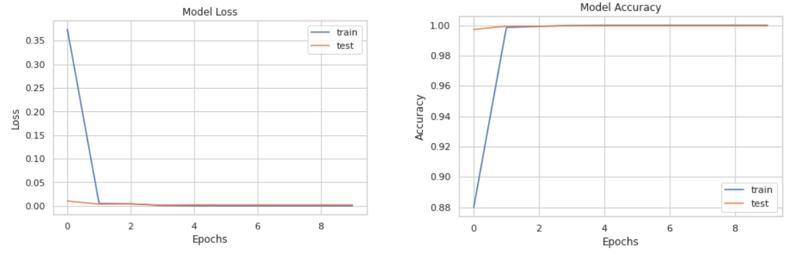
Figure-4: Theplotsdepicttherapidconvergenceofthe model.
5.2.Qualitativemetrics

Figure-5: Showstheaccuracyrateof99.8.
During testing, the hand gesture-based help alert system demonstrated exceptional accuracy and reliability across all test cases, with each test case resulting in a successful outcome. The CNN model with Fuzzy Logic exhibited
International Research Journal of Engineering and Technology (IRJET) e-ISSN:2395-0056
Volume:11Issue:12|Dec2024 www.irjet.net p-ISSN:2395-0072
robust performance in accurately recognizing and classifying hand gestures, achieving an impressive accuracy rate of 99.8% on the test dataset. Additionally, the system's gesture recognition module seamlessly interpreted user gestures, triggering the appropriate alerts with precision and consistency. The alert window effectively conveyed visual or textual alerts, ensuring timely and noticeable notifications to relevant parties or authorities. Overall, the system's high accuracy and consistent performance underscore its efficacy in facilitating efficient communication and response to user needsandemergencysituations.
In conclusion, the hand gesture-based help alert system represents a sophisticated yet intuitive solution for facilitating communication and assistance in emergency situations. By leveraging advanced technologies such as Convolutional Neural Networks (CNNs), Fuzzy Logic for gesture recognition, the system demonstrates exceptional accuracy and reliability in interpreting user gestures and triggering appropriate alerts. Through a well-designed userinterfaceand instructional database,userscan easily convey their needs and requests using intuitive hand gestures, while also accessing relevant guidance and information. The system's robust performance, as evidenced by its high accuracy and consistent results during testing, underscores its effectiveness in enabling timely and efficient communication and response to user needs and emergency situations. With its seamless integration of hardware, software, and user interaction elements,thehandgesture-basedhelpalertsystemstands asapromisingtoolforenhancingsafety,accessibility,and assistance in various environments, from healthcare facilitiestopublicspaces.
[1] Sharma, Rishi Raj, Kaku Akhil Kumar, and Sung Ho Cho. "Novel time-distance parameters based hand gesture recognition system using multi-UWB radars." IEEE Sensors Letters 7.5(2023):1-4.
[2] Sharma, Anand Kumar, et al. "Study on HGR by Using Machine Learning." 2023 3rd International Conference on Advance Computing and Innovative Technologies in Engineering (ICACITE).IEEE,2023.
[3] Kang, Soongyu, et al. "sEMG-based hand gesture recognition using binarized neural network." Sensors 23.3(2023):1436.
[4] Huang, Guan, et al. "Real-time automated detection of older adults' hand gestures in home and clinical settings." Neural Computing and Applications 35.11 (2023):8143-8156.
[5] Sahoo, Jaya Prakash, et al. "DeReFNet: Dual-stream Dense Residual Fusion Network for static hand gesturerecognition." Displays 77(2023):102388.
[6] Miah, A. S. M., Hasan, M. A.M., Shin, J., Okuyama, Y., & Tomioka,Y.(2023).Multistagespatialattention-based neural network for hand gesture recognition. Computers, 12(1),13.
[7] Damaneh,M.M.,Mohanna,F.,&Jafari,P.(2023).Static hand gesture recognition in sign language based on convolutional neural network with feature extraction method using ORB descriptor and Gabor filter. Expert Systems with Applications, 211,118559.
[8] Gao,Q.,Li,J.,Zhu,Y.,Wang,S.,Liufu,J.,&Liu,J.(2023). Hand gesture teleoperation for dexterous manipulators in space station by using monocular handmotioncapture. Acta Astronautica, 204,630-639.
[9] Bora,J., Dehingia,S.,Boruah,A.,Chetia,A.A., &Gogoi, D. (2023). Real-time assamese sign language recognition using mediapipe and deep learning. Procedia Computer Science, 218,1384-1393.
[10] Qahtan, S., Alsattar, H. A., Zaidan, A. A., Deveci, M., Pamucar, D., & Martinez, L. (2023). A comparative study of evaluating and benchmarking sign language recognition system-based wearable sensory devices using a single fuzzy set. Knowledge-Based Systems, 269,110519.
[11] Sarkar, A., Hossain, S. S., & Sarkar, R. (2023). Human activity recognition from sensor data using spatial attention-aided CNN with genetic algorithm. Neural Computing and Applications, 35(7),5165-5191.
[12] Muneeb, M., Rustam, H., & Jalal, A. (2023, February). Automate appliances via gestures recognition for elderly living assistance. In 2023 4th International Conference on Advancements in Computational Sciences (ICACS) (pp.1-6).IEEE.
[13] Das,S.,Imtiaz,M.S.,Neom,N.H.,Siddique,N.,&Wang, H.(2023).AhybridapproachforBanglasignlanguage recognition using deep transfer learning model with random forest classifier. Expert Systems with Applications, 213