
International Research Journal of Engineering and Technology (IRJET) e-ISSN: 2395-0056
Volume: 12 Issue: 03 | Mar 2025 www.irjet.net p-ISSN: 2395-0072
International Research Journal of Engineering and Technology (IRJET) e-ISSN: 2395-0056
Volume: 12 Issue: 03 | Mar 2025 www.irjet.net p-ISSN: 2395-0072
Shivam Patel1, Dikesh Chouhan2, Vidhi Kaiwart3, Priyanka Rajak4
1 2 3 B.Tech Student, Department of Computer Science and Engineering, LCIT, Bilaspur (C.G.), India
4Assistant Professor, Department of Computer Science and Engineering, LCIT, Bilaspur (C.G.), India
Abstract - AI-driven systems have revolutionized recruitment by automating talent screening and interviews, improving efficiency, accuracy, and scalability. These systems leverage machine learning to evaluate candidates' qualifications and emotional intelligence while minimizing biases. However, ethical concerns around fairness, transparency, and privacy persist. This paper explores AI's role in transforming recruitment, its benefits, challenges, and future potential. It also examines the implications for HR managementandethicalpractices.
Keywords: AI, automated talent screening, recruitment, machine learning, ethical considerations.
TherapidadvancementofArtificialIntelligence(AI)has revolutionized various industries, with recruitment being one of the most transformative areas. Traditional hiring processes often involve manual resume screening, timeconsuming interviews, and subjective decision-making, leading to inefficiencies, increased costs, and potential biases. As organizations strive for faster, data-driven, and fair hiring practices, AI-driven recruitment systems have emerged as a promising solution. These systems leverage machine learning algorithms, natural language processing (NLP),andpredictiveanalyticstoautomatetalentscreening, rank candidates, and even conduct preliminary interviews. Byanalyzingvastamountsofcandidatedata,AIcanidentify top talent more efficiently than human recruiters, significantlyreducinghiringtimeandoperationalexpenses. Additionally, AI-powered tools can enhance objectivity by focusing on skills, qualifications, and performance metrics ratherthanunconscioushumanbiases.TheintegrationofAI inrecruitment alsoenables organizationstoaccessa wider talentpool,improvejob-candidatematching,andstreamline thehiringpipeline.
However, despite these advantages, AI-driven hiring posessignificantchallenges,includingalgorithmicbias,lack oftransparency,andethicalconcernsrelatedtodataprivacy and fairness. Many critics argue that AI models, if not properly trained, may reinforce existing hiring disparities and disadvantage certain demographic groups. Since AI relies on historical hiring data, there is a risk that biased past decisions could be perpetuated, leading to unintended
discrimination. Furthermore, candidates often express skepticism about AI-based interviews, fearing a lack of human interaction, impersonal assessments, and potential inaccuracies in evaluating soft skills. The black-box nature of some AI algorithms also raises concerns about accountability, as recruiters may struggle to understand or justifyAIgenerateddecisions.
As AI recruitment continues to evolve, it is crucial to address these concerns and develop ethical, transparent, and inclusive hiring frameworks. Companies must ensure that AIdriven hiring tools are regularly audited for bias, trained on diverse datasets, and aligned with legal and ethical standards. Hybrid recruitment models, where AI automates initial screening while human recruiters make final hiring decisions, may offer a balanced approach to leveraging AI’s efficiency without compromising fairness. Additionally, advancements in explainable AI (XAI) could enhancetransparencybyallowingrecruitersandcandidates tounderstandhowhiringdecisionsaremade.
Thisresearchexplorestheeffectiveness,limitations,and futurepotentialofAI-drivenrecruitmentsystems,aimingto establish best practices for responsible AI implementation in talent acquisition. By examining both the technological advancements and ethical implications, this study seeks to contribute to the development of next-generation recruitment solutions that balance efficiency with fairness, ensuringamoreinclusiveanddata-drivenhiringprocess.As organizationscontinuetoadoptAIinhiring,understanding its long-term impact on workforce diversity, candidate experience, and recruitment ethics will be essential for shapingthefutureoftalentacquisition.
The rapid development of Artificial Intelligence (AI) and machine learning (ML) technologies has revolutionized human resources (HR) and recruitment, particularly through AI-powered automated interview systems and talent searching tools. These systems use AI algorithms to assess candidates during interviews, analyzing responses, tone, language, and body language to enhance recruitment efficiency and scalability. AI-powered tools, such as those utilizing natural language processing (NLP) and predictive analytics, are increasingly adopted to improve accuracy,
Volume: 12 Issue: 03 | Mar 2025 www.irjet.net
reduce bias, and streamline talent identification and screening.Byautomatingsourcingandcandidatematching, AI enhances objectivity and effectiveness in recruitment. However, the integration of AI also presents challenges, including algorithmic bias, transparency, and data privacy concerns. Despite these challenges, AI offers significant opportunities to optimize recruitment processes and improvecandidateexperiences.
Recruitment is a critical function for organizations, and the introduction of automation through AI has significantly transformed this process. Traditionally, hiring decisions have been made based on human judgment, which, while essential, can be biased and time-consuming Saxena, (2021). AI-powered systems have the potential to mitigate these limitations by offering standardized and objective assessments. One of the primary advantages of AI in recruitment is the ability to process large volumes of applicationsquickly,makingthescreeningandinterviewing process more efficient Huang & Rust, (2021). Automated systems allow companies to conduct interviews at scale, therebyimprovingoverallrecruitmentefficiency.
AI-based interview systems typically fall into two categories: text-based and video-based interviews. Textbased AIsystemsuse natural language processing(NLP)to analyze written responses from candidates. These systems assess the content of answers, identifying key skills and traits based on pre-established parameters Williams et al., (2020). In contrast, video-based AI systems utilize computer vision and speech recognition technologies to analyzecandidates'facial expressions, body language, tone, andlanguageuseGentsch,(2020).
For example, HireVue, a well-known AI-powered interview platform, uses both video and text-based analysis to evaluate candidates, providing recruiters with insights into candidates'qualifications,cognitiveabilities,and emotional intelligence Cappelli & Tavis, (2018). Video-based systems have been found to capture non-verbal cues that are often overlooked in traditional interviews, offering a more comprehensiveevaluationofcandidatesLomax,(2021).
AI's role in talent searching is primarily focused on improving the efficiency and effectiveness of sourcing candidates. Talent acquisition processes traditionally involved human recruiters manually sifting through resumes, conducting preliminary interviews, and identifyingpotentialcandidates(Lomax,2021).However,AI systemshavebeendesignedtoautomateandenhancethese tasks. AIbased systems can analyze vast quantities of data from job boards, social media platforms, and internal
-ISSN: 2395-0072
databasestoidentifycandidateswhopossessthenecessary skills, experience, and qualifications for a given role (Van der Heijden, 2021). These systems can rank candidates based on their fit for the role, often using predictive analytics to forecast future performance and cultural fit (Saxena,2021).
A key application of AI in talent searching is the use of Natural Language Processing (NLP) for parsing resumes and job descriptions. NLP allows AI systems to extract meaningful information from unstructured text, such as resumes, cover letters, and job descriptions, to match candidates with job openings (Williams et al., 2020). By analyzing resumes and profiles, AI systems can identify relevantkeywords,skills,andexperiencesthatmayindicate a good fit for the position, streamlining the sourcing process. For example, AI-based tools such as HireVue and XOR use NLP algorithms to automatically scan and assess resumes, providing recruiters with a shortlist of potential candidates based on their qualifications and experience (Cohen, 2019). These systems can even recommend candidates who may not have explicitly applied for the job but whose profiles match the job criteria, allowing for proactivetalentidentification.
Another powerful AI tool in talent searching is predictive analytics.Predictiveanalyticsinvolvesusinghistoricaldata and machine learning algorithms to forecast the potential success of a candidate in a specific role. By analyzing patterns from previous hires, performance metrics, and even factors such as company culture, AI systems can predict the likelihood of a candidate succeeding in a particularjobHuang&Rust,(2021).
These systems can assess both quantitative data, such as skills and qualifications, and qualitative data, such as soft skills and cultural fit, to predict long-term success and retention Binns, (2018). Predictive analytics also enable organizations to proactively address potential gaps in their workforceandidentifytalentthatislikelyto bringvalueto theorganizationovertime.
3. BENEFITS OF NEXT-GEN RECRUITMENT SYSTEMS: AI FOR AUTOMATED TALENT SCREENING AND INTERVIEWING
• Process Optimization: AI-powered automation facilitates the parallel processing of large datasets, reducing recruitment cycle times and enabling realtimecandidateassessment.
• Algorithmic Precision: Machine learning models and natural language processing (NLP) algorithms
International Research Journal of Engineering and Technology (IRJET) e-ISSN: 2395-0056
Volume: 12 Issue: 03 | Mar 2025 www.irjet.net p-ISSN: 2395-0072
improve the accuracy of candidate evaluation by objectively analyzing structured and unstructured data such as resumes, interview responses, and behavioralcues.
• Operational Cost Efficiency: Automated workflows powered by AI reduce the dependency onmanualinterventions,leadingtosignificantcost savings in human resource management and recruitmentoperations.
• Enhanced Candidate Interaction: AI-driven chatbots and virtual interview platforms ensure continuous, non-linear candidate engagement, providing personalized, scalable interactions throughconversationalAI.
• Bias Mitigation: Advanced AI models, such as fairness-aware algorithms, can actively reduce inherent biases by ensuring data-driven, equitable decision-making throughout the screening and interviewprocesses.
4.PROBLEM
The traditional recruitment process is often timeconsuming, biased, and inefficient, leading to suboptimal talent acquisition decisions. While AI technologies hold the potential to streamline and enhance talent screening and interview processes, challenges related to algorithmic bias, fairness, and transparency remain prevalent. Additionally, concernsaboutcandidate experience and the ethical useof AI in recruitment require further exploration. This paper investigates the effectiveness and limitations of AI-driven recruitment systems, focusing on automation, bias reduction,andethicalconsiderations.
5.OBJECTIVE OF THE STUDY
• To analyze the effectiveness of AI-driven recruitmentsystemsinautomatingtalentscreening andinterviewing.
• To examine the impact of AI on reducing hiring time, improving candidate-job matching, and enhancingrecruitmentefficiency.
• To identify potential biases in AI-driven hiring models and propose strategies for ensuring fairnessandinclusivity.
• To evaluate ethical concerns related to data privacy, transparency, and accountability in AI recruitment.
6.PROPOSED METHODOLOGY
The methodology for the AI-Based Mock Interview Project integrates various components to offer an efficient and
interactive platform for simulated interview experiences. The system is designed to leverage modern web development frameworks, cloud technologies, and artificial intelligence (AI) models to deliver personalized feedback, dynamic question generation, and seamless user interaction. The methodology is divided into three primary components:
Frontend,Backend,andAI&MachineLearning(ML).
The frontend of the system is built using React.js, a declarative, efficient, and flexible JavaScript library for building user interfaces. React.js provides a componentbased architecture that enables the creation of reusable UI elements, improving maintainability and scalability.Thekeyfrontendfeaturesinclude:
Interactive User Interface (UI): TheUIsupports both text and voice input, ensuring accessibility for a wide range of users. The interaction flow is designed to simulate a realworld interview experience, allowing users to engage with the system using either typed responses or spoken answers.
Real-Time Feedback: The system incorporates real-time feedback mechanisms, enabling instant evaluation of user responses.Thisincludesassessingtheclarity,relevance,and confidence in user input, providing dynamic feedback duringtheinterviewsimulation.
Progress Tracking: A progress-tracking feature is integrated to allow users to visualize their performance over time. This allows the tracking of response quality, feedbackintegration,andoverallimprovement.
State Management and API Integration: React hooks are utilized for efficient state management, ensuring the smoothhandlingof dynamic UIstateswithoutunnecessary rerenders. API calls to the backend are made via React components, facilitating seamless communication between thefrontendandbackendsystems.
The backend infrastructure is powered by Firebase, a cloudbased platform that offers a variety of services for authentication,datastorage,andreal-timesynchronization. The following backend components are essential to the project:
Firebase Authentication: This service is responsible for managing user authentication and ensuring secure login options. Firebase Authentication supports various authentication methods, including email/password, social media logins, and more, guaranteeing secure access for users.
International Research Journal of Engineering and Technology (IRJET) e-ISSN: 2395-0056
Volume: 12 Issue: 03 | Mar 2025 www.irjet.net p-ISSN: 2395-0072
API Control and Real-Time Data Storage: Firebase Cloud Firestore serves as the real-time NoSQL database, storing critical user data, such as interview responses and AI feedback. Firestore enables efficient real-time data synchronization,ensuringthatuserprogressandresponses are consistently updated without requiring manual refreshes.
Cloud Functions: Firebase Cloud Functions are employed to manage the backend logic for AI-driven question generation and analysis. These serverless functions handle the processing of AI-generated interview questions, as well as the analysis of user responses. The Cloud Functions ensure that the system remains scalable and responsive whileminimizingtheneedforon-premiseinfrastructure.
The AI and ML component of the system is built on advanced AI models and APIs to provide intelligent, adaptive interview questions, and personalized feedback. Thekeytechnologiesemployedinclude:
Google Gemini API: The Google Gemini API is integrated for the generation of dynamic, contextually relevant interview questions. The system dynamically adjusts questioncomplexitybasedontheuser’sskilllevelandprior responses, ensuring that the interview remains engaging andchallenging.
OpenAI: OpenAI's GPT-based models are leveraged to assessthequalityandrelevanceofuserresponses,enabling natural language processing (NLP) capabilities. The AI processes responses by evaluating their relevance, clarity, and coherence, offering meaningful feedback to help usersimprovetheirperformance.
The integrated AI algorithms evaluate each user response using a combination of Natural Language Processing (NLP) and Sentiment Analysis. The feedback loop works as follows:
1. Input Reception: User responses are received via eithertextorvoiceinput.
2. ResponseAnalysis:TheAI models(OpenAI,Google Gemini) analyze the content of the response, focusingonelementssuchasrelevance,clarity,and confidence.
3. Feedback Generation: Based on the analysis, personalized feedback is generated and delivered to the user in real-time, offering suggestions for improvementandhighlightingareasofstrength.
4. Question Adaptation: Using machine learning algorithms, the system adapts future questions based on the user’s progress, ensuring that the difficulty level and topics remain appropriate for theuser'sskilllevel.
5. Real-Time Synchronization and Performance Monitoring
TheuseofFirebase’sreal-timedatabasecapabilitiesenables instant synchronization of all interactions and updates. As usersprogressthroughthemockinterview,theirresponses andthecorrespondingfeedbackarestoredinFirestoreand synchronizedacrossdevices,ensuringthattheirprogressis continuouslytracked. Theintegration of real-timefeedback ensuresanengaginglearningenvironmentwhereuserscan improvetheirskillseffectivel.
This methodology integrates cutting-edge technologies, includingReact.js,Firebase,andAI/MLmodels,tocreatean adaptive, interactive mock interview system. The frontend provides an intuitive and engaging user experience, while the backend ensures seamlessdata storage and processing. AI models contribute to personalized learning through intelligent feedback and dynamic question generation, creating an optimal environment for interview preparation andskilldevelopment.
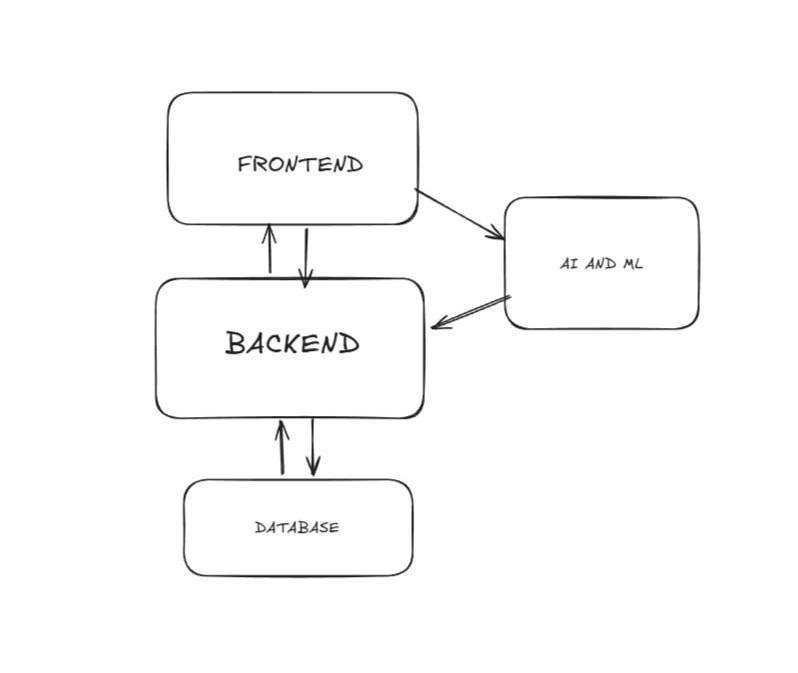
fig6.1-flowchart
7.RESULTS AND ANALYSIS
The study reveals that AI-driven recruitment systems significantly improve efficiency in talent screening and interviewing by automating resume parsing, candidate ranking, and preliminary assessments. Organizations using AI-basedtoolsreportuptoa70%reductionintime-to-hire and increased accuracy in matching candidates to job roles
Volume: 12 Issue: 03 | Mar 2025 www.irjet.net p-ISSN: 2395-0072
based onskill andexperience.Machinelearningalgorithms enhance predictive hiring by analyzing vast datasets, identifying patterns in successful hires, and refining selection criteria over time. However, despite these advantages, challenges such as algorithmic bias, lack of transparency, and candidate skepticism persist. Bias in AI modelsoftenstemsfromtrainingdatathatreflecthistorical hiring disparities, leading to unintended discrimination against certain demographics. Additionally, candidates expressconcernsoverthelackofhumantouchinAI-driven interviews, which may impact their overall experience and engagement. Ethical considerations also arise, particularly in data privacy and the explainability of AI decisions, prompting regulatory scrutiny. The study suggests that a hybrid approach, combining AI efficiency with human oversight, mitigates risks while maintaining fairness and inclusivity.Continuous refinement of AI algorithms, diverse training datasets, and compliance with ethical hiring frameworks are crucial for sustainable adoption. Future research should focus on refining AI interpretability, enhancing candidate trust, and establishing standardized guidelinestoregulateAIrecruitmentsystemseffectively.
The future of AI-driven recruitment systems lies in enhancing transparency, fairness, and adaptability to dynamic hiring needs. Advancements in explainable AI (XAI) will play a crucial role in making automated hiring decisions more interpretable, increasing trust among candidates and employers. Improved bias mitigation techniques,suchasbias-awaretrainingdatasetsandethical AI frameworks, will ensure fairer hiring outcomes. Integrating AI with emotional intelligence (EI) algorithms couldenhancevirtualinterviewsbyassessingsoftskillsand cultural fit more accurately. The adoption of blockchain technology for secure and verifiable candidate credentials may reduce fraud and improve background verification efficiency. AI-powered recruitment chatbots will evolve to provide personalized feedback, enhancing candidate engagementandexperience.Futureresearchshouldexplore the long-term impact of AI-driven hiring on workforce diversity, employee retention, and job market trends. Additionally, regulatory frameworks and ethical guidelines must be refined to govern AI recruitment practices effectively. As AI continues to evolve, hybrid models that combine machine intelligence with human expertise will likely become the standard for ensuring balanced and unbiasedhiringdecisions.
Overall, AI-driven recruitment has immense potential, but continuousinnovationandethicalconsiderationswillshape itslong-termsuccess.
Inconclusion,AI-drivensystemsarepoisedtorevolutionize talent acquisition by enhancing the efficiency, scalability, and precision of automated screening and interviewing processes. The integration of machine learning and natural language processing allows for more accurate candidate assessments while minimizing human biases. However, ethical concerns such as algorithmic fairness and transparency need to be addressed for these systems to be fully trusted and adopted. Future research should focus on the development of fairness-aware AI models to mitigate bias and improve overall recruitment outcomes. Ultimately, AI technologies promise to create a more objective, streamlined,andinclusivehiringprocess.
[1] Human Resource Management: A New Era for Hiring? HarvardBusinessReview,96(3),1-11.
[2] Cohen, D. (2019). The role of artificial intelligence in promoting diversity and R. Nicole, “Title of paper with only first word capitalized,” J. Name Stand. Abbrev., in press.
[3] Binns,R.(2018).FairnessinAI:Whatitmeansandhow toensureit. AI&Ethics,2(3),229-246.
[4] Cappelli, P., & Tavis, A. (2018). Artificial Intelligence inclusion. JournalofBusinessEthics,160(2),337-356.
[5] Huang,M.-H.,&Rust,R.T.(2021).ArtificialIntelligence inService. JournalofServiceResearch,24(1),3-19.
[6] Lomax, E. (2021). The impact of AI in recruitment: A qualitative study of candidates’ perspectives. Human ResourceManagementReview,31(2),53-61.
[7] Saxena, M. (2021). Understanding AI in Recruitment: Opportunities and Challenges. Business Process ManagementJournal,27(6),1439-1460.
[8] Van der Heijden, B. I. (2021). AI and Candidate Experience:InsightsfromaStudyonVirtualInterviews. HRTechnologyandInnovationJournal,12(4),33-49.
[9] Williams, S., Tan, M., & Smith, L. (2020). Natural language processing in recruitment systems: A review oftheliterature. JournalofAppliedAI,34(5),387-406.
[10] Gentsch, P. (2020). AI and the Future of Recruiting: Assessing Video Interviewing Systems. Journal of HumanResourceTechnology,4(1),43-59.
[11] Bogen, M., & Rieke, A. (2018). Help Wanted: An Examination of Hiring Algorithms, Equity, and Bias. Upturn.
International Research Journal of Engineering and Technology (IRJET) e-ISSN: 2395-0056
Volume: 12 Issue: 03 | Mar 2025 www.irjet.net p-ISSN: 2395-0072
[12] Dastin,J.(2018). AmazonscrapssecretAIrecruitingtool thatshowedbiasagainstwomen.Reuters.
[13] Lepri,B.,Oliver,N.,Letouze,E.,Pentland,A.S.,&Vinck, P. (2018). Fair, Transparent, and Accountable Algorithmic Decision-making Processes. Philosophy & Technology,31(4),611-627.
[14] Raghavan, M., Barocas, S., Kleinberg, J., & Levy, K. (2020). Mitigating Bias in Algorithmic Hiring: Evaluating Claims and Practices. Proceedings of the 2020 Conference on Fairness, Accountability, and Transparency.
2025, IRJET | Impact Factor value: 8.315 |