
International Research Journal of Engineering and Technology (IRJET) e-ISSN: 2395-0056
Volume: 13 Issue: 04 | Apr 2026 www.irjet.net p-ISSN: 2395-0072

International Research Journal of Engineering and Technology (IRJET) e-ISSN: 2395-0056
Volume: 13 Issue: 04 | Apr 2026 www.irjet.net p-ISSN: 2395-0072
Komarina Dileep Chowdary1, Grandhi Gopal Guptha2 , Karni Dharani3 , Nakka Santosh Kumar4 , Vechalapu Paavana Sai Lakshmi5
1Assistant Professor, Dept. of Civil Engineering, Sanketika Vidya Parishad Engineering College, VSP, India
2B.tech graduate student, Dept. of Civil Engineering, Sanketika Vidya Parishad Engineering College, VSP, India
3B.tech graduate student, Dept. of Civil Engineering, Sanketika Vidya Parishad Engineering College, VSP, India
4B.tech graduate student, Dept. of Civil Engineering, Sanketika Vidya Parishad Engineering College, VSP, India
5B.tech graduate student, Dept. of Civil Engineering, Sanketika Vidya Parishad Engineering College, VSP, India
Abstract - Concrete is one of the most widely used construction materials, but its production consumes large amounts of natural resources and contributes to environmental problems. At the same time, waste materials like Expanded Polystyrene (EPS), or Styrofoam, create serious disposal challenges because they do not decompose easily. This project aims to address both issues by developing a sustainable, multifunctional lightweight concrete using recycled Styrofoam and photo catalyst materials.
In this study, crushed EPS is used as a partial replacement for coarse aggregate, making the concrete lighter and improving its thermal and acoustic insulation properties. Additionally, titanium dioxide (TiO₂) nanoparticles are incorporated into the concrete as a photo catalyst. These particles give the material self-cleaning and air-purifying abilities. When exposed to sunlight, especially ultraviolet (UV) rays, TiO₂ reacts with oxygen and moisture in the air to break down harmful pollutants such as nitrogen oxides (NOx) and volatile organic compounds (VOCs), converting them into less harmful substances that can be washed away byrain.
ThecombinationofEPSandphotocatalystmaterialsresults in a concrete that is not only lightweight but also environmentally beneficial. While EPS helps reduce the overall density and improves insulation, TiO₂ enhances the surfacefunctionalityofthe concretebyactivelyreducing air pollution.
This research highlights how innovative use of waste materials and advanced technologies can improve the performance of construction materials. Overall, the study demonstrates that multifunctional concrete can support sustainable constructionbyreducingenvironmentalimpact, improving energy efficiency, and contributing to cleaner air inurbanareas.
Key Words: Lightweight (EPS) Concrete, Sustainable Construction, Titanium Dioxide (TiO₂), Self-cleaning (Photo catalyst) Concrete, Air Purification, Waste Utilization, Multifunctional Concrete, Thermal Insulation
Concrete is one of the most commonly used construction materials because of its strength, durability, and versatility. However, its production consumes large amounts of natural resources and contributes to environmental issues like carbon emissions. At the same time, non-biodegradable waste such as Styrofoam (Expanded Polystyrene – EPS) creates serious disposal problems.Toaddressthesechallenges,thisstudyexplores the development of multifunctional concrete using recycledStyrofoamandphotocatalystmaterials.
The concept of multifunctional concrete goes beyond traditional strength by adding properties like lightweight performance, thermal insulation, and pollution reduction. In this study, crushed Styrofoam is used asa replacement for coarse aggregates, significantly reducing the weight of concrete while improving thermal and sound insulation. Additionally, titanium dioxide (TiO₂) is incorporated as a photo catalyst, enabling the concrete to break down harmfulairpollutantssuchasnitrogenoxides(NOx)when exposed to sunlight. This also provides self-cleaning, antibacterial,andaestheticdurabilitybenefits.
The main objectives of the study are to develop sustainable concrete, reduce self-weight, utilize waste materials, and evaluate mechanical and functional propertiessuchascompressivestrength, workability,and air-purifyingability.TheuseofStyrofoampromoteswaste management, while TiO₂ enhances environmental performance.
The scope of the study focuses on laboratory-scale evaluation of concrete properties with different EPS proportionstodeterminetheoptimalmix.Althoughlargescaleapplicationsarenotincluded,theresearchhighlights the potential of this material for lightweight structures, partitionwalls,andeco-friendlyconstructionsolutions.r.
To develop multifunctional concrete using photo catalystmaterialsandExpandedPolystyrene(EPS).
International Research Journal of Engineering and Technology (IRJET) e-ISSN: 2395-0056
Volume: 13 Issue: 04 | Apr 2026 www.irjet.net p-ISSN: 2395-0072
To study the feasibility of using waste Styrofoam in concrete.
To reduce the self-weight of concrete by replacing naturalcoarseaggregateswithEPS.
Toevaluatemechanicalpropertiessuchascompressive strengthandworkability.
To analyze photo catalytic properties like air purificationandself-cleaningability.
To promote sustainable construction through waste utilizationandreducedresourceconsumption.
1.2 Objectives of Additional Materials
Photo catalyst (TiO₂):
Toreduceharmfulairpollutants(airpurification).
Toprovideself-cleaningproperties.
Toofferantibacterialandantifungaleffects.
Toimproveaestheticdurabilityofconcretesurfaces.
Styrofoam (EPS):
Toproducelightweightconcrete.
Toenhancethermalinsulation.
Toimprovesoundinsulation/absorption.
To support waste management by recycling plastic materials.
Combined Objective:
Todevelopa sustainable, lightweight, and eco-friendly concretewithinsulationandair-purifyingcapabilities.
1.3
TodevelopandtestmultifunctionalconcreteusingEPS andphotocatalystmaterials.
To study physical and mechanical properties such as density,workability,andcompressivestrength.
To determine the optimum percentage of EPS replacement.
To evaluate self-cleaning and air-purifying performanceoftheconcrete.
To promote sustainable construction using waste materials.
The study is limited to laboratory-scale testing and doesnotincludelarge-scalestructuralapplications.
1.3 Problem Statement
Excessive use of natural aggregates in construction leads to resource depletion and environmental degradation.
Disposal of non-biodegradable plastic waste like EPS (Styrofoam)isagrowingenvironmentalconcern.
Conventional concrete lacks environmental benefits such as pollution reduction and self-cleaning properties.
There is a need for innovative, sustainable construction materials with added functional benefits.
Theprojectaimstodevelop multifunctional concrete using crushed EPS as partial aggregate replacement and incorporating photo catalysts for improved environmentalperformance.
Materialselection
Materialstests
EPSpreparation
Cement
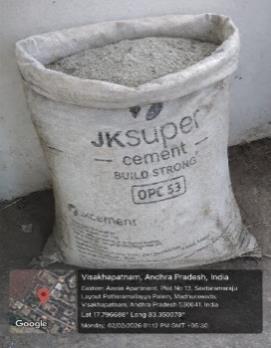
Cement is a binding material, used for construction that sets,hardens,andadherestoothermaterialstobindthem together. Ordinary Portland cement (OPC) of 53 grade, of JK Super (Build strong) brand available in local market is used in the investigation. The cement used for all tests is fromthesamebatch.
Table I: Testresultsoncement
S.no Properties Test results observed
1. Finenessofcement 9%
2. StandardConsistency 30%
International Research Journal of Engineering and Technology (IRJET) e-ISSN: 2395-0056
Volume: 13 Issue: 04 | Apr 2026 www.irjet.net p-ISSN: 2395-0072
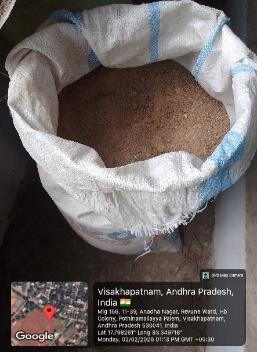

Fineaggregate(commonlyreferredtoassand)isacritical component of concrete and mortar, typically consisting of granular materials that pass througha 4.75 mm sieve and are retained on a 75 µm sieve. The used fine aggregate is riversand.
Table II: Testresultsonfineaggregate
S.no Properties Test results observed
1. FinenessModulus 2.2
2. Zoneofsand ZoneIII
3. SpecificGravity 2.65
4. BulkDensity 1450kg/m³
5. Moisturecontent 2.04%
6. BulkingofSand 20%
7. Siltcontent 0%
Coarse aggregate is a foundational component of concrete which consists of large-sized particles retained on a 4.75 mm sieve, typically ranging up to 37.5 mm in diameter, though sizes can go up to 75 mm for mass concrete. Well gradedcoarseaggregateof10and20mmareused.
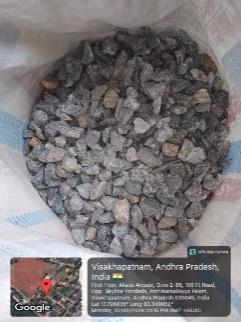
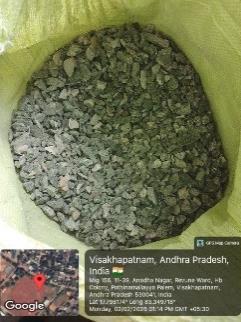
Fig. 3: 20mm

Table III: Testresultsoncoarseaggregate
S.no Properties Test results observed
1. SpecificGravity 2.72
2. BulkDensity 1623.75kg/m³
3.
6. AggregateImpactValue 5.7%
Crushed Expanded Polystyrene (EPS) or Styrofoam, particularly in the 2–5 mm size range, is used in concrete as a lightweight aggregate to produce Expanded PolystyreneConcrete(EPSConcrete).
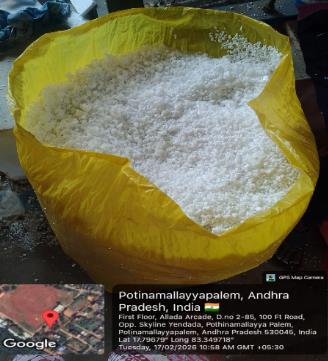
Fig. 5: CrushedStyrofoam
Table IV: TestresultsonCrushedStyrofoam
S.no Properties Test results observed
1. BulkDensity 21kg/m³
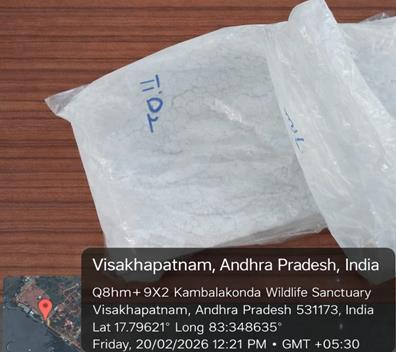
Anatase Titanium Dioxide (TiO₂) is widely used in concrete as a photo catalytic additive, typically at 0.5%–5% by weight of cement, to impart self-cleaning (decolourization of organics) and smog-abating (reduction) properties. It improves compressive/flexural strength and durability, with 2%–3% deemed optimal for balancingperformancewithcost.

Fig. 4: 10mm coarseaggregate
International Research Journal of Engineering and Technology (IRJET) e-ISSN: 2395-0056
Volume: 13 Issue: 04 | Apr 2026 www.irjet.net p-ISSN: 2395-0072
TheconcretemixwasdesignedforM20andM25gradeas perIS10262:2019andIS456:2000
Coarse aggregate was fully replaced by crushed Styrofoambyvolume.
Water–cementratiowasmaintainedlessthan0.50.
TiO₂wasaddedat5%ofcementcontentandSuper plasticizerof1%ofcementwasusedtoimprove workability.
Table V: TestresultsonCrushedStyrofoam

Fig. 7: Polycarboxylate ether
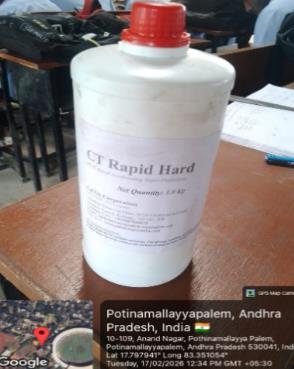
Super plasticizer (Polycarboxylate ether (PCE))
Polycarboxylate ether (PCE) super plasticizer is a highperformance, water-reducing, and eco-friendly concrete admixture that drastically reduces water content (up to 30-40%) while enhancing flow ability, strength, and durability
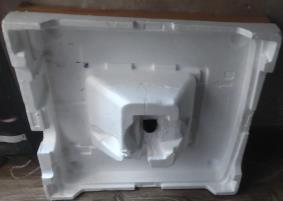
2.2 Preparation of Crushed Styrofoam
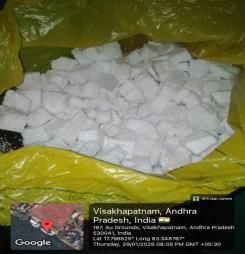
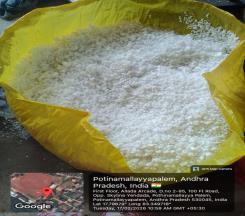
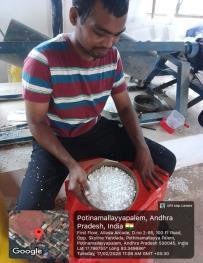
Waste Styrofoam was crushed into 2–5 mm particles, washed, and lightly pre-wetted to minimize water absorptionandfloatingduringmixing.
Water–cementratiousedis0.40
Table VI: TestresultsonCrushedStyrofoam

Fig 8: Waste Styrofoamblocks
Water–cementratiousedis0.40
S.no Material Quantityfor 1m3

Fig 9: Simplifying Styrofoamblocks IntoSmallpieces
OPC53Cement

Fig 10: Crushed/Shredded Styrofoam

Fig 11: Sieving through5mmsieve
Dry Mixing
Mixcementandsandfor2-5min
Add TiO₂ powder and mix properly to ensure even distribution.
International Research Journal of Engineering and Technology (IRJET) e-ISSN: 2395-0056
Volume: 13 Issue: 04 | Apr 2026 www.irjet.net p-ISSN: 2395-0072
Add crushed Styrofoam slowly to the mix and mix carefully to avoid segregation (Styrofoam is very lightweight).
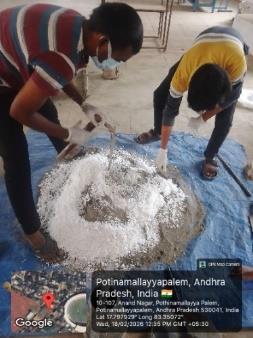
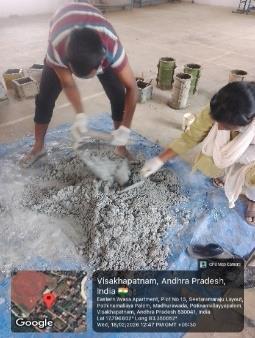
Add 70 % of water gradually (water–cement ratio ~0.4–0.5).
Mixitfor3–4minutes
Addsuperplasticizertotheremaining30%water
Addsuperplasticizermixedwatertothemix
Mixuntilitisuniform,workablemixisobtained.
AvoidovermixingtopreventfloatingofStyrofoam.
Casting Process
PreparationofMoulds
Use standard moulds (cube: 150×150×150 mm, cylinder,orprism).
Clean and apply oil to the inner surface to prevent sticking.
PlacingofConcrete
Pourtheconcretemixintomouldsin3layers.
Compaction
Uselighttampingorhandcompaction.
Give25-35blowsforeachlayer.
Avoidheavyvibrationbecause:
Styrofoammayfloattothetop
Segregationmayoccur
LevellingandFinishing
Levelthesurfaceusingatrowel.
Ensureasmoothandevenfinish.
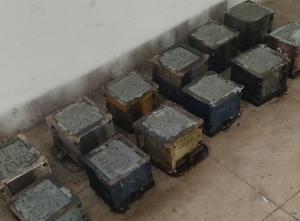
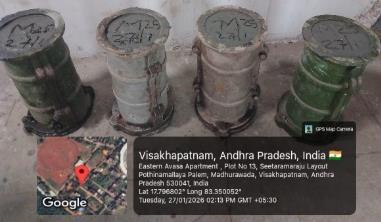
Initial Setting
Keep the moulds undisturbed for 24 hours at room temperature.
Cover the surface with plastic sheets or wet cloth to preventmoistureloss.
De-moulding
After 24 hours, carefully remove specimens from moulds.
Handle gently since early strength may be low due to Styrofoamcontent.
Curing Process
Method:WaterCuring
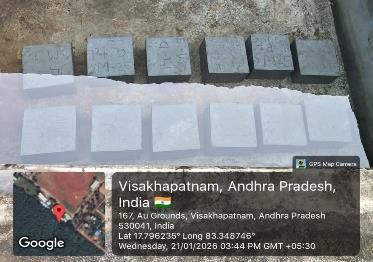
ImmersethespecimensinWaterTank
Placespecimensincleanwatertanks.
Maintaintemperaturearound20–27°C.
Curing Duration: Immerse the specimens for a curing periodof:
7 days (early strength), 14 days, 21 days, and 28 days (finalstrength)
Precautions
Donotuseheavyvibration
UseuniformsizeofcrushedStyrofoam
Maintainproperwater-cementratio
Handlespecimenscarefullyduringde-moulding
Ensurepropercuringtoimprovestrength
2.8 Thermal Insulation of this Concrete
This concrete mix has improved thermal insulation mainly due to the use of EPS (Expanded Polystyrene) andtheremovalofcoarseaggregates.
EPSplaysakeyroleeveninsmallquantitiesbecauseit is about 98% air. This air content disrupts heat flow, making the material a good insulator. In contrast, cementandsandconductheatmuchmoreeasily.
Theabsenceofcoarseaggregatesalsohelps.Innormal concrete, these aggregates act as thermal bridges, allowing heat to pass through quickly. Removing them reducesheattransfer.
Lowerdensityisanotherimportantfactor.Lightweight concretenaturallyprovidesbetterinsulationbecauseit contains more air and less solid material for heat conduction.
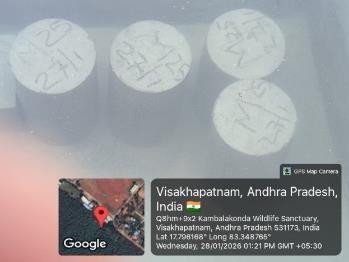
Labelling each specimen
Eachcubeandcylinderwas clearlylabelledwitha unique IDindicating:
Mixtype(control,percentage,oradditive)
Dateofcasting
Smaller EPS particles (2–5 mm) ensure uniform distribution, creating evenly spaced air voids. This leads to consistent insulation performance throughout theconcrete.
Thermal insulation depends on thermal conductivity (kvalue).
International Research Journal of Engineering and Technology (IRJET) e-ISSN: 2395-0056
Volume: 13 Issue: 04 | Apr 2026 www.irjet.net p-ISSN: 2395-0072
Lowerkvalue→higherinsulation
Higherkvalue→Lowerinsulation
Material - k(W/mK)
Normalconcrete - 1.5–1.8
Ourcube - 0.6–1.0
EPS - 0.03–0.04
Conclusion
By replacing about 40–50% of the volume with 2–5 mmcrushedEPS(withaverylowdensityof21kg/m³), theconcretetrapsmoreairandreducesheatflow.Asa result, it offers much better thermal insulation comparedtoconventionalconcrete.
2.9 Tests done on Concrete
Laboratory tests were carried out the prepared concrete samples.Thefollowingtestswereconducted:
1.Testsonfreshconcrete-
Workabilitytest(Slumpconetest)
Density/Unitweighttest
2.Testsonhardenconcrete-
Compressive strength test at 7, 14, 21 and 28 days
Splittensilestrengthtestat7,14,21and28days
Waterabsorptionafter28days
Self-cleaning and photo catalytic performance undersunlightusingmethyleneblue
3. CONCRETE TEST ANALYSIS AND EVALUATION OF RESULTS
Test results were analysed and compared with conventionalM20andM25concretetoevaluatetheeffect ofTiO₂additionandfullEPSreplacementonstrengthand multifunctional performance. The results were presented using tables, pictures and graphs. Conclusions and recommendationsweregivenattheendoftheproject.
3.1 Slump cone Test (Workability):
Table -VII: SlumpconeTest(Workability)values
Chart -1:SlumpconeTest(Workability)results
3.2 Unit weight:
Table -VIII: UnitweightTestvalues
Chart -2:Unitweighttestresults
3.3 Compressive Strength Test (28 Days):
International Research Journal of Engineering and Technology (IRJET) e-ISSN: 2395-0056
Volume: 13 Issue: 04 | Apr 2026 www.irjet.net p-ISSN: 2395-0072
Table -XI: CompressiveStrengthTestvalues
Chart -3:CompressiveStrengthTestresults
3.4 Split Tensile Strength Test (28 Days):
Table -X: SplitTensileStrengthTestvalues
M20 conventional concrete mix
M20 multifunctional concrete mix
M25 conventional concrete mix
M25 multifunctional concrete mix
Chart -4:SplitTensileStrengthTestresults
International Research Journal of Engineering and Technology (IRJET) e-ISSN: 2395-0056
Volume: 13 Issue: 04 | Apr 2026 www.irjet.net p-ISSN: 2395-0072
3.5 Water absorption test:
Table -XI: WaterabsorptionTestvalues Chart -5:Waterabsorptiontestresults
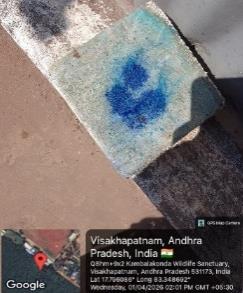
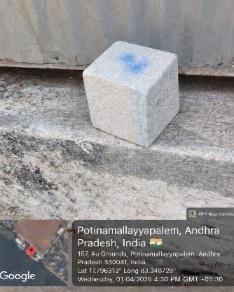
3.6 Photo-catalyst effect test:
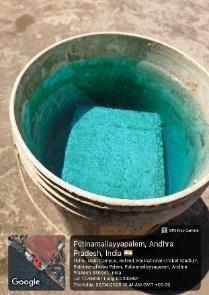
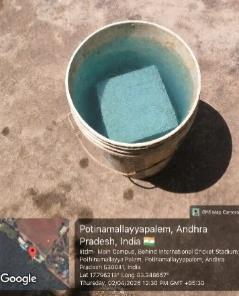
Method 1 -
• Prepared a dye solution of light blue color by adding Methylene Blue to water in a bucket or Transparentglassbeakers
• Kepttheconcretecubespecimeninthissolution.
• ThebucketisthenkeptinsunlightorUVlight
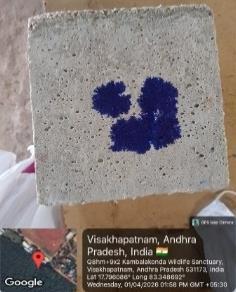
Method 2 -
• Poured a few drops of Methylene Blue solution ontotheconcretespecimensurface
• Keepindarkfor30minutes(adsorptionstage)
• ExposetheconcretecubetosunlightorUVlight
Then observe
• Takephotosatregularintervals(0,1,2,3,4hrs.)
• Comparecolorfadingvisually
This study explores how waste EPS (expanded polystyrene)canbeusedinconcretetomakeitlighter and more environmentally friendly, while also adding photocatalyticbenefits.
The results show that replacing traditional materials withcrushedEPSsignificantlyreducesthedensityand overall weight of concrete, making it suitable for lightweightapplications.
The workability of the concrete improves slightly compared to conventional mixes. However, because EPSislightweight,thedensitydropsquiteabit about 31%forM20and37%forM25mixes.
This reduction in weight is useful, but it also leads to lower compressive and tensile strength. Even so, the strength levels are still acceptable for non-structural uses.
Water absorption increases slightly, but remains within acceptable limits (below 5%). In terms of cost, M20 multifunctional concrete becomes much more expensive, while M25 shows only a small increase, makingM25themorepracticaloption.
Photo-catalyst test confirmsstrong photo catalytic activity.Thespecimeneffectivelydegradedthesurface pollutantswithina4–10hour,provingitspotentialfor "self-cleaning" applications in real-world environments
Overall, while using 100% EPS reduces strength, adjusting the percentage can help strike a balance betweenstrength,reducedweight,andsustainability.
International Research Journal of Engineering and Technology (IRJET) e-ISSN: 2395-0056
Volume: 13 Issue: 04 | Apr 2026 www.irjet.net p-ISSN: 2395-0072
The study highlights how recycled materials like EPS can contribute to greener, more innovative constructionpractices.
The present study provides a foundation for further research on multifunctional concrete. The following areas canbeexploredinthefuture:
Investigation of different percentages of EPS replacement to determine the optimum proportion thatprovidesbothstrengthandlightweightproperties.
Study of additional mechanical properties such as tensilestrength,flexuralstrength,anddurabilityofEPS concrete.
Evaluation of long-term performance and durability underdifferentenvironmentalconditions.
UseofotherwastematerialsalongwithEPStoimprove thesustainabilityofconcrete.
Detailed analysis of photo catalytic efficiency in reducing air pollutants in real environmental conditions.
Application of multifunctional concrete in practical construction projects such as non-load bearing walls, panels,pavements,andinsulationstructures.
Development of improved mix designs to enhance the strengthanddurabilityofEPS-basedconcrete.
Furtherresearchintheseareascanhelpin developing more efficient, durable, and environmentally friendly construction materials for future infrastructure development.
[1] Kiiko,P.I.,Chernykh,T.N.,Kriushin,M.V.,Wang,J.,& Orlov, A. A. (2026). Self-cleaning capacity of photo catalytic building plasters under frost attack. NanotekhnologiivStroitel'stve,18(1),5-14.
[2] Maktoof,Y.R.,&Abbas,R.M.(2025,March).Effectof hybrid fibers on the performance of lightweight expanded polystyrene self-compacting concrete. In AIP Conference Proceedings (Vol. 3303, No. 1, p. 110014).AIPPublishingLLC.
[3] Imtiaz, A., Sharif, M. B., Irfan-ul-Hassan, M., Ghafoor, M. T., & Hasan, S. (2025). Effect of expanded polystyrene beads on mechanical, thermal, and acoustic properties of lightweight concrete. Arabian Journal for Science and Engineering, 50(3), 17151727.
[4] Saini, A., & Ratan, J. K. (2021, August). A Review on Titanium Dioxide Based Photocatalytic Cement: Selfcleaning Cement. In International Conference on Chemical, Bio and Environmental Engineering (pp. 239-273).Cham:SpringerInternationalPublishing.
[5] Khatib, J. M., Herki, B. A., & Elkordi, A. (2019). Characteristics of concrete containing EPS. Use of recycledplasticsineco-efficientconcrete,137-165.
[6] Karthick, M. D., Ramya, S. B., Bharathi, R., & Mullainathan, R. (2018). Experimental study on strength behaviour of concrete block with partial replacement of “expanded polystyrene beads”. Mater Sci,10(6),1-5.
[7] S N Zailan, N Mahmed, M M A Abdullah, A V Sandhu. “Self-cleaninggeopolymerconcrete-Areview.”2017
[8] Sayadi, Ali A., Juan V. Tapia, Thomas R. Neitzert, and G. Charles Clifton. "Effects of expanded polystyrene (EPS) particles on fire resistance, thermal conductivity and compressive strength of foamed concrete." Construction and Building Materials 112 (2016):716-724.
[9] Demirboga, Ramazan, and Abdulkadir Kan. "Thermal conductivity and shrinkage properties of modified wastepolystyreneaggregateconcretes."Construction andBuildingMaterials35(2012):730-734,
[10] Miled,K.,K.Sab,andR.LeRoy."Particlesizeeffecton EPS lightweight concrete compressive strength: experimental investigation and modelling." MechanicsofMaterials39,no.3(2007):222-240.
[11] Sabaa, Ben, and Rasiah Sri Ravindrarajah. "Workability assessment for polystyrene aggregate concrete." In VII QualityControl Congress, pp. 18-21. 1999
[12] Khatib, J. M., and P. S. Mangat. "Absorption characteristics of concrete as a function of location relative to casting position." Cement and concrete research25,no.5(1995):999-1010.
[13] IS: 4031 – (Part 1 and 4) – Methods of physical tests forhydrauliccement
[14] IS 10262:2019 - Indian Standard Concrete Mix ProportioningGuidelines
[15] IS 456:2000 - Indian Standard Plain and Reinforced ConcreteCodeofPractice
[16] IS 383:1970 - Specification for Coarse and Fine aggregatefromnaturalresourcesforConcrete
[17] IS 2386 (Pt. 1-8) - Methods of test for aggregates for concrete
[18] IS516:1959-Methodsoftestsfortestingofconcrete
[19] IS12269:1987-Specificationsfor53GradeCement
[20] IS1199:1959–MethodsofSamplingandAnalysisof Concrete
[21] IS 516:1959 - Method of Tests for Strength of Concrete
[22] IS 5816:1999 - Method of Test Splitting Tensile StrengthofConcrete